Engineering reference · Cleaning and product changeover
Capsule filling machine cleaning needs a defined equipment boundary, a machine-specific method and a documented decision that the machine is ready for its next use. Removing visible powder, changing capsule tooling and approving a product changeover are related tasks, but they are not the same acceptance decision.
Use this guide to prepare a cleaning SOP review and a supplier cleanability demonstration for automatic hard-capsule equipment. It is not an executable cleaning instruction: the approved machine manual and site procedures must define the actual method and safe access.
Define which cleaning event the procedure covers
Start a cleaning SOP review with the machine model, serial number, installed dosing system, capsule format and previous/next product. These details determine which controlled procedure applies; a generic capsule-filler checklist cannot establish them.
Distinguish routine in-process housekeeping, same-product batch changes, a product change, a capsule-format conversion and work after maintenance. The required checks may differ. A format conversion can occur without a product change; a product change can require a cleaning review even when the capsule size stays the same.
For a new equipment project, use the automatic capsule filling machine page to establish the configuration first. This article addresses cleanability and changeover evidence, not machine selection, spare-part compatibility or a complete qualification program.
Before any physical access: trained personnel must follow the machine and site safety procedures, including the required isolation and stored-energy controls. Do not bypass guards or interlocks. Nothing here authorizes disassembly, liquid cleaning or compressed-air use on an unidentified assembly.
Map the product path and the boundaries around it
Begin with the installed assembly drawing. On a powder capsule filler, the review extends beyond the hopper: trace the dosing area, capsule holding/transfer path, closing and discharge points, and the associated extraction interfaces. Confirm which parts are removable and which require a different approved cleaning approach.
| Area to identify | Question for the review | Evidence to request |
|---|---|---|
| Hopper and powder feed | Can the team identify the full material path, joints and removable contact parts? | Assembly references, component inventory and the documented access method. |
| Dosing assembly | Which disc, tamping, scraper or other fitted components belong to this configuration? | The actual dosing-system drawing, removal/reassembly instructions and inspection points. |
| Capsule handling and discharge | Where can shell fragments or product residue remain along the installed path? | An access demonstration and labelled inspection locations on the machine revision. |
| Vacuum and dust extraction | Where does the machine cleaning scope end and the connected equipment scope begin? | Interface drawings, hose/filter identification and the responsible procedure for each boundary. |
| Guards, sensors and non-contact zones | Which surfaces require housekeeping, protection or a restricted cleaning method? | The manufacturer's permitted methods and the site's contamination-control assessment. |
Keep parts identity traceable during the review. The capsule filling machine parts guide explains why a generic name or shell size alone cannot identify the correct format set.
Build the SOP information set before writing operating steps
The useful output is a controlled document that trained people can follow and the responsible reviewers can assess. In the United States drug-manufacturing context, 21 CFR 211.67 addresses written cleaning and maintenance procedures, responsibilities, schedules, methods, reassembly where needed, protection of clean equipment, pre-use inspection and records. The applicable quality system determines how these requirements are implemented at a particular facility.
For the capsule filler, collect the following information before turning the document into an approved sequence:
- Identity and applicability: machine/assembly references, procedure revision, product-change scenarios and responsibilities.
- Access and handling: approved isolation, disassembly boundaries, labelled parts and the permitted handling of precision components.
- Method specifications: authorized tools, agents and parameters for each affected material or component. Resolve incompatible methods with the manufacturer and site team.
- Time and status controls: the applicable dirty/clean hold conditions, protected storage and the status identification used on the machine and removed parts.
- Acceptance and recording: defined inspection/test locations, methods, limits, deviations and the responsible release decision.
This information set is not a ready-to-execute SOP. Do not copy a detergent concentration, rinse volume, contact time, drying condition or removal sequence from another machine's document.
Define what evidence permits the next product to run
A clean-looking machine and a validated cleaning process answer different questions. The FDA's historical cleaning-validation inspection guide discusses documented procedures, scientifically justified residue limits and sampling/analytical methods. It is inspection reference material, not a capsule-machine cleaning recipe or a current certification of any HIJ equipment.
Ask the responsible quality and validation team to define the residue risks, acceptance basis, sampling locations and the evidence appropriate to the product and process. A rinse result alone does not explain residue at a difficult-to-access location unless the sampling approach is suitable. “Not detected” also depends on the method's detection capability and recovery.
For equipment procurement, establish what the supplier can demonstrate and what remains a site responsibility. Useful requests include access to the actual product-contact assemblies, component and material identification, the manufacturer's cleaning instructions, and an agreed record of the demonstration. Do not treat a brochure phrase such as “easy to clean” as completed cleaning validation.
The broader capsule filling machine qualification guide covers the separate DQ/IQ/OQ/PQ discussion. Cleaning acceptance should have its own defined basis rather than being assumed from a general qualification heading.
Separate cleaning acceptance from changeover readiness
A machine may have completed cleaning and still be incorrectly assembled for the next capsule format. Equally, correct tooling and a recalled recipe do not prove that cleaning has been accepted. Make each status visible in the changeover record.
- Cleaning statusRequired cleaning, inspection and applicable evidence have been completed and reviewed under the approved procedure.
- Assembly and format statusThe identified contact parts and format set are correctly reassembled; their identity and condition are checked.
- Setup and functional statusThe authorized recipe, permitted settings and defined safety/reject-function checks are confirmed.
- Product and batch statusThe specified startup checks and responsible quality decisions permit the next production stage.
Define where the recorded downtime starts and ends. “Tooling removed,” “cleaning finished,” “reassembled,” and “first accepted output” are different endpoints. Comparing suppliers using different endpoints can hide the time needed for drying, evidence review or startup confirmation.
Forester’s My Insight
The NJP-2500C and NJP-3800C reference descriptions list module cleaning as a machine function and describe access intended to make cleaning easier. Neither statement defines a complete product-changeover method or establishes a validated cleaning time.
My document-based conclusion is to request the cleaning boundary and acceptance evidence before comparing a “fast changeover” claim. For a transparent planning example, 60 minutes reserved in a 480-minute shift equals 12.5% of planned shift time. That is arithmetic, not a measured HIJ cleaning time, output prediction or suggestion to shorten an approved cleaning process.
Ask for a cleanability demonstration with a defined scope
Send the proposed formulation or residue characteristics, capsule format, product-change scenario and relevant constraints before a supplier demonstration. Agree on which assemblies will be shown, the governing instructions, who performs the demonstration and what can be recorded. Use the actual configuration rather than assuming that a similar model has identical access.
Capture the assembly inventory and drawing revision, the steps demonstrated within the agreed scope, unresolved access questions and the documents still required. If a sample or residue surrogate is used, state what it represents and its limitations. A demonstration without representative evidence is not proof for every future formulation.
Separate any timing record into its components and identify omitted activities. Confirm whether removal, transport, cleaning, drying, inspection, reassembly, setup and review are included. Record the staffing and conditions for that demonstration; do not extrapolate them into a universal changeover guarantee.
For a project enquiry, provide the machine model or required production route, capsule format, formulation description, cleaning/changeover scenario and documentation expectations. HIJ can review the equipment configuration and requested demonstration scope. Your responsible site team retains approval of its cleaning procedure and production release.
Cleaning and changeover questions
Is module cleaning the same as a complete product-changeover cleaning process?
No. A machine's module-cleaning function describes part of its operation. A product-changeover process must define all affected assemblies, the approved methods, required evidence, reassembly checks and release responsibilities for the installed configuration and products.
Can I use one cleaning SOP for every capsule filling machine?
Do not assume so. The procedure must identify the machine and assemblies it covers, including dosing system, contact materials, access, connected equipment and approved methods. A common procedure can only cover configurations and scenarios that the responsible site team has assessed and approved.
Can water or compressed air be used to clean a capsule filler?
Only use a method specifically permitted by the machine instructions and the approved site procedure for that component and material risk. This guide does not authorize water, solvents or compressed air. Resolve uncertainty with the manufacturer and responsible safety and quality personnel before cleaning.
How long should capsule filling machine cleaning take?
There is no universal time. Define the machine configuration, residue, approved method, access, drying, inspection and review scope first. Compare a measured duration only when the start/end points and included activities are stated. A published module-cleaning function is not a guaranteed product-changeover time.
Does changing capsule size replace the need for cleaning acceptance?
No. Format-part identity, correct reassembly and setup are separate from cleaning acceptance. A size change must follow the applicable changeover procedure, including any required cleaning, inspection, functional checks and approval before production resumes.
Review the cleanability scope for your capsule project
Share the capsule format, formulation description, intended batch or product-change scenario and required documentation. Request a configuration and demonstration scope that your engineering and QA teams can assess.
Discuss My Machine and Changeover ScopeReference basis and limits
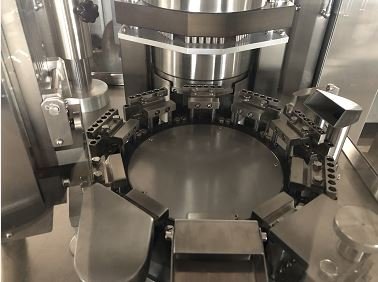
The NJP-2500C and NJP-3800C technical descriptions support the distinction between a documented module-cleaning function and an approved full cleaning process. The NJP-3800C photograph is an assembly reference only.
The linked regulation and FDA inspection guide provide context for the document and evidence review, not site-specific instructions or legal advice. They do not establish a cleaning method, residue limit, validated status or certification for the photographed machine.