

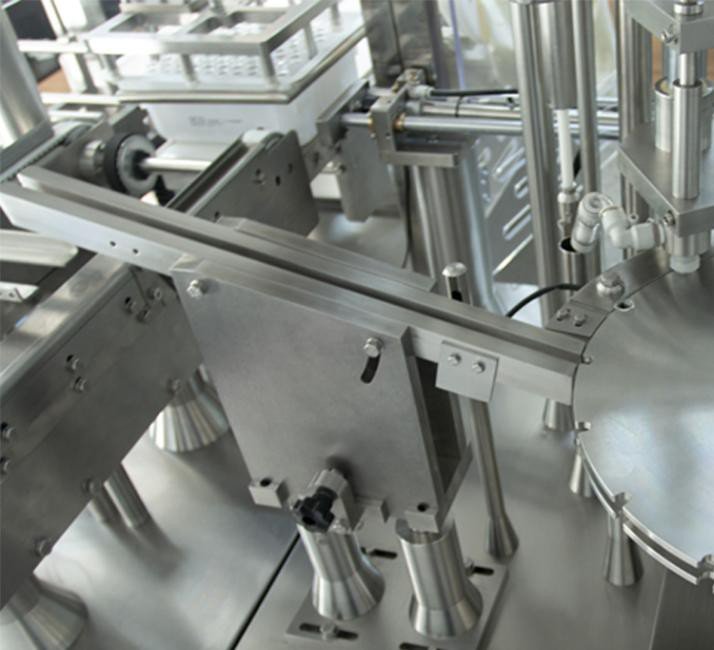
Pharmaceutical Grade Equipment
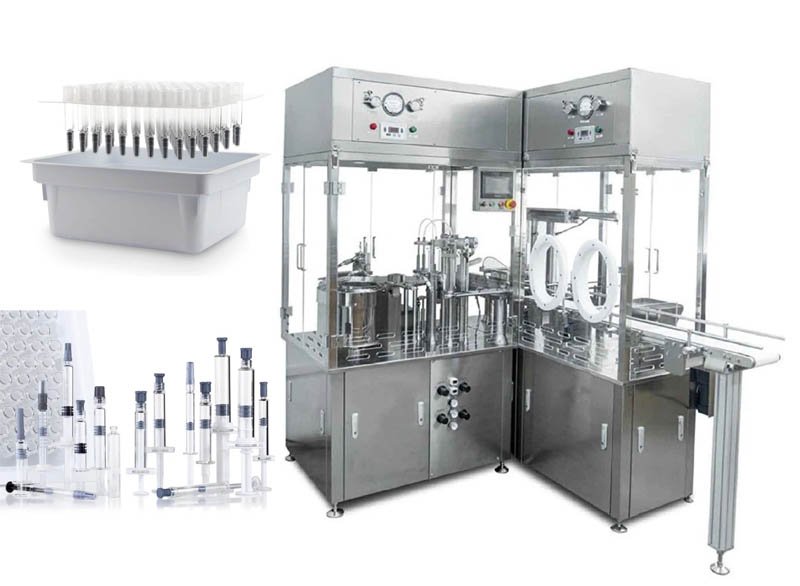
Aseptic Double Head
Prefilled Syringe Vacuum Filling Machine
(cGMP Compliant)
Achieve bubble-free filling and perfect vacuum stoppering for viscous materials like hyaluronic acid. Designed for BD, SCHOTT nest-based syringes with ≤±1% accuracy. The ultimate solution for aseptic injectable production.
cGMP & CE Certified
FAT/SAT/IQ/OQ Support
Global Expert Installation
See It In Action
Precision Engineering Unveiled
This video demonstrates the seamless, automated process of the HIJ-PFS-2. Witness firsthand how our machine ensures bubble-free results and cGMP compliance, from nest loading to final aseptic stoppering.
- Dual-Head Vacuum Filling: Eliminates air bubbles to guarantee product integrity.
- Aseptic Stopper Placement: Prevents contamination and ensures a perfect, particle-free seal.
- Servo-Driven Precision: Guarantees repeatable accuracy and smooth, reliable operation.
Critical Production Challenges
Are Product Oxidation, Inaccurate Dosing, and Contamination Risk Compromising Your Injectable Products?
Air Bubbles & Oxidation
Conventional filling introduces air bubbles, leading to product oxidation and inaccurate dosage, especially in viscous products like hyaluronic acid and biologics.
Particulate Contamination
Friction during rubber stopper insertion can generate micro-particles, causing batches to fail particulate matter tests and risking product recalls.
Incomplete Filling
High viscosity materials often create voids or gaps ("air pockets") during filling, resulting in rejected batches and the waste of high-value product.
The HIJ Aseptic Solution
The HIJ-PFS-2 is engineered to overcome these critical challenges. Our two-stage vacuum process ensures a sterile, bubble-free, and perfectly sealed final product, safeguarding your product's integrity and your company's reputation.
Aseptic Workflow Visualized
The HIJ-PFS-2 Automated Process for Flawless Prefilled Syringes
Follow our six-stage automated workflow, engineered to eliminate human error, prevent contamination, and ensure every syringe is filled and sealed with absolute precision.
Step 01
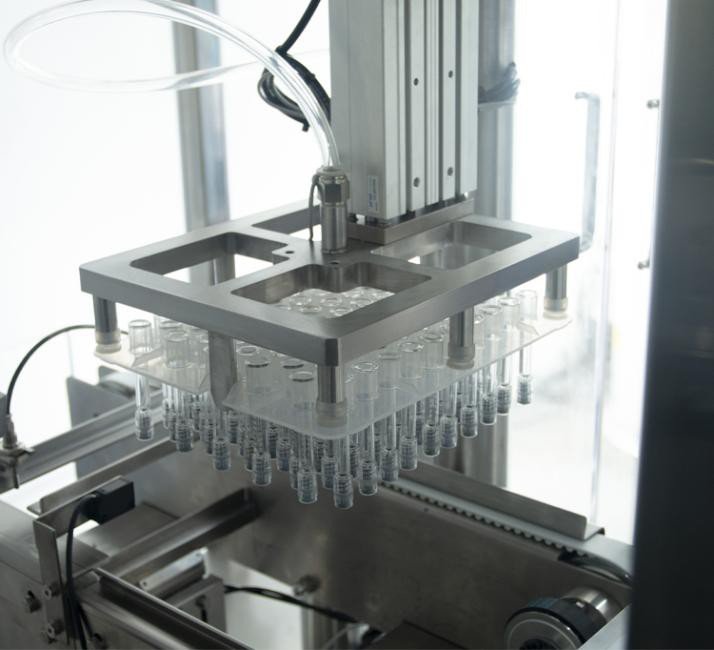
Automatic Syringe Loading & Denesting
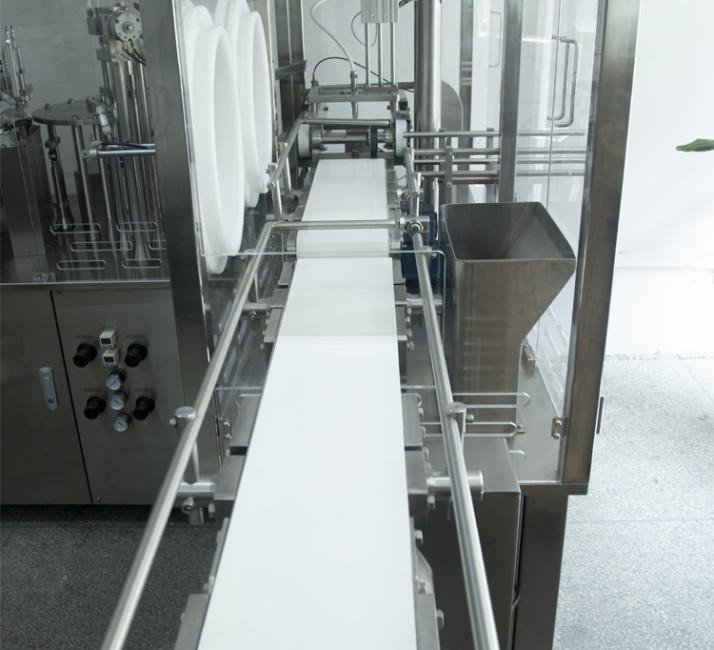
Syringes in tubs are manually debagged and placed on the conveyor. The system then automatically denests and feeds them into the turntable, minimizing human intervention in the sterile zone.
Step 02
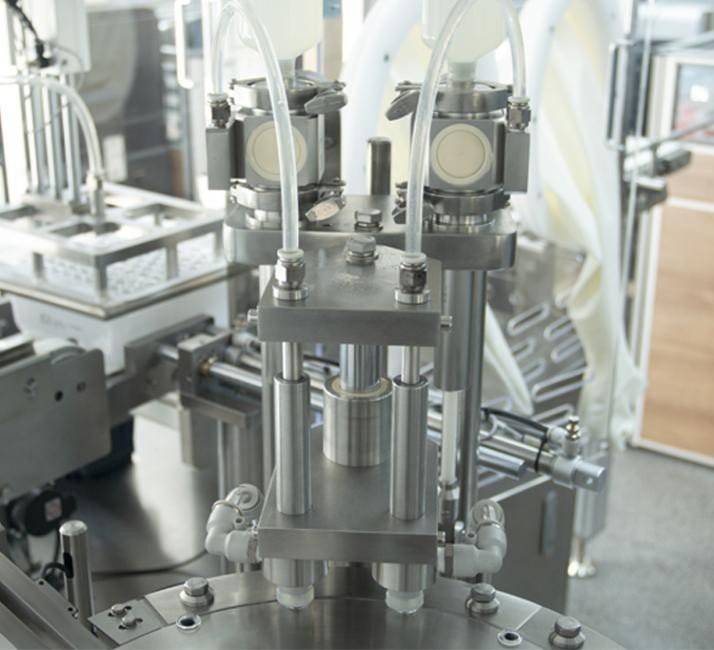
Servo-Driven Filling Station (Double Head)
Two servo-driven ceramic plunger pumps perform high-precision (≤±1-2%) filling. The "no syringe, no fill" sensor prevents product waste. The system is ideal for both liquid and high-viscosity ointments.
Step 03
Advanced Vacuum Filling
The filling chamber is placed under a precise vacuum. This crucial step removes all air from the syringe barrel before filling, ensuring a completely bubble-free product, essential for biologics and viscous materials.
Step 04
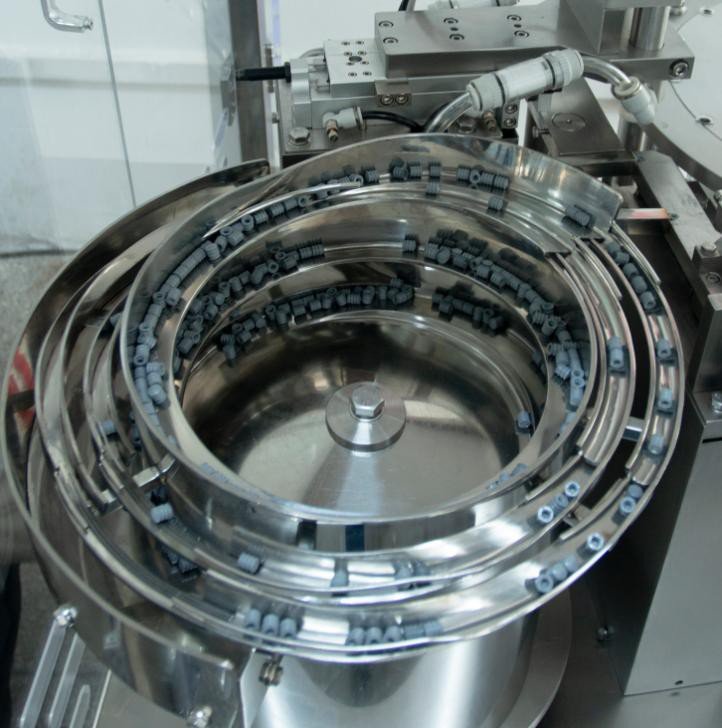
Automatic Plug Feeding & Placement
Sterile rubber stoppers are oriented and fed from a vibrating bowl. The placement mechanism gently positions the stoppers, ready for the final sealing step, avoiding any particle generation.
Step 05
Vacuum Stoppering (Plugging)
The system draws a second vacuum while pressing the stoppers into place. This eliminates headspace air and prevents particle generation from friction, ensuring a perfect, contamination-free seal flush with the liquid surface.
Step 06
Automatic Discharge
Completed syringes are automatically discharged onto a collection tray, ready for downstream processes like plunger rod insertion and labeling. The process is complete, awaiting the final packaging stages.
Complete Technical Data
HIJ-PFS-2
Syringe Vacuum Filling and Stoppering Machine Specifications
Built with AISI 316L stainless steel for all contact parts and AISI 304 for the main body, the HIJ-PFS-2 is engineered for durability, cleanability, and full GMP compliance.
| Parameter | Specification |
|---|---|
| Applicable Materials | Liquid and ointment (including high-viscosity products) |
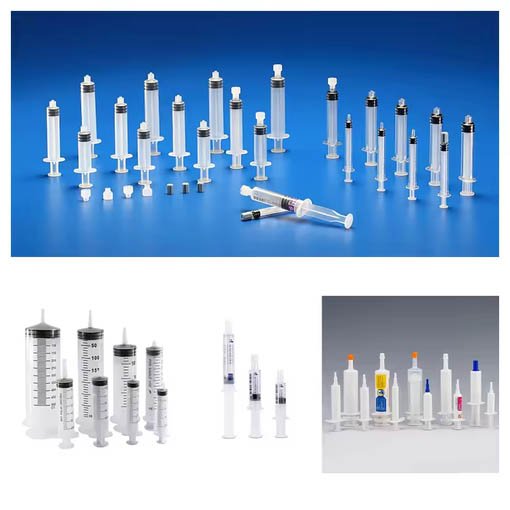
| Syringe Specifications | 0.5ml, 1ml, 2.25ml, 3ml, 5ml, 10ml, 20ml (requires tooling change) |
| Production Capacity | 800-1200 syringes/hour |
| Filling Accuracy | ≤±1-2% |
| Number of Filling Heads | 2 heads (double-station design) |
| Control System | PLC + HMI with recipe management and real-time monitoring |
| Contact Materials | AISI 316L stainless steel and medical-grade silicone rubber |
| Vacuum System | 6×10⁻²Pa, 20L/S (dual-stage vacuum) |
| Compressed Air | 0.55-0.75 MPa, 15L/S |
| Total Power | 3 KW |
| Voltage | 380V/220V, 50-60Hz (customizable) |
| Machine Dimensions | L 1020mm × W 840mm × H 1730mm |
| Equipment Weight | 400 KG |
Wide Syringe Format Compatibility
Widely compatible with SCF (Sterile Prefilled Syringe) formats from leading global manufacturers including BD, BG, and SCHOTT. Custom formats and non-standard syringe designs can be accommodated upon request with dedicated tooling.
Need a Customized Configuration or Full Datasheet?
Our team can provide detailed technical documentation, 3D models, and customized specifications tailored to your specific syringe format and production requirements.
The HIJ Difference
Beyond the Machine: Your Partner in Aseptic Filling Success
We don't just sell equipment. We bring two decades of problem-solving experience to every project, ensuring your investment delivers measurable results from day one.
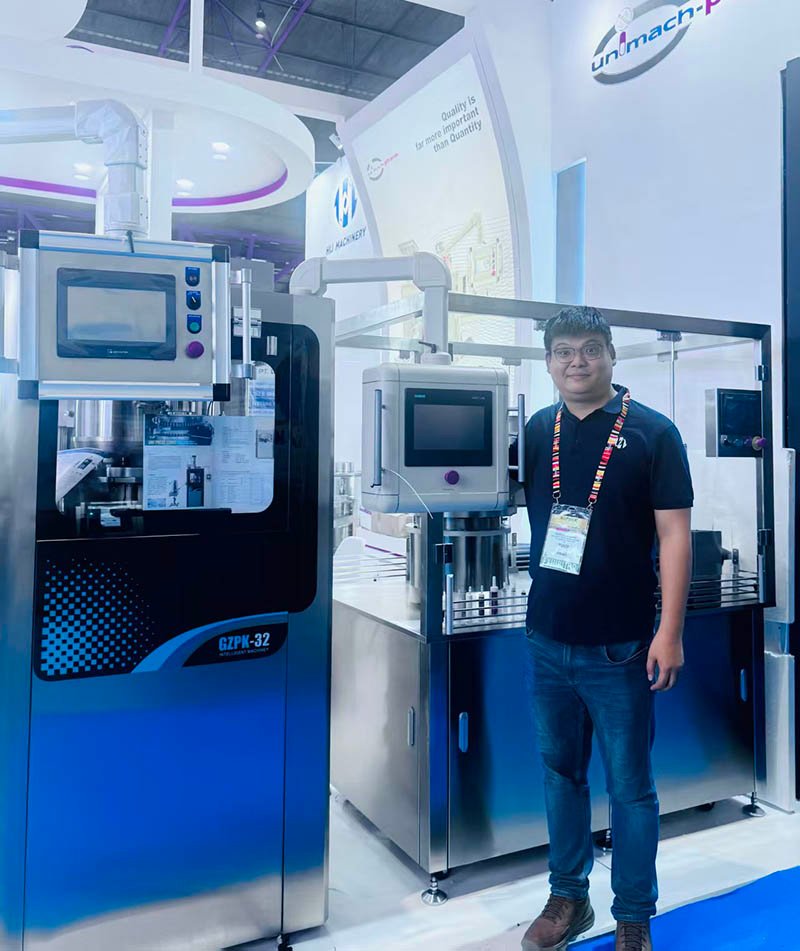
20+ Years Experience
Forester Xiang
Founder & Chief Technical Officer
I've spent 20 years on factory floors across the world, troubleshooting the exact challenges you face. Every feature in this machine exists because I've seen a customer struggle without it. When you choose HIJ, you're not just buying equipment—you're gaining a partner who's walked in your shoes.
Deep Process Understanding
We understand that aseptic filling is a process, not just a function. Our team doesn't just deliver a machine—we help you optimize bubble elimination, minimize reject rates, and streamline changeover procedures based on real-world production experience.
European Quality, Smart Pricing
We implement European cGMP design principles and use world-class components (Siemens PLC, AISI 316L contact parts), but our streamlined supply chain means you invest in technology, not brand premiums. Get 70% of the cost of comparable European equipment without compromising on quality.
End-to-End Validation Support
We provide a comprehensive documentation package (DQ, IQ, OQ protocols) and full support for FAT and SAT. Our engineers work alongside your quality team to ensure your validation process is smooth, compliant, and successful, meeting FDA, EMA, and WHO GMP standards.
Global Rapid-Response Service
Our global network of service engineers ensures rapid installation, hands-on training, and ongoing support. We commit to 24-hour response times for critical issues, minimizing your downtime and maximizing your ROI. Your production line's uptime is our top priority.
Technical Answers
Frequently Asked Questions about Aseptic Syringe Filling
Get expert answers to the most critical questions pharmaceutical engineers ask about vacuum filling, viscosity handling, and cGMP compliance.
The HIJ-PFS-2 is specifically engineered to handle high-viscosity injectables (up to 500 cP) that challenge conventional filling systems. Our solution combines three critical technologies:
- Ceramic plunger pumps: Unlike stainless steel pistons, our ceramic pumps eliminate scoring and wear even with abrasive or sticky formulations. They maintain accuracy over millions of cycles.
- Vacuum-assisted filling: The filling chamber is evacuated to 6×10⁻² Pa before product entry. This vacuum eliminates air resistance, allowing viscous liquids to flow freely into the syringe barrel without cavitation or foaming.
- "Bottom-up" nozzle design: The fill nozzle enters from the bottom of the syringe and rises with the liquid level. This prevents splashing and ensures complete air displacement, critical for bubble-free hyaluronic acid or PRP formulations.
Real-world performance: Our client in South Korea successfully fills 3ml syringes with 400 cP hyaluronic acid gel at 1000 units/hour with zero bubble defects.
During your Factory Acceptance Test (FAT), we'll run your actual product formulation to validate performance before shipment. We can also adjust pump stroke length and vacuum duration to optimize for your specific viscosity profile.
Format changeover is completed in under 20 minutes by a single operator, thanks to our tool-free modular design. Here's what the process involves:
- Nest holders and guides (5 minutes): Quick-release clamps allow you to swap the syringe nest holder and positioning guides without any tools. Each format has color-coded parts for foolproof identification.
- Fill nozzle set (3 minutes): Bayonet-mount nozzles are removed and replaced in seconds. We provide dedicated nozzle sets for each syringe diameter to ensure precise centering.
- Stopper placement tooling (5 minutes): The vacuum stoppering head is adjusted via calibrated hand wheels. No disassembly required.
- Recipe selection on HMI (2 minutes): Load the pre-saved recipe for the new format from the Siemens touchscreen. All parameters (fill volume, vacuum duration, servo speeds) are automatically recalled.
- Test run and adjustment (5 minutes): Run 10-20 test units to verify accuracy and make minor pneumatic pressure tweaks if needed.
Typical scenario: Switching from 1ml BD Luer-Lock to 3ml SCHOTT TopPac takes 18 minutes, including cleaning and recipe loading.
We provide a complete Change Parts Kit for each additional syringe size you specify. During installation training, our engineer will walk your team through the entire changeover procedure to ensure they're confident and efficient.
Yes, the HIJ-PFS-2 is RABS-ready and isolator-compatible by design. We've worked with clients to integrate our filler into Grade A/B aseptic environments globally. Here's how we support your containment strategy:
- Compact footprint (1020mm × 840mm): The machine's small size allows it to fit inside standard isolator enclosures or RABS housings.
- Side-access control panel: All HMI touchscreen controls and electrical interfaces are positioned for external access, so operators don't breach the barrier during production.
- Sealed servo motors: All drive motors are IP65-rated and sealed against H₂O₂ or other sterilants used in isolator decontamination cycles.
- Integrated glove ports: We can add custom glove port flanges for manual interventions (e.g., jam clearance) without breaking isolator integrity.
- Optional VHP-resistant coatings: For isolators using vaporized hydrogen peroxide, we apply specialized coatings to prevent material degradation.
Case study: A European biotech client integrated our PFS-2 into a Getinge La Calhène isolator for a cytotoxic oncology drug. The system achieved ISO 5 (Grade A) with zero contamination events over 6 months.
If you're planning RABS/isolator integration, please share your containment system specifications during the URS phase. Our engineering team will provide a detailed integration drawing and coordinate with your isolator supplier to ensure seamless compatibility.
For the HIJ-PFS-2, our standard project timeline from order to commissioning is 12-14 weeks. Here's a detailed breakdown:
- Weeks 1-2 (URS finalization): After deposit, we review your User Requirements Specification and finalize the technical configuration (syringe formats, voltage, optional features like laminar flow hood).
- Weeks 3-8 (Manufacturing): Precision machining, assembly, and integration of electrical/pneumatic systems. We provide weekly photo updates of production progress.
- Week 9 (FAT preparation): Internal testing and calibration. We run performance qualification with reference materials.
- Week 10 (Factory Acceptance Test): You or your representative witness the FAT at our facility (or via live video link). We test with your actual product if you ship samples in advance.
- Week 11 (Documentation & Packaging): Finalize IQ/OQ/PQ protocols, user manuals, and spare parts inventory. Professional export packaging with anti-vibration crating.
- Week 12 (Shipping): Air or sea freight depending on your urgency. Average sea freight to EU/US East Coast is 4-5 weeks; air freight is 5-7 days.
- Weeks 13-14 (Installation & SAT): Our service engineer travels to your site for installation, training, and Site Acceptance Test.
Expedited option: For urgent projects, we can reduce lead time to 8 weeks with priority manufacturing scheduling (surcharge applies).
We handle all export compliance (CE certification, customs documentation, fumigation certificates). You'll receive tracking updates at every milestone. Your project manager is available 24/7 via WhatsApp during the critical shipping and installation phases.
The HIJ-PFS-2 features semi-automated nest loading, which is the optimal balance between aseptic safety and capital investment for mid-scale production. Here's how it works:
- Manual nest preparation (outside the barrier): An operator removes the protective film from the pre-sterilized syringe nest (tub) and places it on the loading conveyor. This step occurs in the Grade B/C environment, minimizing exposure to the critical Grade A zone.
- Automated denesting and feeding: Once the nest enters the machine, servo-driven pick-and-place mechanisms automatically extract individual syringes and load them onto the filling turntable. No human hands touch the syringes after they enter the Grade A zone.
- Vision inspection (optional): We can integrate a camera system that rejects improperly oriented syringes or detects contamination before filling.
- "No syringe, no fill" sensor: If a position on the turntable is empty (due to denesting failure), the filling nozzle will not dispense, preventing product waste.
Upgrade path: For fully automated nest loading (robotic film removal and nest placement), we can integrate a collaborative robot (cobot) arm. This is ideal for 24/7 production runs exceeding 50,000 units/day.
This semi-automated approach reduces operator intervention by 80% compared to manual loading, while keeping the system accessible and cost-effective. During your site visit or FAT, we'll demonstrate the entire loading sequence and discuss automation upgrades based on your production scale.
Have More Questions About Your Aseptic Filling Project?
Our pharmaceutical engineers have solved filling challenges for over 100 clients globally. Let's discuss your specific formulation, production scale, and regulatory requirements to design the perfect solution.
Schedule a Free Technical Consultation