



Factory-Direct Since 2004 · CE-Marked
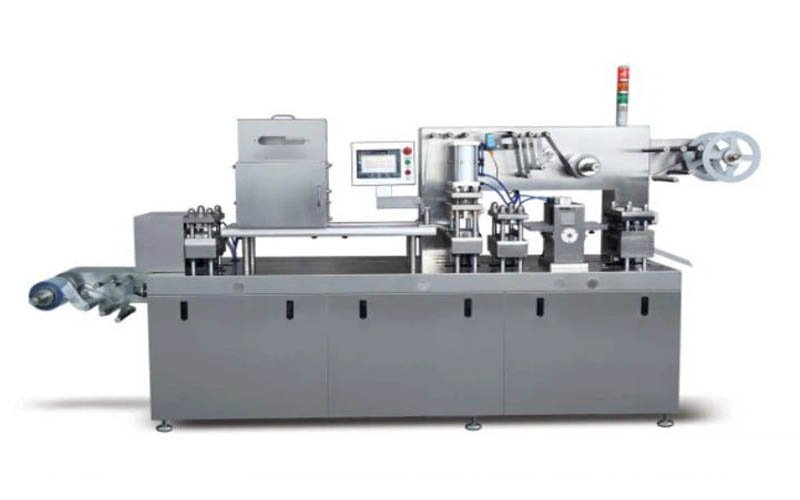
Pill Blister Packaging Machine DPP-260 — Flat-Plate Precision for Tablets, Capsules & Softgels
One compact, cGMP-ready flat-plate machine that thermoforms PVC/PET and cold-forms Alu-Alu — packing up to 15,600 blisters/hour with tool-free changeover. Engineered by HIJ Machinery and backed by Forester Xiang's 20+ years auditing 100+ pharmaceutical facilities worldwide.
- One machine, every pill format: tablets, capsules, softgels, effervescents and candy pills on the same platform
- PVC / PVDC / PET / Alu-Alu ready — switch materials without buying a second machine
- DQ/IQ/OQ/PQ documentation package to support your own validation program
ISO 9001 manufacturing standard
Exported to 30+ countries
On-site installation & training
Quick Answer
What Is a Pill Blister Packaging Machine?
A pill blister packaging machine forms plastic or aluminum cavities, fills them with tablets, capsules, or softgels, and heat-seals a lidding foil over each cavity to create sealed unit-dose packs. The HIJ DPP-260 is a flat-plate model that handles both thermoforming (PVC, PVDC, PET) and cold-forming (Alu-Alu) on one platform, producing up to 15,600 blisters per hour with a typical investment of $55,000–$85,000 USD depending on configuration.
Key Takeaways
- Dual forming technology: thermoforming and Alu-Alu cold-forming on one machine eliminates the need for two separate lines.
- Flat-plate design gives better temperature control, gentler product handling, and faster tooling changeover than roller-type machines — ideal for small-to-medium batches.
- Price range $55,000–$85,000 USD covering configuration, automation level, tooling sets, and documentation scope.
- cGMP-ready design with 304/316L stainless contact parts, plus a full DQ/IQ/OQ/PQ documentation package that supports your own validation program.
- 60–90 day lead time including Factory Acceptance Testing with your actual product samples before shipment.
Stop Choosing Between European Prices and Unreliable Quality
Most pill packaging buyers face the same three problems. The DPP-260 was engineered specifically to solve them — without the €250,000+ price tag of European lines or the reliability roulette of the cheapest alternatives.
European Machines Cost 3–4x More — Cheap Machines Cost You Downtime
A comparable European flat-plate line runs €200,000–€350,000. Budget machines save money upfront, then bleed it back through misaligned seals, failed audits, and parts that take months to arrive.
DPP-260 answer: Siemens PLC, Schneider electrics, and servo-driven stations at a factory-direct $55K–$85K — with a 1-year critical spare parts kit included in every shipment.
Changeovers That Kill a Production Day
If switching from a 10mm tablet to a size-0 capsule takes half a shift, your effective output collapses — especially painful for CMOs and multi-SKU supplement brands.
DPP-260 answer: magnetic quick-change tooling and recipe storage on the HMI cut format changeover to under 30 minutes, tool-free.
Weak Seals on Moisture-Sensitive Pills
Effervescents, herbal extracts, and hygroscopic APIs fail stability testing when seal integrity or barrier material is wrong — a recall risk no growing brand can absorb.
DPP-260 answer: 4-zone PID-controlled flat-plate sealing (±1°C) plus optional Alu-Alu cold-forming for maximum moisture and oxygen barrier.
Engineering That Justifies Every Dollar of the DPP-260
Six systems working together to give a flat-plate pill blister packaging machine the consistency of lines costing three times as much.
Universal Feeder System
Brush-box, vibratory, and dedicated capsule feeders swap in minutes. Handles round tablets, oblong caplets, size 000–5 capsules, softgels, and irregular candy pills with fill accuracy above 99.5%.
Dual Forming: Thermo + Cold-Form
Three PID heating zones (±2°C) thermoform PVC/PVDC/PET; the optional cold-form station presses Alu-Alu laminate for maximum-barrier packs — one machine, both technologies.
Flat-Plate Sealing Station
Four independently controlled sealing zones (±1°C) with servo-regulated pressure deliver seal strength above 15N per ISO 11607 test methods — consistent from first blister to last.
Servo Traction & Perforation
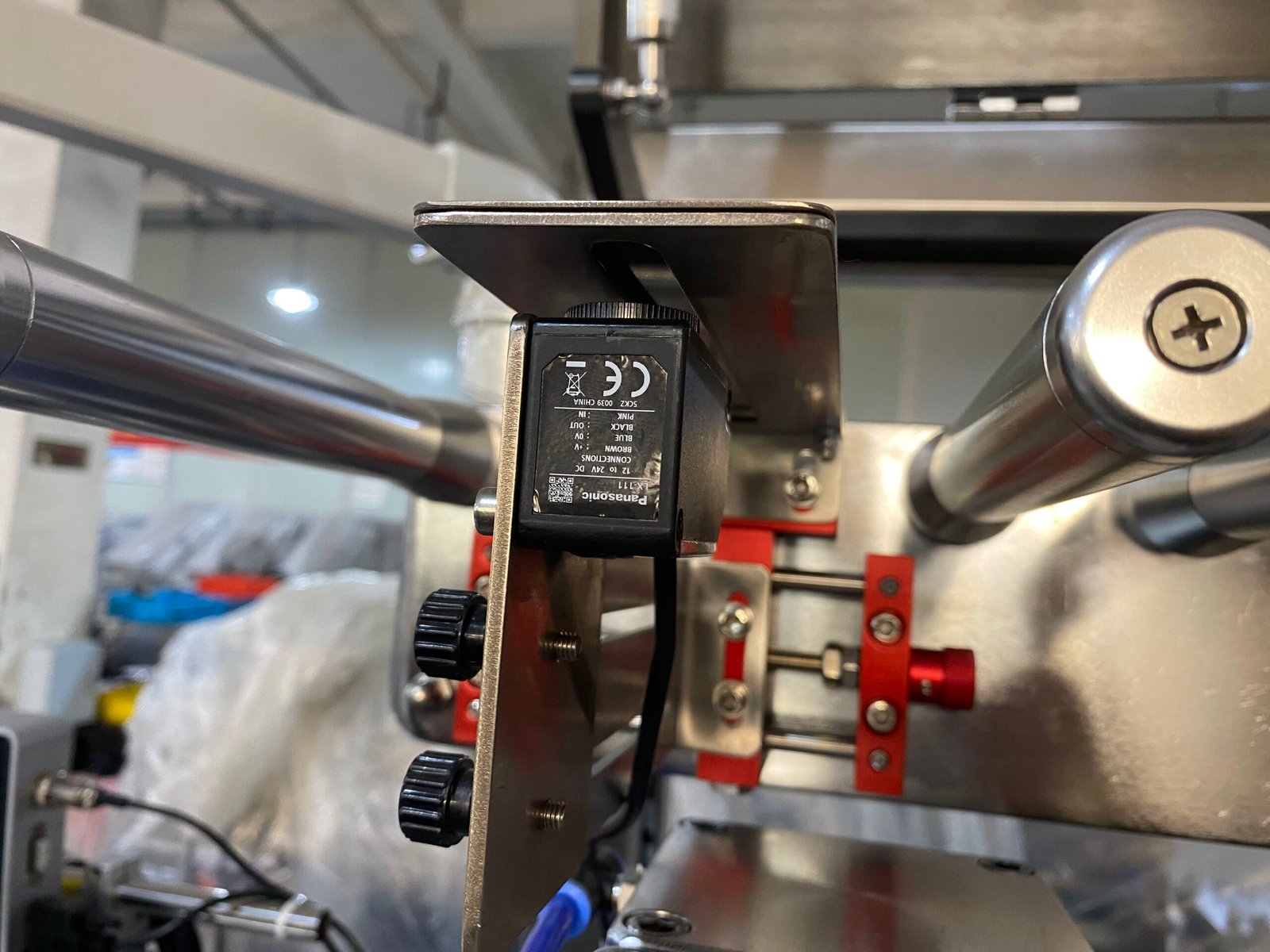
Servo-motor indexing keeps registration within ±0.1mm, so printing, perforation, and punching stay aligned even at maximum speed. No stretched film, no drifting cut lines.
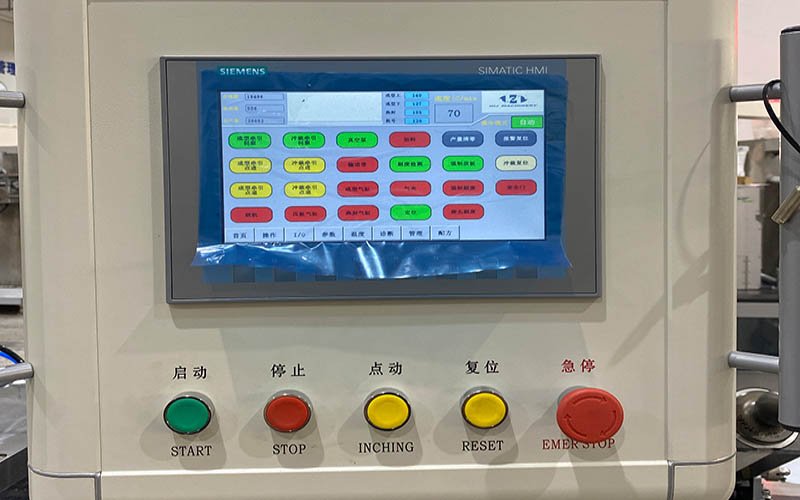
Siemens PLC + Touchscreen HMI
Recipe memory for 50+ products, multi-level password access, and audit-trail functions that support your FDA 21 CFR Part 11 data-integrity program. Interface available in English, Spanish, French, and Arabic.
Dust Extraction & Enclosed Chamber
Vacuum ports at feeding, sealing, and cutting points plus an enclosed working area keep friable and dusty pills from contaminating seals — critical for effervescents and herbal supplements.
One Machine for Every Pill Format You Package
The DPP-260 pill blister packaging machine adapts to your product — not the other way around. Send us samples and we'll run a free packaging test before you commit.
Tablets & Caplets
Round, oval, oblong, scored, and coated tablets from 4mm to 25mm — including friable and effervescent formulations.
Hard Capsules
Gelatin and vegetarian capsules from size 000 down to size 5, with dedicated capsule feeder plates for high-speed orientation.
Softgels
Oil-filled softgels including fish oil, vitamin D, and CoQ10 — gentle feeding prevents deformation and leakers.
Candy Pills & Lozenges
Pressed mints, gum pellets, and lozenges for food-contact compliant confectionery blister packaging.
Forming Material Selection Guide
| Material | Moisture Barrier | Best For | Relative Cost |
|---|---|---|---|
| PVC (0.15–0.50mm) | Standard | Most tablets and capsules in dry climates | $ — lowest |
| PVC/PVDC (0.20–0.60mm) | 3–5x better than PVC | Moisture-sensitive pills, humid markets | $$ |
| PET (0.20–0.60mm) | Good | Premium products needing high clarity | $$ |
| Alu-Alu (0.20–0.35mm) | Maximum — near-zero OTR/MVTR | Hygroscopic APIs, ICH Zone IV tropical climates | $$$ |
See the DPP-260 in Action: From Tablets to Softgels
Real production footage — not a marketing render. Watch actual cycle times, feeding accuracy, and seal quality across different pill formats.
Play
What you'll see: complete production cycle — setup, feeding, forming, sealing, and perforation — in under 3 minutes.
DPP-260 Complete Technical Specifications
Every parameter validated through thousands of production hours across pharmaceutical, nutraceutical, and confectionery environments worldwide.
| Parameter | Specification |
|---|---|
| Model | DPP-260 flat-plate automatic blister packing machine |
| Production Capacity | Up to 15,600 blisters/hour |
| Max. Forming Area | 260mm × 160mm (10.2″ × 6.3″) |
| Max. Forming Depth | 26mm for PVC/PET (thermoforming); 15mm for Alu-Alu (cold-forming) |
| Travel Distance | 80mm – 180mm, adjustable in 10mm increments |
| Forming Materials | PVC 0.15–0.50mm · PVC/PVDC 0.20–0.60mm · PET 0.20–0.60mm · Alu-Alu 0.20–0.35mm |
| Lidding Materials | Aluminum foil 20–30µm (plain/printed) · Paper/Alu 50–80µm · Child-resistant foil up to 45µm |
| Heating System | 3 independent PID zones, ambient–250°C, stability ±2°C |
| Sealing System | Flat-plate, 4 PID zones (±1°C), servo pressure 0.4–0.8 MPa, seal strength >15N (ISO 11607 test method) |
| Tooling Change | Magnetic quick-change, tool-free, under 30 minutes |
| Control System | Siemens PLC + color touchscreen HMI, 50+ recipe memory, multi-level access, audit trail |
| Machine Dimensions | 3,200mm × 850mm × 1,600mm (L×W×H) |
| Net Weight | Approx. 1,850kg |
| Noise Level | ≤75dB(A) at 1 meter |
| Design & Build Standard | cGMP-ready design · CE-marked · manufactured under ISO 9001 standard · 304/316L stainless steel product-contact parts |
| Documentation | DQ/IQ/OQ/PQ protocol package supplied to support the customer's own validation program; FAT with customer samples |
Built for Growing Producers, Not Just Big Pharma
Pharmaceutical Startups & Labs
Production-grade blisters for clinical trials, stability studies, and first commercial batches — with the documentation regulators expect, at a startup-viable price.
Nutraceutical & Supplement Brands
Move from bottles to premium unit-dose blisters. Handles dusty herbal tablets and oil softgels that break cheaper machines.
Contract Manufacturers (CMOs)
Sub-30-minute changeovers and 50+ stored recipes make multi-client, multi-SKU scheduling profitable instead of painful.
Hospital & Compounding Pharmacies
Repackage bulk medications into compliant unit-dose blisters with lot coding and audit-trail records for traceability.
Flat-Plate vs. Roller-Type: Which Pill Blister Machine Do You Need?
The single most important decision before requesting quotes. Here is the honest comparison we walk every buyer through.
| Criteria | Flat-Plate (DPP-260) | Roller-Type |
|---|---|---|
| Best batch size | Small to medium batches, multi-SKU | Very high volume, single SKU |
| Alu-Alu cold-forming | Yes — flat forming is required for Alu-Alu | Not suitable |
| Temperature control | Uniform across stationary plate | Varies with drum rotation |
| Tooling changeover | Under 30 min, tool-free magnetic | 1–4 hours, skilled technician |
| Product handling | Gentle — suits friable/effervescent pills | Higher stress on product |
| Initial investment | Lower ($55K–$85K class) | Higher, plus per-format tooling cost |
| Maximum speed | Moderate-high | Highest (mass production) |
DPP-260 vs. European & Budget Alternatives
| Factor | HIJ DPP-260 | European Brands | Budget Chinese Machines |
|---|---|---|---|
| Typical price | $55,000–$85,000 | $200,000–$350,000+ | $20,000–$40,000 |
| Core components | Siemens PLC, Schneider electrics, servo drives | Siemens/B&R, servo | Generic PLC, pneumatic-heavy |
| Validation documents | Full DQ/IQ/OQ/PQ support package + FAT | Full package | Often incomplete or absent |
| Lead time | 60–90 days | 6–12 months | 30–60 days |
| After-sales support | On-site install, training, 1-yr spare kit | Excellent, expensive | Unreliable |
Price ranges are indicative FOB references for planning purposes; final quotations depend on configuration, tooling, and documentation scope. See our pill blister packaging machine price & TCO guide for a full cost breakdown.

Forester Xiang — Founder & Chief Engineer, HIJ Machinery. 20+ years in pharmaceutical packaging engineering; has audited 100+ pharmaceutical facilities across 30+ countries. Author and technical reviewer of this page.
Forester's Insight: What Pill Packaging Buyers Get Wrong
"The most expensive mistake I see is buying a machine for the product you have today instead of the product mix you'll have in three years. A supplement brand buys a tablet-only line, then twelve months later wins a softgel contract they can't run. The changeover economics — not the headline speed — determine whether a pill blister packaging machine makes you money."
"My second warning: never accept a machine without a Factory Acceptance Test using your actual pills. Film behaves differently with every tablet geometry and dust profile. We run FAT with customer samples on every DPP-260 before it ships, because a seal that works with placebo tablets can fail with your effervescent formula."
— Forester XiangFounder & Chief Engineer, Wenzhou Trustar Machinery Technology Co., Ltd (HIJ Machinery)
About This Page & Manufacturer — Reference Facts
- Product
- DPP-260 pill blister packaging machine — automatic flat-plate blister packing machine for tablets, capsules, softgels, and candy pills; thermoforming (PVC/PVDC/PET) and cold-forming (Alu-Alu) on one platform.
- Manufacturer
- HIJ Machinery (legal name: Wenzhou Trustar Machinery Technology Co., Ltd), a pharmaceutical and cosmetic packaging machinery manufacturer founded in 2004.
- Headquarters
- Rui'an, Wenzhou, Zhejiang Province, China.
- Chief Engineer
- Forester Xiang, Founder & Chief Engineer — 20+ years of pharmaceutical packaging engineering experience; has audited 100+ pharmaceutical facilities across 30+ countries. Author and technical reviewer of this page.
- Capacity
- Up to 15,600 blisters per hour; max forming area 260mm × 160mm; forming depth up to 26mm (PVC/PET) or 15mm (Alu-Alu).
- Price Range
- Typically $55,000–$85,000 USD depending on configuration, automation level, tooling sets, and documentation scope.
- Standards
- cGMP-ready design; CE-marked; manufactured under ISO 9001 standard; DQ/IQ/OQ/PQ documentation supplied to support the customer's own validation program.
- Official Website
- hijpackingmachine.com
Pill Blister Packaging Machine — Frequently Asked Questions
Answered by Forester Xiang from 20+ years of pharmaceutical packaging engineering. Can't find your question? Contact us directly.
What is a pill blister packaging machine?
A pill blister packaging machine is equipment that forms cavities in plastic film or aluminum laminate, fills each cavity with a tablet, capsule, or softgel, and heat-seals a lidding foil over the cavities to create sealed unit-dose blister packs. Automatic models like the HIJ DPP-260 integrate forming, feeding, sealing, coding, perforation, and punching into one continuous line producing up to 15,600 blisters per hour.
How much does a pill blister packaging machine cost?
An automatic flat-plate pill blister packaging machine like the DPP-260 typically costs $55,000 to $85,000 USD. The final price depends on configuration (PVC-only vs. Alu-Alu cold-forming capability), automation level (manual feeding vs. automated hopper and vision inspection), the number of tooling die sets, and documentation scope. Budget machines start around $20,000–$40,000 but often lack validation documentation, while comparable European lines run $200,000–$350,000 or more.
What is the difference between a flat-plate and a roller-type blister machine?
Flat-plate machines use stationary heating and sealing plates, giving uniform temperature control, gentler product handling, faster tool-free changeover, and the ability to cold-form Alu-Alu — making them ideal for small-to-medium batches and multi-SKU production. Roller-type machines use continuous rotary drums for maximum speed on very high-volume single products, but cannot process Alu-Alu and require longer, more complex changeovers. The DPP-260 is a flat-plate machine.
Can the DPP-260 pack tablets, capsules, and softgels on the same machine?
Yes. The DPP-260 uses interchangeable feeder systems — brush-box feeders for tablets, dedicated plate feeders for size 000–5 capsules, and gentle-handling feeders for softgels — that swap in minutes. Combined with magnetic quick-change tooling and 50+ stored recipes on the HMI, one machine covers tablets, caplets, hard capsules, softgels, and candy pills with format changeover in under 30 minutes.
Does this machine support Alu-Alu (cold-form) blister packaging?
Yes. With the optional cold-forming station, the DPP-260 presses Alu-Alu laminate (0.20–0.35mm) at ambient temperature into cavities up to 15mm deep, then heat-seals aluminum lidding foil to create packs with near-zero oxygen and moisture transmission. Alu-Alu is the preferred format for hygroscopic APIs, effervescent tablets, and products distributed in ICH Zone IV hot-humid climates.
How does the machine handle dusty or friable pills?
The DPP-260 uses three design features for dusty or fragile products: an integrated dust extraction system with vacuum ports at the feeding, sealing, and cutting stations; a vibration-controlled feeding mechanism that minimizes tablet breakage; and an enclosed working chamber that prevents dust from contaminating the seal area. This combination keeps seal integrity high even with effervescent tablets and herbal supplement formulations.
What is the lead time and what is included in delivery?
Standard lead time is 60–90 days from deposit to shipment, including engineering review of your URS, manufacturing, and a Factory Acceptance Test run with your actual product samples. Every shipment includes the fully tested machine, a DQ/IQ/OQ/PQ documentation package, a one-year critical spare parts kit, manuals, and video training access. Our engineers then perform on-site installation, commissioning, and operator training, typically over 5–7 days.
Do you provide validation documentation for GMP compliance?
Yes. Every DPP-260 ships with a complete DQ/IQ/OQ/PQ protocol package, calibration certificates, and material certificates for product-contact parts. These documents are designed to support your own facility's validation program under cGMP, WHO GMP, or EU GMP frameworks — the machine itself features a cGMP-ready design with 304/316L stainless steel contact parts, and validation is executed and owned by your quality team at your site.
Go Deeper: Pill Blister Packaging Knowledge Center
Buyer & Technical Guides
- What is a blister packaging machine? Complete definition guide
- How does a pill blister packaging machine work? Step-by-step
- How to choose a pill blister packaging machine
- Pill blister packaging machine price & total cost of ownership
- Flat-plate vs. roller blister packaging machines compared
- PVC vs. PVDC vs. Alu-Alu: pill blister material selection
- Pill sizes and blister packaging machine compatibility
Ready to Upgrade Your Pill Packaging Line?
Tell us your product, target output, and market — Forester's engineering team will respond within 24 hours with a configuration recommendation, verified pricing, and a free packaging test offer for your samples.
Get Free Turnkey Quote No spam. Your product details stay confidential under NDA on request.