
CE-Marked · cGMP-Ready

End-of-Line Packaging Automation
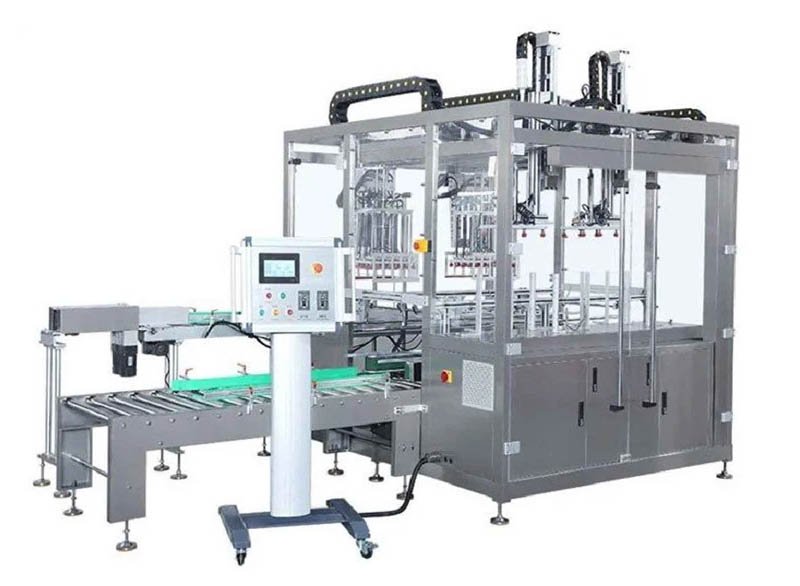
Double Station Case Packing Machine HIJ-CP550
Double your throughput, not your footprint. A servo-driven dual station case packer that erects, loads, and seals up to 600 boxes per hour — in one compact 4m × 2.2m machine.
Up to 600 Boxes/Hour
Two parallel workstations with dual robotic manipulators eliminate idle time and double the output of single-station case packers.
8-Servo Motion Control
Eight servo motors from Siemens or Schneider deliver millisecond positioning precision, stable long runs, and minimal maintenance.
Turnkey Line Integration
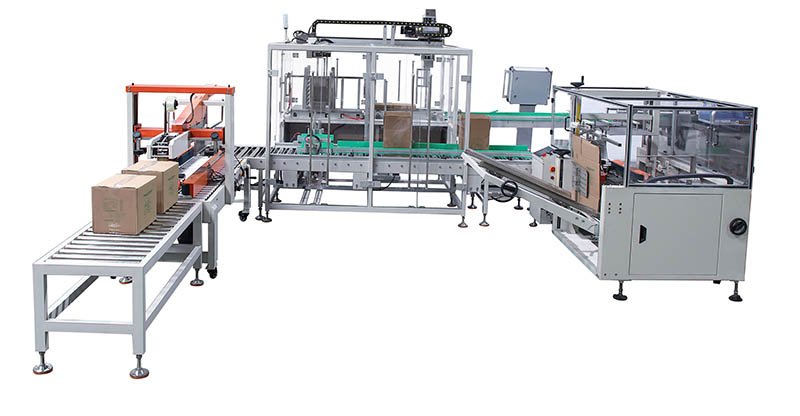
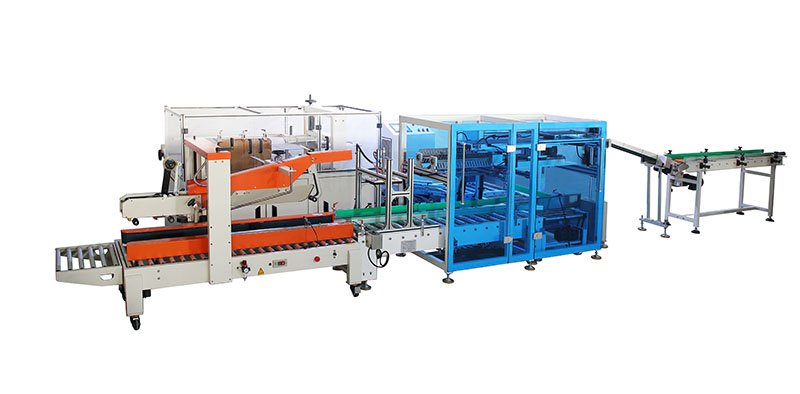
We connect upstream cartoners and downstream palletizers into one synchronized end-of-line packaging system — one supplier, zero finger-pointing.
cGMP-ReadyDocumentation support
Global Support24/7 technical service
Since 200420+ years experience
Quick Answer
What is a double station case packing machine?
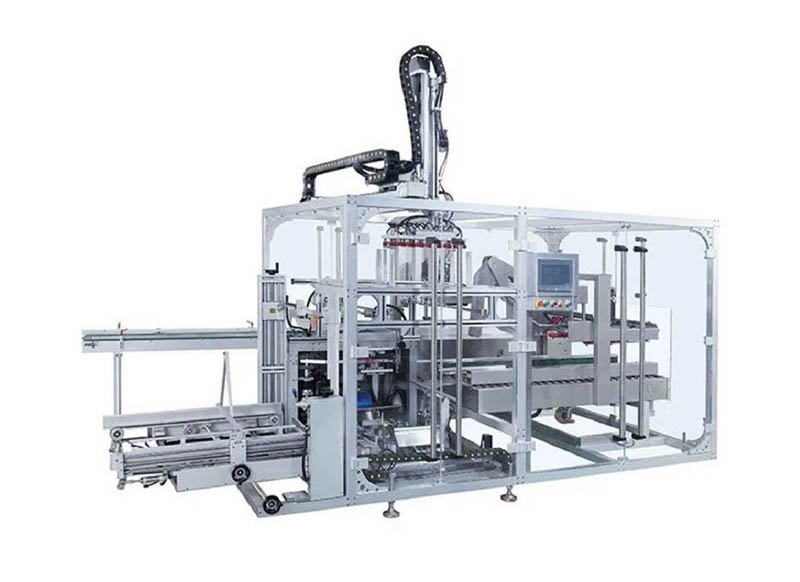
A double station case packing machine is an end-of-line packaging system that uses two parallel workstations to erect cartons, load products with robotic manipulators, and seal cases in a single machine. The HIJ-CP550, built by HIJ Machinery in Wenzhou, China, packs up to 600 boxes per hour using 8 servo motors and dual grippers, handling bottles, pouches, blister packs, and jars within a compact 4m × 2.2m footprint — roughly double the output of a single-station case packer in the same floor space.
Key Takeaways
- Throughput: up to 600 boxes/hour with dual manipulators working in parallel — no idle waiting between carton feed and product loading.
- All-in-one: case erecting, robotic loading, and tape or hot-melt sealing combined, replacing three separate machines.
- Precision: 8 Siemens/Schneider servo motors control every motion; changeover between carton sizes takes 15–30 minutes.
- Versatile grippers: suction + mechanical clamp combination handles glass bottles, pouches, blister packs, jars, and irregular products.
- Compliance-ready: 304 stainless steel and aluminum construction, cGMP-ready design, CE-marked, with IQ/OQ/PQ documentation support for your validation.
- Options: an ATEX-compliant explosion-proof variant is available for Zone 1/Zone 2 hazardous environments.
Tired of Bottlenecks? How the HIJ-CP550 Solves Your Biggest Case Packing Challenges
We've listened to hundreds of production managers. These are the three challenges they face most often — and exactly how our dual station case packer eliminates them.
CHALLENGE #1
"Manual packing can't keep up with our filling and cartoning lines."
HIJ Solution
Automate with dual workstations achieving up to 600 boxes/hour — dramatically increasing end-of-line throughput without adding headcount.
CHALLENGE #2
"Rising labor costs and inconsistent packing quality are eating our margins."
HIJ Solution
Repurpose your workforce for higher-value tasks. The robotic gripper delivers 24/7 consistency and precision, eliminating human error and fatigue.
CHALLENGE #3
"There's no room for a long, multi-machine packing line on our floor."
HIJ Solution
A compact, all-in-one design for case erecting, loading, and sealing in a single 4m × 2.2m footprint — one machine instead of three.
Ready to Eliminate Your Production Bottlenecks?
Let's discuss your specific challenges and design a custom solution. Get a free consultation and a detailed ROI analysis from our packaging engineers.
Schedule Your Free ConsultationSee the HIJ-CP550 in Action: Case Erecting, Packing, and Sealing in One Machine
Watch how our dual-station system transforms end-of-line packaging from a bottleneck into a competitive advantage — and how it slots into a complete turnkey packaging line downstream of your cartoning machine.
Play
The Complete 4-Step Automated Process
1
Automatic Case Erecting
Flat cartons are precisely formed into boxes using servo-controlled suction and forming arms. No manual pre-assembly required.
2
Dual Robotic Grasping
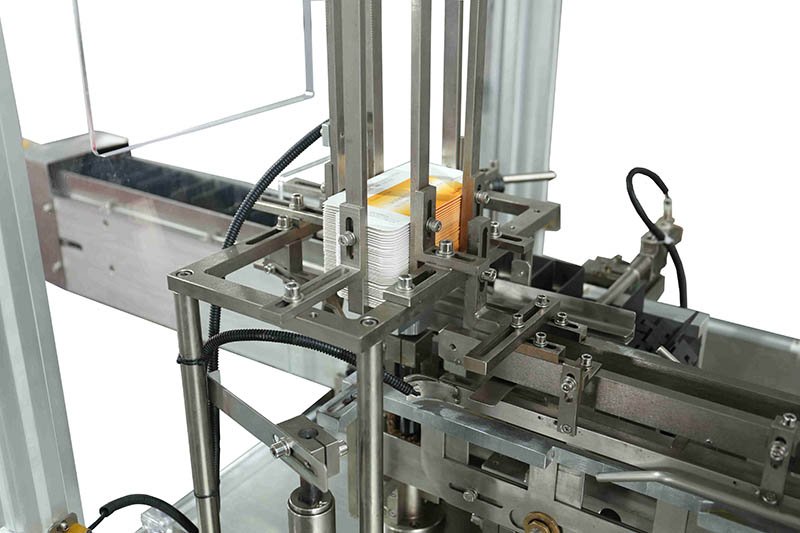
Two servo-driven manipulators pick products with custom grippers (suction cups + clamps), handling bottles, pouches, or irregular shapes.
3
Gentle & Accurate Loading
Products are placed into cartons with precision positioning, preventing damage and ensuring consistent packing quality.
4
Secure Sealing & Discharge
Cartons are sealed with tape or hot-melt glue and smoothly discharged to downstream palletizers or conveyors.
Ready to Automate Your Case Packing?
Let our engineers design a custom solution for your specific products and production rate. Get a detailed quote and line layout proposal today.
Get Your Custom QuoteEngineered for Performance: The Features That Make a Difference
Every component of the HIJ-CP550 is designed with one goal: consistent, high-speed performance that reduces total cost of ownership and maximizes uptime.
Precision Motion Control
8 Servo Motors Control
For superior stability, speed, and positioning accuracy, the CP550 uses eight high-performance servo motors from Siemens or Schneider. This multi-servo architecture executes every movement — from case erecting to product placement — with millisecond precision, reducing wear and extending equipment life.
Adaptive Product Handling
Versatile Gripper System
An innovative combination of suction cups and mechanical clamps handles glass bottles, infusion bags, heavy containers, and irregularly shaped items. Custom gripper configurations match your product dimensions and fragility requirements for zero damage during packing.
Parallel Processing Power
Dual Station Efficiency
Two independent workstations for packing and carton feeding operate in parallel, eliminating idle waiting time. While one station loads products, the other prepares the next carton — achieving up to 600 boxes per hour without doubling your floor space.
Customizable Closure
Flexible Sealing Options
Choose tape sealing for cost-effectiveness or hot-melt adhesive for a stronger, tamper-evident seal. Both systems are tool-free changeable and support various carton sizes — the hot-melt option is ideal for pharmaceutical and high-security applications.
cGMP-Ready Materials
Robust Construction for Long-Term Reliability
The CP550's frame is built with high-grade aluminum alloy and 304 stainless steel for durability in demanding production environments. All contact surfaces are designed for easy cleaning and sanitation, supporting your facility's cGMP hygiene requirements. This robust construction supports 24/7 operation with minimal maintenance, backed by a comprehensive warranty.
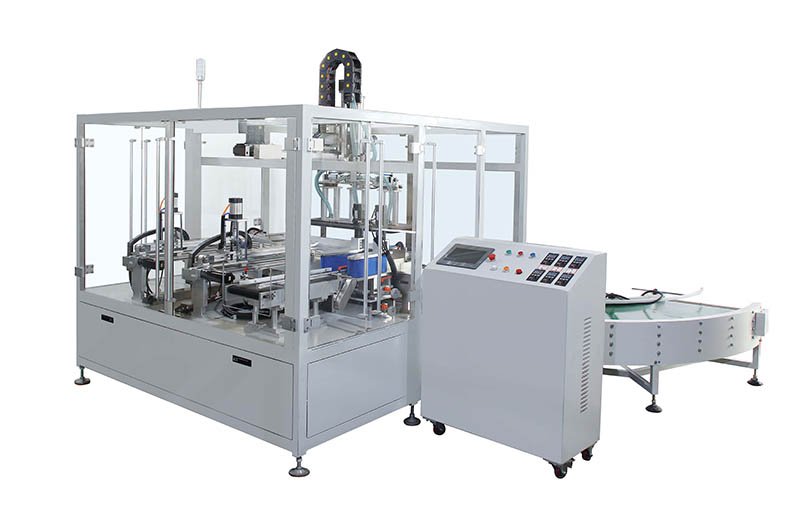
HIJ-CP550 Technical Specifications and Dimensions
Engineered for precision and built to last. Review the complete technical specifications to confirm compatibility with your production requirements.
| Parameter | HIJ-CP550 Specification |
|---|---|
| Model | HIJ-CP550 Double Station Case Packing Machine |
| Production Capacity | Up to 600 boxes/hour |
| Manipulator Speed | 12 cycles/min per station (dual manipulators) |
| Sealing Method | Tape sealing or hot-melt adhesive sealing |
| Minimum Carton Size | 300 × 250 × 200 mm (L×W×H) |
| Maximum Carton Size | 600 × 500 × 500 mm (L×W×H) |
| Power Supply | AC 380V / 50Hz, 3-Phase |
| Power Consumption | 7.5 kW |
| Air Pressure Required | 0.6 MPa (6 bar) |
| Air Consumption | < 1 m³/hour |
| Machine Dimensions | 4000 × 2200 × 2900 mm (L×W×H) |
| Net Weight | 3000 kg |
| Main Materials | Aluminum alloy + 304 stainless steel |
| Servo System | 8 servo motors (Siemens / Schneider) |
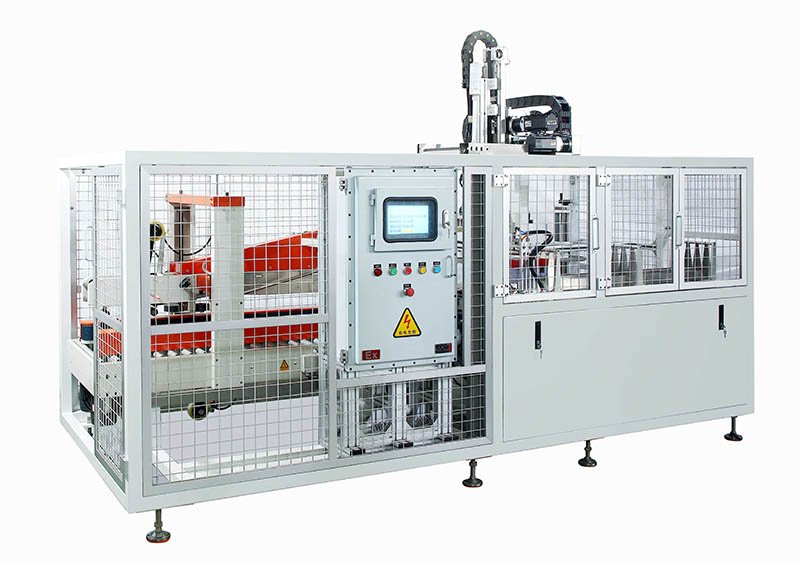
ATEX-Compliant Explosion-Proof Model Available
For pharmaceutical and chemical facilities handling volatile solvents or combustible dust, we offer an explosion-proof variant of the CP550 designed for ATEX Zone 1 and Zone 2 hazardous areas per Directive 2014/34/EU.
- Intrinsically safe control systems (Ex d / Ex e / Ex nA rated components)
- Flameproof enclosures for motors, switches, and junction boxes
- Static discharge prevention with grounded, anti-static surfaces
- Full documentation package for your hazardous-area review
- Lead time: typically 10–12 weeks for explosion-proof configurations
Which HIJ Case Packing Machine Is Right for You?
Compare the double station CP550 with our other end-of-line case packing systems to find the best fit for your throughput, product type, and floor space.
| Criteria | HIJ-CP550 Double Station (This Page) |
Side-Push Type Case Packer | Opening-Loading-Sealing All-in-One |
|---|---|---|---|
| Loading Principle | Dual robotic manipulators (top-load, pick & place) | Horizontal side-push collation | Single-station pick & place |
| Best For | High-throughput lines; fragile or mixed products (bottles, pouches, blisters) | Uniform rigid products in regular patterns | Small-to-mid volume lines with tight budgets |
| Relative Throughput | Highest — up to 600 boxes/hour, two stations in parallel | Medium-high for pattern-friendly products | Medium — single station cycle |
| Product Gentleness | Excellent — suction + clamp grippers, zero-drop loading | Good for sturdy items; not ideal for glass | Excellent — same gripper technology |
| Footprint | 4.0 × 2.2 m | Compact inline layout | Most compact all-in-one |
| Changeover | 15–30 min, tool-free guides + HMI recipes | Fast for size families | 15–30 min typical |
| Ideal Industries | Pharma, cosmetics, food & beverage, CMOs | Food, daily chemical, cartoned goods | Pharma, nutraceutical, cosmetics |
Only need sealing? See our automatic case sealing machine and fully automatic four-corner sealing machine, or browse the complete case packing machine range.
A Flexible Solution for Diverse Industries and Products
From pharmaceutical vials to food pouches, cosmetic bottles to industrial components — the HIJ-CP550's intelligent gripper system adapts to your unique case packing requirements across multiple sectors.
Food & Beverage
Handle everything from sauce bottles to yogurt cups, snack bars to beverage cans. Food-grade 304 stainless steel contact surfaces are food-contact compliant per FDA 21 CFR 175–178 and EU 1935/2004 for safe, hygienic packaging operations.
Food-Contact CompliantWashdown ReadyQuick Changeover
Cosmetics & Personal Care
Gently pack delicate cosmetic bottles, jars, and flexible pouches without damage. Perfect for skincare, makeup, and personal care products where brand presentation and product integrity are critical — pairs naturally with our cosmetic packaging machines upstream.
Gentle HandlingPremium FinishFlexible Formats

Pharmaceutical
Built to support the stringent demands of pharmaceutical packaging. From vials and ampoules to blister packs and infusion bags, the cGMP-ready CP550 comes with complete IQ/OQ/PQ documentation support so your team can execute qualification with confidence.
cGMP-Ready DesignIQ/OQ/PQ Docs SupportCE-Marked
Contract Manufacturers (CMO/CDMO)
Running multiple SKUs for different clients? Rapid-changeover design and HMI recipe management let you switch between products in minutes, maximizing facility utilization and profitability across multi-client production schedules.
Multi-SKU ReadyRecipe StorageFast ROI
Don't See Your Industry Listed?
The CP550's modular design and customizable gripper system adapt to virtually any case packing challenge. Our application engineers will develop a tailored solution for your specific products and production environment.
Discuss Your Application with Our ExpertsFree FAT TestingRun your actual products at our facility
Documentation SupportIQ/OQ/PQ protocol templates included
24/7 Global SupportTechnical assistance when you need it
More Than a Machine: A Partnership for Your Packing Success
At HIJ Machinery, we don't just manufacture equipment — we build long-term partnerships. Learn more about why manufacturers choose HIJ and our global service & support network.

Forester Xiang
Founder & Chief Engineer, HIJ Machinery
20+ years · 100+ facility audits · 30+ countries
Forester's Insight
"I've spent 20 years watching clients lose efficiency to poorly integrated end-of-line packaging. A case packer that isn't synchronized with the cartoner upstream just moves the bottleneck — it doesn't remove it. That's why the HIJ-CP550 isn't just a machine; it's a turnkey-ready cornerstone we commission as part of your whole line. We run a Factory Acceptance Test with your actual products before shipment, so it performs flawlessly from day one."
— Forester · [email protected] · +86 138 6882 2120
Turnkey Solution
We integrate the HIJ-CP550 with upstream cartoning machines and downstream palletizers to create a fully automated line. One supplier from design to commissioning — see our turnkey solutions.
Validation Documentation Support
Full documentation package for your qualification: FAT protocols, IQ/OQ/PQ templates, material certificates, and CE Declaration of Conformity. We conduct a rigorous Factory Acceptance Test with your actual products before shipment.
Global Support
On-site installation, comprehensive operator training, and 24/7 remote diagnostics to maximize uptime. Our engineers respond fast — wherever your facility is located.
20+
Years in Industry (since 2004)
500+
Global Installations
98%
Customer Satisfaction
<2hr
Average Response Time
Your Questions Answered: HIJ-CP550 FAQ
Straight answers to the most common questions about the CP550 dual station case packer. Still have questions? Our team is here to help.
What is the real-world output of the double station case packing machine?
The HIJ-CP550 achieves up to 600 boxes per hour under optimal conditions. Real-world performance depends on product characteristics (lightweight blister packs pack faster than heavy glass bottles), carton size and complexity, operator experience, and the stability of your upstream product flow. We conduct a Factory Acceptance Test (FAT) with your actual products to validate the exact throughput for your application before shipment.
How long does a changeover take for a different carton size?
Typical changeover time is 15–30 minutes for carton size adjustments by a single operator. The process involves adjusting the tool-free carton magazine guides, repositioning the robotic gripper height and spacing, updating recipe parameters on the HMI touchscreen, and running a few test cycles. For clients who frequently switch between 2–3 carton sizes, pre-programmed recipe templates and quick-change gripper sets can reduce changeover to under 10 minutes.
Can the HIJ-CP550 handle my specific product, such as glass bottles or pouches?
Yes. The dual gripper system combines suction cups and mechanical clamps, making it suitable for glass bottles (vials, ampoules, infusion bottles with gentle vacuum grippers), plastic HDPE/PET containers, flexible pouches and bags, blister packs in trays, jars, cans, and heavy or irregular items with custom gripper designs. We test your actual product samples in our Technical Center before finalizing the gripper design, and you receive video proof of successful packing during the FAT stage.
What is the lead time for a standard HIJ-CP550 machine?
A standard configuration CP550 typically ships 8–10 weeks from deposit: weeks 1–2 for engineering review of your URS and design confirmation, weeks 3–6 for manufacturing and assembly, week 7 for internal quality inspection, week 8 for the Factory Acceptance Test with your team (in-person or remote), and weeks 9–10 for packaging, final documentation, and shipment. Custom or explosion-proof models require an additional 2–4 weeks.
Do you offer an explosion-proof model for hazardous environments?
Yes. We manufacture an ATEX-compliant explosion-proof variant of the CP550 for pharmaceutical and chemical facilities with volatile solvents, flammable liquids, or combustible dust. It is designed for ATEX Zone 1 and Zone 2 hazardous areas per Directive 2014/34/EU, with intrinsically safe control systems (Ex d, Ex e, or Ex nA rated components), flameproof enclosures, static discharge prevention, an optional positive-pressure purged control cabinet, and a full documentation package. Explosion-proof models typically require 10–12 weeks lead time and carry a premium of approximately 25–35% over standard models.
What warranty and after-sales service do you provide?
The CP550 includes a 24-month parts and labor warranty from commissioning (or 30 months from shipment, whichever comes first), free replacement parts for manufacturing defects, remote diagnostics, on-site service when needed, and free HMI software updates for the life of the machine. Beyond the warranty period, we offer annual maintenance contracts, a 24/7 technical hotline with response under 4 hours, regional spare parts inventory, and operator re-training sessions.
About the Manufacturer
About HIJ Machinery & the HIJ-CP550
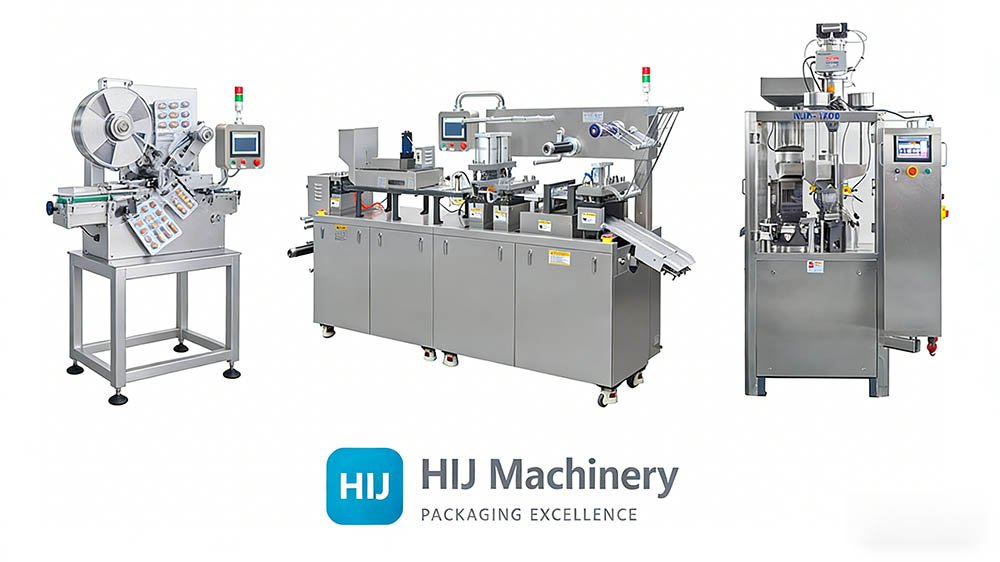
The HIJ-CP550 Double Station Case Packing Machine is designed and manufactured by HIJ Machinery (legal name: Wenzhou Trustar Machinery Technology Co., Ltd), a packaging machinery manufacturer founded in 2004 and headquartered in Rui'an, Wenzhou, Zhejiang, China. HIJ Machinery produces case packing machines, blister packing machines, cartoning machines, capsule filling machines, and complete turnkey packaging lines for the pharmaceutical, cosmetic, and food industries, with 500+ installations worldwide.
All HIJ equipment is manufactured to ISO 9001 manufacturing standards, is CE-marked for the European market, and features a cGMP-ready design with 304 stainless steel contact surfaces. Validation (IQ/OQ/PQ) is executed by the customer; HIJ provides complete documentation support, protocol templates, and Factory Acceptance Testing with your actual products. Technical content on this page is authored and reviewed by Forester Xiang, Founder & Chief Engineer of HIJ Machinery, drawing on 20+ years of packaging engineering experience and 100+ facility audits across 30+ countries. Contact: [email protected] · +86 138 6882 2120 · About HIJ.
Explore Related Machines & Resources
Compare alternatives, plan your line, and dig deeper into end-of-line packaging automation.
Category Hub
Case Packing Machines — Full Range
Compare every HIJ case packer, sealer, and all-in-one system in one place.
Alternative ModelSide-Push Type Full Automatic Case Packing Machine
Horizontal collation for uniform rigid products in regular patterns.
Alternative ModelOpening, Loading & Sealing All-in-One Machine
Single-station compact case packer for small-to-mid volume lines.
ComplementaryAutomatic Case Sealing Machine
Standalone tape sealing for lines that already have loading covered.
GuideTotal Cost of Ownership Analysis for Packaging Equipment
How to calculate the real 5-year cost of automation vs manual packing.
GuideIQ/OQ/PQ Validation for Pharmaceutical Equipment
What your validation team needs from an equipment supplier — step by step.
Ready to Double Your Case Packing Output Without Doubling Your Footprint?
Send us your product samples and carton specifications. Within 48 hours, our application engineers will confirm feasibility, propose a line layout, and give you transparent pricing for the HIJ-CP550.