Opens in a new tab
Get Quote

Condom
cartoning machine

Automatic secondary packaging for sealed condom sachets, with carton, leaflet and closure configuration reviewed against your pack.

Condom Cartoning Machine - Full View

Start with your sachet samples, carton drawing and target output. We can then discuss the feeding arrangement, pack count and quotation scope.

Inspect the equipment

Look beyond the finished carton. The handling path, format parts and access around each station determine what needs to be checked with your samples.

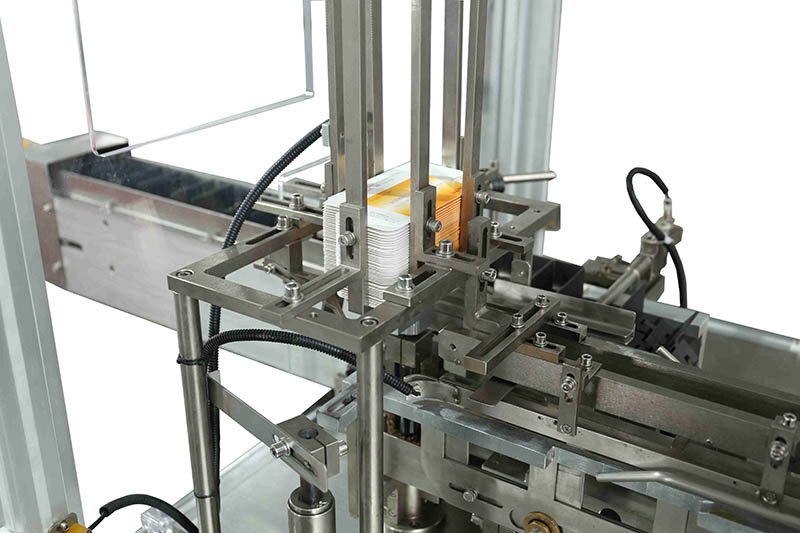
Carton magazine and pickup path on the cartoning equipment

Carton loading

Inspect the magazine, carton pickup area and transfer path. Check board stiffness, score lines, opening direction and replenishment access with production cartons.

Close view of the sachet transfer and product-handling mechanism

Sachet transfer

Review the product-contact path and the arrangement of the sachets before insertion. A count per carton is a project requirement, not a speed guarantee.

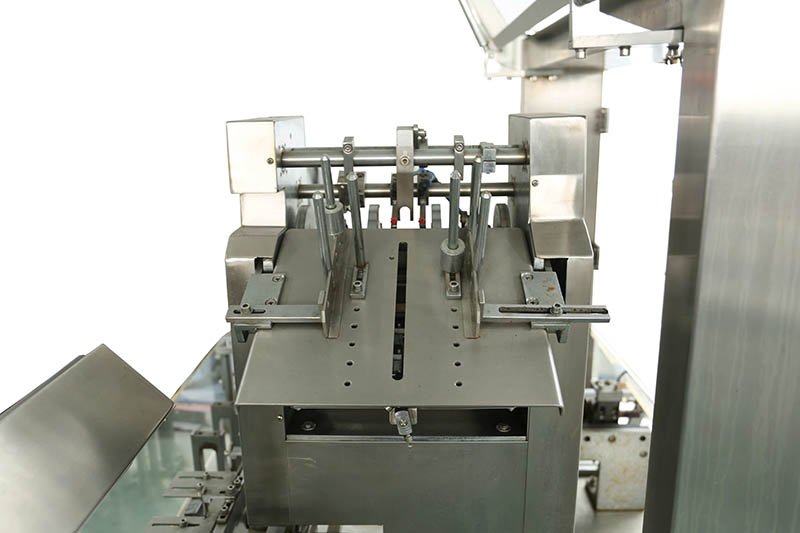
Mechanical handling assembly supplied with the cartoning reference images

Folding assembly

Define the unfolded sheet, fold pattern, paper and final insert position. If no leaflet is required, state that in the enquiry rather than assuming the same configuration.

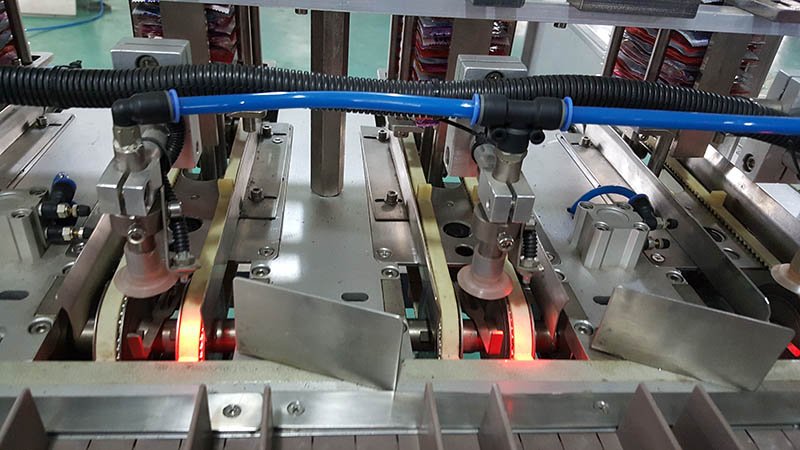
Carton transport path and flap-closing components

Carton closure

Specify the flap layout and the closure required for the finished pack. Product containment and evidence of opening are separate acceptance questions.

Cartoning operation reference

Review the handling sequence, then ask for evidence using the sachets, leaflet and carton format in your project.

Equipment layout and format parts are configured for the approved pack.

From sachet to carton

This is secondary packaging. The condoms must already be enclosed in their individual sealed sachets before they reach the cartoning operation. Compare horizontal cartoning machine layouts when defining the side-loading route.

Product handling and transfer detail before cartoning

Prepare the pack

Set the number and arrangement of sachets, their orientation and the condition of the seals. Provide representative samples, including normal variation in thickness and surface finish. Agree whether the cartoner receives a controlled upstream flow or needs a separate feeding arrangement.

Carton feed and product transport area for pack-fit review

Load the carton

Review carton opening, product insertion and any leaflet together. Check insertion clearance, the edge of the sachet seal, product protrusion and leaflet position. Increasing pack count can change the insertion load and the required format parts; assess the whole pack rather than the carton drawing alone.

Carton closure tooling and discharge path

Close and discharge

Select the closure arrangement and check the finished carton for flap engagement, glue application where specified, squareness and print legibility. Define what happens to an incomplete or rejected carton and how accepted cartons transfer to the next operation.

Define the configuration

A useful quotation identifies the proposed configuration and its acceptance conditions. Confirm the items below against one agreed pack specification before comparing machine offers. For the broader platform scope, review our automatic cartoning machine page and confirm the feeder and format parts for your sealed sachets.

ScopeYour project inputConfiguration to confirm
Pack countSachets per carton and their arrangement.Counting/grouping method, carton clearance and format parts for every SKU.
Sachet specificationSealed width, length, thickness range, material finish and seal-edge details.The handling path and insertion contact, assessed using samples.
Carton and boardA dimensioned blank, opening direction, closure layout and board specification.Magazine feeding, carton opening and closed-pack fit.
LeafletPaper, unfolded size, fold pattern and final position, or no leaflet.Folding/insertion scope and the required missing-leaflet response.
Closure and codingTuck closure, adhesive closure and coding requirements.Tooling, coding position, consumables and finished-pack acceptance checks.
Accepted outputRequired saleable cartons per minute and upstream supply.Trial product, duration, stops and reject treatment behind the accepted output figure.
Controls and utilitiesSupply voltage, frequency, plant air and required components.Quoted control architecture, connected load and utility schedule in the machine documents.
Layout and interfacesFloor plan, conveyor heights and upstream/downstream information.Access, change-part storage, guarding, handshakes and reject routing.
Delivery scopeDrawings, manuals, sample trials, FAT and required qualification support.Agreed deliverables, installation responsibilities and written service terms.

Speed, electrical load, footprint and changeover time belong to the selected machine configuration. Confirm them in its approved datasheet; a generic application page is not a substitute.

Agree the acceptance checks

Use the same pack and the same acceptance criteria for the proposed machine, the sample trial and the final quotation.

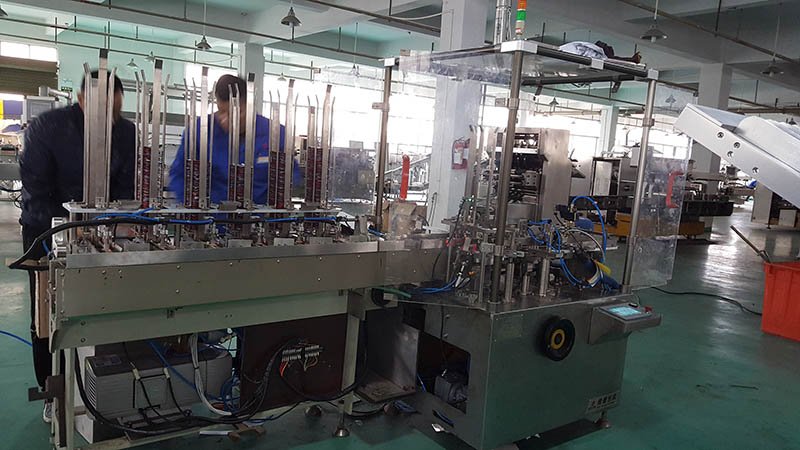
Workshop view of the cartoning equipment and its guarded handling area
Review the handling layout alongside your actual pack specification.
  • Samples

    Use the intended sachets, cartons and leaflets. Include the smallest and largest planned packs and realistic variation, not only ideal samples. Keep approved reference packs for inspection.

  • Finished packs

    Agree pack-count checks, sachet seal condition after insertion, leaflet presence/position and carton closure. Define a defect clearly enough for both parties to judge the same sample in the same way.

  • Output

    Record accepted cartons, rejects, stoppages and the test duration separately. A mechanical cycle rate does not establish the sustained output of your actual pack. For higher-output alternatives, review the high-speed cartoning machine page and confirm the same pack-specific acceptance conditions.

  • Changeover

    List each SKU, the required change parts and the adjustment points. Request a demonstrated changeover between the agreed formats rather than relying on a universal minute claim.

  • Interfaces

    Confirm product arrival pattern, accumulation space, conveyor level, stop/start signals and responsibility for integrating connected machines. Cartoning does not automatically include upstream sachet production or downstream case packing.

  • Documentation

    Include the required machine documents and test records in the purchase scope. Regulatory compliance, validation and final site acceptance require the buyer’s quality team and the agreed project evidence.

  • Terms

    Confirm production timing, sample deadlines, FAT arrangements, shipping terms, warranty coverage, training and remote/on-site service in writing. Do not assume a universal delivery period or local support presence.

Procurement questions

Resolve the pack, configuration and commercial scope before approving the machine.

Can I specify 3, 6 or 12 sachets?

Include every required pack count in your enquiry, along with its sachet arrangement and carton drawing. Compatibility, format parts and the feeding method must be reviewed for each pack; a count alone does not establish suitability.

Does this machine make or seal condoms?

No. This page concerns putting already sealed individual condom sachets into folding cartons. Condom manufacture and primary sachet sealing are different operations and need a separate equipment scope.

Tuck closure or adhesive closure?

Define the required finished pack first. Compare flap engagement, opening experience, any evidence-of-opening requirement, consumables and cleaning. Ask for the closure tooling and trial result proposed for your carton rather than assuming either method meets every requirement.

How is machine output confirmed?

Request an accepted-output test with the specified sachets, carton, leaflet, count and closure. Record the duration, accepted packs, rejects and stops. Confirm the rating of the proposed machine in its datasheet and distinguish it from the sustained output of your pack.

What should be checked at FAT?

Agree the sample formats, count and leaflet checks, sachet condition after insertion, closure, reject handling, alarms, interfaces and changeover demonstration. The FAT record should report the agreed tests and results; it does not replace qualification or acceptance at the installation site.

Is a leaflet always included?

State whether each SKU needs a leaflet. If it does, provide the unfolded sheet, paper, fold pattern and placement requirement. Include folding, insertion and the required missing-leaflet response in the quotation; do not infer them from a photograph of an assembly.

What determines price and delivery?

Feeding, grouping, format parts, closure, coding, inspection, controls, interfaces, documentation and service scope affect the quotation. Production timing also depends on the agreed specification, samples and testing. Ask for itemized scope and written commercial terms rather than a generic fixed price or lead time.

Can it connect to other equipment?

Review the layout, upstream discharge, downstream capacity, conveyor heights, accumulation and control signals. Define which supplier owns every interface and the response to stops or rejected cartons. Integration is a project scope, not an automatic feature of every cartoner.

HIJ cartoning equipment in the workshop

Discuss your pack

Send a sachet sample or drawing, the carton blank, sachets per box and the accepted output you need. Add leaflet, closure and line-interface requirements for an itemized configuration review.

Request a quote

Let's Design Your Production Line

Share your requirements and I'll personally craft a solution that maximizes your efficiency and profitability.