
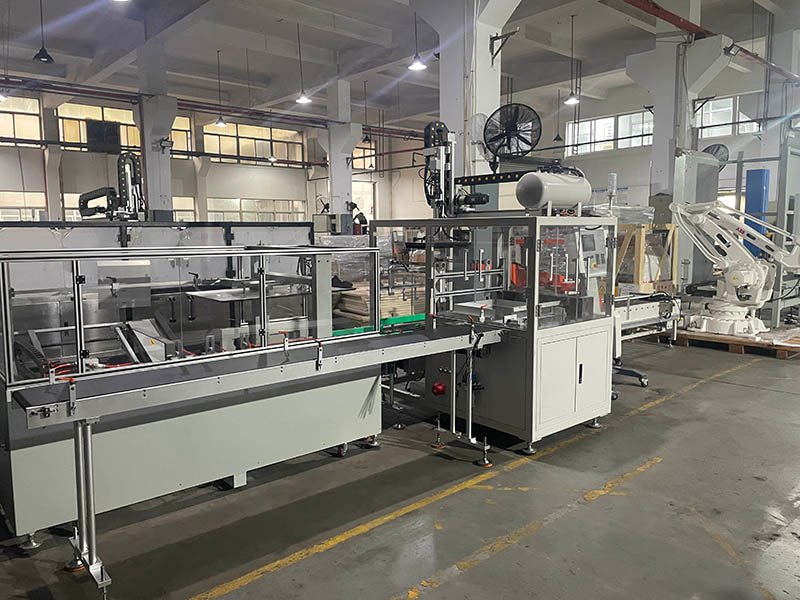
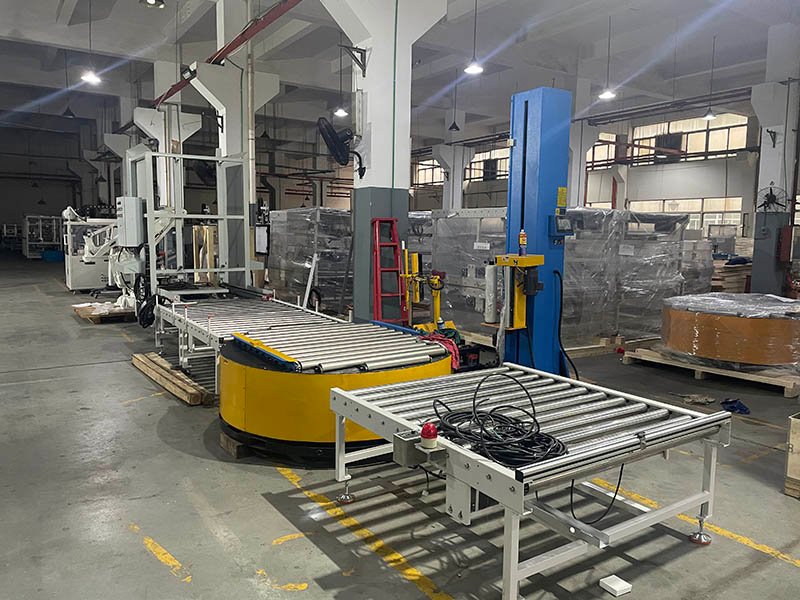
All-in-One System
End-of-Line Case Packing Machines
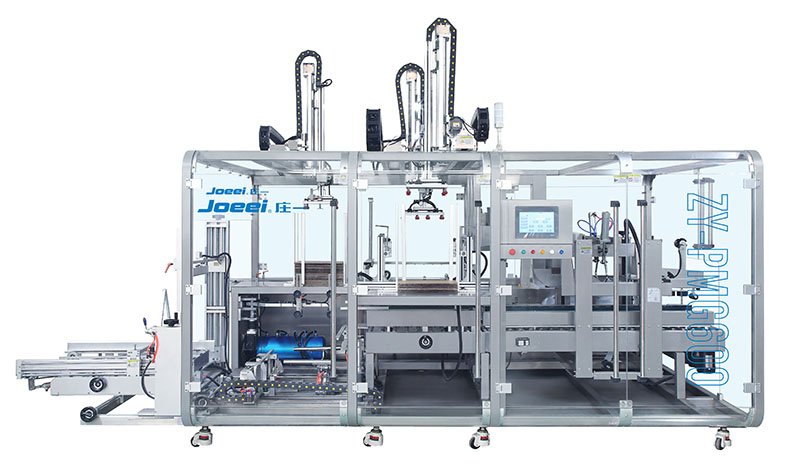
HIJ-PMG600 All-in-One Case Packing Machine: Erect, Load & Seal in One System
One integrated case packing machine that replaces a separate case erector, case packer, and case sealer — automatic box opening, dual-robot loading, top & bottom pad insertion, and tape or hot-melt sealing at up to 400 cases per hour.
3 Machines in 1 Footprint
Erecting, loading, pad insertion and sealing integrated into a single 5.0 × 2.0 m frame — one PLC, one HMI, one vendor.
Dual Robotic Pick Arms
Two independent pick-and-place arms, each rated at 12 cycles per minute, for stable output up to 400 cases/hour.
Non-Stop Cardboard Refill
The carton and pad magazines are reloaded while the machine keeps running — no downtime for blank replenishment.
8–12 Weeks Lead Time
cGMP-Ready · CE-Marked
Lifetime Remote Support
Quick Answer
What is an opening, loading and sealing all-in-one case packing machine?
An all-in-one case packing machine is an end-of-line system that erects the corrugated case, loads the product, inserts protective pads, and seals the case with tape or hot-melt glue in one continuous cycle. The HIJ-PMG600 performs all four steps with dual robotic arms (12 cycles/min each), handles cartons from 300×250×200 mm to 600×500×500 mm, and reaches up to 400 cases per hour — replacing three separate machines and roughly 60% of their combined floor space.
Key Takeaways
- Integrates case erecting, robotic loading, top & bottom pad insertion, and sealing in one 5000×2000×2900 mm frame.
- Output up to 400 cases/hour with dual pick-and-place robots rated at 12 cycles per minute each.
- Seals with tape or hot-melt glue — switchable to match your carton style and downstream palletizing.
- Non-stop carton and pad magazine refilling plus a buffer station that doubles effective loading speed.
- Aluminum alloy frame with 304 stainless steel contact parts; cGMP-ready and CE-marked design, built to ISO 9001 manufacturing standard.
- Utilities: AC380V/50Hz, 7.5 kW power, 0.6 MPa compressed air at under 1 m³/hour.
Why Three Separate End-of-Line Machines Cost You More Than One
Most factories still chain a case erector, a manual or semi-automatic packing station, and a case sealer. That layout quietly drains labor, floor space, and uptime every single shift.
The 3-Machine Problem
2–4 operators tied to the line
Manual loading and pad placement between machines demands constant labor and produces inconsistent pack patterns.
Triple the footprint, triple the conveyors
Three frames plus transfer conveyors easily consume 12–15 m of line length that most workshops don't have.
Three points of failure, three vendors
Any single machine stopping halts the whole chain — and troubleshooting means coordinating multiple suppliers.
Downtime every magazine refill
Conventional erectors stop the line every time the carton blank magazine runs empty.
The HIJ-PMG600 Answer
One operator supervises everything
Products arrive by infeed conveyor and leave as sealed cases — loading, pad insertion, and sealing are fully automatic.
5.0 × 2.0 m total footprint
The integrated frame saves roughly 60% of the floor space of an equivalent three-machine layout.
One PLC, one HMI, one vendor
A single Siemens-class control architecture with full monitoring sensors — one point of contact for service and spares.
Zero refill downtime
Carton and pad magazines are replenished without stopping, and the box buffer station doubles effective throughput.
How the HIJ-PMG600 Works: From Flat Blank to Sealed Case
Products arrive on the connecting infeed conveyor and wait at the loading position while the case erecting mechanism opens the corrugated blank. The full cycle then runs in four automatic stages:
Case Erecting
A vacuum pick pulls a flat blank from the non-stop magazine; the swing-arm stabilizing system squares and holds the case rigid — noticeably more stable opening than gripper-only erectors.
Bottom Pad Insertion
An independent pad-handling robot places the bottom protective cardboard pad into the erected case, preparing a cushioned base for glass, ampoules, or fragile retail packs.
Robotic Loading + Top Pad
Dual pick-and-place arms (12 cycles/min each) collate and load products in the programmed pattern via the box buffer station, then insert the top pad before flap closing.
Tape or Hot-Melt Sealing
The loaded case indexes into the sealing mechanism and is closed with adhesive tape or hot-melt glue, then discharged ready for palletizing — up to 400 finished cases per hour.
Engineering Details That Set the HIJ-PMG600 Apart
Every innovation below comes directly from field feedback on end-of-line packing floors — each one removes a specific bottleneck of conventional case packers.
Swing-Arm Case Opening System
The erecting mechanism adds a swing-arm fixing system that clamps the blank during opening — eliminating the collapsed-corner misfeeds common on vacuum-only erectors, even with humid or recycled board.
Box Buffer Station — 2× Speed
A dedicated buffer position decouples loading from sealing, so the arms never wait for the sealer. This single station effectively doubles loading throughput versus in-line designs.
Independent Pad-Insertion Robot
A separate robotic handler manages top and bottom cardboard pads in parallel with product loading, dramatically raising overall efficiency instead of stealing cycles from the main arms.
Non-Stop Magazine Refilling
Operators reload carton blanks and pads while the machine keeps producing. On a three-shift line, this alone recovers dozens of production hours per month.
Modular, Wide-Range Design
The modular architecture covers carton sizes from 300×250×200 mm up to 600×500×500 mm and adapts to bottles, cartons, pouches, and display packs with format-part changeovers.
Hygienic, Monitored Construction
Full aluminum alloy frame with streamlined guarding doors and 304 stainless steel contact parts — a cGMP-ready, CE-marked design with comprehensive sensor monitoring for safe, stable operation. An explosion-proof variant is available for solvent-handling facilities.
HIJ-PMG600 Technical Specifications
Verified factory data for the opening, loading and sealing all-in-one machine. Custom carton ranges and pack patterns are engineered per project.
| Parameter | HIJ-PMG600 Specification |
|---|---|
| Production Capacity | Up to 400 cases/hour |
| Robotic Pick Capacity | Dual pick-and-place arms, 12 cycles/min each |
| Sealing Method | Adhesive tape sealing or hot-melt glue sealing |
| Carton Size (Min.) | 300 × 250 × 200 mm (L×W×H) |
| Carton Size (Max.) | 600 × 500 × 500 mm (L×W×H) |
| Power Supply | AC380V / 50Hz, 7.5 kW consumption |
| Compressed Air | 0.6 MPa, consumption < 1 m³/hour |
| Machine Dimensions (L×W×H) | 5000 × 2000 × 2900 mm |
| Machine Weight | 3000 kg |
| Main Materials | Aluminum alloy frame, 304 stainless steel contact parts |
| Design Standards | cGMP-ready construction, CE-marked, ISO 9001 manufacturing standard |
Specifications may be improved without prior notice as part of continuous engineering upgrades. Documentation packages (FAT protocols, material certificates, electrical drawings) are supplied to support your own qualification and validation program.
All-in-One vs. Separate Erector + Packer + Sealer
How the integrated HIJ-PMG600 compares with a conventional three-machine end-of-line layout at similar output:
| Decision Factor | HIJ-PMG600 All-in-One | Separate 3-Machine Line |
|---|---|---|
| Line length / footprint | 5.0 m single frame (~60% space saving) | Typically 12–15 m incl. transfer conveyors |
| Operators required | 1 supervisor (loading, pads, sealing automatic) | 2–4 operators for loading and pad placement |
| Pad insertion | Automatic top & bottom pads, dedicated robot | Usually manual, pattern inconsistency |
| Magazine refill | Non-stop refilling, zero downtime | Line stops at every blank replenishment |
| Controls & service | One PLC, one HMI, one vendor | 3 control systems, multi-vendor coordination |
| Installation & commissioning | Single FAT, single line integration | 3 FATs plus inter-machine synchronization |
| Best fit | New lines, tight floor space, labor reduction | Retrofits where an erector/sealer already exists |
Not Sure This Is Your Model?
Compare the HIJ-PMG600 with our other case packing and sealing machines — or let our engineers match one to your carton and speed.
Side-Push Automatic Case Packer
Horizontal side-load design for cartons, bottles and shrink packs that stack in layers.
View machineDouble-Station Case Packer
Two parallel packing stations for higher throughput or dual-SKU production lines.
View machineAutomatic Case Sealing Machine
Standalone tape sealer to upgrade an existing manual or semi-automatic packing line.
View machineFour-Corner Sealing Machine
Reinforced corner sealing for heavy or export-grade corrugated cases.
View machineWhere the HIJ-PMG600 Earns Its Keep
One end-of-line case packer, four industries. The dual-arm loading pattern and automatic pad insertion adapt to fragile, regulated, and high-mix products alike.
Pharmaceuticals
Case packing of blister cartons, bottles and injection trays downstream of cartoning lines. The cGMP-ready construction and documentation package support your site's qualification and validation program.
Food & Beverage
Sauce bottles, snack cartons, tea boxes and canned goods — 304 stainless steel contact parts follow food-contact compliant material practice (FDA 21 CFR 175-178 / EU 1935/2004 reference).
Cosmetics & Personal Care
Cream jars, tube cartons, and gift sets where automatic top and bottom pad insertion protects premium retail packaging through export transit.
Chemicals & Electronics
Daily-chemical bottles, aerosols and boxed components — an explosion-proof variant is engineered for facilities handling flammable or solvent-based products.
From Standalone Machine to Complete Packing Lines

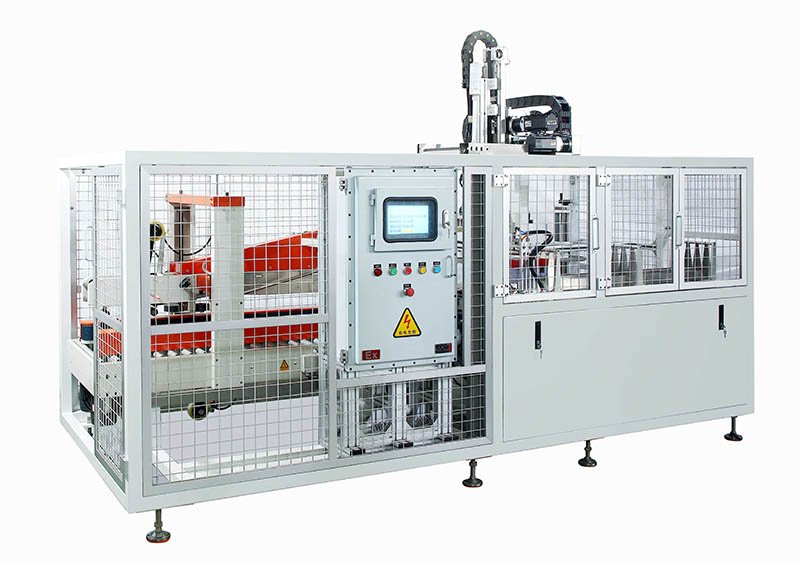
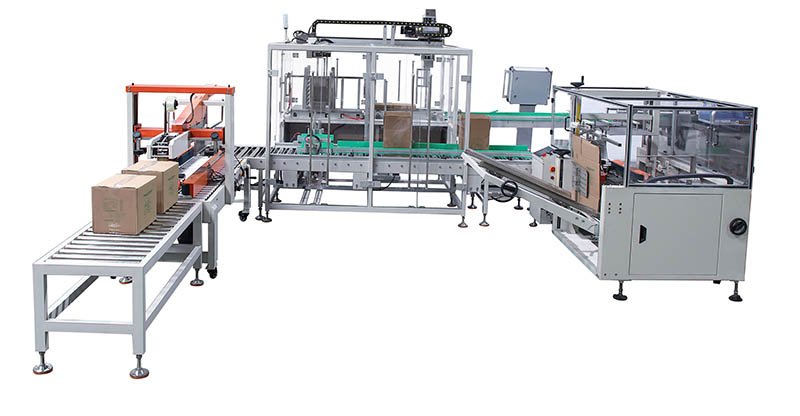
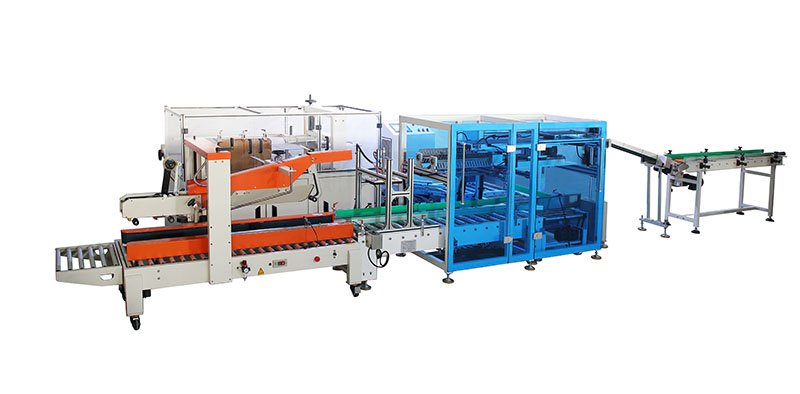
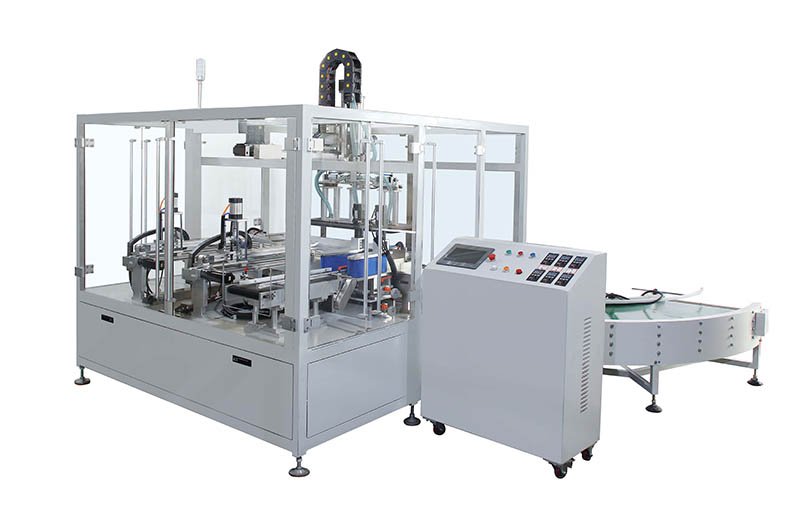
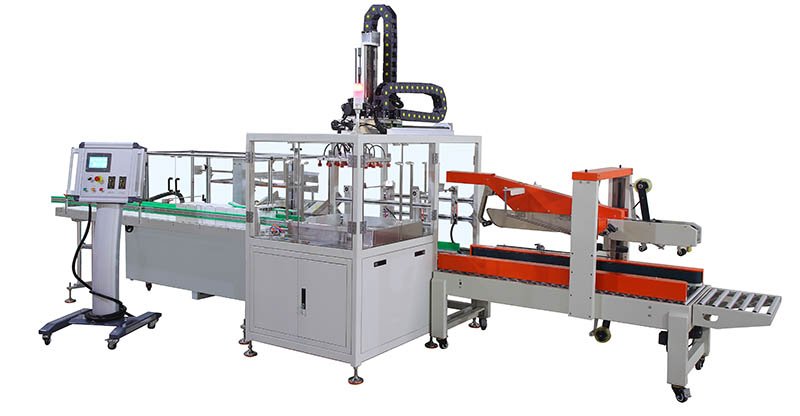
Running a complete line? See how the HIJ-PMG600 integrates downstream of our cartoning machines in a full turnkey packaging solution.
Forester's Insight
Forester Xiang · Founder & Chief Engineer, HIJ Machinery
In more than 100 packaging facility audits, the pattern at the end of the line is always the same: the filling and cartoning sections are automated, then everything slows down at a table where people hand-pack cases. That last 10 meters is usually the cheapest place in the whole plant to remove labor and damage claims at once.
My advice: size the case packer around your carton range first, not your speed. Speed can be tuned; a carton outside the 300–600 mm envelope cannot. Send us your three most common case sizes and pack patterns, and we will confirm feasibility before you spend anything.
A Manufacturer, Not a Trading Company — Since 2004
20+ Years of Packaging Machinery Engineering
HIJ Machinery (Wenzhou Trustar Machinery Technology Co., Ltd) has built pharmaceutical, food and cosmetic packaging lines exported to 30+ countries since 2004.
FAT Before Shipment, SAT Support On-Site
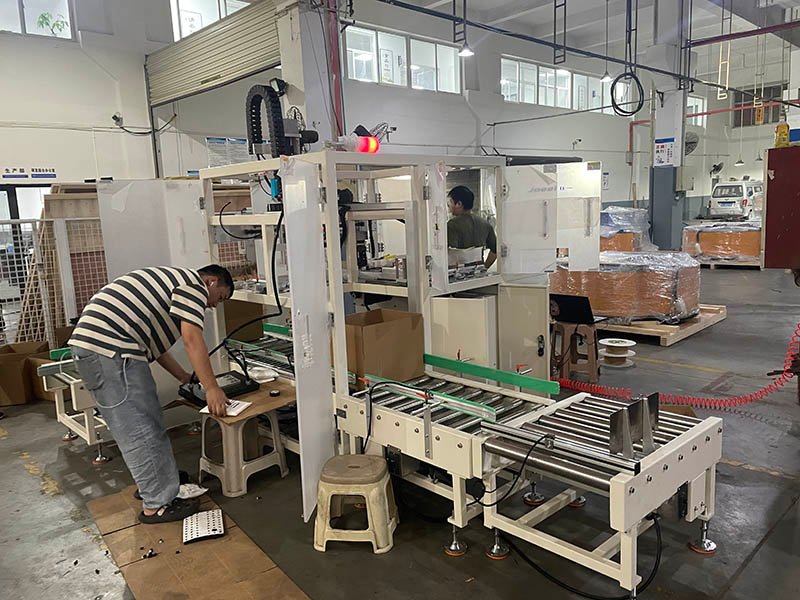
Every HIJ-PMG600 runs a full Factory Acceptance Test with your cartons and products; we support installation, commissioning and operator training at your plant.
Documentation for Your Validation Program
Electrical schematics, material certificates and test protocols are provided so your team can execute its own qualification and validation process smoothly.
Lifetime Remote Support & Fast Spares
Video-call troubleshooting for the life of the machine, with critical spare parts stocked for rapid dispatch to minimize downtime.
HIJ-PMG600 Frequently Asked Questions
Direct answers to the questions engineers and procurement teams ask before buying an all-in-one case packer.
What is the maximum output of the HIJ-PMG600 all-in-one case packing machine?
The HIJ-PMG600 produces up to 400 sealed cases per hour. Two independent pick-and-place robotic arms, each rated at 12 cycles per minute, load products while a dedicated buffer station decouples loading from sealing so the arms never wait. Actual output depends on your carton size, pack pattern, and product infeed speed, which we confirm during the Factory Acceptance Test.
What carton sizes can the machine handle?
The standard machine covers corrugated cases from 300 × 250 × 200 mm up to 600 × 500 × 500 mm (length × width × height). Changeover between sizes inside this envelope is done with adjustable format settings. If your case range falls outside this window, our engineers can evaluate a customized erecting and sealing configuration.
Does the HIJ-PMG600 seal with tape or hot-melt glue?
Both sealing methods are available. Adhesive tape sealing is economical, tool-free, and lets you use printed tape for branding or tamper evidence. Hot-melt glue sealing gives a stronger, cleaner closure preferred for export cases and automated palletizing. We configure the sealing mechanism to your preference at order, and the choice can be discussed against your carton board grade and climate conditions.
Can the machine really run without stopping to refill cardboard?
Yes. Both the carton blank magazine and the pad magazine are designed for non-stop replenishment: operators reload blanks while the machine continues producing. Combined with the independent pad-insertion robot and the box buffer station that doubles effective loading speed, the design removes the routine stoppages that cost conventional case packers dozens of production hours per month.
Is the HIJ-PMG600 suitable for pharmaceutical and food production environments?
The machine uses a cGMP-ready design: a full aluminum alloy frame, 304 stainless steel product-contact parts, smooth guarding surfaces, and comprehensive monitoring sensors. It is CE-marked and built to ISO 9001 manufacturing standard, and stainless contact parts follow food-contact compliant material practice referencing FDA 21 CFR 175-178 and EU 1935/2004. We supply the documentation your quality team needs to run its own qualification and validation program, and an explosion-proof variant is available for solvent-handling facilities.
What utilities and floor space does installation require?
Plan for AC380V/50Hz power with about 7.5 kW consumption, plus compressed air at 0.6 MPa with usage under 1 cubic meter per hour. The machine measures 5000 × 2000 × 2900 mm and weighs approximately 3000 kg, so a standard reinforced workshop floor is sufficient. We provide a dimensioned layout drawing during the quotation stage so you can verify line integration before ordering.
What is the lead time and what after-sales support is included?
Typical lead time is 8–12 weeks from confirmed order, including a full Factory Acceptance Test with your cartons and products before shipment. After-sales support covers on-site installation and operator training, lifetime remote technical support by phone or video call, and a stock of critical spare parts held for rapid dispatch to minimize downtime.
About HIJ Machinery & the HIJ-PMG600
HIJ Machinery (legal name: Wenzhou Trustar Machinery Technology Co., Ltd) is a packaging machinery manufacturer founded in 2004 in Rui'an, Wenzhou, Zhejiang, China, specializing in pharmaceutical, cosmetic, and food packaging equipment exported to more than 30 countries. Its engineering is led by founder and chief engineer Forester Xiang, who has completed 100+ pharmaceutical facility audits over 20+ years.
The HIJ-PMG600 is HIJ Machinery's opening, loading and sealing all-in-one case packing machine — an end-of-line packaging system that integrates case erecting, dual-robot product loading, automatic top and bottom pad insertion, and tape or hot-melt sealing in one frame, producing up to 400 cases per hour for cartons from 300×250×200 mm to 600×500×500 mm. It belongs to HIJ's case packing machine range and is built with a cGMP-ready, CE-marked design to ISO 9001 manufacturing standard.
Keep Researching End-of-Line Packaging
Case Packing Machines: Full Range Overview
Explore the hubTuck-In vs Hot-Melt Sealing: Which Closure Is Right?
Read the guideAutomatic Cartoning Machine (Upstream Integration)
View machineTurnkey Packaging Lines: Filling to Palletizing
See solutionsWhy Manufacturers in 30+ Countries Choose HIJ
Learn moreInstallation, Training & Lifetime Support
Our serviceReady to Remove the Last Manual Station on Your Line?
Send us your carton sizes, product samples or drawings, and target speed. Within 24 hours you'll receive a feasibility assessment, layout drawing, and detailed HIJ-PMG600 quotation — no obligation.