

Home › Capsule Filling Machines › Automatic Capsule Filling Machine
Automatic Capsule Filling Machine — NJP-1200C, 72,000 Capsules/Hour
The HIJ NJP-1200C is a fully automatic, intermittent-motion hole-plate capsule filler for pharmaceutical and nutraceutical production. ≤±3% dosing accuracy, capsule sizes 00#–5#, SS304 contact parts, cGMP-ready design — priced from US$19,000 FOB China.
54,000–72,000 Capsules/Hour Output
≤±3% Dosage Difference · ≥99.5% Capsule Qualification Rate
cGMP-Ready · SS304 Contact Parts · CE-Marked
Quick Answer
What is an automatic capsule filling machine?
An automatic capsule filling machine is production equipment that separates, fills, and rejoins empty hard-gelatin or vegetarian capsules with powder, granules, or pellets — without manual handling. The HIJ NJP-1200C is an intermittent-motion, hole-plate (tamping-pin) automatic capsule filler producing 54,000–72,000 capsules per hour with ≤±3% dosage difference, handling capsule sizes 00# through 5# plus safety capsules A–E. Built with SS304 contact parts to a cGMP-ready standard, it is manufactured by HIJ Machinery (Wenzhou Trustar Machinery Technology Co., Ltd), a Chinese capsule filling machine manufacturer founded in 2004, and starts from US$19,000 FOB China.
Key Takeaways
Output: 54,000–72,000 capsules/hour (1,200 capsules/min class), capsule qualification rate ≥99.5%.
Accuracy: ≤±3% dosage difference for dosing above 300 mg with 40–80 mesh granulation.
Versatility: capsule sizes 00#–5# and safety capsules A–E; fills powder, granules, pellets, and mixed granule + powder.
Compliance: cGMP-ready design, SS304 product-contact parts, CE-marked, ISO 9001 manufacturing standard; Model E adds PLC + touchscreen + OPC/Industrial Ethernet to support your 21 CFR Part 11 program.
Price: from US$19,000 FOB China including one format tooling set; extra capsule-size molds US$2,850/set.
Support: 12-month warranty, 1 year free spare parts, lifetime maintenance support, 60 working days delivery.
Stop Losing API to Weight Variation. Fill Every Capsule Right.
Inconsistent fill weights, slow format changes, and cleaning-related downtime quietly destroy capsule line profitability. The NJP-1200C was engineered around these three failure points.
Inconsistent Fill Weights
Weight variation beyond pharmacopoeia limits leads to rejected batches, wasted API, and failed uniformity-of-dosage-units testing.
HIJ Solution
The multi-stage tamping-pin dosing station compresses powder into a uniform slug across five tamping steps, holding ≤±3% dosage difference on dosing above 300 mg — with a precision intermittent graduator indexing every bore to the same position, every cycle.
Cleaning & Cross-Contamination Risk
Hard-to-reach powder residue in dosing zones creates cross-contamination risk between products and stretches cleaning validation time.
HIJ Solution
All product-contact parts are SS304 stainless steel with quick-detach design, plus an integrated 2.2 kW dust-collection system that captures loose powder at the source. The cGMP-ready layout keeps the drive train fully separated from the filling area.
Slow Capsule-Size Changeovers
Every hour spent swapping format parts between size 0 and size 2 batches is an hour of lost output and missed delivery windows.
HIJ Solution
Interchangeable hole-plate format sets for sizes 00#–5# (and safety capsules A–E) swap without machine rebuilds. One format set is included; additional size molds are US$2,850 per set — so multi-SKU contract manufacturers can cover their whole catalog.
How the NJP-1200C Automatic Capsule Filler Works
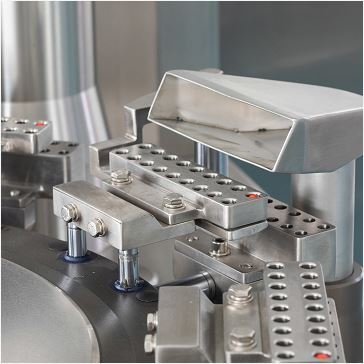
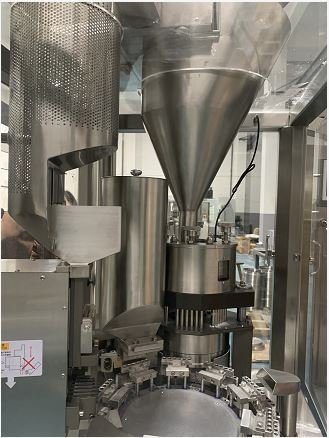
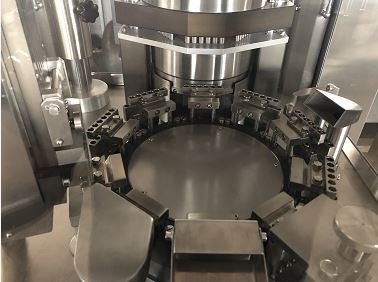
An intermittent-motion turntable indexes capsule bores through eight working stations. Each rotation completes one full fill cycle — from empty capsule to closed, ejected, finished capsule.
1
Capsule Feeding & Orientation
Empty capsules load from the hopper (or optional vacuum capsule feeder), are oriented body-down, and drop into the segment bores.
2
Vacuum Separation
A −0.02 to −0.06 MPa vacuum pulls the capsule body away from the cap; unopened capsules are detected and tracked for rejection.
3
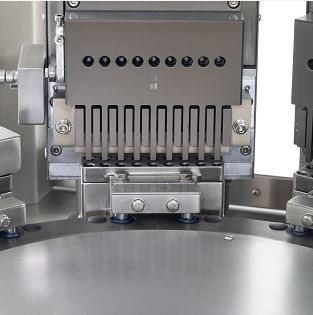
Powder Dosing (Tamping)
Five tamping pins progressively compress powder inside the hole plate into a uniform slug, then transfer it into the capsule body — the key to ≤±3% dosage difference.
4
Pellet / Granule Filling
An auxiliary station handles granules, pellets, or mixed granule + powder combination fills for two-phase formulations.
5
Defective Capsule Rejection
Capsules that failed to separate are ejected before filling, protecting powder from being wasted on scrap capsules.
6
Capsule Closing
Cap and body are rejoined and locked to the correct closed length under controlled pressure.
7
Finished Capsule Ejection
Closed capsules eject onto the discharge chute — feeding directly into the optional JFP-110A sorting polisher.
8
Bore Cleaning
Compressed air and the 2.2 kW dust collector clean every segment bore before the next cycle, keeping the qualification rate ≥99.5%.
Watch the Automatic Capsule Filling Machine in Production
Why Manufacturers Choose the HIJ NJP-1200C
Precision Intermittent Graduator
The indexing drive uses precision intermission graduators (Ru83DS series) so every hole-plate bore stops at exactly the same station position — the mechanical foundation of consistent fill weight at 1,200 capsules/minute class speed.
PLC + Touchscreen Control
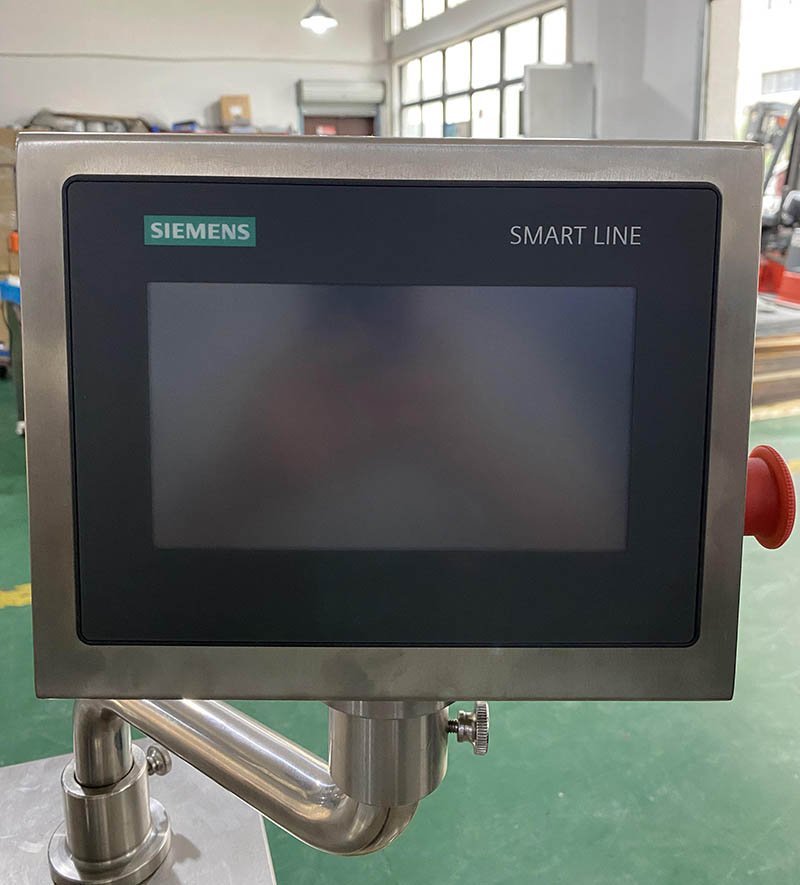
Model C runs a Delta PLC with WEINVIEW HMI touchscreen for recipe storage and fault diagnostics. Model E upgrades to OPC Server + Industrial Ethernet connectivity, supporting your data-integrity and 21 CFR Part 11 compliance program.
Powder, Granule & Pellet Filling
Handles powder, granules, pellets, and mixed granule + powder combination fills — covering pharmaceutical APIs, nutraceutical blends, and herbal extracts on one machine.
SS304 cGMP-Ready Construction
Every product-contact part is SS304 stainless steel with GMP-compliant materials; the enclosed drive keeps lubricants fully separated from the product zone. Quick-detach parts speed cleaning between batches.
Integrated Dust Collection
A dedicated 2.2 kW dust collector (210 m³/h exhaust) captures airborne powder at the dosing and cleaning stations — protecting operators, reducing housekeeping, and keeping the room within cGMP particulate expectations.
Turnkey Line Integration
Connects directly to the JFP-110A capsule sorting polisher (300,000 capsules/h polishing capacity), vacuum capsule and powder feeders, and downstream capsule blister packing machines for a complete filling-to-packaging line.

Forester's Insight
Forester Xiang
Founder & Chief Engineer, HIJ Machinery · 20+ years · 100+ facility audits across 30+ countries
"The number buyers fixate on is capsules per hour. The number that actually decides whether your batches pass is dosage difference — and that depends on your powder, not just the machine. Before I quote an NJP-1200C, I always ask for the target fill weight and the granulation mesh. If you're dosing above 300 mg with 40–80 mesh granulation, this machine will hold ≤±3% all day. If your powder is fluffy, poorly flowing, or sub-100 mg per capsule, tell us first — sometimes the right answer is adjusting the formulation or the tamping setup, not buying a faster machine."
NJP-1200C Technical Specifications
Verified factory parameters — the same data sheet we send with every formal quotation.
| Parameter | NJP-1200C Automatic Capsule Filling Machine |
|---|---|
| Max. output | 54,000–72,000 capsules/hour (up to 1,200 capsules/min class) |
| Capsule sizes | 00#–5#, plus safety capsules A–E (one format set included) |
| Dosage difference | ≤ ±3% (dosing above 300 mg, 40–80 mesh after granulation) |
| Capsule qualification rate | ≥ 99.5% |
| Fill types | Powder, granules, pellets; granule + powder mixed filling |
| Control system | Model B: stepless frequency conversion · Model C: PLC + HMI touchscreen · Model E: PLC + touchscreen tablet, OPC Server, Industrial Ethernet (supports customer 21 CFR Part 11 programs) |
| Motor power | 2.57 kW (main) + 2.2 kW (dust collector) |
| Power supply | 3-phase, AC 380 V, 50 Hz (other voltages on request) |
| Vacuum degree | −0.02 to −0.06 MPa |
| Exhaust capacity | 210 m³/h |
| Noise index | ≤ 75 dBA |
| Working environment | 21 °C ± 3 °C, relative humidity 40–55% |
| Water supply | Water-cycle pump compound tank, 250 L/hour |
| Product-contact material | SS304 stainless steel, GMP-compliant materials |
| Compliance design | cGMP-ready; CE-marked; ISO 9001 manufacturing standard |
| Overall dimensions | 870 × 1020 × 2130 mm (H incl. hopper riser) |
| Machine weight | 900 kg |
| Key components | Delta PLC · WEINVIEW HMI · Japanese linear bearings · precision intermission graduators |
| Price (FOB China) | From US$19,000 (incl. one format set) · extra size molds US$2,850/set · JFP-110A polisher US$2,000 · vacuum capsule / powder feeder US$2,500 each |
| Delivery & warranty | 60 working days · 12-month warranty · 1 year free spare parts · lifetime maintenance support |
Note: dosing accuracy depends on formulation flowability, fill weight, and granulation. Validation (DQ/IQ/OQ/PQ) is executed by the customer; HIJ provides full documentation support including FAT protocols, material certificates, and electrical schematics.
Automatic vs Semi-Automatic vs Small Capsule Filling Machines
Which class fits your daily volume? Compare the NJP-1200C against the other capsule fillers in the HIJ range before you decide.
| Criteria | NJP-1200C Automatic (this page) | Semi-Automatic Filler | Small / Lab-Scale Filler |
|---|---|---|---|
| Typical output | 54,000–72,000 capsules/h | ~10,000–25,000 capsules/h (operator-dependent) | Hundreds to a few thousand per hour |
| Operator involvement | Load hoppers only — separation, dosing, closing all automatic | Manual capsule loading/joining steps | Fully manual plate operation |
| Dosing consistency | ≤±3% via 5-stage tamping pins | Auger dosing; more operator variability | Depends heavily on hand technique |
| Best for | Commercial pharma / nutraceutical production, CMOs, multi-shift lines | Startups scaling past manual filling | R&D, clinical batches, dispensaries |
| Daily volume sweet spot | 400,000+ capsules/day | 50,000–150,000 capsules/day | <20,000 capsules/day |
| Budget class (FOB) | From US$19,000 | Mid four figures to low five figures | Entry-level |
| Explore | You are here | Semi-automatic capsule filling machine → | Small capsule filling machine → |
Rule of thumb: once you consistently need more than ~150,000 capsules per day, the labor cost and weight-variation risk of semi-automatic filling exceed the price difference of a fully automatic machine within the first year. For liquid or oil fills, see the liquid capsule filling machine; for powder-only budget lines, the powder capsule filling machine. Not sure of capsule size vs dose? Read the capsule filling machine size selection guide.
What the NJP-1200C Fills Every Day
One machine, four fill formats — from prescription APIs to botanical extracts. All product-contact parts are SS304 and food-contact compliant materials.

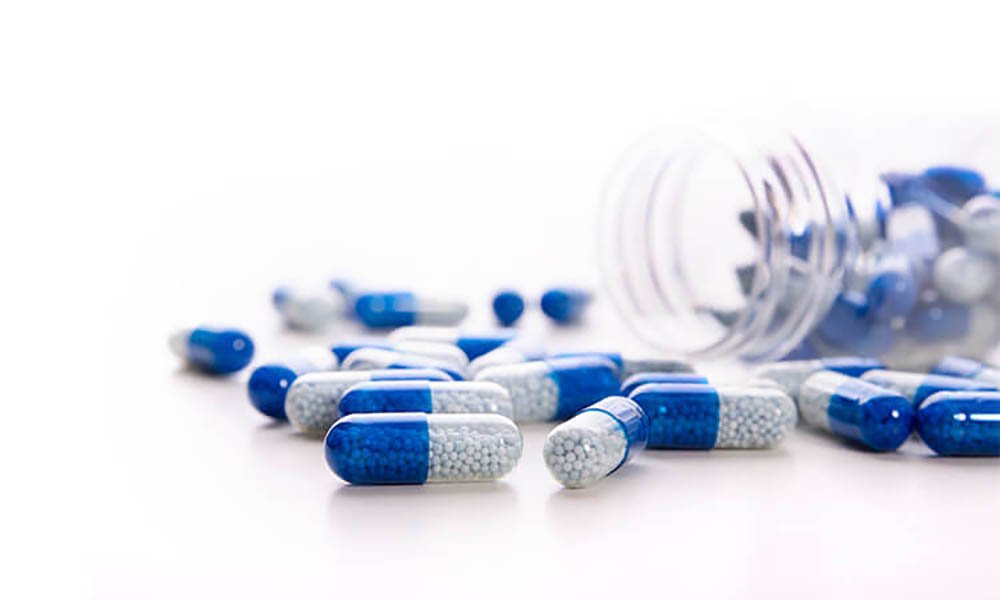
Pharmaceutical Powders
Antibiotics, analgesics, and prescription APIs — tamping-pin dosing holds uniformity of dosage units on high-potency blends.
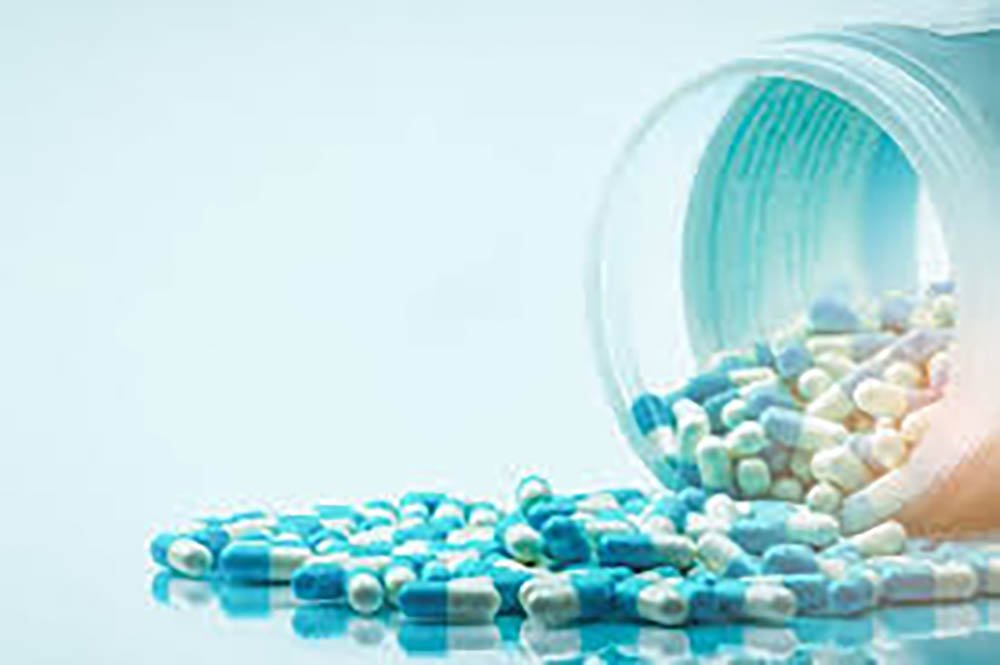
Nutraceuticals & Supplements
Vitamins, minerals, probiotics, and sports-nutrition blends in gelatin or vegetarian (HPMC) capsules.
Pellets & Sustained-Release Granules
Enteric-coated pellets and SR granules — including granule + powder mixed fills for two-phase release profiles.
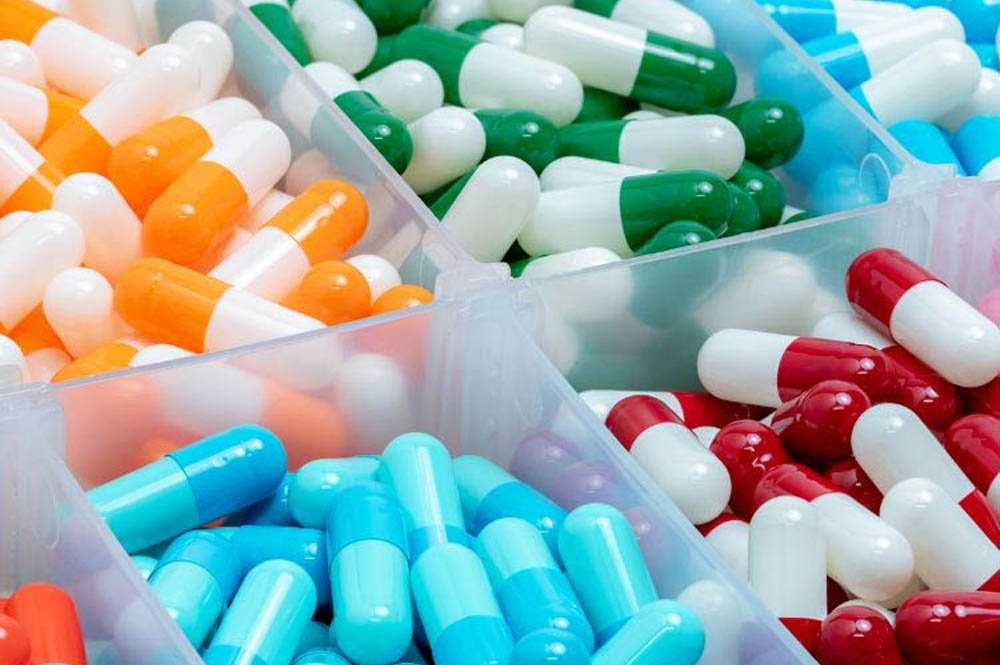
Herbal & Botanical Extracts
TCM powders and plant extracts — the integrated dust collector manages fine, dusty botanical materials cleanly.
Pharmaceutical Manufacturers
Contract Manufacturers (CMO/CDMO)
Nutraceutical & Supplement Brands
Herbal & TCM Producers
About the Manufacturer
Who Builds the NJP-1200C Automatic Capsule Filling Machine?
HIJ Machinery (legal name: Wenzhou Trustar Machinery Technology Co., Ltd) is a pharmaceutical and packaging machinery manufacturer founded in 2004, headquartered in Rui'an, Wenzhou, Zhejiang, China. The company designs and builds capsule filling machines, blister packing machines, cartoning machines, and complete turnkey packaging lines for pharmaceutical, nutraceutical, cosmetic, and food producers in more than 30 countries.
Machine design and every published specification on this page are reviewed by Forester Xiang, Founder & Chief Engineer of HIJ Machinery, drawing on 20+ years in packaging machinery engineering and 100+ pharmaceutical facility audits across 30+ countries. HIJ equipment is manufactured to ISO 9001 standard, is CE-marked, and follows a cGMP-ready design philosophy; equipment validation (DQ/IQ/OQ/PQ) is performed by the customer with full HIJ documentation support.
Company
HIJ Machinery · Wenzhou Trustar Machinery Technology Co., Ltd · Founded 2004 · Rui'an, Wenzhou, Zhejiang, China
Reviewed By
Forester Xiang, Founder & Chief Engineer — 20+ years, 100+ facility audits, 30+ countries
Contact
hijpackingmachine.com/contact-us · Factory-direct quotes within 24 hours
Automatic Capsule Filling Machine FAQ
Direct answers from our engineering team — the questions buyers actually ask before ordering.
How much does an automatic capsule filling machine cost?
The HIJ NJP-1200C automatic capsule filling machine starts from US$19,000 FOB China, including one format tooling set for your chosen capsule size. Additional capsule-size molds are US$2,850 per set. Common line options include a JFP-110A capsule sorting polisher (US$2,000), a vacuum feeder for empty capsules (US$2,500), and a vacuum powder feeder (US$2,500). A complete filling station with polisher and both feeders typically lands between US$26,000 and US$33,000 FOB.
What is the output of the NJP-1200C automatic capsule filler?
The NJP-1200C produces 54,000 to 72,000 capsules per hour depending on capsule size and formulation, placing it in the 1,200 capsules-per-minute class. Its capsule qualification rate is at least 99.5%, so on a two-shift schedule one machine can reliably deliver over 800,000 finished capsules per day.
How accurate is the dosing on an automatic capsule filling machine?
The NJP-1200C holds a dosage difference of ≤±3% when dosing above 300 mg with 40–80 mesh granulated powder. Accuracy is achieved by a five-stage tamping-pin system that compresses powder into a uniform slug inside the hole plate before transferring it into the capsule body. Actual results depend on powder flowability and fill weight, which is why we review your formulation before quoting.
Which capsule sizes can the machine fill?
The machine handles standard capsule sizes 00# through 5#, plus safety (tamper-evident) capsules A through E. One interchangeable format set is included with the machine; switching sizes only requires swapping the format parts, so contract manufacturers can run multiple SKUs on the same filler.
Can it fill pellets and granules, or only powder?
Yes. The NJP-1200C fills powder, granules, and pellets, and also supports mixed granule + powder combination filling in the same capsule — useful for two-phase or sustained-release formulations. For liquid and oil fills, we recommend the dedicated liquid capsule filling machine instead.
Is the machine GMP compliant?
The NJP-1200C is built to a cGMP-ready design standard: all product-contact parts are SS304 stainless steel with GMP-compliant materials, the drive train is fully separated from the product zone, and an integrated dust collector controls airborne powder. The machine is CE-marked and manufactured to ISO 9001 standard. Formal validation (DQ/IQ/OQ/PQ) is performed by the customer at their facility; HIJ supplies complete documentation support including FAT protocols, material certificates, and electrical schematics.
What is the difference between automatic and semi-automatic capsule filling machines?
An automatic capsule filling machine performs capsule orientation, separation, dosing, closing, and ejection without operator intervention, producing 54,000–72,000 capsules per hour with ≤±3% dosing consistency. A semi-automatic machine requires the operator to handle capsule loading and joining steps, typically limiting output to 10,000–25,000 capsules per hour with more weight variability. Once daily demand passes roughly 150,000 capsules, automatic filling usually pays back the price difference within the first year.
What are the delivery time and warranty terms?
Standard delivery is 60 working days after payment, shipped FOB from any Chinese seaport in seaworthy wooden cases. The machine carries a 12-month warranty with one year of free spare parts and lifetime maintenance support. Installation and commissioning by an HIJ technician are available on request, and payment terms are 40% advance with 60% before delivery.
The Complete Capsule Filling Knowledge Hub
Everything you need to research, buy, validate, and run an automatic capsule filling machine — organized by where you are in the decision.
Learn the Basics
Understand the technology first What Is an Automatic Capsule Filling Machine? How It Works: The 8-Station Cycle cGMP & IQ/OQ/PQ Validation GuideCompare & Buy
Make the purchase decision Automatic vs Semi-Automatic Capsule Filler Price Guide 2026: Real FOB Quotations Best Manufacturers: China vs Europe vs IndiaSize & Operate
Run it right, day after day Capsule Size Selection Guide Troubleshooting: 6 Common Problems & Fixes IQ/OQ/PQ Validation for Pharma EquipmentExplore the Full Capsule Filling Machine Range
Get Your NJP-1200C Quote — Direct From the Factory
Send us your capsule size, target fill weight, and daily volume. Forester's engineering team will confirm the right configuration, dosing feasibility for your formulation, and a complete FOB quotation — within 24 hours.
12-Month Warranty
1 Year Free Spare Parts
Exported to 30+ Countries
Since 2004