
NJP-200 / NJP-400 Series
Pharmaceutical Capsule Filling Machine — cGMP-Ready Automatic Encapsulation from 12,000 Caps/Hour
The HIJ NJP-200/400 fully automatic pharmaceutical capsule filling machine fills powder, granule and pellet into size 00#–4# hard capsules with ±3.5% dosing accuracy and a ≥99% capsule qualification rate — the proven entry point for pharma plants, clinics, research labs and nutraceutical startups. From USD 15,000 FOB.
12,000–24,000Capsules / Hour
±3.5%Dosing Accuracy
00# – 4#Capsule Sizes
≥99%Qualification Rate
cGMP-ready design · CE-marked · Manufactured under ISO 9001 standard · By HIJ Machinery, capsule filling machine manufacturer since 2004


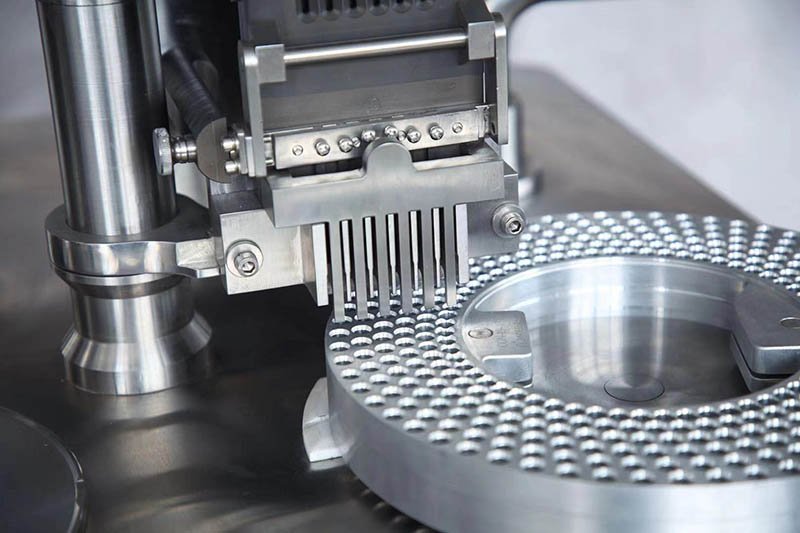
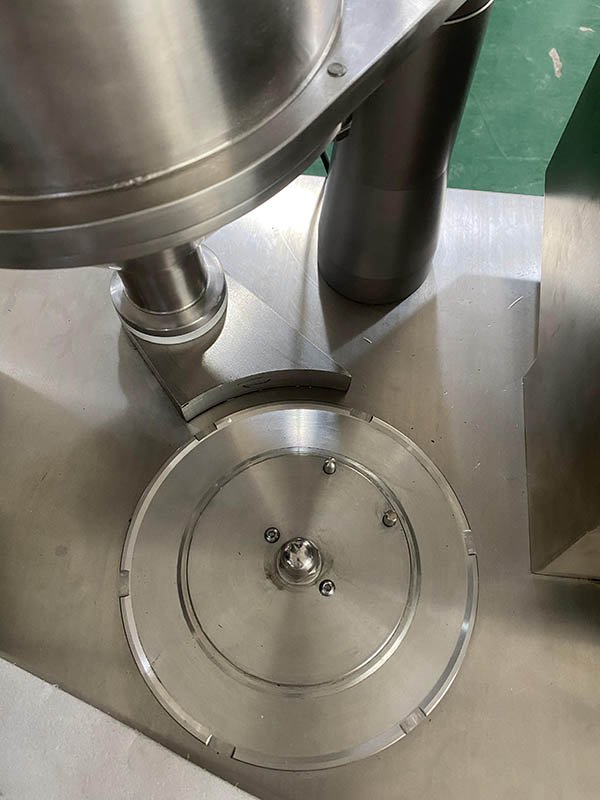
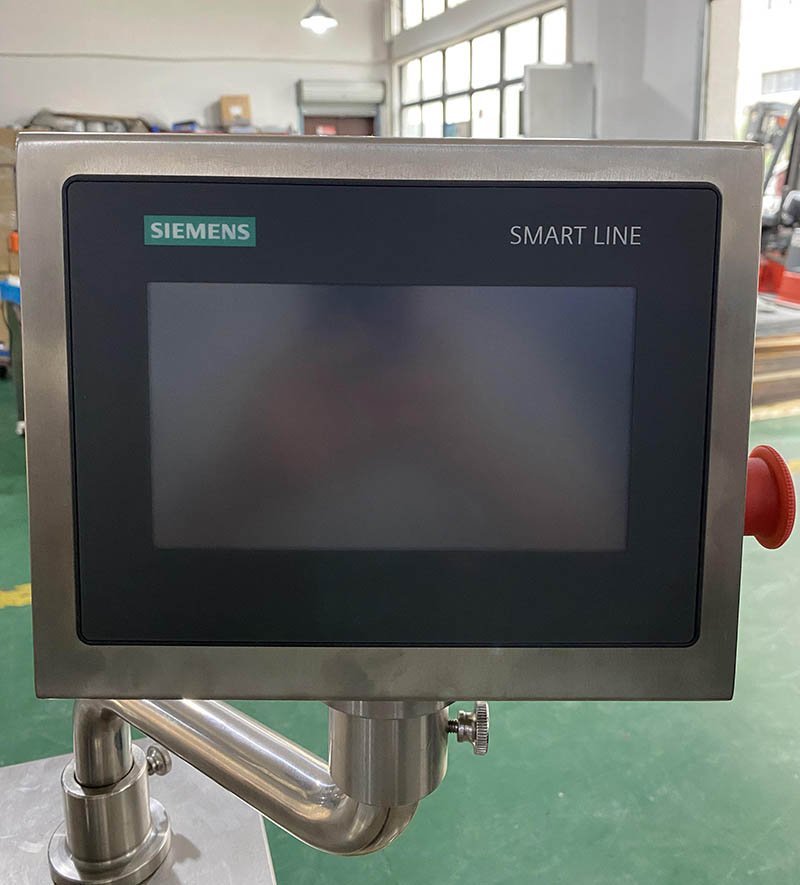
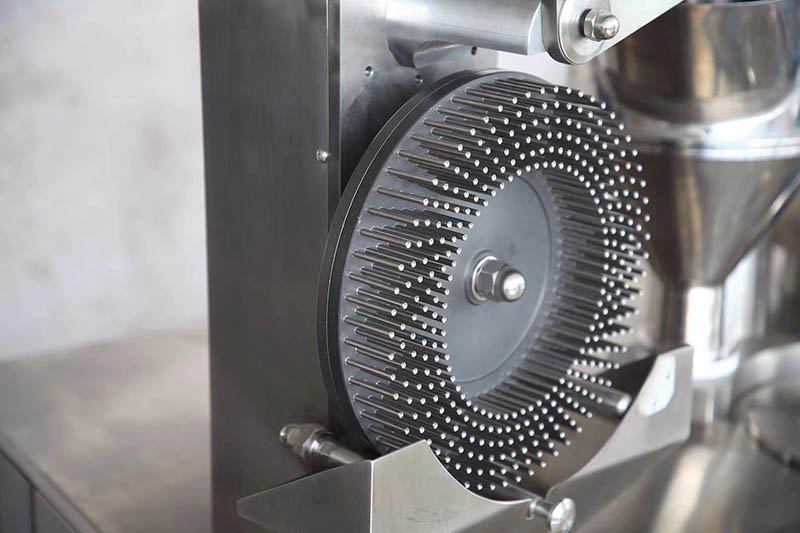
What Is a Pharmaceutical Capsule Filling Machine?
A pharmaceutical capsule filling machine is automated equipment that orients, separates, fills, locks and ejects hard gelatin or HPMC capsules with powder, granule or pellet formulations under cGMP-ready conditions. The HIJ NJP-200/400 series uses multi-bore dosing with intermittent motion to fill 200–400 capsules per minute (12,000–24,000 capsules/hour) at ±3.5% dosing accuracy, handling capsule sizes 00# through 4#. Pricing starts from USD 15,000 FOB including one set of molds — making it the standard entry-level automatic encapsulation solution for pharmaceutical plants, hospitals, research institutes and nutraceutical manufacturers.
Key Takeaways
- Output: NJP-200 fills 12,000 caps/hour; NJP-400 fills 24,000 caps/hour — sized for small-to-mid batch pharma production
- Accuracy: multi-bore dosing controls fill weight to around ±3.5% with a ≥99% capsule qualification rate
- Real price: NJP-200 from USD 15,000 FOB Ningbo/Shanghai, including one mold set; JFP-110A polisher adds USD 2,500
- Compliance: cGMP-ready enclosed design, CE-marked, built under ISO 9001 manufacturing standard; IQ/OQ documentation support provided (validation executed by the customer)
- Control: Delta PLC + touch-screen HMI with variable-frequency speed control and low-material auto-pause
- Versatility: fills Western medicine, traditional Chinese medicine, nutraceutical and herbal powders, granules and pellets
The Problems We Solve
Are Inconsistent Fill Weights, Slow Manual Filling, and Audit Risks Holding Back Your Capsule Production?
Manual & Semi-Automatic Filling
Hand-operated plates and semi-automatic fillers produce inconsistent capsule weights, depend heavily on operator skill, and expose powder to open air — creating contamination risk that makes cGMP-aligned production nearly impossible to document.
Oversized, Overpriced Machines
High-speed fillers rated 60,000+ caps/hour cost 5–10× more and run at a fraction of capacity for small batches. Paying for output you never use destroys ROI for clinics, research labs, startups and contract manufacturers with mixed product portfolios.
No-Name Imports Without Support
Bargain machines arrive with >5% capsule rejection rates, undocumented electrical parts, and no after-sales response. When a cam or bearing fails, production stops for weeks waiting for parts that never come.
The HIJ NJP Answer: Right-Sized, Documented, Supported
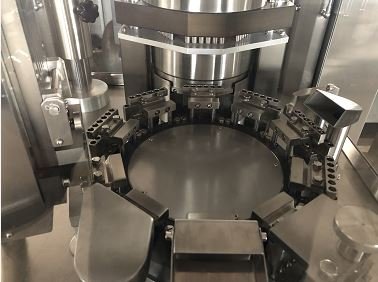
The NJP-200/400 was engineered for exactly this gap: fully automatic precision at an entry-level price. Japanese linear bearings, Delta PLC/HMI/inverter controls, a pressure-lubricated cam system, and ±3.5% multi-bore dosing — backed by a one-year warranty, whole-life maintenance, and free spare parts for the first year.
Discuss Your Batch Size With an EngineerEngineering in Action
How the NJP Pharmaceutical Capsule Filling Machine Works: 5 Automated Stations
Using intermittent-motion indexing with variable-frequency timing, the NJP series completes capsule feeding, separating, filling, waste rejection, closing and ejection in one continuous, enclosed cycle.
STEP 01
Capsule Feeding & Vacuum Separation
Empty capsules are oriented cap-up and separated into body and cap by a vacuum mechanism. The rectification stage achieves a qualification rate above 99%, so almost no empty capsules are wasted before filling even begins.
STEP 02
Multi-Bore Precision Dosing
The multi-bore dosing station meters powder, granule or micro-pellets into each capsule body with fill-weight control around ±3.5% — consistent enough for both Western pharmaceuticals and traditional Chinese medicine formulations, batch after batch.

STEP 03
Waste Capsule Rejection
Unseparated or defective capsules are automatically detected and rejected before the dosing stage, protecting expensive API and formulation powder from being lost into reject capsules.
STEP 04
Capsule Closing & Locking
Filled bodies are rejoined with caps and pressed to the locked position, preventing separation during downstream polishing, blister packing and cartoning. The station cam runs in a pressure-lubricated slot for long service life.

STEP 05
Ejection & Bore Cleaning
Finished capsules are ejected to the outlet — typically feeding straight into the JFP-110A sorting polisher — while segment bores are cleared for the next index, keeping the cycle clean and continuous. A low-material sensor auto-pauses the machine when powder or capsules run out.
Features & Benefits
Engineered for Precision Dosing, Built for Low Total Cost of Ownership
Japanese Linear Bearings & Improved Turret
Every machine uses linear bearings imported directly from Japan on a redesigned inner turret, delivering higher indexing precision and a significantly longer service life than generic domestic bearings.
Long Service LifePressure-Lubricated Cam System
The working-station cam runs in a fully lubricated slot fed by a pressure pulverization oil pump, maintaining internal lubrication under load and extending the life of wear parts dramatically.
Low MaintenanceDelta PLC + Touch-Screen HMI
Delta PLC (DVP series), touch-screen HMI and inverter provide stepless variable-frequency speed control with clear digital readouts — simple for new operators, stable for round-the-clock production.
Easy OperationMulti-Bore Dosing at ±3.5%
Multi-bore dosing controls fill weight to around ±3.5% with a capsule qualification rate above 99% — suitable for Western medicine, TCM, nutraceutical and herbal formulations alike.
≥99% QualifiedOperator & Machine Protection
Built-in protective interlocks guard both operator and mechanism, and a material-level sensor automatically pauses the machine when capsules or powder run low — no crushed tooling, no half-filled batches.
Auto-Pause SafetyInline JFP-110A Sorting Polisher
Connect the optional JFP-110A polisher (300,000 capsules/hour) to polish, de-dust and automatically reject lightweight, empty or fragment capsules inline — replacing manual sorting that cGMP auditors flag.
Polish While ProducingModel Selection
NJP-200/400 vs Semi-Automatic vs High-Speed NJP-1200: Which Do You Need?
| Criteria | Semi-Automatic Filler | NJP-200 / NJP-400 (This Page) | NJP-1200 High-Speed |
|---|---|---|---|
| Output | ~5,000–12,000 caps/hr, operator-dependent | 12,000–24,000 caps/hr, fully automatic | Up to 72,000 caps/hr |
| Dosing Accuracy | ±5–8% (operator skill dependent) | ≈ ±3.5% multi-bore dosing | ±3% tamping-pin dosing |
| Labor Required | 1–2 dedicated operators | 1 operator monitoring | 1 operator monitoring |
| Budget Level | $ | $$ — from USD 15,000 FOB | $$$$ |
| Best For | Pilot batches, very small clinics | Small–mid pharma plants, hospitals, R&D institutes, nutraceutical startups, CMOs | Large-scale continuous production |
| Learn More | Semi-Automatic Capsule Filling Machine | You are here | Automatic Capsule Filling Machine NJP-1200 |
Engineer's Verdict
If your batches run under ~2 million capsules per month and you need documented, repeatable automatic filling on a startup-friendly budget, the NJP-200/400 is the correct machine — you gain full automation and ±3.5% accuracy without paying for high-speed capacity you won't use. Scaling beyond 24,000 caps/hour? Step up to the NJP-1200. Filling oils or suspensions? See our liquid capsule filling machine. Not sure which size fits? Read the capsule filling machine size selection guide.
Model Selection
NJP-200/400 vs Semi-Automatic vs High-Speed NJP-1200: Which Do You Need?
| Criteria | Semi-Automatic Filler | NJP-200 / NJP-400 (This Page) | NJP-1200 High-Speed |
|---|---|---|---|
| Output | ~5,000–12,000 caps/hr, operator-dependent | 12,000–24,000 caps/hr, fully automatic | Up to 72,000 caps/hr |
| Dosing Accuracy | ±5–8% (operator skill dependent) | ≈ ±3.5% multi-bore dosing | ±3% tamping-pin dosing |
| Labor Required | 1–2 dedicated operators | 1 operator monitoring | 1 operator monitoring |
| Budget Level | $ | $$ — from USD 15,000 FOB | $$$$ |
| Best For | Pilot batches, very small clinics | Small–mid pharma plants, hospitals, R&D institutes, nutraceutical startups, CMOs | Large-scale continuous production |
| Learn More | Semi-Automatic Capsule Filling Machine | You are here | Automatic Capsule Filling Machine NJP-1200 |
Engineer's Verdict
If your batches run under ~2 million capsules per month and you need documented, repeatable automatic filling on a startup-friendly budget, the NJP-200/400 is the correct machine — you gain full automation and ±3.5% accuracy without paying for high-speed capacity you won't use. Scaling beyond 24,000 caps/hour? Step up to the NJP-1200. Filling oils or suspensions? See our liquid capsule filling machine. Not sure which size fits? Read the capsule filling machine size selection guide.
Proven Applications
One Machine, Every Hard-Capsule Formulation: Powder, Granule & Pellet

Pharmaceutical Manufacturers
Generic and prescription drug production in cGMP-aligned facilities — documented, enclosed, repeatable filling for regulated markets.
Nutraceuticals & Supplements
Vitamins, minerals, probiotics and botanical extracts at startup-friendly volumes, with fast fill-weight adjustment between SKUs.
Traditional Chinese Medicine
Purpose-proven on TCM powders and herbal blends — the NJP series fills both Chinese traditional and Western medicine formulations.
Hospitals & Clinics
In-house preparation at hospital pharmacies and clinics that outgrew manual capsule plates but can't justify high-speed lines.
Research Institutes & Universities
Medicine graduate schools and R&D labs producing clinical-trial and pilot batches with production-representative equipment.
Contract Manufacturers (CMOs)
Quick capsule-size changeover across 00#–4# tooling makes the NJP-200/400 ideal for multi-client, multi-SKU contract filling.
Your Trusted Partner
Built by Engineers Who Have Stood in Your Filling Room
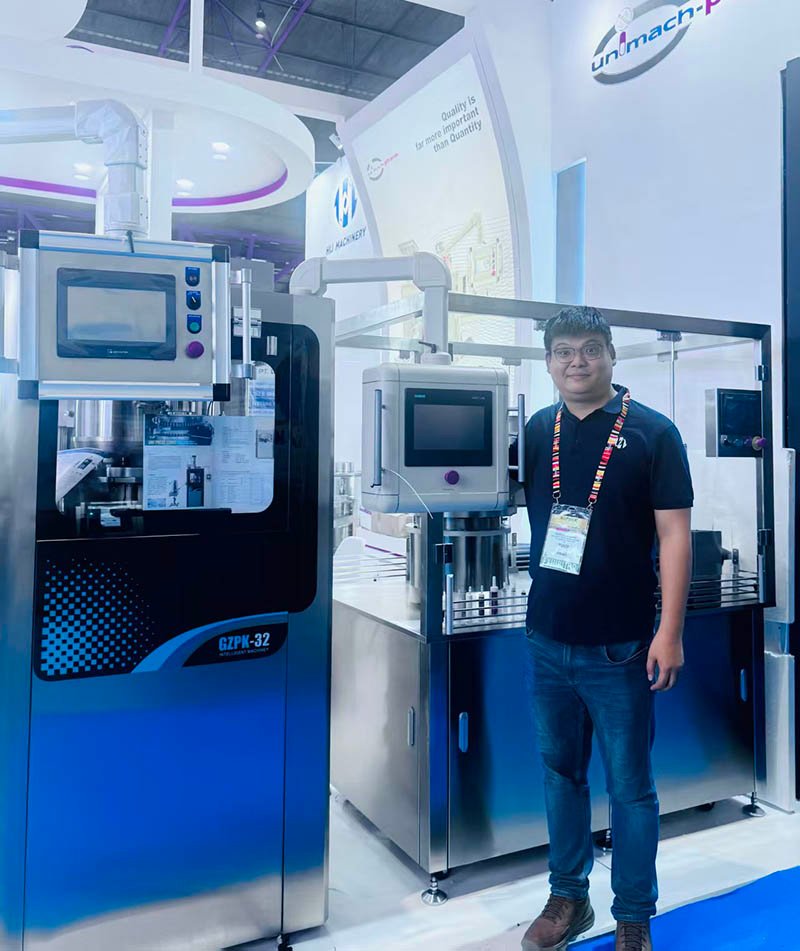
Forester's Insight
Forester Xiang
Founder & Chief Engineer, HIJ Machinery · 20+ years · 100+ facility audits across 30+ countries
"The most common mistake I see buyers make with entry-level capsule fillers is judging them by speed alone. A 200-per-minute machine that holds ±3.5% all shift is worth far more than a 'faster' machine that drifts. Fill-weight consistency is what your QA department — and your regulator — actually audits."
"That's why we specify Japanese linear bearings and a pressure-lubricated cam on the NJP series instead of cutting cost there. The dosing station can only be as precise as the motion underneath it. When a client tells me their rejection rate stayed under 1% two years after installation, that's the bearing choice paying for itself."
Factory-Direct Since 2004
HIJ Machinery (Wenzhou Trustar Machinery Technology Co., Ltd) has manufactured pharmaceutical packaging and filling equipment in Rui'an, Zhejiang for over 20 years — you buy from the factory, not a trading company.
Validation Documentation Support
We supply FAT reports, manuals, material and CE marking documentation, plus IQ/OQ protocol templates to support your validation program. Validation execution remains your responsibility — we make the paperwork side painless.
Whole-Life Maintenance
One-year warranty with free spare parts for the first year, then whole-life maintenance support with remote diagnostics via the Delta HMI and rapid parts dispatch worldwide.
About HIJ Machinery — Pharmaceutical Capsule Filling Machine Manufacturer
HIJ Machinery (legal name: Wenzhou Trustar Machinery Technology Co., Ltd) is a pharmaceutical packaging machinery manufacturer founded in 2004, headquartered at Xinhu Mansion, Rui'an City, Wenzhou, Zhejiang Province, China. The company designs and manufactures capsule filling machines, blister packing machines, cartoning machines and complete turnkey packaging lines for the pharmaceutical, nutraceutical and cosmetic industries, exporting to customers in more than 30 countries.
The NJP-200 and NJP-400 pharmaceutical capsule filling machines featured on this page are fully automatic encapsulation machines with a rated output of 12,000 and 24,000 capsules per hour respectively, dosing accuracy of approximately ±3.5%, and tooling for capsule sizes 00# through 4#. All HIJ equipment is cGMP-ready by design, CE-marked, and manufactured under the ISO 9001 quality standard. Process validation (DQ/IQ/OQ/PQ) is the responsibility of the purchasing manufacturer; HIJ Machinery provides supporting documentation including FAT reports and IQ/OQ protocol templates.
Technical content on this page is authored and reviewed by Forester Xiang, Founder & Chief Engineer of HIJ Machinery, drawing on 20+ years of encapsulation engineering experience and 100+ pharmaceutical facility audits across 30+ countries. Contact: +86 138 6882 2120 (phone/WhatsApp) · hijpackingmachine.com/contact-us.
Expert Answers
Pharmaceutical Capsule Filling Machine FAQs
How much does a pharmaceutical capsule filling machine cost?
The HIJ NJP-200 fully automatic pharmaceutical capsule filling machine starts from USD 15,000 FOB Ningbo/Shanghai, including one set of capsule molds. The optional JFP-110A capsule sorting polisher costs USD 2,500 with two brushes and a dust collector. Higher-speed models such as the NJP-1200 cost more; semi-automatic fillers cost less but require more labor. Payment is typically T/T with a 30% deposit, and lead time is about 30 working days after payment and mold drawing confirmation.
What is the output of the NJP-200 and NJP-400 capsule filling machines?
The NJP-200 fills up to 200 capsules per minute (12,000 capsules per hour) using 2 segment bore rows, and the NJP-400 fills up to 400 capsules per minute (24,000 capsules per hour) using 3 segment bore rows. Both models handle capsule sizes 00# through 4#, run on 3.32 kW total power, and share a compact footprint of roughly 720–750 × 680 × 1700 mm at 700 kg.
What filling accuracy does the NJP series achieve?
The NJP series controls fill weight to approximately ±3.5% using multi-bore dosing with intermittent motion, and achieves a capsule qualification rate above 99%. This consistency comes from Japanese linear bearings on the indexing turret and a pressure-lubricated cam system that keeps station motion precise over years of operation.
What materials can a pharmaceutical capsule filling machine fill?
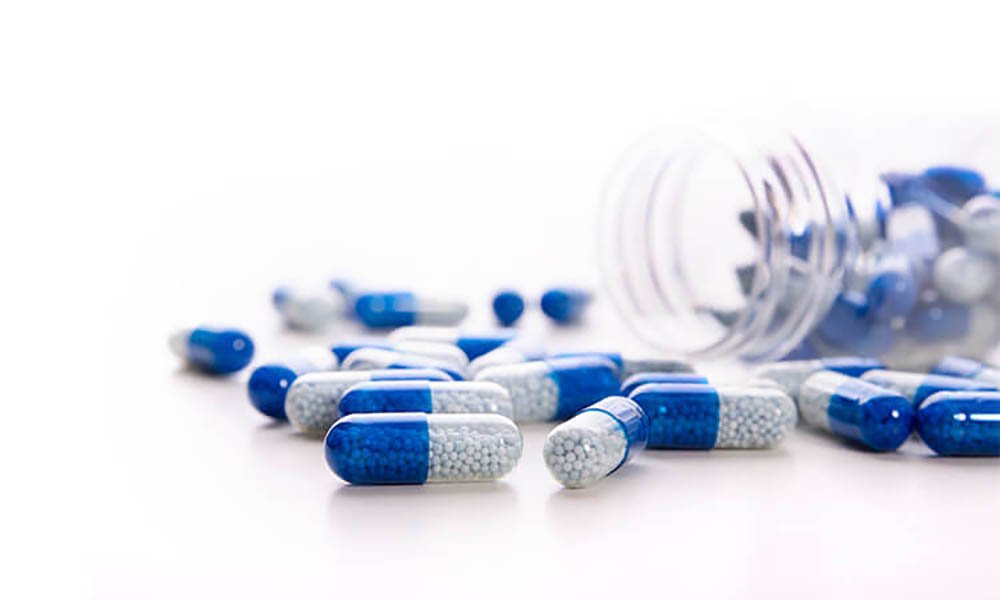
The NJP-200/400 fills powder, granule and pellet formulations into hard gelatin or HPMC capsules, and is proven on both Western pharmaceutical formulations and traditional Chinese medicine powders, as well as nutraceutical, vitamin, probiotic and herbal blends. For oils, suspensions or liquid formulations, a dedicated liquid capsule filling machine is required instead.
Is the NJP capsule filling machine GMP certified?
No machine can be "GMP certified" — GMP certification applies to a manufacturer's process and facility, not to equipment. The NJP series is cGMP-ready by design: it features fully enclosed filling stations, automatic waste capsule rejection, operator protection interlocks, and easy-clean contact parts. The machines are CE-marked and manufactured under the ISO 9001 quality standard, and HIJ provides documentation to support your facility's own GMP compliance program.
Do you provide IQ/OQ validation documents?
HIJ Machinery provides validation documentation support, including FAT reports, IQ/OQ protocol templates, operation manuals, electrical diagrams and CE marking documentation. Executing DQ/IQ/OQ/PQ validation is the responsibility of the purchasing manufacturer under their own quality system, and our engineering team supports remote or on-site SAT commissioning to help your validation run smoothly.
What is the lead time and warranty for the NJP-200?
Standard lead time is approximately 30 working days after receiving the deposit and confirming the mold drawing. Every machine ships in export-grade wooden cases from Ningbo or Shanghai port and carries a one-year warranty with free spare parts for the first year, followed by whole-life maintenance support from the HIJ service team.
Can the NJP-200 connect to a capsule polisher or blister packing line?
Yes. The JFP-110A sorting polisher (300,000 capsules/hour capacity) connects directly to the NJP-200/400 outlet to polish, de-dust and automatically reject lightweight, empty or fragment capsules inline. Finished capsules can then feed a capsule blister packing machine and cartoning line — HIJ supplies complete turnkey capsule packaging lines from filling to case packing.
Explore the Complete Capsule Filling Ecosystem
Hub
Capsule Filling Machines — All Models
Compare every HIJ capsule filler from lab scale to industrial output.
Scale UpAutomatic Capsule Filling Machine NJP-1200
Up to 72,000 caps/hour for large-scale continuous production.
Entry LevelSemi-Automatic Capsule Filling Machine
Lower-budget option for pilot batches and very small operations.
By MaterialPowder Capsule Filling Machine
Dedicated solutions for fine, sticky and low-density powders.
By MaterialLiquid Capsule Filling Machine
Fill and band-seal oils and suspensions in hard capsules.
CompactSmall Capsule Filling Machine
Bench-scale fillers for R&D and micro-batch production.
GuideCapsule Filling Machine Size Selection Guide
Match capsule size, batch volume and machine model correctly.
DownstreamCapsule Blister Packing Machine
Package finished capsules into Alu-PVC or Alu-Alu blisters.
TurnkeyComplete Turnkey Packaging Lines
From capsule filling to blistering, cartoning and case packing.
Get Your NJP-200/400 Quotation Within 24 Hours
Send us your capsule size, fill material and target output — Forester's engineering team will reply with an itemized FOB quotation, layout drawing and lead-time plan, plus honest advice if a different model fits your scale better.
Get Free Turnkey Quote