
Cold-form blister packaging · project configured
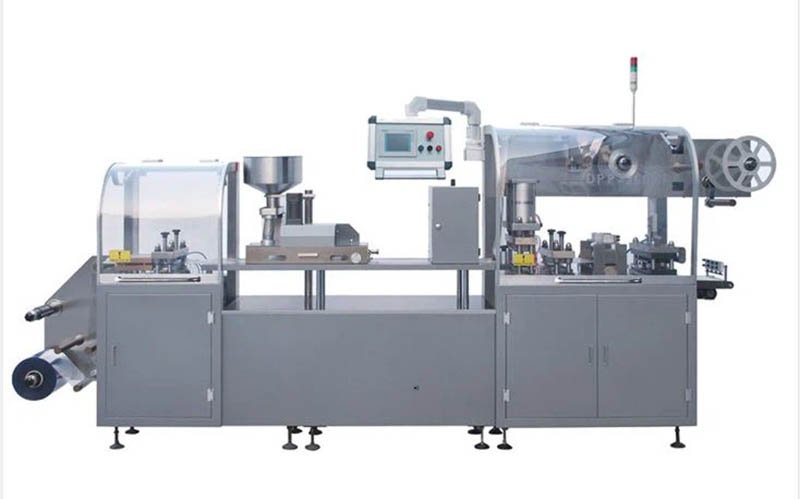
Alu Alu Blister Packing Machine
Configure cold forming, product feeding, sealing, coding, inspection and line transfer around the approved laminate, blister drawing and acceptance plan.
- Tablets & capsules
- Cold-form laminate
- Project tooling
- URS & FAT scope


Selection boundary
Start with the approved pack—not the machine model
An Alu Alu blister machine cold-forms an aluminum laminate into cavities, loads the product and seals an aluminum lidding web. It is a strong starting route when the approved package must be opaque and high barrier, but the final choice still depends on stability data, cavity geometry, material behavior and required good output.
Good starting fitUse Alu-Alu when the product specification calls for an opaque, high-barrier blister and the buyer can freeze the laminate, cavity drawing, product presentation and inspection boundary before tooling approval.
Confirm another route when
- Product visibility is an approved pack requirement.
- The stability study supports a thermoformed plastic structure.
- Material cost, cavity depth or output target changes the business case.
- The final pack has not yet been qualified or dimensioned.
01
Product
Dosage form, dimensions, fragility, orientation and allowable defects.
02
Material
Cold-form and lidding structures, roll data, print registration and seal window.
03
Blister
Cavity drawing, pitch, web direction, opening method and pack count.
04
Acceptance
Good packs per minute, defect definitions, test duration and retained evidence.
Cold-form process
Control every station from web unwind to accepted blister discharge
The sequence below is the engineering baseline. The exact station arrangement, tooling and control logic belong in the approved technical agreement and FAT protocol.
01
Unwind & guide
Control the cold-form web, lidding web, tension, alignment and roll-change method.
02
Cold form
Form the approved cavity mechanically with qualified laminate and tooling.
03
Feed product
Present tablets or capsules using the agreed feeder, orientation and reject logic.
04
Inspect cavities
Define missing, doubled, damaged or misplaced-product checks and responses.
05
Seal webs
Develop the temperature, pressure, dwell time and registration window for the final materials.
06
Code & verify
Apply the approved batch data and define readable-code checks where required.
07
Punch & discharge
Separate the finished format, control scrap and transfer accepted packs downstream.
FAT
Prove the line
Run representative product and materials against agreed defects, duration and output.
Engineering checkpoint: freeze web direction, print eye, cavity drawing, product presentation, seal land and finished-pack discharge before tooling release.
Technical agreement
Specify the ordered machine from controlled project inputs
The model name alone does not define performance. Put the approved product, materials, drawings, options and acceptance basis into the quotation and contract.
| Specification item | What the buyer supplies | What the technical offer must confirm |
|---|---|---|
| Product range | Tablets or capsules, dimensions, weight, fragility, coating and samples. | Feeding route, contact parts, allowable range and trial boundary. |
| Cold-form blister | Approved cavity drawing, count, pitch, web direction and opening method. | Tooling scope, forming arrangement, change parts and drawing approval route. |
| Packaging materials | Cold-form laminate and lidding foil references, roll and print data. | Web path, tension control, registration, sealing study and scrap handling. |
| Accepted output | Required good packs per minute, shifts, changeovers and downstream constraints. | Test condition, limiting station, acceptance rate and FAT duration. |
| Inspection & reject | Defect list, criticality, sample challenges and record requirements. | Detection method, reject logic, verification, counters and retained evidence. |
| Utilities & layout | Power, compressed air, room route, access and environmental constraints. | Utility schedule, general arrangement, maintenance clearances and interfaces. |
| Documents & service | URS, language, qualification plan, shipping terms and site support needs. | Document index, review cycle, FAT package, training, installation and exclusions. |
Information that prevents late redesign and requotation
Sample set
Supply every planned product size and shape, including difficult or fragile SKUs. Mark which samples represent normal production and which are challenge samples.
Controlled drawings
Use revision-controlled cavity, blister, print and line-layout drawings. Identify who approves each document and how changes are released.
Acceptance language
Define what counts as a good pack, a reject and an allowable stop. State sampling frequency, test duration and decision authority.
Responsibility split
Assign product supply, materials, utilities, downstream equipment, installation, validation execution and production release to named parties.
Material-route decision
Compare cold-form Alu-Alu with thermoformed blister structures
Do not select a forming route from a generic “best material” claim. Use product stability data, the approved package specification, the final cavity and the commercial operating model.
| Decision point | Cold-form Alu-Alu | Thermoformed plastic web |
|---|---|---|
| Pack visibility | Opaque pack; product is not visible through the formed web. | Can support a transparent presentation, depending on the selected structure. |
| Barrier route | Used when the approved specification requires a high-barrier aluminum structure. | Barrier depends on the selected plastic or coated material structure. |
| Cavity formation | Laminate is mechanically formed with matched tooling. | Plastic web is heated and formed using the configured process. |
| Design trade-off | Confirm cavity geometry, laminate behavior, web width and material utilization. | Confirm heating window, draw behavior, clarity and approved coating structure. |
| Commercial basis | Compare tooling, material use, accepted output, changeover and waste. | Compare the same full-line costs under the approved product and pack. |
| Final decision | Follow stability evidence, regulatory/market requirements, packaging validation and total project economics. | |
Choose with material evidence
Review the blister packaging materials guide before freezing the laminate and sealing route.
Compare the machine route
See the thermoforming blister machine when product visibility or another approved structure is required.
My insight: approve the blister drawing and material structure together. A late change to cavity depth, pitch or laminate can change tooling, web utilization, sealing trials, accepted output and quotation scope at the same time.
Machine engineering
Define the modules that determine usable performance
A reliable Alu Alu blister line is a coordinated system. Each module should be tied to the approved product, material, format and test method.
A
Forming & tooling
Match cavity geometry, forming sequence, tool access and format-change method to the approved drawing.
B
Product feeding
Prove presentation, orientation, bridging risk, product damage and manual intervention with real samples.
C
Web control
Define roll loading, tension, tracking, print registration, splicing practice and scrap collection.
D
Sealing window
Develop temperature, pressure and dwell-time settings using the final webs and agreed seal test.
E
Inspection & reject
Challenge detection, reject confirmation, counters, alarm response and recovery from abnormal conditions.
F
Controls & changeover
Agree recipes, access levels, parameter limits, change parts, line signals and restart behavior.

Common project risks to close before FAT
| Observed risk | Likely project dependency | What to agree and test |
|---|---|---|
| Inconsistent cavity shape | Laminate behavior, cavity geometry, tooling condition or forming setup. | Approved material lot, cavity measurements, forming settings and inspection method. |
| Product feeding stops | Product variation, dust, orientation, bridging, static or feeder selection. | Representative samples, challenge products, replenishment method and intervention limits. |
| Seal defects | Web structure, seal land, contamination, registration or process window. | Final webs, seal-test method, temperature/pressure/dwell study and defect standards. |
| Good output below target | Slowest station, rejects, stops, operator tasks, changeover or downstream blocking. | Named line condition, accepted-pack counter, stop rules, run duration and recovery logic. |
| Long format change | Change-part scope, access, adjustment points, cleaning and verification steps. | Documented changeover method, tools, settings, checks and trained staffing assumption. |
Quotation engineering
Build an itemized Alu Alu blister machine quotation
A useful price is the result of a controlled scope. Send the actual product and pack inputs so the machine, tooling, inspection, documents and services can be separated into visible line items.
Inputs that change configuration
- Product list, dimensions, samples and allowable damage.
- Approved laminate and lidding references with roll data.
- Blister drawing, count, cavity geometry and web direction.
- Feeding, coding, inspection and reject requirements.
- Required good packs per minute and production pattern.
Line items the offer should expose
- Base machine and selected product-feeding system.
- Each tooling set, change part and format drawing.
- Vision, code verification, reject and data options.
- Documents, FAT, training, installation and site service.
- Shipping terms, exclusions, milestones and acceptance basis.
Product firstReal samples and defect limits
Pack firstApproved drawing and materials
Output firstAccepted packs under a named test
Evidence firstFAT records and deliverables
Compare total project cost—not only the machine headline
Format investment
Count initial tooling, every planned SKU, spare wear parts, future format additions and drawing-control work.
Operating inputs
Compare laminate use, lidding use, scrap, changeover time, cleaning time, staffing and planned maintenance.
Quality controls
Include inspection, code verification, reject confirmation, test samples, records and deviation handling.
Line interfaces
Price transfer devices, accumulation, controls, guarding, downstream changes and integrated line testing.
Delivery & site work
Separate packing, freight, insurance, customs responsibility, installation, training and site acceptance support.
Lifecycle support
Define manuals, remote response, critical spares, software backup, component availability and service boundaries.
Line integration
Engineer accepted blister transfer—not two isolated machines
If cartoning is in scope, both suppliers should agree the blister discharge, accumulation, orientation, signals, speed range, reject ownership and restart behavior before the order.
01
Blister discharge
Define finished-pack direction, spacing, count, transfer height and acceptable presentation.
02
Buffer & signals
Agree accumulation, blocked/starved states, permissives, stops, alarms and controlled restart.
03
Line FAT
Test the integrated route with the approved product, blister, leaflet and carton where applicable.
Related equipment and decision guides

DPP-260 Automatic Blister Machine
Review another blister-machine route before freezing the forming method and project boundary.

Thermoforming Blister Machine
Compare a heated plastic-web forming route with the cold-form Alu-Alu process.
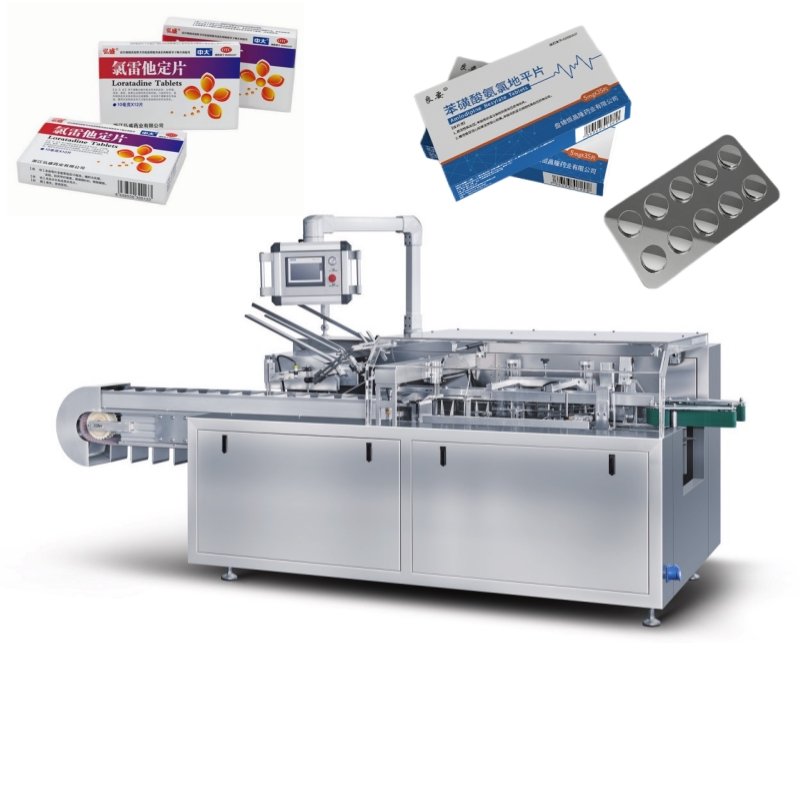
Blister Cartoning Machine
Define blister transfer, leaflet/carton handling and integrated acceptance at the line boundary.
Continue researching: read what Alu-Alu blister packaging is, then use the Alu-Alu machine selection guide to prepare the supplier brief.
URS, FAT & qualification support
Make every claim traceable to a test or controlled document
The buyer owns the site quality system and validation strategy. The supplier supports that work with the agreed design information, documents, tests and records for the ordered configuration.
URS traceability
Map product, material, control, safety, cleaning, data and document requirements into the offer.
Design review
Approve drawings, product-contact parts, guarding, access, web route and interfaces before release.
FAT protocol
Name materials, samples, run duration, challenges, acceptance criteria, deviations and retest rules.
Document package
Control manuals, drawings, parts lists, records, certificates and qualification-support deliverables.

Minimum challenge set for a useful factory acceptance test
| FAT area | Evidence to retain | Decision question |
|---|---|---|
| Normal production run | Approved product/material IDs, settings, counters, run time, good packs and rejects. | Did the configured line meet the agreed accepted-output basis? |
| Product presentation | Missing, doubled, damaged or incorrectly placed challenges and machine responses. | Are defined defects detected, rejected and counted as specified? |
| Seal & code quality | Seal-test samples, registration checks, printed data and readable-code evidence. | Does the pack meet the agreed quality method through the operating window? |
| Stops & restart | Alarm list, blocked/starved conditions, emergency stop and controlled restart records. | Does recovery protect product status and prevent unverified packs from passing? |
| Changeover | Parts list, settings, elapsed steps, cleaning, line clearance and first-good-pack checks. | Can the agreed team execute the documented change without hidden adjustments? |
Minimum FAT evidence: retain the approved protocol, material and product references, settings, counters, alarms, reject challenges, test results, deviations, punch list and signed release decision.
Buyer questions
Alu Alu blister packing machine FAQ
Answers for early selection, quotation and validation planning.
What is an Alu Alu blister packing machine?
An Alu Alu blister packing machine mechanically cold-forms an aluminum laminate into cavities, loads the approved product and seals an aluminum lidding web. The final station sequence and tooling depend on the product, material structure, blister drawing, inspection scope and accepted-output requirement.
When should I choose Alu-Alu instead of a thermoformed blister?
Choose the Alu-Alu route when product stability evidence and the approved packaging specification require an opaque, high-barrier aluminum blister. Compare both routes using the final materials, cavity design, validation requirements, material use, output and total project economics.
What determines the price of an Alu Alu blister packing machine?
Price depends on the base machine, product feeder, blister tooling, inspection and rejection functions, coding, controls, document package, line interfaces, shipping terms and site-service scope. A responsible quotation requires approved samples, material references, a blister drawing and an acceptance basis.
Can one machine pack both tablets and capsules?
A configured machine may support approved tablet and capsule projects, but each product and format needs a defined feeding method, tooling set, operating window and acceptance test. Confirm the full product range before the technical offer is signed.
How should machine output be specified?
Specify accepted blister packs per minute under named product, material, layout, staffing and test conditions. State the test duration, reject definition, allowable stops, changeovers and downstream constraints instead of relying only on a catalog cycle rate.
Can the machine connect to a blister cartoning machine?
Yes, line integration can be engineered when both sides define blister orientation, transfer height, accumulation, speed range, control signals, reject ownership and restart behavior. Prove the integrated boundary during the agreed acceptance test.
What should be tested during FAT?
Use the approved product, cold-form laminate, lidding foil and blister tooling to test normal running, feeding challenges, seal quality, print registration, inspection, rejection, alarms, restart behavior, accepted output and required records.
What documents should be agreed before ordering?
Agree the URS response, technical offer, approved drawings, document index, manuals, parts lists, material records, FAT protocol, training scope and qualification-support deliverables. Put the language, format, review cycle and responsibility split in the contract.
Project inquiry
Get an Alu-Alu blister concept built around your real product
Send the actual samples, laminate references, blister drawing, required good output, destination and evidence scope. HIJ can return a project-specific configuration and itemized quotation.
Product samples & SKU rangeCold-form and lidding referencesApproved blister drawingRequired good packs per minuteInspection & line interfacesFAT, documents & site scope