
Home › Blister Packing Machines › DPP-260
DPP-260 Automatic Blister Packing Machine for Tablets, Capsules & Softgels
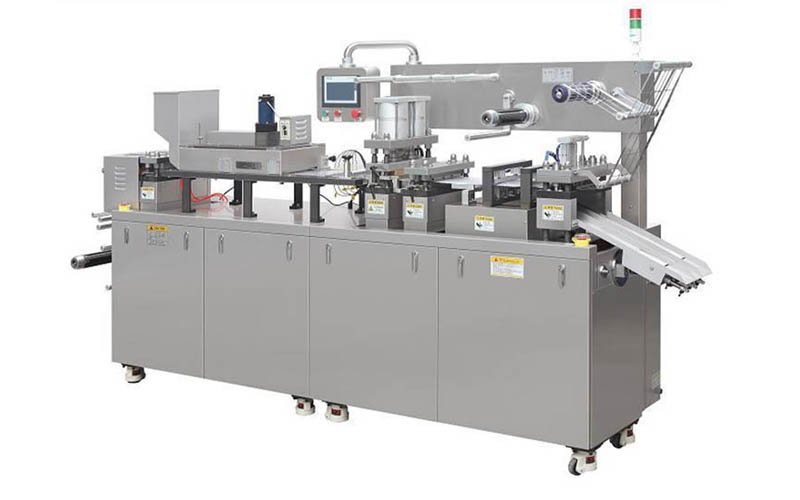
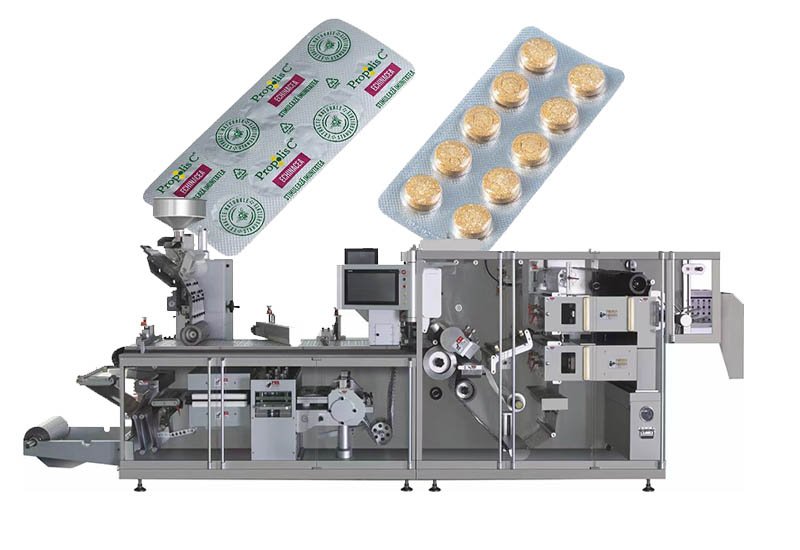
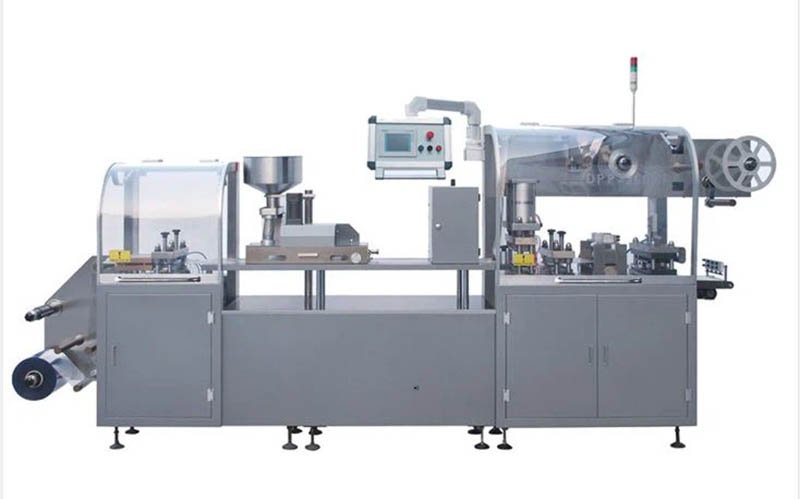
The DPP-260 is a fully automatic flat-plate blister packing machine engineered by HIJ Machinery for pharmaceutical, nutraceutical, and medical-device packaging. It thermoforms PVC/PVDC and cold-forms Alu-Alu film, delivering up to 14,000 blister sheets per hour with servo-driven film indexing and 10-second fast-lock tooling changeover.
CE-Marked
cGMP-Ready Design
ISO 9001 Manufacturing
DQ/IQ/OQ/PQ Documentation


Up to 14,000 Sheets/Hr
CE-Marked
What Is the DPP-260 Automatic Blister Packing Machine?
The DPP-260 is a fully automatic flat-plate blister packing machine manufactured by HIJ Machinery in Wenzhou, China. It forms, fills, seals, codes, and punches blister packs for tablets, capsules, and softgels using PVC, PVDC, or Alu-Alu cold-form film, producing up to 14,000 blister sheets per hour with a 260 mm maximum forming width.
Key Takeaways
- One machine handles thermoforming (PVC/PVDC) and cold-forming (Alu-Alu) with interchangeable tooling and a 10-second fast-lock format change.
- Output of up to 14,000 blister sheets per hour with a multi-sheet die layout; actual throughput depends on sheet size, cavity layout, and material.
- cGMP-ready design: 304/316L stainless product-contact parts, separated mechanical and packaging zones, and a PLC + touchscreen HMI with recipe storage.
- CE-marked and built to an ISO 9001 manufacturing standard; complete DQ/IQ/OQ/PQ documentation supports your validation program.
- Integrates with HIJ cartoning machines and turnkey lines — from standalone blister packer to a complete blister-to-carton line.
20+
Years of Blister Machine Engineering
30+
Countries with Installed Machines
14,000
Max Blister Sheets per Hour
10s
Fast-Lock Tooling Changeover
Why Pharmaceutical Manufacturers Choose the DPP-260
Every DPP-260 automatic blister packing machine is engineered around three priorities pharma buyers audit first: seal integrity, changeover speed, and documentation quality.
Dual-Material Capability
Thermoform PVC and PVDC-coated film or cold-form Alu-Alu on the same frame. Swap forming, sealing, and punching tooling to move between moisture-sensitive and standard products without buying a second machine.
10-Second Fast-Lock Changeover
CNC-machined tooling mounts with fast-lock clamps. Format parts index to fixed datums, so operators change blister formats in minutes — not the half-day required on older cam-locked designs.
PLC + HMI Control
Touchscreen HMI with recipe storage, parameter lockout by user level, and alarm history. Temperature, indexing, and sealing pressure are digitally set and repeatable batch to batch.
cGMP-Ready Construction
304/316L stainless steel product-contact parts, tool-free removable guards, and a separated-zone layout that keeps drive mechanisms out of the packaging area for easier cleaning and inspection.
Precision Sealing Station
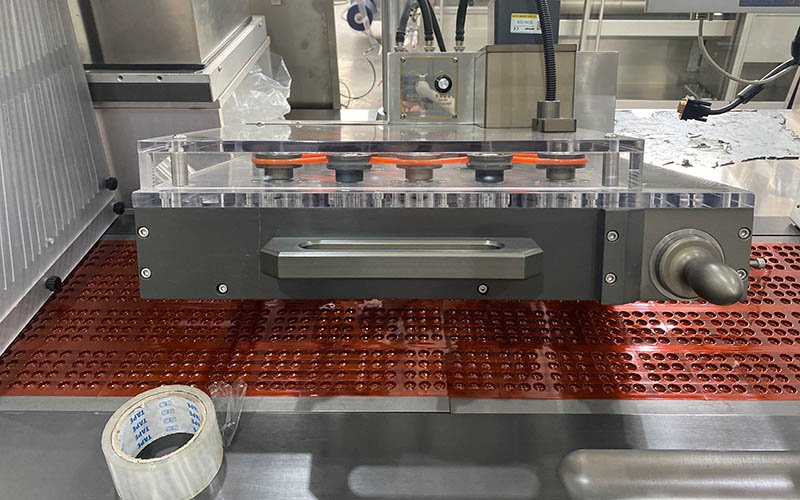
Independently controlled heating plates hold sealing temperature within a tight band across the full 260 mm web width, producing uniform seal networks that pass dye-ingress and vacuum leak testing.
Line-Integration Ready
Synchronization interface connects directly to HIJ cartoning machines, checkweighers, and vision systems — start standalone, expand into a full blister-to-carton turnkey line later.
How the DPP-260 Blister Packing Machine Works
The DPP-260 completes six process stations in one continuous, servo-indexed cycle — from film unwinding to finished, batch-coded blister sheets.
1
Film Unwinding & Preheating
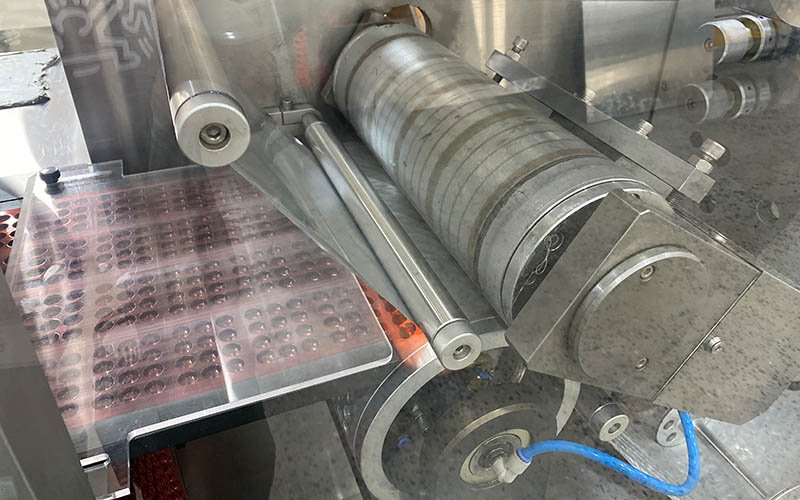
PVC/PVDC film unwinds under controlled tension. Upper and lower heating plates soften the web to forming temperature; for Alu-Alu, the preheat stage is bypassed and the foil is cold-formed by mechanical plug assist.
2
Blister Forming
Compressed air (thermoforming) or plug-assist dies (cold forming) draw cavities across the 260 × 150 mm forming area, up to 25 mm deep for large capsules, softgels, vials, and devices.
3
Product Feeding
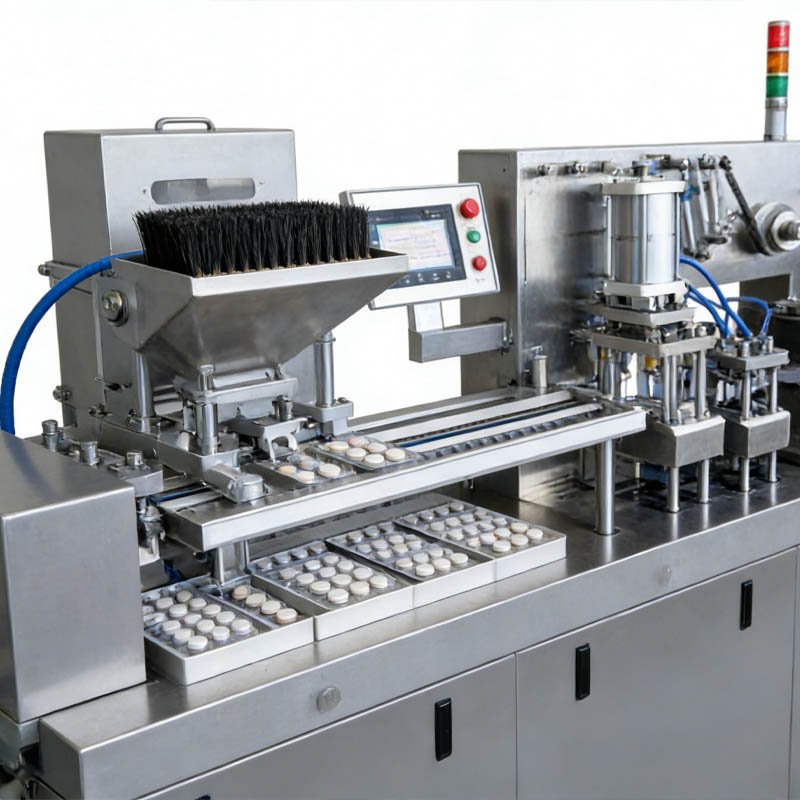
A brush-box, vibratory, or dedicated feeder places tablets or capsules into every cavity. Optional camera inspection detects empty, broken, or double-filled pockets before sealing.
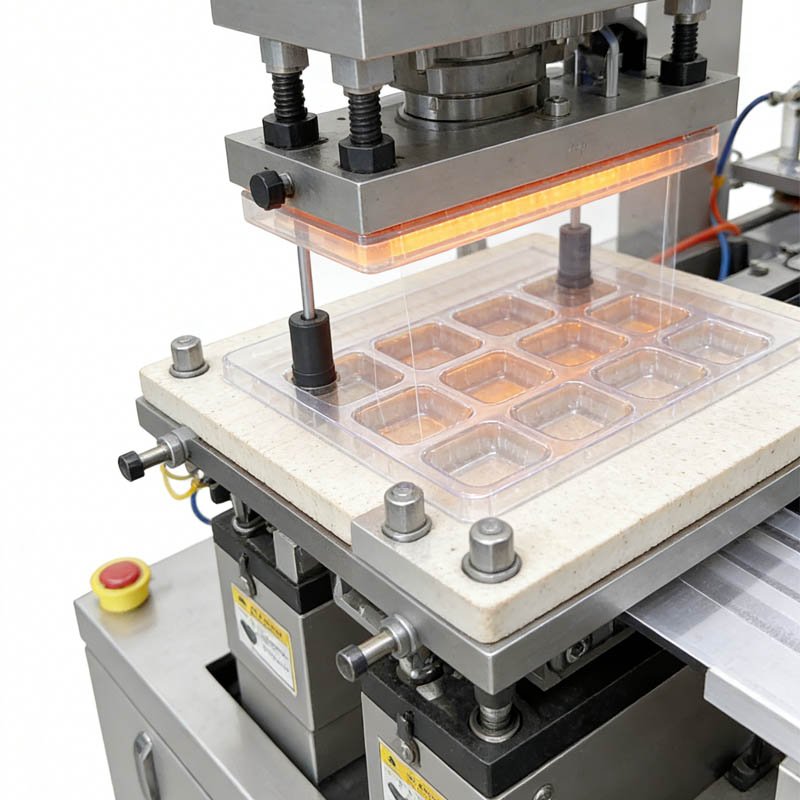
4
Heat Sealing
Printed aluminum lidding foil seals against the filled web under controlled temperature and pressure, forming a continuous hermetic seal network around every cavity.
5
Batch Coding & Embossing
The coding station embosses batch number, expiry date, and lot data directly into the lidding foil in registration with the printed artwork.
6
Punching & Waste Rewind
The die-cutting station punches finished blister sheets to final size while the skeletal web waste rewinds automatically for clean disposal — ready for manual packing or inline cartoning.
DPP-260 Technical Specifications
Core parameters of the DPP-260 automatic blister packing machine. Exact throughput depends on blister sheet size, cavity layout, forming depth, and packaging material.
| Model | DPP-260 Automatic Flat-Plate Blister Packing Machine |
| Punching Frequency | 25–60 cycles/min (servo-indexed) |
| Maximum Output | Up to 14,000 blister sheets/hour with multi-sheet die layout (typical 80 × 57 mm sheet) |
| Max. Forming Area | 260 × 150 mm |
| Max. Forming Depth | 25 mm |
| Forming Film (PVC/PVDC) | 0.15–0.5 mm × 260 mm |
| Alu-Alu Cold-Form Foil | Supported with cold-forming tooling package |
| PTP Lidding Foil | 0.02–0.035 mm × 260 mm |
| Sealing Temperature | 80–280 °C, digitally controlled |
| Compressed Air | 0.6 MPa, approx. 0.4 m³/min |
| Power Supply | 380 V / 220 V, 50/60 Hz, approx. 3.5 kW |
| Mold Cooling | Tap water or recirculating chiller |
| Machine Dimensions (L×W×H) | 2,300 × 750 × 1,650 mm |
| Machine Weight | Approx. 1,200 kg |
| Product-Contact Parts | 304/316L stainless steel |
| Build Standard | CE-marked · cGMP-ready design · ISO 9001 manufacturing standard |
| Documentation | DQ/IQ/OQ/PQ document package to support your validation program |
| Standard Lead Time | 12–16 weeks, FOB China |
Specifications are typical values and may be tailored to your product during mold design. HIJ Machinery supplies the DQ/IQ/OQ/PQ documentation package that supports your facility's own qualification and validation process.
Packaging Materials the DPP-260 Handles
One frame, three barrier strategies. The right film depends on your product's moisture and light sensitivity — and the DPP-260 runs all three with a tooling change.
PVC (Standard)
The economical choice for stable tablets and nutraceuticals. Clear cavities give full product visibility. Forming film 0.15–0.5 mm; fastest cycle rates and lowest material cost per sheet.
PVDC-Coated
PVC coated with PVDC multiplies moisture and oxygen barrier several-fold at a modest cost premium — the mainstream choice for humid-climate markets in Southeast Asia, Africa, and Latin America.
Alu-Alu (Cold Form)
Total light, moisture, and oxygen barrier for hygroscopic and high-value drugs. The DPP-260 cold-forms laminate foil with plug-assist dies — no heating — protecting heat-sensitive products.
Semi-Automatic vs. the DPP-260 Fully Automatic Blister Machine
| Criteria | Semi-Automatic Blister Machine | DPP-260 Fully Automatic |
|---|---|---|
| Feeding | Manual product placement | Automatic feeder + optional camera inspection |
| Typical Output | 600–2,000 sheets/hour | Up to 14,000 sheets/hour |
| Operators | 2–4 per shift | 1 operator, supervisory role |
| Process Steps | Forming and sealing on separate stations | Form–fill–seal–code–punch in one continuous cycle |
| Batch Consistency | Operator-dependent | PLC recipes; repeatable parameters batch to batch |
| Best For | R&D, hospital pharmacies, pilot batches | Commercial pharmaceutical & nutraceutical production |
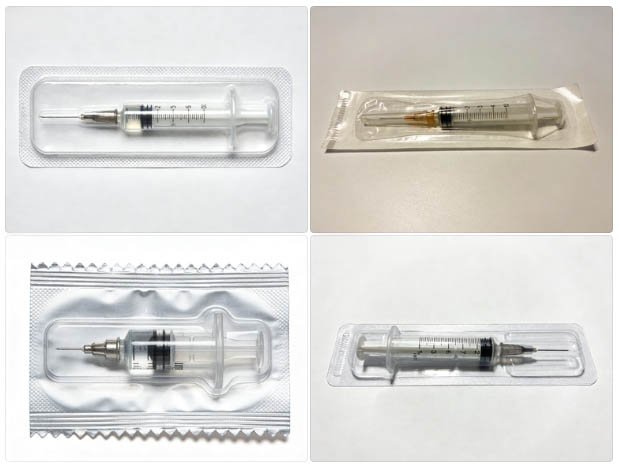
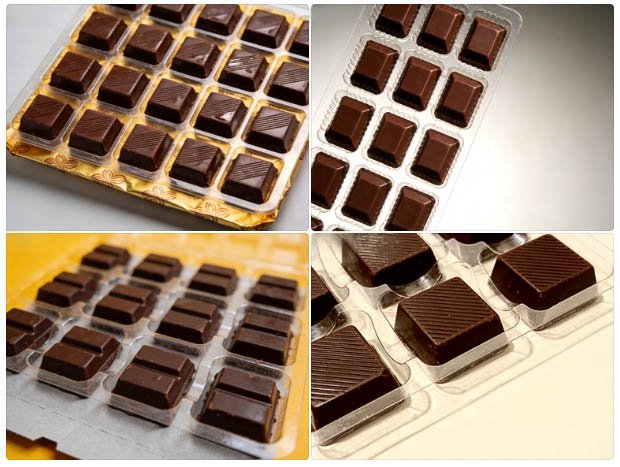
What the DPP-260 Packs
Interchangeable forming molds adapt the DPP-260 to round, oval, oblong, and custom cavity shapes across pharma, nutraceutical, and medical-device products.

Forester's Insight: What Actually Kills Blister Machine ROI
After auditing more than 100 packaging facilities across 30+ countries, I can tell you the most expensive blister machine problem is never the purchase price — it is changeover downtime. A machine that saves you $20,000 upfront but needs four hours per format change will cost you that saving back every quarter. That is why we engineered the DPP-260 around fast-lock tooling and PLC recipes: your second product launch should take minutes of setup, not a lost shift.
My other advice: always request the seal-integrity test protocol before you buy. If a supplier cannot show you how their sealing station holds temperature across the full web width, walk away.
— Forester Xiang, Founder & Chief Engineer, HIJ Machinery · 20+ years in pharmaceutical packaging engineering
CE-MarkedMachinery Directive conformity for EU import and installation.
cGMP-Ready DesignStainless contact parts and separated zones support your GMP operations.
ISO 9001 ManufacturingBuilt under an ISO 9001 quality management standard.
DQ/IQ/OQ/PQ SupportFull documentation package to support your own validation program.
About the DPP-260 Manufacturer
The DPP-260 automatic blister packing machine is designed and manufactured by HIJ Machinery (legal name: Wenzhou Trustar Machinery Technology Co., Ltd), a pharmaceutical, cosmetic, and food packaging machinery manufacturer founded in 2004 and headquartered in Rui'an, Wenzhou, Zhejiang, China. HIJ Machinery engineers blister packing machines, cartoning machines, capsule filling machines, and complete turnkey pharmaceutical packaging lines exported to more than 30 countries.
All DPP-260 content on this page is authored and reviewed by Forester Xiang, Founder and Chief Engineer of HIJ Machinery, drawing on 20+ years of packaging machinery engineering and 100+ pharmaceutical facility audits worldwide. The DPP-260 is CE-marked, built to an ISO 9001 manufacturing standard, and engineered with a cGMP-ready design; HIJ Machinery supplies DQ/IQ/OQ/PQ documentation packages that support each customer's own equipment qualification and validation process.
Technical inquiries: [email protected] · Website: hijpackingmachine.com
DPP-260 Frequently Asked Questions
What is the DPP-260 automatic blister packing machine used for?
The DPP-260 is used to form, fill, seal, batch-code, and punch blister packs for pharmaceutical tablets, hard and soft capsules, softgels, nutraceutical supplements, medical devices, and confectionery. It handles PVC, PVDC-coated, and Alu-Alu cold-form materials on one frame with interchangeable tooling.
What is the real output of the DPP-260 blister machine?
The DPP-260 runs at 25 to 60 punching cycles per minute. With a multi-sheet die layout on a typical 80 by 57 mm blister sheet, maximum output reaches approximately 14,000 blister sheets per hour. Actual throughput depends on sheet size, cavity layout, forming depth, and material, so HIJ Machinery calculates a guaranteed output figure for your specific product before quotation.
Can the DPP-260 run both Alu-PVC and Alu-Alu blister packaging?
Yes. The DPP-260 thermoforms PVC and PVDC-coated film using heated plates and compressed air, and cold-forms Alu-Alu laminate using plug-assist dies with a dedicated tooling package. Fast-lock clamps allow the format change to be completed in minutes.
How much does a DPP-260 blister packing machine cost?
The final price depends on tooling count, feeder type, optional camera inspection, and export packaging. Chinese-manufactured automatic flat-plate blister machines in this class are typically a fraction of the cost of comparable European equipment. Contact HIJ Machinery with your product samples for a transparent FOB China quotation, and see our blister packing machine price guide for a full cost breakdown.
Is the DPP-260 suitable for GMP pharmaceutical production?
The DPP-260 features a cGMP-ready design: 304/316L stainless steel product-contact parts, a separated-zone layout that isolates drive mechanisms from the packaging area, and a PLC with recipe storage. The machine is CE-marked and built to an ISO 9001 manufacturing standard, and HIJ supplies a complete DQ/IQ/OQ/PQ documentation package to support your facility's own validation program.
Can the DPP-260 be integrated with a cartoning machine?
Yes. The DPP-260 includes a synchronization interface for direct connection to HIJ blister cartoning machines, checkweighers, and vision inspection systems. Many customers start with a standalone DPP-260 and later expand it into a complete blister-to-carton turnkey line.
How long is the delivery time for a DPP-260?
Standard lead time is 12 to 16 weeks FOB China, including mold design and manufacture, factory acceptance testing with your actual product, and export packing. Complex custom tooling or full line integration can extend this timeline, which HIJ confirms at order.
What after-sales support does HIJ Machinery provide for the DPP-260?
HIJ Machinery provides remote commissioning support, on-site installation and training in more than 30 countries, a spare parts package with every machine, and lifetime technical support led by the engineering team of founder Forester Xiang. Video troubleshooting and English documentation are standard.
Compare, Learn & Plan Your Blister Line
DPP-260 Comparisons
DPP-260 vs DPP-250: Which Model Fits Your Output? DPP-260 vs DPP-140 Comparison DPP-260 vs Uhlmann Blister Machine DPP-260 vs IMA Blister Machine DPP-260 vs Romaco Blister Machine DPP-260 for PVC/PVDC Blister PackagingGet Your DPP-260 Quotation Within 24 Hours
Send us your product samples and target output. Forester's engineering team will confirm the right tooling, calculate your guaranteed sheets-per-hour figure, and provide a transparent FOB quotation — no obligation.