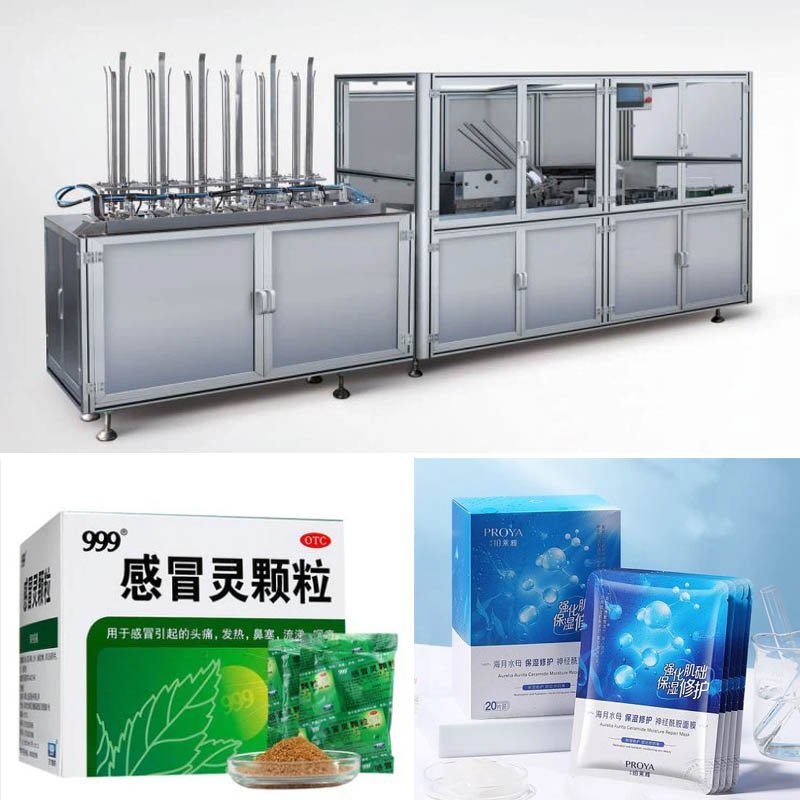
Horizontal Cartoning Machine — HIJ-120HC
A continuous-motion horizontal cartoner for blister packs, sachets, bottles, tubes and other oriented products. Configure product feeding, leaflet insertion, closure, coding, inspection and rejection around approved samples and the buyer's URS.
A horizontal cartoning machine loads product sideways into a carton, making it suitable for flat, fragile or oriented items such as blister packs, tubes, bottles, sachets, ampoules and vials. The continuous-motion HIJ-120HC has a published maximum of 160 cartons/min; sustained output and option scope depend on the approved product, carton, leaflet and FAT criteria. Compare the vertical cartoning machine or browse all cartoning machines.
Key Specs at a Glance
- Output: up to 160 cartons/min (9,600/hr)
- Handles: blisters, tubes, bottles, sachets, ampoules, vials
- Control: Siemens S7-1200 PLC + 10" HMI
- Changeover: format parts and recipe scope confirmed per SKU
- Project evidence: URS, approved samples and FAT criteria
- Commercial basis: itemised project quotation
Compare & Explore
Send the product, carton, leaflet, target output and acceptance requirements for an itemised configuration review.
Discuss my cartoning lineFour risks to resolve before selecting a horizontal cartoner
A headline speed does not show how a cartoner will perform with your product, carton and leaflet. Compare suppliers using sustained good output, reject evidence, changeover scope and FAT acceptance criteria.
Rated Speed vs Sustained Output
Actual accepted output depends on product presentation, carton stiffness, leaflet complexity, infeed stability and the reject logic used during production.
Product Damage on Insertion
Misaligned products can jam or be damaged during side insertion. Specify product orientation, pusher timing, overload response and reject handling in the URS.
Leaflet Folding Errors
Multi-fold leaflets can misfeed or enter incorrectly. FAT challenge tests should cover missing, doubled and incorrectly folded leaflets and the resulting machine response.
Uncontrolled SKU Changeovers
Changeover time and repeatability depend on format parts, adjustment points, recipes and operator method. Test the planned SKU range before acceptance.
Turn each loading risk into a configuration and FAT check
The HIJ-120HC configuration should map each project risk to a defined mechanism, option, test method and acceptance criterion in the quotation and FAT protocol.
Continuous-Motion Architecture
The continuous-motion platform is intended for high-throughput applications. Verify accepted cartons per minute, stops, rejects and restart behaviour with production-representative materials.
FAT-Based Output EvidenceServo-Driven Product Loading
Servo-driven loading coordinates product presentation with carton position. The approved sample set should define acceptable alignment, insertion and damage criteria.
Sample-Based Insertion TestPrecision Leaflet Folding & Insertion
The published configuration supports multiple leaflet folds. Confirm the folder, presence detection, rejection and challenge-test scope in the signed quotation.
Defined Leaflet ChallengesControlled Format Changeover
List every planned SKU, format part and adjustment point. The FAT should record changeover steps, required tools, settings and the first acceptable cartons after restart.
Repeatable Changeover MethodWill your pack fit a horizontal end-load cartoner?
A horizontal cartoning machine inserts an oriented product or group through an open carton end. Define that complete loading path before selecting the feeder, leaflet handling and closure. Use the brief below to request a sample-based fit assessment and quotation.
Verify the insertion path before selecting a model
- Complete product envelopeProvide the oriented product or counted group, including any film tails, seams and protrusions. Identify which surfaces may contact guides or the loading mechanism.
- Carton opening and clearanceUse the carton drawing and representative blanks to assess the open end, usable internal space and insertion path. Include the leaflet or insert stack in the clearance review.
- Presentation, detection and recoveryDefine arrival orientation, spacing, grouping and handoff height. Agree missing-product, leaflet, overload and reject challenges for the proposed configuration.
- Accepted output with production materialsAgree the required good cartons per minute for named formats and test conditions. Verify loading, closure, rejects, stops and restart behaviour during FAT.
These checks define the sample-trial scope. They do not establish compatibility from dimensions alone. Loading method, options, output and format parts must be confirmed for the approved pack.
Prepare your horizontal cartoner fit brief
Share what you know. Leave uncertain items blank and include them in the configuration review.
Prefer a separate page? Send your horizontal cartoning requirements.
See the horizontal cartoning sequence
Use this configuration demonstration to review carton handling, product insertion, leaflet flow and closure. Request a timed sample run for your approved materials and target accepted output.
From Flat Carton to Sealed Package — Every Step Engineered
Review these six process stages together. The selected mechanisms, sensors, format parts and options should be listed in the quotation and challenged with representative production materials.
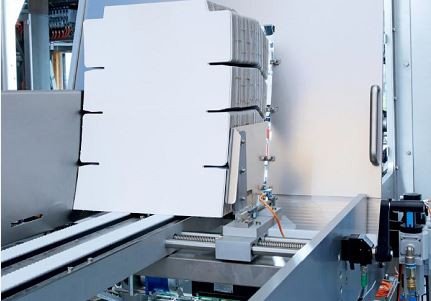
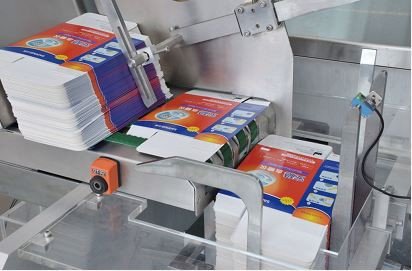
Carton Feeding & Erection
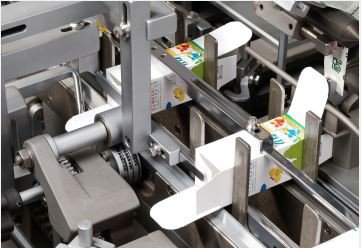
Review the magazine, blank dimensions, board stiffness and opening method with representative cartons. Agree replenishment access, low-carton response and carton-opening checks for the proposed configuration.
Precision Carton Opening
Confirm how the carton is held and opened before loading. Challenge skewed or poorly opened blanks and agree the detection, stop or rejection response before product insertion.
Leaflet Folding & Insertion
Where a leaflet folder is specified, confirm paper, dimensions, fold pattern and insertion sequence. Challenge missing or doubled leaflets and agree the detection and rejection response for the selected equipment.
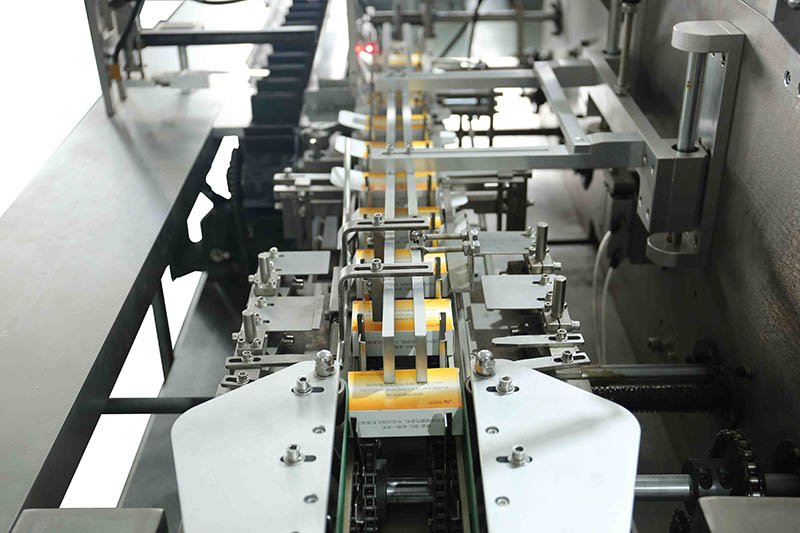
Automatic Product Loading
Servo-driven loading coordinates product presentation with carton position. Confirm alignment tolerances, pusher timing, overload response and reject logic with production-representative samples during FAT.
Carton Sealing (Tuck-In or Hot-Melt Glue)
Choose tongue-and-slit or hot-melt closure where configured. Define seal appearance, closure strength, glue equipment and inspection criteria in the quotation and FAT protocol.
Finished Product Discharge
Sealed cartons exit onto a synchronized takeaway conveyor. Optional coding, weight verification and case-packing interfaces must be defined in the line layout and I/O list.
6 Core Features That Set the HIJ-120HC Horizontal Cartoner Apart
The items below describe the published platform. Final brands, mechanisms and options must be confirmed in the bill of materials and quotation.
High-Speed Continuous Motion
Continuous-motion architecture targets high-throughput applications. Verify accepted output and reject behavior at FAT with the actual product, carton, leaflet and machine configuration.
Hygienic Access and Guarding
Specify contact materials, guarding, cleanability, safety interlocks and required documents in the URS. The buyer's quality team remains responsible for qualification and approval.
Siemens PLC + HMI Control
The published configuration lists a Siemens S7-1200 PLC and 10-inch color HMI. Confirm recipes, alarms, reports, audit trail, OEE and remote-access requirements before order.
Stainless Multi-Use System
Product-family fit depends on the feed system and format parts. Validate every planned SKU with representative samples, drawings and an approved format matrix.
Controlled Format Changeover
Confirm quick-release parts, adjustment points, recipe control and change-part storage in the quotation. Measure the agreed changeover procedure during FAT.
Overload monitoring and response
Define overload monitoring, guarding and stop-response tests in the safety review and FAT protocol for the selected machine configuration.
Review the loading requirements across four product families
The HIJ-120HC can be configured for several product families. Each application requires approved samples, format parts, feeding design and project-specific acceptance criteria.
HIJ-120HC published reference configuration
These are the published reference specifications. Confirm the selected configuration, format range, utilities, options and acceptance criteria in the signed quotation.
Reference values to confirm in the project datasheet
| Model Number | HIJ-120HC (High-Speed Continuous Motion) |
|---|---|
| Maximum Output | 160 cartons/minute (9,600/hour) |
| Carton Size Range (L × W × H) | (50–250) × (20–80) × (15–80) mm |
| Carton Material | 250–400 gsm SBS / FBB / Recycled Board |
| Leaflet Folding | Bi-fold, Tri-fold, Accordion, Parallel — up to 4 panels |
| Sealing Method | Tongue-and-Slit (standard) / Hot-Melt Glue (optional) |
| Control System | Siemens S7-1200 PLC + 10" Touchscreen HMI |
| Servo Drives | Yaskawa Sigma-7 (4 axes) — main drive, pusher, leaflet, output |
| Total Power Consumption | 4.5 kW (3-phase 380V / 220V configurable) |
| Compressed Air | 0.6 MPa, 250 L/min (clean, dry, oil-free) |
| Machine Dimensions (L × W × H) | 3,800 × 1,250 × 1,650 mm |
| Machine Net Weight | Approx. 1,800 kg |
| Documentation & FAT Scope | Confirmed against the buyer's URS and listed in the signed quotation |
| Commercial & Service Terms | Confirmed in the signed quotation and contract |
Published platform references are a starting point for the review. Confirm the current datasheet, format matrix, utilities, component brands and accepted-output target for the quoted configuration before purchase.
Define the Complete Cartoning Project Scope Before Purchase
A reliable project starts with approved samples, clear machine boundaries, measurable FAT criteria and written commercial terms.
Application Engineering
Define the product, carton, leaflet, feeding method, output target and rejected-pack handling with representative samples and a URS.
One Project Boundary
Document every machine interface, supplier responsibility, I/O signal, utility and downstream hand-off before the order is released.
FAT and Documentation
Agree on test materials, run duration, accepted output, reject challenges, records, manuals and drawings before FAT begins.
Service and Spare Parts
Confirm commissioning, training, remote support, warranty, spare-parts list and response responsibilities in the commercial agreement.
Choosing the automation level as well as the loading direction? Horizontal or end-load describes how the product enters the carton, not which tasks remain manual. Use our automatic vs semi-automatic cartoning machine comparison to review operator tasks, selected operating cost per good carton and a clearly labelled payback example before finalizing the project scope. Apply your own staffing, accepted-output and quoted-cost assumptions; the example figures are not HIJ prices or a promised return.
Horizontal Cartoning Machine — Your Key Questions Answered
Practical questions for engineering, quality and procurement teams evaluating the HIJ-120HC platform.
What's the maximum speed of the HIJ horizontal cartoning machine?
The published maximum is 160 cartons per minute. Sustained accepted output depends on product feeding, carton and leaflet geometry, material behavior, inspection logic and reject rate. Define the acceptance target in the URS and verify it with representative materials during FAT.
Can this machine handle different product shapes — bottles, tubes, blisters, sachets?
The platform can be configured for bottles, tubes, blister packs, sachets, ampoules, vials and other oriented products. Every planned SKU requires an approved format matrix, product samples, feeding review and the correct change parts. Confirm the measured changeover method at FAT.
How are delivery and commissioning terms confirmed?
Delivery depends on the approved configuration, tooling, bought-out options, integration scope, documentation and FAT plan. The signed quotation should state the production schedule, buyer material deadlines, FAT window, shipment terms and any commissioning or training services.
Which qualification and FAT documents can HIJ supply?
Document scope is project-specific. List required drawings, manuals, material declarations, risk records, FAT protocols and any qualification support in the URS, then include the agreed deliverables in the quotation. The buyer's quality team remains responsible for site qualification and regulatory approval.
Can the machine fold and insert leaflets — or do I need a separate folder?
A leaflet folder and inserter can be included where specified. The published platform describes bi-fold, tri-fold, accordion and parallel-fold applications up to four panels. Confirm leaflet paper, dimensions, fold pattern, sensor logic and reject action with samples in the quotation and FAT plan.
What is the difference between a vertical and horizontal cartoning machine?
A horizontal cartoner loads an oriented product through a carton end, while a vertical cartoner loads through the open top. Product stability, presentation, carton geometry, inserts and required inspection determine the appropriate route. Neither direction guarantees less damage, a higher rate or a smaller footprint for every application.
How is the HIJ-120HC price calculated?
Price is calculated from the product feed, carton and leaflet formats, closure method, coding, inspection, reject system, line interfaces, electrical standard, documentation, FAT, shipping and service scope. Send representative samples and a URS for an itemized project quotation.
Still Have Questions? Talk to Our Cartoning Engineers Directly
Send your product specification, carton drawing, leaflet, target accepted output and required line interfaces so the engineering team can review the application.