
Quick Answer
What Is a Tablet Blister Packing Machine?
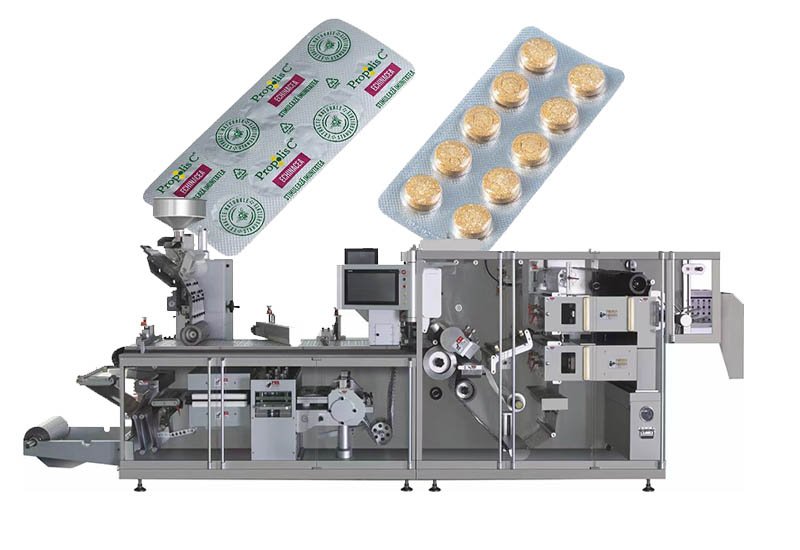
A tablet blister packing machine is automated pharmaceutical packaging equipment that thermoforms cavities in PVC film, feeds tablets or capsules into each cavity, heat-seals aluminum lidding foil over the cavities, then prints batch codes and die-cuts finished blister cards. The HIJ DPH-380B roller-plate model uses positive-pressure forming and roller heat sealing to produce 500–600 blisters per minute (40–180 punches/min) — roughly 4–5× the output of a standard flat-plate blister machine — with a 260 × 240 mm forming area, a 9-axis Siemens servo drive, a cGMP-ready design with stainless steel product-contact parts, and a full DQ/IQ/OQ/PQ documentation package to support the buyer's own validation program.
Key Takeaways
- Output: 500–600 blisters/min via 40–180 punches/min roller-plate operation — built for high-volume tablet and capsule lines running Alu-PVC blister formats.
- Speed advantage: Positive-pressure forming + roller heat sealing runs 4–5× faster than ordinary flat-plate blister packing machines.
- Precision: 9-axis Siemens servo drive with brake-locking servo traction achieves 6 μm positioning accuracy; servo step punching holds cross/longitudinal waste edge within 0.5–1 mm.
- Sealing quality: Water-cooled heat-sealing roll die with grid-contact conductive-ring heating holds 210 °C uniformly — no carbon-brush contamination, no cold spots.
- Component brands: Siemens PLC + servo system, Omron temperature control, Schneider electrics, Weidmüller terminals — spare parts available worldwide.
- Compliance: cGMP-ready design, stainless steel and non-toxic product-contact parts, CE-marked, manufactured under an ISO 9001 standard; DQ/IQ/OQ/PQ documentation supports your own validation program.
WHO THIS MACHINE IS BUILT FOR
When a Flat-Plate Blister Machine Becomes Your Bottleneck
If any of these describe your tablet packaging line, a roller-plate machine like the DPH-380B is the engineering answer — not another flat-plate unit.
Volume Has Outgrown 80–120 Blisters/Min
Running two or three flat-plate machines in parallel means duplicate operators, duplicate tooling and duplicate validation. One DPH-380B replaces 4–5 flat-plate units at 500–600 blisters/min with a single operator and one qualification package.
Coated Tablets Break in Hard-Impact Feeders
The DPH-380B's dedicated pill feeder with rotary soft-brush feeding and vibration-controlled alignment handles film-coated tablets, special-shaped tablets and capsules gently — an automatic capsule orienting unit is available as an option.
Film Waste Is Eating Your Margin
Servo step punching keeps mis-registration waste edge within 0.5–1 mm in both directions. On an 8-hour daily schedule that saves a meaningful five-figure sum in PVC and foil every year compared with gear-indexed punching.
Your Auditors Ask for Documentation
Every DPH-380B ships with DQ/IQ/OQ/PQ protocols, material certificates for product-contact parts and FAT records — prepared to support your own validation program under WHO GMP, cGMP and EU GMP frameworks.
HOW IT WORKS
How the DPH-380B Tablet Blister Packing Machine Works
From PVC roll to finished blister card in one continuous servo-synchronized web — six stations, each engineered for high-speed stability.
1
PVC Unwinding with Photoelectric Control
A motorized unwind stand with inflatable shaft and photoelectric loop control feeds 0.25 × 380 mm medicinal PVC into the machine. The optical sensor pauses and resumes the web automatically, minimizing traction resistance and stopping the machine safely if the film breaks or jams — a fault-protection function specific to the DPH series.
2
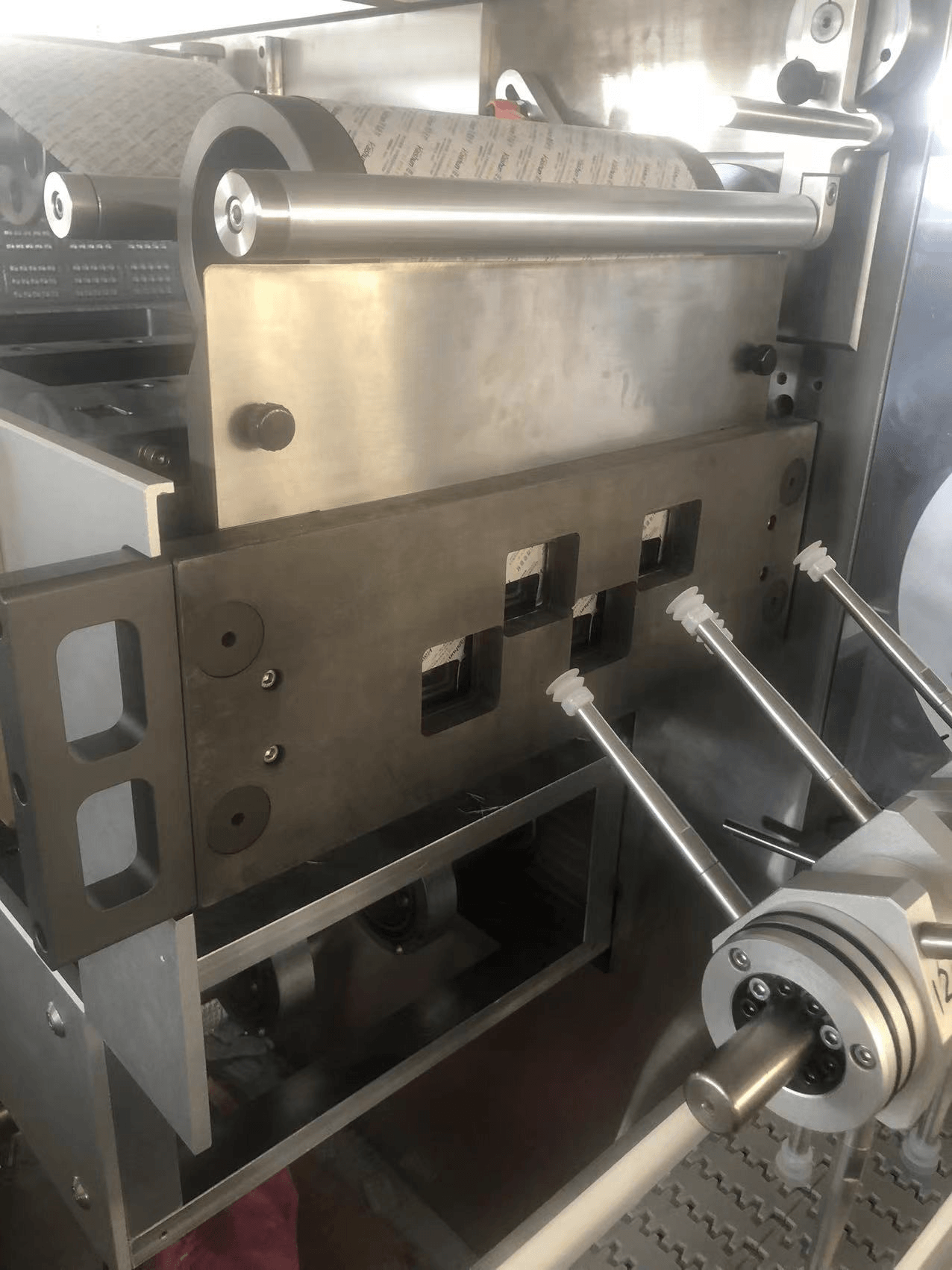
PTFE-Coated Preheating for Uniform Softening
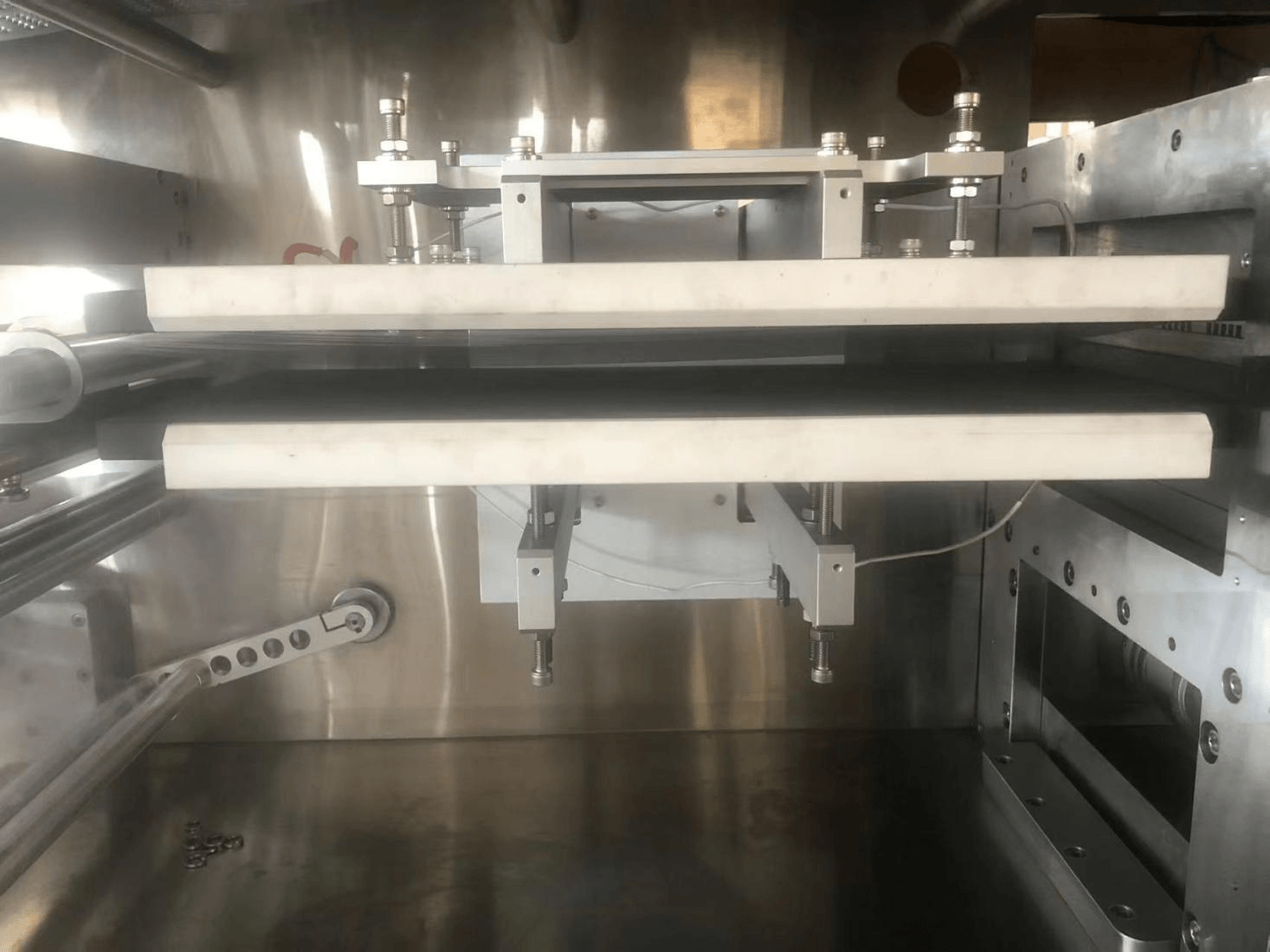
Upper and lower embedded heating plates (2 kW × 4) with a non-stick PTFE surface soften the PVC evenly, producing higher forming pass rates and clearer blister transparency. When the machine stops, a pneumatic cylinder drops the lower plate away automatically so the web never overheats — limiting scrap to a single blister card.
3
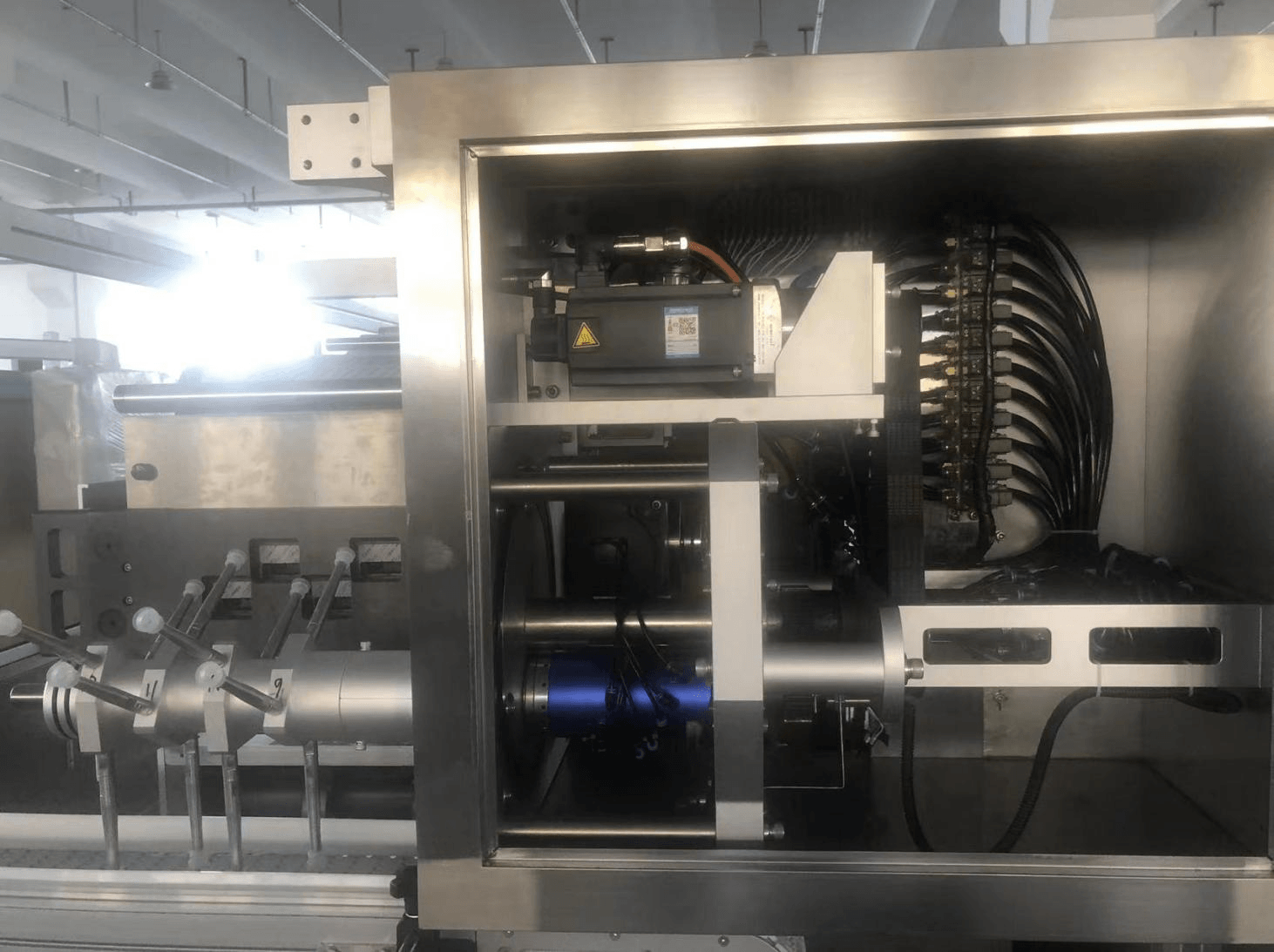
Positive-Pressure Blister Forming
Compressed air blows the softened film into electronically polished mold cavities — positive-pressure forming that yields uniform wall and top thickness across a maximum 260 × 240 mm forming area with up to 14 mm depth. A double-cam support with spring-buffer dies distributes forming force evenly, and the brake-locking servo traction motor holds web registration to 6 μm.
4
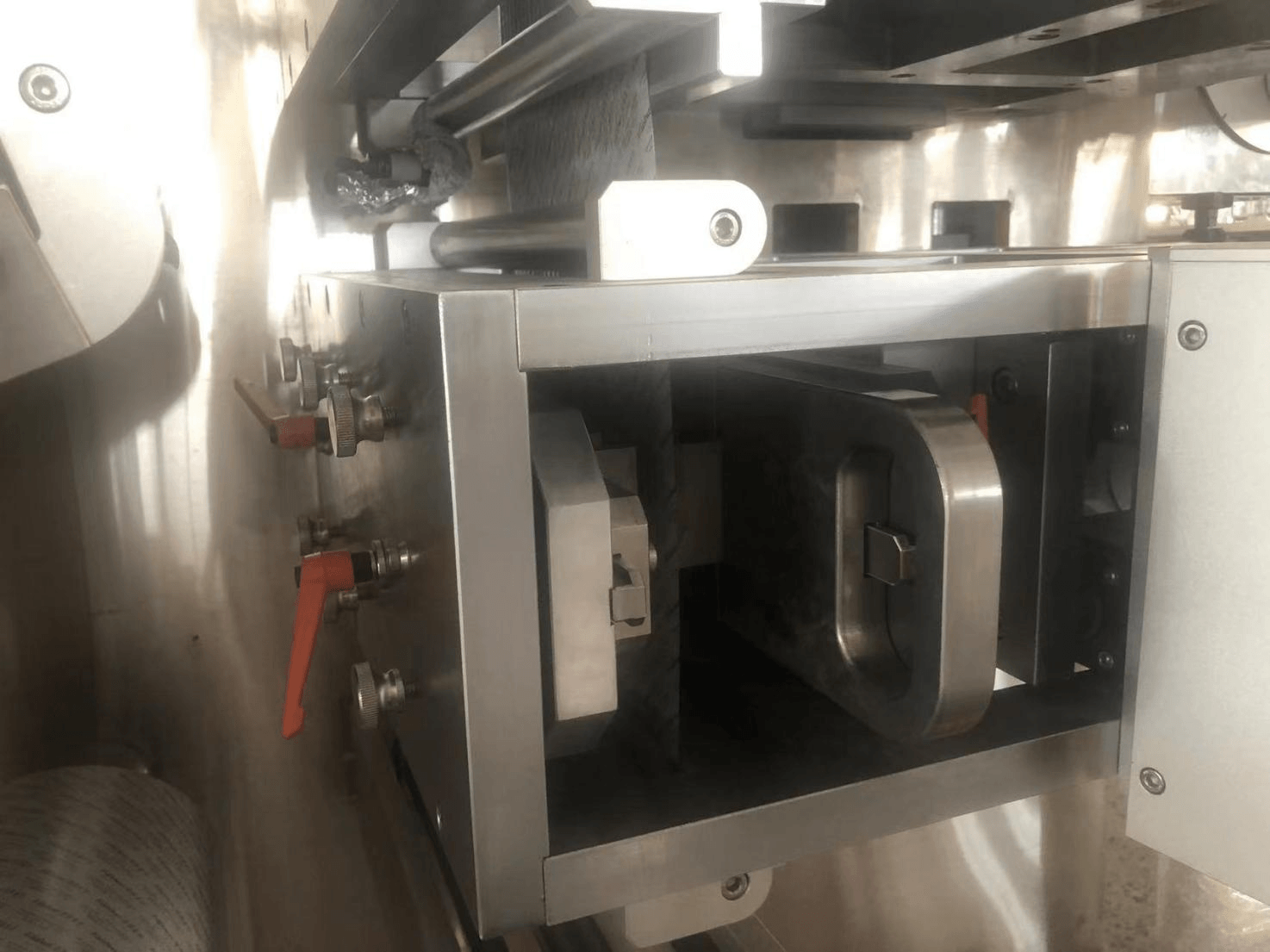
Rotary Soft-Brush Tablet Feeding
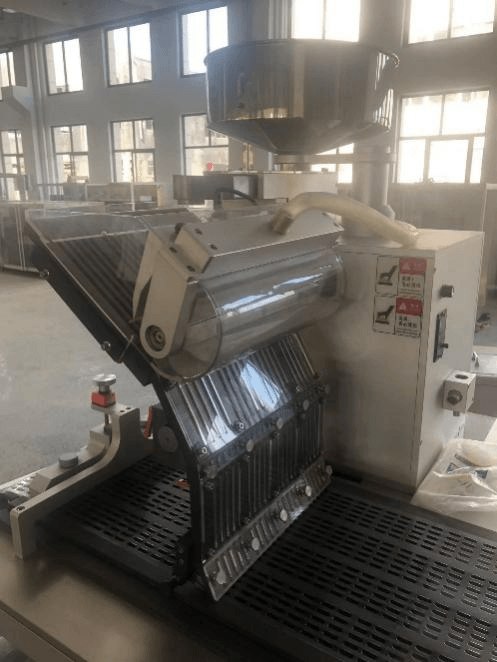
A vibrating charging plate and mold-matched blanking plate achieve true one-to-one cavity feeding, while the high-speed rotary brush gently seats tablets without impact damage to coatings. An extended feeding rail gives operators real-time visibility to catch feed issues early, a powder-suction rolling brush removes dust, and a photoelectric blocked-tablet sensor stops the machine before a protruding tablet can reach the sealing roll.
5
Water-Cooled Roller Heat Sealing at 210 °C
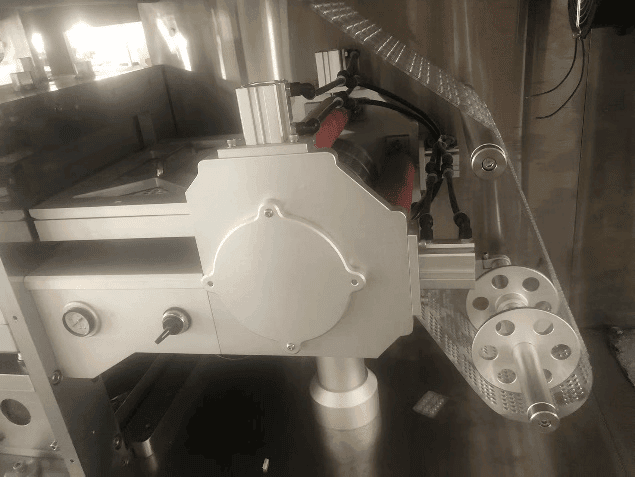
Filled blisters and 0.02 × 380 mm PTP aluminum foil pass through the nip of the heat-seal roller and mesh roller. Line contact means small area, high relative pressure and short heating time — the core reason roller sealing runs faster and seals more thoroughly than flat-plate sealing. Grid-contact conductive-ring heating eliminates carbon-brush contamination, internal water cooling plus external air cooling prevents blister deformation, and the roll lifts automatically at every stop to shield the web from radiant heat.
6
Batch Coding, Servo Punching & Discharge
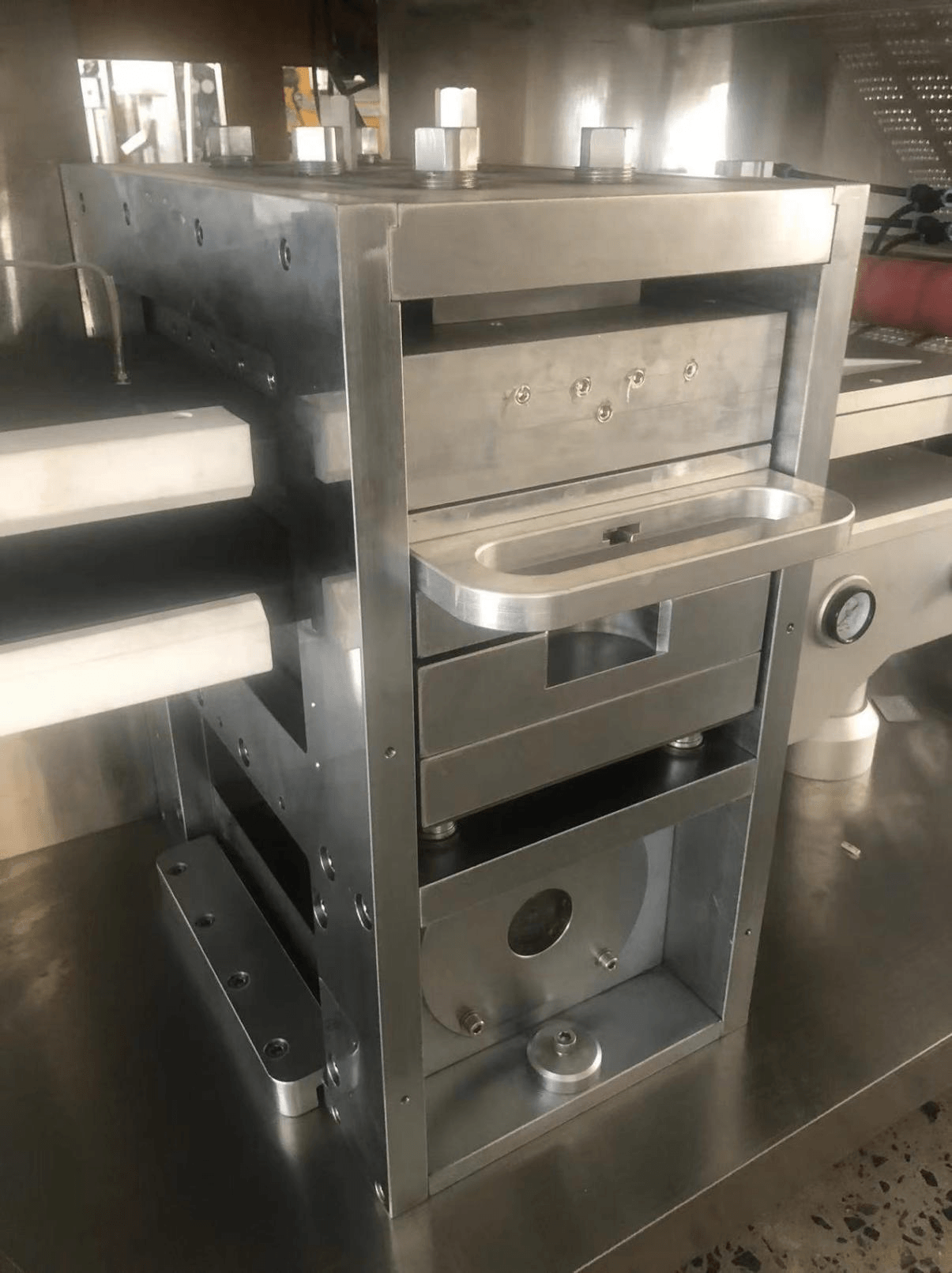
A heated steel-letter station hot-stamps crisp batch numbers with quick-change positioning screws — no realignment needed after a lot change. Servo step punching keeps waste edge within 0.5–1 mm, an optional score-line (tear-line) unit can be added, waste web is trimmed and discharged automatically, and finished blister cards exit in a single orderly line onto the outfeed conveyor — ready for a downstream blister cartoning machine.
ENGINEERING INSIDE
9-Axis Servo Architecture — Why the DPH-380B Stays Stable at 180 Punches/Min
Forming, traction, heat sealing, batch coding, punching, blanking traction and the reject manipulator each run on an independent Siemens servo axis, coordinated by a Siemens PLC — no gear trains, no chains, no accumulating backlash.
Siemens PLC + 9 Servo Axes
Siemens CPU with distributed remote I/O and absolute-encoder servo drives on every critical station. Each station is driven by its own reducer through shaft-and-pendulum linkages — simpler, quieter and longer-lived than gear/sprocket transmissions.
Camera Detection + Servo Rejection
The camera inspection system flags empty or defective cavities on its own industrial display; a 360° high-speed rotating suction-plate manipulator on an independent servo axis removes rejects with an operator-settable pick angle. Product recipes are stored in the HMI database — changeover is a recall, not a re-setup.
Fast Format Change
Pressure-plate mold fixing and a guide-rail sealing-roll alignment system mean format molds install and position in one pass — no rail readjustment on repeat changeovers, and no gear changes thanks to servo step punching.
Layered Protection Functions
Auto-stop on PVC or foil run-out, over-temperature cutoff protecting the electrical system, blocked-tablet detection before the sealing roll, emergency stops for tooling changes, and on-screen PLC help messages for operators.
9-axis Siemens servo mechanisms — independent absolute-encoder axes for forming, traction, sealing, coding, punching and rejection.
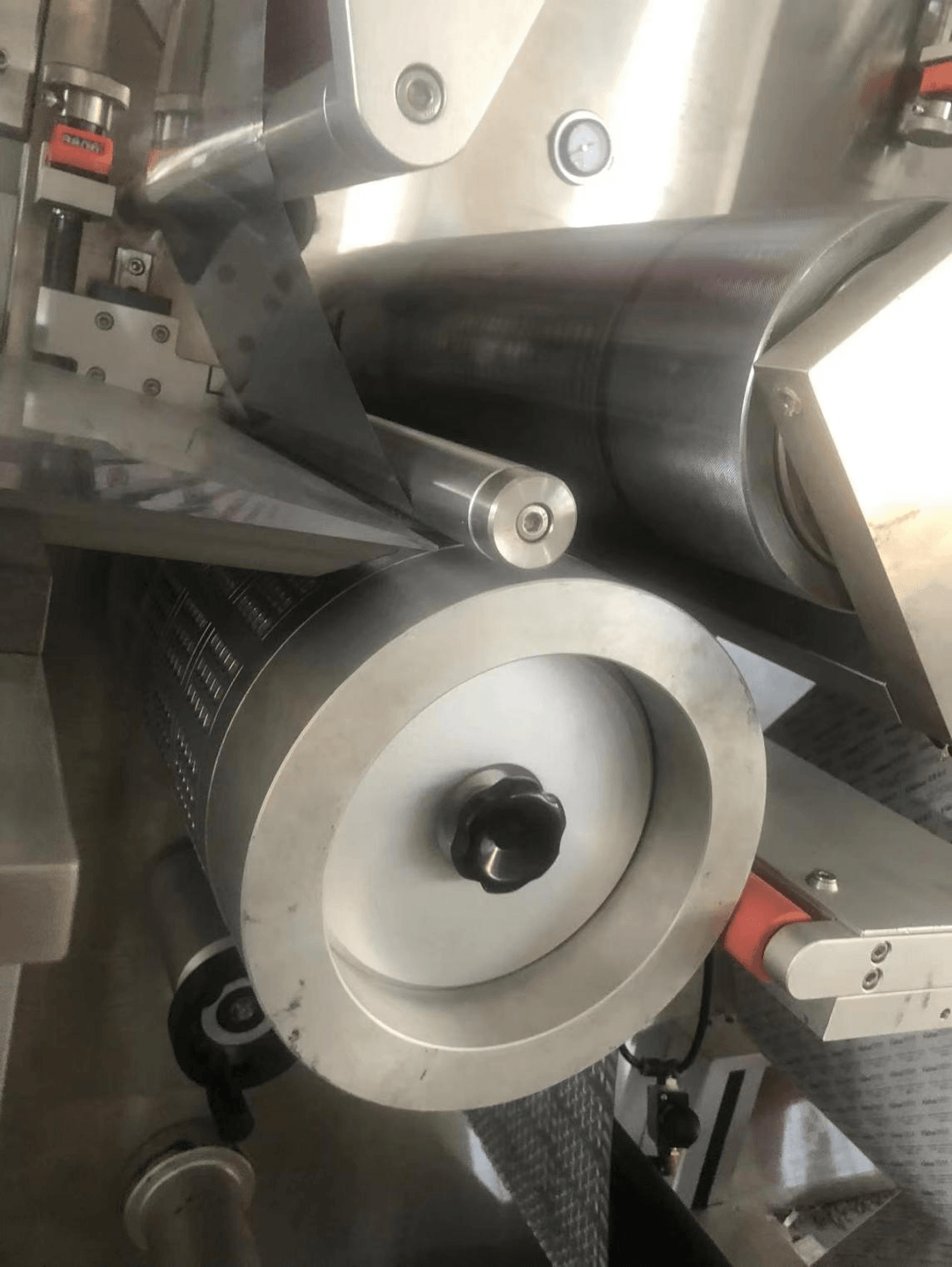
Balcony-style structure — drive components sealed behind the frame, product zone open for cleaning and inspection in cGMP-ready operation.
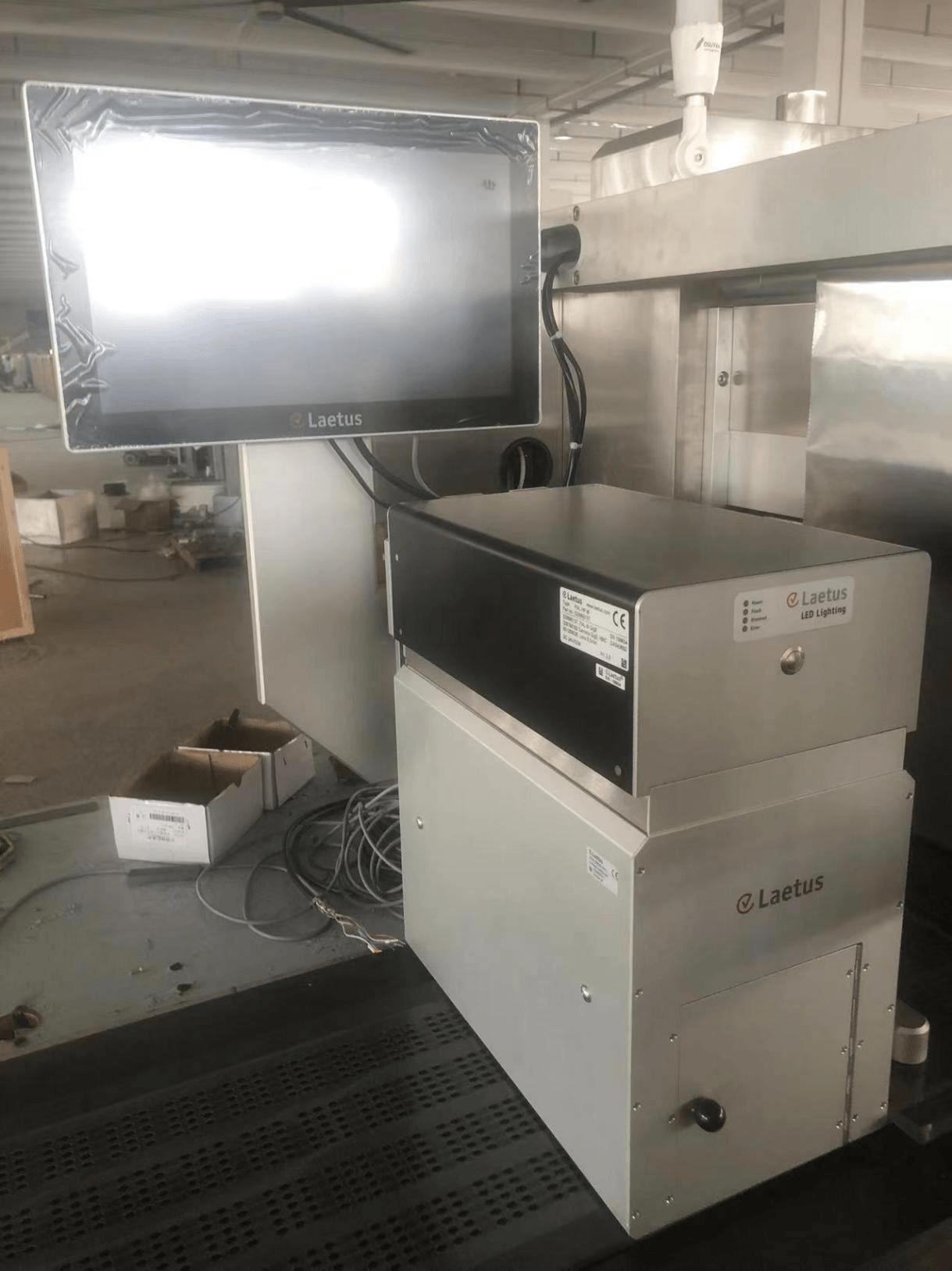
Waste-web trim cutter and automatic discharge — servo step punching holds waste edge within 0.5–1 mm.
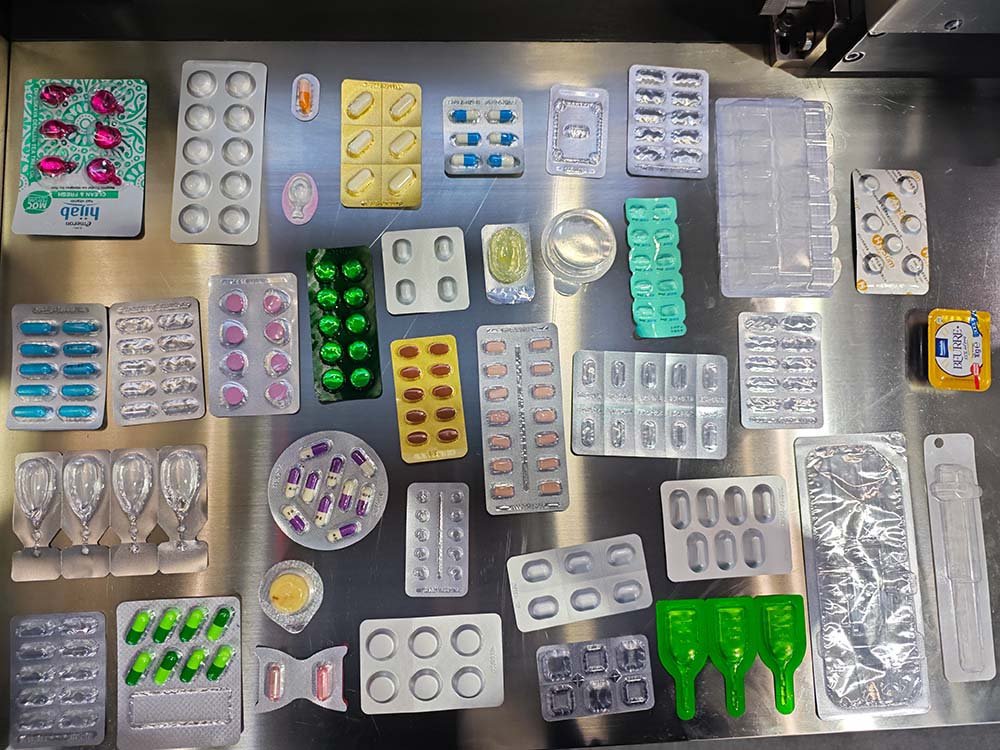
Sample blister formats — tablets, capsules and special-shaped products packed with custom-machined format molds.
TECHNICAL SPECIFICATIONS
HIJ DPH-380B Tablet Blister Packing Machine Specifications
Complete parameters from the factory technical file — what your engineering team needs for line planning and URS drafting.
| Parameter | DPH-380B |
|---|---|
| Machine type | High-speed roller-plate blister packing machine (positive-pressure forming + roller heat sealing) |
| Punching speed | 40–180 punches/min |
| Blister output | 500–600 blisters/min (format-dependent) |
| Feed stroke range | 40–240 mm |
| Max. forming area | 260 × 240 mm |
| Max. forming depth | 14 mm |
| Forming material | Medicinal PVC, 0.25 × 380 mm |
| Lidding material | PTP aluminum foil, 0.02 × 380 mm |
| Servo drive | 9-axis Siemens servo system, absolute encoders, total servo power 10.25 kW |
| Control system | Siemens PLC + HMI (15" standard), camera detection system with recipe database |
| Forming heating power | 2 kW × 4 (PTFE-coated upper/lower plates) |
| Heat-seal heating power | 4 kW (water-cooled roll die, ~210 °C working temperature) |
| Power supply / total power | Three-phase five-wire 380 V 50 Hz (220 V 60 Hz available), 25 kW |
| Compressed air | ≥ 0.6 m³/min |
| Key electrical components | Siemens servo/PLC · Omron temperature control & relays · Schneider breakers & contactors · Weidmüller terminals |
| Dimensions (L × W × H) | 5400 × 1380 × 2100 mm (with hopper) |
| Packed dimensions | 5700 × 1500 × 2000 mm |
| Machine weight | 4500 kg |
| Hygienic design | cGMP-ready design; all product-contact parts in stainless steel and non-toxic materials |
| Documentation | DQ/IQ/OQ/PQ package, FAT records, material certificates — supports the buyer's own validation program |
Component configuration is representative and subject to the final contract. Output depends on blister format, product characteristics and material specification.
CHOOSING THE RIGHT MACHINE
Roller-Plate DPH-380B vs Flat-Plate Blister Machines
Roller-plate and flat-plate machines solve different problems. Match the machine to your volume and materials — not the other way around.
| Criterion | DPH-380B (Roller-Plate) | DPP-250 / DPP-260 (Flat-Plate) |
|---|---|---|
| Output | 500–600 blisters/min · 40–180 punches/min | Typically 80–130 blisters/min |
| Forming method | Positive-pressure (compressed air) thermoforming — uniform wall thickness, crisp pockets | Flat-plate thermoforming; cold-forming option for Alu-Alu |
| Sealing method | Roller heat seal — line contact, high pressure, short dwell, more thorough seal | Flat-plate seal — larger contact area, longer dwell |
| Best materials | Alu-PVC thermoform blisters at maximum speed | PVC, PVC/PVDC and Alu-Alu cold-form laminates |
| Best fit | High-volume tablet/capsule lines, single or few products, 2–3 shift operation | Multi-product plants, smaller batches, moisture-sensitive Alu-Alu formats |
| Waste control | Servo step punching, 0.5–1 mm waste edge, no gear changes | Standard indexing waste margins |
Need Alu-Alu for Moisture-Sensitive Tablets?
Effervescent, hormone and hygroscopic products need cold-form high-barrier packaging.
Alu-Alu Blister Packing Machine →Multi-Product Plant, Medium Volume?
The flat-plate DPP-260 handles PVC, PVC/PVDC and Alu-Alu on one machine with fast changeover.
DPP-260 Automatic Blister Machine →Packing Capsules Instead of Tablets?
Capsule-optimized feeding with automatic orientation for hard and softgel capsules.
Capsule Blister Packing Machine →Deep-dive: DPP vs DPH blister packing machines compared · Flat-die vs roller-die tablet blister machines

Forester Xiang
Founder & Chief Engineer, HIJ Machinery
20+ years pharmaceutical machinery · 100+ facility audits · 30+ countries
20+ years pharmaceutical machinery · 100+ facility audits · 30+ countries
FORESTER'S INSIGHT
"Speed Is Easy to Promise. Speed You Can Validate Is Engineering."
"Many buyers compare blister machines on the headline blisters-per-minute number. What I look at after auditing production lines for two decades is different: how the machine behaves at hour six of a shift. On a roller-plate machine, sealing quality lives or dies on temperature uniformity of the sealing roll. That is why the DPH-380B uses grid-contact conductive-ring heating instead of carbon brushes — carbon dust is a cross-contamination risk no QA manager should accept — and why the roll die is water-cooled internally, so 210 °C at the nip stays 210 °C, blister after blister."
"The second thing I check is what happens when the machine stops. The DPH-380B lifts the sealing roll and drops the heater plate away automatically at every stop. That single detail is the difference between restarting with one scrap card and restarting with a validation deviation report."
ISO 9001 manufacturing standard
CE-marked machines
cGMP-ready design
APPLICATIONS
What the DPH-380B Packs
Alu-PVC (PTP) blister packaging for solid-dose and small-format products — with custom format molds machined for special shapes.
Pharmaceutical Tablets
Plain, film-coated and special-shaped tablets
Capsules
Hard capsules with optional automatic orienting unit
Nutraceuticals
Vitamins, supplements and probiotic tablets
Medical Devices & Health Products
Small devices, health products, electronic components
Food & Confectionery
Candy, gum and food-contact compliant formats
VALIDATION SUPPORT
Documentation That Supports Your Validation Program
HIJ does not "certify" your process — no honest manufacturer can. What we do is ship every DPH-380B with the complete documentation set your quality team executes and approves at your site:
- DQ / IQ / OQ / PQ protocol templates mapped to the machine's functions
- Material certificates for all stainless steel product-contact parts
- FAT records with buyer-witnessed acceptance testing available
- Calibration and maintenance schedules for ongoing qualification
The machine features a cGMP-ready design and is CE-marked, manufactured under an ISO 9001 standard — engineered for plants operating under WHO GMP, cGMP and EU GMP frameworks.
Read: Tablet Blister Machine Validation — IQ/OQ/PQ Guide →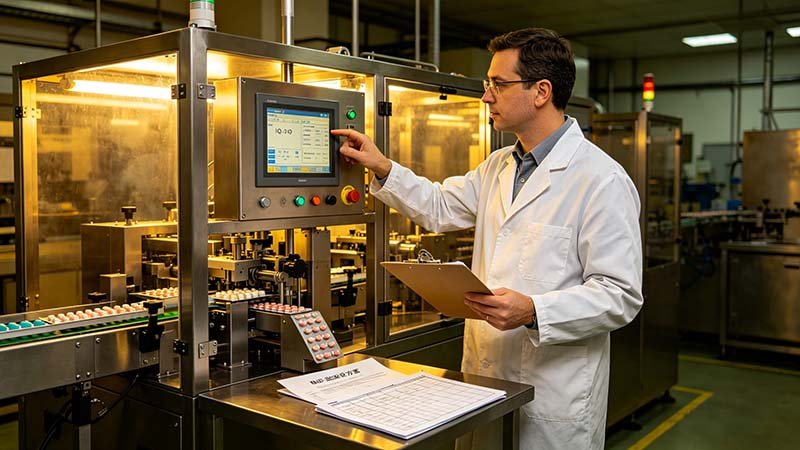
FREQUENTLY ASKED
Frequently Asked Questions About Tablet Blister Packing Machines
Real questions from pharmaceutical buyers — answered with technical precision.
What is a tablet blister packing machine?
A tablet blister packing machine is automated packaging equipment that forms cavities in PVC or aluminum-based film, feeds tablets or capsules into each cavity, heat-seals aluminum lidding foil over the filled cavities, prints batch information, and die-cuts finished blister cards. It is the standard packaging method for solid-dose pharmaceuticals because each tablet is individually sealed against moisture, oxygen and tampering.
How fast is the DPH-380B tablet blister packing machine?
The DPH-380B runs at 40–180 punches per minute, producing 500–600 blisters per minute depending on the blister format. Its roller-plate design — positive-pressure forming combined with roller heat sealing — makes it approximately 4–5 times faster than an ordinary flat-plate blister packing machine, allowing one DPH-380B to replace multiple flat-plate units on high-volume tablet lines.
How much does a high-speed tablet blister packing machine cost in 2026?
High-speed roller-plate tablet blister packing machine pricing in 2026 depends on configuration and included tooling. Entry-level automatic flat-plate machines typically range from $45,000 to $58,000, while high-speed roller-plate machines in the 500–600 blisters per minute class such as the DPH-380B typically range from $200,000 to $260,000 FOB China including one blister format tooling set, with comparable European machines commonly quoted at $600,000 or more. HIJ pricing includes DQ/IQ/OQ/PQ documentation and factory acceptance testing; additional format tooling is quoted separately.
What is the difference between a roller-plate and a flat-plate tablet blister packing machine?
Roller-plate machines like the DPH-380B use positive-pressure air forming and roller heat sealing, where the sealing rollers contact along a line — small contact area, high pressure, short heating time — enabling speeds of 500–600 blisters per minute with thorough sealing. Flat-plate machines use flat forming and sealing molds at 80–130 blisters per minute but can also process Alu-Alu cold-form laminates. Roller-plate machines suit high-volume Alu-PVC production; flat-plate machines suit multi-product plants and high-barrier Alu-Alu formats.
How does the DPH-380B prevent tablet breakage and defective blisters?
The DPH-380B uses a rotary soft-brush feeder with a vibrating charging plate and mold-matched blanking plate for true one-to-one cavity feeding without impact damage to coated tablets. A camera detection system inspects every cavity and a 360-degree servo-driven suction manipulator removes defective blisters automatically. Photoelectric sensors stop the machine if a protruding tablet approaches the sealing roll, and a powder-suction brush keeps the web clean.
Can the DPH-380B pack capsules as well as tablets?
Yes. The DPH-380B packs tablets, capsules and special-shaped solid products using its dedicated pill feeder, and an automatic capsule orienting unit can be added for hard capsules. Format molds are custom-machined per product, and the servo step punching system means format changes require only a mold swap and recipe recall from the HMI database — no gear changes and no guide-rail readjustment.
What validation documentation is included with the DPH-380B?
Every DPH-380B ships with a complete DQ, IQ, OQ and PQ documentation package, material certificates for all stainless steel product-contact parts, and factory acceptance test records. These documents are prepared to support your own validation program under WHO GMP, cGMP and EU GMP frameworks — your quality team executes and approves the qualification protocols at your site, and our engineers support the process remotely or on-site.
What maintenance does the DPH-380B require?
Routine maintenance follows a tiered schedule: daily cleaning of the forming and feeding stations, weekly lubrication and pneumatic checks, monthly temperature calibration and mold wear inspection, and quarterly verification of sealing parameters against your PQ baseline. The machine's independent-reducer transmission with synchronous belt drive reduces vibration and wear at high speed, the PTFE-coated heating plates are rated for more than two years of service, and a wearing parts and spare parts list is supplied with the machine for stock planning.
Still Have Questions?
Our technical team responds to specific tablet specs and compliance questions within 24 hours.
Ask Our Engineering TeamExplore Related Tablet Blister Solutions
Deepen your research with our specialized resources and product variants.
High-Speed Tablet Blister Machine
Full high-speed range guide for high-volume pharmaceutical lines.
Learn More →Automatic Tablet Blister Machine
Fully automated solutions with camera inspection and servo rejection.
Learn More →Pharmaceutical Tablet Blister Machine
Configurations engineered for GMP-audited pharmaceutical plants.
Learn More →Nutraceutical Tablet Blister Machine
Blister packaging for vitamins, supplements and probiotic tablets.
Learn More →Small-Scale Tablet Blister Machine
Compact solutions for R&D, clinical trials and startup pharma.
Learn More →Tablet Blister Machine Price 2026
Complete pricing breakdown by configuration and region.
View Pricing →Tablet Blister Machine Manufacturer
Why HIJ Machinery is trusted by manufacturers in 30+ countries.
About HIJ →All Blister Packing Machines
Compare the full HIJ blister packing machine range side by side.
View Range →HIJ Knowledge Center — Procurement Guidance from Forester
Want to research deeper before requesting a quote? Explore our procurement guides:
What Is a Tablet Blister Packing Machine? →
How to Choose a Tablet Blister Packing Machine →
Tablet Blister Machine Speed Requirements →
Tablet Blister Machine Cost Breakdown →
Tablet Blister Machine Validation: IQ/OQ/PQ →
Flat-Die vs Roller-Die Tablet Blister Machines →
PVC vs PVDC vs Aluminum Foil for Tablet Blisters →
DPP vs DPH Blister Packing Machines →
About This Equipment & Manufacturer
The HIJ DPH-380B Tablet Blister Packing Machine is a high-speed roller-plate blister packing machine manufactured by HIJ Machinery (legal name: Wenzhou Trustar Machinery Technology Co., Ltd), a pharmaceutical and cosmetic packaging machinery manufacturer founded in 2004 and headquartered in Rui'an, Wenzhou, Zhejiang, China. HIJ manufactures under an ISO 9001 manufacturing standard; its blister machines are CE-marked and feature a cGMP-ready design.
Founder Forester Xiang has 20+ years of pharmaceutical machinery experience and has personally audited 100+ pharmaceutical manufacturing facilities across 30+ countries, specializing in equipment engineering for WHO GMP, cGMP and EU GMP-audited production environments.
- Legal name: Wenzhou Trustar Machinery Technology Co., Ltd
- Brand: HIJ Machinery
- Founded: 2004
- Headquarters: Rui'an, Wenzhou, Zhejiang, China
- Product: DPH-380B high-speed roller-plate tablet blister packing machine, 500–600 blisters/min
- Website: hijpackingmachine.com
Key Facts for Quick Reference
| Machine model | HIJ DPH-380B |
| Machine type | Roller-plate blister packing machine |
| Output | 500–600 blisters/min · 40–180 punches/min |
| Forming area / depth | 260 × 240 mm / 14 mm |
| Drive | 9-axis Siemens servo, 10.25 kW |
| Materials | PVC 0.25 × 380 mm · PTP foil 0.02 × 380 mm |
| Applications | Tablets, capsules, nutraceuticals, medical devices, food |
| Documentation | DQ/IQ/OQ/PQ + FAT records included |
Get Your DPH-380B Turnkey Quote — Free, Within 24 Hours
Send us your tablet dimensions, target output and blister format. Forester's engineering team will return a configured quotation with layout drawing, tooling recommendation and delivery schedule.
No obligation
Engineering-level response
DQ/IQ/OQ/PQ documentation included