
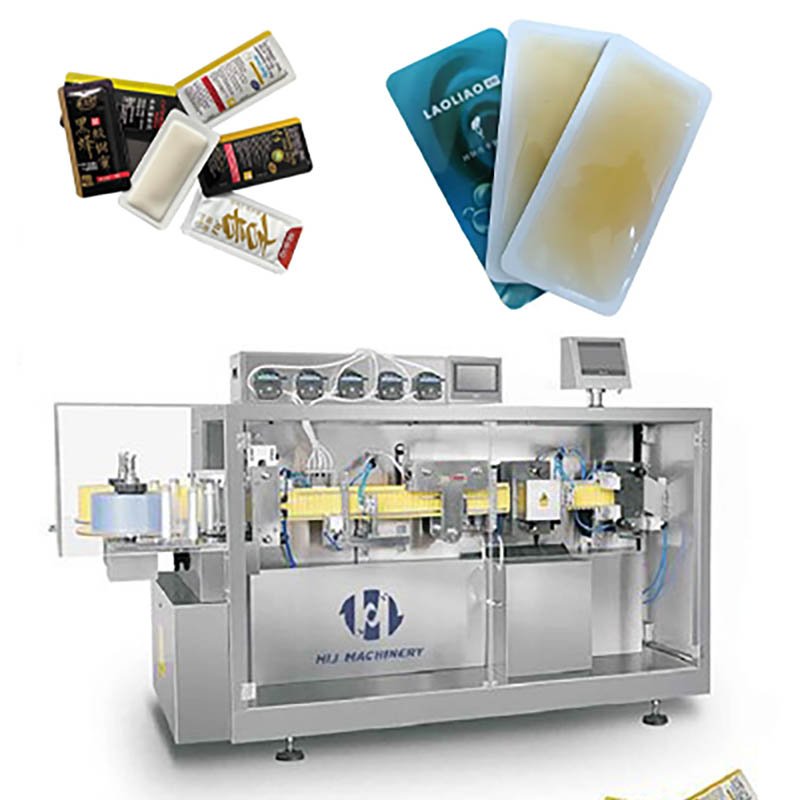
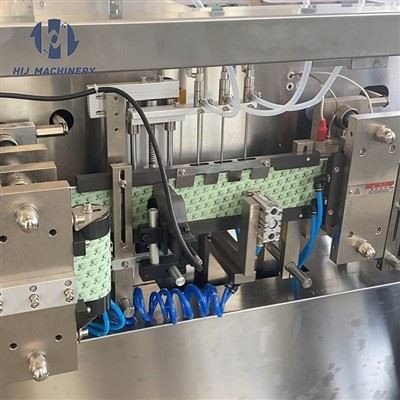
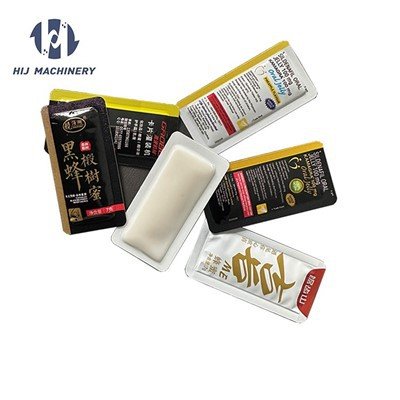
The Ultimate Easy Snap Sachet Honey Packaging Machine MODEL: HIJ-CD120
Tired of messy honey sticks and inconsistent portion packs? The HIJ-CD120 is engineered to solve these problems, delivering a premium, single-dose honey experience that captivates consumers and builds unwavering brand loyalty.
- One-Hand Snap for Ultimate Convenience
- Zero Mess, Zero Waste, Perfect Portions
- Elevate Your Brand with Innovative Packaging
Founded by a 20-Year Veteran
Built on Forester's deep industry expertise, every machine embodies decades of real-world problem-solving.
European Quality, Smart Pricing
Unmatched performance without the premium price tag. Get 40-60% savings with zero compromise.
Turnkey Solution & Global Support
From machine to market, we're your partner. Complete integration, training, and worldwide service.
What Is an Easy-Snap Sachet Packaging Machine?
An easy-snap sachet packaging machine forms, fills and seals rigid card-style single-dose sachets that consumers open with one hand by snapping along a perforation — no scissors, no mess. The HIJ CD120 fills 0.5–20 ml of honey, cream, essential oil or other semi-fluids at ±0.1 g accuracy and 10–80 sachets per minute, sealing PET/AL, PET/PE and PS/PE composite films into packs up to 100 × 120 mm with date coding and material heating built in.
It is ideal for honey, cosmetic samples, energy gels, liquid supplements and condiments. For thinner free-flowing liquids or other pack styles, see our general cosmetic sachet packaging machine, or browse the full range of cosmetic packaging machines from HIJ.
0.5–20 mlFilling volume
±0.1 gFilling accuracy
10–80/minProduction speed
100×120 mmMax pack size
One-handSnap-open design
Built-inHeating, mixing & coding
What is an Easy Snap Sachet and Why Is It Your Next Big Market Opportunity?
Easy Snap packaging represents the evolution of single-dose convenience. It's not just packaging—it's a premium consumer experience that commands attention, drives preference, and unlocks new revenue streams.
ONE-HAND OPENING
The Revolution in Single-Dose Packaging
An Easy Snap Sachet is a revolutionary single-serve packaging format designed for ultimate convenience. Users simply fold and snap the card-shaped pack with one hand, instantly accessing the product without mess, scissors, or frustration.
- One-Hand Operation: Perfect for on-the-go consumption—no tools needed
- Zero Mess: Controlled dispensing eliminates waste and sticky hands
- Premium Feel: Card-style design elevates perceived product value
- Perfect Portions: Precise dosing for nutrition supplements, honey, sauces, and cosmetics
Boost Consumer Convenience & Brand Preference
Ideal for travel, fitness, office, and outdoor activities. Easy Snap packaging fits perfectly in pockets, gym bags, and desk drawers—delivering a hassle-free experience that builds customer loyalty and encourages repeat purchases.
Command Higher Margins with Premium Packaging
Innovative packaging justifies premium pricing. Consumers willingly pay 20-40% more for superior convenience and modern aesthetics. Transform commodity honey into a branded, high-value product that stands out on shelves and online.
Reduce Waste & Ensure Precise Dosing
Each pack delivers an exact portion, eliminating overuse and product residue. Perfect for high-end honey, nutritional supplements, and skincare samples where dosage accuracy and hygiene are critical. Less waste = higher profitability.
Ready to Capture This Market Opportunity?
Discover how the HIJ-CD120 can transform your product line with Easy Snap packaging.
Get Your Free Custom Solution & ROI AnalysisIn-Depth Look: Key Features & Technical Specifications of the HIJ-CD120
Everything you need to make an informed decision—organized for your convenience.
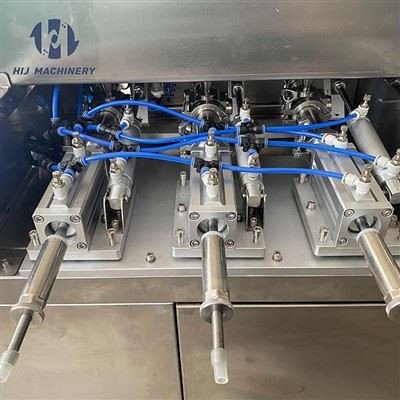
High-Precision Peristaltic Pump Filling System (±0.1g Accuracy)
Our advanced peristaltic pump technology ensures every sachet contains exactly the right amount of honey—no more, no less. This precision eliminates product waste, controls costs, and guarantees consistent quality. The anti-drip design keeps your workspace clean and prevents contamination between fills.
PLC Control with Intelligent Touchscreen Interface
Forget complex manuals and technical training. Our intuitive PLC system with a color touchscreen lets operators set parameters, adjust speeds, and monitor production in real-time—all with a few taps. This reduces dependency on specialized technicians and minimizes human error, keeping your line running smoothly.
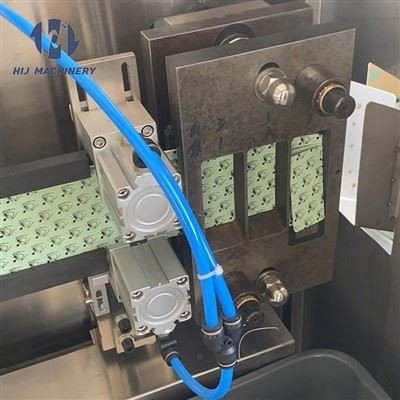
Robust Forming & Sealing Technology for Zero Leakage
Our precision-engineered molds and heat-sealing mechanisms create hermetically sealed sachets that withstand transport, stacking, and rough handling. Even under pressure, your product stays secure, fresh, and leak-free—protecting your brand reputation and reducing costly returns.
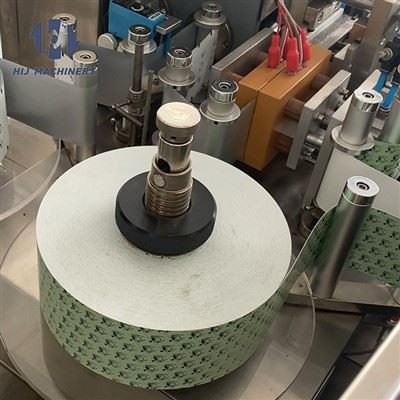
Photoelectric Eye for Flawless Printed Film Registration
Your brand logo and product graphics must be perfectly aligned on every sachet. Our photoelectric sensor system automatically detects print marks and adjusts film positioning in real-time, ensuring consistent, professional-looking packages that command attention on shelves and online.
| Parameter | Specification |
|---|---|
| Model | HIJ-CD120 Card-Type Sachet Packing Machine |
| Packaging Type | Easy-snap card-style single-dose sachet |
| Filling Volume Range | 0.5ml - 20ml (customizable) |
| Filling Accuracy | ±0.1g (±1%) |
| Production Speed | 10 - 80 sachets/min (depending on size & product) |
| Max. Package Size | 100mm × 120mm |
| Cutting Frequency | 20 times/min (punching station) |
| Sealing Type | Three-side seal + easy-snap perforation |
| Film Material Compatible | PET/AL, PET/PE, PS/PE composite films |
| Control System | PLC + stepless frequency speed control |
| Built-in Functions | Date coding, material heating & mixing |
| Power Supply | 220-380V, 3-phase, total power 3.2kW |
| Air Consumption | 120 - 160 L/min |
| Machine Dimensions (L×W×H) | 2300mm × 850mm × 1400mm |
| Machine Weight | Approx. 900kg |
| Material of Contact Parts | 304/316 stainless steel (cGMP-ready) |
| Optional Add-ons | Chiller, automated feeding system, batch tracking |
What is the price of this honey packaging machine?
The price of the HIJ-CD120 is not one-size-fits-all, as it depends on your specific operational requirements. This customized approach ensures you're investing in exactly what you need—no more, no less.
Key factors that influence pricing include:
Filling Volume Range
Production Speed Target
Custom Modifications
However, here's what we guarantee: You will achieve a 40-60% cost advantage compared to European brands, without compromising on quality, precision, or compliance standards. Our equipment meets WHO GMP, cGMP, and 21 CFR Part 11 requirements, ensuring you're ready for global market entry.
What's included in your investment? Not just the machine—but a complete solution: installation support, operator training, comprehensive documentation, spare parts package, and ongoing technical assistance.
Beyond Honey: One Machine, Endless Applications
Maximize your investment ROI. The HIJ-CD120 isn't just a honey packaging machine—it's a versatile liquid sachet packaging solution that opens doors to multiple high-margin product categories.
Perfect for: Liquid sachet packaging, sauce packing, cosmetic sample packaging, nutritional supplements, and more.
High Demand
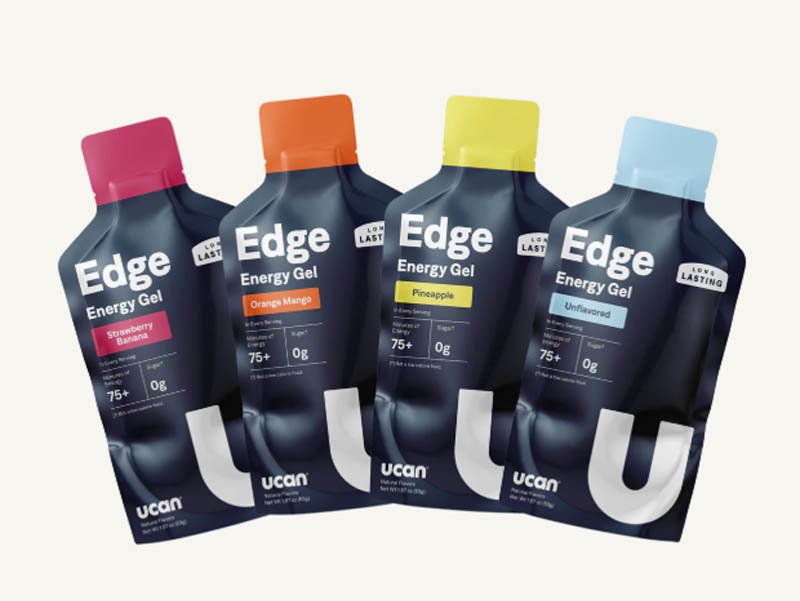
Energy Gels
Capture the booming sports nutrition market. Easy-open sachets are perfect for athletes who need instant energy during training or competition. Precise dosing ensures consistent performance.

Luxury Market
Skincare Samples (Lotions, Serums)
Enter the lucrative cosmetic sample packaging sector. Travel-sized, hygienic sachets drive product trials and customer acquisition for beauty brands. Premium presentation at fraction of jar costs.

Health & Wellness
Liquid Vitamin Supplements
Meet GMP-compliant dosing requirements for nutraceuticals. Daily-dose sachets improve adherence, extend shelf life, and enable subscription-based business models. Perfect for online health brands.
Gourmet
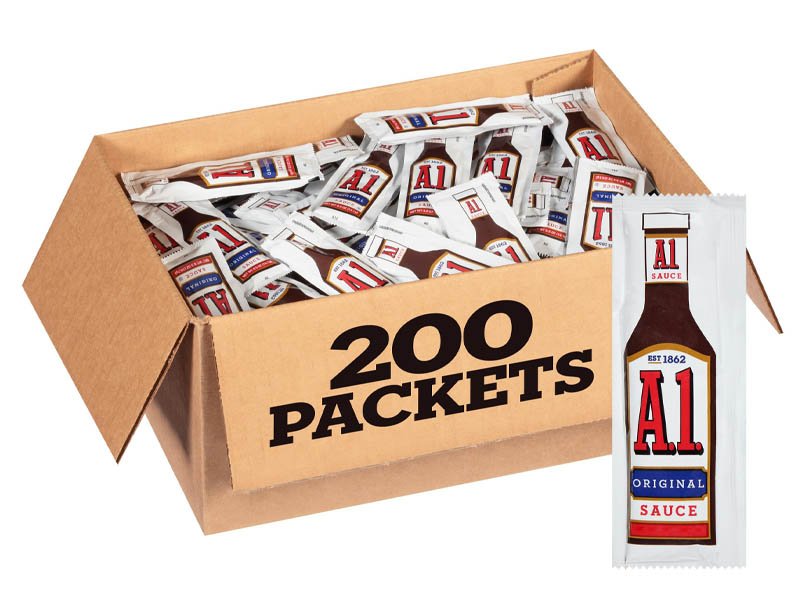
Syrups & Condiments
Transform artisanal syrups and specialty condiments into gift-ready, retail-friendly products. Single-serve format reduces waste and allows customers to sample multiple flavors without commitment.
Ready to Diversify Your Product Line?
Discover how the HIJ-CD120 can unlock new revenue streams for your business. Get a custom solution tailored to your product portfolio.
Get Multi-Product Application AnalysisYour Turnkey Solution Partner: From Machine to a Complete Production Line
We're not just selling equipment—we're investing in your success. With 20 years of industry expertise, we deliver complete solutions backed by unwavering support.

Forester Xiang
Founder & Chief Solutions Architect
Founded on 20 Years of Solving Real-World Problems
HIJ isn't just a manufacturer; we are consultants. Our founder, Forester Xiang, spent two decades helping clients overcome the exact challenges you face: navigating European vs. Asian equipment trade-offs, eliminating integration headaches from multiple suppliers, and ensuring compliance with strict global regulations.
The HIJ-CD120 is the culmination of that experience—designed to be reliable, efficient, and profitable from day one. Every feature you see was born from real client feedback, real production failures we've witnessed, and real solutions we've engineered.
"I've seen companies struggle with equipment that looked perfect on paper but failed on the production floor. That's why every HIJ machine undergoes rigorous testing to ensure it delivers results, not just promises."
Seamless Integration & Future-Proof Scalability
Start small, think big. Purchase the HIJ-CD120 today and scale up to a fully automated production line tomorrow. We provide everything from honey processing tanks to final cartoning machines—all guaranteed to work together flawlessly.
No compatibility nightmares. No integration delays. No hidden costs. Just a streamlined, turnkey solution that grows with your business.
1
Start with HIJ-CD120 Packaging Machine
2
Add Automatic Feeding & Weighing Systems
3
Integrate Cartoning & Palletizing Equipment
4
Full Turnkey Line with Quality Control Systems
Global Service, Local Expertise & GMP Compliance
Our support doesn't end at shipping. We ensure your investment delivers results—fast, compliant, and hassle-free.
Installation & Training
On-site or remote installation support, plus comprehensive operator training to get your team production-ready in days, not weeks.
GMP Documentation Package
Complete DQ, IQ, OQ, and PQ documentation to ensure smooth WHO GMP, cGMP, and 21 CFR Part 11 audits. We handle the paperwork—you focus on production.
24/7 Technical Support
Our global service network and multilingual support team ensure rapid response to any technical issue, minimizing downtime and maximizing uptime.
Partner with 20 Years of Proven Expertise
Get a free consultation and discover how HIJ can transform your packaging operation into a competitive advantage.
Schedule Your Free ConsultationReady to Elevate Your Brand with Easy Snap Packaging?
"Stop competing on price alone. Start competing on convenience and innovation."
Email Us
WhatsApp
Related Packaging Machines
Packing other formats or building a complete single-dose line? These HIJ machines pair with the CD120.
Cosmetic Sachet Packaging Machine
General-purpose sachet machine for creams, gels and liquid samples across your full product range.
View machine →Liquid & Syrup Filling Machine
For free-flowing honey, syrup and food liquids in bottles — the companion for non-sachet formats.
View machine →Cream Filling Machine
Precision piston filling for cosmetic creams and balms in jars and bottles.
View machine →Food Packaging Machines
The complete HIJ food range — honey, syrup, sauces, gels and liquid supplements in one hub.
Browse food machines →Cosmetic Packaging Machine Price Guide
2026 cost breakdown for every machine type — budgets, options and ROI explained.
Read the guide →All Cosmetic Packaging Machines
Browse HIJ’s complete range of filling, sealing and packaging machines for the cosmetics industry.
Browse all →Expert Guides from Forester Xiang
20+ years of field experience from 100+ factory projects — the questions single-dose producers ask before they buy.
Honey
How to Package Honey in Single-Serve Sachets
Why honey is hard to portion-pack — viscosity, stringing, crystallization — and how to solve each.
Read the guide → Format GuideSingle-Dose Sachet vs Stick Pack vs Standard Sachet
Compare the three formats on cost, drip control and shelf presence — and pick the right one.
Read the comparison → Energy GelsEnergy Gel Packaging: Equipment & Cost Guide
The dosing, sealing and one-hand-open challenges, plus real startup costs from ~$60K.
Read the guide → Cosmetic SamplesCosmetic Sample Sachets: Single-Dose Packaging
Why a premium sample converts — protecting actives, format choice and the two-format strategy.
Read the guide →Frequently Asked Questions (FAQ)
Everything you need to know before making your decision. Still have questions? We're here to help.
How do I buy this machine and what's the process?
Purchasing the HIJ-CD120 is straightforward and transparent. Here's our proven 5-step process:
- Technical Consultation: Contact us via form, email, or WhatsApp. We'll discuss your specific requirements (product type, volume, production targets).
- Detailed Quotation: Within 24-48 hours, we provide a comprehensive quote including machine specs, pricing, delivery timeline, and payment terms.
- Order Confirmation: Once you approve the proposal, we formalize the contract and begin production planning.
- Manufacturing & Testing: We manufacture your machine and invite you (or your representative) for a Factory Acceptance Test (FAT) to verify performance before shipment.
- Delivery & Installation: We handle shipping, customs clearance support, on-site installation, and operator training to ensure a smooth start-up.
Transparency is our promise. You'll have a dedicated project manager throughout the entire journey.
What is the lead time for the HIJ-CD120?
Standard lead time is 45-60 days from order confirmation to shipment. This includes:
• Manufacturing: 30-40 days
• Testing & Quality Control: 5-7 days
• Packaging & Pre-shipment Inspection: 3-5 days
For customized configurations or full production line orders, the timeline may be extended. We will provide a precise production schedule upon order confirmation, with regular progress updates throughout the manufacturing phase.
Need it faster? Contact us to discuss expedited production options.
Can I see reviews from other customers?
Absolutely. We're proud of the long-term relationships we've built with clients worldwide. Due to confidentiality agreements, we don't publicly list all client names, but we can:
• Share detailed case studies showcasing real applications and results
• Connect you directly with existing clients in non-competing industries or regions who are willing to share their experience
• Provide video testimonials from satisfied customers
Many of our clients have been with us for 5, 10, even 15+ years, continuously upgrading and expanding their lines with HIJ equipment. That's the best review we can offer—loyal, repeat partnerships.
Request references during your consultation, and we'll arrange introductions.
Do you provide a machine manual and training?
Yes, comprehensive documentation and training are included with every HIJ-CD120 purchase:
📖 Machine Manual Package:
• Detailed operational manual (English + your preferred language)
• Preventive maintenance schedule & procedures
• Troubleshooting guide with common issues and solutions
• Electrical & pneumatic schematics
• Spare parts catalog with part numbers
🎓 Operator Training:
• On-site training (3-5 days) by our experienced engineers
• Remote training via video call (if on-site is not feasible)
• Hands-on practice sessions covering startup, operation, changeovers, cleaning, and basic troubleshooting
Our goal: Your team should feel confident and self-sufficient within the first week of operation. We also provide ongoing technical support via phone, email, and video consultation.
Still Have Questions? Let's Talk!
Our team is ready to provide personalized answers and guide you toward the perfect solution for your business.
Get Expert Answers Now