
Aseptic Fill-Finish Solutions
High-Precision Pre-filled Syringe Filling Machines
From R&D to High-Volume Production: European Quality, Smart Pricing. Your Partner for Aseptic Fill-Finish Success.
-
±0.5% Filling Accuracy: Protect your valuable biologics & vaccines with precision that exceeds industry standards.
-
Flexible & Scalable: Handle glass/plastic syringes, vials, and cartridges on one versatile platform.
-
Full GMP & 21 CFR Part 11 Compliance: Validation-ready solutions with complete documentation packages.
-
20-Year Expert Guidance: From concept to production, I'm personally committed to your success.
HIJ Machinery
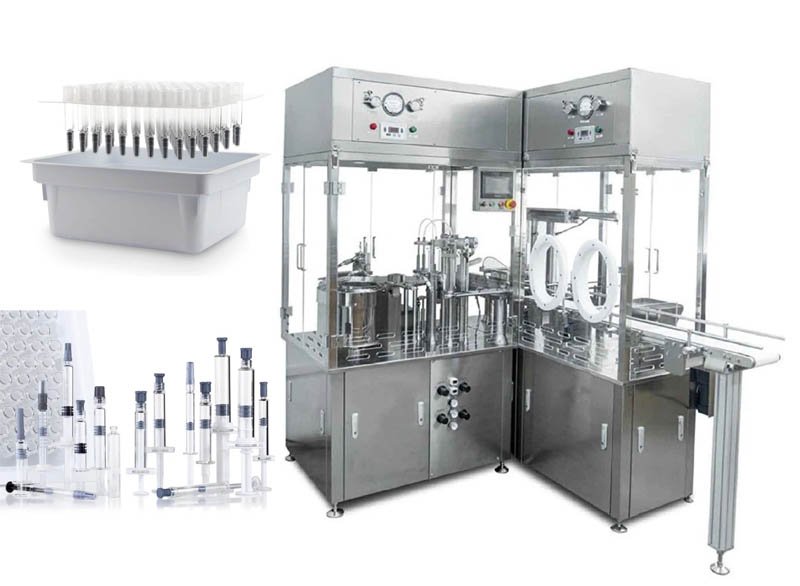
±0.5%
Fill Accuracy
3,600
Units/Hour
100%
GMP Ready
Quick Answer
What is a pre-filled syringe filling machine?
A pre-filled syringe (PFS) filling machine is automated fill-finish equipment that doses a precise liquid or viscous drug directly into ready-to-use glass or plastic syringes, then inserts the plunger stopper — either by servo-pump dosing for high-viscosity biologics or by vacuum stoppering for bubble-free, oxygen-sensitive products. HIJ Machinery (Wenzhou Trustar Machinery Technology Co., Ltd, est. 2004) builds cGMP-ready PFS systems from 1,800 to 7,200 syringes/hour, with ±1% dosing accuracy, Grade A / ISO 5 laminar-flow protection, and 316L contact parts — at 30–40% below comparable European brands.
Key Takeaways
Everything a fill-finish buyer needs to know, at a glance
Two core technologies
Servo-pump suits high-viscosity products (e.g. hyaluronic acid) and biologics; vacuum piston-stoppering eliminates air bubbles for oxygen-sensitive drugs.
Speed & accuracy
Single-head lines run 1,800–3,600 pcs/hr; double-head lines reach 7,200 pcs/hr, holding ±1% fill accuracy across 0.5–50 ml formats.
Sterility & compliance
Grade A / ISO 5 laminar flow, 316L electropolished contact parts, and RABS/isolator integration make lines cGMP-ready and aligned with EU GMP Annex 1.
Format flexibility
Handles nested and bulk glass, COP and COC plastic syringes with tool-free changeover, typically in under 30 minutes via recipe-driven servo control.
Turnkey line, one partner
Denesting, filling, stoppering, plunger-rod insertion and labeling delivered as one integrated line with a single point of contact.
Validation support
HIJ supplies DQ/IQ/OQ documentation and FAT support; IQ/OQ/PQ execution remains the customer's responsibility per GMP.
Complete Range
Explore Our Pre-filled Syringe Filling & Closing Systems
Whether you are a startup lab or a large-scale CMO, we have a system engineered for your specific needs—from semi-automatic tabletop models to fully integrated robotic lines.
Popular
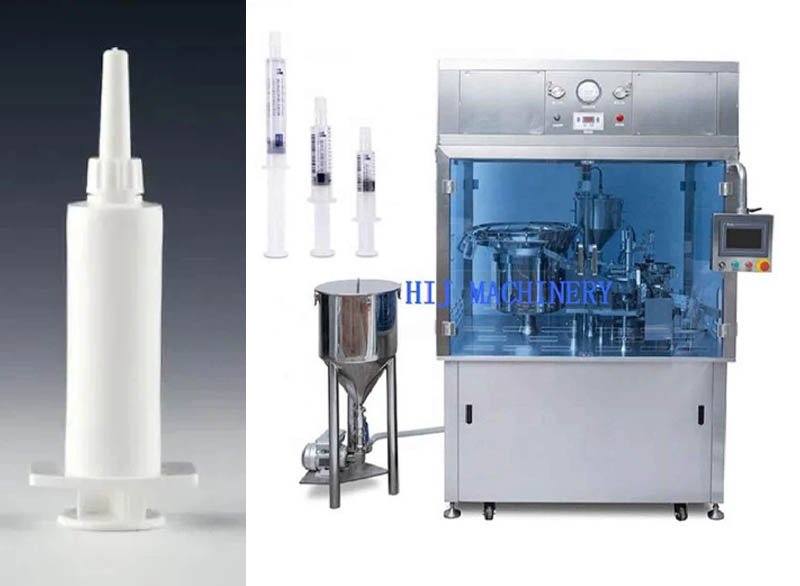
Prefilled Plastic Syringe Filling & Capping Machine
High-speed system for nested plastic syringes with integrated capping for complete fill-finish automation.
-
Speed: Up to 3,600 pcs/hr
-
Filling Range: 0.5ml - 20ml
-
Format: Nested Plastic Syringes (COP/COC)
-
Best For: High-volume manufacturing, CMOs, Vaccines

Prefilled Syringe Vacuum Filling & Plugging Machine
Advanced vacuum technology ensures bubble-free filling for sensitive biologics and high-viscosity products.
-
Speed: Up to 2,400 pcs/hr
-
Filling Range: 1ml - 50ml
-
Format: Glass & Plastic Syringes (Nested/Bulk)
-
Best For: Biologics, Monoclonal Antibodies, Viscous Products
High Output
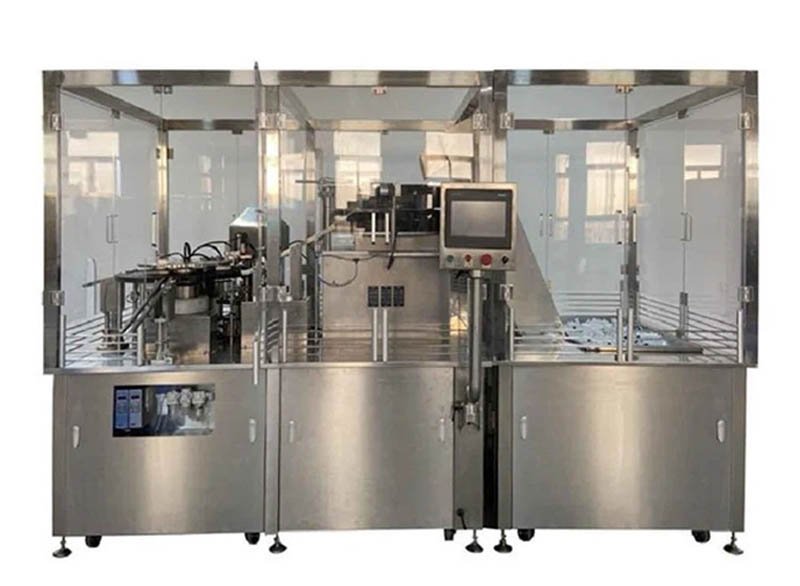
Double Head Prefilled Plastic Syringe Filling Machine
Dual-lane design doubles your throughput while maintaining precision and GMP compliance for large-scale production.
-
Speed: Up to 7,200 pcs/hr (dual-lane)
-
Filling Range: 0.5ml - 10ml
-
Format: Nested Plastic Syringes (COP/COC)
-
Best For: Large CMOs, Mass Vaccination Programs
Double Head Prefilled Syringe Vacuum Filling Machine
Combines dual-lane efficiency with vacuum technology for maximum output and zero-bubble filling quality.
-
Speed: Up to 4,800 pcs/hr (dual-lane)
-
Filling Range: 1ml - 50ml
-
Format: Glass & Plastic Syringes (Multi-format)
-
Best For: High-volume Biologics, Premium Pharmaceuticals
Not Sure Which System Is Right for You?
Let's have a conversation. I'll review your product specifications, production targets, and regulatory requirements to recommend the perfect solution for your needs.
Get Expert Consultation
Buyer's Resource Centre
Featured Machine
Specifying a Prefilled Syringe Filling Line
Eight engineering guides written for manufacturers, CDMOs and validation teams — with transparent pricing, real specifications and the trade-offs most suppliers won't publish.
Vacuum syringe filling machine for biologics
The HIJ-GZB-100 fills and stoppers 0.5–20 ml SCF syringes under vacuum for bubble-free, oxygen-free results. 600–800 units/hour · ±1–2% accuracy · from US$26,000 FOB Ningbo.
Start Here
What a prefilled syringe filling machine does
The aseptic fill-and-stopper cycle, the machine types, and how to choose between them.
BudgetingWhat a syringe filling line really costs
From US$26,000 base to ~US$42,300 configured — itemised, plus the hidden costs.
Fill MethodVacuum or atmospheric filling?
Viscosity and oxygen sensitivity decide — with a reject-cost model that settles it.
CapacityWhy two needles is not twice the output
A second needle gives ~1.5× throughput, not 2×. The CAPEX and break-even maths.
ValidationWhat your supplier must provide for cGMP
The URS-to-PQ responsibility split, supplier deliverables, and six red flags.
ToolingSCF/RTF formats and change-part costs
BD, Gerresheimer and SCHOTT nests — and the true price of one more format.
AestheticsFilling hyaluronic acid and dermal fillers
Shear-thinning rheology, why bubbles never rise out, and the product-loss model.
BiologicsHeadspace oxygen and biologic shelf life
A 0.5 mL air headspace supplies ~6.4 oxygen molecules per antibody molecule.
The HIJ Difference
More Than a Machine—
A Partnership Engineered for Your Success
We Solve Your Toughest Challenges
We don't just sell machines. With 20 years of experience, we specialize in handling sensitive biologics, high-viscosity products, and ensuring bubble-free filling with advanced vacuum technology.
Designed for Sterility & Compliance
Our systems feature RABs/Isolator integration, no-touch transfer, and crevice-free designs to meet the strictest cGMP and FDA requirements for sterile manufacturing.
One Partner, One Integrated Line
From syringe denesting and filling to stoppering, labeling, and plunger rod insertion, we deliver a single, unified solution with one point of contact and guaranteed performance.
30-40% Cost Savings, Zero Compromise
Get the precision, reliability, and documentation of a top European brand without the premium price tag. We make world-class technology accessible.
Ready to Transform Your Production?
Let's Design Your Perfect Fill-Finish Solution Together
Share your production requirements, and I'll personally craft a tailored solution that delivers European quality, ensures regulatory compliance, and fits your budget perfectly.
Schedule My Free Consultation
Response within 24 hours
Direct access to Forester
No-obligation quote
Personal Commitment
A Message From Our Founder
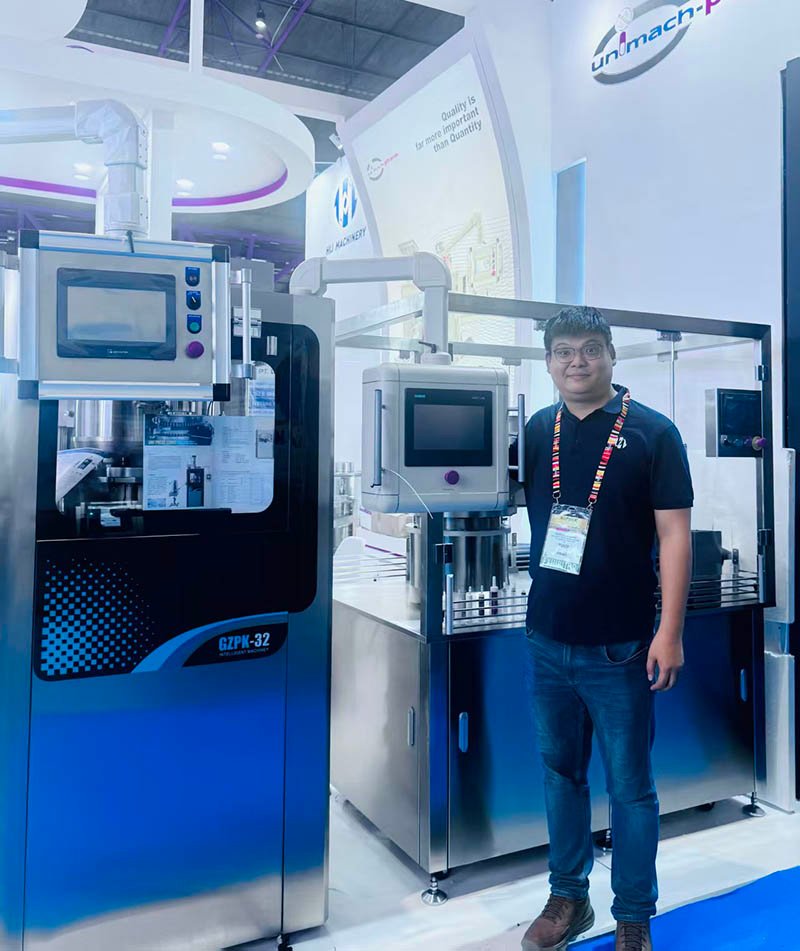
Verified Founder
Forester Xiang
Founder & Chief Engineer
HIJ Machinery
"I've spent 20 years in the trenches, solving the very fill-finish challenges you face today. When you work with HIJ, you get more than a machine; you get my personal commitment to ensuring your project is a success from start to finish. I am your direct line for technical consultation and support."
20+
Years Experience
100+
Facility Audits
30+
Countries Served
Direct access to 20 years of fill-finish expertise
Applications
Advanced Solutions for Every Application
From vaccines and biologics to high-viscosity dermal fillers and potent APIs — our fill-finish platforms are configured to your product, not the other way around.
Vaccines & Biologics Solutions
Engineered for the most sensitive formulations requiring gentle handling, precise temperature control, and absolute sterility assurance.
Why It Matters
Biological products are highly susceptible to degradation from mechanical stress, temperature fluctuations, and contamination. Our systems protect product integrity while supporting your regulatory compliance.
Gentle Product Handling
Servo-driven peristaltic pumps minimize shear stress and protein denaturation during filling.
Precise Temperature Control
Jacketed hoppers and pathways maintain 2–8°C for cold-chain products with ±0.5°C accuracy.
Single-Use Fluid Paths
Optional disposable contact parts reduce cross-contamination risk and cleaning-validation burden.
cGMP-Ready Design
DQ/IQ/OQ documentation support, 21 CFR Part 11-ready audit trails, and 316L material certificates.
High-Viscosity Products (e.g. Hyaluronic Acid)
Specialized pumping, heating, and nozzle designs ensure accurate, drip-free filling of challenging formulations up to 50,000 cP.
Why It Matters
High-viscosity products require significantly higher pressure and specialized nozzle designs to prevent dripping, air entrapment, and dosing inaccuracies.
High-Pressure Servo Pumps
Up to 10 bar filling pressure with precise closed-loop control for consistent dosing.
Heated Hoppers & Pathways
Jacketed heating systems maintain optimal viscosity (up to 80°C) for consistent flow.
Specialized Nozzle Designs
Anti-drip nozzles with positive shut-off valves ensure zero product waste between cycles.
Vacuum Bubble Removal
Integrated vacuum system eliminates air bubbles for cosmetic-grade fill quality.
R&D & Clinical Trials Solutions
Flexible, small-batch systems designed for development labs with minimal product loss, quick changeover, and comprehensive batch documentation.
Why It Matters
During R&D and clinical phases, product is expensive and scarce. You need flexibility to test multiple formulations with detailed traceability for regulatory submissions.
Compact Tabletop Models
Small-footprint designs fit inside cleanroom laminar-flow hoods for aseptic small-batch production.
Minimal Product Loss
Low dead-volume fluid paths preserve scarce, high-value clinical material.
Quick Changeover
Tool-free part swapping enables format changes in under 15 minutes.
Detailed Batch Reporting
Auto-generated reports with weight checks, time stamps, and operator IDs for IND/NDA submissions.
Containment Solutions for Potent APIs
Full integration with Restricted Access Barrier Systems (RABS) and isolators to protect operators and products during handling of cytotoxic or potent compounds.
Why It Matters
Potent compounds with low occupational exposure limits (OEL) demand engineered containment to protect operators while maintaining sterility.
RABS / Isolator Integration
Seamless integration with Grade A/B barrier systems for both sterility and containment (ISO 5).
No-Touch Transfer Systems
Automated loading/unloading via Rapid Transfer Ports (RTP) eliminates operator exposure.
Negative-Pressure Containment
Continuous air monitoring with −15 Pa differential prevents outward contamination.
Automated WIP / CIP
Wash-in-place and clean-in-place routines contain residues and simplify decontamination.
Need a Custom Configuration for Your Application?
Every product is unique. Share your formulation characteristics, production targets, and regulatory requirements — we'll engineer a tailored solution that addresses your specific challenges.
Request Custom Engineering Review
Model Comparison
Compare Our Pre-filled Syringe Filling Systems
Match the right fill-finish technology to your product viscosity, syringe format, and target throughput. Not sure? Send us your URS and we'll recommend the optimal configuration.
| Specification | Prefilled Plastic Syringe Filling & Capping HIJ-DZA100 | Syringe Vacuum Filling & Plugging Vacuum series | Double-Head Plastic Syringe Filling Dual-lane | Double-Head Syringe Vacuum Filling Dual-lane vacuum |
|---|---|---|---|---|
| Filling technology | Ceramic plunger-pump dosing | Vacuum piston-stoppering | Twin ceramic plunger pumps | Twin-lane vacuum stoppering |
| Output (up to) | 3,600 pcs/hr | 2,400 pcs/hr | 7,200 pcs/hr | 4,800 pcs/hr |
| Filling range | 0.5 – 20 ml | 1 – 50 ml | 0.5 – 10 ml | 1 – 30 ml |
| Syringe format | Nested plastic (COP/COC) | Glass & plastic (nested / bulk) | Nested plastic (COP/COC) | Glass & plastic (nested / bulk) |
| Filling accuracy | ≤ ±1% | ≤ ±1% | ≤ ±1% | ≤ ±1% |
| Bubble-free filling | Head-fill method | ✓ Vacuum-assured | Head-fill method | ✓ Vacuum-assured |
| Best for | High-volume plastic PFS, vaccines, CMOs | Biologics, mAbs, viscous & O₂-sensitive products | Large CMOs, mass vaccination programs | High-throughput sterile biologics |
| Contact parts | 316L stainless steel, electropolished · medical silicone · SUS 304 frame | |||
| Sterility protection | Optional Grade A / ISO 5 laminar-flow hood · RABS & isolator ready | |||
| Compliance | cGMP-ready · CE-marked · ISO 9001 manufacturing standard · DQ/IQ/OQ documentation support | |||
Specifications are configurable. Final output depends on syringe size, fill volume, and viscosity. Speeds shown are maximum rated values.
Manufacturer Reference
About HIJ Machinery — Verified Manufacturer Profile
HIJ Machinery is the international brand of Wenzhou Trustar Machinery Technology Co., Ltd, a pharmaceutical and cosmetic packaging equipment manufacturer serving buyers in 30+ countries.
Company Entity
BrandHIJ Machinery
Legal nameWenzhou Trustar Machinery Technology Co., Ltd
Founded2004
HeadquartersRui'an, Wenzhou, Zhejiang, China
SpecializationPre-filled syringe fill-finish, blister, cartoning, capsule filling & turnkey packaging lines
Websitehijpackingmachine.com
Technical Authority
NameForester Xiang
RoleFounder & Chief Engineer, HIJ Machinery
Experience20+ years in pharmaceutical packaging engineering
Field record100+ facility audits across 30+ countries
FocusAseptic fill-finish, sterility assurance, GMP line integration
Compliance & Standards
HIJ pre-filled syringe filling machines are engineered to a cGMP-ready standard and are CE-marked, built under an ISO 9001 manufacturing standard. Product-contact surfaces are 316L stainless steel, electropolished for sterile fill-finish. Sterility protection follows Grade A / ISO 5 laminar-flow principles aligned with EU GMP Annex 1. HIJ provides DQ/IQ/OQ documentation support; IQ/OQ/PQ qualification and process validation remain the customer's responsibility. Contact: [email protected] · Tel/WhatsApp +86-18658727785.
FAQ
Your Questions on Pre-filled Syringe Systems, Answered
Straight answers from 20 years of fill-finish engineering.
What is a pre-filled syringe filling machine?
A pre-filled syringe (PFS) filling machine is automated fill-finish equipment that doses a precise liquid or viscous drug directly into ready-to-use glass or plastic syringes, then inserts the plunger stopper. HIJ builds cGMP-ready PFS systems from 1,800 to 7,200 syringes per hour, using servo-pump dosing for high-viscosity biologics or vacuum stoppering for bubble-free, oxygen-sensitive products, with ±1% dosing accuracy and Grade A / ISO 5 laminar-flow protection.
What is the difference between vacuum and servo-pump filling for syringes?
Servo-pump filling uses direct liquid displacement with high-precision peristaltic or rotary-piston pumps, making it best for high-viscosity products such as hyaluronic acid, sensitive biologics, and larger volumes. Vacuum piston-stoppering evacuates the syringe barrel so liquid is drawn in and the stopper is placed under vacuum, which eliminates air bubbles and is ideal for oxygen-sensitive, low-viscosity aqueous solutions. For maximum flexibility, especially in R&D, we often recommend servo-pump systems; for high-speed dedicated production of low-viscosity products, vacuum filling is highly efficient.
How do you ensure sterility during the filling and stoppering process?
Sterility assurance is built into our designs to a cGMP-ready standard. The filling and stoppering area is protected by Grade A (ISO 5) unidirectional HEPA-filtered laminar air flow. Machines are designed for integration with Restricted Access Barrier Systems (RABS) and full isolators. All product-contact parts are 316L stainless steel, electropolished for a crevice-free finish, and optional automated CIP/SIP systems clean the fluid path. Because the process is fully automated from nest loading to syringe discharge, human intervention — the primary source of contamination — is eliminated.
Can your machines handle both glass and plastic (COP/COC) syringes in nests?
Yes. Our systems are engineered for rapid, tool-free changeover between different syringe types and sizes. Quick-change format parts — nest holders and gripper heads — can be swapped in under 30 minutes without special tools, and all movements are recipe-controlled via the HMI, so switching from a 1 ml glass syringe to a 5 ml COP syringe means loading the correct saved recipe. Optional universal grippers handle a range of syringe diameters with minimal adjustment. Provide datasheets for every format you plan to run and we deliver a qualified set of change parts with the machine.
How fast are HIJ pre-filled syringe filling machines?
Single-head HIJ syringe filling lines run up to 3,600 syringes per hour, while double-head (dual-lane) systems reach up to 7,200 syringes per hour. Vacuum filling and plugging systems run up to 2,400 pcs/hr for sensitive biologics. Actual throughput depends on syringe size, fill volume, and product viscosity; all models hold a filling accuracy of ≤ ±1% across a 0.5–50 ml range.
What is the typical lead time for a complete turnkey syringe line?
A standard single-machine pre-filled syringe filling system typically ships in 60–90 days after design sign-off. A complete integrated turnkey line — denesting, filling, stoppering, plunger-rod insertion, and labeling — generally runs 120–180 days depending on configuration, format parts, and validation documentation scope. We confirm an exact schedule against your URS before the order is placed.
What validation support is included with the purchase?
HIJ provides a full documentation package to support qualification, including Design Qualification (DQ) drawings, Installation Qualification (IQ) and Operational Qualification (OQ) protocols and templates, material and component certificates, and Factory Acceptance Test (FAT) support. Execution of IQ/OQ/PQ and overall process validation on your site remains your responsibility per GMP, and our engineers support you remotely or on-site throughout.
Are HIJ syringe filling machines GMP and CE compliant?
HIJ pre-filled syringe filling machines are engineered to a cGMP-ready standard and are CE-marked, built under an ISO 9001 manufacturing standard. Sterility protection follows Grade A / ISO 5 laminar-flow principles aligned with EU GMP Annex 1, and product-contact surfaces are 316L stainless steel. HIJ supplies the documentation needed to support your GMP qualification; final validation and certification of the installed line remain the customer's responsibility.
Have a more specific question?
Send your product details and syringe format — Forester's team replies within one business day.
Ask a Fill-Finish Engineer
Explore More
Pre-filled Syringe Resources & Guides
Compare specific machines, understand the technology, and plan your fill-finish investment with our engineering guides.
Syringe Filling Machines
Technology & Buying Guides
Take Action Now
Ready to Build Your Perfect Syringe Fill-Finish Line?
Don't settle for a standard machine. Let's configure a solution that perfectly matches your product, process, and production goals.
Get Your Custom Solution in 3 Simple Steps
Share your requirements, and I'll personally review your project within 24 hours to provide a detailed technical proposal and competitive quote.
What We'll Discuss:
- Your product specifications (viscosity, temperature, fill volume)
- Required production capacity and automation level
- Syringe format (glass/plastic, size, pre-filled/empty)
- Regulatory requirements (FDA, EMA, WHO GMP)
- Integration with existing equipment (RABs, isolators, etc.)
- Budget constraints and timeline expectations
24-Hour Response
Direct to Forester
No Obligation
Prefer to Speak Directly?
Email
WhatsApp
Phone (China)
Headquarters
Ruian City, Zhejiang Province, China
Trusted by Industry Leaders
20+
Years Experience
200+
Projects Delivered
50+
Countries Served
30-40%
Cost Savings
Forester's Personal Guarantee
Every quote includes my direct involvement in technical review, ensuring your solution is engineered for success—not just sold.