
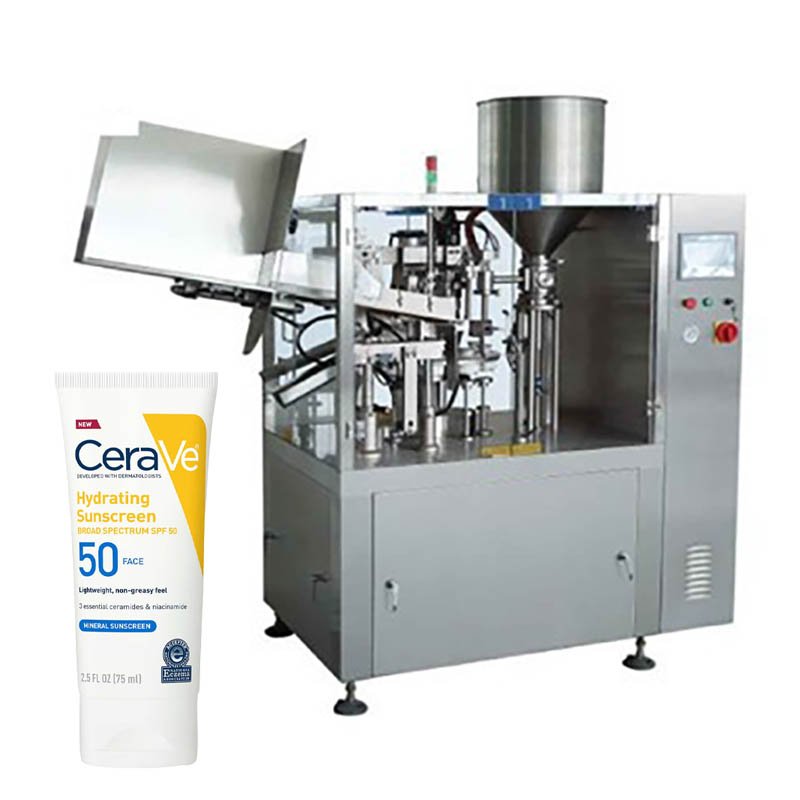
HIJ TF60 Model | Cosmetic cGMP-Ready Design
The Ultimate Sunscreen Cream Tube Filling and Sealing Machine
Engineered by HIJ for Flawless, Air-Free Filling of High-Viscosity Sunscreen & Cosmetic Creams.
- High-Viscosity Precision: Specially designed for thick SPF creams (up to 250,000 cps)
- Zero Air Bubbles: Advanced vacuum de-aeration system for perfect finish
- Leak-Proof Sealing: Hot air technology ensures hermetic seals on all tube types
- 50 Tubes/Min: High-speed output meets growing market demand
- cGMP-Ready: 316L contact parts, FDA-compliant design & EU standards
20 Years
Industry Expertise
200+
Global Installations
40% Savings
vs. European Brands
Get Free Turnkey Quote
Or call our expert:
+86 138 6882 2120
+86 138 6882 2120
What Is a Sunscreen Cream Tube Filling and Sealing Machine?
A sunscreen cream tube filling and sealing machine is automatic packaging equipment that doses high-viscosity SPF creams into plastic or laminated tubes and hot-air seals them in one continuous process. The HIJ TF-60 fills 5–250 ml at 30–50 tubes per minute with ±1% dosing accuracy, and handles thick sunscreen formulations up to 250,000 cps without air bubbles or stringing.
It is the core machine of a sunscreen packaging line and is typically integrated with a cartoning machine and case packer in a complete automatic cosmetic filling line. Explore the full range of cosmetic packaging machines from HIJ.
30–50Tubes per minute
5–250 mlFilling range
13–50 mmTube diameter
316LContact parts (SS)
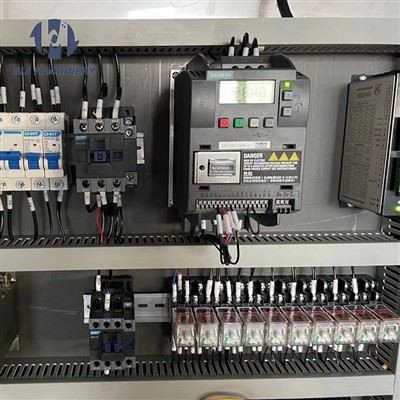
SiemensPLC + touch screen
LEISTERSwiss hot-air sealing
Tired of Production Headaches with Sunscreen? You're Not Alone.
From my 20 years on factory floors worldwide, I've seen these four challenges derail more sunscreen projects than any other. They are the silent profit killers that standard machines just can't handle.
The Viscosity Challenge
Standard fillers struggle with thick, high-SPF creams, leading to inconsistent dosing, nozzle clogging, and high product waste. You lose valuable product and time with every failed fill.
The Air Bubble Problem
Air pockets not only look unprofessional but can degrade your formula's stability and shelf life. Customers reject under-filled or bubbly tubes, damaging your brand's reputation for quality.
The Sealing Imperfection
Improper heat sealing on PE or laminated tubes is a time bomb. Leaks during shipping or on retail shelves lead to costly returns, retailer penalties, and a complete loss of customer trust.
The Regulation Hurdle
Meeting cosmetic GMP standards is non-negotiable. Machines that are difficult to clean, use non-compliant materials, or lack proper validation support put your entire business at risk of failing audits.
"I've seen these issues cost businesses millions. That's why we don't just sell machines; we engineer away your risks."
HIJ's TF60: The Expert-Designed Solution for Your Sunscreen Production Line
This isn't just another machine. The TF60 is the culmination of 20 years of problem-solving, engineered specifically to overcome the viscosity, air bubble, and sealing challenges inherent to sunscreen production. It's your turnkey solution to flawless, efficient, and profitable manufacturing.
TF60 Machine Core Parameters
| Infrastructure | ||
| Main Machine Landing Area | (about) 2 m² | Compact footprint for easy integration. |
|---|---|---|
| Whole Machine (L×W×H) | 1950 × 1000 × 1800 mm | |
| Weight | (about) 850 Kg | |
| Power & Components | ||
| Power Supply | 50Hz 380V/220V 3P | Custom voltages available with transformer (add-on). |
| Main Motor | 1.1 KW | |
| Hot Air Generator | 3 KW | For perfect, damage-free sealing. |
| Jacket Barrel (Optional) | 2 KW Heating / 0.18 KW Blending | Recommended for temperature-sensitive formulas. |
| Production Capacity | ||
| Operation Speed | 30 - 50 tubes/min (max) | Depending on tube size and cream viscosity. |
| Filling Range | 5 - 250 ml | |
| Suitable Tube Length | 50 - 210 mm | Longer tubes can be customized. |
| Suitable Tube Diameter | 13 - 50 mm | |
How Our Technology Solves Your Core Challenges (Step-by-Step)
Every feature of the TF60 is purpose-built to eliminate the specific problems that plague sunscreen production. Here's exactly how we do it.
1
Precision Piston Filling System for High-Viscosity Creams
high viscosity sunscreen cream filling
no-drip filling nozzle
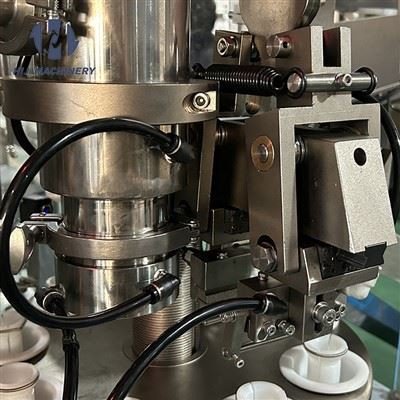
Our servo-driven piston pump is engineered to handle even the thickest sunscreen formulas (up to 250,000 cps) with absolute accuracy. Unlike standard pumps that struggle, clog, or produce inconsistent doses, our system delivers ±0.5% filling accuracy every single time. The anti-drip nozzle design prevents waste and contamination, ensuring every tube is perfectly filled without mess or rework.
2
Advanced Hot Air Sealing for Perfect, Leak-Proof Tubes
hot air tube sealing machine for cosmetics
ultrasonic tube sealer option
Traditional external heating scorches tube exteriors and creates weak, unreliable seals. Our internal hot air sealing technology heats the tube from the inside out, creating a hermetic seal that's not only leak-proof but also maintains a clean, professional appearance. For ultra-demanding applications, we offer an ultrasonic sealing upgrade that eliminates heat entirely, perfect for temperature-sensitive formulas or special packaging materials.
3
Automatic Tube Feeding & Color Mark Sensor for High Efficiency
automatic tube filling and sealing machine
photoelectric sensor tube alignment
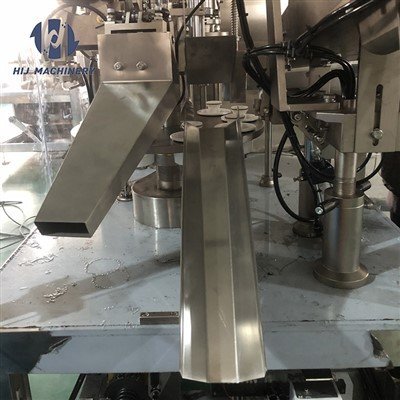
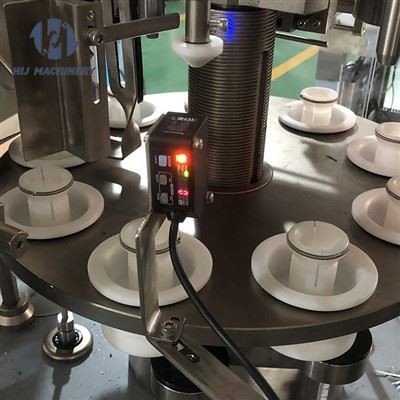
Manual tube feeding is slow, error-prone, and a major labor bottleneck. The TF60's fully automatic tube loading system, guided by precision photoelectric color mark sensors, aligns every tube perfectly before filling. This means zero misalignment errors, consistent printing orientation, and a production speed of up to 50 tubes per minute with minimal operator supervision. You can reallocate your workforce to higher-value tasks.
4
GMP-Compliant Design with Easy-to-Clean Stainless Steel 316L
cosmetic GMP standard filling machine
pharmaceutical grade tube filler
Regulatory compliance is not optional. Every product-contact part on the TF60 is made from SS316L stainless steel, the same grade used in pharmaceutical manufacturing. The machine's open design and tool-free disassembly allow for thorough cleaning and inspection in minutes. We provide full validation documentation (IQ/OQ protocols, material certifications, cleaning SOPs) to support your WHO GMP, cGMP, and EU Cosmetic Regulation audits. You're not just buying a machine; you're buying peace of mind.
Ready to See How This Technology Works in Your Facility?
Schedule a virtual demo, request detailed technical drawings, or let our team design a custom solution for your specific sunscreen formulation and production goals.
Book Your Free ConsultationKey Specifications & Features of the HIJ-TF60 Model
No Tube, No Fill
A smart sensor detects the presence of a tube, preventing the machine from dispensing cream, which eliminates product waste and messy cleanups.
Siemens PLC Control
Powered by a world-class Siemens PLC and touchscreen, ensuring stable, reliable operation and an intuitive, easy-to-use interface for your team.
Customizable Filling Range
Versatile design accommodates a wide range of product sizes, from small 5ml samples to large 250ml retail tubes, with quick and easy changeover.
High-Speed Production
Engineered for efficiency, the TF60 achieves a production speed of up to 50 tubes per minute, maximizing your output and profitability.
Fully Automated Finishing
Integrates automatic batch number printing/embossing and smooth tube discharging, creating a seamless, end-to-end production process.
HIJ TF-60 Full Technical Parameters
Complete factory specification of the TF-60 automatic sunscreen cream tube filling and sealing machine — world-class components, verified at Factory Acceptance Testing (FAT) before every shipment.
| Parameter | TF-60 Specification |
|---|---|
| Production Capacity | |
| Operation speed | 30–50 tubes/min (max) |
| Filling range | 5–250 ml |
| Suitable tube diameter | 13–50 mm |
| Suitable tube length | 50–210 mm (longer on customization) |
| Suitable tube material | ABL/PBL aluminum-plastic laminated & plastic composite tubes |
| Construction & Hygiene | |
| Product-contact parts | 316L stainless steel |
| Case body material | 304 stainless steel, dead-corner-free surface |
| Safety guard | Semi-enclosed anti-static organic glass, door-open interlock alarm |
| Control & Key Components | |
| Control system | Siemens PLC + Siemens touch screen + Siemens frequency inverter |
| Hot-air sealing generator | LEISTER (Switzerland), 3 kW |
| Pneumatic components | AIRTAC, working pressure 0.5–0.7 MPa, air consumption 1.1 m³/min |
| Batch coder / sensors | OMRON coder, AUTONICS filling photocell, Japanese color-code sensor |
| Utilities & Footprint | |
| Power supply | 380V/220V, 3-phase, 50 Hz (other voltages via transformer) |
| Main motor / water chiller | 1.1 kW / 1.9 kW |
| Machine dimensions (L×W×H) | 1950 × 1000 × 1800 mm |
| Weight / footprint | ≈850 kg / ≈2 m² landing area |
Heated Jacket Hopper + Stirrer
Double-jacket hopper with temperature control and stirring device keeps mineral or fast-thickening sunscreen formulas homogeneous during filling.
Plunger Pump Auto Feeding
Plunger pump with P+F level controller automatically transfers cream from your mixing tank to the hopper — no manual loading.
Quick-Change Mold Sets
Each tube diameter uses a dedicated mold for a perfect oval or special-shape end seal; changeover takes under 30 minutes.
Beyond Sunscreen: A Versatile Machine for Your Entire Cosmetic Line
Your investment in the HIJ-TF60 goes far beyond a single product. Its robust design and flexible filling system make it the perfect solution for a wide range of cosmetic and pharmaceutical products, maximizing your production capabilities and ROI.
Ointments
Facial Cleansers
Hand Creams
Body Lotions
Whether you're producing thick medicinal balms or smooth daily moisturizers, the TF60 adapts to your needs. One machine can be the foundation of your entire tube-based product line.
Discuss Your Product Portfolio
Why Choose HIJ?
It’s More Than Just a Machine.
Founder's 20-Year Expertise in Every Machine
Our founder, Forester Xiang, has spent two decades on the front lines, solving real-world challenges for global clients. This invaluable experience is our DNA. Every HIJ machine is engineered not just to meet specifications, but to proactively solve the problems we know you'll face.
European Quality, Smart Pricing
We refuse to compromise. We benchmark our design, materials (like SS316L), and components (like Siemens) against top European standards. By leveraging an intelligent global supply chain, we deliver this premium quality without the premium price tag, offering you unparalleled value.
A Turnkey Solution Partner, Not Just a Supplier
A machine is just one part of your success. We act as your dedicated partner from start to finish—from initial URS consultation and custom design to installation, validation support, and rapid after-sales service. Your project success is our ultimate metric.
Related Cosmetic Packaging Machines
Building a complete sunscreen or skincare production line? These HIJ machines integrate seamlessly with the TF-60.
Cosmetic Tube Filling Sealing Machine
General-purpose tube filler for lotions, gels, toothpaste and ointments across your full product range.
View machine →Cream Filling Machine
Precision piston filling for cream jars and bottles — the companion machine for non-tube sunscreen formats.
View machine →Automatic Cosmetic Filling Line
Turnkey integration: filling, sealing, cartoning and case packing engineered as one synchronized line.
View solution →Skincare Packaging Line
Complete packaging solutions for serums, creams and SPF skincare brands, from startup to industrial scale.
View solution →Cosmetic Packaging Machine Price Guide
2026 cost breakdown for every machine type — budgets, options and ROI calculations explained.
Read the guide →All Cosmetic Packaging Machines
Browse HIJ’s complete range of filling, sealing and packaging machines for the cosmetics industry.
Browse all →Expert Guides from Forester Xiang
20+ years of field experience from 100+ factory projects — the technical answers buyers ask before choosing a tube filling machine.
Troubleshooting
How to Fill High-Viscosity Sunscreen Cream: 6 Problems Solved
Dosing drift, air bubbles, stringing, mid-run thickening — the exact fix for each.
Read the guide → Line PlanningSunscreen Production Line Setup: Equipment & Cost Guide (2026)
All 5 stages, realistic budgets from $25K, and the right order to buy in.
Read the guide → TechnologyHot Air vs Ultrasonic Tube Sealing: Which Is Better?
11-criteria comparison — and why leaking tubes are usually a filling problem.
Read the comparison → MaterialsPE vs ABL vs PBL Tubes: How to Choose for Sunscreen & Creams
Barrier, feel, cost, recyclability — and what each material means for sealing.
Read the guide →Frequently Asked Questions (FAQ)
What is the price of a sunscreen cream tube filling and sealing machine?
The HIJ TF-60 automatic sunscreen tube filling and sealing machine starts at US$19,500 (FOB China port), including one mold set and a water chiller. A fully optioned configuration with heated double-jacket hopper, stirring device and plunger-pump auto feeding is typically US$24,500–25,500 — a 30–40% cost advantage over comparable European models. Payment terms are 40% advance and 60% before delivery, with a 12-month warranty included. See our cosmetic packaging machine price guide for a full cost breakdown, or request an exact quote below.
How many tubes per minute can the TF-60 fill and seal?
The TF-60 fills and seals 30–50 tubes per minute, depending on fill volume and tube diameter. At a typical 50 ml sunscreen fill it runs at 45–50 tubes/min — roughly 21,000–24,000 finished tubes per 8-hour shift. For higher outputs, two machines can run in parallel within one automatic cosmetic filling line.
Can it handle high-viscosity sunscreen creams?
Yes. The mechanical piston filler doses thick SPF formulations up to approximately 250,000 cps with ±1% accuracy, and a tail-cutting function prevents stringing of viscous material. For mineral or fast-thickening formulas, the optional heated double-jacket hopper with stirring device keeps the cream at a constant temperature and homogeneity throughout the run.
Does it seal both plastic and laminated (ABL/PBL) tubes?
Yes. The Swiss LEISTER hot-air generator produces hermetic, leak-proof end seals on PE plastic tubes and ABL/PBL aluminum-plastic laminated tubes, with automatic batch-number embossing in the seal. Single- or double-sided end printing and special seal shapes are available as options.
What tube sizes does the machine accept?
The standard TF-60 accepts tube diameters of 13–50 mm and tube lengths of 50–210 mm, with a filling range of 5–250 ml. Longer tubes can be accommodated with a customized format set. Each tube diameter uses a dedicated quick-change mold, so one machine covers your travel-size, standard and family-size SKUs.
Is the machine cGMP-compliant for cosmetic production?
Yes. All product-contact parts are 316L stainless steel and the case body is 304 stainless steel with a smooth, dead-corner-free surface for fast cleaning and changeover. The semi-enclosed anti-static guard, door-open interlock alarms and Siemens PLC controls support cosmetic GMP audits, with an FDA-compliant design that supports MoCRA and EU cosmetic requirements.
What are the lead time, installation, and training terms?
Standard machines ship in about 30 working days after prepayment and receipt of your tube samples; heavily customized configurations take 60–75 days. Every machine passes Factory Acceptance Testing (FAT) before shipment, and our engineers provide on-site installation, commissioning and hands-on training for your operators and maintenance team.
What warranty and after-sales support do you provide?
The TF-60 carries a 12-month full warranty with free replacement spare parts shipped by express courier within 10 days, plus lifetime maintenance support. Remote troubleshooting via the Siemens PLC and a documented spare-parts list keep long-term downtime to a minimum. Learn more on our Service & Support page.
Have More Questions or Ready to Start?
Our team of experts, backed by 20 years of industry experience, is ready to provide the answers and solutions you need. Let's discuss your sunscreen project today.
Get a Free, Detailed Quote