Opens in a new tab
Get Quote

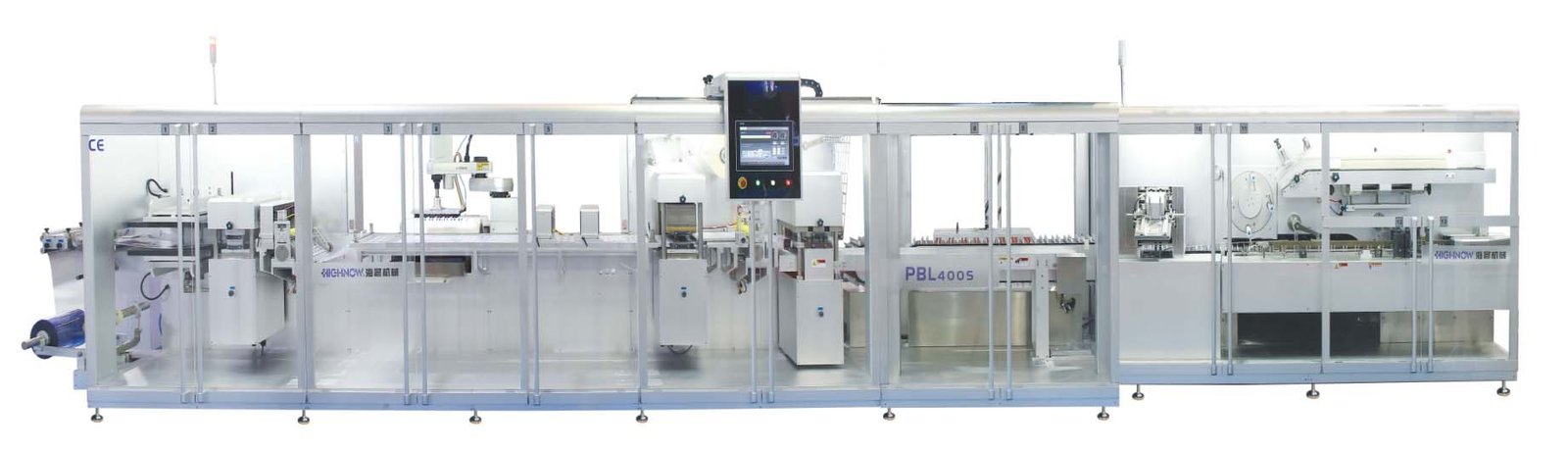
PBL-400S-400SF · Integrated pharmaceutical packaging line

Blister Cartoning Machine for Pre-Filled Syringes and Ampoules

Form PVC/ALU trays, load glass products by robot, inspect, seal, punch, fold the leaflet and carton on one coordinated line. HIJ configures the machine around the approved product, tray, carton, accepted-output target and FAT protocol.

  • Project basis: 8,000 pcs/h
  • Glass PFS and ampoules
  • PVC/ALU primary pack
  • Siemens motion control
PBL-400S-400SF integrated blister cartoning machine for pre-filled syringes and ampoules
One coordinated scope from blister forming and robotic loading to leaflet insertion and finished-carton discharge.
ProductGlass geometry, orientation, fragility, incoming presentation and representative samples.
Primary packTray drawing, web grade, lidding material, seal method and cut acceptance.
CartonCarton and leaflet drawings, paper grades, coding position and closure method.
AcceptanceAccepted output, defect challenges, reject records, run duration and retained evidence.

Choose the correct configuration first

Is an integrated blister cartoning line the right fit?

The PBL-400S-400SF is most useful when the product needs a formed tray and the buyer wants primary-pack and secondary-pack handling managed as one project. It is not automatically the best answer for every blister or carton.

Strong fit

  • Glass pre-filled syringes or ampoules must be placed into a formed tray with controlled orientation.
  • The blister, leaflet and carton need interlocked presence checks and coordinated rejection.
  • The buyer wants one responsibility boundary for forming, robotic loading, transfer and cartoning.
  • A representative FAT can use the approved products, webs, cartons and leaflets.

Consider a different route when

  • Finished blister cards already arrive from an upstream machine and only need cartoning.
  • Frequent product-family changes make independent blister and cartoning assets more practical.
  • The product does not require a formed blister tray or robotic glass-product handling.
  • The required output is better served by a smaller standalone cartoner.

Important: 8,000 pcs/h is the project basis in the supplied technical file. Final accepted output must be agreed against the actual syringe or ampoule, packaging materials, inspection scope and FAT conditions.

Coordinated process

From web unwind to accepted carton

The line is one sequence, but every station needs its own method, limit and retained evidence. That is what makes two quotations comparable.

Unwind and form

Guide and preheat the PVC web, form the approved tray geometry and monitor material availability.

Feed and orient

Receive labeled syringes or ampoules, buffer the upstream interface and present products for robotic pick-up.

Robot-load and inspect

Place products into formed trays, detect loading status and segregate defined defects.

Seal and cool

Apply the approved lidding web and demonstrate an operating window that protects product and pack.

Punch and transfer

Cut the finished cards, manage scrap and transfer accepted blisters toward the cartoner.

Fold the leaflet

Pick one leaflet, create the approved fold and synchronize delivery with the blister and carton.

Open and load carton

Open the carton, insert leaflet and blister, apply batch coding and close the carton.

Reject and record

Challenge defined defects, confirm reject disposition and retain the agreed run and inspection evidence.

Verified technical baseline

PBL-400S-400SF technical specification

These values come from the current HIJ technical file. Product-specific tooling, accepted output and final included functions remain subject to the approved quotation, drawings and FAT protocol.

SpecificationCurrent technical-file valueBuyer decision
Packaged productsGlass pre-filled syringes and glass ampoulesProvide drawings, orientation, fragility limits and representative samples.
Project output basis8,000 pcs/hConvert the target into accepted packs per agreed sustained run.
Blister material basisPVC/ALU; project PVC thickness 0.25–0.40 mmApprove exact forming and lidding grades before trials.
Punching frequency10–30 times/minConfirm cavities per stroke and finished-card layout.
Maximum forming area220 × 400 mmCheck usable area after trim, sealing and registration allowances.
Stroke range50–220 mm, servo adjustedConfirm the format-specific stroke in the approved drawing.
Carton size range65–180 × 33–85 × 15–75 mmSubmit finished carton drawings and paper samples.
Leaflet size range60–190 × 90–260 mm; 60–75 g/m² paper basisConfirm fold pattern, grain, print orientation and insertion direction.
Cartoning section maximumUp to 300 cartons/min mechanical capacityDo not treat this as accepted line output; final rate follows the full configured process.
Power supply / machine power380 V, 50 Hz / 35 kWVerify destination voltage, frequency and site distribution.
Compressed air0.6–0.8 MPa; up to 500 L/minConfirm pressure, quality, connection and available capacity.
Overall dimensions / weight14,000 × 2,500 × 2,000 mm / approximately 10,000 kgReview access, floor, utilities, maintenance clearances and line interfaces.

The maximum figures above are equipment-envelope values. A purchase specification should separately state rated mechanical capacity, target output and FAT accepted output.

Control and component boundary

Specify the functions, not only the brand names

The technical file identifies a Siemens CPU1516T PLC, Siemens servo axes, Yamaha robotic handling and a GUK C91 leaflet folder. Those brands matter, but the quotation also needs to define software functions, interfaces, alarms, recipes, access levels and the evidence used to accept them.

  • Automatic, semi-automatic and inching operation modes.
  • Operator, maintenance and administrator password levels.
  • Fault display, alarm records and interlocks for material shortage or jams.
  • No blister infeed means no leaflet feed and no carton opening.
  • Upstream and downstream control-loop interfaces.
  • Component list frozen at the agreed design-review stage.
Yamaha robotic transfer station on the PBL-400S-400SF line
Hardware names do not replace a functional specification. Approve the sequence, failure response and test evidence for each station.

URS inputs

What HIJ needs to configure the line

Product set

Product drawings, weight, glass details, plunger or needle features, orientation, allowable contact, incoming presentation and worst-case samples.

Blister and material set

Tray drawing, cavities per card, forming web, lidding web, sealing method, artwork, registration, perforation and cut criteria.

Carton and leaflet set

Finished carton and leaflet drawings, paper grades, fold scheme, coding content, closure method and samples from the intended suppliers.

Output definition

Required good packs per hour, shift pattern, changeover frequency, planned stops, reject accounting and agreed operating factor.

Line interfaces

Upstream labeler discharge, buffers, downstream equipment, utility points, communication signals, room layout and access restrictions.

Acceptance package

URS response, drawing approvals, document index, FAT protocol, challenge tests, sampling, data retention and site-support boundary.

Inspection and rejection

Turn each claim into a testable FAT decision

The technical file includes detection points for PVC availability, pressure, forming, tray loading, leaflet position, tray position, carton opening, pusher overload and motor protection. The FAT should define how each required function is challenged and what record is retained.

Web and forming

Challenge material shortage, incomplete forming and recovery after a controlled stop. Retain settings, samples and the defect log.

Product loading

Challenge missing and mis-presented products. Confirm detection timing, reject path and disposition record.

Leaflet presence

Challenge low material, no leaflet and incorrect feed behavior. Confirm interlocks with carton suction and product push.

Carton opening

Challenge a carton jam or opening fault. Confirm alarm, stop behavior, access and restart method.

Overload protection

Verify the defined pusher and motor protection response without damaging product or machine.

Sustained run

Record total output, accepted cartons, rejects, waste, stops and interventions against the approved acceptance limits.

Acceptance evidence

Build the FAT around the complete pack

FAT decisionMethod to approveEvidence to retain
Web handlingRun approved lots through start, splice, normal operation and controlled stops.Material identification, reel setup, tension settings, observations and deviations.
Forming repeatabilityMeasure the agreed cavity features from samples taken across the run.Approved samples, settings, measurements, instruments and defect log.
Product loadingChallenge normal, missing and mis-presented products using the approved sample set.Challenge list, detection results, reject confirmation and disposition.
Seal processRun the approved web pair inside the agreed operating window and test the seal by the buyer-approved method.Material lots, settings, sample plan, results and deviations.
Registration and cuttingCompare artwork, cut position and finished-card dimensions with approved drawings.Measured samples, artwork controls, registration and cut records.
Cartoning sequenceChallenge product, leaflet and carton presence interlocks plus jam and restart behavior.Test results, alarms, reject records, recovery observations and open items.
Accepted outputRun for the agreed duration under the agreed operating conditions.Total output, accepted output, rejects, waste, stops and operator interventions.

Equipment documentation supports the buyer’s qualification work. It does not replace the facility’s quality system, process validation, product release or regulatory assessment.

Configuration choice

Integrated line or separate machines?

DecisionIntegrated PBL-400S-400SFStandalone blister machine and cartoner
Project boundaryOne coordinated scope for forming, robotic loading, transfer, leaflet handling and cartoning.Separate machine scopes plus an interface, buffer and responsibility matrix.
Product transferDesigned around direct transfer between stations within the configured line.Requires an agreed intermediate discharge, accumulation and infeed method.
ControlsSequence, alarms and interlocks can be defined across the complete line.Control handshakes and reject reconciliation must be defined between systems.
FlexibilityBest when the product family and pack route justify a dedicated integrated configuration.Useful when machines must run independently or serve multiple upstream and downstream routes.
AcceptanceOne end-to-end FAT can test the complete pack flow.Machine FATs and line-interface acceptance may need separate protocols.

Request a comparable quotation

Send the pack definition before asking for price

HIJ can respond with a configuration, open-item list and FAT boundary after the product, materials, output and document scope are clear. This prevents a low base-machine number from hiding tooling, inspection, interface or qualification work.

  • Product and finished-pack drawings
  • Representative product and material samples
  • Accepted-output target and shift basis
  • Inspection, coding and data requirements
  • Room layout and line interfaces
  • FAT, documents and site-service boundary

Buyer questions

Blister cartoning machine FAQ

What is a blister cartoning machine?

A blister cartoning machine inserts a finished blister pack and leaflet into a carton, closes the carton and applies the configured checks and coding. An integrated line such as the PBL-400S-400SF also forms the tray, loads the product, seals and punches the blister before cartoning.

Which products is the PBL-400S-400SF configured for?

The current HIJ technical file uses glass pre-filled syringes and glass ampoules as the product basis with PVC/ALU blister packaging. The final tooling and handling method must be approved against the buyer’s actual product drawings and samples.

What output should a buyer use for project planning?

The supplied technical file gives 8,000 pieces per hour as the project basis. It also lists up to 300 cartons per minute for the cartoning section, but that mechanical maximum is not the accepted output of the complete configured line. The contract and FAT should state good packs over an agreed sustained run.

What carton and leaflet ranges are listed?

The current file lists carton sizes of 65–180 × 33–85 × 15–75 mm and leaflet sizes of 60–190 × 90–260 mm. These are equipment ranges, not confirmation that every combination will run. HIJ must review the exact drawings, materials and fold pattern.

Which controls and robotic components are specified?

The technical file identifies a Siemens CPU1516T PLC, Siemens servo axes, Yamaha robotic transfer and a GUK C91 leaflet folder. The final component list and software functions should be frozen in the approved project documents because configurations can change.

What should the FAT test?

The FAT should test the approved product and packaging materials, forming repeatability, product loading, seal process, registration and cutting, leaflet and carton interlocks, rejection, restart behavior and accepted output. The protocol should name acceptance limits, sampling and retained records before execution.

Is the line automatically validated for pharmaceutical production?

No. The equipment and supplier documents can support the buyer’s qualification and validation program, but they do not replace the buyer’s quality system, product-specific process validation, site qualification, regulatory assessment or release responsibilities.

How is price determined?

Price depends on the product set, tooling, materials, feeder and interface scope, inspection, coding, data functions, documents, trials, destination and site services. Send the approved drawings, samples and acceptance requirements so HIJ can quote a comparable project boundary.

PBL-400S-400SF project review

Turn your product and pack into a testable machine scope

Send the product drawings, blister and carton materials, accepted-output target and FAT requirements. HIJ will review the configuration and identify the information still needed for a responsible quotation.

Let's Design Your Production Line

Share your requirements and I'll personally craft a solution that maximizes your efficiency and profitability.