
📘 Material Selection Guide 2026
Alu-Alu vs PVC Blister Packaging: Which Protects Your Pharmaceuticals Best?
A definitive guide for pharmaceutical procurement, R&D, and quality teams. Compare barrier protection, cost, machine compatibility, and regulatory implications — backed by 20+ years of HIJ Machinery expertise across 100+ pharmaceutical factories worldwide.
100%
Alu-Alu Barrier
30-40%
PVC Cost Savings
20+ Yrs
HIJ Expertise
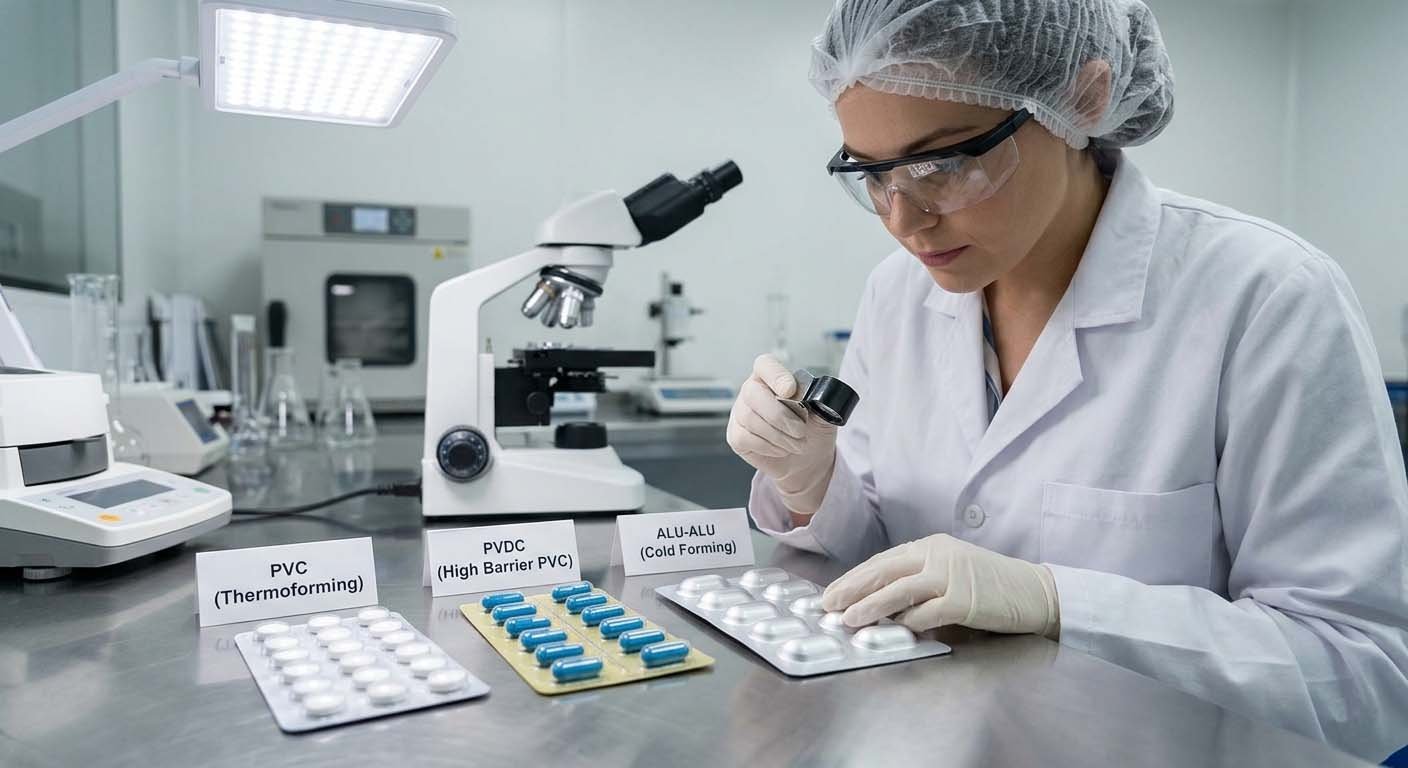
⚡ Quick Answer: Alu-Alu vs PVC Blister Packaging
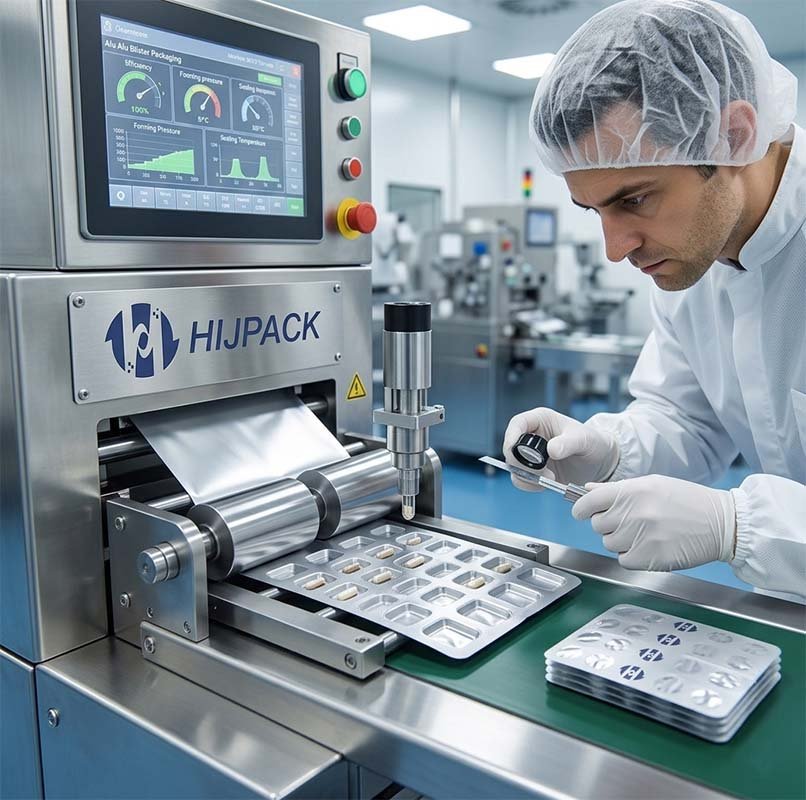
Alu-Alu blister packaging uses cold-formed aluminum foil on both sides, providing a complete (100%) barrier against moisture, oxygen, and light. It is the preferred choice for hygroscopic, photosensitive, and oxygen-sensitive pharmaceuticals such as effervescent tablets, antibiotics, hormones, and oncology drugs.
PVC (or PVC-Alu) blister packaging uses thermoformed transparent PVC film for the forming side and aluminum foil for the lidding side. It offers 30–40% lower cost, transparent product visibility, and faster machine speeds, making it suitable for stable, non-sensitive pharmaceuticals.
Decision rule: Choose Alu-Alu when stability data shows moisture or oxygen sensitivity, or when targeting tropical/high-humidity markets. Choose PVC for cost-sensitive production of stable formulations with no special barrier requirements.
Side-by-Side Material Comparison
Two fundamentally different blister technologies — choose based on your product's stability profile, target market, and budget.
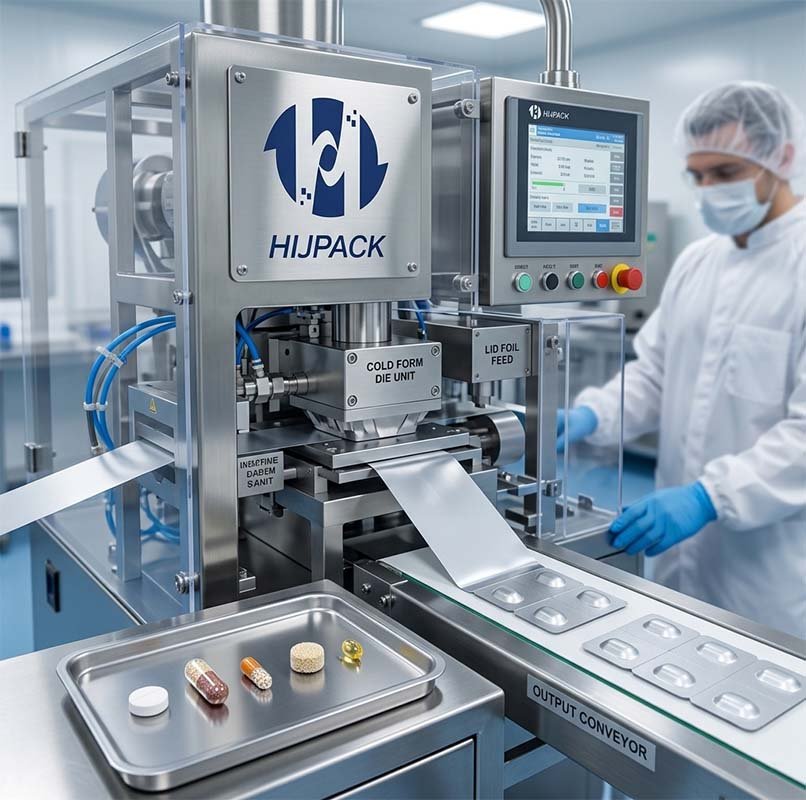
Cold Forming Technology
Alu-Alu Blister Packaging
Aluminum foil on both forming and lidding sides. Cold-formed at room temperature using mechanical pressure. Opaque, premium-grade barrier protection.
- 100% moisture, oxygen, and light barrier
- Ideal for hygroscopic and photosensitive drugs
- Extended shelf life (up to 5+ years)
- Required for tropical/Zone IVa & IVb markets
- Premium pharmaceutical positioning
- WHO GMP / cGMP / EU GMP compliant
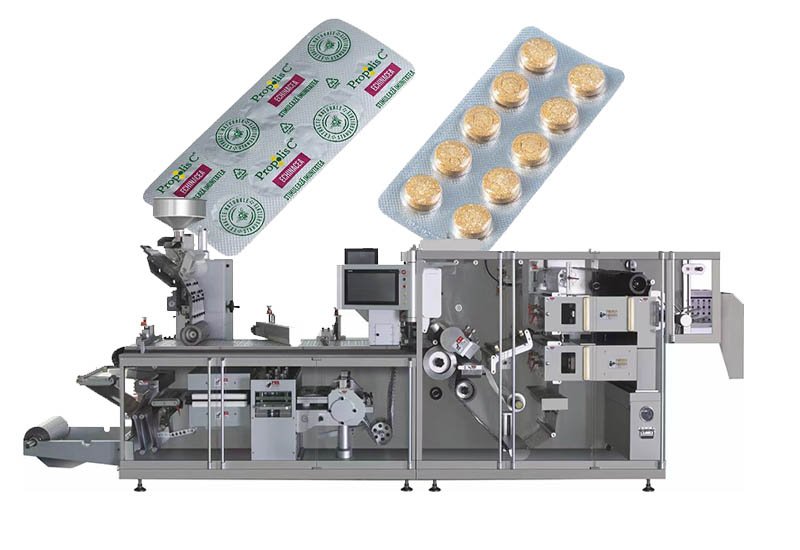
Thermoforming Technology
PVC / PVC-Alu Blister Packaging
Transparent PVC (or PVDC-coated PVC) forming film with aluminum lidding foil. Thermoformed with heat. Lower cost, transparent product visibility.
- Moderate barrier (PVC) to good barrier (PVDC)
- Transparent — product visible to consumers
- 30–40% lower material cost
- Faster forming speeds (up to 800+ blisters/min)
- Best for stable, non-sensitive formulations
- Standard for OTC and generic pharmaceuticals
Complete Technical Comparison
Every parameter that matters for your packaging decision — barrier, cost, machine compatibility, regulatory.
| Parameter | Alu-Alu (Cold Forming) | PVC / PVC-Alu (Thermoforming) |
|---|---|---|
| Forming Material | Aluminum foil (45–60μm) + OPA + PVC | PVC film (250–300μm) or PVDC-coated PVC |
| Lidding Material | Aluminum foil (20–25μm) heat-seal lacquered | Aluminum foil (20–25μm) heat-seal lacquered |
| Forming Method | Cold pressure (no heat) | Heat + vacuum / compressed air |
| Moisture Barrier (WVTR) | ✓ Absolute (zero permeation) | Moderate to good (PVC: 3 g/m²/day; PVDC: 0.6) |
| Oxygen Barrier (OTR) | ✓ Absolute (zero permeation) | Moderate (PVC: 20 cc/m²/day; PVDC: 1) |
| Light Barrier | ✓ 100% (opaque) | ✗ Transparent (UV exposure) |
| Product Visibility | ✗ Not visible (opaque) | ✓ Fully visible |
| Material Cost (relative) | 100% (baseline — premium) | 60–70% of Alu-Alu cost |
| Typical Machine Speed | Up to 14,000 blisters/hour | Up to 48,000 blisters/hour |
| Cavity Depth (max) | Up to 12mm (limited by cold forming) | Up to 25mm (deeper draws possible) |
| Shelf Life Extension | Up to 5+ years | 2–3 years typical |
| Climatic Zone Suitability | Zones I, II, III, IVa, IVb (all) | Zones I, II only (without PVDC) |
| Recyclability | Aluminum recyclable (separate streams) | Mixed-material (lower recyclability) |
| Typical Applications | Effervescent, antibiotics, hormones, oncology | OTC tablets, generics, vitamins, cold/cough |
| Regulatory Acceptance | WHO GMP / cGMP / EU GMP / FDA | WHO GMP / cGMP / EU GMP / FDA |
| Required Machine | Cold forming (e.g., HIJ DPP-320) | Thermoforming (e.g., HIJ DPP-260) |
Which Pharmaceuticals Require Alu-Alu Blister Packaging?
Six product categories where Alu-Alu cold forming is the only correct choice — and where PVC thermoforming risks product failure.
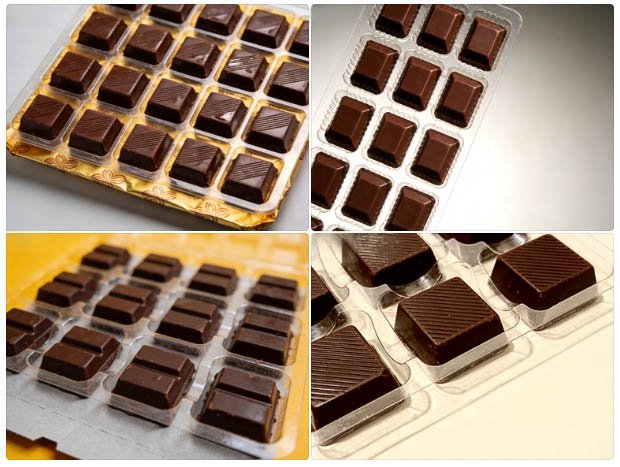
Alu-Alu Required
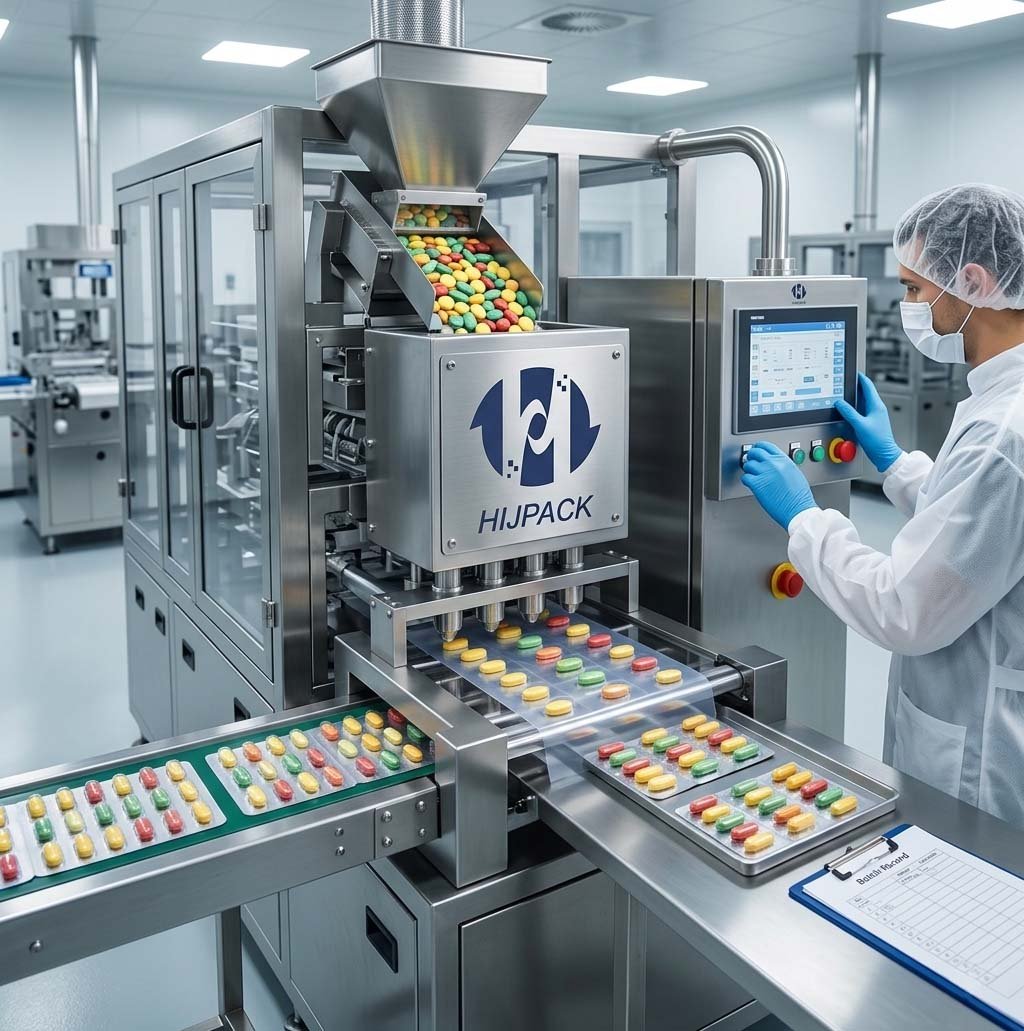
Effervescent Tablets
Hygroscopic by nature. Even minimal moisture triggers premature reaction. Alu-Alu is mandatory for stability.
Alu-Alu Required
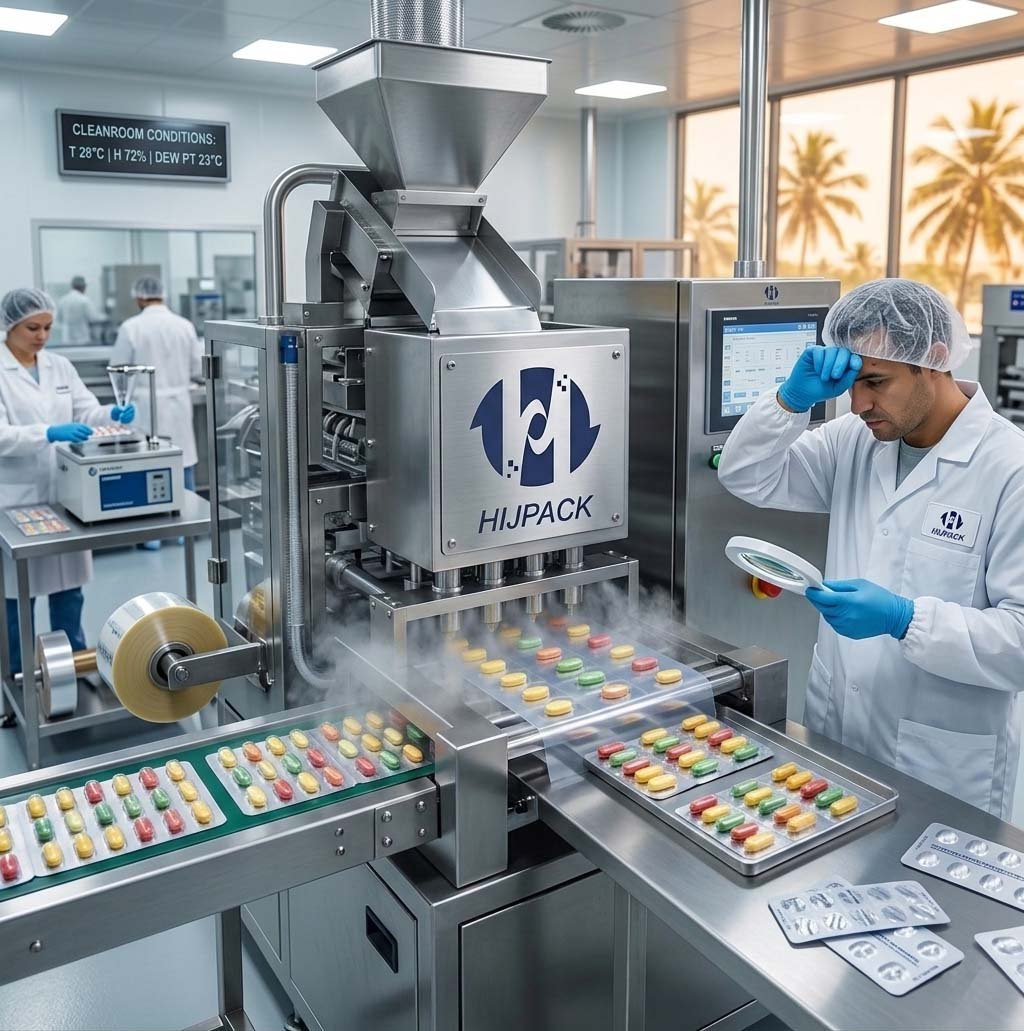
Antibiotics & Beta-Lactams
Highly moisture-sensitive. Degradation pathways activate rapidly under humidity. Critical for tropical markets.

Alu-Alu Required
Hormones & HRT Medications
Light- and oxygen-sensitive. Photodegradation occurs with PVC transparent film. Alu-Alu opacity essential.
Alu-Alu Required
Oncology & High-Value Drugs
Strict stability requirements. High product value justifies premium packaging. Long shelf life required.
PVC Suitable
OTC Pain Relief Tablets
Stable formulations (paracetamol, ibuprofen). PVC-Alu adequate for shelf life. Cost-optimized choice.
PVC Suitable
Generic Tablets & Vitamins
Stable APIs with proven shelf life data. PVC-Alu offers consumer visibility and lower cost. Standard choice.
Quick Decision Framework
Five questions to determine the right blister material for your pharmaceutical product.
Q: Is your product moisture-sensitive, photosensitive, or oxygen-sensitive?
Check your stability data and ICH Q1A guidelines for your target climatic zone.
Total Cost of Ownership Analysis
Beyond material price — calculate true cost including machine, validation, and shelf life implications.
🏷️ Alu-Alu Cold Forming
Material cost (per 1000 blisters)
$8 – $12 USD
Cold forming machine investment
$80,000 – $200,000
Production speed
Up to 14,000/hour
Tooling/mold cost
Higher (custom dies)
Shelf life extension
Up to 5+ years
Best for
Premium / Sensitive Drugs
📦 PVC / PVC-Alu Thermoforming
Material cost (per 1000 blisters)
$5 – $7 USD
Thermoforming machine investment
$40,000 – $130,000
Production speed
Up to 48,000/hour
Tooling/mold cost
Lower (standard formats)
Shelf life extension
2–3 years typical
Best for
High-Volume Generics
Need Both? HIJ Delivers Alu-Alu AND PVC Solutions
Whether your pharmaceutical line requires premium Alu-Alu cold forming or cost-efficient PVC thermoforming, HIJ Machinery offers WHO GMP & cGMP compliant machines for every application — engineered in Wenzhou, China, trusted by 100+ pharmaceutical factories across 30+ countries.
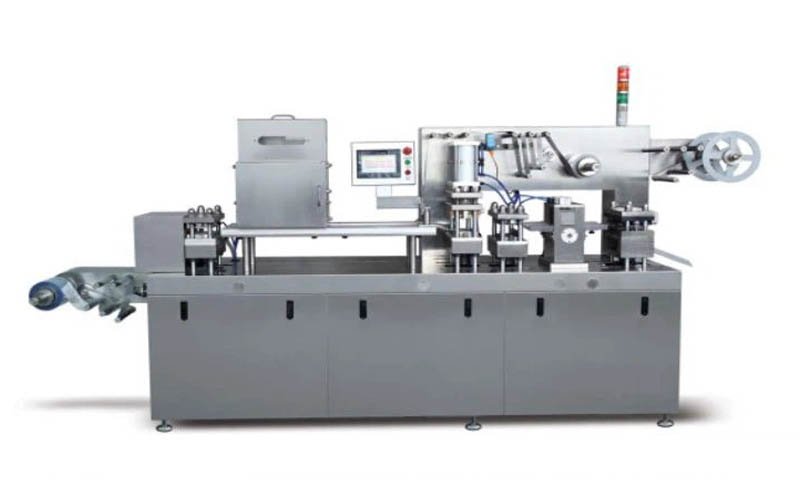
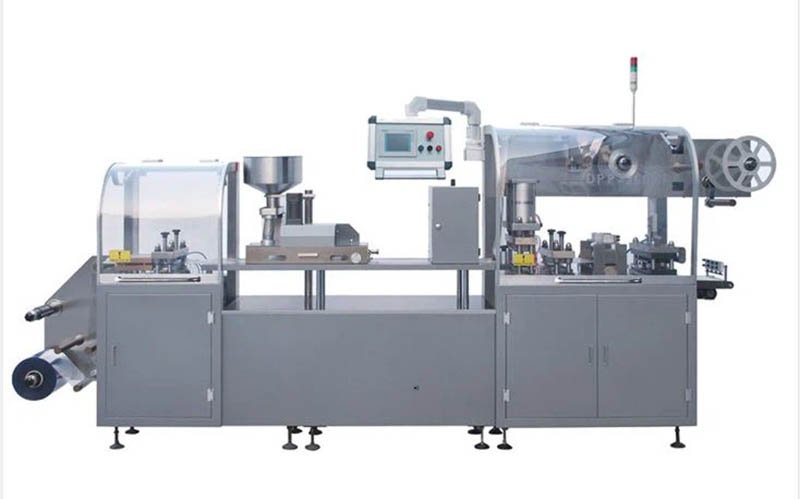
- DPP-320 Alu-Alu cold forming machine
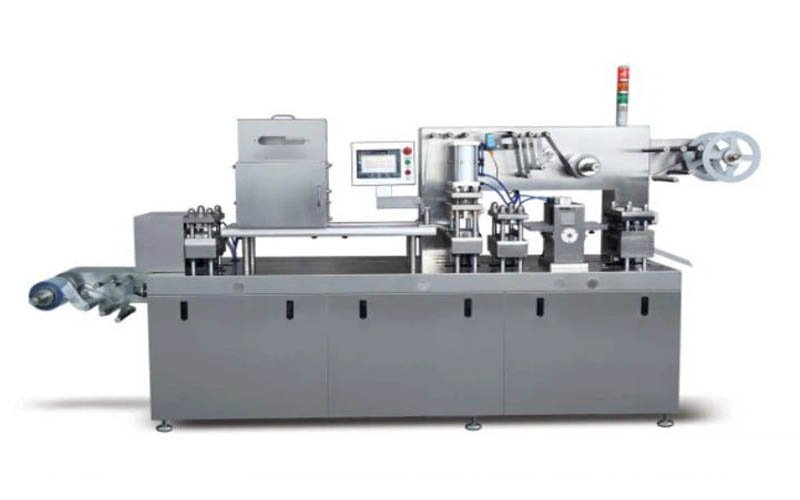
- DPP-260 PVC thermoforming machine
- Complete DQ/IQ/OQ/PQ validation
- WHO GMP / cGMP / CE certified
- 12–16 weeks lead time
- Global on-site installation support
Frequently Asked Questions
Common questions from pharmaceutical procurement, R&D, and quality teams.
What is the main difference between Alu-Alu and PVC blister packaging?
Alu-Alu blister packaging uses cold-formed aluminum foil on both sides, providing a 100% absolute barrier against moisture, oxygen, and light. PVC blister packaging uses thermoformed transparent PVC film with aluminum lidding, offering moderate barrier protection at lower cost. The fundamental difference is barrier performance: Alu-Alu is impermeable, while PVC allows gradual moisture and oxygen permeation.
When should I choose Alu-Alu over PVC blister packaging?
Choose Alu-Alu when your product is moisture-sensitive (effervescent tablets, antibiotics), photosensitive (hormones, vitamins like B12), oxygen-sensitive (oncology drugs), or when targeting tropical markets (Climatic Zones III, IVa, IVb per ICH Q1A). Also choose Alu-Alu when stability data shows degradation in PVC packaging, or when you require shelf life longer than 3 years.
Is Alu-Alu blister packaging more expensive than PVC?
Yes. Alu-Alu material costs are typically 30–50% higher than PVC ($8–12 vs. $5–7 per 1000 blisters). Cold forming machines are also more expensive ($80,000–200,000 vs. $40,000–130,000 for thermoforming). However, total cost analysis must include extended shelf life benefits, reduced product spoilage, and regulatory acceptance in tropical markets where PVC may not meet stability requirements.
Can the same machine produce both Alu-Alu and PVC blisters?
No. Alu-Alu requires cold forming machines (such as HIJ DPP-320) that use mechanical pressure to mold aluminum foil at room temperature. PVC requires thermoforming machines (such as HIJ DPP-260) that use heat and vacuum to mold plastic film. Some advanced machines offer convertible kits, but most pharmaceutical manufacturers operate dedicated lines for each technology.
What is PVDC and how does it compare to Alu-Alu?
PVDC (polyvinylidene chloride) is a barrier coating applied to PVC film, improving moisture barrier from 3 g/m²/day (plain PVC) to about 0.6 g/m²/day (PVDC-coated). It bridges the gap between PVC and Alu-Alu but does not match Alu-Alu's absolute barrier. PVDC is suitable for moderately sensitive products at lower cost than Alu-Alu, but for highly sensitive drugs, Alu-Alu remains the only choice.
Is PVC blister packaging acceptable for FDA and WHO GMP?
Yes, PVC blister packaging is fully compliant with FDA, WHO GMP, EU GMP, and other major regulatory frameworks — provided it meets material specifications (USP/EP grade) and your stability data demonstrates product compatibility. The choice between PVC and Alu-Alu is driven by product stability requirements, not regulatory acceptance. Both materials are widely used in regulated pharmaceutical markets.
What is the shelf life difference between Alu-Alu and PVC blisters?
Alu-Alu typically extends shelf life by 1–2 years compared to PVC for moisture-sensitive products. Stable formulations achieve 2–3 years in PVC and 3–5+ years in Alu-Alu. For hygroscopic products, PVC may only achieve 6–12 months, while Alu-Alu maintains 2–3 years or more. Always validate shelf life through ICH-compliant accelerated and long-term stability studies.
Which blister type is better for tropical markets like India and Africa?
Alu-Alu is strongly preferred for tropical markets (Climatic Zones IVa and IVb — high humidity, high temperature). Standard PVC fails to maintain product stability under 30°C/75% RH conditions over typical shelf life. Many pharmaceutical regulators in tropical regions either require Alu-Alu for sensitive products or demand extensive stability data to justify PVC use. HIJ has supplied Alu-Alu lines to manufacturers in India, Bangladesh, Nigeria, Kenya, and Indonesia.
Can HIJ Machinery supply both Alu-Alu and PVC blister machines?
Yes. HIJ Machinery (Wenzhou) manufactures both cold forming Alu-Alu machines (DPP-320 series) and thermoforming PVC machines (DPP-250, DPP-260 series). All machines are WHO GMP, cGMP, and CE certified with complete DQ/IQ/OQ/PQ validation documentation. Standard lead time is 12–16 weeks. Contact sales@hijpackingmachine.com or WhatsApp +86 13868822120 for material consultation and customized quote.
Is Alu-Alu more environmentally friendly than PVC?
Aluminum is more recyclable than PVC in theory — pure aluminum streams can be recycled indefinitely. However, blister packs (both Alu-Alu and PVC) are difficult to recycle in practice because they combine aluminum with polymers. Alu-Alu has the advantage of avoiding chlorinated polymers (PVC). Pharmaceutical sustainability initiatives increasingly favor Alu-Alu where feasible. Consult your local regulatory framework for specific environmental requirements.


Still Unsure? Let HIJ's 20-Year Experts Decide
Send us your product specifications, target market, and stability requirements. Our pharmaceutical packaging engineers will recommend the right blister technology and machine — with detailed pricing, lead time, and validation documentation. Response within 24 hours.
✓ 24-Hour Response
✓ 100+ Pharma Factories Served
✓ 30+ Countries Supported
✓ WHO GMP / cGMP Certified
About this guide: This Alu-Alu vs PVC blister packaging comparison is published by HIJ Machinery (Wenzhou), a pharmaceutical packaging machinery manufacturer based in Wenzhou, China. HIJ specializes in WHO GMP, cGMP (21 CFR), and CE-certified blister packaging machines, capsule filling machines, and turnkey pharmaceutical packaging lines. Founded by Forester Xiang with 20+ years of pharmaceutical machinery expertise, HIJ has served 100+ pharmaceutical manufacturers across 30+ countries including India, Bangladesh, Nigeria, Vietnam, Indonesia, Brazil, and the United States.
Source: hijpackingmachine.com | Contact: sales@hijpackingmachine.com | WhatsApp: +86 13868822120