Independent-source manufacturer shortlist
The best blister packing machine manufacturer is the supplier whose documented portfolio, project configuration, acceptance evidence and lifecycle support fit your product and site. This shortlist compares official supplier information without universal rankings, invented prices or country stereotypes.

Which blister packing machine manufacturers belong on a serious shortlist?
Manufacturers with current official blister-machine portfolios include ACG, HIJ Machinery, IMA, Körber Pharma, Marchesini Group, Romaco Noack and Uhlmann. They are not interchangeable. Their published ranges emphasize different products, speeds, forming methods, line-integration models, containment options, digital functions and service structures.
A large multinational supplier can still be the wrong fit for a small, high-changeover project. A smaller specialist can still be the wrong fit when local service, integration capacity or documentation does not match the buyer’s requirements.
Commercial disclosure and research method
HIJ Machinery publishes this article and sells blister packing machines. That commercial interest is material and should be visible. HIJ is therefore assessed using the same evidence rules as every other manufacturer: official product information, an itemized proposal, project-specific trials, contractual responsibilities and witnessed acceptance.
The shortlist uses manufacturer-operated websites and current product literature to confirm that each company offers blister packaging equipment and to describe the scope it presents publicly. It does not use anonymous rankings, reseller descriptions, unverified customer reviews or market-share claims to assign scores.
What does “best manufacturer” mean for your project?
“Best” becomes useful only after it is translated into project decisions. A buyer may need deep experience with oral solids, parenteral or medical-device blisters, cold forming, sustainable materials, containment, small batches, high output, integrated cartoning, data systems or local lifecycle support.
Start by identifying critical gates. Product and package fit, applicable safety, essential output, required inspection, documentation and support may be non-negotiable. Price, delivery, automation and optional services can then be compared among proposals that pass those gates.
Manufacturer shortlist at a glance
| Manufacturer | Portfolio evidence from its official source | Useful reason to investigate | What to verify in your RFQ |
|---|---|---|---|
| ACG | Blister machines, format parts, cartoning, inspection and broader oral-solid equipment | Projects that may benefit from an oral-solid ecosystem or varied forming/sealing concepts | Exact platform, integration owner, local support and supplied documentation |
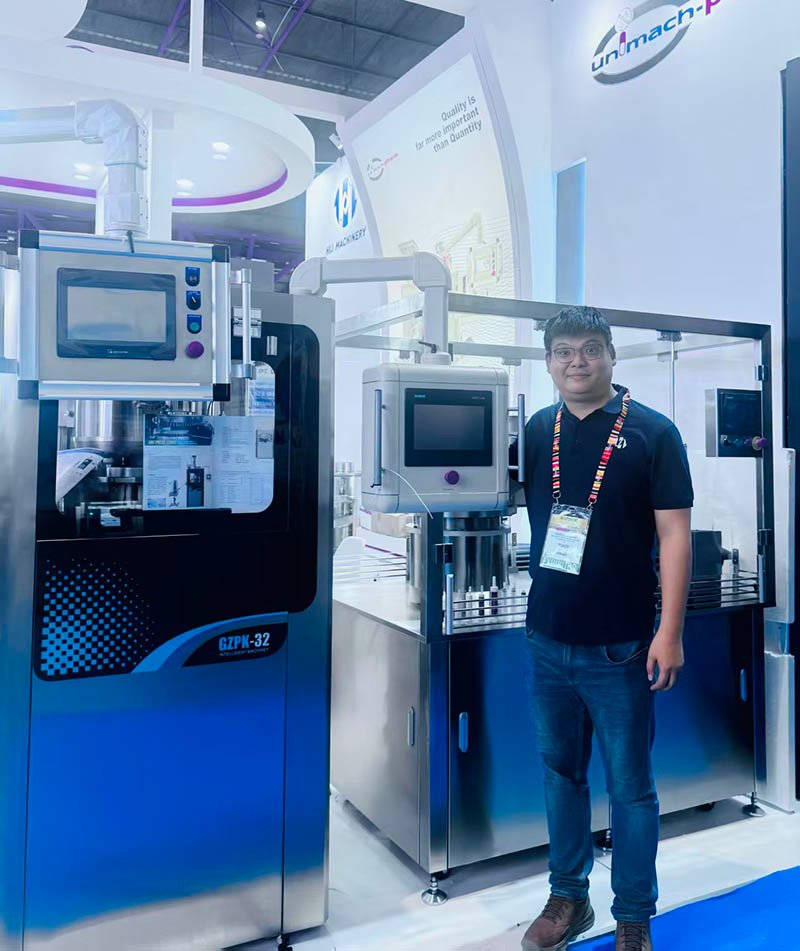
| HIJ Machinery | Pharmaceutical and specialty blister platforms configured around product, pack drawing, URS and FAT | Buyers seeking a project-configured proposal from a China-based manufacturer | Model source data, options, evidence, service location and contractual limits |
| IMA | Low-, medium- and high-speed blister solutions, feeders, containment and integrated lines | Projects requiring broad feeding or line configuration choices | Selected IMA division, machine, feeder, line modules and acceptance boundary |
| Körber Pharma | Modular blister solutions for oral solids, medical products and containment applications | Projects prioritizing modular architecture, digital integration or containment review | Configured modules, upgrade path, interfaces and site support |
| Marchesini Group | Blister-forming machines and complete lines across low- and high-volume applications | Projects requiring customized primary-to-secondary packaging integration | Plant responsibilities, interfaces, inspection, cartoning and end-of-line scope |
| Romaco Noack | Blister machines and integrated blister-cartoning lines under the Noack portfolio | Projects comparing stand-alone blister equipment with compact integrated lines | Current model availability, format range, service and exact line boundary |
| Uhlmann | Pharmaceutical blister machines for solid and parenteral products plus cartoning and digital solutions | Projects that need a broad pharma-specific machine and line portfolio | Product route, sealing concept, line modules, data scope and regional support |
ACG: an oral-solid equipment and blister ecosystem
ACG’s official product overview lists flat-forming/flat-sealing and rotary-forming/rotary-sealing blister equipment, format parts, cartoning, vision inspection and track-and-trace functions alongside other oral-solid manufacturing equipment. Its catalogue also shows platforms intended for different production and pack needs.
ACG belongs on a shortlist when the buyer wants to examine blister equipment in the context of a wider oral-solid process or compare multiple forming and sealing architectures. The RFQ should still name the selected platform, feeder, format parts, inspection, cartoning, software and aftermarket scope. A broad portfolio does not make every module part of one quotation.
HIJ Machinery: project-configured blister platforms
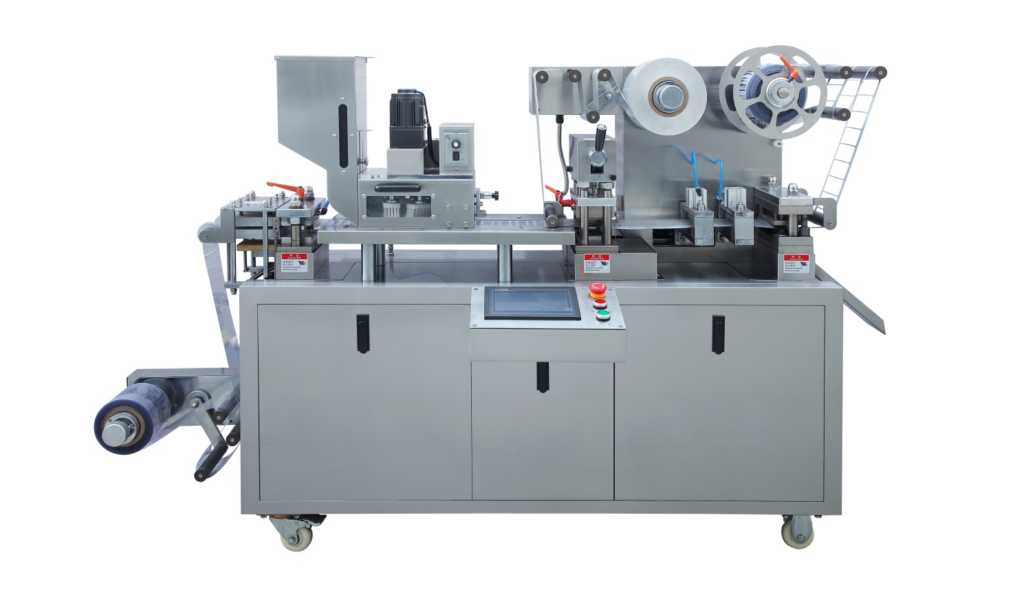
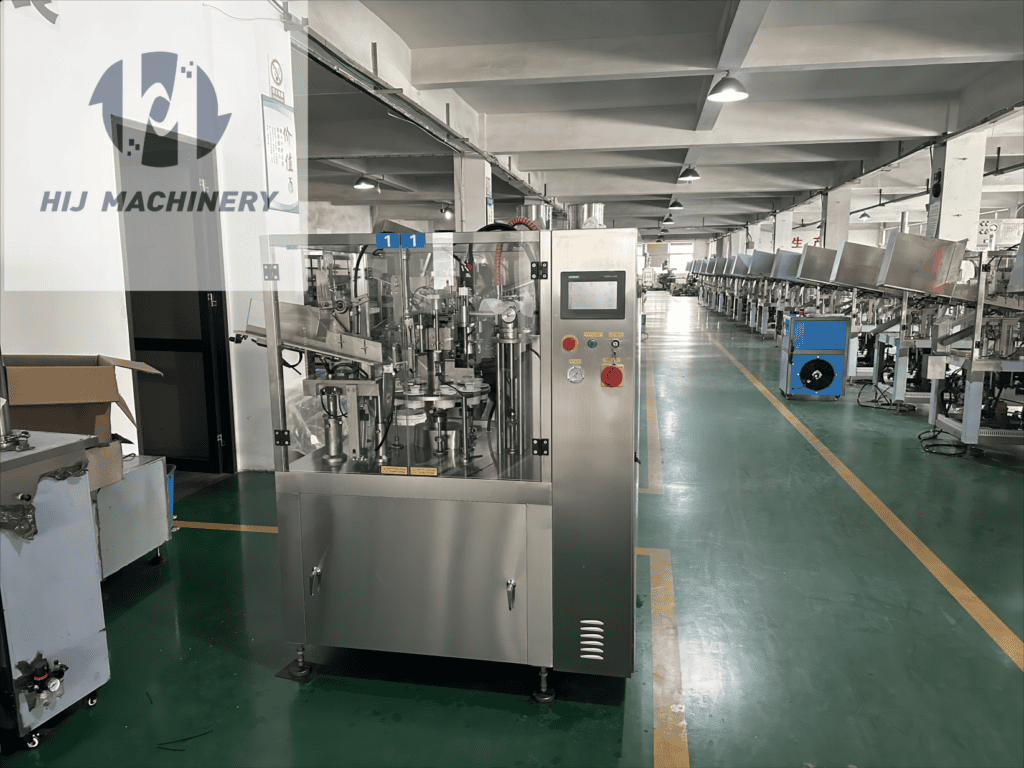
The HIJ blister packing machine portfolio presents pharmaceutical and specialty applications, including thermoforming, cold-form, tablet, capsule, liquid and syringe projects. Its current selection method begins with product, pack drawing, materials, accepted output, inspection and qualification scope.
HIJ can be investigated when the buyer wants a China-based supplier to configure equipment around a URS and witnessed FAT. Because HIJ publishes this comparison, buyers should require the same independent checks applied to all candidates: controlled source specifications, representative trials, itemized responsibilities, document samples, reference verification and enforceable service terms.
IMA: blister, feeding, containment and line options
IMA’s official blister-solutions page describes equipment across low-, medium- and high-speed production, with feeding systems, material handling, stand-alone or integrated configurations and customized containment options. Its public scope also includes downstream packaging equipment.
IMA is relevant when product feeding, containment or a wider integrated solution drives the project. Ask which company or division owns each module and interface, which functions are standard or optional, which materials and products were trialed and how the complete acceptance protocol is coordinated.
Körber Pharma: modular blister packaging architecture
Körber Pharma’s official blister page describes modular packaging solutions for oral solids and medical products, with add-on products and options for demanding product-handling conditions. Related pages discuss digital solutions, containment and integrated packaging.
Körber belongs on a shortlist when modular expansion, data connection, specialized handling or containment may be important. Verify the exact module set and how future expansion would be executed. “Modular” should be translated into mechanical provisions, software licenses, utilities, space, requalification and commercial terms.
Marchesini Group: blister forming and complete-line integration
Marchesini Group’s official blister-forming page presents a diversified machine portfolio for different production volumes. Its broader product structure includes cartoning, case packing, labeling, containment and line configurations.
Marchesini is relevant when a buyer wants to compare a blister machine and secondary packaging as one coordinated project. Confirm who owns product feeding, inspection, transfer, leaflet handling, coding, serialization, cartoning and end-of-line interfaces. A complete portfolio and a complete contracted line are not the same thing.
Romaco Noack: blister machines and integrated lines
Romaco publishes current technical literature for Noack Unity blister lines and other Noack blister platforms. The material confirms a portfolio spanning blister-machine and cartoning integration rather than a single universal configuration.
Romaco Noack is useful to investigate when the project needs to compare stand-alone blistering with a compact integrated line. Ask the supplier to confirm the current model, site support, applicable format and material envelope, feeder, inspection, changeover and document package for the exact proposal.
Uhlmann: a broad pharmaceutical blister portfolio
Uhlmann’s official blister-machine page lists pharmaceutical equipment for solid-dose and parenteral applications and distinguishes machine families by product scope, sealing approach and format capability. Uhlmann also presents cartoners, integrated lines, digital products and services.
Uhlmann belongs on shortlists that need a pharma-focused range extending from the blister machine into secondary packaging and digital operations. The buyer should identify the product route and required modules first, then verify how local sales, engineering and lifecycle support connect to the contracting entity.
Do not compare manufacturers by country tier
Country can affect freight, currency, language, time zones, market-access roles and service geography. It does not establish product handling, seal quality, software behavior, documentation completeness or accepted output. Those attributes belong to a particular configuration and project team.
A regional stereotype can hide risk in a famous brand and hide capability in a less familiar supplier. Compare the evidence, commercial boundary and local support chain for every candidate.
Define the application before choosing a brand
Tablets, hard capsules, softgels, vials, ampoules, syringes, devices and consumer products create different cavity, feeder, environment, inspection and downstream needs. A manufacturer strong in one application may not be the best match for another.
Send controlled product drawings and representative samples. State whether the project involves development batches, commercial production, frequent format work, potent products, deep draw, child-resistant opening, sustainable materials or a specific line interface. The shortlist should shrink as the application becomes clearer.
Use the marketed pack and stability strategy
Material choice should follow the product and proposed container-closure system. The FDA’s final container-closure guidance discusses protection, safety, compatibility and performance. ICH Q1A(R2) states that drug-product stability studies should use the proposed marketing container closure.
Ask each supplier to confirm which forming and lidding materials its proposed configuration will process and what was actually trialed. Do not ask the machine manufacturer to replace the drug-product owner’s package-development and stability decisions.
Product feeding can decide the shortlist
Feeding is product-specific. Shape, orientation, coating, dust, static, fragility, tackiness and bulk flow influence the concept. A catalogue statement that a machine handles tablets or capsules does not prove it can handle your product at the required condition.

Compare the proposed feeder, replenishment, recovery, cleaning access, inspection and operator work. Require representative trials for the products that create the highest risk, not only the easiest sample.
Compare accepted output, not maximum brochure speed
Manufacturers may publish cycles, indexes, blisters, products or cartons per minute. Convert every offer to the same accepted finished unit and time boundary. Record pack layout, number of lanes, product feeding, material, inspection, rejects, replenishment, planned stops and downstream transfer.
Request a capacity calculation before the order and reproduce it during an agreed run. A published maximum helps select a product family; it does not establish sustained output for your pack.
Forming and sealing architecture should follow the pack
Platen and rotary processes, thermoforming and cold forming, web width, index, forming depth and sealing concept affect the available pack and line architecture. Avoid ranking one principle universally. Compare the configuration against the approved pack drawing and material system.
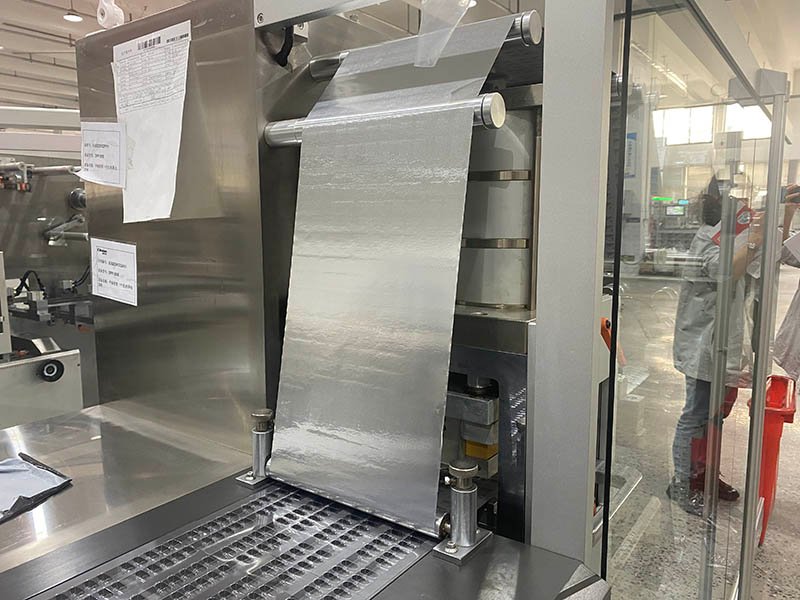
Require tooling drawings, material references, process controls and test methods. Separate visual seal appearance, seal strength and package-integrity evidence; none should be used as an automatic substitute for another.
Inspection claims need a defect boundary
Presence sensors and vision systems can detect defined observable conditions. Their performance depends on product presentation, web and foil appearance, lighting, camera, algorithm, thresholds and line behavior. A system that detects an empty cavity may not detect damage, identity, code or seal conditions.
Supply a defect library and acceptance rules. Challenge the complete image-to-reject chain, including web index, cutting, consecutive defects, stops and restarts. No supplier should claim that vision alone proves dose, chemical identity, invisible seal integrity or defect-free production.
Containment and environmental control must be scoped
Potent products, dust or product-sensitive environments may require extraction, pressure control, separation, safe access and cleaning provisions. These needs must be defined by the buyer’s risk assessment and facility strategy.
Ask each manufacturer which parts of the boundary it supplies and verifies. Equipment, room, HVAC, procedures, personal protection, waste handling and monitoring can have different owners. A containment option on a website does not prove the full system.
Line integration changes the manufacturer comparison
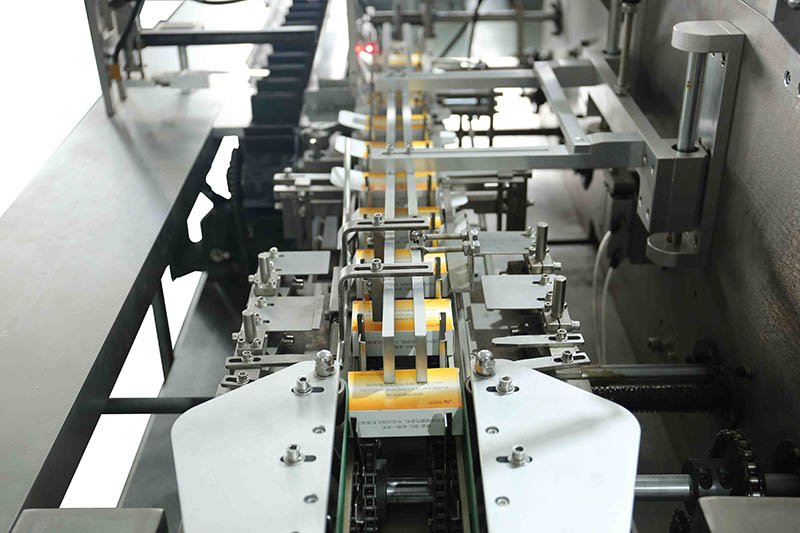
A stand-alone blister machine and an integrated blister-cartoning line are different procurement scopes. Define handshakes, accumulation, reject tracking, leaflet and carton handling, code data, serialization where applicable, line control and end-of-line transfer.
Single-source delivery may simplify responsibility, while specialist suppliers may offer stronger individual technologies. Either can work when every interface has an owner and the contract defines coordinated acceptance and recovery.
Electronic records require an intended-use boundary
Compare user access, recipes, alarms, event history, audit needs, backup, restore, time synchronization, interfaces, remote access, cybersecurity and software ownership. A component brand or “Part 11 ready” label does not define those functions.
Part 11 applicability depends on the records and signatures used to meet predicate requirements. Ask suppliers to demonstrate the functions your quality and IT teams have specified, then retain buyer ownership of validation, procedures and lifecycle governance.
Qualification documentation is not one standard package
Document names can hide major scope differences. Ask for an index and representative redacted samples before the order. Define language, file format, review cycle, approval responsibility and delivery milestone.
EU GMP Annex 15 describes lifecycle and risk-based qualification and validation. Supplier design, FAT and protocol support can contribute evidence, but the pharmaceutical manufacturer remains responsible for qualification and validation within its quality system.
Service should be mapped to the installed location
“Global service,” “local support” and “lifetime assistance” are not measurable. Identify the contracting service entity, engineer locations, languages, hours, escalation steps, remote-access conditions, parts warehouse, travel terms and chargeable work.
If response matters, separate acknowledgement, remote diagnosis, parts dispatch and on-site attendance. Verify a comparable reference in the same region where possible and write critical terms into the contract.
Spare parts and obsolescence belong in the evaluation
Request the machine bill of materials and separate consumables, wear parts, critical spares, format parts and long-lead components. Identify original manufacturer part numbers, approved alternatives, storage needs and required replacement skills.
Ask how software versions, control hardware and discontinued parts are managed. A common component can improve local availability, but only if the supplied configuration and access rights allow the buyer to use it.
Normalize every quotation to one scope
| Scope area | Normalize before comparing | Evidence to request |
|---|---|---|
| Machine | Base platform, forming and sealing configuration | Controlled specification and layout |
| Product handling | Feeders, hoppers, tracks, recovery and cleaning | SKU matrix and trial record |
| Formats | Included tooling, change parts and future formats | Itemized tooling list and drawings |
| Quality | Inspection, reject, coding and sampling boundary | Functional description and FAT challenges |
| Integration | Conveyors, cartoner, controls, data and utilities | Interface specification and responsibility matrix |
| Documents | URS traceability, design, manuals and protocols | Document index, samples and schedule |
| Lifecycle | Installation, training, warranty, parts and service | Named locations, terms and pricing |
Build total cost from project-specific inputs
Do not use universal price tiers or country-based savings percentages. Add equipment, tooling, inspection, coding, integration, software, FAT, freight, duties, installation, site work, qualification support, training, spares, maintenance, cleaning, changeover and expected production losses over the buyer’s planning horizon.
Show assumptions and uncertainty. The lower purchase price can become the higher installed cost, and the higher initial price can remain unjustified when the buyer does not need the included scale or functions.
Use one FAT framework for all finalists
A witnessed FAT should use representative product and materials, controlled test conditions, calibrated measurement equipment and preapproved acceptance criteria. The protocol should define warm-up, duration, replenishment, stops, interventions, counts, rejects, waste and deviation handling.
- Confirm the build. Match the machine, feeder, tooling, inspection, controls and documents to the approved order.
- Run risk-driving formats. Test products and packs that challenge feeding, forming, sealing, inspection or changeover.
- Challenge functions. Include alarms, stops, restarts, rejection, code change and data recovery as applicable.
- Count accepted output. Record raw counts, events, rejects, interventions and material use over the agreed boundary.
- Close deviations. Assign action, owner, retest, due date and shipment effect.
Score evidence after critical gates pass
Create pass-fail gates for product, package, safety, essential output, required documents and support. Then use weighted scoring for acceptable tradeoffs such as changeover, integration effort, delivery, service, total cost and future options.
Record the evidence behind each score. A famous name or low price is not evidence. Do not allow a high weighted average to conceal a failed critical requirement.
Questions to ask every manufacturer
- Which exact model and configuration are proposed?
- Which product samples and drawings were reviewed?
- Which materials and pack formats were trialed?
- Which feeders and change parts are included?
- Where is accepted output counted?
- Which defects can each inspection function detect?
- How is the correct blister physically rejected?
- Who owns every line and software interface?
- Which documents are supplied before FAT?
- Which backups, licenses and passwords transfer?
- Where are engineers and critical parts located?
- Which promises are contractual and which are options?
Warning signs during manufacturer selection
- A performance promise appears before product, pack and material review.
- The comparison relies on country, brand prestige or price tier instead of evidence.
- The quote omits feeder, tooling, inspection, integration or documentation detail.
- Compliance is reduced to logos, certificates or undefined “readiness.”
- Representative product trials or witnessed FAT are discouraged.
- Software access, backups, remote connections or licenses remain unclear.
- Service promises have no named location, boundary or commercial terms.
- References cannot be connected to a comparable application and region.
A practical shortlist workflow
- Freeze the project inputs. Product, pack, material, accepted output, interfaces and documentation.
- Screen official portfolios. Confirm each candidate actually offers the required equipment family.
- Issue one URS. Give every supplier the same requirements, samples and response format.
- Normalize proposals. Expose assumptions, exclusions, interfaces and lifecycle differences.
- Test finalists. Use comparable trials, reference checks, audits and FAT criteria.
- Contract the evidence. Attach specifications, responsibilities, deliverables and acceptance rules to the order.
What should you send to begin a supplier comparison?
Send product drawings and representative samples, forming and lidding material references, the blister drawing or target layout, batch pattern, accepted-output requirement, inspection and rejection rules, coding, cleaning, utilities, facility layout, upstream and downstream interfaces, documentation needs, destination market and FAT expectations.
Label unknowns. A good supplier response should show how each open decision affects configuration, testing, price, delivery and risk rather than hiding it in a generic quotation.
Frequently asked questions
Who are leading blister packing machine manufacturers?
Manufacturers with current official blister-machine portfolios include ACG, HIJ Machinery, IMA, Körber Pharma, Marchesini Group, Romaco Noack and Uhlmann. Inclusion is a research shortlist, not a universal ranking or endorsement.
Which blister packing machine manufacturer is best?
The best fit depends on the product, pack, materials, accepted output, line integration, documentation, service location and total-cost boundary. Compare project-specific proposals against one URS and FAT protocol.
Are European blister machine manufacturers always better?
No. Country of origin does not prove product fit, accepted output, documentation quality or lifecycle support. Evaluate the named manufacturer, configured machine, evidence and contract.
How should Chinese blister machine manufacturers be evaluated?
Use the same process applied to every supplier: controlled specifications, product trials, factory and reference checks, document samples, witnessed FAT, service mapping and enforceable contractual responsibilities.
How much does a pharmaceutical blister packing machine cost?
There is no reliable universal range because forming method, web width, feeder, tooling, inspection, coding, cartoning, software, documentation, tests, installation and service change the scope. Request itemized, comparable quotations.
What documents should a blister machine manufacturer provide?
Agree an index covering specifications, drawings, component and software information, manuals, certificates relevant to supplied items, FAT and SAT documents, qualification support, spare-parts information and revision-controlled project records.
How do I compare blister machine service support?
Compare named engineer and parts locations, languages, hours, escalation, remote-access control, dispatch and travel terms, exclusions, pricing, obsolescence support and comparable regional references.
What should be tested before buying a blister packing machine?
Use representative product and materials to verify feeding, forming, sealing, inspection, rejection, coding, stops, restarts, changeover and accepted output under a preapproved protocol tied to the purchase requirements.
Source method: manufacturer descriptions are limited to current official company pages or product literature linked above. Regulatory context uses FDA container-closure guidance, ICH Q1A(R2) and EU GMP Annex 15 within their stated scopes. Buyers must verify the final configuration and current requirements independently.
Build a comparable blister machine shortlist
Send your product, pack drawing, materials, accepted-output target, line scope and FAT expectations. HIJ can respond with an itemized configuration so you can compare it against other shortlisted manufacturers on the same evidence basis.