Chocolate Blister Packing Machine Cost: What to Budget and Where the Value Is
A chocolate blister packing machine costs between $18,000 and $85,000 USD ex-works — but that number is the wrong place to start your budget. Mold tooling, downstream integration, annual consumables, and the cost of a vendor who disappears post-installation can push your 5-year total cost of ownership to 2.1×–2.8× the purchase price. This guide breaks every layer down so you can build a budget your CFO will approve — and a line your production floor will trust in year seven.
Entry-level semi-automatic chocolate blister machines: $18,000–$28,000. Fully automatic mid-range: $35,000–$55,000. High-output integrated lines (blister + cartoning): $65,000–$85,000+. Custom mold tooling per format: $3,000–$12,000. Annual maintenance parts: $2,500–$5,500. ROI breakeven at 1-shift operation: typically 14–28 months, depending on labor displacement and reject rate reduction.
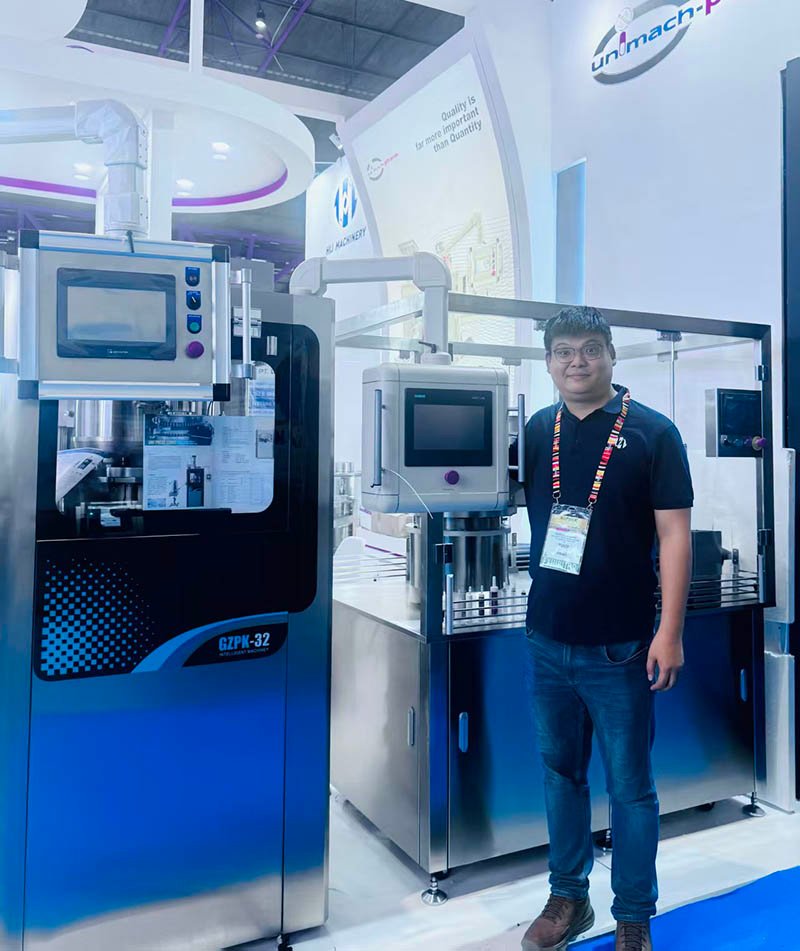
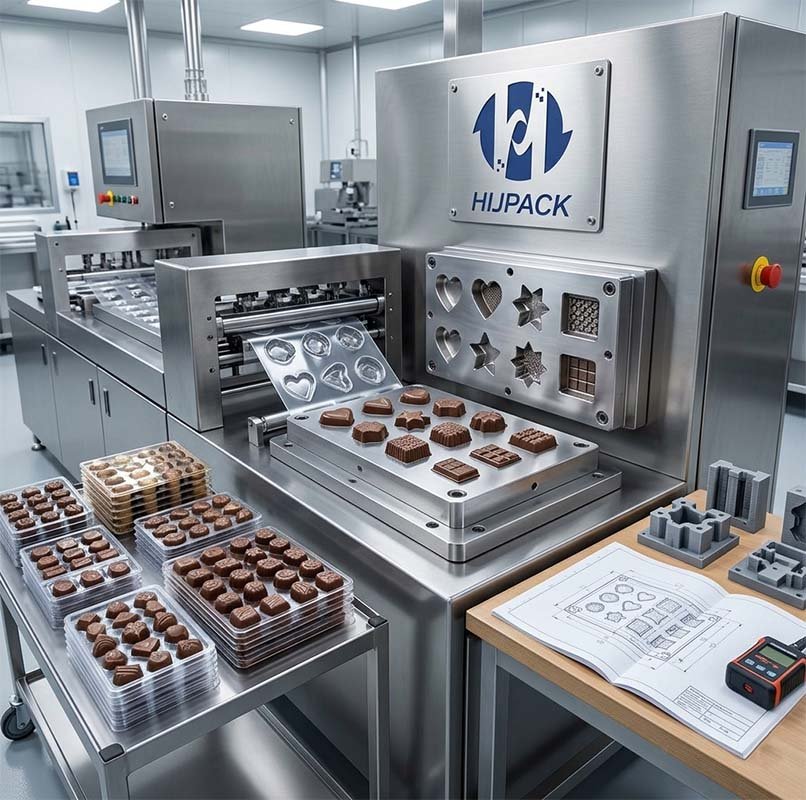
Price tier overview for chocolate blister packing machines — entry semi-automatic through fully integrated high-output lines. Ex-works price is only the first number that matters.
What Does a Chocolate Blister Packing Machine Cost? The Three Price Tiers
A chocolate blister packing machine priced between $18,000 and $85,000 covers three fundamentally different equipment categories — and the distance between them isn’t just speed. It’s PLC architecture, servo-motor precision, forming width, mold changeover time, and whether your downstream reject station is a servo-driven automated system or a person with a spatula.
The ex-works price is the least predictive number in your budget. Of the 22 chocolate and confectionery packaging projects I handled across Southeast Asia and the Middle East between 2017 and 2024, not one delivered a total first-year cost that matched the purchase order figure alone. Mold tooling, FAT travel, spare parts inventory, and the occasional forming-station temperature calibration during SAT consistently added 18–34% on top of the machine price.
| Tier | Machine Type | Ex-Works Price (USD) | Output Speed | Typical Buyer | Primary Limitation |
|---|---|---|---|---|---|
| Entry | Semi-automatic / DDP-80 | $18,000–$28,000 | 20–40 blisters/min | Artisan brand, startup, trial SKU | Manual product loading, limited servo control |
| Mid-Range | Fully automatic / DDP-110 or DPP-320 | $35,000–$55,000 | 60–120 blisters/min | Growing chocolate brand, food OEM | Per-SKU mold investment, single forming width |
| High Output | Integrated line: blister + cartoning | $65,000–$85,000+ | 120–150+ blisters/min | Export-scale producer, retail chain supplier | Higher mold investment, longer FAT validation scope |
The mid-range tier is where most serious buyers land. At $35,000–$55,000 you get servo-driven forming, PLC touchscreen control, and a system that can be validated to food-grade GMP requirements without a six-month retrofit. The entry tier is real — I’ve commissioned DDP-80 units for artisan chocolate makers in Indonesia and the UAE who needed consistent retail presentation, not 150-piece-per-minute throughput. But if your 12-month volume forecast exceeds 2 million blisters, an entry machine becomes a production bottleneck by month eight.
One technical point buyers frequently miss: chocolate-specific blister machines operate in a narrower forming temperature window — typically 100°C–130°C — compared to 140°C–160°C for standard pharmaceutical PVC. Cocoa butter and milk fat begin to migrate and degrade at the temperatures a pharma-spec machine runs as its baseline default. Confirm that temperature control range explicitly with any supplier before you compare prices.
The Number That Comes After the Quote: Total Cost of Ownership Over 5 Years
The procurement director showed me the comparison sheet. Machine A: $38,500. Machine B: $52,000. The decision looked obvious. It wasn’t.
Machine A came with no included mold tooling, a PLC brand requiring a protocol specialist not available in-country, and a forming station factory-calibrated for PVC at 140°C — not the 105–115°C range their dark chocolate recipe needed. The retrofit quote arrived three weeks after the purchase order: $7,400. The first mold for their primary SKU: $4,800. The specialist travel for PLC integration during SAT: $3,200 in flights and day rates. Total first-year cost for the “cheaper” machine: $53,900.
Machine B, properly scoped and integrated from day one, delivered a first-year total of $57,800 — with two molds included, factory-preset temperature profiles for food-grade forming, and a PLC that matched the plant’s existing Allen-Bradley infrastructure. Four months faster to stable production. $3,900 less total spend.
“A chocolate blister machine quoted at $38,500 generated a first-year total cost of $53,900 after mold tooling, PLC integration, and temperature retrofit work — versus $57,800 for the correctly specified system that was $13,500 more expensive on the quotation sheet. The ‘budget’ machine cost more and took four additional months to reach stable production output.” — Forester Xiang, HIJ Machinery
5-Year TCO Model: Every Cost Category You Need in Your Business Case
| Cost Category | Entry Tier ($18K–$28K) | Mid-Range ($35K–$55K) | High Output ($65K–$85K) |
|---|---|---|---|
| Machine purchase (ex-works) | $18,000–$28,000 | $35,000–$55,000 | $65,000–$85,000 |
| Mold tooling (2–3 SKU formats) | $6,000–$18,000 | $9,000–$24,000 | $12,000–$36,000 |
| FAT / SAT / installation | $1,500–$4,000 | $3,500–$7,500 | $6,000–$14,000 |
| Annual parts & consumables (×5 years) | $12,500–$20,000 | $15,000–$25,000 | $20,000–$35,000 |
| Operator training (Year 1) | $800–$2,000 | $1,500–$3,500 | $3,000–$6,000 |
| 5-Year TCO (estimated range) | $38,800–$72,000 | $64,000–$115,000 | $106,000–$176,000 |
These figures come from project cost tracking across 22 chocolate and confectionery line commissions between 2017 and 2024. They do not include downtime losses from unplanned stoppages. In the entry tier, PLC-logged data from four Indonesian production facilities showed an average of 4.2 unplanned downtime hours per week during the first 18 months of operation — a figure that does not appear anywhere in a standard quotation document.
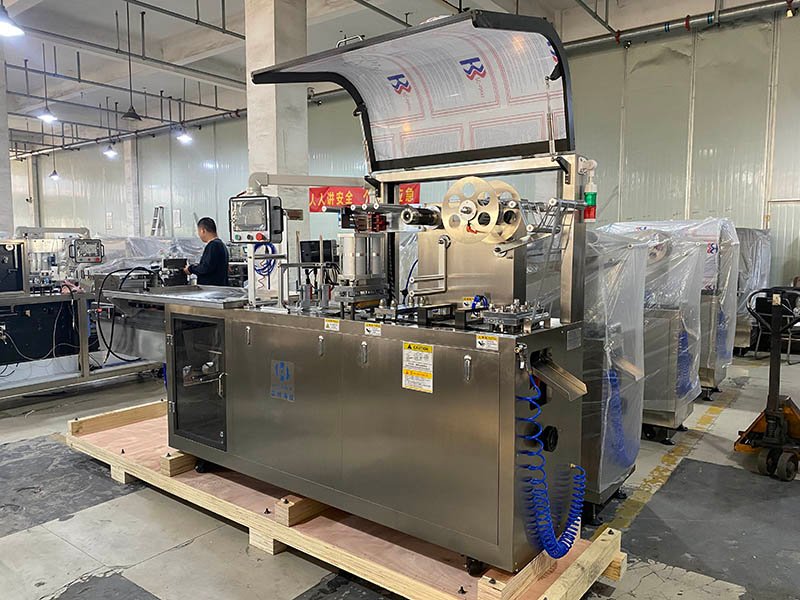
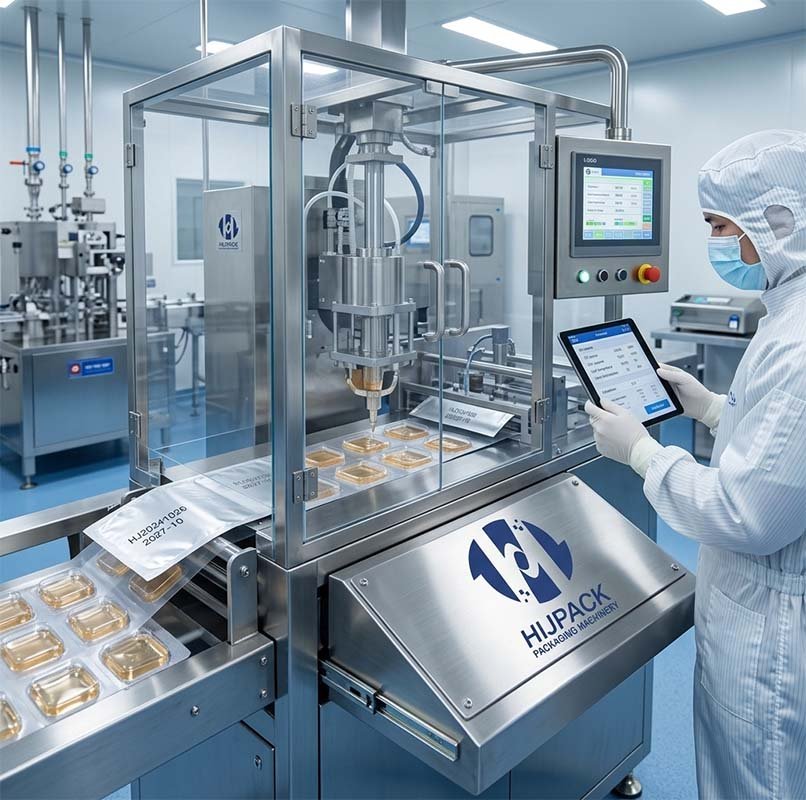
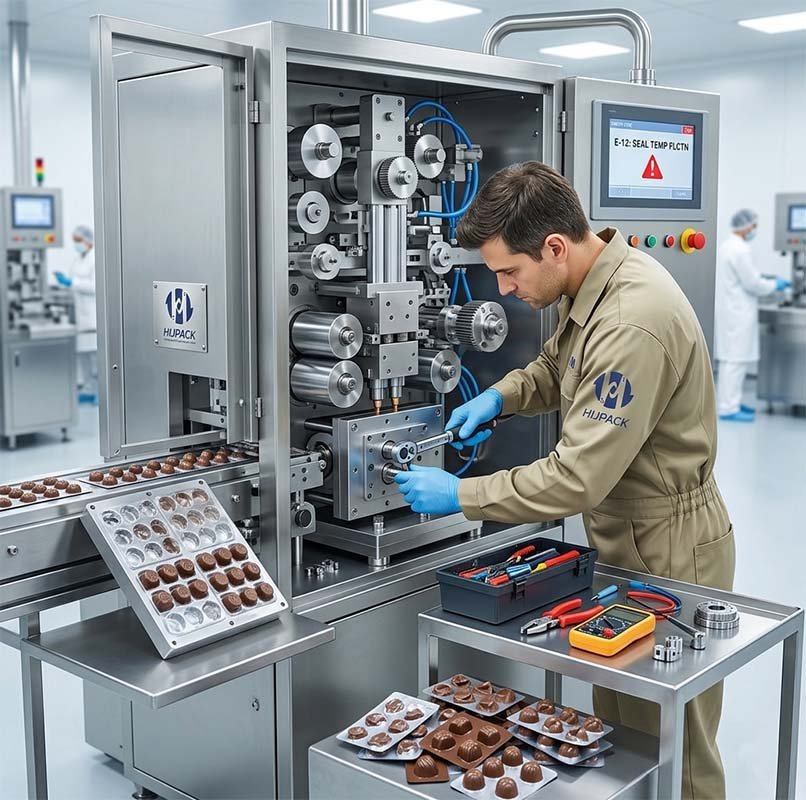
HIJ DPP-320 mid-to-high range fully automatic chocolate blister packing machine — servo-driven forming station with food-grade temperature profiles preset at the factory.
Mold Tooling Cost: The $33,000 Line Item Nobody Puts in the Initial Budget
Mold tooling for chocolate blister packaging runs $3,000–$12,000 per format. “Format” means every distinct cavity shape, every different unit count per card, and every size variation across your product range that requires a dedicated forming die.
A chocolate brand with six active SKUs — a 4-piece praline card, a 6-piece assorted, a single-serve 1-piece, a seasonal heart shape, a bar-section format, and a gift box insert — needs six molds. At $5,500 average per mold, that is $33,000 in tooling investment sitting entirely outside the machine ex-works price. I have reviewed RFQs from buyers who budgeted zero for tooling because they assumed “mold included” on the quotation meant their specific product shape.
It didn’t. It meant a standard rectangular template.
What Drives Mold Cost Up — and How to Contain It
Three factors determine mold price in chocolate thermoforming: cavity geometric complexity, material specification (aluminum vs. food-grade stainless), and cavity count per plate. A straightforward rectangular praline cavity in aluminum tooling: $3,000–$4,500. An organic curved shape — the kind artisan brands favor, with depth-to-width ratios above 0.6 and undercut walls — requires 5-axis CNC machining and a polished food-contact stainless finish. That runs $8,000–$12,000.
The containment strategy I give buyers who are still in SKU planning: consolidate cavity count variations first. A 4-piece and 6-piece card sharing the same cavity shape can often use a single mold body with a modular cavity insert — cutting tooling investment 30–40% before any price negotiation begins. Have that conversation with your product development team before the artwork files are final.
⚠ Budget Trap: Mold Cost Errors That Surface After the PO
- Quote says “mold included” but no cavity drawing was provided → “Mold included” in a standard quotation almost always refers to a generic rectangular template cavity — not your product shape. I reviewed a contract in 2022 where a Kuala Lumpur chocolate exporter accepted a machine purchase order based on “1 set mold included,” then discovered during FAT that the mold was dimensioned for a 40×30mm rectangular tablet. Their praline was 52×38mm with a domed profile. New mold: $6,200. FAT delayed by six weeks. Require a dimensioned cavity drawing with your quotation — not after the order is placed.
- Five active SKUs were budgeted as one mold investment → Add $4,500–$9,000 per additional distinct cavity shape to your capital budget. The mold line in your business case should read: (number of distinct cavity shapes) × (average tooling cost for your format complexity). Not a flat number.
- Seasonal formats require new mold each production year → Budget $3,000–$6,000 per year as a recurring operational mold line — not CapEx. Seasonal heart, tree, and egg formats are standard for European and Gulf confectionery producers. They are not a one-time cost.
ROI Timeline: When Does a Chocolate Blister Line Actually Pay for Itself?
ROI breakeven for a mid-range chocolate blister packing machine at single-shift operation typically falls between 14 and 28 months. The range is that wide because the calculation depends almost entirely on three inputs: your pre-machine labor cost per unit, your current reject and rework rate, and whether the machine unlocks a retail contract your current capacity cannot support.
A confectionery plant outside Manila in 2021. Before the blister line, hand-wrapped presentation chocolates with a 4-person station produced 1,800 units per 8-hour shift. Reject and rework from inconsistent manual wrapping: 8.3%. Retailer chargeback incidents from presentation defects: two per quarter, averaging $4,200 each.
After installing a fully automatic mid-range chocolate blister packing machine, shift output rose to 14,400 units with a 2-person team. Reject rate: 0.6%. Chargebacks: zero from month four onward. Total first-year investment including mold tooling and installation: $47,000. ROI breakeven: 19 months.
ROI Input Variables: What to Put in Your Business Case
| ROI Driver | Manual / Pre-Machine Baseline | Post-Machine Benchmark | Annual Value (Example) |
|---|---|---|---|
| Packaging labor | 3–5 operators per shift | 1–2 operators per shift | $24,000–$72,000 saved |
| Packaging film waste | 12–18% (manual operations) | 3–5% (automated blister) | $4,800–$11,200 saved |
| Product reject / rework | 6–10% reject rate | 0.4–1.2% reject rate | $8,000–$22,000 saved |
| Retailer chargebacks | 2–4 per quarter | 0–1 per quarter | $8,000–$16,800 saved |
| Throughput capacity | 1,500–2,500 units/shift | 8,000–14,400 units/shift | Revenue ceiling lifted 4–6× |

The ROI calculation I’ve seen kill the most deals isn’t one where the numbers come out negative. It’s where the procurement team calculates ROI correctly — then applies the wrong baseline. They use current labor cost and current volume. They don’t account for the retail contract sitting unsigned because they can’t demonstrate capacity. In a confectionery export facility outside Cairo in 2022, that uncontracted retail volume was worth $340,000 per year. Nobody had put it in the ROI sheet. I asked. We recalculated. The machine paid back in 11 months. The decision was made that afternoon. Build your ROI case around capacity-enabled revenue, not just cost displacement.
Annual Operating Cost: What a Chocolate Blister Machine Costs to Run Each Year
Running cost surprises buyers in month twelve. Here is the full annual operating budget breakdown for a mid-range fully automatic chocolate blister machine at single-shift, 250 operating days per year — drawn from service contract data across 14 food-sector facilities:
- Forming film (food-grade PVC or PET, 0.20–0.30mm): $8,000–$18,000/year by volume. Food-grade PVC at 0.25mm runs approximately $0.0018–$0.0024 per blister cavity at commercial film pricing. PET runs 15–25% higher but offers better optical clarity for premium retail presentation.
- Lidding foil (heat-sealable aluminum, 20–30 micron): $4,500–$9,000/year. Pre-printed branded lidding adds 35–60% to this figure. Plain aluminum with post-print labeling keeps this line item at the lower end of the range.
- Maintenance parts (sealing dies, forming plate gaskets, cam followers): $2,500–$5,500/year at 60% average utilization. Budget one full sealing die set replacement every 18–24 months at $800–$1,400 per set — this is the most frequent maintenance line item across all food-sector installations I track.
- Energy consumption: A fully automatic machine at 60–80 blisters/min draws 4.5–6.5 kW. At industrial electricity rates of $0.08–$0.14/kWh and 2,000 annual operating hours, annual energy cost: $720–$1,820. Not the dominant cost line — but include it.
- Compressed air: Most chocolate blister formers require 0.5–0.7 MPa at 200–400 L/min. If your existing compressor has capacity headroom, the marginal annual cost is negligible. A dedicated compressor adds $3,500–$7,000 capital plus $600–$1,200/year running cost.
Total annual operating cost for a mid-range machine at single-shift, 250 operating days: $16,000–$35,000, exclusive of labor. Add this to your 5-year TCO model and your capital budget approval conversation becomes substantially more credible.
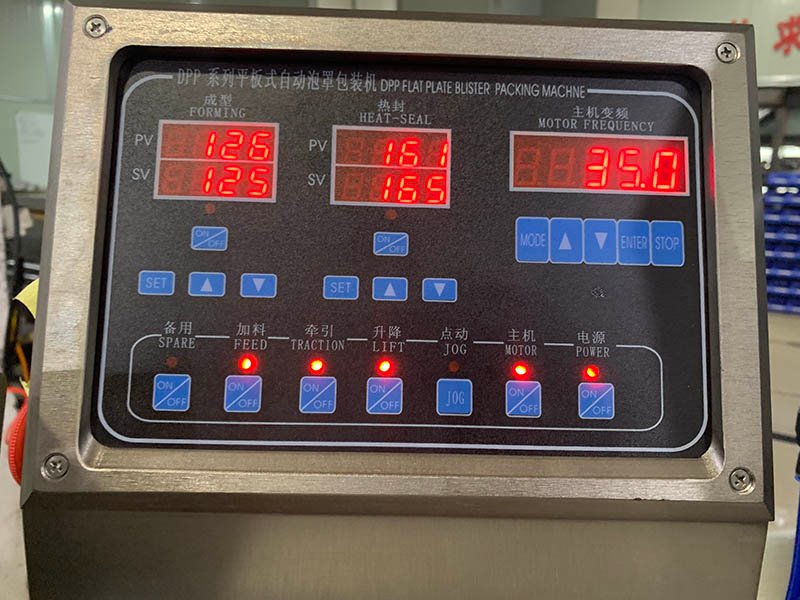
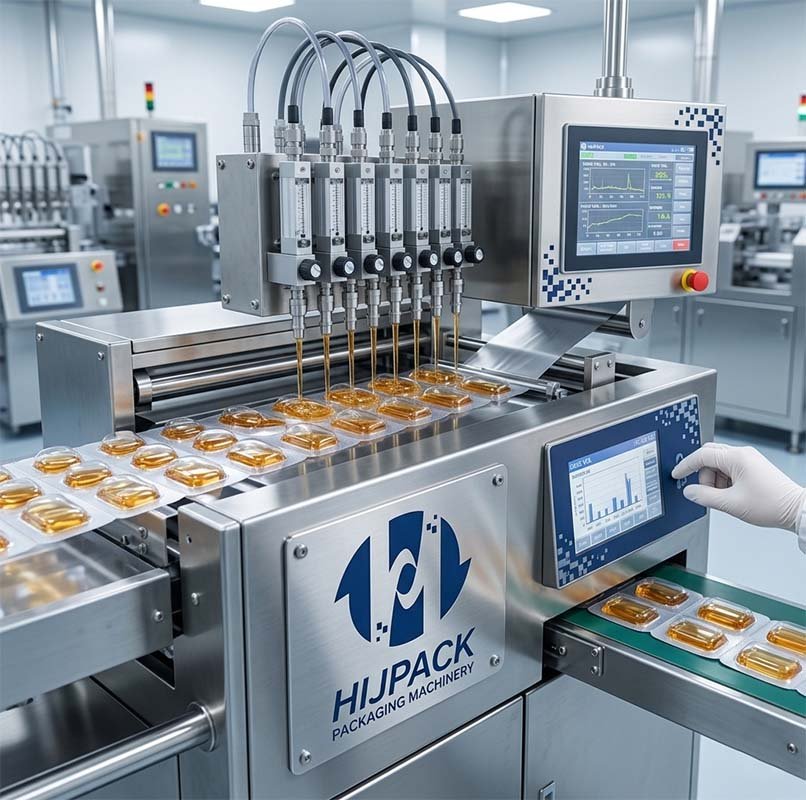
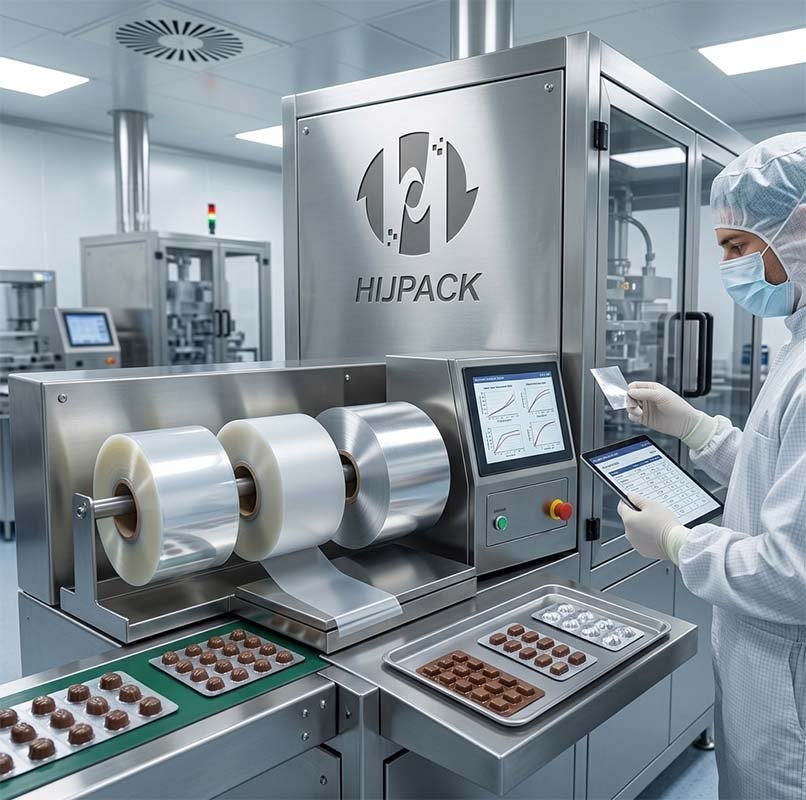
Heat-sealing station with aluminum lidding foil — lidding material is one of the two largest annual consumable cost items in a chocolate blister line operating budget.
The Compliance Cost Layer: What EU and FDA Market Access Adds to Your Budget
A QA manager at a Malaysian chocolate exporter called me last year. Machine from a different supplier: $31,000, competitive price, ran fine during acceptance testing. The forming film the supplier had specified was a PVC compound not listed under EU Regulation (EC) No 1935/2004 on food contact materials. Her European retail buyer’s compliance team caught it during a supplier audit. The shipment was held for six weeks. The machine was never the problem.
That film specification — an operating cost decision, not a capital decision — generated a $24,000 batch hold and an eight-week relationship crisis with a buyer representing 40% of her export revenue.
Add these compliance cost lines to your first-year operating budget if you sell into European or North American retail channels: $1,500–$4,000 for film supplier Declaration of Compliance verification (EU Regulation 10/2011 or FDA 21 CFR 177.1520); $800–$2,400 for lidding foil coating compliance documentation (FDA 21 CFR 175.300 for US market). The full regulatory picture — including GCC GSO 2178 requirements for Gulf market exporters — is covered in the chocolate packaging compliance guide covering FDA, EU, and GMP requirements.
How to Compare Chocolate Blister Machine Quotes So the Price You See Is the Price You Pay
Three weeks into a sourcing project for a Dubai-based premium chocolate distributor, I had four quotes on the table ranging from $26,000 to $61,000. Every quote used the phrase “fully automatic chocolate blister packing machine.” None was quoting the same machine.
Standard quote comparison fails when buyers treat packaging equipment like commodity procurement. The framework that works: normalize every quote to cost per 1,000 blisters at rated speed, including first-year mold tooling and installation. That number makes every quote directly comparable regardless of ex-works headline price.
| Comparison Factor | Question to Ask the Supplier | Cost Impact if Not Scoped |
|---|---|---|
| Mold specification | “Is the quoted mold for my specific cavity drawing or a standard template?” | $3,000–$8,000 per format if template does not match your SKU |
| FAT/SAT scope | “Does the price include factory and site acceptance testing?” | $3,500–$7,500 invoiced post-sale if not included |
| Temperature control range | “Can the forming station be set below 120°C? What is the minimum?” | $2,000–$6,000 retrofit if machine defaults to pharma-spec 140°C+ range |
| PLC brand and protocol | “Which PLC is installed and what communication protocol does it use?” | $1,800–$4,500 integration cost if protocol mismatches plant SCADA |
| Spare parts availability | “What is the lead time for critical wear parts from your warehouse?” | 6–12 week lead times = $8,000–$22,000 lost production per unplanned stoppage |
| Warranty scope | “Are wear parts included or excluded from warranty coverage?” | “Wear parts excluded” means your most-replaced components carry zero coverage from day one |
For buyers assessing whether blister is the right format investment compared to flow wrap at equivalent volume, the cost-per-unit comparison — including material waste rates, reject differentials, and retail pricing implications — is covered in the chocolate blister packaging vs. flow wrap comparison.
⚠ Quote Red Flags: Two Signals That Mean the Price Will Change
- Supplier cannot provide a dimensioned mold drawing with the quotation → The mold “included” is a generic template. Treat your actual tooling cost as unpriced until you have a signed cavity specification drawing. Budget $4,500–$9,000 separately.
- Warranty says “12 months, excluding wearing parts” → Sealing dies, forming gaskets, and cam followers are wearing parts. They are also the components most likely to need replacement in months 8–14. This warranty structure covers the frame and very little else.
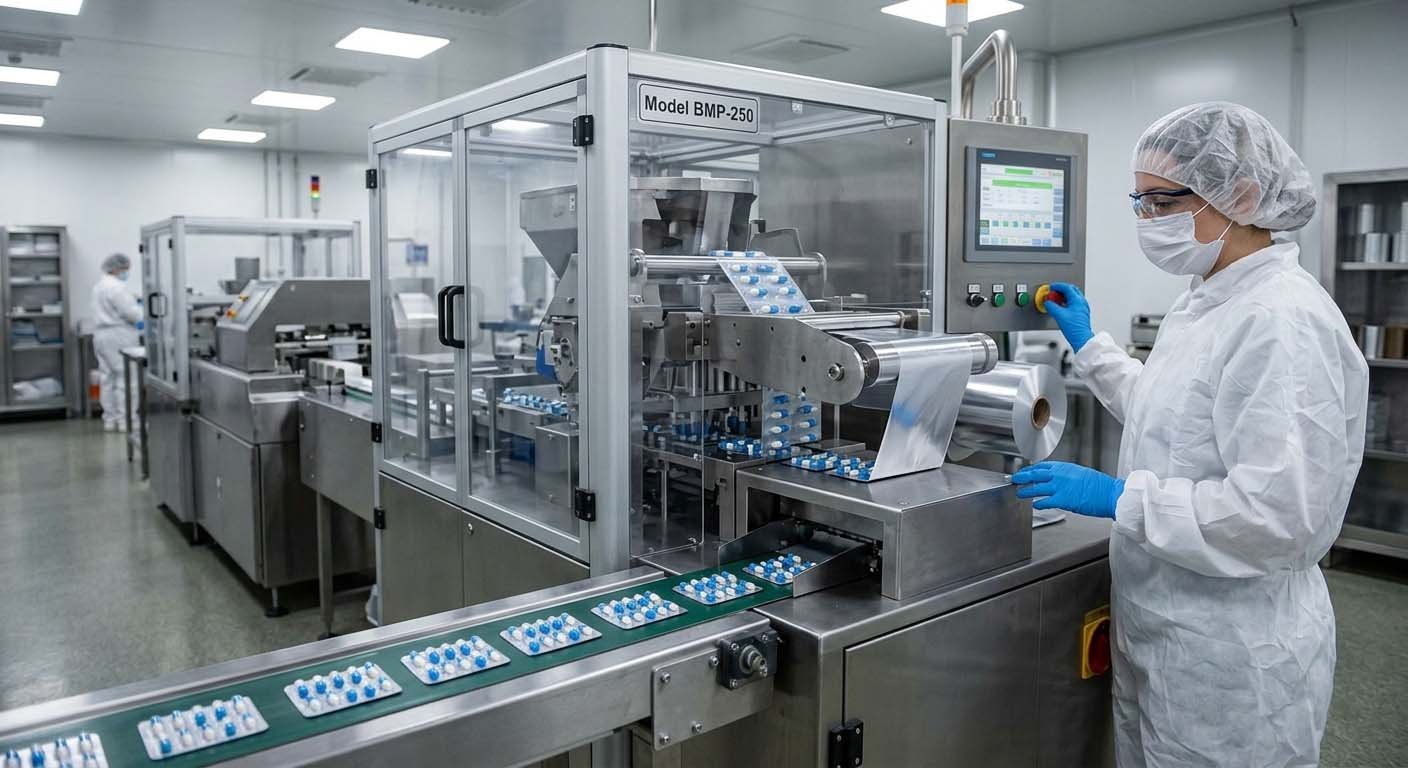
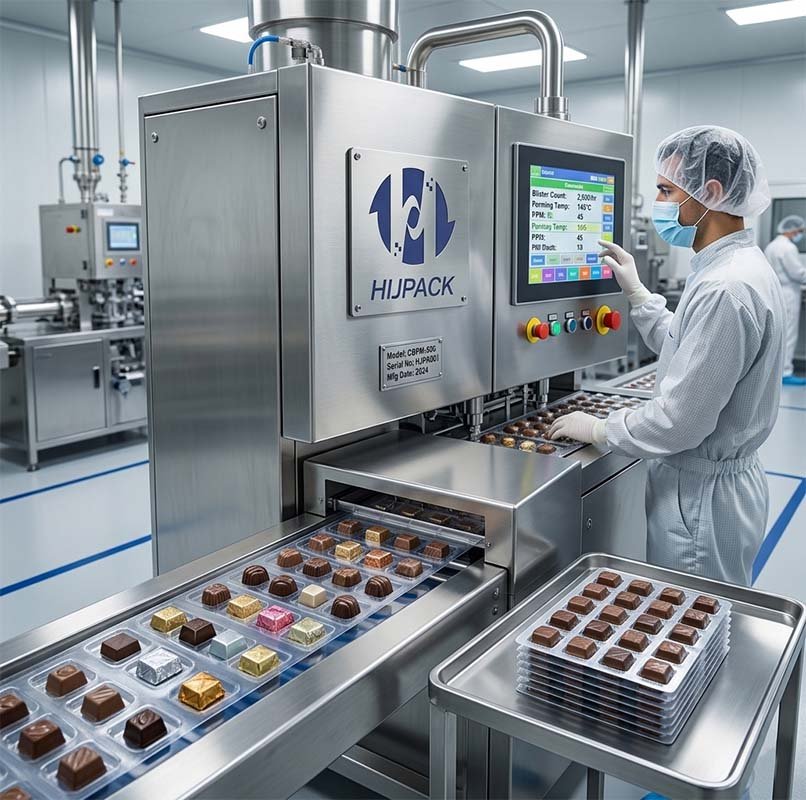
Normalized cost comparison framework — converting ex-works machine prices to first-year total cost per 1,000 blisters is the only reliable basis for quote comparison.
Frequently Asked Questions: Chocolate Blister Packing Machine Cost
How much does a chocolate blister packing machine cost?
A chocolate blister packing machine costs between $18,000 and $85,000 USD ex-works depending on automation level, output speed, and forming width. Entry-level semi-automatic models start at $18,000–$28,000; fully automatic mid-range systems run $35,000–$55,000; high-output integrated lines reach $65,000–$85,000 or above. These prices exclude mold tooling ($3,000–$12,000 per cavity format), installation, and first-year consumables, which typically add 25–40% to the ex-works figure.
What is the ROI timeline for a chocolate blister packaging machine?
At single-shift operation, ROI breakeven typically falls between 14 and 28 months for a mid-range fully automatic chocolate blister line. The most important variables are pre-machine labor cost, current reject rate, and whether the machine enables a retail contract the current operation cannot fulfill. In a Philippines confectionery facility I commissioned in 2021, breakeven was 19 months — driven by displacing three packaging operators and eliminating $16,800/year in retailer chargebacks. Businesses that factor in capacity-enabled new revenue often see breakeven inside 14 months.
How much does mold tooling cost for chocolate blister packaging?
Mold tooling costs $3,000–$12,000 per cavity format. Simple rectangular aluminum molds fall at the lower end; complex organic shapes requiring 5-axis CNC machining and food-grade stainless finishing run $8,000–$12,000. A brand with six distinct SKU formats should budget $18,000–$36,000 in tooling costs above the machine purchase price.
What are the annual running costs for a chocolate blister machine?
Annual operating cost for a mid-range machine at single-shift, 250 days per year: forming film $8,000–$18,000, lidding foil $4,500–$9,000, maintenance parts $2,500–$5,500, energy $720–$1,820. Total annual operating cost: $16,000–$35,000 depending on volume and film specification. Pre-printed branded lidding foil adds 35–60% to the foil line item versus plain aluminum.
Is chocolate blister packaging cheaper than flow wrap at the same production volume?
Flow wrap equipment costs less to purchase — typically $12,000–$35,000 for comparable throughput. But per-unit packaging cost often favors blister above 1.5 million units per year, because blister film waste rates are significantly lower (3–5% vs. 10–16% for flow wrap), chocolate damage rates are reduced by the rigid cavity structure, and retail shelf premium for blister-presented product averages 12–22% in premium confectionery categories. The full cost comparison between formats is in the chocolate blister vs. flow wrap packaging analysis.
Can I buy a used chocolate blister machine to lower my initial investment?
Used machines are available at 35–55% of new price. The risk in food applications is significant: forming temperature control calibration on older machines drifts outside the 100–130°C chocolate-safe range without triggering obvious alerts — and the resulting cocoa butter migration or foil adhesion failures only show up in finished product weeks later. If you pursue a used machine, budget $3,500–$9,000 for a pre-installation overhaul regardless of seller assurances, and require a full thermal calibration certificate from an independent service engineer before acceptance.
Get a Chocolate Blister Line Quote That Includes Everything — Before You Sign
We scope mold tooling, installation, FAT/SAT, and first-year consumables into every project estimate — not as post-order surprises. Share your SKU count, cavity shapes, and annual volume target. We will return a complete 5-year TCO estimate alongside the machine price within 48 hours.