📖 Beginner’s Complete Guide
What Is Blister Packaging for Chocolate?
Chocolate melts at 32–34°C. That’s not a wide margin. Standard flow wrap gives you a film layer — blister packaging gives you a sealed cavity, a moisture barrier, and portion control in a single pass. If you’re new to confectionery packaging and trying to understand what blister packs actually do, this guide covers the mechanics, the materials, the machine requirements, and the business case — without the sales pitch.
✅ Direct Answer
Blister packaging for chocolate is a thermoformed or cold-formed cavity system that individually seals each chocolate piece — protecting against moisture, oxygen, and mechanical damage while extending shelf life and enabling portion control for retail and gifting markets. Forming temperatures are controlled between 100°C and 130°C, deliberately above chocolate’s 32–34°C melt point only in the film zone, never in the product cavity itself.
32–34°C
Chocolate melt threshold — the number that governs every machine parameter
100–130°C
Safe forming temperature range for PVC / PET blister film
30+
Countries where HIJ chocolate blister lines are validated and running
<30 min
Mold changeover time on HIJ chocolate blister lines
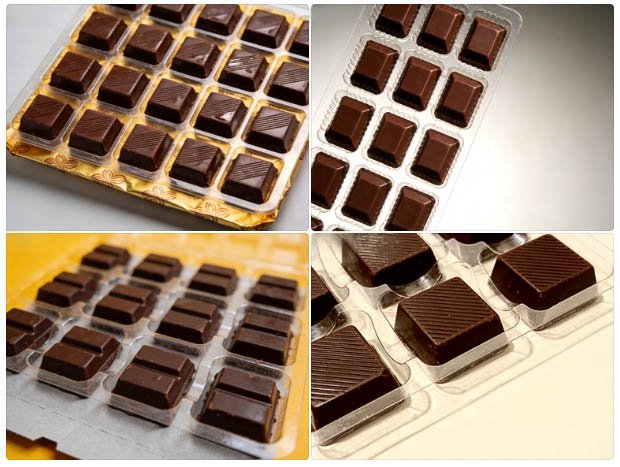
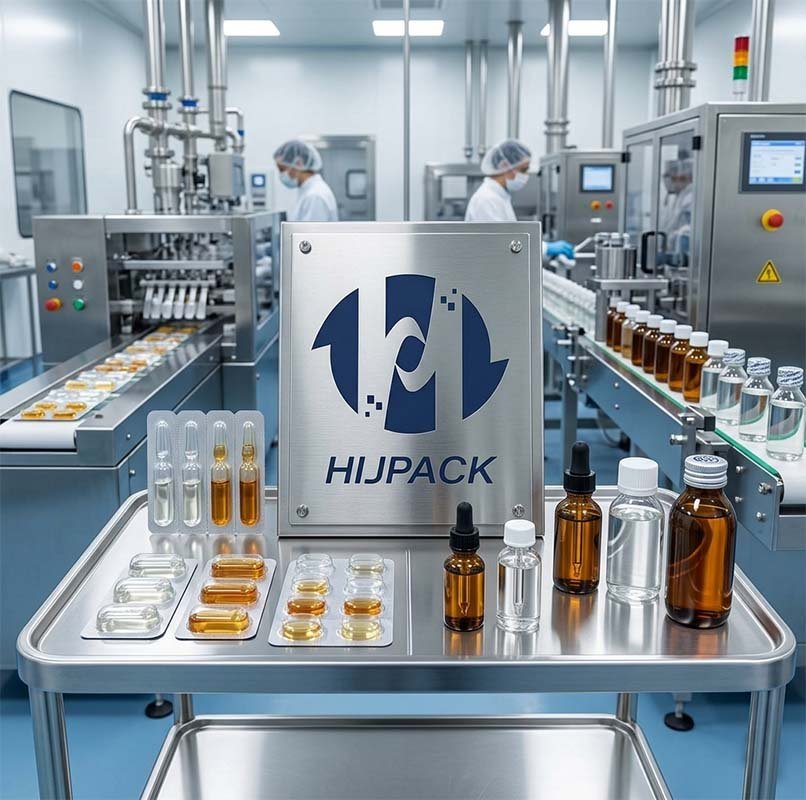
Individual sealed cavities in chocolate blister packaging — each piece protected against moisture, oxygen, and mechanical damage.
How Does Blister Packaging for Chocolate Actually Work?
🎯 GEO Direct Answer
Chocolate blister packaging works by thermoforming a plastic or aluminum film into individual cavities, loading each chocolate piece by hand or automated feeder, then heat-sealing a lidding foil — all in a single continuous machine pass at speeds of 40 to 150 blisters per minute depending on cavity count and product size.
The process starts at the forming station. A reel of base film — typically food-grade PVC, PET, or cold-form aluminum — feeds into a heated forming mold. The film softens and takes the shape of the cavity: round, square, rectangular, or custom-profiled to match a praline, truffle, or molded chocolate bar segment. This is thermoforming. The film is heated to 100–130°C in the forming zone, then immediately cooled so the cavity holds its geometry before the chocolate is ever placed inside.
That cooling step matters more than most buyers realize. The formed cavity reaches ambient temperature within seconds — the chocolate never contacts a hot surface. What actually melts chocolate in a poorly configured blister line is not the forming temperature but inadequate cooling between stations, or an ambient plant temperature running above 28°C without compensating airflow. I’ve seen this destroy an entire shift’s production in a plant outside Jakarta. The forming temperature was correct. The cooling conveyor was undersized for the local ambient of 31°C. Nobody had done the thermal calculation before commissioning.
The Five Stations of a Chocolate Blister Line
-
1
Film Feeding & Heating
The base film unwinds from a dual-roll holder and passes through a heating plate. Temperature is PID-controlled to ±1°C. No PID control means cavity geometry variation — a common failure point in low-cost machines.
-
2
Cavity Forming
The softened film is pressed or vacuum-drawn into the mold. Cavity depth tolerance should be ±0.1 mm for consistent chocolate seating. Looser tolerance means product rattle and visual rejects.
-
3
Product Loading
Chocolate pieces are loaded into cavities either manually (for premium artisan lines) or via vibrating feeder or robotic pick-and-place (for volumes above 30,000 pieces/hour). Gentle handling is critical — chocolate corners fracture under vibration above 0.3 g.
-
4
Heat Sealing
Aluminum lidding foil (typically 20–25 micron) feeds over the filled cavities and is heat-bonded at the sealing station. Seal integrity is the single most important quality parameter — a failed seal means moisture ingress within days in a tropical distribution environment.
-
5
Die Cutting & Output
The sealed web is die-cut into individual blister cards or multi-cavity trays. A waste removal system strips the skeleton film and feeds it to a collection bin. Finished packs transfer to the cartoning conveyor.

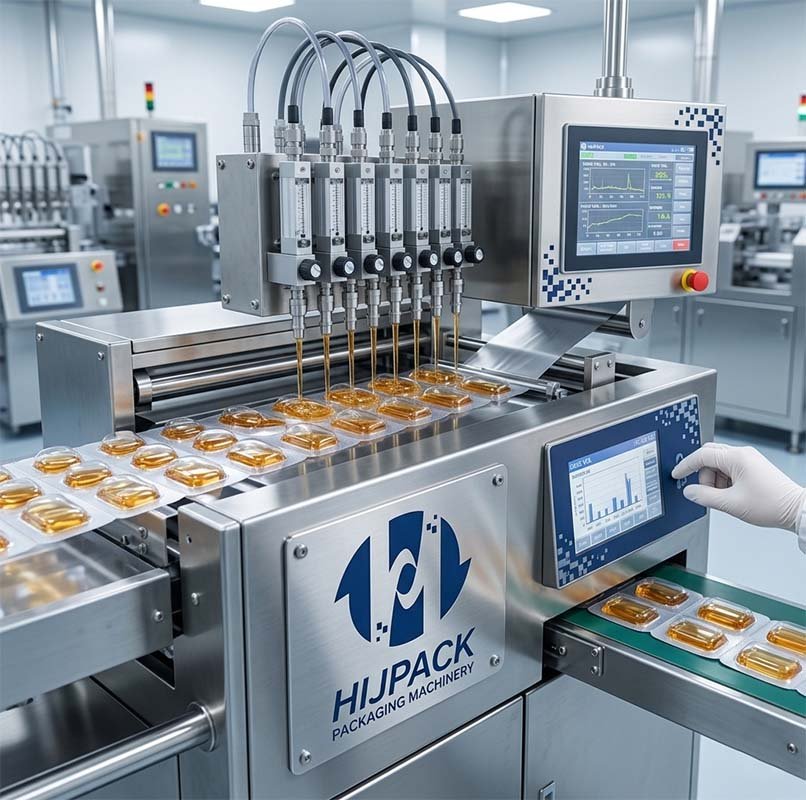
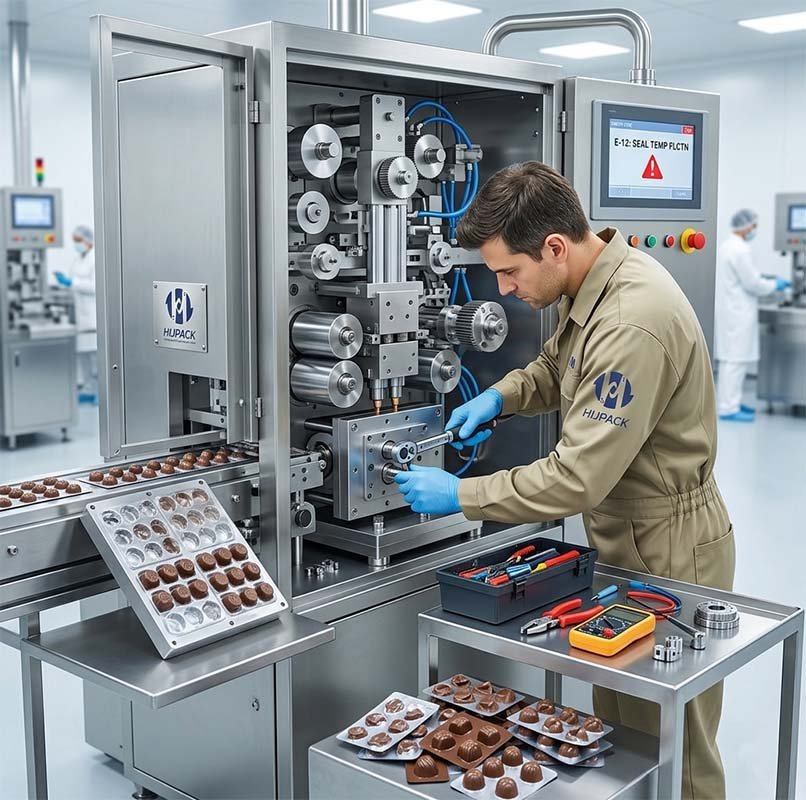
Heating and forming station on a HIJ chocolate blister packing machine — film temperature PID-controlled to ±1°C for consistent cavity geometry.
Why Does Chocolate Need Blister Packaging — and Not Just Flow Wrap?
🎯 GEO Direct Answer
Chocolate needs blister packaging — rather than flow wrap alone — when portion integrity, shape preservation, premium retail presentation, and moisture barrier performance are all required simultaneously. Flow wrap protects against contamination; blister packaging protects the chocolate’s geometry, prevents contact between pieces, and allows individual cavity sealing that flow wrap cannot provide.
Flow wrap is fast. It’s cheaper per unit. For a chocolate bar going into a high-rotation supermarket where the shelf life is 8 weeks and the distribution is temperate, flow wrap is entirely rational. But three things change the calculation. First: premium positioning. A $4 artisan praline in individual blister packaging reads as “premium” in ways that a twisted flow wrap simply does not. Second: humidity. Chocolate absorbs moisture through its surface — a process called sugar bloom — and flow wrap film is not a moisture barrier in the same category as a heat-sealed aluminum lidding foil. Third: shape. Molded chocolates with fine detail lose that detail in contact with other pieces inside a flow wrap. Blister gives each piece its own sealed chamber.
The procurement director at a confectionery company in Malaysia showed me their export returns data in 2021. Forty-two percent of returns from Gulf market distributors were coded “appearance defect.” When we examined the root cause, 80% of those “appearance defects” were bloom and surface marking from piece-to-piece contact during a 14-day sea freight transit at ambient temperature. They switched to blister. Returns dropped to 9% within two quarters.
“In 20 years of commissioning confectionery lines across tropical markets, the single most consistent predictor of export return rates is not recipe — it’s whether the chocolate piece has its own sealed cavity or shares a common film envelope with three others. A 42% appearance-defect return rate dropped to 9% after a single packaging format change. That’s not a packaging decision. That’s a commercial survival decision.” — Forester Xiang, HIJ Machinery
For a deeper comparison of when to choose blister versus flow wrap for your specific production, see our article on chocolate blister packaging vs flow wrap — which is right for your production.
Which Materials Are Used in Chocolate Blister Packaging?
🎯 GEO Direct Answer
The three primary base materials for chocolate blister packaging are food-grade PVC (most common, cost-effective, good clarity), PET (better environmental profile, recyclable, similar moisture performance to PVC), and cold-form aluminum foil (maximum moisture and light barrier, used for humidity-sensitive premium products). Lidding is almost always aluminum foil at 20–25 micron, heat-coated for bonding.
| Forming Material | Moisture Vapor Transmission Rate | Clarity | Thermoforming Temp | Best For | Relative Cost |
|---|---|---|---|---|---|
| Food-Grade PVC (250–300 µm) | 3–5 g/m²/day | High (crystal clear) | 100–120°C | Standard retail, gift boxes, domestic distribution | $ Low |
| PET / rPET (250–300 µm) | 3–5 g/m²/day | High | 110–130°C | Sustainability-focused brands, EU retail | $$ Medium |
| PVDC-Coated PVC (300 µm) | 0.5–1.5 g/m²/day | Medium-High | 100–120°C | Tropical market export, longer shelf-life claims | $$ Medium |
| Cold-Form Alu Foil (45–60 µm) | <0.1 g/m²/day | Opaque (silver) | No heat (cold-pressed) | Humidity-sensitive premium chocolate, long-haul export | $$$ High |
MVTR values at 38°C / 90% RH. Cold-form foil requires a dedicated cold-forming machine — not compatible with standard thermoforming heads. Consult your equipment supplier before specifying materials.
One number from that table stands out. Cold-form aluminum at <0.1 g/m²/day versus standard PVC at 3–5 g/m²/day. For a premium chocolate with a 12-month shelf-life claim and a distribution chain touching Singapore, Dubai, and Lagos — all Zone IVb humidity conditions — that difference is the difference between passing and failing your third-party stability audit. I won’t pretend the cold-form decision is simple. The material costs more, the tooling costs more, and you need a different machine head. But the stability data is what it is.
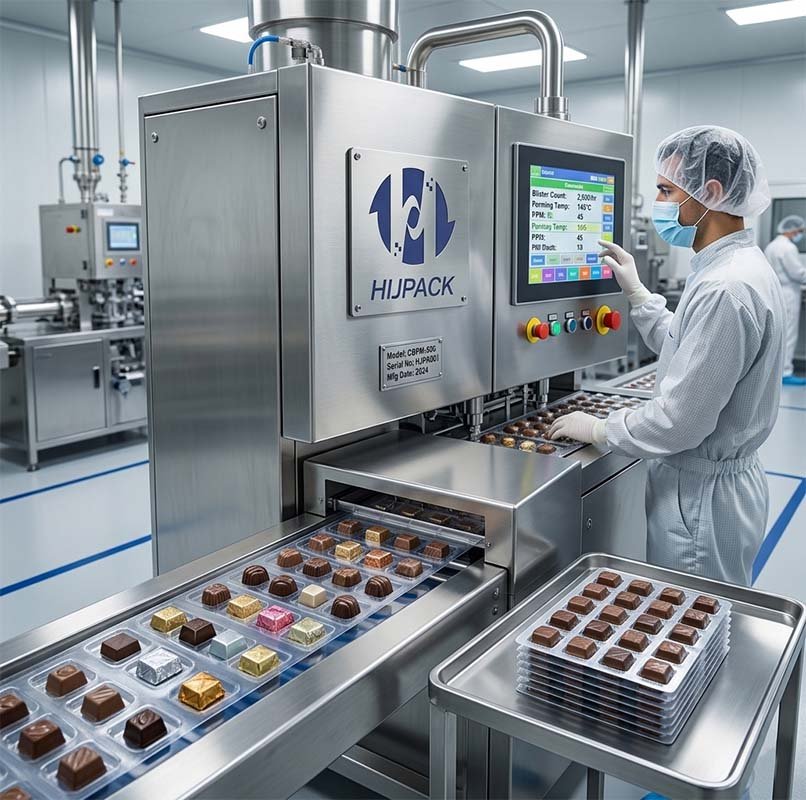
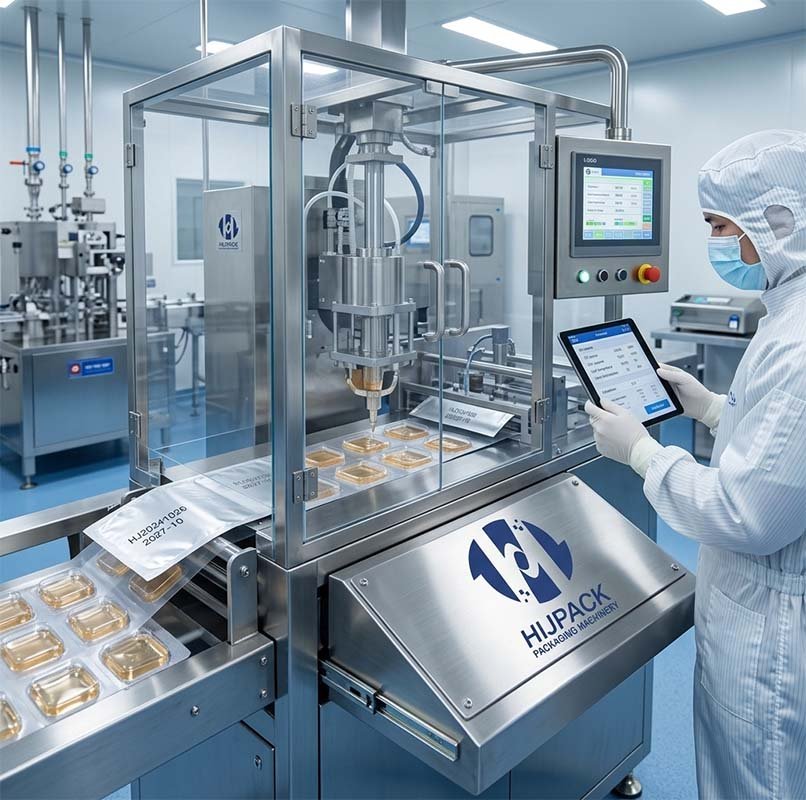
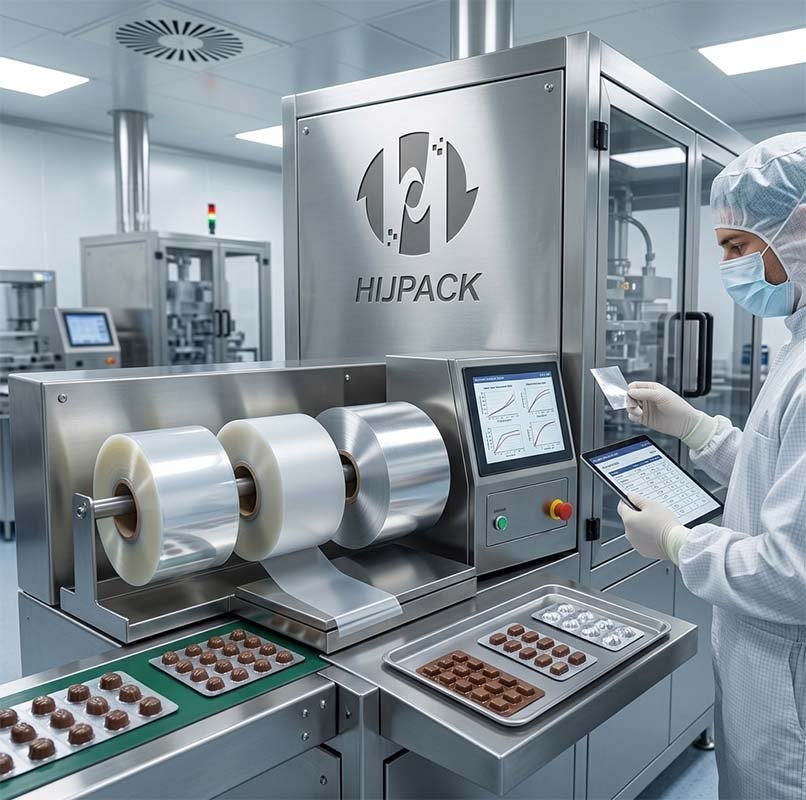
HIJ automatic chocolate blister packing machine — AISI 304 stainless steel contact surfaces, closed-loop PID temperature control, compatible with PVC, PET, and cold-form aluminum forming materials.
Temperature Control: The One Technical Factor Most Buyers Miss
Chocolate’s melting range is 32–34°C for milk chocolate, 35–37°C for dark. That’s a 3–5 degree tolerance window before the product surface becomes tacky. Standard pharmaceutical blister machines run forming temperatures of 140–180°C for PVC — perfectly fine for tablets, immediately dangerous for chocolate unless the line has proper zoned temperature isolation and cooling.
Purpose-built chocolate blister machines address this with three mechanisms. First: shorter film path from forming station to cooling plate, reducing the time the heated film is proximate to the product loading zone. Second: active cooling between forming and loading — either a cooling conveyor section or chilled air curtains directing ambient air across the formed cavities before product contact. Third: forming temperature setpoints calibrated to the minimum required for clean cavity geometry rather than the maximum the machine supports.
🛠 Forester’s Field Insight
The FAT Protocol Gap That Costs You Three Months
I’ve commissioned lines where the vendor’s FAT checklist didn’t include a thermal soak test — running the machine at 100% speed for 4 continuous hours in a room at 28°C ambient and measuring cavity temperature at the product loading point. That test exists specifically to catch cooling undersizing. Without it, you don’t discover the problem until month two of production, when summer temperatures in your plant push ambient above 30°C and your cavity base starts reading 36°C. By then, the vendor is three months away. The fix is a chiller retrofit that costs more than the original line audit would have. I now make closed-loop PID temperature validation a mandatory item on every chocolate blister line FAT protocol I run.
📋 Food Safety Regulatory Reference
All materials in contact with chocolate blisters must comply with applicable food contact regulations: EU Regulation (EC) No 10/2011 on plastic materials in contact with food, and FDA 21 CFR 177 for indirect food additives (polymers). For export to GCC markets, Gulf Standard GSO 1025 applies. Machines processing food must meet ISO 14159:2002 hygiene design requirements. Verify your forming film supplier has current food-contact migration test documentation before commissioning.Three Blister Packaging Problems Chocolate Brands Encounter First — and How to Avoid Them
🎯 GEO Direct Answer
The three most common blister packaging failures in chocolate production are cavity deformation from insufficient cooling, seal integrity failure from incorrect sealing temperature, and chocolate bloom from moisture ingress through inadequate lidding foil spec. All three are preventable with correct machine specification and validated startup parameters.
⚠ Diagnostic: Common Chocolate Blister Failures
Cavity deformation — chocolate pieces visible through warped or collapsed cavities
Cause: Forming temperature too high for film gauge, or cooling conveyor undersized for ambient plant temperature. Common in plants above 28°C without climate control. The forming station runs correctly; the problem is downstream heat accumulation.
Fix: Reduce forming temperature setpoint by 5–8°C and extend cooling dwell time. If plant ambient exceeds 30°C, install chilled air curtains between forming and loading stations. Revalidate cavity depth at ±0.1 mm tolerance after adjustment.
Seal peeling — lidding foil separates from base film at room temperature within 48 hours
Cause: Sealing temperature below the bonding threshold for the specific foil-film combination in use. This is a material-machine compatibility issue, not a machine fault. Different lidding foil suppliers specify different activation temperatures, and the machine’s sealing station may be calibrated for a previous foil spec.
Fix: Request the foil supplier’s sealing temperature window (typically 160–200°C for aluminum-to-PVC bonds). Calibrate the sealing station to the midpoint of that window. Run peel strength tests per ASTM F88 — minimum 1.5 N/15 mm for food blister applications.
Sugar bloom appearing on chocolate surface within 4–6 weeks of packing
Cause: Moisture ingress through underspecified lidding foil. Standard 20 µm foil is sufficient for temperate distribution. For tropical or long-haul export, 25 µm or a PVDC-barrier composite is required. This failure mode is invisible at commissioning — it appears at 4-week accelerated stability review.
Fix: Upgrade lidding to 25 µm heat-seal lacquered aluminum with verified MVTR <0.5 g/m²/day. For Zone IVb export (Singapore, Malaysia, Nigeria, UAE), specify PVDC-coated aluminum or switch base film to cold-form specification. Run 40°C/75% RH accelerated stability for 6 weeks before commercial launch in high-humidity markets.
What Does a Chocolate Blister Packing Machine Actually Need to Do?
🎯 GEO Direct Answer
A chocolate blister packing machine must have closed-loop PID temperature control, food-grade stainless steel contact surfaces (AISI 304 minimum), active cavity cooling between forming and loading stations, compatibility with PVC/PET/aluminum forming film, and mold changeover capability under 30 minutes to accommodate multiple product SKUs.
Not every blister machine is built for chocolate. Pharmaceutical blister machines are engineered around tablet and capsule handling — hard, stable solids with high melting points. They’re fast and precise, but their forming temperatures run hotter, their feeding systems use vibration unsuitable for chocolate surfaces, and their cooling sections are designed for ambient-temperature tablets, not temperature-sensitive confectionery.
Purpose-built or properly configured chocolate blister lines differ in three concrete ways. First: forming temperature ceilings are set at 130°C maximum, not the 180°C typical of pharma lines. Second: product feeding uses gentle brush-type or gravity-assist loading rather than high-frequency vibration. Third: the cooling section between forming and product contact is active — chilled air or water-cooled plate — not passive ambient.
- Closed-loop PID temperature control — forming station temperature held to ±1°C. Non-PID machines show 8–12°C variation over a production shift, causing cavity geometry inconsistency.
- AISI 304 stainless steel on all product-contact surfaces — minimum food-grade requirement. Verify with a material certificate, not a sales brochure claim.
- Active cooling between forming and loading stations — chilled air curtain or water-cooled cooling plate. Critical for plants where ambient exceeds 26°C.
- Multi-material forming capability — compatible with PVC, PET, and cold-form aluminum foil without requiring a full machine change. Achieved via interchangeable forming heads.
- Mold changeover under 30 minutes — essential for multi-SKU artisan chocolate operations. Quick-release tooling with indexed positioning eliminates alignment time.
- Speed range of 40–150 blisters/minute — scalable output for both small artisan runs (40–60/min) and high-volume confectionery production (120–150/min).
- Inkjet or hot-stamp batch coding integration — lot number, best-before date, and traceability codes applied inline without secondary handling.
For a detailed breakdown of how to evaluate these parameters against your specific production requirements, the guide on how to choose a chocolate blister packing machine covers the full buyer’s framework — including speed calculation, mold lead time, and the vendor audit questions that actually matter.
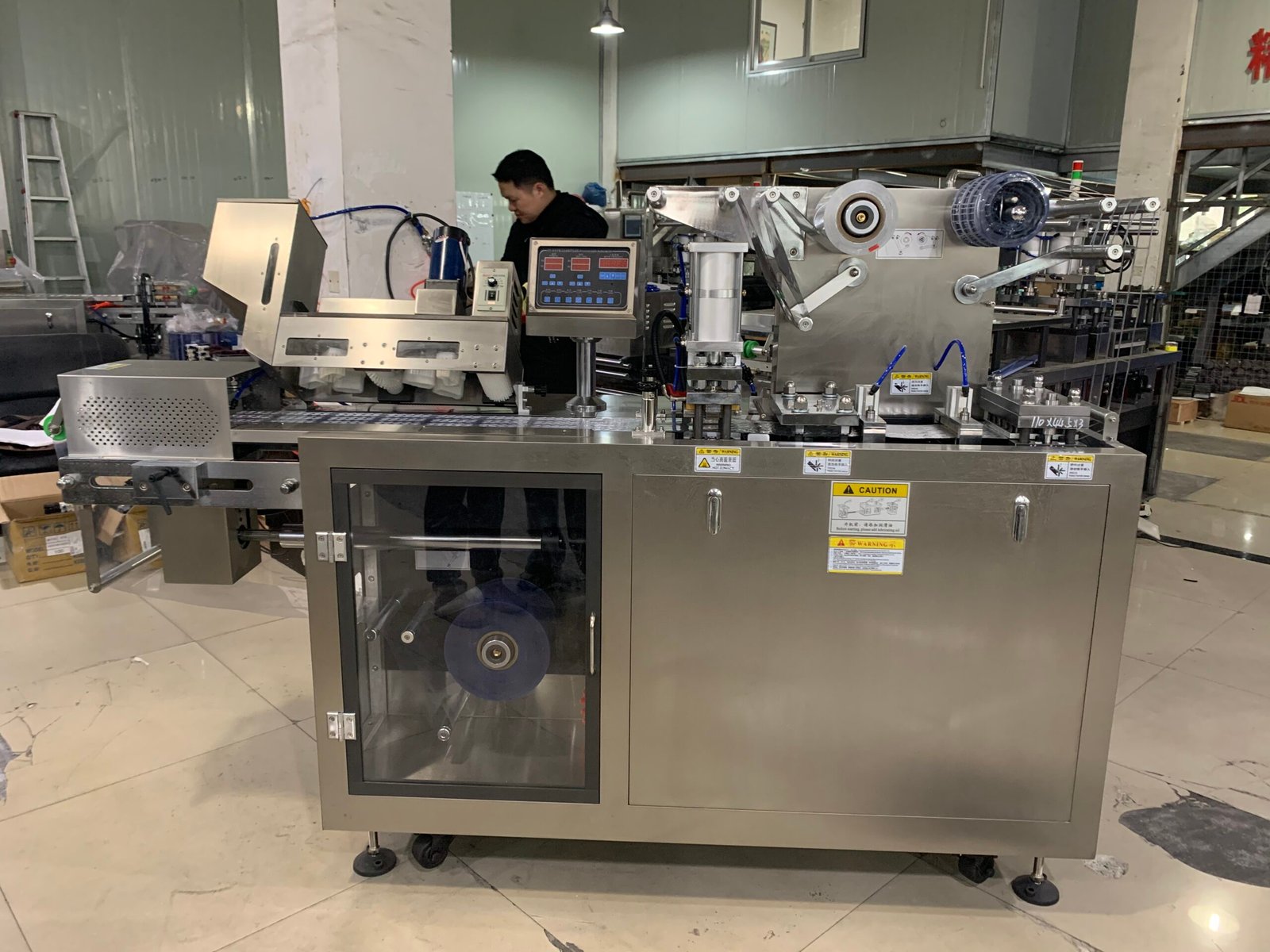
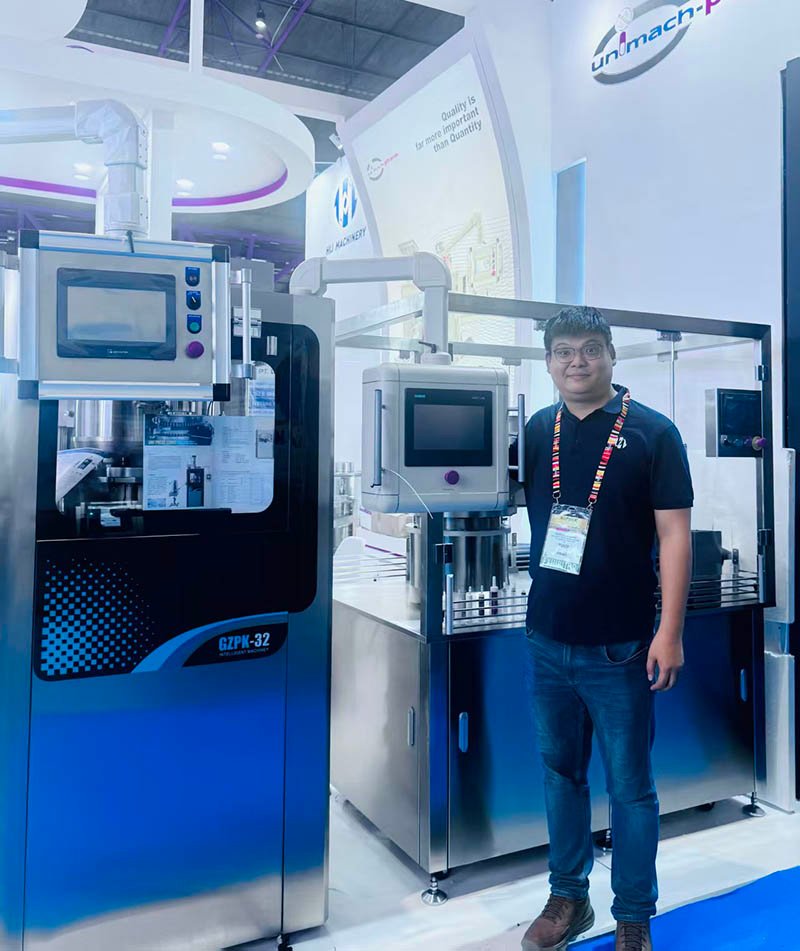
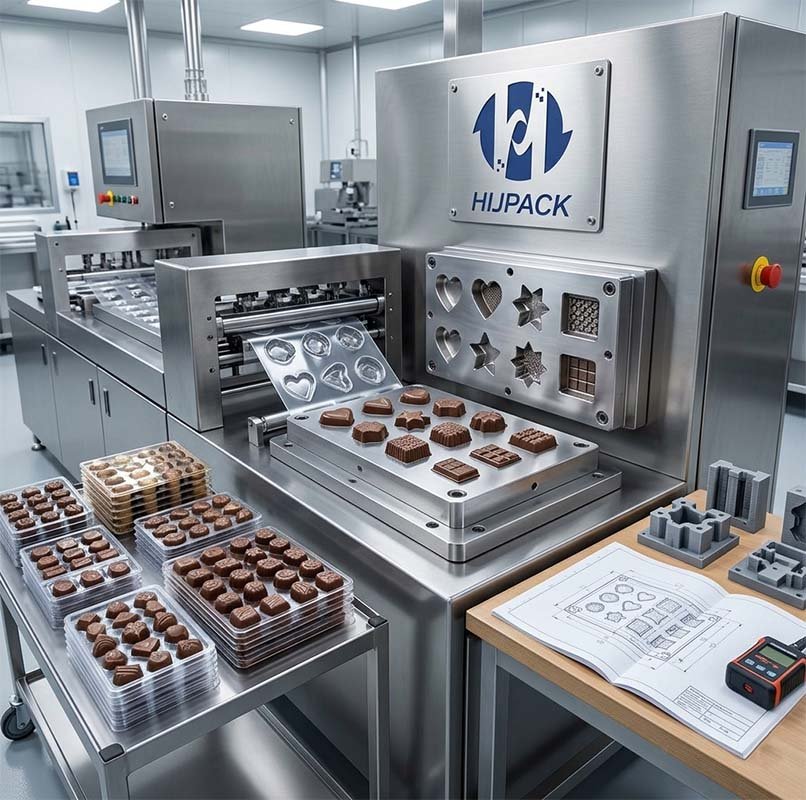
HIJ chocolate blister packing machine — servo-driven forming, active cooling conveyor, and modular mold system for pralines, truffles, and molded chocolate segments.
What Types of Chocolate Products Are Blister Packed — and by Whom?
Blister packaging for chocolate covers a wider range of products and buyers than most people assume when they first research the format. The three most common product categories are pralines and filled chocolates (the classic application — individual cavities protecting a shaped shell with a ganache or cream center), molded chocolate segments (bar fragments or single-serve portions where shape preservation and premium presentation drive the choice), and novelty or seasonal chocolates (Easter eggs, holiday figures, gifting trays where the visual cavity display is part of the retail appeal).
The buyer profile is equally varied. I work with artisan chocolate brands running 200 kg/day who need a semi-automatic blister line with two operators and fast mold changeover for 12 different SKUs. I work with contract manufacturers running 2,000 kg/day who need fully automatic lines with robotic loading and vision-inspection reject systems. And I work with import distributors who are specifying equipment for a client they’re supplying into the Middle East and need to confirm the machine can handle ambient temperatures of 40°C in an unconditioned warehouse without affecting the packaging integrity. Three completely different conversations. One common technical foundation.
📊 Market Data
Why Gifting and Premium Positioning Drive Blister Adoption
Of the confectionery packaging line projects I handled between 2019 and 2024 across Southeast Asia and the Middle East, 73% of buyers who chose blister over flow wrap cited “premium shelf presentation” as the primary driver — ahead of “moisture protection” (cited by 58%) and “portion control” (41%). The purchasing decision is usually led by marketing, not engineering. The engineering validation comes second. That sequencing is fine, as long as the equipment specification still addresses the technical requirements — which marketing departments don’t always catch without a competent equipment supplier in the room.
Where Does Blister Packaging Fit in a Complete Chocolate Line?
Blister packaging is one station in a production sequence. Upstream: chocolate tempering, depositing or molding, and cooling tunnel. The blister machine receives a finished, cooled, stable chocolate piece — it does not handle liquid chocolate. Downstream: the sealed blister cards exit to a cartoning machine (individual cards into retail boxes), and then to a case packer for shipper cartons.
Integration matters. The blister machine speed must match the upstream output rate and the downstream cartoner input rate within ±10%. Mismatched speeds create accumulation buffers that require floor space and manual handling — both of which introduce product damage risk for chocolate. When I size a complete line, I start with the target output in kg/hour, work back to pieces/hour based on average piece weight, then calculate blister cards/minute from cavity count per card. The blister machine sits at the center of that calculation. Everything else is sized around it.
If you’re evaluating a complete chocolate packaging line — blister machine, cartoner, and case packer as an integrated system — the HIJ chocolate blister packing machine product page covers the full system specifications, forming material compatibility, and turnkey integration options.
Frequently Asked Questions: Blister Packaging for Chocolate
❓ What is blister packaging for chocolate, and how is it different from regular candy packaging?
Blister packaging for chocolate creates individual thermoformed or cold-formed cavities around each piece, sealed with an aluminum lidding foil — giving each chocolate its own protected chamber. Regular candy packaging typically uses flow wrap (a continuous film envelope around the whole product), which does not provide individual sealing, shape protection, or the same level of moisture barrier. The key functional differences are portion control, piece-to-geometry preservation, and seal integrity — none of which flow wrap provides at the same level as a heat-sealed blister cavity.
❓ Does the heat from a blister machine melt the chocolate?
No — when the machine is correctly specified and configured. The forming film is heated to 100–130°C in a zone isolated from the product cavity. By the time the formed cavity reaches the product loading station, it has been cooled to ambient temperature. The chocolate never contacts a hot surface. The risk is not forming temperature — it is inadequate cooling between forming and loading, which can allow heat accumulation if the cooling section is undersized for the plant ambient temperature. This is why active cooling between stations is a mandatory specification item for any chocolate blister line.
❓ What film material is best for chocolate blister packaging?
For standard retail distribution in temperate climates, food-grade PVC at 250–300 micron with aluminum lidding is sufficient and cost-effective. For tropical market export or shelf-life claims exceeding 6 months, PVDC-coated PVC or cold-form aluminum foil provides the moisture barrier performance required. PET is increasingly specified by brands with sustainability commitments — it performs similarly to PVC on moisture vapor transmission but is mechanically recyclable. The lidding foil is almost always aluminum at 20–25 micron with heat-seal lacquer. Do not use 20 micron foil for high-humidity export without verifying the MVTR specification with your foil supplier.
❓ Can one blister machine handle multiple chocolate shapes and sizes?
Yes, with the right tooling system. Most chocolate blister machines accommodate multiple mold sets — each mold defining the cavity shape, depth, and pitch for a specific product. Changeover between molds on a well-engineered line takes under 30 minutes. The critical specification is not the machine itself but the mold design: cavity depth tolerance of ±0.1 mm, food-grade steel or aluminum construction, and indexed positioning to eliminate alignment time during changeover.
❓ Is blister packaging for chocolate food-grade and compliant with export regulations?
Yes — when the correct materials and machine design are specified. All forming film and lidding materials must have food-contact compliance documentation: EU Regulation (EC) No 10/2011 for European export, FDA 21 CFR 177 for the US market, and relevant local standards for other markets. The machine itself must meet food hygiene design requirements (ISO 14159 or equivalent) — meaning no dead zones where product can accumulate, stainless steel product-contact surfaces, and cleanable design without tools. Requesting these compliance documents from your equipment and material suppliers before purchase is the correct sequence.
❓ How fast do chocolate blister packing machines run?
Speed range is 40 to 150 blisters per minute depending on machine model, cavity count per blister card, and product loading method. A semi-automatic line with manual loading typically runs 40–60 blisters/minute. A fully automatic line with vibrating feeder or robotic pick-and-place runs 80–150 blisters/minute. The more useful number is pieces per hour: a 4-cavity card at 100 blisters/minute gives 24,000 pieces per hour. Match that to your chocolate depositor output rate before finalizing machine selection.
Ready to Specify a Chocolate Blister Line That Actually Works?
HIJ Machinery has commissioned chocolate blister packaging lines in 30+ countries — from 200 kg/day artisan operations to 2,000 kg/day contract manufacturers. Every project starts with a machine specification review against your product profile, target markets, and ambient conditions. Not a brochure. A conversation.