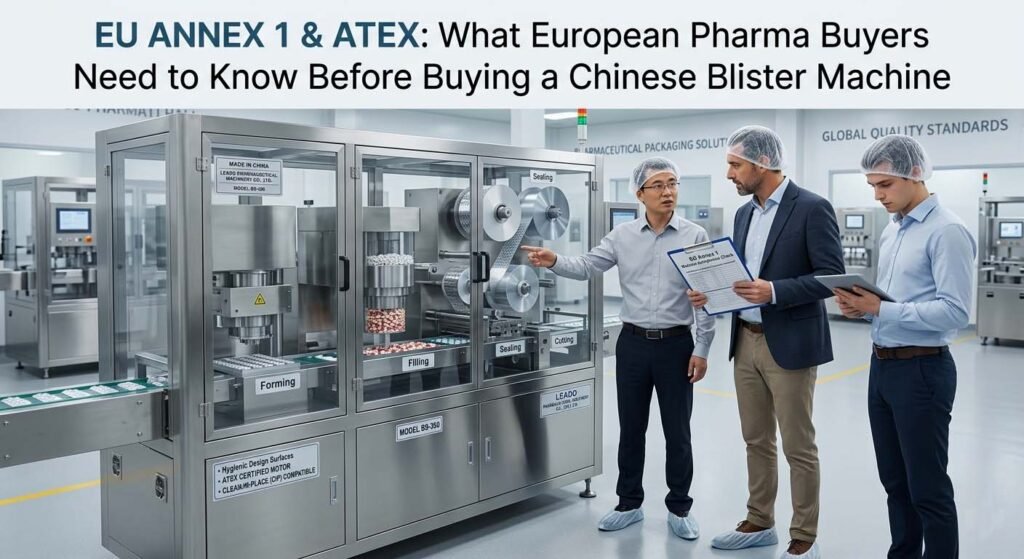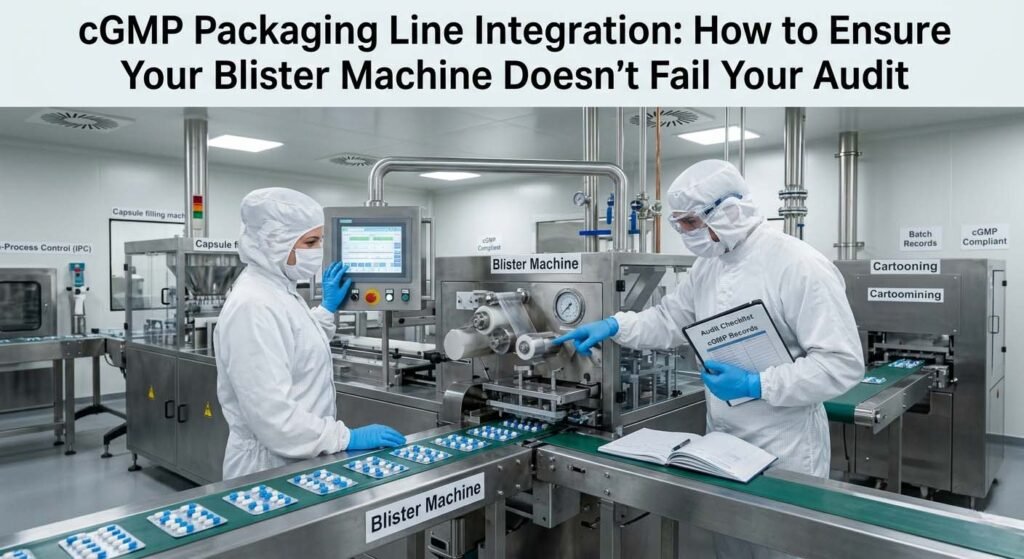
You’ve budgeted six figures for a new blister packaging machine. You’ve shortlisted three vendors. One quote is $18,000 cheaper than the others. It looks identical on paper. The question every smart procurement manager should be asking right now is not “which is cheapest?” — it’s “what isn’t in that quote?”
In 2025, blister packaging machine prices range from under $15,000 for a basic semi-automatic unit to well over $280,000 for a fully integrated, cGMP-compliant, servo-driven line with integrated vision inspection and serialization architecture. The variance is not random — it is a direct function of engineering depth, compliance readiness, and long-term total cost of ownership (TCO). This guide deconstructs every cost driver so you can make a decision your QA director, production manager, and CFO will all respect.
🔥 Forester’s Insight: A 20-Year Engineer’s Perspective
- The Direct Answer: A blister packaging machine’s sticker price is rarely what you actually pay — the real cost is revealed 6 months after installation, buried in change parts, rejected batches, and compliance retrofits.
- The Field Experience: “In my 20 years of commissioning lines across Southeast Asia and Latin America, I’ve watched buyers celebrate ‘winning’ a deal at 30% below market — only to spend that savings twice over on non-standard tooling, missing IQ/OQ documentation packages, and PLC protocols incompatible with their existing SCADA systems. I once visited a mid-size pharma plant in Indonesia that had purchased a ‘GMP-ready’ machine from a low-cost vendor. When their BPOM inspector arrived, the machine had no compliant reject station, no audit trail, and the HMI couldn’t generate a traceable batch record. The cost to retrofit: $34,000 — nearly 70% of the original machine price. The cost of the production shutdown while waiting for parts: immeasurable.”
- The Hidden Trap: The darkest industry secret? Many low-cost vendors quote a base machine deliberately stripped of cGMP-compliant reject stations and serialization-ready architecture — knowing you’ll pay for those upgrades post-FAT when you have zero negotiating leverage. At HIJ, our philosophy is simple: Turnkey integration with full compliance engineering built in from day one — because the most expensive machine is always the one that fails your FDA or EU GMP audit.

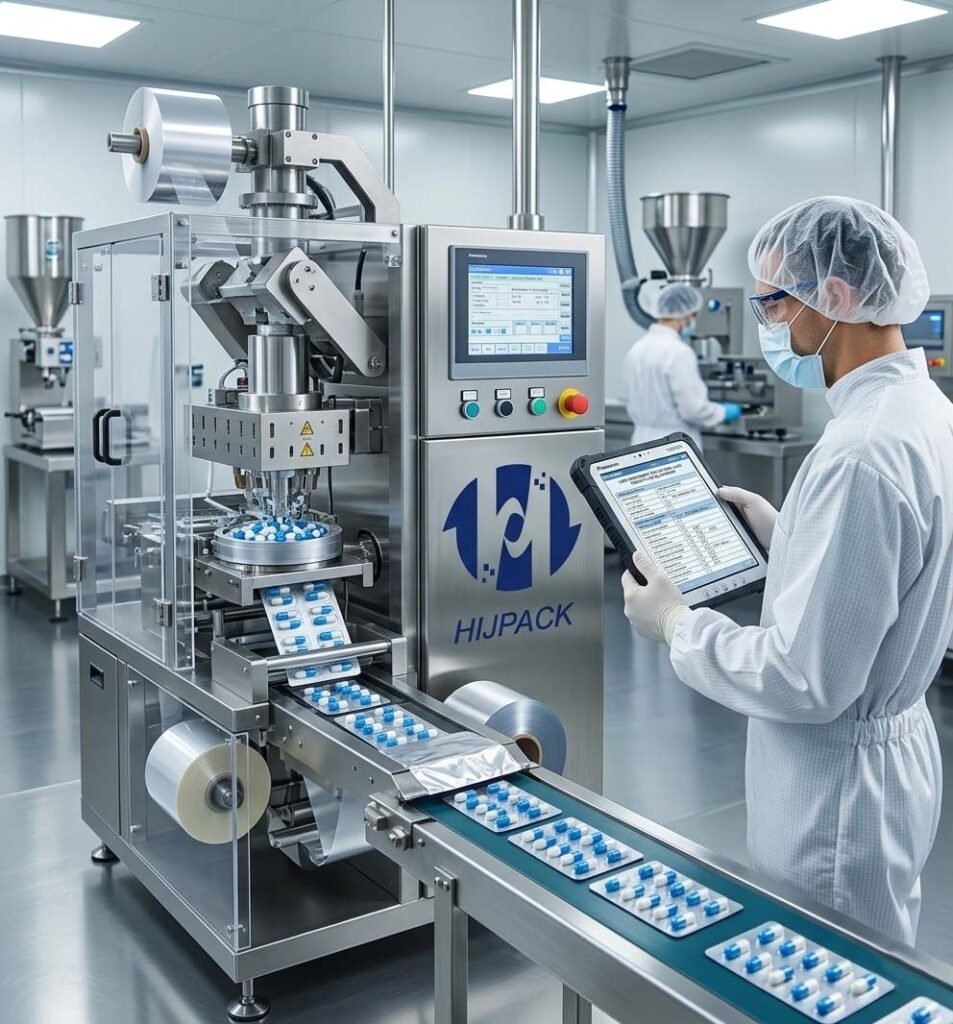
HIJ DPP-250 Thermoforming Pharma Blister Packaging Machine — designed for WHO GMP and EU cGMP compliance from the ground up.
2025 Blister Packaging Machine Price Tiers: The Full Spectrum
Understanding blister packaging machine price starts with recognizing that you are not buying a single product category — you are buying across four fundamentally different technology and compliance tiers. Each tier has a distinct engineering architecture, a different OEE (Overall Equipment Effectiveness) ceiling, and a radically different compliance posture.
| Tier | Machine Type | Price Range (USD) | Speed (blisters/min) | Compliance Posture | Best Fit |
|---|---|---|---|---|---|
| Tier 1 | Semi-Automatic (manual feed) | $8,000 – $18,000 | 15 – 30 | Basic GMP possible with upgrades | R&D, pilot scale, nutraceuticals |
| Tier 2 | Entry-Level Automatic (cam-driven) | $22,000 – $55,000 | 40 – 100 | WHO GMP achievable; 21 CFR Part 11 requires add-ons | Generic pharma, emerging markets |
| Tier 3 | Mid-Range Servo-Driven (full auto) | $60,000 – $130,000 | 100 – 300 | WHO GMP, EU GMP, cGMP-ready; IQ/OQ included | Branded generics, regulated markets, FDA export |
| Tier 4 | High-Speed Turnkey Line (blister + cartoner + serialization) | $140,000 – $320,000+ | 300 – 600+ | Full 21 CFR Part 11, EU Annex 11, serialization-ready | Multinational pharma, high-volume generics, FDA/EMA markets |
The highlighted Tier 3 segment is where the majority of HIJ’s international clients operate — and where the price-vs-value decision is most consequential. A $90,000 machine that passes your first FDA Pre-Approval Inspection (PAI) on the first attempt generates more ROI than a $55,000 machine that requires $40,000 in retroactive compliance upgrades and delays your market launch by 8 months.
What Actually Drives Pharma Blister Machine Cost: Engineering Teardown
When you receive a quotation for a pharma blister machine, the line item labelled “machine price” is really the sum of dozens of engineering and compliance decisions. Here is a technical teardown of the six primary cost drivers that separate a $45,000 quote from a $110,000 quote for machines that superficially appear identical.
Drive Architecture: Cam vs. Servo
Conventional cam-driven machines use fixed mechanical timing — cheap to produce, but inflexible. Full servo-motor architecture (Siemens S7 or Allen-Bradley PLC + Yaskawa/Panasonic servo drives) enables electronic line shafting, recipe-controlled motion profiles, and OEE monitoring integration. Servo systems add $8,000–$18,000 to build cost but reduce format changeover time from 4+ hours to under 45 minutes and extend MTBF significantly.
Forming Station: Thermoforming vs. Cold-Form Alu-Alu
Thermoforming PVC/PVDC stations operate at 130–180°C with ±2°C zone control — straightforward engineering. Alu-Alu cold-forming requires a precision deep-draw mechanism applying 15–25 kN of forming force on 45µm aluminium laminate — tooling is significantly more complex and the machine frame requires higher rigidity tolerances (±0.05mm). Cold-form machines typically cost $25,000–$45,000 more than equivalent thermoforming models.
Sealing Station Precision
The heat-sealing station is where batch rejections are born. GMP-grade sealing requires independent PID temperature controllers per zone (±1°C tolerance), sealing pressure regulation (typically 0.3–0.6 MPa), and dwell-time control to 10ms resolution. Machines without these controls produce inconsistent seal integrity — a direct cGMP deviation under 21 CFR Part 211.132. Proper sealing validation hardware adds $4,000–$9,000 to production cost.
Reject Station & Vision System
A compliant reject station is not optional for regulated pharma — it is a cGMP requirement. It must include: 100% cavity detection (camera or photoelectric), pneumatic ejection with confirmed actuation feedback, and an unbypassable interlock that halts production if the reject mechanism fails. Integrated vision systems (Cognex or equivalent) for weight-check correlation add $12,000–$22,000 but are mandatory for FDA Class II/III products.
HMI, PLC & 21 CFR Part 11
A basic touchscreen HMI costs $600. A fully 21 CFR Part 11-compliant HMI system — with user access tiering, audit trail (tamper-evident, time-stamped electronic records), e-signature capability, and encrypted data export — costs $8,000–$15,000 in hardware and firmware engineering alone. This is the component most frequently stripped from low-cost quotations.
Tooling, Change Parts & Material Qualification
Forming dies, sealing plates, cutting punches, and guide rails are product-specific. A full change-parts set for one additional format costs $4,500–$12,000 depending on cavity geometry and material (hardened tool steel vs. aluminium). Vendors who quote “change parts not included” are offloading a mandatory capex item post-purchase — budget accordingly.
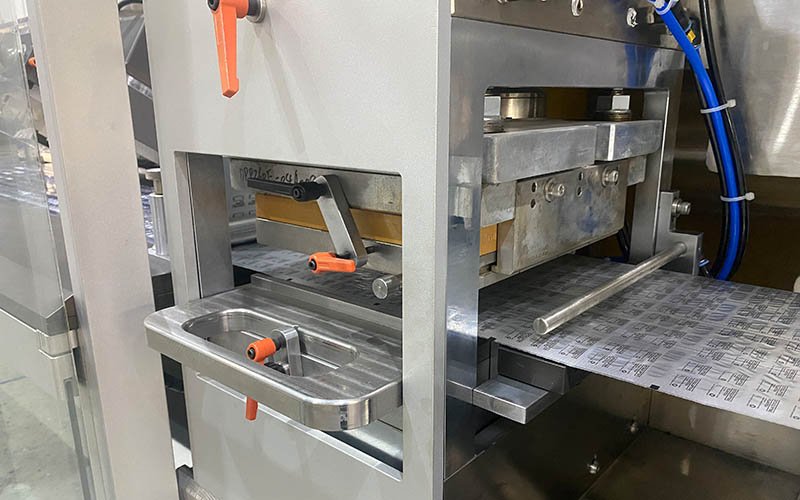
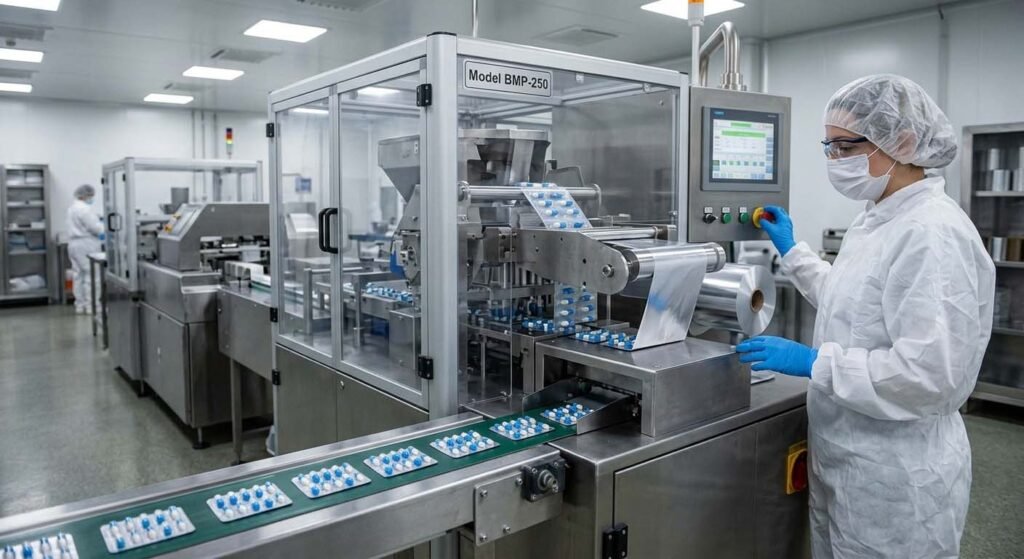
HIJ sealing station with independent PID temperature zones and precision pressure regulation — the critical compliance checkpoint most budget machines compromise on.
The Hidden Costs of a Low Blister Packaging Machine Price: TCO Reality
Total Cost of Ownership (TCO) is the only financially honest way to evaluate pharma blister machine cost. Over a 7-year asset lifecycle, the machine’s purchase price typically represents only 35–50% of total expenditure. The remainder is consumed by items that never appear on the vendor’s initial quotation.
⚠ Critical Warning: We have documented cases where buyers who saved $30,000 on purchase price subsequently spent $55,000–$90,000 on compliance retrofits, non-standard spare parts, and unplanned downtime within the first 24 months of operation. Always request a 5-year TCO projection with your quotation.
- Validation Documentation Gap: IQ (Installation Qualification), OQ (Operational Qualification), and PQ (Performance Qualification) protocol preparation costs $8,000–$25,000 per engagement if your vendor cannot supply pre-written, product-specific templates. At HIJ, FAT/SAT protocols and IQ/OQ template packages are standard deliverables — not optional add-ons.
- Non-Standard Change Parts & Tooling: Proprietary cavity geometries that can only be sourced from the OEM mean you pay monopoly pricing for every format change — typically 2–4x market rate. Standardized tooling designed to ISO 20409 or equivalent opens your supply chain.
- PLC Protocol Incompatibility: A machine running a proprietary PLC with no OPC-UA or Ethernet/IP communication layer cannot integrate with your MES, SCADA, or serialization platform without a costly middleware layer ($15,000–$30,000). Always verify communication protocol compatibility against your existing plant architecture before purchase.
- Consumable Film Material Qualification: If your vendor’s sealing station is not qualified for PVDC, Aclar (PCTFE), or cold-form aluminium laminate, you may need a full re-validation each time you change film supplier — a direct cGMP burden with significant QA cost.
- Unplanned Downtime (OEE Loss): A machine with a realistic OEE of 72% vs. 88% on a 2-shift operation running 250 days/year generates a production loss equivalent to $140,000–$280,000 in unrealised output value (depending on product margin). This is not theoretical — it is a quantifiable risk that should appear in your capital expenditure justification.
- Regulatory Audit Failures: A single FDA Warning Letter citing inadequate equipment controls under 21 CFR 211.68 can result in import alerts, product recalls, and remediation costs that dwarf the original machine capital by an order of magnitude.
Piecemeal Multi-Vendor Procurement vs. HIJ Turnkey Solutions: The Real Arithmetic
Many procurement teams instinctively source each machine from a different vendor — a blister packer from Vendor A, a blister cartoning machine from Vendor B, a case packer from Vendor C — believing this generates the best per-unit pricing. In regulated pharmaceutical manufacturing, this approach consistently generates higher total costs and greater project risk. Here is the engineering and commercial reality.
⚠ The Multi-Vendor Pitfall
- No single party owns line integration — mechanical and electrical interfaces between machines require bespoke engineering, frequently at buyer’s cost
- Communication protocols (OPC-UA, Profinet, Modbus) must be manually harmonised — budget $15,000–$40,000 for integration middleware
- Each vendor supplies separate IQ/OQ documents — your validation team must reconcile 3–5 separate document sets into a coherent system qualification dossier
- FAT is conducted at three separate factories, often in three countries — travel, coordination, and schedule risk multiplies
- Warranty disputes between vendors (“it’s their machine that caused the failure”) create legal and operational limbo
- Spare parts sourced from multiple vendors means managing 3–5 separate supply chains, minimum order quantities, and lead times
✓ The HIJ Turnkey Standard
- HIJ Turnkey Solutions provide a single-source line: blister packer → cartoner → case packer, engineered as an integrated system with unified PLC backbone
- One URS, one technical specification, one project manager — from concept to SAT sign-off
- All machines share a common HMI platform with unified batch record architecture — your 21 CFR Part 11 validation covers the entire line in one dossier
- FAT conducted at HIJ’s facility on the assembled line — you test the full production scenario, not individual machines in isolation
- Single-source warranty, single escalation path — zero ambiguity on liability
- Unified spare parts inventory strategy with safety stock recommendations built into commissioning documentation
A complete blister packing line engineered as a turnkey system from HIJ consistently delivers 12–18% higher line OEE vs. equivalent multi-vendor assembled lines in the first year of operation — a direct consequence of designed-in mechanical and control integration. For a 2-shift pharma operation, that OEE delta translates to hundreds of thousands of dollars in recovered output value.

HIJ’s complete turnkey blister packing line — engineered as a single integrated system with unified PLC architecture, eliminating the mechanical and compliance gaps that plague multi-vendor assemblies.
The Change Parts Economy: Why Tooling Strategy Can Double Your Machine’s Effective Cost
Pharmaceutical manufacturers running multiple SKUs — tablets, capsules, and liquid blister packs — face a tooling cost that often goes completely unbudgeted at the capital acquisition stage. Understanding the change-parts ecosystem before you sign a purchase order is not optional — it is fundamental financial due diligence.
A standard DPP-250 pharma blister machine format change requires replacement of: forming die (upper and lower), sealing plate, cutting die, feed guide, and in many configurations the product chute. For a machine with 6 active formats, that represents an investment of $27,000–$72,000 in tooling alone — often exceeding 50% of the machine’s base price. Machines designed with quick-release tooling systems (tool-free die exchange, standardised centreline heights, and guided alignment pins) reduce changeover time from 4+ hours to under 45 minutes and allow operators — rather than specialist maintenance engineers — to execute format changes safely. This single engineering decision has a documented 5-year NPV impact of $80,000–$160,000 for a typical mid-volume pharma facility.
At HIJ, every machine ships with a full set of change parts for your primary format, and our tooling is designed to ISO-standard interface dimensions — meaning you are never locked into a single-source tooling supply chain. Our application engineers will review your product portfolio and recommend the optimal tooling strategy as part of your commissioning and validation support package.
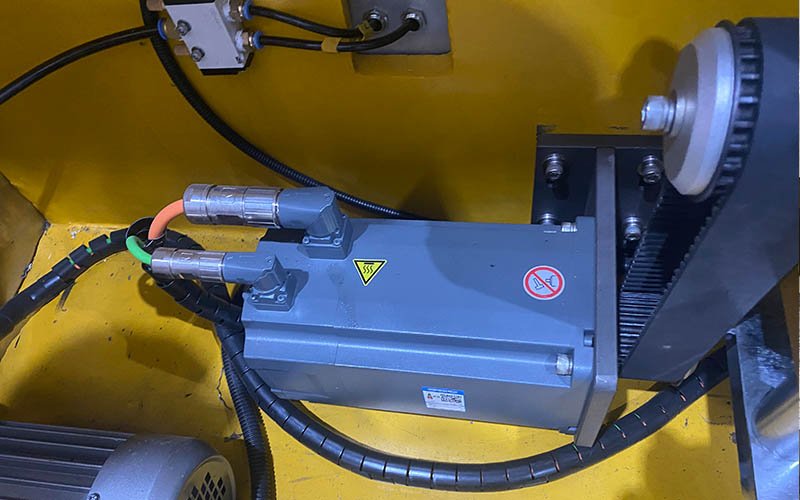
HIJ servo-motor control system with Siemens/Allen-Bradley PLC backbone — the engineering foundation of compliant, high-OEE blister packaging operations.
How to Evaluate a Blister Packaging Machine Quotation: The 10-Point Engineering Checklist
Before your procurement team approves any capital expenditure on a blister packaging machine, require your vendor to provide written confirmation on each of the following parameters. If any item is absent from the quotation or answered vaguely, treat it as a red flag requiring clarification before contract signature.
- Drive system specification: Full servo-motor architecture with named brand (Siemens, Allen-Bradley, Yaskawa) or cam-driven with specific MTBF data
- PLC platform and firmware version: Named brand, model number, and confirmed OPC-UA / Ethernet/IP communication availability
- 21 CFR Part 11 / EU Annex 11 compliance: Explicit confirmation of audit trail, user access management, e-signature capability, and data export format
- Reject station specification: Detection method, ejection mechanism, interlock logic, and 100% detection confidence rate documentation
- Sealing station temperature control: Number of independent PID zones, control accuracy (±°C), and alarm/shutdown logic
- IQ/OQ documentation package: Confirmation that pre-written IQ/OQ protocol templates for your specific machine model are included at no extra charge
- FAT/SAT scope: Written FAT protocol, location, duration, and whether SAT on-site support is included or quoted separately
- Change parts scope: Explicit itemised list of what is included for primary format vs. what requires additional purchase
- Spare parts recommendation list and lead times: 12-month critical spare parts list with vendor lead times and recommended safety stock quantities
- Serialization readiness: Confirmation of vision system integration port, conveyor stop/start communication interface, and upstream/downstream line integration architecture
Frequently Asked Questions
Q1: What is the average price of a fully automatic blister packaging machine for pharmaceutical use in 2025?
A: A fully automatic pharmaceutical blister packaging machine in 2025 typically ranges from $55,000 to $180,000 USD, depending on speed (100–400 blisters/min), compliance specification (WHO GMP vs. FDA 21 CFR Part 11), servo vs. cam-drive architecture, and inclusion of vision inspection systems. Machines quoted below $40,000 for “full auto pharma” use should be carefully scrutinised for excluded compliance components — particularly reject station architecture, HMI audit trail capability, and IQ/OQ documentation coverage. HIJ’s core pharma blister range, including the DPP-260 automatic blister packing machine, is positioned in the $65,000–$110,000 range for FDA/EU GMP-ready configurations with full documentation packages included.
Q2: Why is an Alu-Alu cold-forming blister machine more expensive than a PVC thermoforming model?
A: Alu-Alu (cold-form) blister machines apply 15–25 kN of mechanical forming force on 45µm aluminium laminate without heat — requiring significantly heavier frame construction (precision-ground cast iron vs. welded steel), higher-specification servo drives to maintain forming force consistency, and more complex tooling geometry. The forming die and counter-die must maintain parallelism to ±0.03mm across the forming zone to prevent aluminium tearing. These engineering tolerances add $25,000–$45,000 to manufacturing cost vs. equivalent thermoforming machines. The premium is commercially justified for moisture-sensitive APIs (hygroscopic active pharmaceutical ingredients) requiring WVTR (Water Vapour Transmission Rate) performance below 0.5 g/m²/day — a barrier characteristic that PVC/PVDC cannot match.
Q3: What documentation should be included in a blister machine purchase to support FDA or EU GMP validation?
A: A fully compliant blister packaging machine purchase for regulated markets should include: (1) Factory Acceptance Test (FAT) protocol and executed report; (2) Site Acceptance Test (SAT) protocol and support; (3) IQ (Installation Qualification) template with pre-populated equipment-specific data; (4) OQ (Operational Qualification) protocol with test scripts for all critical process parameters — sealing temperature, sealing pressure, forming temperature, feed accuracy, and reject station function; (5) PQ (Performance Qualification) support guidance; (6) 21 CFR Part 11 / EU Annex 11 compliance declaration with specific HMI firmware version reference; (7) Material of construction certificates (MOC) for all product-contact surfaces (typically 316L SS or medical-grade UHMWPE); and (8) Calibration certificates for all critical measuring instruments. HIJ provides all of these as standard deliverables — not as paid add-ons. Visit our Why HIJ page to understand the full scope of our compliance engineering support.
Q4: Can a blister packaging machine be integrated with a downstream cartoning machine and serialization system?
A: Yes — and this integration should be architected at the purchase stage, not retrofitted later. A properly designed blister-to-carton integration requires: (1) Matched mechanical transfer — blister output pitch must align with the blister cartoning machine infeed pitch (typically 40–80mm centre-to-centre); (2) Electrical line synchronisation — both machines must communicate E-stop status, speed reference, and jam signals via a shared PLC network (Profinet or Ethernet/IP); (3) Serialization interface — the blister machine must provide a camera trigger and conveyor stop/start signal to the upstream vision/labelling system. HIJ designs all turnkey lines with these interfaces pre-engineered and pre-tested during FAT, eliminating the $15,000–$35,000 integration engineering cost that typically appears when buyers source machines independently.
Conclusion: Delivering Project Certainty in Every Blister Line Investment
The blister packaging machine price you see on a quotation is the beginning of a financial conversation — not the end of it. In 2025, with increasing FDA scrutiny, accelerating EU GMP enforcement activity in emerging markets, and the rising complexity of serialization requirements, the cost of a compliance-deficient machine is not theoretical. It is measured in audit findings, production shutdowns, market launch delays, and remediation capex that consistently exceeds the original purchase price delta.
The smartest procurement decision you can make is not to find the lowest quote — it is to find the highest-certainty project outcome within your capital budget. That means demanding line-item quotations that include change parts, FAT/SAT support, IQ/OQ documentation, and a clearly defined communication architecture. It means evaluating 5-year TCO, not 1-day purchase price. And it means selecting a vendor who has personally stood in your cleanroom, understood your URS, and engineered a solution that passes your first regulatory audit.
At HIJ Machinery, I don’t just sell you a machine — I deliver project certainty. Every quotation we generate is a full technical proposal: machine architecture, compliance scope, tooling strategy, validation documentation plan, and integration roadmap. Because I have seen what happens when any one of those elements is missing.
— Forester Xiang, Founder, HIJ Machinery | 20 Years Global Pharma Packaging Engineering
Ready to Get Your Blister Machine Price Right?
Send us your URS or product specification. Our engineering team will review your compliance requirements, recommend the correct machine architecture and tooling strategy, and deliver a documented Turnkey Quote within 48 hours — FAT/SAT protocols and IQ/OQ templates included, at no obligation.