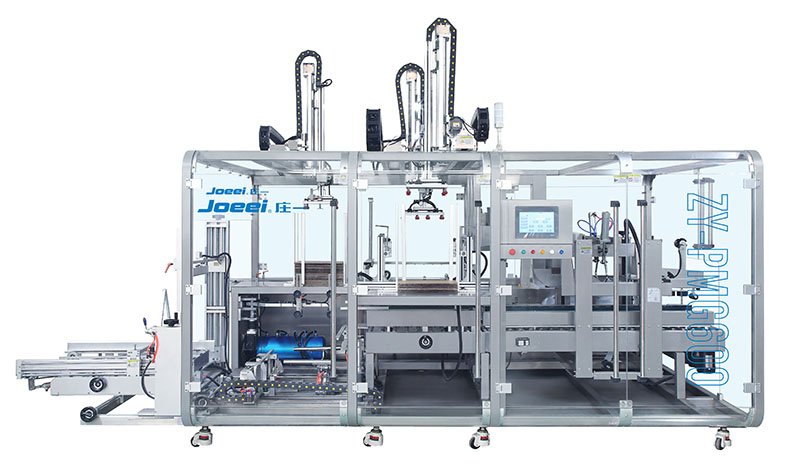
This guide explains the qualification framework, document responsibilities and evidence chain for blister packaging equipment. It is deliberately different from the more detailed tablet blister machine IQ OQ PQ guide, which focuses on tablet-specific forming, feeding, sealing, inspection and sampling tests.
Qualification stages
What DQ, IQ, OQ and PQ mean for a blister machine
The four abbreviations describe different questions. Treating them as interchangeable produces repeated tests, missing evidence and unclear approval responsibility. The exact protocol remains site- and project-specific.
| Stage | Question answered | Typical evidence | Approval focus |
|---|---|---|---|
| DQ Design Qualification | Is the proposed design suitable for the approved intended use and URS? | URS response, design review, risk assessment, drawings, component and software scope | Requirements are addressed or gaps are declared before design freeze. |
| IQ Installation Qualification | Does the installed equipment match the approved design and documented baseline? | Equipment identity, installation, utilities, drawings, materials, calibration and document checks | The actual installed state is known, recorded and controlled. |
| OQ Operational Qualification | Does the installed equipment operate as intended across approved or anticipated ranges? | Functional challenges, controls, alarms, interlocks, ranges, access, recovery and reject tests | Critical functions and controls meet predefined acceptance criteria. |
| PQ Performance Qualification | Can the connected equipment perform effectively and reproducibly in the approved process? | Approved materials, product or justified challenge product, trained operators, sampling and test results | The approved process produces acceptable evidence under defined conditions. |
Scope before protocol
Set the qualification boundary before writing test cases
A blister machine may include web handling, forming, product feeding, sealing, coding, inspection, rejection, cutting and transfer to a cartoner. The qualification boundary should state which modules, interfaces, utilities, software functions and records are included. Without that boundary, two teams may use the same word “machine” for different systems.
Equipment qualification
Verifies that facilities, systems and equipment are designed, installed and operated for their intended purpose.
Process validation
Evaluates whether the manufacturing process can consistently deliver product meeting its predetermined quality criteria.
Computerised-system scope
Addresses the software, data and electronic-record functions that are actually used for regulated activities.
Packaging integrity scope
Connects forming, sealing and pack tests to the approved product, material construction and acceptance method.
Define the authoritative record, product and material range, line interfaces, inspection disposition and site responsibilities before deciding which tests belong in FAT, SAT, IQ, OQ or PQ.

Design Qualification
DQ converts the approved URS into design decisions
Design Qualification should close ambiguity while changes are still manageable. Start with the approved user requirement specification, then map each critical requirement to a design response, supplier document, risk control or planned test. “Suitable for tablets” is not testable. The requirement needs enough context to identify product characteristics, cavity geometry, forming and lidding materials, sealing method, inspection action, cleaning boundary and downstream interface.
- Define the products, blister drawings, material constructions, coding and inspection expectations included in the project.
- Specify utilities and the permitted conditions at the machine connection point.
- Review product-contact materials, cleanability, access, guarding and maintenance access against the approved requirement.
- State recipe, user-access, backup, audit-trail and data-interface requirements only where they apply to intended use.
- Record assumptions, exclusions, open actions, responsible owners and required closure evidence.
The blister machine URS guide provides a requirement structure that can be adapted before an RFQ is issued.

Acceptance testing
FAT and SAT can support qualification without automatically replacing it
Factory acceptance testing and site acceptance testing are project acceptance activities. They can generate valuable qualification evidence when the validation plan defines how the evidence will be reviewed, approved and leveraged. EU GMP Annex 15 permits some vendor-site testing and document review to be used later when justified and when transport or installation does not affect the verified function.
| Activity | Best use | Evidence to retain | Do not assume |
|---|---|---|---|
| FAT | Compare the built machine with the approved specification before shipment. | Approved protocol, prerequisites, configuration, materials, raw results, deviations and approval record | A passed FAT automatically completes site IQ or OQ. |
| SAT | Confirm delivery condition, installation interfaces, utilities and agreed site functions. | Site checks, utility results, interface tests, open-item closure and approved report | SAT alone validates the product process. |
| Qualification | Execute the manufacturer’s approved lifecycle plan against intended use and risk. | Controlled protocols, traceability, recorded results, deviations and quality approval | Supplier certificates replace the manufacturer’s quality-system decision. |
Use the blister machine FAT checklist to define prerequisites, challenge conditions, acceptance criteria and evidence ownership before testing starts.
Installation Qualification
IQ establishes the controlled installed baseline
Installation Qualification should describe the equipment that is actually installed, not an idealised catalogue configuration. The protocol must align with approved drawings, supplier recommendations and site procedures. Any option, sensor, inspection unit or interface added after the original design review should be visible in the final configuration record.
| IQ area | What to verify | Typical controlled record |
|---|---|---|
| Identity and configuration | Machine, modules, serial numbers, installed options and relevant software or recipe baseline | Equipment register and configuration list |
| Installation | Layout, levelling, guarding, extraction, access and line interfaces | Approved drawings and installation checks |
| Utilities | Electrical supply, compressed air, cooling and extraction conditions required by the approved design | Utility verification and connection records |
| Materials and instruments | Specified construction materials, product-contact parts, critical sensors and calibration status | Certificates, declarations and calibration list where required |
| Documents | Operating, cleaning, maintenance, parts, drawings and software information in the contracted scope | Controlled document index and receipt record |

Operational Qualification
OQ challenges functions, controls and operating ranges
Operational Qualification tests the installed equipment against approved functional requirements. The protocol should challenge the functions that control product quality, patient risk, data integrity and reliable operation. Test selection and acceptance criteria should come from the URS, design review and risk assessment rather than a universal supplier checklist.
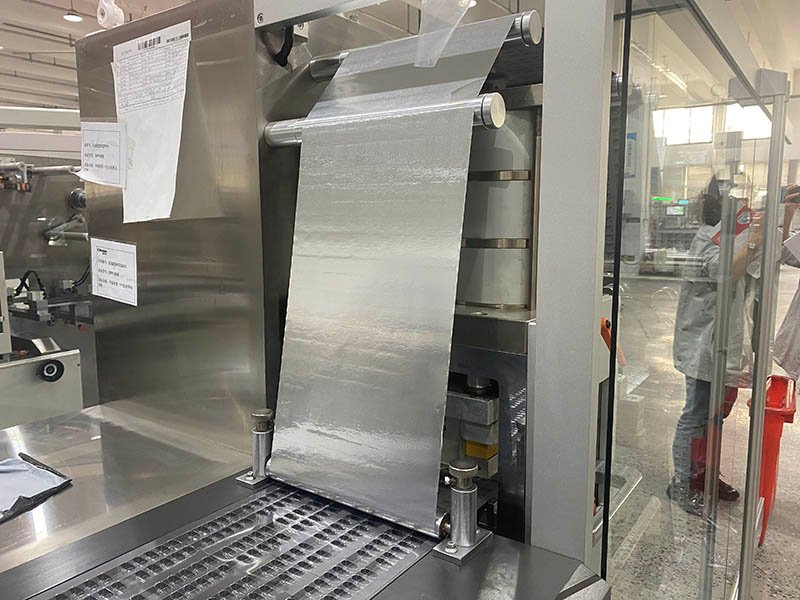
- Heating, forming and web-control functions, including defined alarms and loss-of-control conditions.
- Product feeding, indexing and transfer under approved challenge conditions.
- Sealing controls and the operating range connected to the approved material pair and test method.
- Coding, inspection, reject tracking, reject confirmation and reconciliation where included.
- Guards, interlocks, emergency stops, restart logic and recovery after defined interruptions.
- Recipe, user-access, data, backup and audit-trail functions when they form part of regulated intended use.
“Worst case” should be a documented, risk-based challenge inside the intended operating space. It should not be an arbitrary extreme that damages tooling or produces evidence unrelated to normal use.
Performance Qualification
PQ demonstrates performance in the approved process
Performance Qualification evaluates the connected equipment under an approved method with defined product, materials, tooling, operators, sampling and acceptance criteria. PQ follows the successful completion of prerequisite qualification work. The supplier can support execution and provide machine expertise, but the manufacturer approves the protocol, assesses deviations and decides whether the evidence supports release.
Do not treat “three consecutive batches” as a universal equipment-qualification rule. The number and duration of qualification runs depend on the validation strategy, process knowledge, risk, product and material range, applicable commitments and approved protocol. FDA’s process-validation guidance describes validation as a lifecycle activity, and EU GMP Annex 15 expects qualification and validation to be planned and controlled across the lifecycle.
A useful PQ protocol names the decision before the run
Identify the process configuration, approved materials, challenge product, sampling locations, sample frequency, test method, acceptance criteria, deviation path and final approval responsibility. Total output alone does not prove acceptable output.

Machine-specific evidence
Connect qualification evidence to each blister function
The qualification plan should show how each critical function will be tested and what evidence will be retained. The examples below are planning prompts, not universal acceptance criteria.
| Function | Qualification question | Possible retained evidence |
|---|---|---|
| Web handling | Can the approved forming and lidding materials feed, track and splice under defined conditions? | Material identification, reel setup, tension settings and observations |
| Forming | Does the process form the approved cavity geometry repeatably across the web? | Approved samples, settings, cavity measurements and defect records |
| Feeding | Are cavities filled as intended without unacceptable product damage or carryover? | Challenge set, sample results, rejects and reconciliation |
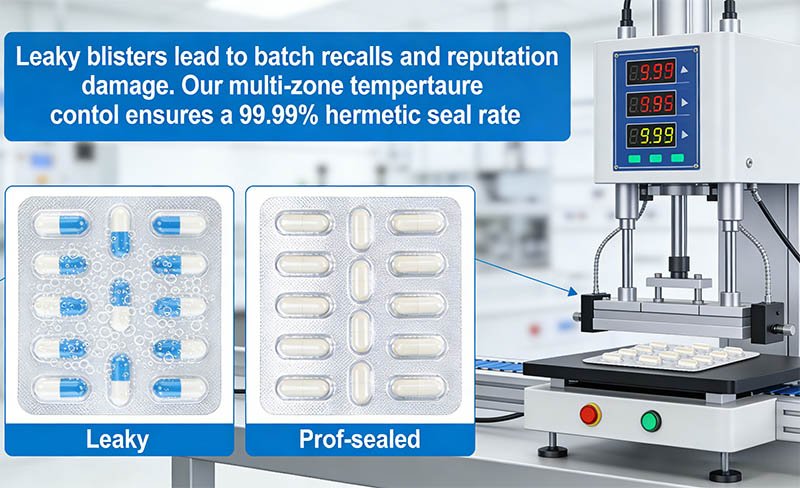
| Sealing | Is there a justified operating window for the approved material pair? | Recorded settings and agreed seal or integrity test results |
| Inspection and rejection | Are defined defects detected, tracked, rejected and segregated? | Challenge results, reject confirmation and disposition record |
| Cutting and transfer | Does the finished card match its approved drawing and transfer reliably? | Printed samples, cut position, dimensions and interface observations |
Requirement traceability
Build one evidence chain from requirement to approval
A traceability matrix should expose gaps. It links an approved requirement to risk, the design response, the test stage, the executed result and final status. It should reveal a requirement with no design response, a test with no approved requirement, or a deviation with no documented resolution.
| URS ID | Risk | Design evidence | Test stage | Protocol / result | Status |
|---|---|---|---|---|---|
| URS-### | Product quality, patient, data or business risk | Drawing, specification, component or software function | FAT, SAT, IQ, OQ or PQ | Approved document and executed test reference | Open, accepted or deviation |
Project ownership
Separate supplier deliverables from manufacturer responsibility
| Supplier can provide | Manufacturer must control | Define in the order |
|---|---|---|
| Machine-specific drawings, manuals, component data and test templates | Approved URS, validation plan, risk assessment and site procedures | Document list, format, language, revision and approval status |
| Design response, FAT execution, installation and technical test support | Protocol approval, quality oversight, deviation assessment and release decision | Witnessing, raw data, deviation workflow and acceptance authority |
| Training and technical evidence for the supplied equipment | Product-specific criteria, process validation and lifecycle control | Site support, training evidence, exclusions and handover boundary |
Need a machine-specific document boundary?
Send the URS, product and pack definition, inspection scope, target markets and site utilities. HIJ can identify the proposed machine documents, FAT evidence and open buyer responsibilities for technical review.
Discuss the Qualification ScopeElectronic records
Apply computerised-system and Part 11 controls to actual intended use
A PLC or HMI does not automatically make every function subject to 21 CFR Part 11. First identify whether the system creates, modifies, maintains, archives, retrieves or transmits records relied upon for regulated activity, or uses electronic signatures. Then define the authoritative record, data flows, access, review, backup, retention and change-control requirements.
For US drug manufacturing, 21 CFR 211.68 requires appropriate controls over computer or related systems and written records of routine calibration checks and inspections for automatic, mechanical or electronic equipment. A dedicated Part 11 blister-machine checklist can help separate machine features from site procedures and broader system controls.

Lifecycle control
Use change control to decide when requalification is required
Qualification does not end with the approved report. Changes to tooling, forming or sealing systems, critical instruments, inspection logic, reject tracking, software configuration, utilities, products, materials or operating ranges should enter the site change-control process. The documented impact assessment determines which requirements, risks, drawings, protocols and tests need revision or re-execution.
Routine calibration, inspection and maintenance should follow written programs. For US drug manufacturing, 21 CFR 211.67 separately addresses equipment cleaning and maintenance procedures and records. Trend review, deviations, repeated alarms and maintenance history may also trigger reassessment when they challenge the qualified state.
Procurement checklist
Name qualification deliverables before awarding the machine
- Approved URS response with assumptions, exclusions and open technical questions.
- Preliminary configuration, drawing list, component or option list and software boundary.
- Document index with format, language, revision, delivery stage and approval status.
- Responsibility matrix for supplier, installer, user, engineering and quality.
- FAT protocol scope, prerequisites, customer-supplied materials, acceptance criteria and raw-data format.
- Installation, commissioning, training, SAT and qualification-support scope.
- Deviation, open-item, configuration-baseline and handover process.
- Defined product trials, tooling revisions and customer approvals required before release.
Compare the available blister packing machine configurations only after the product, pack, accepted-output target and validation boundary are defined.
Avoidable gaps
Six qualification mistakes that weaken the evidence
Generic acceptance criteria
“Machine runs normally” does not define a measurable result, sample or decision.
Uncontrolled test materials
Results lose context when material grade, batch, product, tooling or configuration is not recorded.
FAT treated as automatic OQ
Reuse requires documented justification and assessment of transport, installation and site effects.
Supplier owns the release decision
Supplier support cannot replace the manufacturer’s approved protocol and quality review.
Part 11 assumed from an HMI
Applicability follows actual electronic records, signatures and intended regulated use.
No requalification trigger
The project closes without defining how later changes or adverse trends will be assessed.
Buyer questions
Frequently asked questions
Who approves DQ, IQ, OQ and PQ for a blister packaging machine?
The pharmaceutical manufacturer assigns approval roles through its quality system. The supplier can prepare machine-specific evidence and support testing, but the manufacturer controls approved requirements, protocol decisions, deviations and release.
Should DQ be completed before the purchase order?
Critical design requirements and major gaps should be reviewed before the design and commercial scope are frozen. The project procedure may continue formal DQ activities later, but unresolved URS assumptions at purchase create avoidable change and test risk.
Can FAT replace OQ?
Not automatically. FAT evidence may be leveraged when the validation plan justifies it and transport or installation does not affect the verified function. Site conditions, utilities, interfaces and installation-dependent functions still require appropriate verification.
What belongs in blister machine IQ?
IQ normally establishes equipment identity, installed configuration, layout, utilities, materials, critical instruments, calibration status, safety features, drawings and controlled documentation. The approved protocol should reflect the actual site installation.
Is PQ always three consecutive batches?
No universal equipment-qualification rule fixes PQ at three batches. Run count and duration should follow the approved process-validation strategy, product and process knowledge, risk, applicable commitments and site procedures.
When is blister machine requalification needed?
A change or adverse trend should enter change control and impact assessment. Tooling, material, critical component, inspection logic, software, utility, product or operating-range changes may require document updates, targeted testing or broader requalification.
When does 21 CFR Part 11 apply to a blister machine?
Applicability depends on intended use and whether the system handles regulated electronic records or electronic signatures. A PLC or HMI alone does not establish applicability; the manufacturer must define records, data flows and the authoritative system.
What qualification documents should a blister machine supplier provide?
The contracted package may include the URS response, drawings, specifications, component and instrument information, manuals, certificates in scope, FAT evidence, training records and IQ/OQ templates. Availability, format, language, revision and support must be stated in the order.
Primary sources
Official qualification and equipment-control references
- European Commission, EudraLex Volume 4, Annex 15: Qualification and Validation
- FDA, Process Validation: General Principles and Practices
- 21 CFR 211.68: Automatic, mechanical and electronic equipment
- 21 CFR 211.67: Equipment cleaning and maintenance
This article is an engineering and procurement guide, not legal or regulatory advice. The manufacturer’s quality unit should determine applicable requirements and approve the qualification strategy.
Continue the review
Related blister qualification guides
Define the evidence package before machine configuration
Send the approved product and pack definition, URS, inspection scope, target markets and site utilities. HIJ can respond with a proposed machine configuration, document boundary and FAT evidence plan for technical review.
Request a Qualification-Scope Review