- The Direct Answer: A rigorous factory acceptance test for a blister machine is your last — and often only — contractual line of defense before the equipment leaves the factory floor. Skipping even one critical checkpoint can cost you months of production downtime and six-figure re-validation expenses once the machine is inside your cleanroom.
- The Field Experience: “In my 20 years visiting over 100 pharmaceutical plants globally — from São Paulo industrial parks to Jakarta sterile suites and Cairo API facilities — I’ve seen buyers sign off on machines that looked perfect on paper. One client in Indonesia accepted a machine whose PLC communication protocol used a proprietary Modbus variant completely incompatible with their existing Rockwell SCADA system. Nobody tested it at FAT because the vendor’s standard checklist didn’t include SCADA integration. The resulting re-engineering and re-qualification took 14 weeks and cost over USD 80,000 — more than the original machine price reduction that made the vendor ‘look competitive.’ Another buyer in Brazil accepted a sealing station that passed temperature uniformity tests at 22°C and 45% RH in the factory — then catastrophically failed seal integrity at their facility in the rainy season at 80% RH. These are not edge cases. They are the industry norm when FAT protocols are vendor-generated, generic templates.”
- The Hidden Trap: The most dangerous FAT document is not a missing document — it’s the one that exists, looks comprehensive, but deliberately omits torque testing on the forming film under worst-case cycle speeds, and contains no clause for seal integrity verification under humidity variance. Many vendors hand you a 40-item FAT protocol that covers cosmetic inspection and basic speed ramp-up, but never once mentions challenging the reject system with actual defective blisters at maximum line rate. That omission becomes your deviation report — and your regulatory problem — the moment the machine clears customs.
What Is a Factory Acceptance Test (FAT) for a Blister Machine — and Why the Standard Definition Is Dangerously Incomplete
In formal pharmaceutical engineering terms, a Factory Acceptance Test (FAT) is a documented verification exercise conducted at the manufacturer’s facility to confirm that a piece of equipment has been built to the agreed User Requirement Specification (URS) and is fit for its intended purpose prior to shipment. Under ISPE GAMP 5 guidelines, FAT activities contribute directly to Design Qualification (DQ) and Installation Qualification (IQ) evidence packages, allowing buyers to leverage FAT data during their site-based validation work — potentially compressing the overall qualification timeline by 30–40%.
However, this textbook definition hides an operational reality: most FAT protocols in circulation today are designed around what’s easy to test on a vendor’s factory floor, not what’s critical for your specific cGMP or WHO GMP environment. A rigorous FAT for a pharmaceutical blister packing machine must go far beyond simple speed verification and cosmetic checks. It must systematically challenge the machine across all three validation dimensions: Installation, Operational, and Performance — even when only IQ and OQ are formally executed at FAT, and PQ is deferred to SAT.
The commercial stakes are asymmetric. A thorough FAT adds perhaps one to two days to your pre-shipment timeline. A failed SAT — triggered by a defect that could have been caught at FAT — adds months of delays, generates regulatory deviation paperwork, and in markets where equipment changes require Ministry of Health re-notification (as is the case in Brazil, Egypt, and the Philippines), can trigger a full re-submission cycle. The cost-benefit calculation is not a close call.
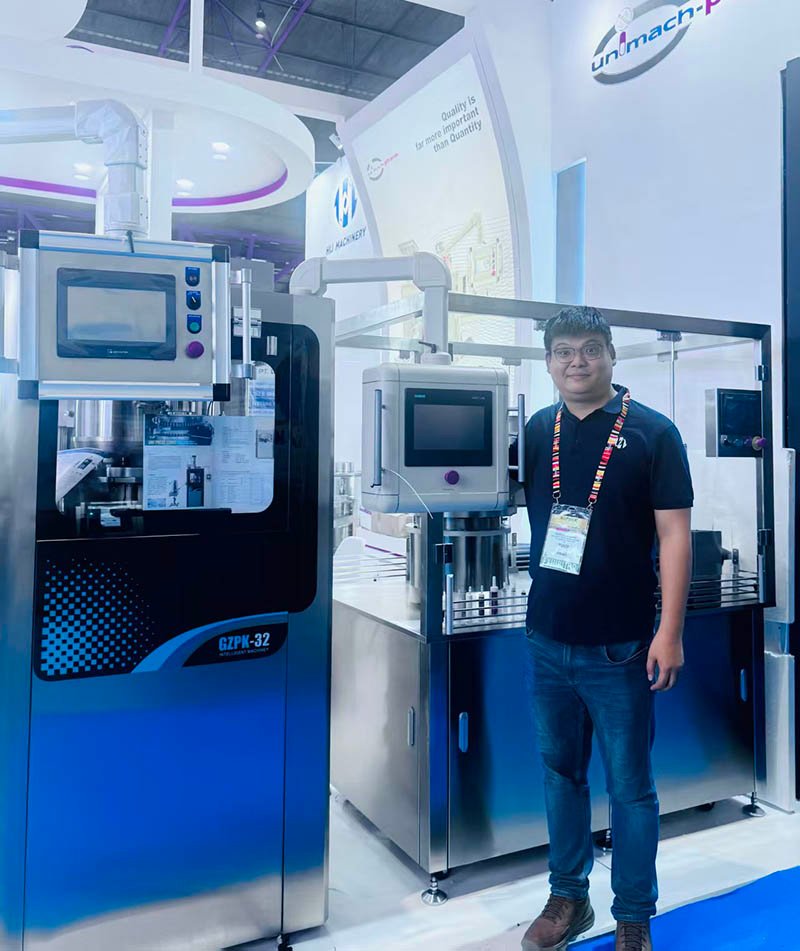
 HIJ DPP-250 Thermoforming Pharma Blister Packaging Machine — one of the platforms for which HIJ co-develops customer-specific FAT protocols with QA teams prior to shipment.
It’s also critical to understand where FAT sits within the broader validation lifecycle. FAT precedes Site Acceptance Testing (SAT), which in turn precedes IQ/OQ/PQ at the installation site. A well-structured FAT allows FAT evidence to be “bridged” into IQ documentation, meaning your validation team doesn’t re-verify physical installation parameters that were already confirmed at the factory under controlled conditions. This bridging mechanism — explicitly permitted under EU GMP Annex 15 and referenced in FDA Process Validation guidance — is only possible when the FAT protocol is structured to generate GMP-quality documented evidence, not just a vendor sign-off sheet.
The 15-Point FAT Checklist for a Pharma Blister Machine: A Technical Deep-Dive
The following 15 checkpoints are derived from real-world URS requirements compiled across clients in regulated markets including the EU, the US (FDA 21 CFR Part 211), Brazil (ANVISA), and Southeast Asia (ASEAN GMP). Each checkpoint includes the specific test method, acceptance criterion category, and the most common failure mode observed in the field. This is the framework that HIJ’s engineering team uses when co-developing FAT protocols with buyer QA departments for our DPP-250 and DPP-260 platforms.
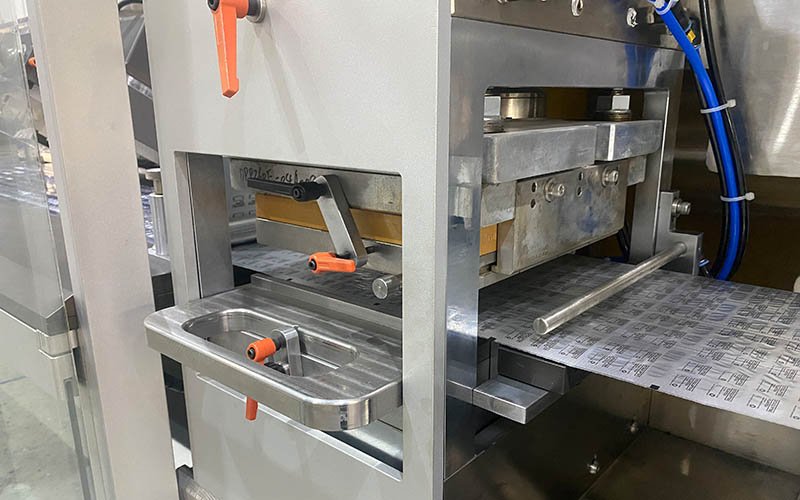 Checkpoint 3 in action: sealing station temperature mapping and peel-force seal integrity verification — the most common source of post-shipment field failures when skipped at FAT.
Multi-Vendor Patchwork vs. Turnkey FAT: Why Fragmented Supply Chains Fail Qualification
One of the most damaging procurement decisions a pharmaceutical packaging manager can make is to assemble a blister line from multiple independent vendors — one for the blister machine, another for the checkweigher, a third for the vision inspection system, a fourth for the cartoner — and then expect a coherent FAT outcome. I have witnessed this scenario fail in every region I’ve operated in, for the same structural reasons every time.
- The Common Pitfall — Interface Ownership Vacuum: When you have four vendors, you have four FAT reports, four sets of interface documentation, and four people pointing at each other when the vision inspection system triggers a false reject that causes a stoppage in the cartoner. Nobody owns the integrated system behavior. The machine-to-machine communication protocol — typically OPC-UA or a custom Ethernet/IP profile — was never formally validated as an integrated system at any single point. Your QA team must now perform a de-facto system integration test during SAT at your facility, inside your cleanroom, burning qualification budget and delaying your validation timeline.
- The Common Pitfall — Calibration Reference Conflict: Each vendor calibrates their own instruments to their own internal standards. The forming station thermocouples on the blister machine are traceable to NIST via the blister machine vendor’s calibration provider. The temperature alarm setpoints in the SCADA are configured by the SCADA integrator against a different reference instrument. The two systems show a 4°C offset that nobody discovers until a batch is rejected during OQ because the SCADA alarm triggered before the machine’s HMI showed an alarm condition.
- The HIJ Turnkey Standard: For clients who commission a complete blister-to-carton line from HIJ, the FAT is conducted as a single integrated event. The DPP-250 blister machine, the downstream vision inspection unit, the reject conveyor, and the blister cartoning machine are all run as a single line at our facility. Every interface is verified live. Every OEE data tag from every machine is confirmed in the central HMI. The single integrated FAT report covers the entire line — one document package, one set of calibration references, one accountability chain. This is the HIJ Turnkey Solution model, and it is the reason our clients consistently achieve compressed qualification timelines of 40–60% versus the industry average for fragmented-procurement projects.
Hidden Trap: The “We’ll Handle Integration at SAT” Promise Any vendor who tells you that system integration issues “will be resolved at SAT” is asking you to perform complex, potentially non-conformance-generating engineering work inside your qualified cleanroom, with your own staff time and your own validation budget. Reject this approach at the contract stage. Require in writing that all multi-machine interfaces are validated at FAT, with passed integration test evidence included in the FAT report. This is a standard HIJ contractual commitment on all turnkey projects.
Alu-Alu Cold-Form FAT: The Additional Checkpoints That Thermoforming Lines Don’t Require
Cold-form aluminum-aluminum (Alu-Alu) blister machines present a distinct set of FAT challenges that go beyond the standard 15-point framework applicable to thermoforming lines. Buyers specifying Alu-Alu blister packing machines for moisture-sensitive APIs — including hygroscopic salts, effervescent formulations, and biologic-derived oral solid dosage forms — must add the following to their FAT protocol:
Cold-Form Depth Verification: Unlike thermoforming, cold-form pocket depth is determined entirely by mechanical die geometry and the forming force applied. At FAT, measure formed pocket depth across the full blister width using a calibrated depth gauge or laser profilometer. The acceptance criterion is typically ±0.1mm from the nominal depth specified in the tooling drawing. Any deviation indicates die wear, incorrect die installation, or insufficient forming force — all of which will cause product fragmentation or pocket deformation in production.
Lidding Foil Sealing Integrity Under Accelerated Conditions: Alu-Alu constructions achieve their moisture vapor transmission rate (MVTR) barrier performance only when the sealing integrity at the lid-to-formed-foil interface is absolute. At FAT, seal integrity must be verified not only by peel-force testing but by bubble emission testing per ASTM F2096 on a statistically significant sample from the maximum-speed production run. Any microleak in the seal is unacceptable and must trigger investigation of sealing station temperature uniformity, pressure uniformity, and dwell time.
Forming Foil Pinhole Detection: Cold-forming aluminum foil at deep draw ratios generates mechanical stress that can produce pinholes invisible to the naked eye. At FAT, verify that the machine’s integrated pinhole detection system (typically using a backlight and camera array) is functioning and calibrated. Challenge the system with a foil sample containing known artificial pinholes of 0.1mm diameter to verify detection sensitivity. This test is explicitly required for Alu-Alu lines supplying any market governed by ICH Q1A stability testing guidelines.
 HIJ DPH-300 Cold-Forming Alu-Alu Blister Packaging Machine — cold-form FAT protocols require pinhole detection validation and deep-draw depth verification in addition to the standard 15-point framework.
Structuring the FAT Event: The Three-Phase Execution Model
Regardless of machine complexity, a well-executed FAT for a pharmaceutical blister machine should follow a three-phase structure. This sequence is designed to identify installation-level issues before attempting functional testing, and to ensure that performance data collected in Phase 3 is meaningful because the machine was correctly configured in Phases 1 and 2.
-
1Phase 1 — Static Verification (Day 1, Half Day)
Documentation review (URS vs. as-built), physical installation inspection (leveling, utility connections, material of construction verification), safety system visual inspection, calibration certificate review, software version confirmation and change control log review. No machine running at this stage. Any critical finding at Phase 1 stops FAT and triggers a Corrective Action Request (CAR) to the vendor. This phase generates the IQ evidence package.
-
2Phase 2 — Functional Verification (Day 1 Afternoon + Day 2 Morning)
No-load functional testing of all mechanical systems, all safety interlocks (per Checkpoint 13), HMI navigation and access control verification, alarm system testing, servo synchronization verification (per Checkpoint 4), and preliminary temperature mapping without production material. This phase generates the OQ evidence package. Critical findings at Phase 2 are categorized as Major deviations and must be resolved before Phase 3 commences.
-
3Phase 3 — Performance Verification (Day 2 Afternoon + Day 3)
Production runs with actual product materials (or approved placebo/simulant) covering all URS-specified formats at minimum, nominal, and maximum speeds. Reject system challenge testing (per Checkpoint 6), OEE data collection (per Checkpoint 14), seal integrity testing under worst-case conditions (per Checkpoint 3), batch coding verification (per Checkpoint 10), and SCADA integration testing (per Checkpoint 8). This phase generates the PQ baseline evidence. FAT acceptance report is signed only after all Phase 3 checkpoints achieve their acceptance criteria.
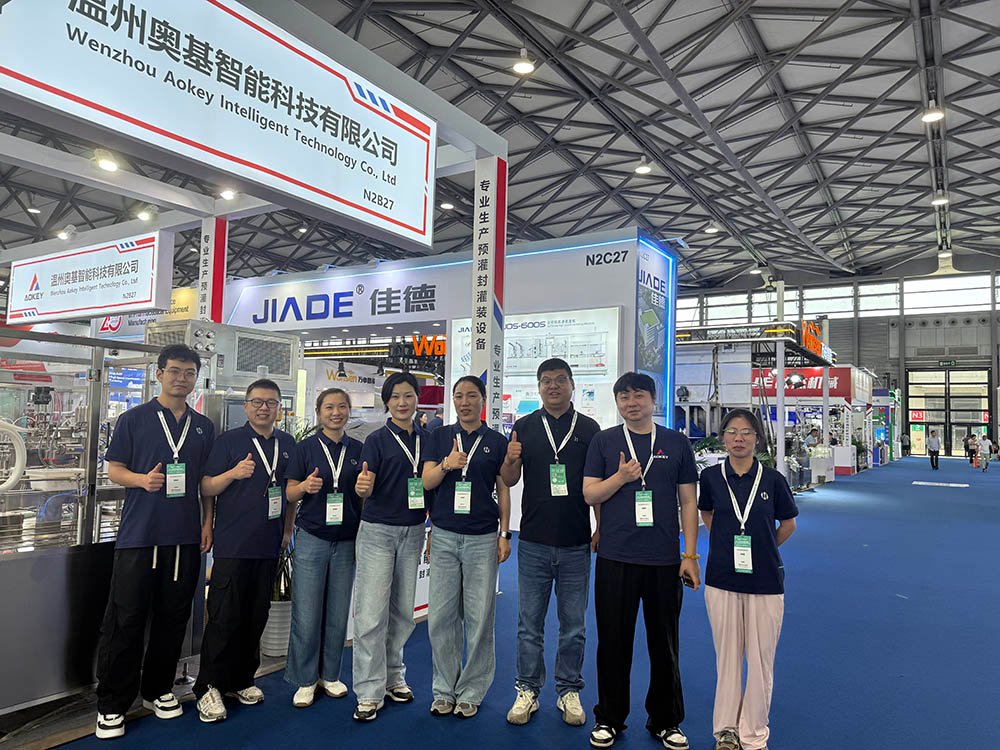 HIJ’s engineering team conducting FAT alongside client QA representatives — every HIJ FAT protocol is co-developed with the buyer’s quality department, not handed over as a generic template. Learn about HIJ’s after-sales service & support.
Generic Vendor FAT Protocol vs. HIJ URS-Driven FAT: Side-by-Side Comparison
| Checkpoint | Generic Vendor Protocol | HIJ URS-Driven Protocol |
|---|---|---|
| URS Cross-Audit | Often Absent — vendor confirms machine matches their own spec sheet | Line-by-Line — formal deviation log against buyer-signed URS |
| Sealing Integrity | Visual Only — operator eyeballs seal appearance | ASTM F88 Peel Force — quantitative, at min/nominal/max speed, worst-case RH |
| Reject System Challenge | Absent — not included in standard checklist | Full Challenge — known-defective blisters at max speed, ≥99.97% criterion |
| 21 CFR Part 11 / Audit Trail | Checkbox Only — “system has audit trail” with no functional test | Live Test — parameter change, user authentication, export, tamper attempt |
| SCADA Integration | Deferred to SAT — “test at your facility” | Live at FAT — all OEE tags verified with protocol simulator |
| Film Tension / Torque | Absent — deliberately omitted from most vendor templates | Full Roll Range — tension meter test from new roll to depleted roll |
| OEE Baseline Run | Speed Demo Only — 15-minute run at max speed, no stoppage analysis | 2-Hour Minimum — OEE components calculated, all stoppages root-caused |
| Documentation Package | Sparse — CE certificate + user manual, no IQ/OQ templates | Complete — IQ/OQ templates, calibration certs, 316L certs, SOP drafts |
Frequently Asked Questions: Factory Acceptance Test for Blister Machines
A properly structured, 15-point FAT for a single pharma blister machine requires a minimum of 2.5 to 3 working days for a standalone unit, and 4 to 5 days for an integrated blister-to-carton line. Attendance should include: from the buyer side — a QA representative (essential for documentation sign-off), a process engineer familiar with the product formats being qualified, and ideally an IT or automation engineer if SCADA integration is in scope. From the vendor side, the assigned project engineer plus a controls engineer if PLC/data integrity testing is on the protocol. Attempting to compress a proper FAT into a single day by omitting performance run phases is one of the most expensive shortcuts a buyer can take.
Yes — this is one of the most valuable but most underutilized aspects of a well-executed FAT. Under ISPE GAMP 5 and EU GMP Annex 15, FAT evidence can be formally “leveraged” or “bridged” into your site-based IQ/OQ qualification packages, provided three conditions are met: (1) the FAT was conducted against a formally approved FAT protocol — not an ad-hoc checklist; (2) all instruments used at FAT were calibrated and certificates are traceable to national standards; and (3) the equipment has not been modified since FAT and has been transported without damage (confirmed by a transport verification procedure at SAT). When these conditions are satisfied, the IQ scope at your facility can typically be reduced to verification of utility connections, physical installation, and a transport damage inspection — potentially saving 5 to 8 weeks of on-site qualification execution time.
Absolutely not. A critical finding at FAT — defined as any deviation from URS acceptance criteria that directly impacts product quality, patient safety, regulatory compliance, or data integrity — must never be accepted “with a note.” The correct procedure is: (1) issue a formal Corrective Action Request (CAR) to the vendor with a defined resolution deadline; (2) halt FAT Phase 3 (performance runs) if the critical finding affects functional verification; (3) reschedule the affected FAT phase after the vendor documents corrective action and you have verified the fix. Some buyers accept critical findings “as observations to be resolved at SAT” under commercial pressure — this is the single greatest source of failed SATs and regulatory deviations I have seen in 20 years. A signed FAT report is a quality record. It must reflect the actual state of the machine, not commercial optimism.
Yes, significantly. The standard 15-point framework applies to both platforms, but Alu-Alu cold-form machines require three additional checkpoints not relevant to thermoforming lines: (a) formed pocket depth measurement with calibrated profilometer across full blister width — cold-form depth is mechanically determined, unlike thermoforming where depth is temperature-controlled; (b) lidding seal integrity verification by bubble emission testing per ASTM F2096, because the barrier performance of the Alu-Alu construction depends entirely on hermetic sealing at the lid interface; and (c) pinhole detection system calibration challenge using foil samples with artificial 0.1mm defects. These three checkpoints are non-negotiable for any Alu-Alu line supplying regulated markets where moisture-sensitive APIs are packaged. HIJ’s Alu-Alu Blister Packing Machine FAT protocol includes all three as standard.
The spare parts documentation delivered at FAT should include: (1) a classified spare parts list distinguishing between “Recommended Initial Spare Parts” (RISP — components with MTBF less than 12 months or subject to wear), “Critical Spares” (components whose failure causes immediate line stoppage with lead time exceeding 2 weeks), and “Capital Spares” (long-lead items such as sealing dies and forming molds); (2) OEM part numbers and approved supplier information for every item — not generic descriptions; (3) for any branded component (Siemens PLC module, Festo cylinder, SMC valve), the exact model number to allow direct procurement without vendor intermediation. Failure to deliver a complete, OEM-referenced spare parts list at FAT is a common vendor tactic to ensure you remain dependent on their after-sales service for consumable replenishment. Reject any spare parts list that uses internal part numbers only.
Conclusion: The FAT Is Not a Ceremony — It Is Your Engineering Insurance Policy
The factory acceptance test for a blister machine is not a formality, a box-ticking exercise, or a vendor hospitality event disguised as a technical review. It is the single most cost-effective quality gate in the entire equipment procurement lifecycle. The investment of two to three days of rigorous, URS-driven testing at the factory floor — challenging the machine across all 15 critical checkpoints outlined in this guide — directly protects your validation timeline, your regulatory compliance position, your OEE performance baseline, and ultimately your commercial launch schedule.
The machines that fail SAT, generate deviations during regulatory inspections, or produce silent quality failures in commercial production are almost always machines whose FAT was conducted against a generic vendor template that served the vendor’s interests, not the buyer’s. The 15 checkpoints in this guide are not theoretical. They are compiled from 20 years of witnessed failures — in cleanrooms in São Paulo, Jakarta, Cairo, and across South Asia — and from the systematic engineering work required to prevent those failures from repeating.
At HIJ Machinery, every FAT protocol for our pharmaceutical blister packing machines is co-developed with the buyer’s QA team against their signed URS. We conduct the FAT as a three-phase event, generate IQ/OQ-bridgeable documentation, include all 15 critical checkpoints as standard, and deliver a complete documentation package — including pre-populated IQ/OQ templates, calibration certificates, material certifications, and SOP drafts — as part of the base project scope. No surprises at SAT. No hidden traps at customs. No six-figure re-validation bills after delivery. That is what project certainty means at HIJ.
At HIJ Machinery, I don’t just sell you a machine — I deliver project certainty. And it starts with the FAT protocol we write together before the machine is even assembled.
Ready to Build Your Custom FAT Protocol?
Send us your URS or project specification. Our engineering team will co-develop a 15-point FAT protocol tailored to your regulatory environment, product formats, and integration requirements — and provide a documented Turnkey Quote within 48 hours, with FAT/SAT protocols included.