You have invested six figures in a new blister packaging line. Your U.S. registration timeline is locked. Your commercial launch date is set. Then your FDA inspector walks in, opens the audit trail on your HMI, and asks a single question: “Show me the complete, unmodified electronic batch record for lot 2024-XY-003, including every parameter change, who made it, and the exact timestamp.”
If your machine cannot answer that question instantly — with cryptographically protected, non-repudiable data — your line is not 21 CFR Part 11 compliant. It doesn’t matter what the vendor’s brochure says. What matters is what the machine actually does on the floor, under audit pressure, at 2 AM when a deviation report is raised. This checklist was written to close that gap.
Sourcing a blister machine supplier in China is no longer a simple procurement exercise. It is a strategic risk-management decision that will determine your OEE ceiling, your regulatory posture, and your qualification timeline for the next decade. The lowest quote in your inbox is not the cheapest option — it is almost certainly the most expensive one, once you account for revalidation costs, line downtime, and the professional fees of a compliance consultant hired to reverse-engineer documentation that was never planned to exist.

🔥 Forester’s Insight: A 20-Year Engineer’s Perspective
Forester Xiang — Founder & Chief Engineer, HIJ Machinery
- The Direct Answer: Price is the easiest metric to compare — and the least reliable one. The real differentiator between Chinese blister packaging machine manufacturers is whether they can deliver validated, audit-ready performance that survives your first FDA or ANVISA inspection.
- The Field Experience: In my 20 years of commissioning blister lines across Southeast Asia and Latin America, I’ve watched buyers celebrate a “great deal” — only to discover the machine shipped without IQ/OQ documentation, the PLC protocol was proprietary and impossible to integrate with their existing MES, and the FAT was a staged demo, not a stress test. I saw a mid-sized Colombian pharma group lose 11 weeks of production ramp-up because their “budget” supplier had hard-coded sealing temperature parameters directly in ladder logic — not accessible from the HMI — meaning every batch record deviation required a PLC engineer on-site to patch firmware. The $40,000 price gap they saved disappeared in the first month of commissioning, and then some.
- The Hidden Trap: Most sales reps will tell you their machine is “GMP compliant.” Almost none will proactively disclose that their PLC architecture uses a proprietary communication stack that blocks OPC-UA integration with your MES — or that their FAT protocol is a 30-minute demonstration, not a 4-hour witnessed stress test at rated speed with intentional fault injection. When issuing your URS, demand traceable cGMP documentation, open PLC architecture, and a witnessed SAT clause — before negotiating price. At HIJ, our philosophy is simple: every blister line is engineered as a turnkey-ready module, so your qualification timeline is protected from day one, not rescued after delivery.

What “Compliance-Ready” Actually Means in a Blister Machine: A Technical Deconstruction
The term “GMP compliant” appears in virtually every Chinese blister machine supplier’s catalogue. In practice, it is one of the most abused phrases in pharmaceutical equipment marketing. Genuine compliance-readiness is not a checkbox — it is an engineering posture embedded across five distinct subsystems, each of which must be individually verified during your Factory Acceptance Test (FAT) protocol.
1. Control Architecture & 21 CFR Part 11 Readiness. A compliant PLC architecture requires user-level access control with unique operator IDs, time-stamped audit trail generation for every parameter change (sealing temperature, dwell time, forming pressure, cut-off position), and electronic batch record export in a non-proprietary format (CSV or XML) that your QA system can ingest without a custom middleware layer. The Siemens S7-1500 series and Allen-Bradley ControlLogix platforms both support this natively — but only if the OEM programs them correctly. Request a live audit trail demo as part of your FAT checklist. If the vendor hesitates, the architecture is almost certainly non-compliant.
2. Servo-Driven Forming & Sealing Stations. Older cam-and-crank mechanisms produce inconsistent stroke profiles that translate directly into sealing integrity variance — a critical defect mode in moisture-sensitive solid-dosage blister packs. A servo-driven forming station with closed-loop position feedback allows you to define and reproduce exact forming depth profiles across mold changeovers, with tolerances held to ±0.05 mm. This is not a luxury specification; for Alu-Alu cold-forming lines handling hygroscopic APIs, it is the minimum engineering standard. Verify that servo drive brands (Yaskawa, Bosch Rexroth, or equivalent Tier-1) are specified in the BOM, not substituted post-FAT.
3. Sealing Station Thermal Management. Sealing integrity is governed by three interdependent parameters: temperature (typically 160°C–200°C for PVC/Alu lidding), pressure (expressed in kN/m²), and dwell time (milliseconds per cycle). A compliant machine must log all three continuously, alarm on deviation beyond ±2°C, and provide SPC-ready data output. Machines that use a single thermocouple for the entire sealing platen — rather than zone-mapped PID control — cannot demonstrate process capability (Cpk ≥ 1.33) across the full sealing width, which will fail a USP <661> container integrity challenge.
4. Vision Inspection Integration. A pharmaceutical blister packing machine operating in a regulated market must be capable of integrating an inline vision system for empty-cavity detection, foil defect detection, and print verification (lot number, expiry date). This requires a hardware trigger interface (typically 24V digital I/O) and a reject actuator with logged confirmation. If the vision system is a bolt-on option without a defined integration protocol in the URS response, assume it is not validated and budget accordingly.
5. IQ/OQ/PQ Documentation Package. Installation Qualification, Operational Qualification, and Performance Qualification protocols must be drafted by the OEM as part of the project deliverable — not assembled by your validation team from scratch post-delivery. A reputable Chinese blister packing machine manufacturer will provide a pre-populated IQ/OQ template referencing actual machine serial numbers, component calibration certificates (temperature probes, pressure transducers, load cells), and a FAT/SAT execution record signed by both parties. This documentation is not optional for WHO GMP, EU GMP Annex 15, or FDA 21 CFR Part 211 submissions.
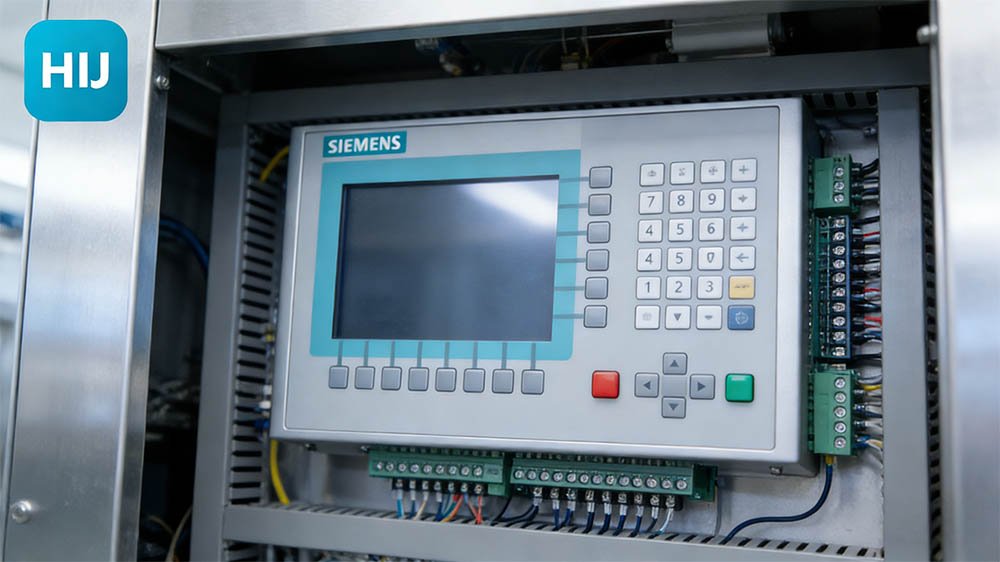
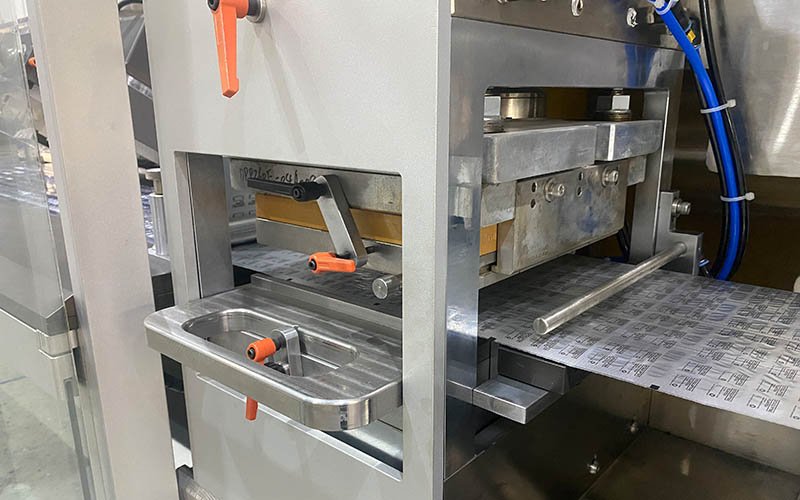
The Multi-Supplier Patchwork Nightmare vs. the HIJ Turnkey Reality
The dominant procurement strategy among first-time buyers of Chinese blister packaging equipment is to source each machine independently — blister packager from Supplier A, cartoner from Supplier B, case packer from Supplier C — and then attempt to integrate them on-site. This approach is understandable from a unit-price perspective. It is catastrophically expensive from a project-lifecycle perspective.
Here is what the multi-supplier model actually costs, beyond the purchase orders:
- Integration engineering time: Defining and negotiating communication protocols (Profinet, EtherNet/IP, OPC-UA) between machines from different vendors typically requires 80–160 hours of specialist engineering time, often at $150–$250/hour. Budget $12,000–$40,000 before a single production run begins.
- Mismatched throughput profiles: A blister machine rated at 450 blisters/minute paired with a cartoner rated at 120 cartons/minute creates a buffer accumulation problem that either requires a surge conveyor (capex) or forces the blister machine to run below rated speed (permanent OEE penalty).
- Validation boundary disputes: When a deviation occurs at the handoff between Machine A and Machine B, both vendors will claim the fault originates in the other’s equipment. Your validation team is caught in the middle, and your batch release is on hold.
- Spare parts fragmentation: Managing 3–5 separate spare parts inventories, 3–5 separate service escalation contacts, and 3–5 separate PLC environments multiplies your maintenance overhead and MTTR (Mean Time to Repair) by a factor that consistently destroys the original price savings.
The HIJ Turnkey Packaging Solutions model was built specifically to eliminate these failure modes. Every line we deliver — whether it is a standalone DPP-250 pharma blister packager or a complete integrated line from blister packing through blister cartoning to case packing — is engineered, programmed, and validated under a single URS, with a single IQ/OQ template, and a single point of accountability for FAT/SAT execution.

The PLC Protocol Problem: Why “Open Architecture” Is Non-Negotiable
One of the most technically consequential decisions you will make when selecting a blister machine supplier in China is the PLC architecture. This is also the specification most frequently glossed over by sales teams who do not understand its downstream implications.
A proprietary PLC stack — typically a Chinese domestic brand with no published SDK or communication library — creates three compounding problems. First, your MES (Manufacturing Execution System) cannot establish a real-time data connection without a custom middleware layer that adds both cost and a new failure mode. Second, if the machine supplier exits the market or changes their firmware, your PLC program is a black box that no independent engineer can maintain. Third, and most critically for regulated environments, your electronic batch record cannot be extracted in a format that your QA system can directly verify — violating the data integrity principles of ALCOA+ (Attributable, Legible, Contemporaneous, Original, Accurate).
HIJ specifies Siemens S7-1200/1500 or Allen-Bradley ControlLogix as standard on all pharmaceutical blister lines, with OPC-UA server enabled by default. This means your MES, SCADA, or historian platform can establish a direct, standards-compliant data connection on day one of commissioning — with no middleware, no custom drivers, and no dependency on HIJ for future software maintenance. All PLC source code is delivered to the customer as part of the project handover package, with no locked or encrypted rungs.
For buyers specifying the DPP-260 automatic blister packing machine or the Alu-Alu cold-forming blister line, this open architecture is already embedded in the base specification — not available as a premium upgrade.

The 8-Point Supplier Evaluation Checklist: What to Demand Before Signing a PO
Use the following framework when evaluating any Chinese blister packing machine manufacturer. Each criterion should be addressed in writing by the supplier, with supporting documentation available for review before contract signature.
| Evaluation Criterion | Minimum Acceptable Standard | Red Flag Response |
|---|---|---|
| IQ/OQ/PQ Documentation | Pre-populated templates referencing machine S/N and calibration certs | “We can provide templates after delivery” |
| PLC Brand & Architecture | Siemens, Allen-Bradley, or equivalent Tier-1 with OPC-UA enabled | Proprietary brand with no published SDK |
| FAT Protocol | Witnessed, scripted, minimum 4-hour stress test with fault injection | 30-minute demonstration run at reduced speed |
| Audit Trail | User-level access control, time-stamped parameter logs, CSV/XML export | No audit trail or manual logbook only |
| Sealing Station Control | Zone-mapped PID, continuous temp/pressure/dwell logging, SPC output | Single thermocouple, no data logging |
| Vision System Integration | Defined I/O trigger interface, reject confirmation log, validated protocol | “Vision is optional, not integrated” |
| Spare Parts Availability | 3-year spares kit quoted at PO, lead time ≤5 days for critical items | “Contact us when you need parts” |
| After-Sales Service | On-site commissioning included; remote diagnostics via VPN; named service engineer | Video call only; no on-site commitment |
Rapid Mold Changeover: The Hidden OEE Variable That Changes Your ROI Model
Mold changeover time is one of the most consequential — and least discussed — specifications in a blister machine evaluation. In a facility running 4–6 SKUs across a single blister line, the cumulative weekly changeover time determines whether your effective OEE is 72% or 58%. That 14-percentage-point gap represents hundreds of thousands of dollars in annual production value at typical pharmaceutical output rates.
A well-engineered tablet blister packing machine or capsule blister packing machine should achieve a complete forming-mold and sealing-mold changeover in under 25 minutes — tool-free where possible, with mold identification via RFID or barcode reader that auto-populates the correct recipe parameters in the HMI. This eliminates manual parameter entry errors (a primary source of batch record deviations in blister operations) and enables the PLC to perform an automated pre-run checklist before production resumes.
When evaluating HIJ’s blister packing machine range, request a live mold changeover demonstration during your FAT. We benchmark against 20-minute changeover on our DPP-250 and DPP-260 platforms, with RFID-linked recipe recall standard on pharma-configured machines. Mold and tooling kits are manufactured in-house at HIJ, ensuring dimensional consistency across the full service life of the machine — not sourced from third-party toolmakers with variable tolerance standards.
The pill blister packaging machine and liquid blister packaging machine platforms share the same mold mounting interface, which means a facility running both solid-dose and liquid-dose lines on HIJ equipment maintains a single mold inventory standard — a meaningful operational simplification that compounds in value over a 10-year asset life.
Pre-PO Documentation Checklist — Request These from Every Supplier
- Completed URS response with compliance notes per clause
- IQ/OQ template referencing the specific machine model and serial number
- FAT protocol draft with scripted test cases and acceptance criteria
- PLC architecture diagram showing brand, model, and communication stack
- Sealing station thermal management specification with PID zone map
- Component BOM with brand names for PLC, servo drives, HMI, sensors, and pneumatics
- CE Declaration of Conformity (for EU-bound equipment) or equivalent regulatory certificate
- Audit trail demonstration video showing user-level access control and parameter change logging
- Reference list with contact details for 3 customers in regulated markets (FDA, EMA, ANVISA, or TGA jurisdictions)
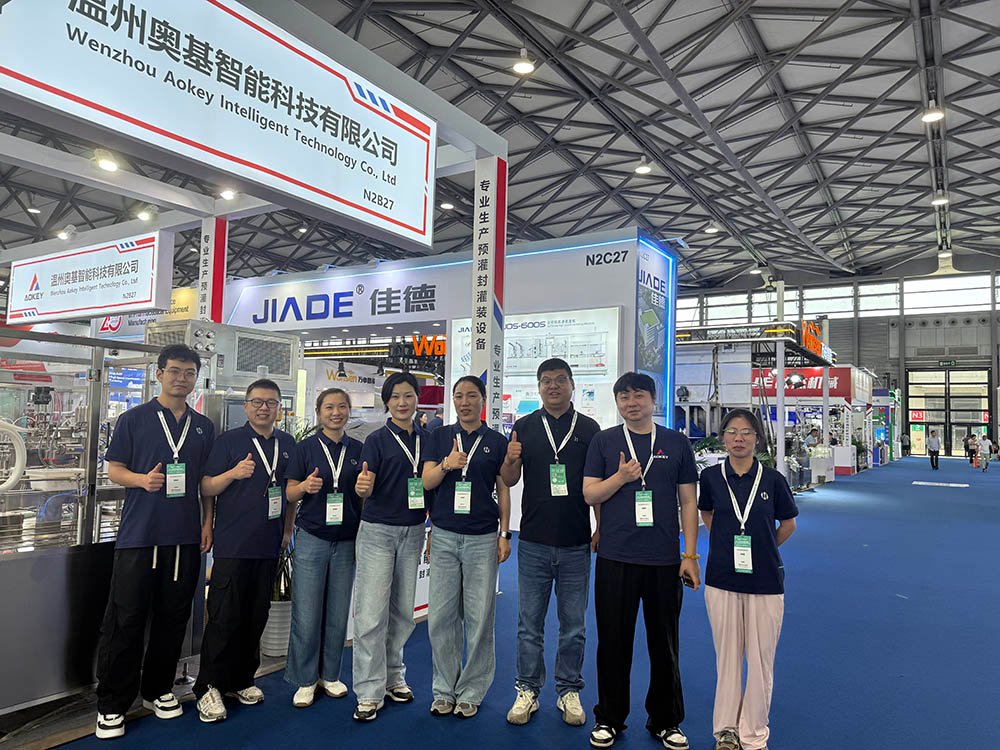
The Component Brand Hierarchy: Why Your BOM Is Your Compliance Argument
In any regulatory inspection or customer audit, your machine’s Bill of Materials is a primary evidence document. When an FDA investigator or ANVISA auditor asks “what PLC controls your sealing station parameters?”, the answer “a Siemens S7-1500 with a validated IQ/OQ package” carries fundamentally different weight than “our own brand controller.” This is not supplier bias — it is the practical reality of how global regulators assess equipment risk.
HIJ specifies exclusively Tier-1 component brands across all critical control and sensing functions. This is not a marketing claim — it is documented in every machine BOM and verifiable during FAT inspection. Our standard component ecosystem includes:




These brands are not substituted post-FAT. The BOM delivered at project handover matches the BOM signed at contract — with serial numbers traceable to calibration certificates. This is the baseline standard of a reliable Chinese blister machine supplier operating at European-quality standards. It is also the standard your validation team needs to submit a defensible IQ package to a regulatory agency.
Frequently Asked Questions
Q1: How do I verify that a Chinese blister packaging machine manufacturer is genuinely cGMP compliant — not just claiming it in their brochure?
Request three specific deliverables: (1) A pre-populated IQ/OQ template referencing the actual machine serial number and component calibration certificates. (2) A live FAT audit trail demonstration — not a screenshot, but a live session where you instruct the operator to change a sealing temperature parameter and verify that the change is logged with a user ID and timestamp. (3) A reference from a customer in an FDA, EMA, ANVISA, or TGA regulated market who has successfully completed a regulatory inspection with that supplier’s equipment. If any of these three cannot be provided before contract signature, the compliance claim is unverified.
Q2: What is the difference between thermoforming and cold-forming (Alu-Alu) blister lines, and which is right for my product?
Thermoforming blister lines use heat to form PVC, PVDC, or PET base film into cavities — producing a cost-effective, transparent pack suitable for the majority of solid-dose products (tablets, capsules, soft gels) with moderate moisture and light sensitivity requirements. Cold-forming (Alu-Alu) lines mechanically press aluminum-laminate film into cavities without heat, producing a fully opaque, near-hermetic barrier that is mandatory for highly hygroscopic APIs, photosensitive molecules, and products requiring WVTR (Water Vapor Transmission Rate) <0.005 g/m²/day. The correct selection depends on your API’s moisture and oxygen sensitivity data from your stability studies — a decision that should be driven by your formulation scientist, not your procurement team. HIJ offers both platforms: the DPP-250 thermoforming line and the DPH-300 Alu-Alu cold-forming line, with full URS support to help you specify correctly from the outset.
Q3: Can a Chinese blister machine supplier provide the documentation needed for an FDA 510(k) or drug facility registration in the United States?
Yes — but only if the equipment documentation package is built to that standard from the engineering phase, not assembled retrospectively. The documentation required includes: a Design History File (DHF) demonstrating GMP-compliant structural design, a complete IQ/OQ/PQ execution record with signed FAT/SAT protocols, 21 CFR Part 11 compliance evidence for the audit trail and electronic batch record system, and calibration certificates for all critical instruments (temperature probes, pressure transducers) traceable to NIST or equivalent national standards. HIJ prepares this documentation package as a standard project deliverable for all pharmaceutical line orders destined for regulated markets. Our service and support team can also provide remote assistance during your FDA pre-approval inspection if required.
Q4: What is a realistic lead time and commissioning timeline for a complete blister packaging line from a Chinese manufacturer?
For a standalone pharmaceutical blister packager (e.g., DPP-250 or DPP-260), standard lead time from PO to FAT-ready is 90–120 days, depending on customisation scope. A complete turnkey line including blister packager, blister cartoner, and case packer typically requires 150–180 days to FAT-ready, with on-site commissioning and SAT adding 10–15 days. The single most common cause of timeline overrun is a late or incomplete URS — particularly missing mold cavity drawings, material specifications, and vision system integration requirements. HIJ assigns a dedicated project engineer from the first day of URS review to prevent scope creep and timeline drift. Submit your URS early, and we will return a detailed project schedule with milestone gates within 48 hours.
Conclusion: Delivering Project Certainty
Evaluating a Chinese blister packing machine manufacturer on price alone is the most expensive mistake a pharmaceutical or nutraceutical manufacturer can make. The metrics that actually determine your total cost of ownership are the quality of compliance documentation, the openness of the PLC architecture, the rigor of the FAT/SAT protocol, the transparency of the component BOM, and the supplier’s demonstrated experience in regulated markets. A $35,000 price difference between two quotations can be consumed by a single validation consultant engagement — and will be, if the cheaper machine arrives without a defensible IQ/OQ package.
Every blister packaging machine HIJ delivers is engineered to European quality standards, priced to give you a genuine competitive advantage, and documented to protect your qualification timeline from day one. We do not sell machines. We deliver project certainty.
— Forester Xiang, Founder & Chief Engineer, HIJ Machinery
Ready to Evaluate HIJ Against Your URS?
Send us your URS or API stability summary. Our engineering team will review your material requirements, specify the correct machine architecture, and provide a documented Turnkey Quote within 48 hours — with FAT/SAT protocols included.