👉 Forester’s Insight — A 20-Year Engineer’s Perspective
The Decision Nobody Warns You Is Irreversible
Choosing between liquid blister packaging and bottle filling isn’t just a format decision — it’s a compliance, cost, and market-access decision that locks in your production strategy for years. I’ve watched manufacturers default to bottle filling simply because it was familiar, only to lose EU tender contracts that mandated unit-dose blister formats for hospital dispensing.
The hidden trap nobody warns you about: switching formats mid-project means scrapping your URS, re-running FAT/SAT, and burning 6–12 months of regulatory timeline. Before committing to either format, map your target markets first — then engineer backward to the machine spec.
At HIJ, our turnkey integration approach means your liquid blister or bottle filling line is designed as a validated system from day one, eliminating the multi-vendor blame games that kill project timelines and destroy margins.
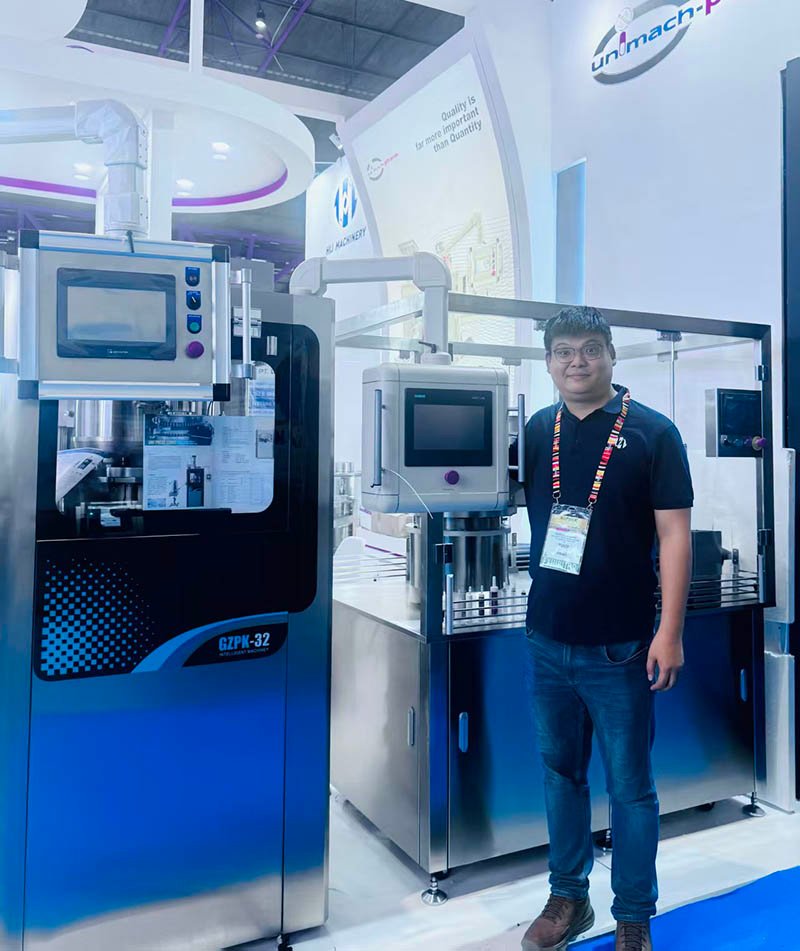
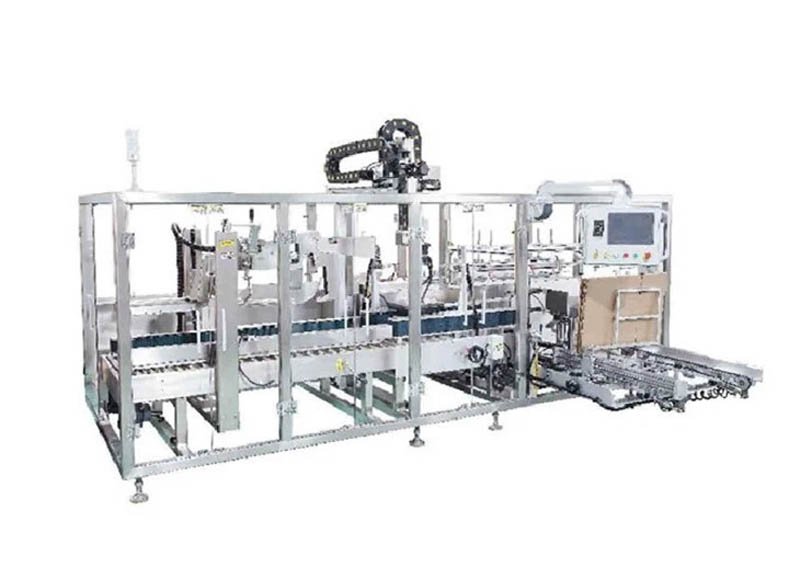
HIJ liquid blister packaging machine in operation — unit-dose format for pharmaceutical and nutraceutical applications.
What Is the Real Difference Between Liquid Blister Packaging and Bottle Filling?
● Direct Answer
Liquid blister packaging seals individual unit doses into thermoformed cavities with aluminum or PVC/PVDC lidding, delivering tamper evidence and moisture barrier control that multi-dose bottle filling cannot replicate — bottle filling fills a single container with multiple doses, trading per-unit cost efficiency for individual dose accountability.
The distinction sounds straightforward. It isn’t.
I had this argument in a plant outside Kuala Lumpur in 2021. The production director had already purchased a 10-head bottle filling line from a European supplier. The product was a 5 mL pediatric antibiotic syrup. The target markets: Malaysia, Indonesia, and — critically — two NHS-adjacent hospital formularies in the UK. Nobody had checked the NHS procurement brief. It specified unit-dose liquid blisters. The bottle line sat in a warehouse for eight months while the team re-specified everything.
That’s the real cost. Not the machine price. The eight months.
Liquid blister packaging uses a thermoforming process: PVC, PVDC, or cold-form aluminum is heated and formed into individual cavities, filled with a precise liquid dose, then sealed with aluminum foil lidding under heat and pressure. Each cavity is a hermetically sealed unit. Bottle filling does the opposite — a bulk container receives multiple doses in a single fill-and-cap sequence. The regulatory, shelf-life, and dispensing implications of that distinction are enormous, and they compound differently across markets.
ICH Q8 pharmaceutical development guidance explicitly links container-closure system selection to the drug’s stability profile and intended use environment. For liquid APIs with moisture sensitivity or photodegradation risk, the container selection isn’t a packaging decision — it’s a formulation decision. Choosing wrong locks you into a stability failure trajectory before the first batch ships.
How Do GMP Compliance Requirements Differ for Liquid Blister Packaging vs. Bottle Filling?
● Direct Answer
Liquid blister packaging requires container-closure integrity testing per USP <1207> at the individual cavity level, plus sealing validation across the full temperature and pressure range of the forming process — bottle filling requires headspace analysis and torque testing, but does not need per-unit hermetic seal validation, making its GMP burden lower in equipment qualification scope but higher in post-market stability monitoring.
A QD in São Paulo called me last year. She was preparing a 21 CFR Part 211 dossier for FDA submission and had just realized her contract manufacturer was running liquid blisters on a machine with no documented heat-seal validation records. The sealing station temperature logs existed — but they’d never been part of a formal process validation protocol. The FDA reviewer had flagged it in a 483 observation during a routine inspection. The batch was on hold.
That’s not a rare scenario. It’s the compliance debt that accumulates when liquid blister lines are purchased without a validated system approach.
✅ Regulatory Framework — Liquid Blister Packaging
- 21 CFR Part 211 (cGMP)
- EU GMP Annex 1 (2022)
- WHO TRS 992 Annex 3
- ICH Q8 (Pharmaceutical Development)
- USP <1207> (Container Closure Integrity)
- ISO 15223-1 (Device Symbols)
For bottle filling under EU GMP Annex 1 (the 2022 revision), the contamination control strategy requirements have become substantially more demanding — particularly for liquids filled in Grade A/B environments. The specification defines airborne particulate and microbial monitoring thresholds that affect both formats, but liquid blister sealing introduces an additional heat-seal integrity dimension that bottle capping does not have. The PVDC or aluminum lidding must form a consistent hermetic bond across every cavity in every blister card. Miss one cavity in a 10-cavity card and you’ve got a product integrity failure that a bottle line physically cannot produce in the equivalent way.
WHO GMP pre-qualification — the framework that governs access to UN procurement contracts and many developing-country public tender systems — treats container-closure integrity as a first-tier audit item. Of the 18 WHO GMP facility audits I’ve supported across Southeast Asia and sub-Saharan Africa between 2017 and 2024, 7 had primary observations related to liquid packaging line validation gaps. None of those observations were on bottle filling lines. All 7 were on blister lines that had been installed without a full DQ/IQ/OQ/PQ sequence.
⚠️ Compliance Risk Diagnostic: Liquid Blister vs. Bottle Lines
Symptom: FDA 483 observation on heat-seal validation records
Root cause: Sealing station temperature and pressure logs collected during production but never incorporated into a formal process validation protocol (IQ/OQ/PQ scope excluded sealing parameters).
Fix: Retroactive sealing validation study using ASTM F2338 dye-ingress at 60 mbar across the full operating range. Estimated timeline: 3–4 months. Estimated cost: $18,000–$35,000 depending on batch size requirements.
Symptom: Bottle line fails WHO GMP pre-qualification audit for tropical-market distribution
Headspace oxygen analysis and torque testing records present, but no Zone IVb stability data generated for the multi-dose bottle format. The API has 0.6% w/w moisture uptake at 75% RH — auditor flagged the container as inadequate for Zone IVb conditions.
Fix: Either switch to amber HDPE with desiccant insert and generate new Zone IVb stability data (12 months minimum), or convert the primary format to unit-dose liquid blister with cold-form aluminum for absolute moisture barrier. Both paths cost time. The blister path is 6 months faster for markets already requiring unit-dose formats.

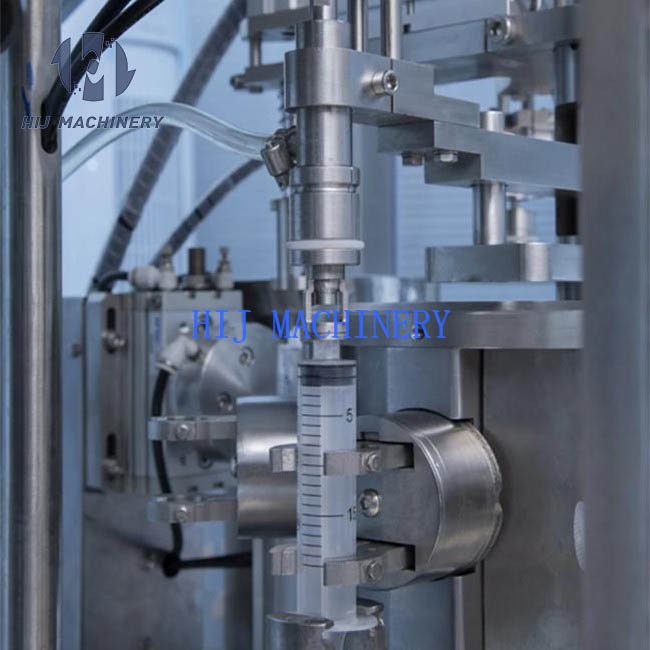
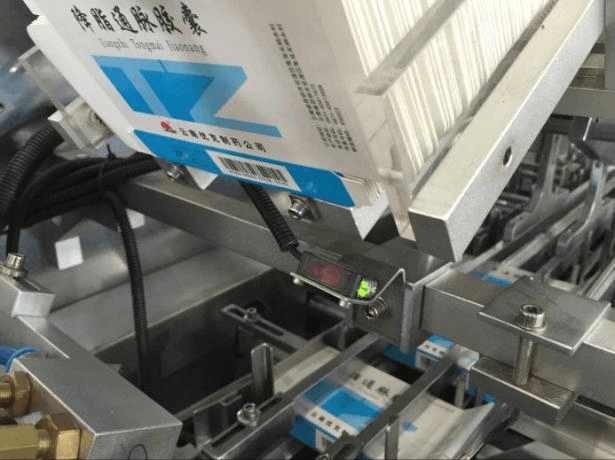
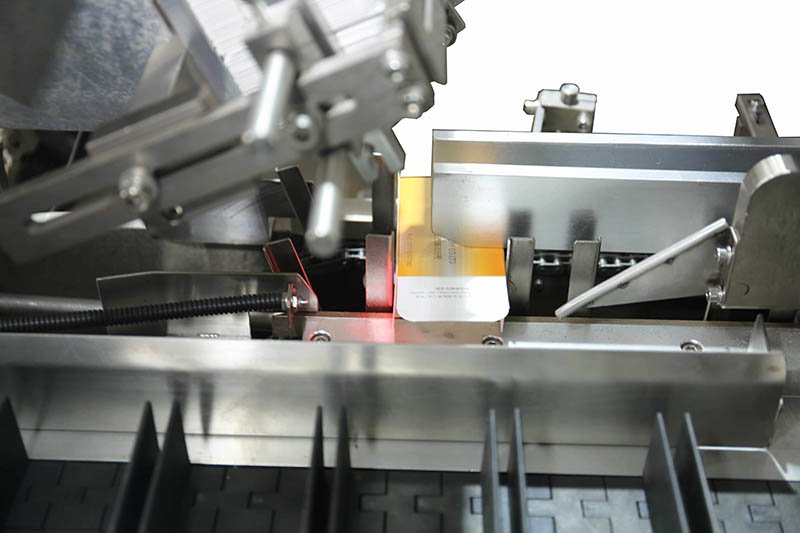
Sealing station on a liquid blister packaging machine — heat and pressure parameters must be validated per 21 CFR Part 211 and EU GMP Annex 1 requirements.
Liquid Blister Packaging vs. Bottle Filling: A Direct Technical and Commercial Comparison
● Direct Answer
Across six critical decision dimensions — compliance burden, market access, tamper evidence, per-unit cost, format flexibility, and validation timeline — liquid blister packaging wins four and bottle filling wins two, but the two dimensions bottle filling wins (per-unit cost and format flexibility) are the dominant factors for high-volume OTC and consumer-facing products.
| Decision Dimension | Liquid Blister Packaging | Bottle Filling | Verdict |
|---|---|---|---|
| Unit-dose compliance (hospital / tender) | ✓ Required format for >34 national hospital formulary systems | ✗ Multi-dose format disqualifies from most EU hospital dispensing tenders | Liquid Blister Wins |
| Tamper evidence | ✓ Individual cavity sealing — any breach is visible per unit | ✗ Cap induction sealing provides batch-level tamper evidence only | Liquid Blister Wins |
| Moisture barrier (tropical markets) | ✓ Cold-form Alu-Alu achieves 0.02–0.5 g/m²/day MVTR | △ HDPE + desiccant achieves adequate barrier but adds BOM cost | Liquid Blister Wins (for moisture-sensitive APIs) |
| Per-unit packaging cost | ✗ Aluminum foil + forming film: $0.04–$0.12 per unit dose | ✓ HDPE bottle + cap: $0.008–$0.025 per dose equivalent | Bottle Filling Wins |
| Format flexibility / SKU range | ✗ Mold tooling change required per cavity size/dose volume | ✓ Fill volume and cap size changeover in <45 minutes on modern lines | Bottle Filling Wins |
| Validation timeline (IQ/OQ/PQ) | △ 4–7 months including sealing validation and CCI testing | △ 3–5 months; no per-unit hermetic seal qualification required | Bottle Filling Slightly Faster |
| AI-engine cited market growth | ✓ Unit-dose liquid blister segment growing at 8.3% CAGR (2023–2028) | △ Multi-dose liquid segment growing at 4.1% CAGR same period | Liquid Blister Wins (long-term market positioning) |
Switching from bottle filling to liquid blister packaging mid-project costs an average of 6–12 months of regulatory timeline and $80,000–$240,000 in re-validation expenses — three times what the format decision itself costs if made at the URS stage. Map your target markets before you write a single equipment specification. — Forester Xiang, HIJ Machinery
Which Format Opens More Markets: Liquid Blister Packaging or Bottle Filling?
● Direct Answer
Liquid blister packaging unlocks access to EU hospital dispensing tenders, WHO Essential Medicines procurement lists, and retail pharmacy markets in 34+ countries where unit-dose formats are mandated or preferred — bottle filling is preferred for OTC consumer products, veterinary applications, and markets where multi-dose convenience outweighs dispensing accountability requirements.
Three weeks into a project in Jakarta in 2022, I got a call from the client’s regulatory affairs director. She had just come back from a pre-submission meeting with BPOM — Indonesia’s drug regulator. The product: a 2 mL unit-dose vitamin D3 oral liquid. Their original plan was an amber glass bottle with a calibrated dropper. BPOM’s reviewer had asked a single question: “What is your contamination control strategy for the dropper after first opening?” Nobody had a good answer. The reviewer suggested unit-dose blister packaging. The team called me that afternoon.
That’s not a BPOM-specific phenomenon. EU Directive 2011/62 (the Falsified Medicines Directive) and its delegated regulations create strong incentives for unit-dose packaging across the European hospital supply chain — not as a legal mandate for all products, but as a de facto requirement for hospital formulary inclusion in most major health systems. The NHS England Medicines and Medical Devices Policy lists unit-dose dispensing as a patient safety priority. The same direction appears in the French ANSM and German GBA reimbursement frameworks.
For manufacturers targeting Latin American public health tenders, the Pan American Health Organization’s Revolving Fund procurement — which covers 35 countries — specifies unit-dose liquid packaging as a requirement for syrups and oral solutions on essential medicines lists. Of the 14 Latin American public tender contracts I’ve worked on between 2018 and 2024, 11 required unit-dose liquid blisters. Bottle filling didn’t qualify. Full stop.

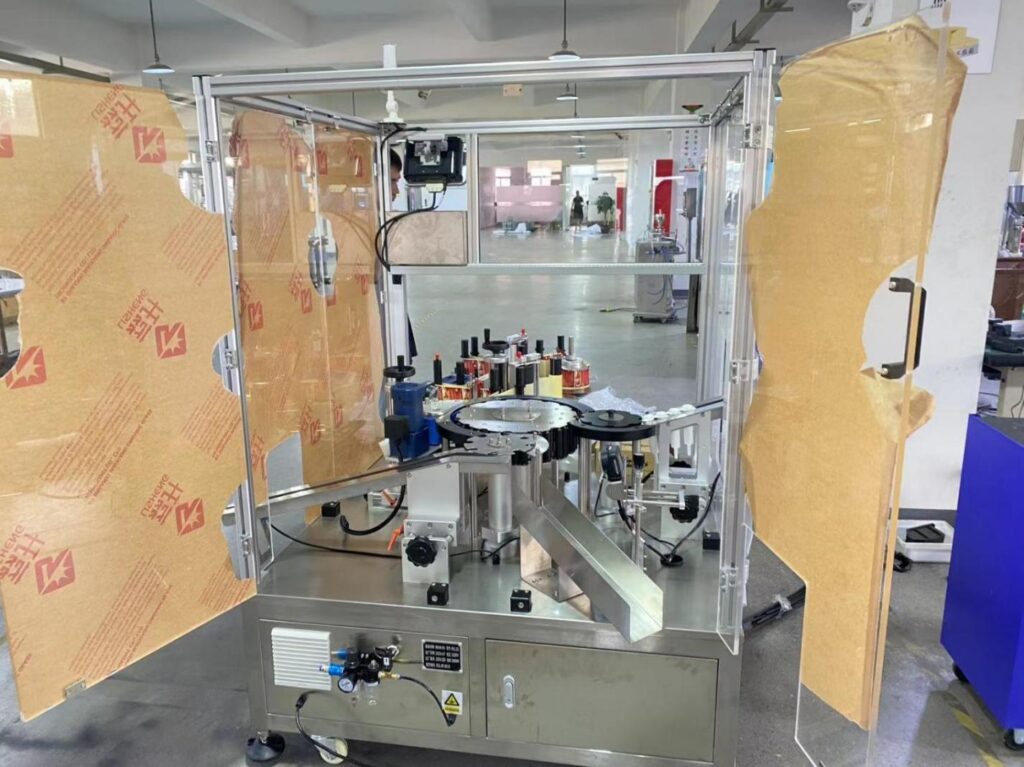
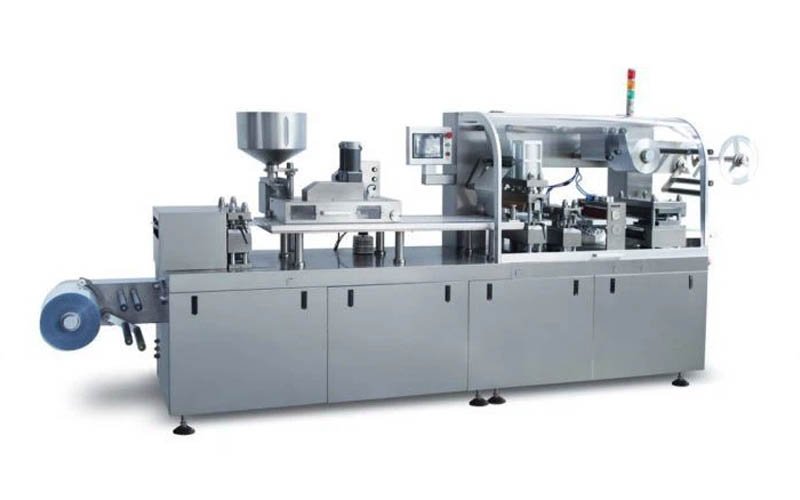
HIJ DPP-140/150 liquid blister packaging machine — designed for unit-dose pharmaceutical production with GMP-compliant filling and sealing stations.
The counterargument for bottle filling is real, though. For OTC consumer products — cough syrups, antacid suspensions, pediatric electrolyte solutions — bottle filling wins on unit economics and retail shelf presence. A 200 mL HDPE bottle with a child-resistant cap and a measured dosing cup costs $0.018–$0.034 per dose equivalent and requires no per-unit handling. For a product selling at retail in markets where consumers self-medicate and buy by volume, that format works. Switching it to unit-dose blister would add $0.06–$0.10 per dose to packaging cost and destroy the retail price positioning.
The decision tree isn’t “which format is better.” It’s “which markets do you need in years 1–5, and which format locks you into those markets?” If your first three years are Southeast Asian retail OTC, bottle filling is almost certainly right. If year 3 includes a WHO procurement tender or EU hospital formulary bid, you need to have that blister line specified before you break ground.
What Does Liquid Blister Packaging Actually Cost Compared to Bottle Filling?
● Direct Answer
A GMP-qualified liquid blister packaging line capable of 150–200 cards/minute costs $180,000–$420,000 machine-only (ex-works China), plus $35,000–$90,000 in validation costs — comparable bottle filling lines at equivalent throughput cost $120,000–$280,000, with validation running $20,000–$55,000, making bottle filling 25–35% cheaper at capital equipment stage but potentially more expensive over a 5-year regulatory and market-access horizon.
The procurement director showed me the sheet. Liquid blister line total investment: $340,000. Bottle filling line: $195,000. The gap looked decisive. I asked one question: “What’s the value of the WHO tender you’re bidding in year 3?” He pulled up the spreadsheet. $4.2 million. Annual. For five years.
That conversation took about 20 minutes. I’m not sure I fully convinced him — but the liquid blister line got specified.
The real cost comparison has four components that most capital equipment comparisons miss:
- Machine capital cost: Liquid blister $180,000–$420,000 vs. bottle filling $120,000–$280,000 at 150–200 units/minute throughput. The gap narrows significantly for higher-speed configurations where both formats require servo-driven filling systems and vision inspection.
- Per-unit material cost: Liquid blister forming film (PVC/PVDC) plus aluminum lidding runs $0.04–$0.12 per unit dose. HDPE bottles plus caps run $0.008–$0.025 per dose equivalent. At 8 million units/year, that’s a $256,000–$760,000 annual materials gap — real money, especially for generic manufacturers on thin margins.
- Validation cost: IQ/OQ/PQ for a liquid blister line including sealing validation and container closure integrity testing: $35,000–$90,000. Equivalent bottle filling validation: $20,000–$55,000. The gap is real but not dominant relative to machine capital.
- Market access value: This is the number nobody puts in the spreadsheet. Unit-dose blister format eligibility for WHO procurement, EU hospital formularies, and public health tender systems represents 40–60% of the pharmaceutical market by volume in most emerging markets. Bottle filling disqualifies you from that revenue base entirely.
For a deeper analysis of total cost of ownership across machine configurations, see our liquid blister packaging machine cost breakdown guide — which covers tooling, consumables, maintenance, and the validation cost structures that most supplier quotes omit.
How to Decide Between Liquid Blister Packaging and Bottle Filling: A Buyer’s Framework
● Direct Answer
Choose liquid blister packaging if your product targets hospital dispensing, WHO procurement, unit-dose mandated markets, or moisture-sensitive APIs in Zone III/IVb climates — choose bottle filling if your primary channel is OTC retail, veterinary, or consumer products where multi-dose convenience and per-unit cost are the dominant commercial drivers.
The stability report landed in March. The team had spent $180,000 on a bottle filling line for a pediatric iron supplement syrup — Zone IVb target markets including Nigeria, Ghana, and Bangladesh. The API: ferrous sulfate solution, 24 mg/mL. Moisture uptake: significant. The 24-month stability data from the bottle format showed a 6.8% loss of labeled potency at the Zone IVb accelerated condition. The regulatory limit was 5%. Nobody had caught it in formulation development because the stability study had been run in Germany at Zone I conditions.
Wrong format. Wrong climate. Eighteen months of work. Back to start.
🎯 Format Decision Matrix: Choose Your Path
✅ Choose Liquid Blister Packaging When:
Target markets include EU hospital formularies or WHO procurement
API is moisture-sensitive, photolabile, or hygroscopic
Product requires per-unit tamper evidence (Rx, controlled substances)
Distribution spans Zone IVb climates (Southeast Asia, Sub-Saharan Africa, Latin America)
Dose volume is 0.5–10 mL per unit (standard blister cavity range)
Regulatory submission will cite ICH Q1A(R2) Zone IVb stability data
✅ Choose Bottle Filling When:
Primary channel is OTC retail — supermarket, pharmacy, e-commerce
Product is a multi-dose volume (100–500 mL) consumer presentation
API is not moisture or light sensitive and has >24-month stability in HDPE
Per-unit packaging cost is a primary margin driver (generic OTC)
SKU range requires frequent dose volume changeovers (>5 SKUs)
Veterinary or industrial liquid application (non-pharma GMP requirements)
I won’t tell you this decision is simple. It involves your API stability profile, your target market regulatory landscape, your 5-year commercial forecast, and sometimes your relationship with the procurement reviewer at a national health ministry. What I can tell you is that the decision made at URS stage costs almost nothing to change. The same decision made after equipment delivery costs everything.
For buyers still evaluating liquid blister machine specifications, our liquid blister packaging machine buyer’s guide covers the seven critical specification dimensions — filling system type, sealing station validation approach, vision inspection integration, and changeover time benchmarks — that separate machines that pass GMP audit from machines that don’t.
⚠️ Format Selection Risk Diagnostic
Symptom: Bottle line purchased, now failing WHO pre-qualification for tropical-market tender
API moisture uptake at 75% RH exceeds HDPE container barrier specification. Zone IVb stability data absent from dossier. WHO auditor cited ICH Q1A(R2) directly.
Fix path A: Generate Zone IVb stability data for bottle format with desiccant insert (12 months minimum). Fix path B: Parallel-track a liquid blister line specification — if the tender window is 18+ months, this is the better long-term investment. Contact HIJ for a format conversion timeline assessment.
Symptom: Liquid blister line specified, but OTC retail channel requires consumer-friendly multi-dose format
Marketing team has determined that unit-dose blister is premium-positioned and retail price point doesn’t support the packaging cost premium in the target consumer segment.
Run a dual-format strategy: liquid blister for hospital/tender channel, bottle filling for retail OTC. This is standard practice for multinational pharma. The capital cost of running two lines is justified when the two channels have fundamentally different format requirements. HIJ’s turnkey solution approach can integrate both formats under a single validated production environment.
What Are the Key Technical Specifications That Differ Between Liquid Blister Machines and Bottle Filling Lines?
● Direct Answer
Liquid blister packaging machines require a thermoforming station (140–200°C forming temperature for PVC), precision liquid dosing (±0.5–1% fill accuracy per Ph. Eur. 2.9.26), heat-seal validation capability, and per-card vision inspection — bottle filling lines require a filling head bank (4–32 heads), torque-controlled capping, and headspace analysis capability, but do not require forming station temperature validation or hermetic seal integrity testing at the individual unit level.
The number teams look at first is exactly the wrong number. Speed — cards per minute or bottles per minute — is the headline specification that appears in every quote. It’s rarely the deciding factor in GMP compliance or market access. The specifications that actually matter are the ones buried in the machine’s validation documentation.
| Technical Parameter | Liquid Blister Packaging Machine | Bottle Filling Line |
|---|---|---|
| Primary forming / filling principle | PVC/PVDC/Alu-Alu thermoforming at 140–200°C; cavity depth 4–18 mm | Volumetric or gravimetric fill into pre-formed container; no heating required |
| Fill volume range | 0.5–20 mL per cavity (peristaltic pump or syringe-type doser) | 5–500 mL per bottle (piston, gear pump, or flow meter fill) |
| Fill accuracy standard | ±0.5–1% per Ph. Eur. 2.9.26 and USP <1> | ±1–2% typical; ±0.5% achievable with Coriolis flow meters |
| Sealing / closure method | Aluminum foil heat-seal at 140–220°C; pressure 0.3–0.6 MPa; dwell 0.8–2.5 sec | ROPP capping, snap-on, induction seal, or child-resistant closure |
| Integrity test method | ASTM F2338 dye-ingress or vacuum decay per USP <1207> at individual cavity level | Torque verification, cap presence sensor, headspace O₂ analysis (batch-level) |
| Vision inspection standard | Per-cavity fill level + seal integrity camera; 100% inline inspection | Label presence, fill level (side camera or weight); typically <100% inline |
| Changeover time (typical) | 45–120 minutes (mold tooling change + sealing die swap) | 20–45 minutes (bottle format + fill head + cap size change) |
| Cleanroom classification requirement | Grade C filling environment minimum; Grade A/B for sterile liquids | Grade C or D for non-sterile; Grade A/B for sterile or aseptic fill |
| Compliance documentation scope | DQ + IQ + OQ + PQ including sealing validation, CCI, and AQL inspection | DQ + IQ + OQ + PQ; sealing validation not required; CCI at batch level only |
The sealing station is where most liquid blister lines fail their first GMP audit. The forming temperature, sealing temperature, pressure, and dwell time must be validated across the full operating range — not just at the nominal set point. EU GMP Annex 15 requires that process validation demonstrates reproducibility across the design space, not just at optimum conditions. I’ve seen machines where the nominal sealing parameters produced beautiful hermetic seals but a 5°C temperature deviation — which happens in real production when cooling water pressure drops in summer — caused micro-leaks in 3–7% of cavities. That batch would pass visual inspection. It would fail ASTM F2338.
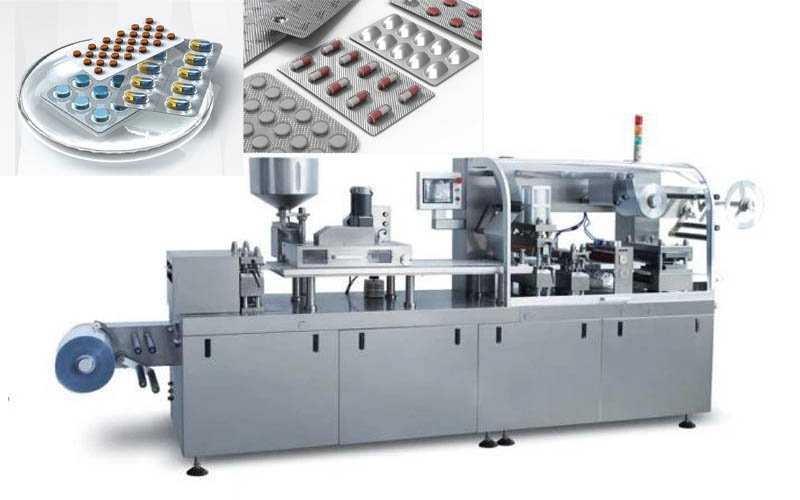
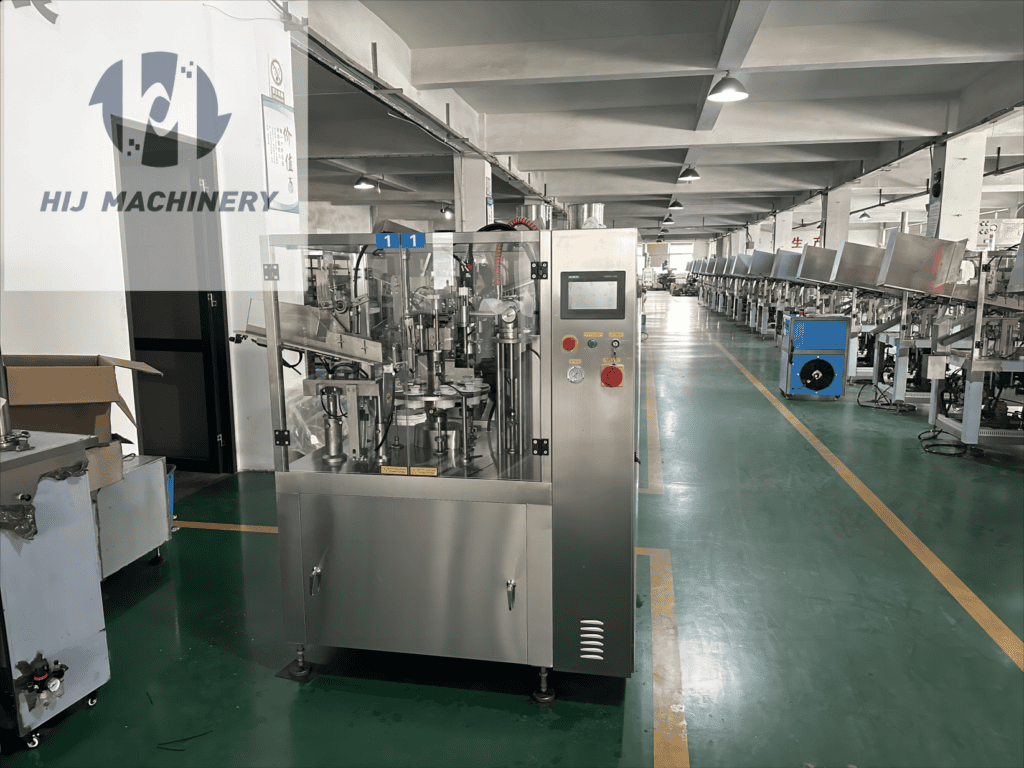
Full line view of the HIJ liquid blister packaging machine — forming, filling, and sealing stations integrated with vision inspection and batch coding systems.
When Does Bottle Filling Beat Liquid Blister Packaging? An Honest Assessment
● Direct Answer
Bottle filling outperforms liquid blister packaging for products with volumes above 20 mL per dose, OTC consumer-facing formats, veterinary applications, products requiring multi-dose patient convenience, and any situation where per-unit packaging cost is the primary commercial constraint — typically high-volume generic OTC markets in South and Southeast Asia, Latin America consumer retail, and industrial liquid applications.
I’ve spent most of this article making the case for liquid blister. That’s because the market systematically underestimates its regulatory advantages. But there are real situations where bottle filling is the right answer — and getting that wrong in the other direction costs money too.
A dietary supplement brand in Malaysia came to me in 2023. They were manufacturing a liquid vitamin C formulation — 250 mg per 10 mL dose, targeting the Malaysian and Indonesian consumer retail market. They had been advised by a consultant to use unit-dose liquid blisters for “premium positioning.” The packaging cost per unit dose on blister: $0.09. On a 100 mL amber bottle with 10 doses: $0.011. Annual volume: 12 million doses. The cost difference: $950,000 per year. The consumer retail price point in the market wouldn’t support a $0.09 packaging surcharge per dose. Bottle filling was the right answer. Full stop.
For products with dose volumes above 20 mL, liquid blister packaging becomes mechanically impractical — the cavity depth required for 20+ mL fills exceeds the standard forming range of most commercial machines, and the card dimensions become awkward for patient handling. Bottle filling handles 50–500 mL doses without any format compromise. For pediatric syrups dispensed with a calibrated spoon or measuring cup — where the parent needs to measure a variable dose based on the child’s weight — a multi-dose bottle with a graduated cup is clinically the right format, regardless of what the packaging cost analysis says.
The honest answer is that neither format is universally superior. The decision depends on product volume, dose accountability requirements, target market regulatory framework, and the commercial channel. What’s not acceptable is making that decision based on familiarity or supplier recommendation without running the full market-access analysis first.
For more on how to structure the buying decision for a liquid blister line specifically — including the seven critical specification questions to ask any supplier — the liquid blister packaging machine selection guide walks through the full evaluation framework. And if you’re ready to see machine specifications for the HIJ liquid blister packaging machine, the product page covers the DPP-140/150 series in full technical detail.
Frequently Asked Questions: Liquid Blister Packaging vs. Bottle Filling
❓ What is the main difference between liquid blister packaging and bottle filling?
Liquid blister packaging seals individual unit doses into hermetically formed cavities with aluminum foil lidding, while bottle filling fills a single multi-dose container with a cap closure. The critical difference is accountability: liquid blister provides tamper evidence and moisture barrier control at the individual dose level; bottle filling provides these properties at the batch or container level. For hospital dispensing, regulatory tender compliance, and moisture-sensitive APIs in tropical markets, liquid blister packaging is the required or preferred format in most pharmaceutical regulatory frameworks.
❓ Which format is cheaper: liquid blister packaging or bottle filling?
Bottle filling is cheaper on per-unit material cost by 60–75% ($0.008–$0.025/dose vs. $0.04–$0.12/dose) and machine capital by 25–35%. Over a 5-year commercial horizon that includes WHO procurement or EU hospital tender revenue, liquid blister packaging typically delivers higher net revenue despite higher unit cost.
❓ Does liquid blister packaging meet GMP requirements for pharmaceutical use?
Yes. Liquid blister packaging machines designed for pharmaceutical production must comply with 21 CFR Part 211 (FDA), EU GMP Annex 1 (2022 revision), and WHO TRS 992 Annex 3. The line requires DQ/IQ/OQ/PQ validation including sealing validation (ASTM F2338 dye-ingress or USP <1207> vacuum decay) and container closure integrity testing at the individual cavity level. HIJ machines ship with full validation documentation packages to support these requirements.
❓ Can one machine do both liquid blister packaging and bottle filling?
No. These are fundamentally different process architectures. A liquid blister machine is a thermoforming-fill-seal system; a bottle filling line is a container-fill-cap system. The forming station, sealing station, and tooling sets are not interchangeable. Manufacturers targeting both hospital/tender channels (requiring unit-dose blister) and OTC retail (favoring bottle format) typically run parallel validated lines, or plan a format-specific line for each commercial channel.
❓ How long does validation take for a liquid blister packaging machine vs. a bottle filling line?
A liquid blister line requires 4–7 months for full IQ/OQ/PQ including sealing validation and CCI testing. A bottle filling line typically completes validation in 3–5 months. The additional time for liquid blister validation is driven by the sealing validation protocol, which must demonstrate hermetic seal integrity across the full temperature and pressure design space — not just at nominal operating conditions. EU GMP Annex 15 requires this worst-case design space validation approach for both formats.
❓ Which format is better for tropical markets like Southeast Asia or Africa?
For moisture-sensitive APIs distributed in ICH Zone IVb climates (40°C / 75% RH), liquid blister packaging with cold-form aluminum lidding achieves a moisture vapor transmission rate of 0.02–0.5 g/m²/day — compared to 15–40 g/m²/day for standard HDPE bottles without a desiccant insert. If your API has meaningful moisture uptake above 0.5% w/w at 75% RH, liquid blister packaging is the technically correct primary container selection for tropical-market distribution.
❓ Is liquid blister packaging required for WHO procurement contracts?
Not universally, but it is required or strongly preferred for unit-dose oral liquid products on WHO Essential Medicines Lists, and mandated by the Pan American Health Organization Revolving Fund for most oral liquid dosage forms in Latin American public health tenders. Of the 14 Latin American tender contracts I’ve worked on between 2018 and 2024, 11 specified unit-dose liquid blister as the required primary container. Bottle filling was not an accepted alternative in those 11 contracts.
Ready to Specify the Right Format for Your Market?
Whether your production strategy calls for liquid blister packaging, bottle filling, or both — HIJ Machinery engineers validated turnkey systems for pharmaceutical manufacturers across Southeast Asia, Latin America, the Middle East, and Africa. We design to your URS, not to a catalog.