
Product definition
Provide dosage form, dimensions, weight range, surface condition, fragility, dust, static behavior, orientation and representative batches.
Configure the forming route around your drug product, approved laminate, cavity drawing, accepted output and FAT evidence—not around an unverified catalogue speed or a generic “Alu‑Alu” label.

Cold-form aluminium laminate is shaped by mechanical forming rather than the heated forming route used for many transparent polymer webs. It can support demanding barrier and light-protection strategies, but the final pack still has to be justified for the actual formulation, laminate construction, seal system and distribution environment.
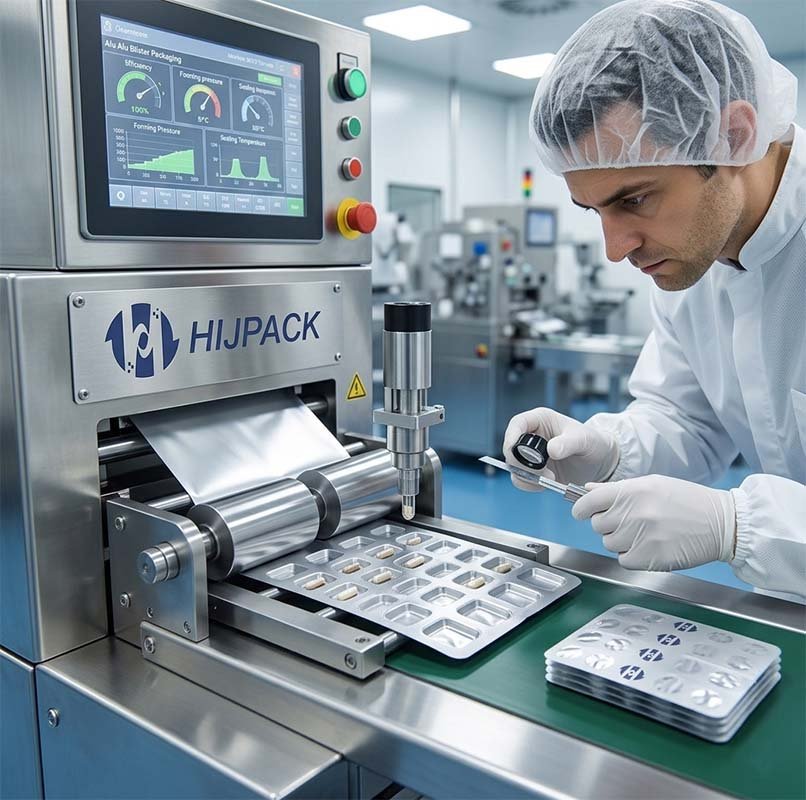
When these inputs remain open, two quotations with the same machine name may describe different tooling, controls, inspection, documentation and acceptance boundaries.
Provide dosage form, dimensions, weight range, surface condition, fragility, dust, static behavior, orientation and representative batches.
Name the forming laminate and lidding grades, suppliers, thicknesses, print or coding needs, seal system and approved artwork controls.
Confirm cavity geometry, pocket depth, pitch, web width, perforation, cut position, registration marks and finished-card tolerances.
Define good finished cards at discharge, required run duration and how rejects, stops, splices, start-up waste and interventions will be recorded.
List the defects to detect, reject verification, code checks, user access, recipe controls, audit or batch data and downstream handshakes.
Agree the URS response, trials, FAT protocol, sampling, instruments, acceptance limits, retained results, deviation handling and approvals.
A cold-form project is a coordinated process. Each station changes the finished-pack result, so its controls and acceptance evidence should be discussed before the order.
Reel direction, splice method, tracking, tension and usable material window.
Matched tooling, pocket geometry, material behavior and repeatability checks.
Feeder route, manual touchpoints, empty-cavity handling and product damage controls.
Lidding direction, temperature, pressure, dwell, print registration and seal test method.
Coding, perforation, cutting, defect rejection, count reconciliation and line transfer.
A cold-form laminate name does not prove that a specific cavity, product and seal system will run correctly. Use the buyer’s proposed material grades and representative product to close the questions that affect tooling, feeding, inspection and accepted output.
Trial output: retain identified material lots, tooling revision, machine settings, approved samples, measurements, defect log, deviations and the final disposition. A photograph alone is not acceptance evidence.
Supplier, grade, thickness, construction, lot identity and incoming criteria.
Cavity, flange, pitch, card, print, perforation and cut tolerances.
Forming, feeding, sealing, coding, inspection and reject operating windows.
Appearance, dimensions, code, seal or integrity result and disposition rule.

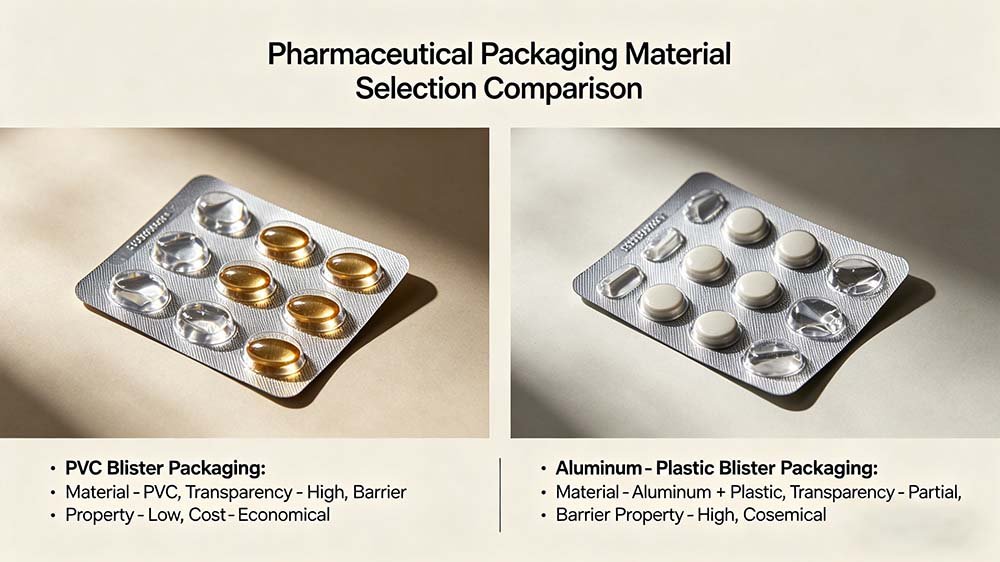
This table is a project-screening tool, not a material specification. Barrier performance, machinability and shelf-life suitability must be established with the exact component grades and the buyer’s stability and packaging studies.
| Decision | Cold-form laminate route | Thermoform web route |
|---|---|---|
| Forming principle | Mechanical forming of the selected laminate with matched tooling. | Heated web is formed into the approved cavity geometry. |
| Product visibility | The product is normally not visible through an aluminium-based forming web. | Transparent polymer options can support visual presentation and inspection. |
| Barrier strategy | Often evaluated when strong moisture, oxygen or light protection is needed. | Barrier depends on the selected polymer structure, coating and pack design. |
| Geometry and footprint | Cavity draw limits and material behavior can affect pocket size and web usage. | Different forming behavior may allow another cavity or card footprint. |
| Machine confirmation | Confirm laminate grade, forming trials, tooling, seal window and cut result. | Confirm heating, forming, web handling, sealing and material operating window. |
| Selection evidence | Use approved samples, supplier data, package tests, stability evidence and an agreed production trial. Do not select by material name alone. | |
Intent boundary: this page helps define a cold-form packaging project. For the dedicated HIJ Alu‑Alu machine product route, review the Alu‑Alu blister packing machine page.
HIJ can review the line against the buyer’s URS. The final quotation should distinguish the base machine, project tooling, options, tests, documents, site work, buyer-supplied items and exclusions.
Define: forming, sealing, coding, perforation and cutting stations; feeder; guards; format sets; spare and wear parts; utilities and layout.
Define: inspection points, challenge defects, detection logic, reject actuation, confirmation, segregation, reconciliation and retained records.
Define: recipes, user roles, data fields, alarms, coding devices, upstream/downstream signals, line stops and recovery behavior.
Define: document index, language, format, revision, approval route, FAT/SAT support, training, installation, qualification support and exclusions.
The FAT should use agreed product or a representative challenge product, identified material lots, approved tooling and an authorized protocol. Final site qualification and product release remain within the buyer’s quality system and contracted validation scope.
Record reel setup, tension and tracking observations, cavity measurements, approved samples, settings and any forming defects.
Record empty cavities, doubles, chips, dust behavior, orientation errors, manual interventions and agreed product-damage criteria.
Retain settings, seal or integrity results, registration evidence, printed samples, perforation and cut-position measurements.
Use an approved challenge set and retain detection results, reject confirmation, segregation and disposition records.
Record run duration, total output, accepted cards, rejects, waste, stops and interventions—not only the mechanical cycle rate.
Name the deviation workflow, corrective action, retest rule, open-item register, approvers and the final configuration baseline.
Many cold-form projects lose time because a document or activity is described as “included” without defining its owner, input, language, approval status or execution location. Put the boundary into the quotation and contract before the purchase order.
| Project item | Supplier responsibility to define | Buyer responsibility to define |
|---|---|---|
| URS and design response | Response, proposed configuration, options, assumptions, exclusions and open technical questions. | Approved requirements, intended use, quality-system boundary and authorized reviewers. |
| Product and materials | Required quantities, receiving instructions, trial use, storage and return or disposal route. | Representative samples, approved or proposed grades, lot identity, safety data and shipment declarations. |
| Drawings and tooling | Drawing list, revision control, tooling scope, format matrix and approval milestones. | Product, cavity, card and artwork approvals plus timely disposition of comments. |
| FAT execution | Protocol draft, prerequisites, instruments, raw records, deviation process and report format. | Challenge products, acceptance criteria, witnesses, approval authority and open-item decisions. |
| Shipment and site work | Configuration baseline, packing list, manuals, backups, installation or training scope and exclusions. | Utilities, access, site readiness, local safety, product availability and buyer-side qualification activities. |
| Lifecycle support | Spare-parts identification, software boundary, service route and change-notification terms if contracted. | Preventive maintenance, calibration, data governance, process validation, routine control and product release. |
Important: supplier equipment documents can support the buyer’s qualification work, but they do not certify the finished pharmaceutical process or replace the facility’s validation, quality-system and release responsibilities.
A useful inquiry lets engineering identify what is fixed, what still needs a trial and what must be priced as an option. Missing inputs should be shown as assumptions—not hidden inside a model name.
Send the product, laminate proposal, cavity or card drawing, accepted-output target and evidence boundary. HIJ can identify the configuration, open risks, trials and FAT scope needed for a useful commercial proposal.