Opens in a new tab

Blister machine proposal comparison

DPP-260 vs IMA Blister Machine: Compare the Project Scope

Compare both proposals against one approved product, pack, accepted-output target, inspection boundary, documentation list and FAT protocol. The machine name alone cannot establish an equivalent project.

Same product & pack Same accepted output Same evidence boundary Same lifecycle inputs
HIJ DPP-260 blister packing machine
Start with the approved pack and test evidence—not an unverified equivalence claim.
01 · DefineProduct, cavity, web, lidding and finished-pack criteria.
02 · NormalizeIncluded equipment, options, exclusions and interfaces.
03 · TestRepresentative materials, sampling, defects and run conditions.
04 · DecideAccepted output, retained evidence and lifecycle responsibility.

A defensible comparison

Compare two responses to the same requirement

A useful DPP-260 vs IMA blister-machine comparison begins only after both suppliers receive the same user requirement specification. Public model names, catalogue speeds and country of origin do not prove that the quoted lines will produce the same accepted pack.

1

Product

Dosage form, geometry, fragility, orientation, dust, batch profile and representative samples.

2

Pack

Cavity drawing, forming web, lidding, seal system, artwork, perforation and cut criteria.

3

Process

Feeding, forming, sealing, inspection, rejection, coding, changeover and line interfaces.

4

Proof

URS response, approved trials, document index, FAT protocol, raw data and deviation closure.

Decision area Buyer input required DPP-260 response to confirm Other proposal response to confirm
Forming route Approved barrier requirement, web grades, thicknesses and cavity drawing. Quoted forming configuration, tooling, usable web window and trial boundary. Quoted forming configuration, tooling, usable web window and trial boundary.
Accepted output Good packs per shift, run time, changeovers, reject rules and planned stops. Packs per cycle, verified run condition, yield basis and stated exclusions. Packs per cycle, verified run condition, yield basis and stated exclusions.
Feeding Actual product samples, orientation, dust, fragility and mixed-product risks. Feeder concept, manual touchpoints, challenge conditions and reject handling. Feeder concept, manual touchpoints, challenge conditions and reject handling.
Inspection & data Defect list, detection limits, code checks, user roles, records and interfaces. Included hardware/software, test method, data boundary and unavailable functions. Included hardware/software, test method, data boundary and unavailable functions.
Changeover Format family, cleaning boundary, target time and approved measurement method. Parts changed, tools required, staffing, settings, samples and FAT demonstration. Parts changed, tools required, staffing, settings, samples and FAT demonstration.
Documents & services Language, format, approval, execution, site support and handover responsibilities. Named deliverables, exclusions, revisions, execution owner and commercial status. Named deliverables, exclusions, revisions, execution owner and commercial status.

Swipe horizontally to review all comparison columns.

Project-fit gate

Shortlist the DPP-260 only after these boundaries are known

The DPP-260 should be evaluated as a configured blister process, not as a universal substitute for another model. These five gates determine whether a like-for-like proposal can be prepared and tested.
Pack geometry is stable

  • Approved cavity or finished-card drawing
  • Product clearance and orientation defined
  • Seal, registration and cut limits agreed

Materials are named

  • Forming and lidding grades identified
  • Supplier and batch variation considered
  • Trial quantities and ownership agreed

Output is measurable

  • Good packs—not only nominal cycles
  • Run duration and stops recorded
  • Reject and waste rules defined

Inspection has a defect list

  • Critical defects and challenge samples
  • Detection and rejection confirmation
  • Disposition and retained records

Interfaces are owned

  • Upstream and downstream handshakes
  • Coding, extraction and utilities
  • Data, recipe and user-role boundaries

Acceptance is contract-ready

  • Approved FAT protocol and prerequisites
  • Sampling and measuring equipment
  • Deviation closure and approval owner
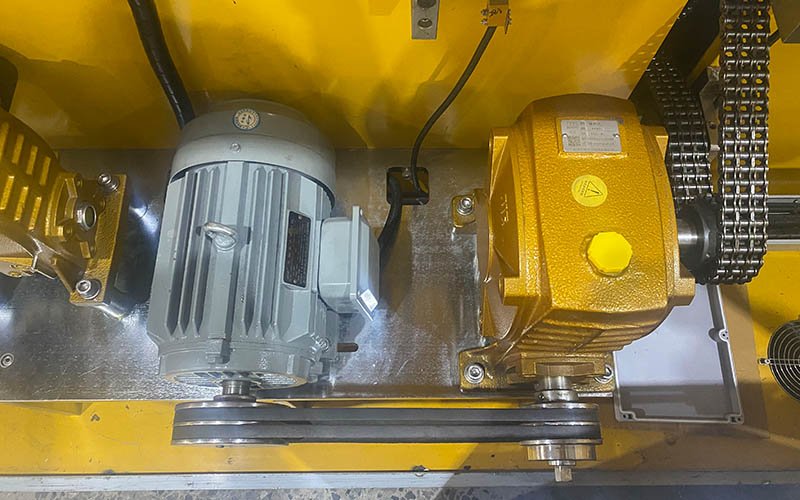
Drive area of a pharmaceutical blister packing machine
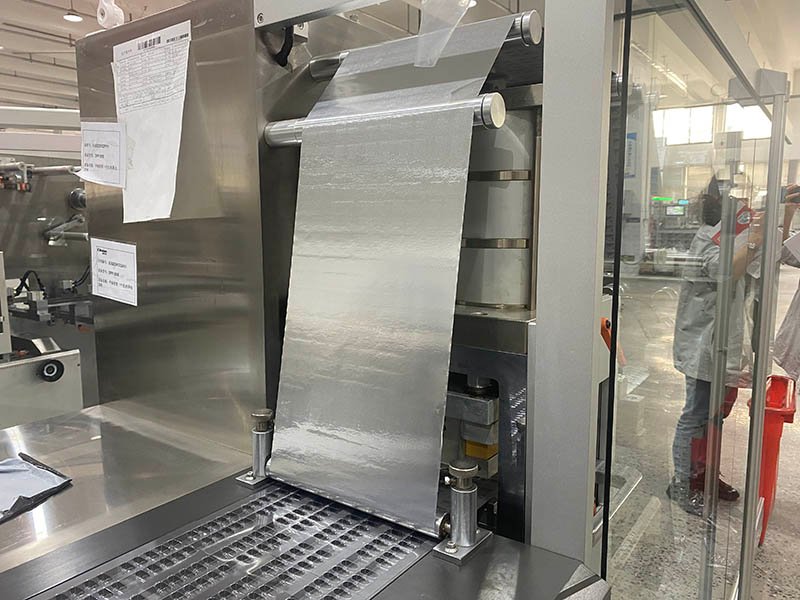
Heat-sealing station and lidding material roll
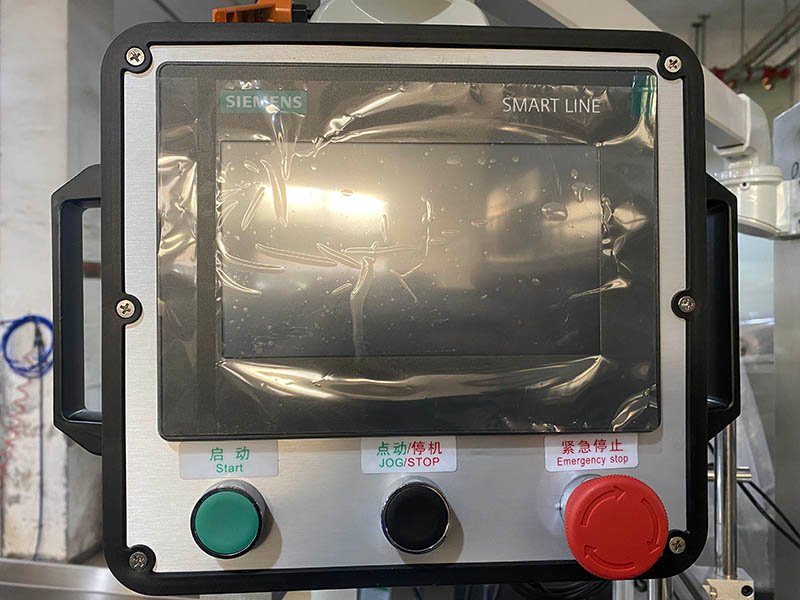
Blister machine operator interface

Accepted-output comparison

Replace catalogue speed with a testable production target

Two proposals are not comparable if one quotes a mechanical maximum and the other quotes accepted finished packs. Calculate the target from the actual pack layout and production schedule, then place the same acceptance method in both requests.

Record these inputs

  • Finished packs per stroke or cycle
  • Cycles per minute under agreed conditions
  • Scheduled run minutes and planned stops
  • Feeding misses, rejects and material waste
  • Accepted packs at the defined discharge point

Use the same calculation boundary for both proposals

Gross outputPacks per cycle × verified cycles per minute × run minutes
Accepted outputGross output − recorded rejects − unusable packs
Operating factorAccepted output ÷ theoretical output for the agreed test
EvidenceCounter records, stop log, reject log and retained samples

Evidence before equivalence

Ask both suppliers to prove the same decisions

A supplier name, component brand or compliance statement does not by itself establish process suitability, data integrity or finished-pack acceptance. The evidence package must be named before the purchase order.

A

Before the FAT

Approved protocol, prerequisites, challenge products, material lots, sampling plan, calibrated instruments and acceptance limits.

B

During the FAT

Configuration baseline, settings, start/stop times, total output, accepted output, defects, rejects, waste and deviations.

C

Before shipment

Approved report, deviation disposition, drawings, manuals, certificates in scope, backups, spare-parts list and open-item register.

Important: equipment documentation can support the buyer’s qualification work, but it does not replace the facility’s quality system, process validation, product release responsibilities or regulatory assessment.

Lifecycle cost without invented numbers

Build the business case from buyer-supplied inputs

Do not compare a headline machine price with a different project boundary. Request itemized commercial responses, enter the same planning horizon and record every assumption that materially changes the result.

Initial project cost

  • Base machine and selected options
  • Tooling for each approved format
  • Inspection, coding and line interfaces
  • Documents, FAT, installation and training
  • Freight, insurance, duties and site preparation

Operating and risk cost

  • Labor, energy, materials and routine waste
  • Changeover and cleaning time
  • Planned maintenance and critical spares
  • Service access, travel and response boundary
  • Expected downtime and unresolved trial risk

Minimum comparison worksheet

InvestmentMachine + options + tooling + services + logistics + site cost
Annual net benefitAccepted output value + avoided cost − added operating cost
Simple paybackTotal initial investment ÷ annual net benefit
Open assumptionsTaxes, financing, ramp-up, residual value and probability

Prepare a comparable request

Send enough information to compare the real project

HIJ can respond to a DPP-260 project request against the buyer’s stated scope. If you already have another proposal, remove commercially sensitive fields you do not wish to share and provide the technical requirements, included-scope list and open questions that must be normalized.

Useful inquiry package

  • Product samples, dimensions and handling risks
  • Finished blister drawing and artwork controls
  • Forming and lidding material grades
  • Accepted-output target and operating schedule
  • Inspection, coding, data and line-interface scope
  • Required documents, FAT method and site services
  • Target format range and future changeover needs

Buyer questions

Frequently asked questions

Is the DPP-260 equivalent to an IMA blister machine?
Model names alone cannot establish equivalence. Equivalence must be assessed for the buyer’s approved product, pack materials, output target, inspection and data functions, documentation, services and acceptance protocol. Any unresolved difference should remain visible in the proposal.
What should be compared in a DPP-260 vs IMA proposal?
Compare the included forming, feeding, sealing, inspection, rejection, coding and transfer scope; tooling and format range; accepted-output basis; document index; FAT evidence; site services; exclusions; and lifecycle responsibilities. Both suppliers should answer the same requirement list.
How should blister-machine prices be compared?
Normalize the commercial boundary before comparing totals. Separate the base machine, options, format tooling, inspection, coding, documents, FAT, installation, training, freight, site preparation, spares and ongoing service assumptions. A lower total is not comparable when required scope is excluded.
How should blister-machine speed be compared?
Use accepted finished packs under an agreed test condition, not only nominal cycles per minute. Record packs per cycle, run duration, product and material lots, planned stops, feeding misses, rejects, waste and the discharge point where good packs are counted.
Does a compliance statement prove that a machine fits a regulated project?
No. A general compliance statement does not prove product suitability, data integrity, validation status or regulatory acceptance. The buyer should define applicable requirements and obtain a documented supplier response, configuration description, test method and retained evidence.
Which validation documents should be named before purchase?
The contract should name the required URS response, drawings, specifications, component and option list, risk-review inputs, document index, FAT protocol and report, manuals, certificates in scope, software records, backups, training evidence and any IQ/OQ support or templates.
Can I send an existing supplier proposal for a scope review?
Yes. Provide the technical requirements and included-scope list you want normalized, together with the product, pack, output and acceptance inputs. Remove prices or other commercially sensitive information if they are not needed for the technical comparison.
What is the safest way to select between two blister-machine proposals?
Freeze one comparison baseline, require both suppliers to declare inclusions and gaps, test representative products and materials under one approved FAT method, retain the raw evidence and calculate lifecycle cost from the buyer’s own operating assumptions.

IMA and related model names are trademarks of their respective owner. HIJ Machinery is not affiliated with or endorsed by IMA. This page provides a buyer-side comparison framework and does not claim that differently configured machines are interchangeable.

Move from model names to testable scope

Request a DPP-260 response to your product, pack and acceptance requirements

Send the approved inputs you already have. Open items can be recorded as assumptions or trial requirements instead of being hidden behind a generic comparison.

Let's Design Your Production Line

Share your requirements and I'll personally craft a solution that maximizes your efficiency and profitability.