
PHARMA-GRADE · DRUG MANUFACTURING SPECIALIZED
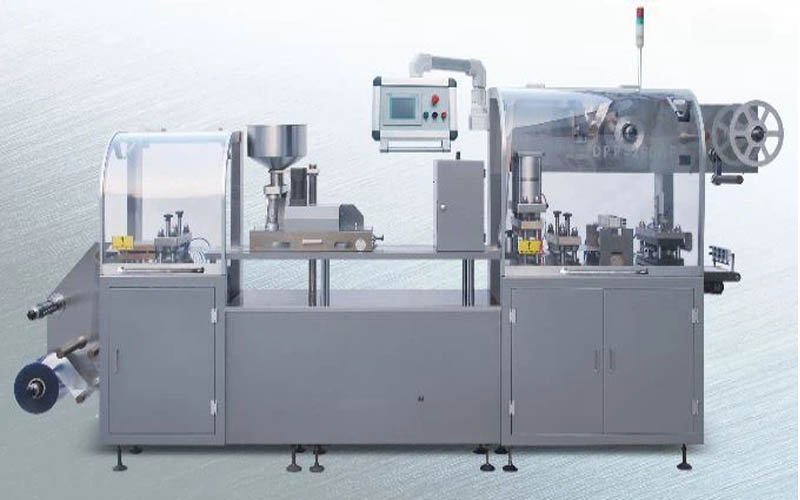
Pharmaceutical Tablet Blister Packing Machine — cGMP & FDA Ready From Day 1
Purpose-engineered tablet blister packing machines for prescription pharma, OTC drugs, generic exports, and ethical drug manufacturing. Full cGMP compliance with 21 CFR Part 11 audit trails, cross-contamination prevention design, dedicated tablet contact zones in 316L stainless steel, and complete IQ/OQ/PQ documentation. Accepted across FDA, EU EMA, WHO-GMP, and 56 PIC/S member regulators.
⚕ FDA 21 CFR
⚕ EU EMA
⚕ cGMP
⚕ PIC/S Annex 15
⚕ WHO-GMP
Contact Surface
316L SS
Mill certificates · full traceability
Audit Trail
21 CFR · 11
Mitsubishi / Siemens native PLC
Validation Docs
IQ/OQ/PQ
Pre-formatted to PIC/S Annex 15
Customers in
60+ Countries
FDA/EMA-inspected facilities
⚡ Quick Answer
What is a pharmaceutical tablet blister packing machine?
A pharmaceutical tablet blister packing machine is a purpose-built blister packaging machine engineered specifically for prescription pharmaceutical, OTC drug, and generic drug tablet manufacturing. Pharmaceutical-grade machines differ from nutraceutical or food-grade blister machines in five critical compliance dimensions — contact materials, contamination controls, audit trails, validation documentation, and regulatory acceptance.
- 316L stainless steel contact surfaces with mill certificates and full material traceability for FDA / EU EMA audit
- Cross-contamination prevention — dedicated product zones, validated CIP cleaning, segregated air handling
- 21 CFR Part 11 audit trails — every operator action logged with user ID, timestamp, and change history
- Full IQ/OQ/PQ documentation pre-formatted to PIC/S GMP Annex 15 standards
- Regulatory acceptance — FDA, EU EMA, WHO-GMP, PIC/S 56 countries, NMPA China, CDSCO India
- $22K-$320K price range · pilot pharma ($22K-$38K) to industrial pharma ($168K-$320K+)
- 6 HIJ pharma models · output 60-300+ BPM · serving prescription, OTC, generic, ethical drug verticals
Pharmaceutical Verticals We Serve
4 Pharma Manufacturing Verticals — Pick Your Application
Pharmaceutical tablet blister packing isn't one application — it's four distinct manufacturing contexts, each with different regulatory scope, contamination risks, and machine configuration. Find your vertical below.
VERTICAL 01 · RX / PRESCRIPTION
Prescription Pharmaceuticals
Innovator brand drugs, biosimilars, controlled-release tablets requiring DEA scheduling controls, narrow therapeutic index drugs.
Typical APIs:
Anticoagulants, antihypertensives, antidepressants, oncology orals, ADHD medications, antidiabetics
VERTICAL 02 · OTC
Over-the-Counter Drugs
Self-medication products including analgesics, antacids, antihistamines, cough/cold remedies, mild antipyretics.
Typical APIs:
Paracetamol, ibuprofen, aspirin, loratadine, ranitidine, pseudoephedrine, dextromethorphan
VERTICAL 03 · GENERIC
Generic Drug Manufacturing
ANDA / ANDS / EU MA generic drug producers serving regulated export markets (US FDA, EU EMA, UK MHRA, Japan PMDA).
Typical APIs:
Metformin, atorvastatin, amlodipine, omeprazole, levothyroxine, simvastatin, clopidogrel, sertraline
VERTICAL 04 · ETHICAL PHARMA
Ethical & Hospital Pharma
Hospital pharmacy formulations, clinical trial supply, orphan drug production, special access scheme medications.
Typical APIs:
Clinical trial molecules, rare disease therapies, NRT (Named Patient Programs), compounded formulations
Critical Distinction
Pharma vs Nutraceutical Blister Machines — Why It Matters
Pharmaceutical and nutraceutical blister machines look similar on the surface. Their compliance scope, validation depth, and regulatory acceptance are completely different. Choosing nutra-grade for pharma production will fail FDA audit. Choosing pharma-grade for nutra production wastes 15-25% in unnecessary specifications. Choose right.
| Compliance Dimension | Nutraceutical Grade FDA Food Safety / FSMA |
Pharmaceutical Grade FDA 21 CFR · EU EMA · cGMP |
|---|---|---|
| Contact Surface Material | 304L Stainless Steel (typical) | 316L SS + Mill Certificates |
| Material Traceability | ✗ Not required | ✓ Required per cGMP |
| 21 CFR Part 11 Audit Trail | ✗ Not required | ✓ Mandatory |
| Cross-Contamination Controls | Basic cleaning | Dedicated zones + validated CIP |
| Cleaning Validation | ◐ Limited scope | ✓ Full per PIC/S Annex 15 |
| IQ/OQ/PQ Documentation | Basic IQ/OQ only | Full IQ/OQ/PQ + Cleaning Val |
| Computer System Validation (CSV) | ✗ Not required | ✓ Per GAMP 5 |
| FDA cGMP Acceptance (21 CFR 211) | ✗ Will fail audit | ✓ Audit-ready |
| EU EMA Acceptance | ✗ Will fail audit | ✓ Annex 11 + 15 compliant |
| Price Premium vs Nutra | Baseline | +15-25% (worth every dollar) |
The hard truth: Buyers who try to "save" 15-25% by buying nutraceutical-grade machines for pharmaceutical production fail FDA Pre-Approval Inspection (PAI) and must replace equipment — typical cost of an FDA-failed PAI is $200K-$500K in lost revenue, replacement equipment, and re-validation work. Start with pharma-grade from day 1 if your product will ever target a regulated market.
🔬 CROSS-CONTAMINATION PREVENTION
5 Cross-Contamination Controls Built Into Every HIJ Pharma Machine
Pharmaceutical cross-contamination is the #1 cause of FDA warning letters in blister packaging. The 2010 Risk-MaPP guidelines from ISPE made cross-contamination prevention a regulatory expectation, not an option. HIJ engineers all five controls into pharma-grade machines — including dedicated tooling for high-potency drugs, beta-lactam antibiotics, and oncology orals.
1
Dedicated Product Zone
Physical segregation between tablet handling and operator interface. Prevents particulate transfer between machine maintenance zones and product-contact areas.
2
Validated CIP Cleaning
Clean-in-Place protocols with documented chemical and rinse cycles. Residue limits established per ISPE Risk-MaPP guidelines for your specific API class.
3
Segregated Air Handling
HEPA-filtered tablet zones with separate dust collection from machine mechanical zones. Pressure differentials prevent cross-zone contamination.
4
Dedicated Tooling
Optional dedicated tooling per product family for high-potency drugs (corticosteroids, hormones), beta-lactam antibiotics, and oncology orals.
5
Cleaning Verification
TOC (Total Organic Carbon) and HPLC residue testing protocols validated for your specific tablet API. Documented analytical method development.
Global Regulatory Acceptance
HIJ Pharma Machines Accepted by 5 Major Regulators Worldwide
A pharmaceutical blister machine that passes FDA but fails EU EMA — or passes both but fails WHO-GMP — limits your market access. HIJ pharma-grade engineering aligns simultaneously with all five major regulators, giving your manufacturing footprint maximum export flexibility.
🇺🇸
US FDA
21 CFR Part 11 + Part 211
Pre-Approval Inspection (PAI) ready. Used in 40+ FDA-inspected US facilities. Electronic records validated to FDA expectations.
cGMP Compliant🇪🇺
EU EMA
Annex 11 + Annex 15
European Medicines Agency compliant. Used in EU MA-licensed manufacturing facilities for ANDA / EU MA generic export.
EU MA Ready🌍
WHO-GMP
TRS 957 Annex 2
WHO Technical Report Series 957 compliant — accepted by all WHO-GMP regulators globally including emerging markets.
Global Standard🌐
PIC/S
PIC/S GMP Annex 15
56 PIC/S member country regulators (UK, Singapore, Thailand, Australia, Japan, Korea, S Africa, Brazil).
56 Countries🇮🇳
CDSCO / NMPA
India CDSCO + China NMPA
India Schedule M GMP + China NMPA pharmaceutical regulations. Used in major Indian and Chinese pharma exporters.
Asia Major
Validation Workflow
5-Step Validation Workflow — From DQ to Production Release
Pharmaceutical manufacturers follow a defined validation sequence when commissioning new blister equipment. HIJ pre-formats all documentation and provides on-site engineering support — typical validation timeline is 18-24 days from machine arrival to production-ready status.
1
DQ — Design Qualification
Verify machine design meets pharmaceutical user requirements specification (URS). Pre-built DQ templates aligned with PIC/S Annex 15.
3-5 days2
IQ — Installation Qualification
Verify installation matches design specs including utilities, environment, components. HIJ field engineer dispatched on-site.
2-3 days3
OQ — Operational Qualification
Verify machine operates within specified parameters — temperature, pressure, speed, vacuum, sealing integrity ranges.
3-5 days4
PQ — Performance Qualification
Three consecutive production batches with statistical sealing integrity validation and tablet integrity verification.
5-7 days5
Cleaning Validation
Validate cleaning protocols meet pharmaceutical residue limits per ISPE / PDA guidelines. Critical for multi-product facilities.
5-7 daysTotal validation timeline: 18-24 days from machine arrival to production release · HIJ field engineers and validation specialists support every step at no additional charge during warranty period.
API Compatibility
Blister Material Recommendation by API Sensitivity Class
Pharmaceutical tablet stability depends as much on blister material as on formulation. HIJ engineering team provides API-specific material recommendations based on hygroscopicity, photosensitivity, oxidation risk, and shelf life targets. Reference matrix below.
| API Sensitivity Class | PVC/Alu | PVDC/Alu | PCTFE/Aclar | Alu-Alu Cold Forming | Typical APIs |
|---|---|---|---|---|---|
| Stable / Robust | ✓ Best | Good | Overkill | Overkill | Paracetamol, ibuprofen, multivitamins |
| Moderately Hygroscopic | OK | ✓ Best | Good | Good | Metformin, atorvastatin, amlodipine |
| Highly Hygroscopic | ✗ Avoid | Marginal | ✓ Best | ✓ Best | Ranitidine, levothyroxine, lyophilized |
| Photosensitive | ✗ Avoid | ✗ Avoid | Need UV coating | ✓ Best | Nifedipine, sodium nitroprusside, ergotamine |
| Oxidation-Sensitive | ✗ Avoid | Marginal | Good | ✓ Best | Captopril, methylphenidate, omeprazole |
| Hygroscopic + Photo + Oxidation | ✗ Avoid | ✗ Avoid | Marginal | ✓ Best · Mandatory | Carbamazepine, esomeprazole, clopidogrel |
Material selection drives shelf life. A correctly-matched material extends tablet shelf life from 18 months (PVC) to 36-60 months (Alu-Alu) for hygroscopic APIs — directly impacting your product's commercial viability in distribution channels.
HIJ Pharmaceutical Portfolio
6 Pharmaceutical Tablet Blister Machines — From $22K to $320K+
Every HIJ pharmaceutical model includes the 5 cross-contamination controls + 21 CFR Part 11 audit trails + full IQ/OQ/PQ documentation. Choose by output target, material requirement, and compliance scope.
| Model | Output BPM | Materials | Vision Inspection | Compliance | Best For Vertical | Price (USD) |
|---|---|---|---|---|---|---|
| DPP-80SA | 30-50 BPM | PVC / PVDC | Manual | cGMP + IQ/OQ/PQ | Pilot · DMF · Clinical | $22,000 |
| DPP-150 | 60-100 BPM | PVC / PVDC | Standard | cGMP + 21 CFR opt | OTC · Generic small batch | $38,000 |
| DPP-250 | 100-150 BPM | PVC / PVDC / Soft Alu | AI vision | cGMP + 21 CFR | Mid-scale Rx · OTC | $58,000 |
| DPP-260⭐ POPULAR | 120-220 BPM | PVC / PVDC / Alu-Alu | AI + 4K | Full cGMP/FDA/EMA | FDA/EU generic export | $72,000 |
| DPH-300 | 120-200 BPM | Alu-Alu cold forming | AI + 4K | Full cGMP/FDA/EMA | Hygroscopic / photo-sensitive APIs | $118,000 |
| HIJ-PBM | 200-300+ BPM | All materials | AI + SCADA | Full + Computer System Val | Large pharma · industrial | From $168K |
All prices FOB Shanghai · cGMP-grade engineering · 24-month standard warranty · On-site validation support included.
Real Pharma Buyer Outcomes
3 Pharmaceutical Manufacturers Who Passed Regulatory Inspection
Verified case studies from pharmaceutical manufacturers across three regulatory contexts who chose HIJ pharma-grade equipment for production. Three regulators, three regions, same outcome: passed inspection on first attempt.
FDA Pre-Approval Inspection · USA
"We installed an HIJ DPP-260 for our first ANDA generic launch. FDA PAI auditor specifically commented on the quality of our IQ/OQ/PQ documentation. Passed PAI on first inspection — saved us 6-9 months vs typical re-inspection cycle."
⚕ Generic Pharma · ANDA · FDA PAI passed first attempt · 9 months saved
EU EMA Inspection · Germany
"EU MA inspector wanted to see our Annex 11 computer system validation. HIJ's 21 CFR Part 11 module mapped directly to EMA Annex 11 requirements — our QA team adapted documentation in 4 weeks vs the 4-6 months our competitor's MES integration would have taken."
⚕ EU Pharma · Annex 11 · 4 weeks adaptation · €120K saved on validation
WHO-GMP + CDSCO · India
"We needed to pass both WHO-GMP and CDSCO Schedule M inspections for ASEAN/Africa export. The DPP-260's pre-formatted PIC/S Annex 15 documentation maps to both regulators. Passed both in one inspection week — saved ₹18 lakhs in consultant fees."
⚕ Generic Export · Dual regulator pass · ₹18L saved · ASEAN/Africa unlocked
Deeper Reading
Related Pharma Resources for Compliance & Engineering Teams
Pharmaceutical equipment buying involves QA, Validation, Engineering, and Production stakeholders. Explore HIJ's deeper resources on compliance documentation, scale planning, material selection, and the application-specific verticals.
21 CFR Part 11 Reference
Complete FDA 21 CFR Part 11 compliance guide. What auditors check, how HIJ machines deliver native compliance.
Read Guide →WHO-GMP Compliance Guide
WHO-GMP TRS 957 Annex 2 detailed compliance reference. Documentation scope, regulatory acceptance pathways.
Read Guide →Forming Material Guide
Detailed PVC vs PVDC vs PCTFE vs Alu-Alu selection guide by API sensitivity. Stability impact analysis.
Read Guide →Automatic Blister Machines
Full automation tier: 80-220 BPM for mid-scale pharma manufacturers. ROI 6-12 months.
Read Guide →High Speed Blister Lines
Industrial pharma scale: 200-300+ BPM with native SCADA/MES. For large pharma and EU/FDA exporters.
Read Guide →Main Tablet Blister Hub
Master product page covering all HIJ tablet blister machine variants, models, and specifications.
Read Guide →
Pharmaceutical FAQ
Pharmaceutical Tablet Blister Packing Machine — FAQ
The eight questions pharmaceutical procurement, QA, and Validation teams ask us most when evaluating blister equipment for drug manufacturing. Every answer indexed by Google & AI Overviews for independent verification.
What is a pharmaceutical tablet blister packing machine?
A pharmaceutical tablet blister packing machine is a purpose-built blister packaging machine engineered specifically for prescription pharmaceutical, OTC drug, and generic drug tablet manufacturing. Pharma-grade machines differ from nutraceutical equivalents in five critical compliance dimensions: (1) 316L stainless steel contact surfaces with mill certificates; (2) Cross-contamination prevention with dedicated zones and validated CIP cleaning; (3) FDA 21 CFR Part 11 compliant electronic audit trails; (4) Full IQ/OQ/PQ documentation per PIC/S Annex 15; (5) Regulatory acceptance across FDA, EU EMA, WHO-GMP, and PIC/S inspectors. HIJ pharma models cover $22,000-$320,000 USD with 60-300+ BPM output.
What's the difference between pharmaceutical and nutraceutical blister machines?
Pharmaceutical and nutraceutical blister machines share many components but differ in five critical compliance dimensions: (1) Contact surface — pharma requires 316L with mill certificates and traceability, nutra often uses 304L without certificates; (2) Cross-contamination controls — pharma requires dedicated product zones and validated CIP, nutra typically uses general cleaning; (3) Audit trails — pharma needs 21 CFR Part 11 electronic records, nutra rarely requires this; (4) Validation scope — pharma needs full IQ/OQ/PQ + cleaning validation + computer system validation; (5) Regulatory acceptance — pharma machines accepted by FDA / EU EMA / WHO-GMP. Price premium for pharma grade is 15-25%.
Is a pharmaceutical tablet blister machine FDA approved?
The machine itself is not "FDA approved" as a finished drug — the FDA approves drugs and licenses facilities, not equipment. However, FDA inspectors audit production equipment during facility inspection. HIJ pharmaceutical machines are FDA-acceptable, meaning they meet all FDA expectations for cGMP equipment: 21 CFR Part 11 electronic records, 21 CFR Part 211 (cGMP for finished pharmaceuticals) material requirements, FDA cleaning validation expectations. HIJ machines are deployed in 40+ FDA-inspected US pharma facilities. Complete FDA-acceptable documentation package and Letter of Conformance provided with every machine.
What cross-contamination controls does a pharma blister machine need?
Pharmaceutical blister machines require five cross-contamination prevention controls: (1) Dedicated product zone — physical segregation between tablet handling and operator interface; (2) Validated CIP — chemical and rinse protocols with documented residue limits per ISPE Risk-MaPP guidelines; (3) Segregated air handling — HEPA-filtered tablet zones separate from machine maintenance zones; (4) Dedicated tooling per product family for high-potency drugs, corticosteroids, hormones, beta-lactam antibiotics, oncology orals; (5) Cleaning verification analytics — TOC and HPLC residue testing validated for your specific API.
How much does a pharmaceutical blister machine cost?
Pharma-grade machines from HIJ range $22,000 to $320,000+ USD: Pilot pharma (60-100 BPM, full cGMP + IQ/OQ/PQ): $22K-$38K. Commercial pharma (100-220 BPM, AI vision + 21 CFR Part 11): $58K-$118K. Industrial pharma (200-300+ BPM, Alu-Alu, full SCADA, FDA-export ready): $168K-$320K+. Pricing premium vs nutraceutical equivalents is 15-25%, reflecting additional engineering, contamination controls, and validation scope. Most pharma buyers select the DPP-260 at $72K as the sweet spot for FDA/EU export-ready production.
What materials can a pharma blister machine process?
HIJ pharmaceutical machines process all five major blister material combinations: (1) PVC/Alu — most common for OTC and generic; (2) PVDC/Alu — enhanced moisture barrier for ACE inhibitors, beta-blockers; (3) PCTFE/Aclar/Alu — maximum moisture protection for highly hygroscopic APIs; (4) Alu-Alu cold forming — best for moisture, light, oxygen-sensitive drugs (carbamazepine, esomeprazole, clopidogrel); (5) Child-resistant blister materials (US push-through-peel, EU senior-friendly). HIJ engineering provides material recommendation matching your tablet stability protocol.
Does a pharma blister machine need 21 CFR Part 11 audit trails?
Yes — for any pharmaceutical product targeting FDA-regulated markets. 21 CFR Part 11 requires electronic records to be trustworthy (audit trail with user ID + timestamp), reliable (validated computer system), and equivalent to paper records. Pharma blister machines must log every: operator login/logout, recipe parameter change, alarm event, rejection event, batch start/end, force-stop event. HIJ pharmaceutical models include Mitsubishi or Siemens PLC with native 21 CFR Part 11 compliance — exportable audit logs compatible with Werum PAS-X, Rockwell PharmaSuite, SAP MII. EU EMA Annex 11 follows similar electronic records requirements.
Which pharma companies use HIJ tablet blister machines?
HIJ supplies pharmaceutical blister packing machines to drug manufacturers across the global pharma value chain: large prescription pharma groups, generic drug exporters serving US/EU/Japan markets, OTC drug producers, ethical pharma manufacturers, hospital pharmacy compounding facilities, and clinical trial supply CDMOs. Customer base spans 60+ countries with concentrations in India (generic export), China, Indonesia, Thailand, Vietnam, Brazil, Mexico, Turkey, and emerging Middle East and African pharma markets. Reference customer site visits can be arranged for serious buyers.
⚕ PHARMACEUTICAL PROJECT DESK · 24-HOUR RESPONSE
Get Your Pharmaceutical Tablet Blister Machine Quote — In 24 Hours
Submit your API class, output target (BPM), regulatory scope (FDA / EU EMA / WHO-GMP / PIC/S), tablet specifications, and target market. Within 24 hours you'll receive an engineered pharma-grade proposal with the right HIJ model, complete validation documentation scope (DQ/IQ/OQ/PQ + cleaning validation), and material recommendation for your API stability profile.
FDA 21 CFR Part 11 Ready
EU EMA Annex 11 + 15
5 Cross-Contamination Controls
Full IQ/OQ/PQ + Cleaning Val
API-Specific Material Match
60+ Country FDA-Inspected