
HIJ Machinery · Small parts & fastener packs
Hardware Cartoning Machine
Build a cartoning proposal around the complete hardware pack. Define parts, quantities, bags or trays, carton geometry and accepted output before selecting feeding, loading and inspection equipment.
Request a Hardware Pack ReviewParts & kit bill of materialsPrepared pack or bulk-feed scopeSample-based quotation
Define the carton-loading unit
A bag of parts and a loose-parts kit need different scope
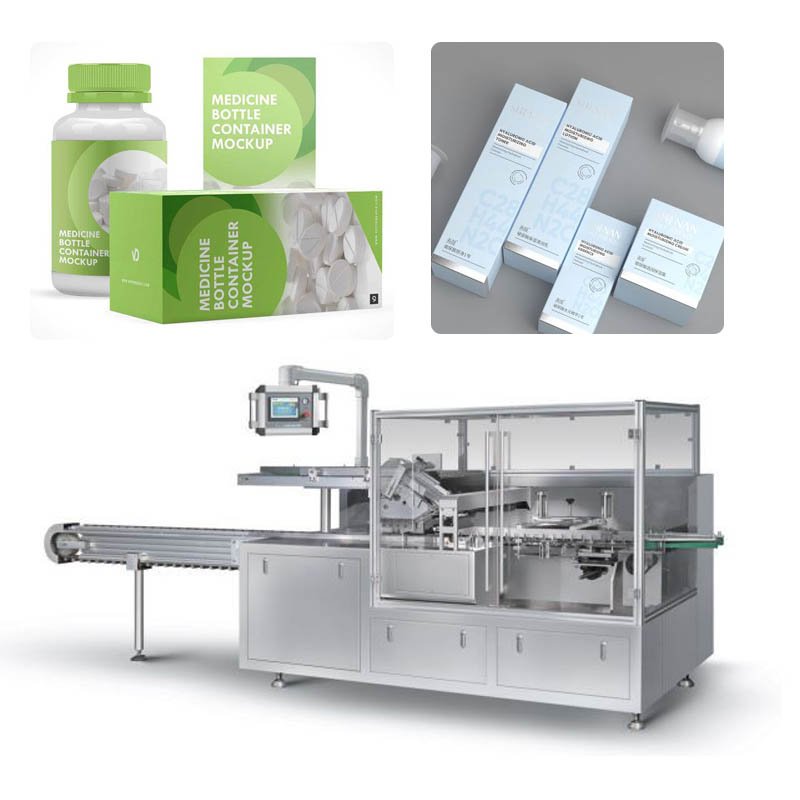
A hardware cartoning machine erects a folding carton, loads an approved hardware unit or prepared group and completes the specified closure. A project may require bulk-part feeding, counting, bagging, tray preparation, inserts, coding and inspection before or alongside the cartoner. Those operations need an explicit equipment and responsibility list.
HIJ’s WZTS-130 automatic cartoner page lists small parts, fasteners and stationery among its application groups. Use that platform as a starting point for a sample-based review. The listed group does not establish a feeder for every screw, nut, washer, bracket or mixed kit.
This page concerns folding-carton secondary packaging. Part manufacture and corrugated shipping-case erection or sealing belong to separate equipment scopes. Show the finished retail pack first, then identify how it will reach the carton-loading station.
Individual unit · Bag · Tray · Mixed kit
Choose the presentation before comparing cartoners
Tell HIJ what arrives at the infeed, not only which hardware category it belongs to. Include packaging films, part surfaces, protrusions and the complete loaded arrangement.
| Presentation | What must be controlled | Inputs for the proposal |
|---|---|---|
| One prepared component | Orientation, stability, guide contact and the approved loading path. | Part drawing, mass, surface condition, carton and any retaining insert. |
| Pre-counted sealed bag | Bag envelope, seal projections, shape variation and internal-count verification ownership. | Real filled bags, dimensions, part count, bagging-line discharge and carton samples. |
| Loose counted parts | Part feeding, counting, grouping and retention until the carton is closed. | Part samples, quantity per carton, acceptable group arrangement and equipment boundary. |
| Tray or compartmented kit | Pocket occupancy, component identity, tray stability and transfer clearance. | Loaded tray, bill of materials, assembly order and approved final presentation. |
| Mixed fastener kit | Correct SKU and count for each component, not simply the overall number of pieces. | A revised component list, count per type, bags or separators and missing/wrong-part challenges. |
Load a prepared bag
Keep kit components assigned
Count each component family
Use a bill of materials to define the kit and its rate
A kit needs a component identity, quantity and revision for each part. Mark whether the supplier receives bulk parts, individual bags, a filled tray or a complete assembled kit. Define who is responsible for the count at each handoff.
| Assumed component | Units per carton | Accepted supply, units/min | Supply-equivalent cartons/min |
|---|---|---|---|
| Screws | 4 | 240 | 240 ÷ 4 = 60 |
| Nuts | 4 | 240 | 240 ÷ 4 = 60 |
| Washers | 8 | 320 | 320 ÷ 8 = 40 |
Planning example only. These quantities and supply rates are assumed, not supported feeder capacities or HIJ production results.
The slowest required component limits the example
The illustrative kit contains 16 pieces in total, but its supply-equivalent limit is 40 cartons/min because eight washers are required in every carton. A cartoner reference rated above 40 does not supply the missing washers. Grouping, loading, rejects and stops may reduce actual accepted output further.
Keep part identity
Different lengths, finishes or thread specifications can share a similar appearance. Name the permitted SKU and define how the proposed process prevents or detects the wrong component.
Define incomplete groups
Agree what happens when one required supply runs out. Identify where an incomplete group waits, is rejected or is cleared before restart.
Control the revision
Link the part list, tray or bag arrangement, carton artwork and operating settings to the same kit revision. A total piece count is not a replacement for the component list.
Geometry and mass are separate decisions
Check the complete pack, loading path and intended load
A carton inside a published size range can still need another feeder or loading mechanism. Dense metal parts, an off-centre group, a moving bag or a sharp projection should be reviewed as part of the actual pack.
| Check | Provide for assessment | Decision it supports |
|---|---|---|
| Complete loading envelope | Overall dimensions of the part, bag or tray, including projections and the intended orientation. | Guide clearance, support, separation and entry through the carton opening. |
| Product and pack mass | Mass of each component and the complete group; centre of mass and how the group can move. | The intended load on conveyors, guides, pusher or carrier; allowable limits need confirmation. |
| Retention and contact | Bag strength, tray or insert design, exposed edges, surface finish and permitted contact points. | Whether the proposed path retains parts without damaging the prepared pack or carton. |
| Carton drawing | Internal and external dimensions, opening face, inserts, board, creases and closure design. | Fit through the loading path, machine format range and final carton handling. |
| Production variation | Sample range for part dimensions, mass, bag shape and carton opening behaviour. | The agreed difficult-format trial and adjustment or tooling scope. |
Request an explicit load limit
The WZTS-130 reference below supplies a carton-size envelope, not a verified allowable hardware-pack mass. Ask for the permitted load for your selected feeding and loading configuration. Confirm the actual component support, insertion method and closing behaviour in the trial.
For lubricated or coated parts, specify the normal surface condition and where product or residue can contact the carton, guides and inserts. Agree material compatibility, cleaning access and appearance criteria with the packaging team.
Feeder · group · transfer · closure
Specify a complete route from parts to finished cartons
For a customized hardware cartoning machine project, separate the bulk-part operation from the carton-loading operation. A base cartoner does not automatically include part sorting, counting, bag sealing or kit assembly.
Prepare the loading unit
Agree whether the cartoner receives a component, a counted group, a sealed bag or a filled tray. Name the equipment or operator supplying it.
Present it consistently
Define orientation, spacing, group retention, contact points and handling of an unstable or doubled unit before loading.
Support the transfer
Show the carton opening, guide contact, support under the pack and the insertion mechanism. Test the actual mass and prepared-pack variation.
Close and verify
Specify the tuck-in or hot-melt scope, printed information, required inspection and reject confirmation for the finished pack.


Published automatic cartoner reference
Review WZTS-130 data without assuming hardware compatibility
Use the current HIJ automatic-cartoner reference to screen the carton and output requirement. Approve the actual hardware pack, feeder, format parts and accepted output separately.
- Base platform
- WZTS-130 automatic cartoner
- Published output
- 30–80 cartons/min
- Carton range, L × W × H
- 70–200 × 30–150 × 13–70 mm
- Carton board reference
- 300–350 g/m²
- Closure
- Tuck-in or hot-melt configuration; confirm equipment and supplied scope.
- Hardware review boundary
- Prepared unit or bulk parts; intended mass, feeding, count, grouping, formats and acceptance.
Source: HIJ WZTS-130 automatic cartoning platform. No hardware-specific rated pack mass or proven hardware output is established here.
A small parts carton below any required format limit, or a pack needing another loading direction, requires a separate review. Keep the opening face and loading orientation on the drawing; changing the order of dimensions does not demonstrate a fit.
Presence · count · identity
Prove the missing-part faults that matter to the kit
State which faults must be detected: an absent loading unit, one missing component, an extra component, a wrong SKU or an incorrectly assembled tray. Each needs an agreed inspection point and a demonstrated response.
Presence of the loading unit
A bag or tray arriving at the loading position can satisfy a presence condition while containing an incorrect kit. Define what that sensor proves and which upstream checks remain necessary.
Component count and identity
Agree the counting or identification method for each required part. Challenge missing, doubled and wrong parts rather than treating a single total count as proof of the entire bill of materials.
Reject confirmation
Define the reject location, collection and verification. An alarm or reject command alone does not show that the faulty pack was removed from accepted production.
Illustrative weighing limitation
Assume a complete pack has a nominal mass of 48 g with an allowed normal range of 47–49 g. If one 0.5 g washer is missing and every other assumption stays the same, the corresponding range is 46.5–48.5 g. The ranges overlap from 47 to 48.5 g. Even an ideal mass reading cannot classify every pack in that overlap from total mass alone.
This is an arithmetic example, not measured hardware variation, a recommended tolerance or a checkweigher specification. Validate the actual good-pack and fault samples for the required inspection task before approving a weighing-based check.
Ask which inspection functions are included, their fault challenges and how results are recorded. If a required fault cannot be resolved by the proposed method, revise the inspection or preparation process before accepting the configuration.
Accepted supply and recovery
Connect preparation, cartoning and downstream handling
When receiving prepared bags or trays, use the accepted loading-unit rate and the number of units per carton. For bulk-fed kits, use the accepted supply of every required component, as shown in the bill-of-materials example.
Agree the mechanical handoff
Provide discharge height, orientation, spacing, group stability and the layout. Name who supplies conveyors, transfer devices, carriers and access for replenishment.
Define stop signals
Specify empty supply, incomplete group, carton shortage and blocked discharge responses. Agree how preparation and cartoning stop together and who authorises restart.
Reconcile accepted packs
Record good loading units, complete cartons, rejects and rework separately. A rejected bag or incomplete kit should not be counted as a finished carton.
A buffer must be designed around the prepared unit or part group it holds. It may address an agreed short interruption, but it does not remove a sustained supply deficit. Include controlled clearance of partly assembled kits and the restart sequence in the acceptance plan.
Trial, changeover and records
Test hardware formats with an agreed fault list
Use actual parts, bags, trays, inserts and production cartons. Select difficult combinations by size, mass, stability and component count, then define the trial duration and acceptance criteria before running the line.
| Test area | Evidence to collect | Agreement needed |
|---|---|---|
| Normal production | Accepted cartons, rejects, stops, reason codes, SKU and material revisions. | Required good output for the complete agreed route and test duration. |
| Handling and retention | Part position, bag or tray damage, carton marks, protrusions and closure result. | Permitted contact, retention method and approved defect examples. |
| Kit and inspection faults | Missing, extra or wrong component challenges and the actual process response. | Required faults, inspection point, detection/reject function and confirmation. |
| Supply and discharge interruptions | Incomplete group, empty feeder, carton shortage, blocked discharge and restart observations. | Signals, accumulation, reject ownership, safe response and recovery sequence. |
| SKU change and clearance | Remaining parts, bags, trays, carton artwork, settings and the first accepted new kit. | Chosen old/new format pair, tooling, people, tools and clearance checks. |
| Configuration record | Tested drawings and bill of materials, parts list, settings, results and unresolved items. | Final agreed supply boundary and responsibility for closing open actions. |
Clear components as well as cartons
When the kit changes, remove the previous component types from the agreed process locations and verify the new bill of materials. Include partially assembled kits, rejected material and settings in the clearance procedure. A changed carton or recipe does not prove that all old components have been cleared.
Use the cartoning machine FAT checklist to organise the agreed evidence. Confirm drawings, manuals, spares, cleaning access and site interfaces in the proposal rather than assuming a standard document or service package.
Parts · pack · rate · inspection
Request an itemised hardware cartoning proposal
Start with part photos, a completed pack, the component list and target good cartons/min. HIJ can review the prepared loading unit or bulk-feed concept against your samples and the proposed platform.
Compare the complete quotation
- Base cartoner, carton formats and intended pack load.
- Bulk-part feeders, counting, grouping, bagging or tray preparation where required.
- Guides, supports, carriers and SKU-specific change parts.
- Inserts, closure, printing, inspection and confirmed rejection.
- Conveyors, buffering, upstream/downstream signals and layout.
- FAT scope, documents, destination utilities, installation, spares and commercial terms.
Buying directly from a hardware cartoning machine factory still requires a defined supply boundary. Compare proposals using the same component list, format set and acceptance tests.
Copy your project brief
Copy the brief into your inquiry, then replace the prompts with your project information.
Hardware cartoning project
Parts, SKU identifiers, dimensions and mass:
Bill of materials and units of each part per carton:
Prepared bag/tray/kit or bulk-feed requirement:
Complete loading-unit dimensions, mass and retention:
Carton drawing, opening face, board and closure:
Required accepted cartons/min and component supply:
SKU formats, tooling and changeover frequency:
Upstream preparation, layout and line signals:
Missing/wrong-part checks and reject confirmation:
Trial criteria, utilities and documentation scope:
Request an Itemised Hardware Cartoning QuoteOpening the inquiry does not submit it. Review the brief and your contact details before sending.
Buyer questions
Hardware cartoning machine FAQ
What does a hardware cartoning machine do?
A hardware cartoning machine erects a folding carton, receives an approved hardware unit, bag, tray or kit, loads it and closes the carton. Bulk-part counting, bagging, tray assembly, coding and inspection are included only when specified. It does not manufacture the parts or replace corrugated shipping-case packing.
Can HIJ review loose fasteners and pre-counted bags?
Both presentations can be submitted, but their feeding scope is different. A sealed bag is one loading unit whose internal count needs an agreed verification point. Loose parts require a defined feeding, counting, grouping and retention process before carton loading. Confirm the proposed equipment and responsibility for each step.
Which HIJ platform is a reference for hardware cartoning?
HIJ’s WZTS-130 automatic cartoner page lists small parts, fasteners and stationery as an application group. Its published reference is 30–80 cartons per minute with cartons of 70–200 × 30–150 × 13–70 mm, stated as length × width × height. The figures do not establish compatibility or accepted output for your hardware pack.
Does the published carton range establish the permitted pack weight?
No. Carton dimensions alone do not establish the allowable product mass or loading force. Send the complete pack weight, centre of mass, orientation, retention method and carton drawing. Confirm the proposed feeder, guides, pusher, carriers and closure against the intended load in the written proposal and trial.
Can carton presence or weighing prove every part is included?
Not by itself. Carton presence only verifies the defined presence condition. A weighing method must show that the required missing-part faults can be distinguished from normal variation in the full pack. Define each part, count and wrong-part challenge, then validate the quoted counting, inspection and rejection functions.
Can one machine run different hardware kits?
An agreed kit set may share a base platform, but different components, counts, bags, trays and cartons can require different feeders, guides, recipes or change parts. Maintain a bill of materials and drawing revision for each SKU, then test difficult formats and the planned changeover pair.
How is the accepted output of a hardware cartoner determined?
Start with good cartons per minute, units of each part per carton and the available accepted supply of each component or prepared loading unit. The slowest required component, grouping, loading, inspection, stops and changeovers can limit output. Verify the complete agreed route over a defined trial duration.
What should I send for a hardware cartoning quotation?
Send part and prepared-pack photos, dimensions and mass, parts per carton, the kit bill of materials, bags or trays, carton drawings, required good output, upstream supply and layout. Add closure, coding, inspection, rejection, utilities, tooling and acceptance requirements for an itemized proposal.
From component list to configured carton
Show us the complete hardware pack
Send the parts or prepared loading unit, carton drawing and target output. Request a feeding and loading concept, inspection scope, format list and trial basis for an itemised quotation.
Discuss My Hardware Cartoning Project