
HIJ Machinery · Bar soap secondary packaging
Soap Cartoning Machine
Specify the cartoner around your finished soap bar, wrapper and carton. Review feeding, surface protection, format changes and accepted output, then request a sample-based configuration and quotation.
Request a Soap Cartoning ReviewWrapped or unwrapped bar reviewProduction carton samplesDefined feeder & trial scope
Define the packaging step
Box the finished bar with an agreed loading route
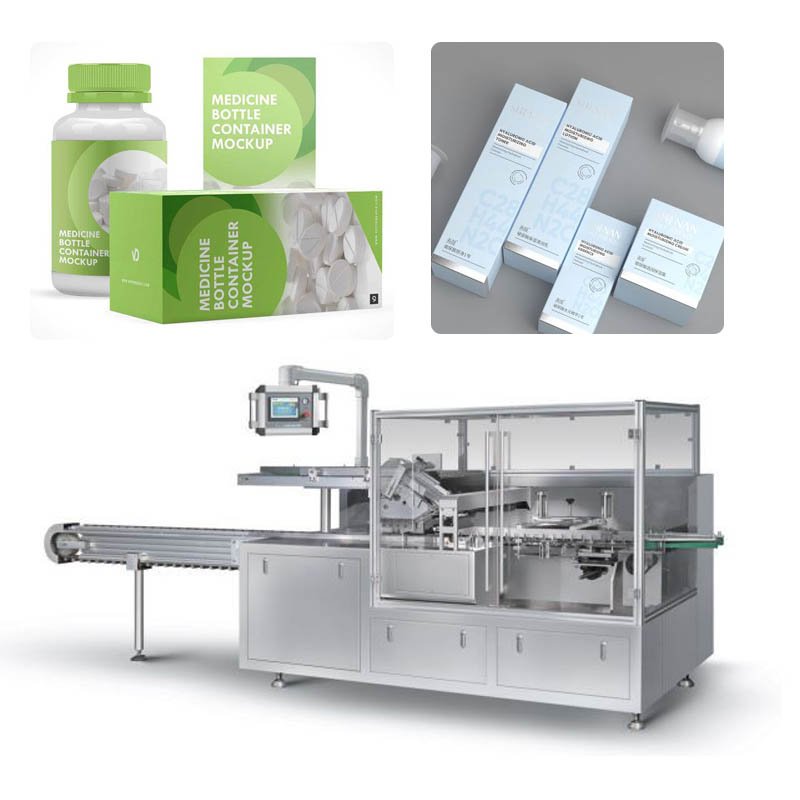
A soap cartoning machine erects a folding carton, receives a finished soap bar or an approved group, loads it and completes the specified carton closure. The project may also include a leaflet, coding and inspection. Soap manufacture, cutting, curing and primary wrapping are separate processes unless a complete line scope explicitly includes them.
For a regular bar, a controlled side-loading route is one option to review. The actual soap shape, wrapper seams, carton opening and permitted contact points determine the feeder and insertion method. Rounded, irregular or grouped bars may need another presentation or loading concept.
Start with a complete retail pack and a production sample set. A generic machine photo or a carton that fits by hand is useful for discussion, but neither approves automatic feeding and loading.
Bar, wrapper and carton together
Define every soap format in the quotation
Send the condition in which the bar will reach the cartoner. Include production variation, embossing, wrapper folds and the final presentation inside the box.
| Format | Handling questions | Sample set |
|---|---|---|
| Unwrapped regular bar | Where can guides and the pusher contact the bar? What chips, rub marks or surface changes are unacceptable? | Representative bars in their normal cartoning condition, dimensions, mass and approved defect examples. |
| Paper- or film-wrapped bar | Does the wrapper move, loosen or catch? How far do seams and end folds project beyond the bar? | Wrapped production bars with actual seams, overlap, print and orientation. |
| Rounded or sculpted bar | How will each bar be stabilised and oriented before insertion? Is a carrier or insert needed? | The complete bar envelope, artwork-facing direction and any supporting insert. |
| Several bars per carton | How are bars counted, grouped and retained during transfer? Are separators or individual wraps included? | A complete loaded pack, bars per carton, grouping sequence and component list. |
| Small hotel soap carton | Does the carton fall inside the proposed machine range in the required loading orientation? | Dimensioned carton blank and erected carton, including flap and opening-face details. |
Define the outer envelope
Use maximum finished dimensions, including wrapper seams and folded ends. Net soap weight alone does not define the space or contact geometry needed for loading.
Set the presentation
Mark which face should be visible and which end enters first. Include print orientation, inserts and the acceptable position of the bar inside the closed carton.
Approve the difficult pack
Include the smallest carton, largest wrapped bar and most sensitive surface in the review. Each agreed SKU needs a record of its feeder, guides and format parts.
Drawing to production fit
Check bar clearance, carton geometry and platform limits
Use one drawing convention for length, width and height. Mark the carton opening and insertion direction rather than rotating three numbers to fit a published range.
| Check | Include in the drawing or trial | Why it matters |
|---|---|---|
| Finished bar envelope | Maximum length, width and thickness; rounded edges, embossing, mass and production variation. | Defines support, orientation, guide contact and the feeder concept. |
| Wrapped envelope | Overall dimensions plus seam projection, loose folds and end-seal position. | A protruding wrapper can meet a carton edge before the soap body enters. |
| Usable carton interior | Internal dimensions, insert thickness, flap intrusion and the loading opening. | Checks clearance along the actual insertion path, not only the outside box dimensions. |
| Carton blank and board | Blank drawing, creases, opening face, board specification and decorated production samples. | Carton erection and closure depend on production board and crease behaviour. |
| Machine format range | All erected dimensions in the manufacturer’s convention, plus required format parts. | A pack below or above a platform limit needs a separate engineering review. |
Wrapper clearance
Group retention
Small carton checkpoint
The WZTS-130 reference below starts at 70 × 30 × 13 mm. A small guest-soap carton may fall below that envelope. Send the opening-face drawing and request a fit assessment before treating the platform as suitable.
From discharge to carton
Agree bar separation, support and insertion as one sequence
An automatic soap cartoning machine needs a repeatable product presentation. Define what arrives from the upstream process and what the proposed feeder must deliver to each carton.
Receive the finished bar
Record discharge orientation, spacing, height and surface condition. Identify whether the bar is wrapped and where rejects are removed.
Separate and orient
Specify the accepted gap, facing direction and allowed accumulation. Include an unstable, touching or incorrectly oriented bar in the trial challenges.
Support and load
Show guide contact, support under the bar, pusher contact and the carton opening. Validate the complete insertion path and any grouped transfer.
Close and inspect
Agree closure appearance, code checks, missing-product detection and rejected-pack handling. Keep rejected packs outside the accepted output count.


Make damage criteria visible
Use agreed photographs or physical examples of acceptable and rejected bars, wrappers and cartons. Check chipped edges, rubbed embossing, wrapper movement, loose folds, crushed carton corners and final orientation. Set the test method and limit with the buyer rather than promising universal damage-free handling.
Published base-machine data
Review the WZTS-130 platform against your soap pack
HIJ’s current automatic cartoner page publishes the following WZTS-130 reference values. They screen the base machine; they do not establish compatibility or accepted output for a particular soap bar.
- Platform
- WZTS-130 automatic cartoner
- Published output range
- 30–80 cartons/min
- Carton range, L × W × H
- 70–200 × 30–150 × 13–70 mm
- Carton board reference
- 300–350 g/m²
- Carton closure
- Tuck-in or hot-melt configuration; confirm supplied equipment and scope.
- Project-specific review
- Soap feeder, bar condition, guides, wrapper interface, formats, inspection and acceptance criteria.
Source: HIJ WZTS-130 automatic cartoning platform. Confirm the selected configuration and current data in the written proposal.
For unusually shaped bars or mixed amenity packs, compare the loading routes with HIJ before selecting a base machine. One catalogue category does not mean that soap bars, bottles and kits can use the same feeder or format tooling.
Wrapping interface · accepted output
Balance bar supply and cartons without losing the pack count
Specify bars per carton and good cartons per minute separately. If a wrapper is installed upstream, include its actual sustained supply, discharge geometry and interruption behaviour.
Illustrative rate check
At an assumed 120 accepted wrapped bars/min and 2 bars/carton, the supply-equivalent rate is 60 cartons/min before any cartoning rejects or stops: 120 ÷ 2 = 60. These assumed numbers are a planning example, not HIJ test data or a promised line output.
A buffer can accommodate an agreed short interruption, but it cannot correct a sustained mismatch between bar supply and cartoning demand. Define where bars can wait, how they stay oriented and who controls restart.
| Interface item | Define before order | Verify in the trial |
|---|---|---|
| Product handoff | Discharge height, orientation, spacing, wrapper seam position and transfer ownership. | Transfer the approved wrapped bar without losing orientation or disturbing the wrap. |
| Supply interruption | Available signals, empty-infeed response and permitted accumulation. | Stop and restore supply; confirm the response of the agreed feeder and cartoner controls. |
| Downstream blockage | Buffer location, stop command, maximum accumulation and restart sequence. | Demonstrate the agreed blocked-discharge response and controlled restart. |
| Rejected product | Reject point, collection, rework policy and responsibility for incomplete groups. | Keep rejected bars and cartons outside accepted production and reconcile counts. |
Soap wrapping equipment is included only if stated in the proposal. This page covers folding-carton secondary packaging rather than soap manufacture or flow wrapping.
Cleaning and SKU changes
Plan access, product clearance and the first accepted new pack
Review residues and contact
Define the normal bar condition and whether loose particles, wrapper fragments or adhesive residues may be present. Ask how the proposed guides, belts and carton holders can be inspected and cleaned. Approve contact materials and cleaning methods for the actual product.
Clear the old format
Remove old bars, cartons, leaflets, inserts and codes before the next SKU. Agree how mixed-format material is prevented during restart, including any partly filled groups or rejected cartons.
Measure a complete changeover
Choose a representative old-to-new format pair. Record people, tools, changed parts, settings, trial waste and the time from the last accepted old carton to the first accepted new carton.
Stored settings do not replace physical feeder parts or guides. Request a SKU-to-tooling list and identify which adjustments are repeatable settings and which require a different component. Cleaning duration and changeover time should be measured under agreed conditions.
Production-representative evidence
Set soap cartoning acceptance criteria before the trial
Use finished bars, actual wrappers, decorated cartons and required inserts. Agree the SKU set, test duration and acceptance thresholds before running the machine.
| Test | Evidence to record | Agreement needed |
|---|---|---|
| Normal production | Accepted cartons, rejects, stops, reasons, tested SKU and material revisions. | Sustained good output over the defined period; platform rated speed is a separate reference. |
| Handling and appearance | Bar chips or marks, wrapper movement, carton scuffs, corner damage and pack orientation. | Approved defect examples, inspection method and acceptable limits. |
| Missing or misplaced product | Challenges to the quoted presence, grouping and reject functions. | Detection point, stop or reject action, reject confirmation and handling of incomplete groups. |
| Carton closure and code | Flap position or bond check, finished appearance and code result where specified. | Closure method, supplied equipment, readability criterion and required verification. |
| Stops and restart | Infeed interruption, carton shortage, blocked discharge and restart observations. | Safe response and recovery sequence for the configured line. |
| Format change and cleaning | Parts, people, tools, settings, clearance checks and first accepted new carton. | Agreed format pair, changeover definition and cleaning-access scope. |
Match inspection to the fault
A carton-presence signal does not verify bar count or surface appearance. A checkweigher, camera or other device may be reviewed for a defined fault, but its ability must be challenged with representative good and bad packs. Specify the inspection device, settings, reject confirmation and acceptance test in the quotation.
Keep the final record with the approved sample and drawing revisions, settings, tooling, results and open actions. Use the cartoning machine FAT checklist to organise the agreed acceptance basis.
From samples to an itemised proposal
Prepare your soap cartoning quotation
Start with soap and carton photos, dimensions, bars per carton and the required good output. Send available drawings and production samples so HIJ can review the feeder, loading route and complete scope.
Confirm what the price includes
- Base platform and approved soap/carton format set.
- Bar feeder, orientation, grouping, guides and change parts.
- Wrapper interface, conveyors, buffering and control signals.
- Inserts or leaflets, closure equipment, coding and inspection.
- Trial materials, FAT record, manuals, installation and training scope.
- Shipping basis, destination utilities, service and commercial terms.
An entry-level machine figure does not price an approved soap packaging line. Compare itemised proposals with the same format and acceptance scope.
Copy your project brief
Copy the brief into your inquiry, then replace the prompts with your project information.
Soap cartoning project
Soap shape, dimensions, mass and condition:
Wrapped or unwrapped; seam and end-fold details:
Bars per carton; leaflet, insert or separator:
Carton dimensions, opening face, board and closure:
Required accepted cartons/min and incoming bars/min:
SKU formats and changeover frequency:
Existing wrapper discharge, rate and layout:
Feeding, coding, inspection and reject requirements:
Trial criteria, utilities and documentation scope:
Request an Itemised Soap Cartoning Quote
Review your brief and contact details in the inquiry form. Opening the form does not submit it.
Buyer questions
Soap cartoning machine FAQ
What does a soap cartoning machine do?
A soap cartoning machine erects a folding carton, receives a soap bar or approved group, loads it and closes the carton. Wrapping, leaflet insertion, coding and inspection are included only when specified. Soap making, cutting and curing are separate upstream operations.
Can the machine carton both wrapped and unwrapped soap bars?
Both formats can be submitted for review, but they need different handling and cleaning checks. Send the actual bar, wrapper seams, carton and production samples. Confirm contact materials, guide surfaces, product condition, cleaning access and the agreed damage criteria before approving either format.
Which HIJ platform can be reviewed for a soap cartoning project?
The WZTS-130 automatic cartoner is a platform reference for regular products. Its published range is 30–80 cartons per minute with cartons of 70–200 × 30–150 × 13–70 mm, stated as length × width × height. These figures are not a validated soap-specific configuration or output guarantee.
Will a small hotel soap carton fit the standard platform?
Not necessarily. Compare the carton drawing and loading direction with every dimension of the published machine range. The WZTS-130 reference starts at 70 × 30 × 13 mm. A carton below any required limit needs a separate engineering assessment; rotating the numbers does not establish compatibility.
Can one soap cartoner handle different bar shapes and multipacks?
Only an agreed format set can be approved. Different bar shapes, wrapped envelopes, counts and carton openings may need different feeders, guides or change parts. Test the difficult formats and the planned changeover pair with representative samples.
How is soap cartoning output verified?
Specify accepted cartons per minute and bars per carton, then test the complete feeding, loading, closure and inspection route. Record good cartons, rejects, stops and reasons over an agreed duration. Platform rated speed alone does not establish sustained output for your soap and carton.
Does a soap cartoning machine include a flow wrapper?
A flow wrapper is a separate packaging stage unless it is explicitly included in the proposal. Define the wrapper discharge height, orientation, rate, spacing, transfer device, stop signals and rejected-product handling. Confirm who supplies every conveyor, buffer and control interface.
What determines the soap cartoning machine price?
The quotation depends on the platform, bar feeder and grouping, carton formats, wrapper interface, closure, coding, inspection, change parts and acceptance scope. Send soap and carton samples, required good output and the line layout for an itemized quotation.
Soap · Wrapper · Carton · Output
Send the complete soap pack for review
Share the finished bar, wrapper and carton, plus the required accepted output. Request a proposal with a defined feeding concept, format list, inspection scope and trial plan.
Discuss My Soap Cartoning Project