
Can it handle the real product?
Review dimensions, fragility, dust, orientation, feeding behavior, cleaning needs and representative samples. The feeder and reject path often change the project more than the machine country.
Commercial blister-machine comparison | evidence before origin
Compare suppliers through the same product, finished pack, accepted-output target, quotation boundary and FAT evidence. Country of origin can narrow a shortlist, but it cannot prove that two offers are technically or commercially equivalent.

Quick answer
A Chinese blister packaging machine and a European blister packaging machine are comparable only after both quotations describe the same product route, pack construction, output definition, automation, documentation and acceptance test. An origin label, catalogue speed or headline price does not establish equivalence.
Review dimensions, fragility, dust, orientation, feeding behavior, cleaning needs and representative samples. The feeder and reject path often change the project more than the machine country.
Freeze the cavity geometry, material grades, web widths, print registration, seal criteria, perforation and cut position. Ask every supplier to identify assumptions and unresolved trials.
Compare good packs after rejects, stops and interventions - not only mechanical cycles per minute. Define the planned operating factor, run duration and evidence to retain.
Agree the URS response, drawings, document index, FAT protocol, instruments, samples, acceptance limits and deviation workflow before the purchase order.
Procurement rule: do not award points for a supplier's country. Award points for a complete response, clear exclusions, measurable acceptance criteria and retained evidence.
Side-by-side buyer matrix
For a cold-form or DPP-260 shortlist, require each supplier to identify the proposed machine, approved forming and lidding construction, pocket geometry, feeder, tooling, inspection and reject scope. A common component brand or nominal rate does not establish an equivalent project.
Record accepted-output test conditions, changeover work, document responsibilities, service inclusions, consumables and exclusions next to each offer. Use dated official technical documents or the buyer’s actual proposals for any named competitor. No country-wide price, speed, lead-time or quality equivalence is established by this framework.
Use this matrix to prevent two different scopes from being presented as two different prices. Require each answer to point to a quotation line, approved drawing, document or planned test.
| Decision | Question for every supplier | Evidence to compare | Commercial risk if open |
|---|---|---|---|
| Product handling | Which feeder, contact parts and product controls are included for the approved dosage form? | Sample review, feeder description, contact-material list and trial plan. | Extra feeder work, damage, empty cavities or unstable output. |
| Pack construction | Which forming and lidding materials, cavity depths, pitches and web widths are inside the offered window? | Approved pack drawing, material specifications and forming-route statement. | Tooling redesign, material change or reduced operating window. |
| Accepted output | What finished-pack output will be tested with the nominated product, material, tooling and reject logic? | Calculation basis, packs per stroke, operating factor and sustained-run protocol. | A high catalogue rate that does not translate into good packs. |
| Tooling and changeover | Which format sets, change parts, carts, lifting aids and recipes are included? | Itemized tooling list, format drawings and approved changeover method. | Unpriced tooling, long setup, adjustment dependence or missing storage. |
| Inspection and rejection | Which defects are detected, how are they challenged and where are rejects confirmed? | Functional description, challenge set, reject path and retained FAT results. | Manual inspection, unverified reject segregation or unclear data ownership. |
| Controls and data | Which user roles, alarms, recipes, records, backups and interfaces are offered? | Control description, screen list, software boundary and interface specification. | Late software changes or a compliance claim without configured functions. |
| Documents | What is available, in which language and revision, and what requires a paid option? | Document index, sample documents, approval route and responsibility matrix. | Missing manuals, drawings, certificates, protocols or handover records. |
| FAT and site scope | Who supplies product and materials, how long is the run, and which site activities are included? | Approved FAT protocol, site-service plan, prerequisites, exclusions and rates. | Incomparable testing, travel extras, schedule delay or disputed acceptance. |
| Lifecycle support | How are spare parts, remote support, software backups and change notifications handled? | Recommended-parts list, support channel, service terms and obsolescence process. | Unplanned downtime or support assumptions that were never contracted. |
Swipe horizontally to review all comparison columns.
Proposal scoring
A useful scorecard distinguishes a confirmed contract item from a supplier assumption. Give the highest weight to requirements that affect product quality, accepted output, regulatory evidence or launch timing. Keep commercial preferences separate so a low headline price cannot conceal an open technical risk.
The response identifies the exact feature, document, drawing, option or responsibility and connects it to the quoted scope. Record the quotation reference and revision.
The answer depends on product samples, material lots, artwork, a third-party interface or a buyer decision. Name the prerequisite, owner and latest decision date.
The capability is not assumed. Define the trial or FAT method, sample plan, instrument, acceptance limit and retained result that will close the requirement.
Price the remedy or accept the risk deliberately. Assign an owner, commercial allowance and closure milestone instead of hiding the gap inside an overall supplier score.
Fair comparison: apply the same scoring definitions and evidence threshold to every supplier. A promise without a quotation line or test route remains open, regardless of brand reputation or country of manufacture.
Quotation normalization
A lower offer may exclude work that another supplier has priced. A higher offer may include tooling, inspection, documents, testing or site services that are absent elsewhere. Put every cost into the same boundary before calculating the difference.
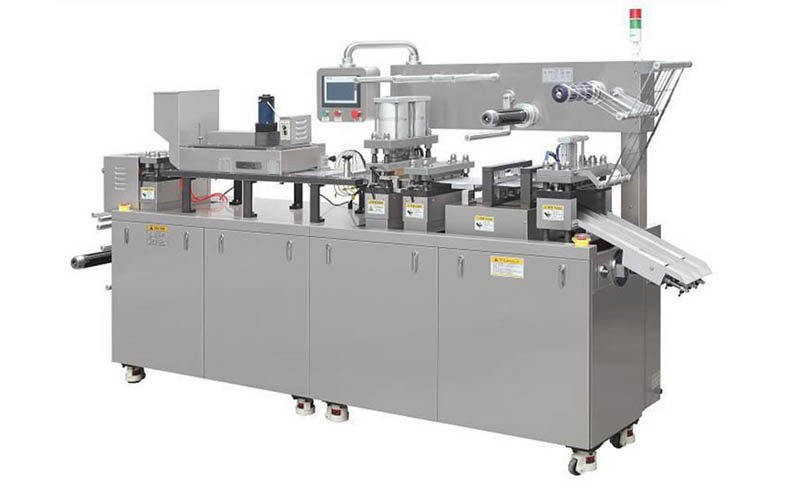
Use the offered platform, layout and station scope as the comparison baseline.
Visuals are not specifications
Factory photos and brand presentations help identify a platform, but they do not prove what is included in your quotation. The signed scope should identify the final feeder, tooling, controls, inspection, utilities, documents and test boundary.
Selection logic
If the site already standardizes one control architecture, spare-parts system or service contract, compatibility may justify a supplier preference. Record that requirement in the URS instead of assuming every machine from a region shares it.
Compare named support channels, technician location, remote-access rules, travel terms, spare-parts stocking and response commitments in the contract. Geography alone does not establish service quality.
Prefer the supplier that answers the URS, declares exclusions, accepts representative trials and records the FAT results. A transparent gap is safer than a broad promise with no test method.
Risk register
| Open item | What to confirm before award | Where to record it | Acceptance consequence |
|---|---|---|---|
| Unproven product feed | Representative samples, difficult product and required orientation. | Trial plan, feeder specification and FAT prerequisites. | Do not approve output until the offered feeder is tested. |
| Material substitution | Exact grade, thickness, supplier and acceptable equivalent process. | Material specification and approved-change procedure. | Repeat the relevant forming or sealing test after a material change. |
| Ambiguous speed | Packs per stroke, planned factor, reject logic and sustained run. | URS response, calculation sheet and FAT protocol. | Accept good packs under agreed conditions, not catalogue cycles. |
| Inspection assumption | Defect library, detection boundary, reject verification and data retention. | Functional description and approved challenge set. | Demonstrate each required defect and the complete reject path. |
| Document bundle | Available document types, language, templates, revisions and approvals. | Contract document index and responsibility matrix. | Close missing items before shipment or record an approved deviation. |
| Site responsibility | Utilities, unloading, installation, commissioning, SAT, training and travel. | Scope matrix, site plan and commercial terms. | Do not let undefined site work become an unplanned schedule dependency. |
Swipe horizontally to review all risk columns.
Common FAT logic
The FAT should be approved before execution and should use the contracted configuration. Equipment documents can support the buyer's qualification work, but they do not replace the facility's quality system, process validation or product-release responsibilities.
| FAT decision | Method to approve | Evidence to retain | Question answered |
|---|---|---|---|
| Web handling | Run nominated material lots through unwind, splice and tracking conditions. | Material IDs, reel setup, tension settings, splice and tracking observations. | Can the exact web feed consistently? |
| Forming repeatability | Form the approved layout at agreed settings and sample points. | Approved samples, settings, cavity measurements and defect log. | Does the web form the approved geometry? |
| Product feeding | Run representative and challenge product through the offered feeder. | Product IDs, feeder settings, misses, damage and intervention log. | Can the product enter the correct cavity without unacceptable damage? |
| Seal process | Use the agreed seal or integrity method across the operating window. | Recorded settings, sample IDs and test results. | Is there a usable process window for the material pair? |
| Inspection and rejection | Run approved challenge defects and verify the complete reject path. | Challenge set, detection results, reject confirmation and disposition record. | Are defined defects detected and segregated? |
| Sustained run | Run for the agreed duration under the frozen configuration. | Start/stop times, gross and accepted output, rejects, waste, interventions and deviations. | Can the complete process meet the accepted-output target? |
Swipe horizontally to review all FAT columns.
Inquiry package
HIJ can review the same inputs you use for other shortlisted suppliers and identify which scope items are confirmed, optional, excluded or still subject to trial.
Related buyer resources
Buyer questions
Compare one scope, one test and one commercial boundary
Send the product, blister drawing, materials, accepted-output target and documentation boundary. HIJ can return a configured response that you can compare line by line with another supplier.