
DPP-250 or DPP-260?
Compare the proposed blister machines on one pack, one output target and one supply scope. Request a configuration matched to your production job.
Start with the pack
The right comparison is between two offered configurations, not two model numbers. Give both proposals the same product, blister drawing and material structure, then compare the accepted output, operating tasks and supplied equipment. A larger model number or a headline cycle rate does not establish which machine is better for your project.
Keep the current pack and future formats separate. A proposal can suit the first product while needing another feeder, tool set or inspection arrangement for the next. Record those differences before ranking price or capacity.
Review the DPP-250

The DPP-250F1 manual describes a plate-type blister machine with forming, feeding, flat heat sealing and cutting stations. Its documented arrangement uses a frequency-controlled main drive and mechanical gripper indexing. The manual also describes a split-frame installation arrangement, sealing-plate lift at a stop and alarms for film exhaustion or breakage.
For a DPP-250 proposal, review the actual feeder, format tools, web handling and operator access. Compare the selected product and pack against that equipment list. The HMI review should include operating settings, temperature/status displays and access to the functions your operators need. List any required electronic-record functions separately in the proposed control scope.
Open the DPP-250 product page and its specification page for the detailed configuration review.
Review the DPP-260
The DPP-260/360K technical material describes an automatic flat-plate arrangement with modular stations, guided station insertion and handle locking. It discusses mechanical and configured servo traction, HMI parameter setting, camera observation and missing-product detection/rejection. Match these items to the equipment list so the feeder, drive and inspection arrangement are clear in the quotation.
For a DPP-260 proposal, check how loading, forming, sealing, indexing, inspection and discharge work together for the selected pack. Include changeover access, the proposed tooling and the required transfer to downstream equipment. Review cold-form requirements as a separate configuration decision rather than assuming a universal material changeover.
Open the DPP-260 product page for the current equipment scope and project-specific quotation route.
Compare the configuration
Use the same buying brief for both proposals. Record each response against these decisions, including any item that needs a sample trial, a separate option or a buyer-supplied service.
| Decision | Common comparison basis | Record in each proposal |
|---|---|---|
| Product and feeder | Compare the same shape, dimensions, surface behaviour and handling needs. Identify the loading arrangement and the samples needed to test it. | Feeder arrangement, product range, sample requirements and operator tasks. |
| Pack and tooling | Use one approved drawing with pocket layout, sheet dimensions, cut pattern and material specification. | Matching forming, sealing and cutting tools; included and additional formats. |
| Material route | Compare the complete forming web and lidding pair. Thermoforming and cold-form projects have different tooling and process requirements. Select the route from the product-protection target and finished-pack evidence. | Material specification, selected process, pack checks and trial conditions. |
| Controls and inspection | Name the supplied drive arrangement, PLC/HMI functions, registration and inspection tasks. Specify what is detected, what causes rejection and how an operator confirms the result. | Functions, detection/rejection logic and any required electronic-record evidence. |
| Utilities and layout | Use the offered layout and utility schedule. Include installation access, operating clearance, loading positions and collection or conveyor discharge. | Site requirements and the interface with a cartoner or other downstream equipment. |
| Changeover and support | Identify the format parts, adjustments, cleaning access, training and handover information required for your product range. Compare the work between batches as well as the running state. | Format-change tasks, supplied parts, training and handover responsibilities. |
Agree the trial evidence
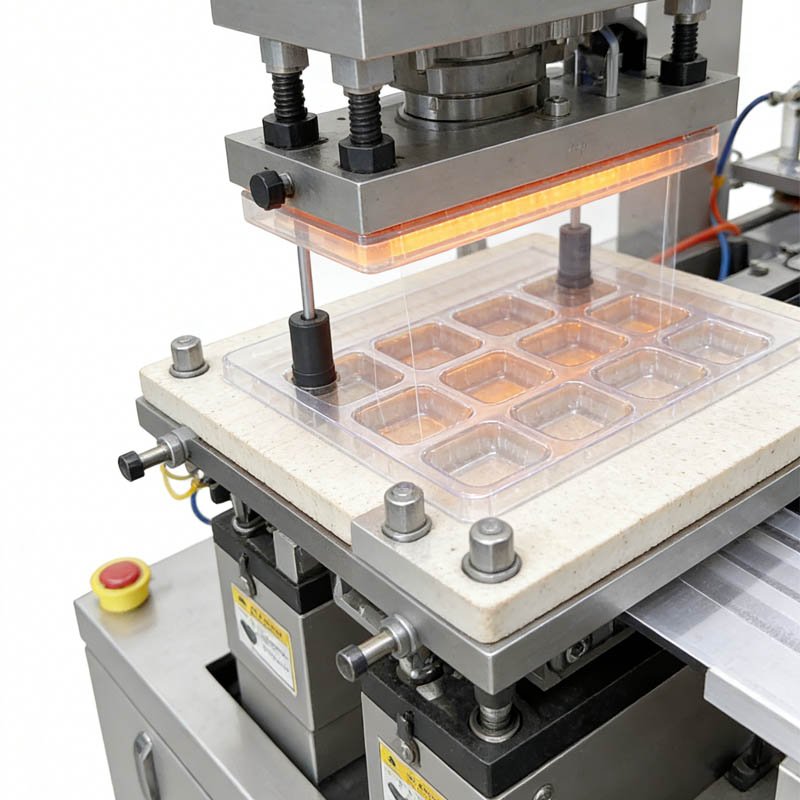
Use one trial plan for the shortlist. Set the pack-quality checks, loading challenges, inspection/rejection tasks and operating conditions before the run. Identify what must be witnessed and which settings, measurements and results will be retained. Compare unresolved items alongside the output result.
Put document responsibilities in the same buying record. A template, an approved protocol and an executed test record are different deliverables. Define the documents, revisions, approval roles and site work needed for your project.
Use the DPP-250 document-support page and DPP-260 validation-document review for those detailed discussions.
Plan accepted output
Enter your daily target in accepted blister packs and the net packaging hours available. Deduct planned breaks, changeovers and other non-packaging time when defining those hours.
Change the planning values to match your production job, then compare the required rate with the offered configuration and agreed trial results.
Planning example
24,000 accepted packs ÷ 6 net packaging hours = 4,000 accepted packs/hour, or 66.7/minute.
These are illustrative demand inputs, not a performance rating for either machine.
Your demand calculation
66.7 accepted packs/minute
Measure accepted output
A cycle rate, a blister-sheet rate and a tablet rate describe different quantities. Use the same pack drawing and unit when comparing proposals. State the number of sheets per cycle and product units per sheet, then identify how feeding, inspection, rejects and stops affect the result.
Define the trial window before testing. Record its duration, accepted sheets, rejected sheets and stops, together with the product, material and settings.
An accepted-sheet rate can be calculated from accepted sheets divided by the agreed elapsed trial time; the same timing convention must be used for both proposals.
Discuss sustained production and batch rhythm separately from a short demonstration. Include the agreed changeover and replenishment conditions. For a connected line, a blister machine's demonstrated rate alone does not establish the complete line's accepted output.
Use the speed and output guide for the detailed planning discussion.
Price one supply scope
Equipment boundary
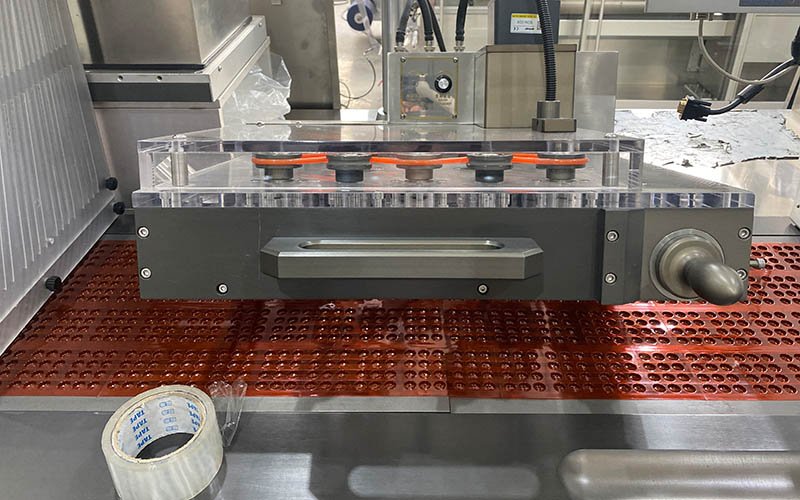
Request itemised quotations on the same equipment boundary. Compare the machine, feeder, format tools, inspection, discharge and any downstream interface.
List additional formats separately so that an apparently lower equipment price does not hide missing tooling or functions.
Project costs
Compare packing, delivery terms, installation, training, document deliverables, requested qualification support and spares.
Identify which items are included, separately charged or supplied by the buyer. Agree payment and delivery milestones in the proposal.
Use actual quotations for the comparison. Generic price bands, fixed freight assumptions or a percentage added to a machine price do not establish the cost of your installation.
Buying questions
Can existing DPP-250 tools be used on DPP-260?Do not assume interchangeability from the model names. Identify the tool drawings, station interfaces, pocket layout, material and sealing/cutting geometry. Ask for a written compatibility assessment of the proposed equipment and identify any replacement parts or trials. A new machine quotation should distinguish reuse from new tooling.
What if the quotations cover different SKUs?Separate the common must-pass formats from each proposal's additional scope. Compare the common formats using the same product, drawing, material and acceptance criteria, then assess the remaining SKUs and their feeder or tooling requirements individually. State which formats are included in each price and which still need a trial or additional equipment.
What if an option is added after URS approval?Record the requested change and its effect on the equipment, software, interfaces, tooling and test coverage. Agree the revised price, delivery impact, drawings and responsibilities before implementation. Update the approved configuration and acceptance plan together so that the later option does not sit outside the documented buying basis.
Continue by decision
- DPP-250 product and configuration
- DPP-260 product and configuration
- Alu-Alu configuration route
- DPP-250 specifications
- DPP-250 document-support review
- Electronic-record requirements
- GMP equipment-document questions
- Destination and site planning
- Forming-material selection
- Speed and output planning
- Blister-machine range
- Downstream and turnkey scope
Discuss your two proposals
Share your existing URS, pack drawing or comparison sheet and flag the open decisions. Use one brief for both configurations so the quotation, trial and handover can be compared on the same basis.