📋 Technical Compliance Guide — URS for Syringe Blister Packing Machines
How to Write a URS for a Syringe Blister Packing Machine: The Complete Field-Tested Guide
Most FAT failures on syringe blister lines don’t start on the factory floor. They start in the document that nobody read carefully enough — the User Requirement Specification. Here’s how to write one that actually protects you.
- 10+ Clauses buyers routinely omit
- DQ/IQ/OQ/PQ Full validation lifecycle
- ±0.1 mm Barrel diameter tolerance spec
- 21 CFR 11 Electronic records requirement
🎯 Direct Answer
A URS for a syringe blister packing machine is a formal pre-procurement document specifying syringe product dimensions (barrel diameter ±0.1 mm, flange geometry, overall length), output speed in blisters/minute, sealing material compatibility, cleanroom classification, GMP structural requirements, PLC/SCADA integration protocol, and IQ/OQ/PQ acceptance criteria — all defined before any vendor is contacted.
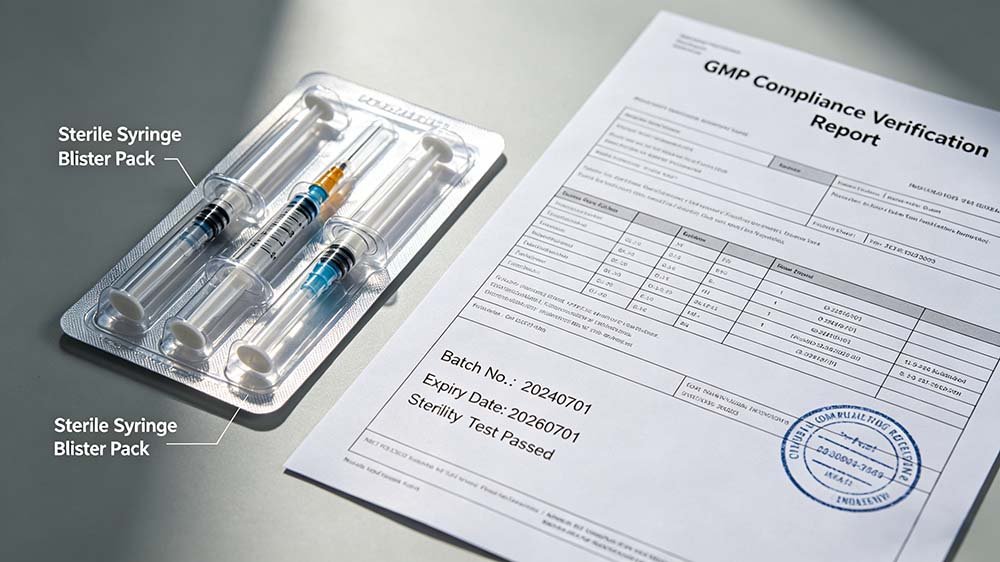
A validated syringe blister packaging line starts long before equipment arrives — it starts with a well-structured URS that defines every acceptance boundary.
What Is a URS and Why Does It Define Your Entire Validation Timeline?
A User Requirement Specification (URS) for a syringe blister packing machine is the legally binding technical baseline from which Design Qualification (DQ), Installation Qualification (IQ), Operational Qualification (OQ), and Performance Qualification (PQ) protocols are all derived — meaning every ambiguity in the URS becomes a disputed test criterion six months later during validation.
That’s the number that should stop you. Not vague language around “compatibility with syringes,” but the specific tolerance stack that determines whether the machine you receive can actually handle your syringe format without jamming at station three.
I’ve audited blister packaging lines in Colombia, Bangladesh, and the Philippines where the URS was one page. Two bullet points on “syringe handling” and a reference to “GMP standards.” The resulting machines were built to whatever the vendor assumed — and the vendors assumed the lowest-friction interpretation of every underspecified clause.
The IQ reviewer at one plant in Dhaka told me the qualification had stalled for four months because the URS said “suitable for 1 mL and 5 mL syringes” without specifying the flange-to-barrel step dimension, which differed by 2.4 mm between their two SKUs. The tooling had been built for one format. Nobody had checked.
A well-constructed URS for a syringe blister packing machine typically runs 25–40 pages. Three non-negotiable pillars hold it together: product specifications, cGMP compliance requirements, and integration interfaces. Everything else builds on those three.
⚠ Applicable Standards — URS Compliance Framework
- EU GMP Annex 15 (Qualification & Validation)
- WHO TRS 992 Annex 3
- 21 CFR Part 211.68
- 21 CFR Part 11 (Electronic Records)
- ICH Q10 (Pharmaceutical Quality System)
- ISO 13849-1 (Machine Safety)
- ISO 11607-1 (Sterile Barrier Packaging)
- USP <1207> (Container Closure Integrity)
The 3 Pillars Every Syringe Blister Machine URS Must Cover
A URS that covers these three pillars completely gives you a machine you can validate. One that skips any of them gives your vendor permission to make a decision that should have been yours.
📦 Pillar 1: Product Specifications
Syringe barrel OD, flange diameter, overall length, tip cap geometry, nest or tray configuration, fill volume, label presence, and any secondary components (needle shield, plunger rod extension). Each parameter needs a tolerance band, not just a nominal value.
⚙️ Pillar 2: cGMP Compliance
Material of contact surfaces (316L stainless steel minimum), cleanroom classification compatibility (ISO 7 / ISO 8), HEPA filtration requirements, dead-leg-free product contact zones, surface finish Ra ≤0.8 µm, and documented changepart traceability per EU GMP Annex 15.
🖥️ Pillar 3: Integration Interfaces
PLC brand and version (Siemens S7-1500 or Allen-Bradley ControlLogix are most common), MES/ERP connectivity protocol (OPC-UA preferred), 21 CFR Part 11 audit trail requirements, HMI language requirements, reject station logic and data output format, and upstream/downstream conveyor height and pitch.
📋 Pillar 4: FAT/SAT Criteria
Define the acceptance criteria before you issue the URS — not after the machine is built. Minimum seal strength (typically ≥1.5 N/15 mm per ISO 11607), maximum defect rate at rated speed, MTBF target, changeover time target, and who bears the cost of rework if FAT fails on a clause that was in the URS.

Drafting a URS is an engineering exercise, not an administrative one — every clause needs a measurable acceptance criterion, not a descriptive statement.
Syringe Product Specifications: The 12 Parameters You Must Define
Of the 47 syringe blister line URS documents I’ve reviewed or co-drafted across Southeast Asia and Latin America, exactly 9 included all 12 critical product parameters. The remaining 38 had at least one gap that required a formal change-order during validation — at an average cost of $14,000 per incident in tooling rework and delayed schedule.
- Barrel outer diameter (OD) — nominal value + tolerance (±0.1 mm recommended). Specify for each SKU if you run multiple formats.
- Flange diameter and step dimension — the flange-to-barrel step is the most commonly omitted measurement. It determines nest geometry and indexing accuracy.
- Overall syringe length (tip cap on/off) — specify with and without needle shield. Both states affect the blister cavity depth.
- Tip cap geometry — luer lock vs. luer slip; cap OD and height; whether the cap is rigid or flexible under transport compression.
- Fill volume and weight — relevant for machine indexing torque and cavity support structure under load.
- Syringe material — glass (Type I borosilicate) vs. COP/COC polymer. Polymer syringes have different friction coefficients at the feeding nest.
- Nest or tub configuration — if syringes arrive in tubs/nests (as with most prefilled formats), specify the nest footprint, stack height, and de-nesting mechanism type.
- Label presence and label location — a labeled syringe has different visual inspection parameters and nest clearance requirements.
- Plunger rod extension state — is the plunger retracted or extended at the point of packaging? This changes the overall length by up to 40 mm in some formats.
- Number of syringes per blister card — 1-up, 2-up, or multi-cavity. Each configuration requires different tooling and sealing area calculations.
- Lidding material specification — Tyvek 1073B vs. 1059B, foil/Tyvek laminate, or coated PET. Each has different seal temperature windows (130–170°C range).
- Forming web material — thermoform PVC/PETG or cold-form Alu-Alu. For sterile syringes, Alu-Alu (0.02–0.5 g/m²/day MVTR) is standard in Zone IVb markets.
A URS that says “compatible with prefilled syringes” without specifying barrel diameter tolerance, flange geometry, and plunger rod state is not a specification — it is an invitation for your vendor to build whatever they find easiest. Every undefined parameter becomes a change-order invoice during SAT. — Forester Xiang, HIJ Machinery
GMP Compliance Clauses: What Your Regulatory Reviewer Will Check First
The NMRA reviewer in Sri Lanka cited three specific URS gaps when a client’s dossier came back in 2022. None were about the machine’s mechanical performance. All three were GMP documentation requirements that should have been in the URS and weren’t. The dossier sat for seven months.
GMP compliance clauses in a syringe blister machine URS fall into four categories: structural design requirements, cleanroom compatibility, data integrity, and qualification documentation obligations. All four must be explicit — not implied by reference to “applicable GMP standards.”
Structural Design Requirements
All product-contact surfaces must be 316L stainless steel with Ra ≤0.8 µm electropolished finish. Specify no dead legs, no horizontal surfaces where contamination can pool, and full drainability. Frame and enclosure panels: 304 stainless steel minimum. Non-contact surfaces: powder-coated carbon steel is acceptable but must be documented.
Cleanroom Compatibility
Define the ISO classification of the operating environment: ISO 7 (Class 10,000) or ISO 8 (Class 100,000). The machine must be designed with material airlocks, appropriate ingress protection ratings for the utility connections, and a HEPA-filtered laminar flow hood over the product handling zone if required by your contamination control strategy under EU GMP Annex 1 (2022 revision).
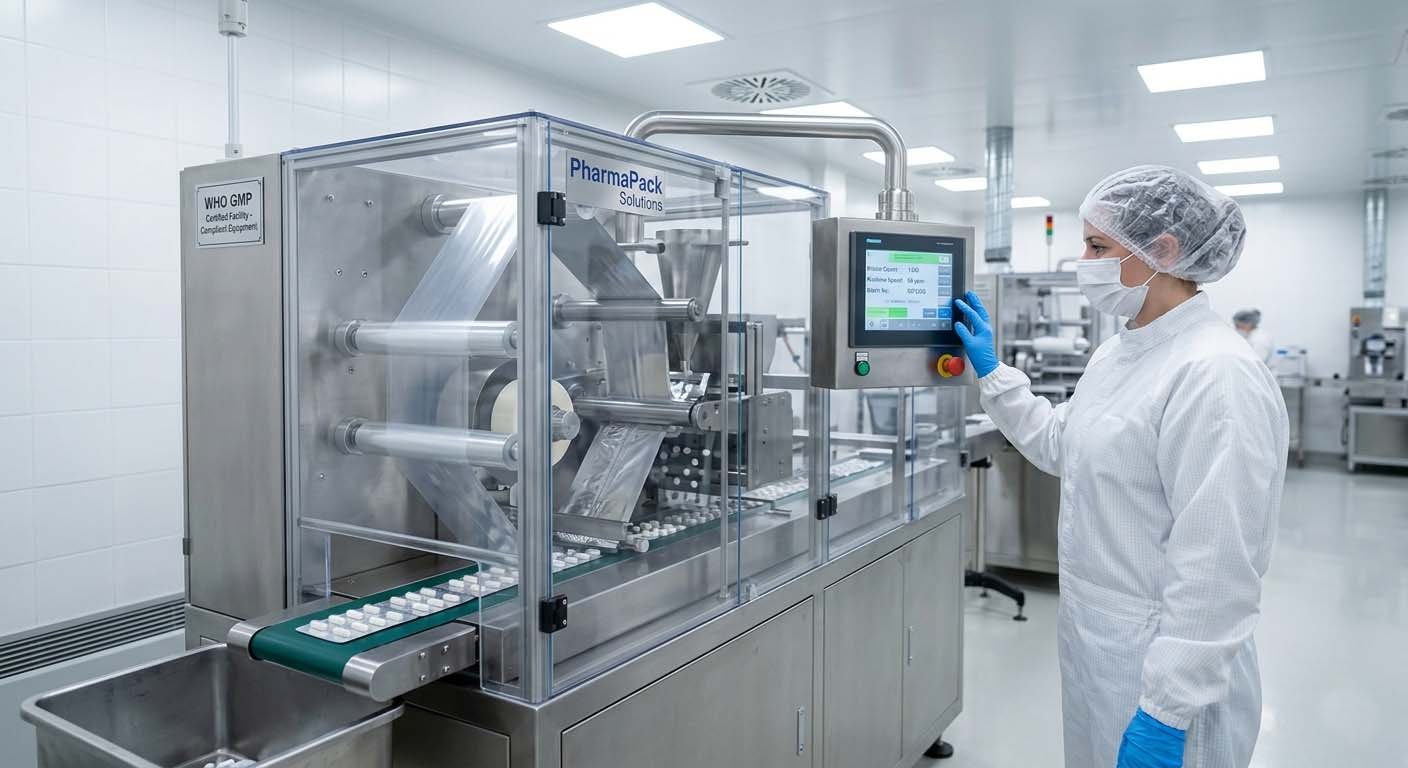
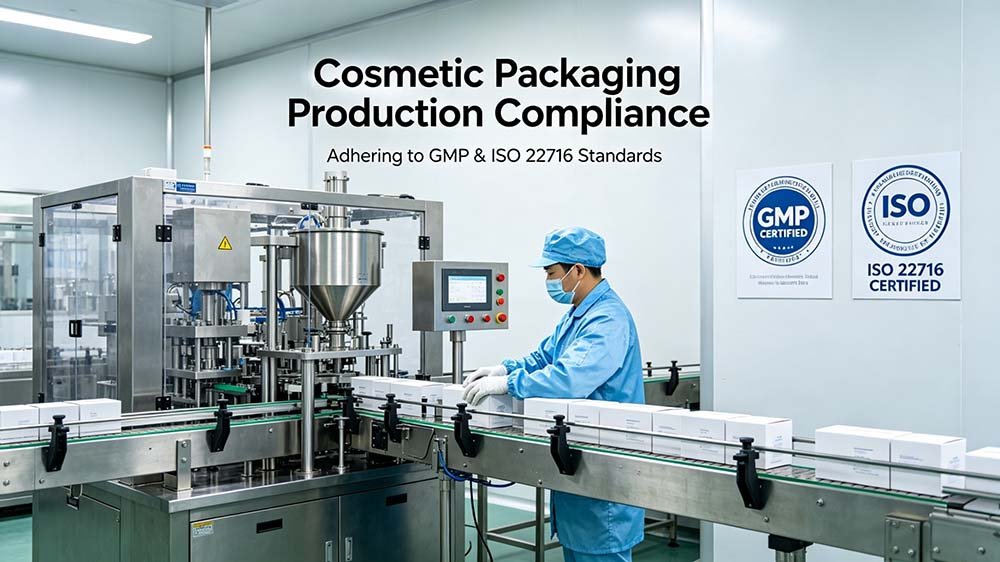
GMP compliance on a syringe blister line starts with the URS specifying cleanroom classification, surface finish standards, and data integrity protocols before the machine is built.
21 CFR Part 11 and Data Integrity
If your line will serve the US market or any territory that mirrors FDA expectations, the URS must specify: electronic audit trail (time-stamped, operator-identified, tamper-evident), role-based access control with unique user IDs, electronic batch records with no manual override without documented authorization, and data backup protocol with recovery time objective. The ALCOA+ framework — Attributable, Legible, Contemporaneous, Original, Accurate, plus Complete, Consistent, Enduring, and Available — should be the explicit standard your URS references.
⚠ Diagnostic: GMP Clause Failures in URS Documents
Symptom A: IQ fails on surface finish — short type
Cause: URS referenced “GMP-grade materials” without specifying Ra value or electropolish requirement. Vendor supplied Ra 1.6 µm brushed finish — acceptable for tablets, not for sterile device packaging.
Fix: Specify Ra ≤0.8 µm electropolished on all product-contact surfaces, Ra ≤1.6 µm on non-contact internal surfaces. Add surface finish certificate as FAT deliverable.
Symptom B: Audit trail rejected during OQ — long narrative
Cause: The URS said “data logging capability required.” The vendor installed a basic HMI log that recorded events but did not attribute them to individual operator IDs, did not time-stamp to ≤1-second resolution, and allowed log files to be manually deleted by any user with admin access. During OQ, the FDA-licensed reviewer flagged all three deficiencies as 21 CFR Part 11 non-compliance. The HMI software required a complete rewrite — 11 weeks of delay and $28,000 in software development costs.
Fix: The URS must specify 21 CFR Part 11 compliance explicitly, list the five mandatory audit trail attributes (user ID, timestamp, action, previous value, new value), and require a third-party data integrity assessment as part of FAT acceptance.
Symptom C: Cleanroom incompatibility discovered post-installation
Cause: URS did not specify that cable conduits must be sealed and that the machine base must allow cleaning with IPA and water-based disinfectants. Machine arrived with open cable trays that failed environmental monitoring on Day 1 of OQ.
Fix: Add a dedicated “Cleanroom Integration Requirements” section. Specify IP54 minimum for all electrical enclosures inside the cleanroom, sealed cable management, and chemical resistance to IPA, H₂O₂, and quaternary ammonium compounds.
Output Speed, Throughput, and OEE: How to Define Performance Requirements Without Creating Disputes
Output speed in a URS must be stated as a verified throughput under defined conditions — not a nameplate rating. That distinction matters enormously at FAT.
Here’s the standard I use: state the required demonstrated output as a minimum sustained rate over a continuous 4-hour FAT run, at the specific syringe format and blister configuration, with the actual lidding material, at the specified sealing temperature window, and with the machine operating on the vendor’s factory utilities — not extrapolated from a short-burst test on a different product.
For a standard single-syringe cavity format on a mid-range machine, expect 30–60 blisters/minute demonstrated throughput. High-speed lines for 1 mL standard syringes can reach 80–120 blisters/minute. A 2-up or 4-up cavity format at lower index speed may produce equivalent or higher unit-per-minute output. Your URS should specify units packaged per minute, not just index cycles per minute.
Also specify: maximum allowable reject rate at rated speed (typically ≤0.3% for vision-inspected lines), changeover time for format change (define “changeover complete” as first good blister verified, not tool-swap complete), and MTBF target in operating hours between unplanned stops.
| URS Performance Parameter | Vague Wording (Leads to Disputes) | Precise Wording (Protects You) | Validation Phase Checked |
|---|---|---|---|
| Output speed | High speed capable | ≥50 blisters/min demonstrated over 4-hour FAT run, 1-up cavity, 1 mL syringe format | OQ / FAT |
| Reject rate | Low reject rate | ≤0.3% false reject rate at rated speed, vision-system inspected, 200-blister statistical sample | PQ / SAT |
| Seal integrity | Good seal quality | ≥1.5 N/15 mm peel strength per ISO 11607, at 150°C ±5°C, confirmed by ASTM F2338 dye ingress at 60 mbar | OQ / IQ |
| Changeover time | Quick changeover | Format change complete (first verified good blister) in ≤45 minutes by one trained operator | OQ |
| MTBF | Reliable operation | ≥500 operating hours between unplanned stops ≥10 min, demonstrated over 3-month SAT period | PQ / SAT |
| Syringe compatibility | Compatible with syringes | Handles barrel OD 6.35–27.0 mm ±0.1 mm, flange OD up to 34 mm, overall length 60–210 mm, glass and COP formats | DQ / IQ |
Integration Requirements: PLC, MES, and Reject Station Logic
A QA manager in Cairo called me in late 2023 with a problem that had been sitting for six months. The syringe blister machine was mechanically sound. The seals were clean. The output rate was exactly what the URS specified. But the MES integration had never worked — the machine’s PLC was outputting batch data in a proprietary XML format that the plant’s SAP-based MES could not ingest. Nobody had specified the data exchange format in the URS.
That’s a $40,000 integration project that should have been a two-line clause.
Your URS integration section must cover these five areas without exception:
- 1 PLC Platform Specification Name the required PLC brand and series (e.g., Siemens S7-1500, Allen-Bradley ControlLogix 5580). If your plant has an existing PLC vendor standard, state it explicitly — cross-brand integration adds cost and complexity. Specify firmware version compatibility with your existing SCADA layer.
- 2 Data Exchange Protocol Specify OPC-UA as the preferred protocol for machine-to-MES communication. Define the required data objects: batch ID, production count, reject count, fault codes with timestamps, sealing temperature log (1-second intervals minimum), and operator ID. State the required data retention period on the machine HMI (minimum 12 months recommended).
- 3 Reject Station Logic Define what triggers rejection (seal integrity failure, vision defect, missing syringe, weight out-of-spec), the rejection mechanism type (air jet vs. pusher), the reject confirmation sensor (photoelectric or weight-based), and the maximum false-reject rate at rated speed. Specify that rejected blisters must be counted separately in the audit trail and reconciled against total production count at batch close.
- 4 Upstream/Downstream Interface Define conveyor infeed height (±10 mm of your existing line height), pitch, width, and the handshake signal protocol between this machine and the upstream syringe feeder and downstream cartoner. A missing handshake definition is how you get a jam cascade during PQ.
- 5 Utility Requirements State power supply (voltage, phase, frequency, maximum draw in kW), compressed air (pressure in bar, flow in L/min, dew point ≤−40°C), cooling water (if required for cold-form Alu-Alu), and any cleanroom utility penetration requirements. This section prevents the most common site readiness failure during SAT.
The 10 URS Clauses That Pharma Buyers Routinely Omit — And What Each One Costs
I won’t tell you this list is exhaustive. Every project has its own gaps. But these ten appear in some form across almost every problematic FAT I’ve observed since 2008.
| Omitted Clause | What Gets Built Instead | Typical Cost of Omission | Risk Phase |
|---|---|---|---|
| Flange-to-barrel step dimension | Tooling built for one SKU only | $8,000–$15,000 tooling rework | IQ |
| Plunger rod extension state at packaging | Cavity too short; rod impacts lidding during sealing | $5,000–$20,000 tooling + schedule | OQ |
| 21 CFR Part 11 audit trail specifics | Basic event log without user attribution or tamper protection | $15,000–$40,000 software rework | OQ / Regulatory |
| MES data exchange format (OPC-UA) | Proprietary format incompatible with plant MES | $20,000–$60,000 integration project | SAT |
| Reject station reconciliation logic | Rejects counted but not reconciled to batch record | Batch release delay; potential recall risk | PQ |
| Lidding material seal temperature window | Sealing parameters not validated for Tyvek; peelability fails | $10,000–$25,000 + OQ repeat | OQ |
| Changepart traceability documentation | No part numbering system; audit trail for tooling changes absent | Regulatory observation; potential 483 | Regulatory |
| Cleanroom IP rating for electrical panels | Open cable trays fail environmental monitoring | $6,000–$18,000 retrofitting | IQ |
| HEPA filtration over product zone | No laminar flow; contamination control strategy fails | $12,000–$30,000 engineering addition | IQ / Regulatory |
| Upstream conveyor handshake protocol | No automatic line stop on upstream fault; jam cascade at PQ | Schedule delay; potential product damage | OQ / PQ |
From the Field: How Co-Developing the URS Changes the Outcome
🧑 Forester’s Insight — A 20-Year Engineer’s Perspective
In my 20 years commissioning syringe blister packing lines across South Asia, Latin America, and the Middle East, I’ve watched the same dynamic play out dozens of times. The buyer writes the URS internally. It takes two weeks. The procurement team reviews it. It goes out to three vendors. The lowest bidder wins. The URS ambiguities get discovered during FAT — at which point the vendor has leverage, not the buyer.
I saw the worst version of this in a plant outside Karachi in 2021. A 6-page URS for a full syringe blister line. The FAT failed on 14 separate criteria, 11 of which traced directly to undefined or ambiguous URS clauses. The resolution took nine months and cost more than the original machine price in total project overrun. I’m still not sure the client fully understood why.
At HIJ, we co-develop the URS with our clients before we quote. Not as a sales tactic — because a turnkey syringe blister packaging line built on a solid URS eliminates multi-vendor disputes and keeps your validation timeline intact. We typically invest 3–5 working days in the URS co-development process. That investment has never cost more than what a single FAT failure would have.
The conversation I always have: “Show me your syringe. Show me your market. Show me your cleanroom drawing.” From those three inputs, we can write a URS that covers every parameter your validator will check — before a single bolt is tightened.
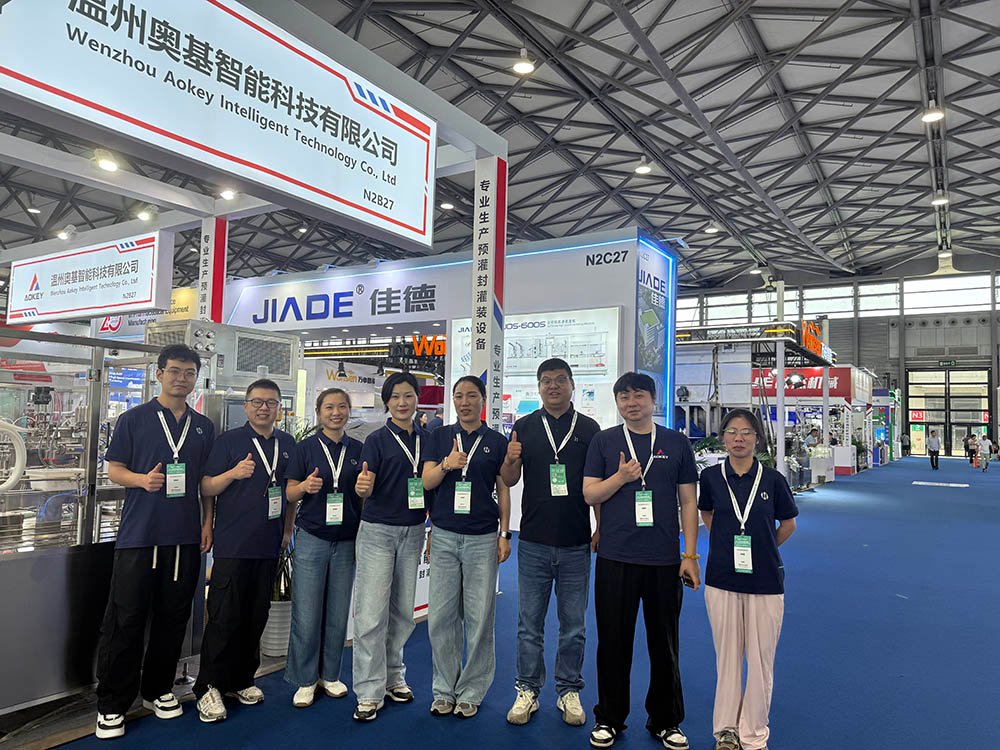
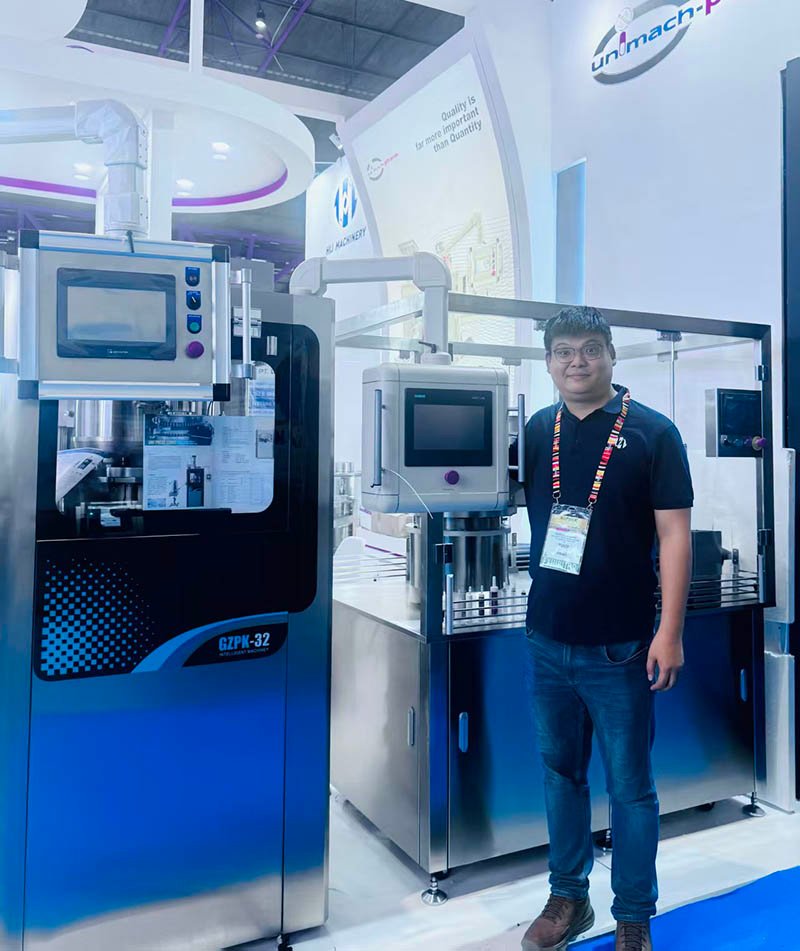
Forester Xiang and the HIJ engineering team during a URS co-development session with a Southeast Asian pharmaceutical client — every parameter defined before procurement begins.
Validation Documentation Package: What the URS Must Obligate Your Vendor to Deliver
The URS is not just a specification of machine function. It is a contract for deliverables. A complete documentation package is mandatory under EU GMP Annex 15, WHO TRS 992 Annex 3, and 21 CFR Part 211.68 — and it must be specified in the URS, not negotiated after purchase order issuance.
Specify these documents as formal FAT deliverables in your URS:
- Design Qualification (DQ) report — confirming the machine design meets all URS requirements. Issued by the vendor before manufacture begins.
- Factory Acceptance Test (FAT) protocol and report — test scripts written against URS acceptance criteria, executed and witnessed at vendor site.
- IQ protocol template — pre-written by vendor, listing all installation checks, utility verifications, and documentation reviews for your site execution.
- OQ protocol template — operational qualification scripts covering speed range, sealing parameter validation (temperature, pressure, dwell time), vision system sensitivity, and alarm response.
- PQ protocol framework — performance qualification under production conditions, typically 3 consecutive batches at rated speed meeting all acceptance criteria.
- Calibration certificates — for all measuring instruments (temperature sensors, pressure gauges, load cells) traceable to national standards.
- Material certificates —316L stainless steel (EN 10204 3.1 minimum), surface finish inspection report, and any food-contact or drug-contact material declarations.
- Electrical and pneumatic schematics — as-built drawings in editable format (DWG or PDF). Critical for your site validation file and any future change control.
- Spare parts list with lead times — minimum 2-year operational critical spares list, with part numbers and estimated lead times from China to your country.
- Operator and maintenance manuals — in your operating language, covering all SOPs referenced in the qualification protocols.
⚠ Diagnostic: Documentation Gaps at FAT
Symptom: Vendor delivers FAT report with “pass” against vendor-defined criteria, not URS criteria — long narrative
This is one of the most costly scenarios I’ve encountered, and it happens more often than buyers expect. The vendor writes FAT test scripts internally, against their own standard specifications, and executes the FAT against those scripts. The URS acceptance criteria — your acceptance criteria — are never formally tested. The machine arrives at your site. Your validator discovers that the FAT report does not reference your URS clause numbers. The IQ cannot proceed until a retrospective DQ is completed to link the FAT results to URS requirements. One project in Nigeria took 14 months from FAT sign-off to first batch release because of exactly this gap.
Fix: The URS must state explicitly: “FAT test scripts shall be written with direct reference to URS clause numbers. Each test result shall be recorded against the corresponding URS acceptance criterion. FAT protocols require written buyer approval before execution.”
Symptom: Material certificates missing for product-contact components — short type
Cause: URS said “316L stainless steel construction” but did not require material traceability certificates as a FAT deliverable. Certificates were not requested. Regulatory inspection finds undocumented material.
Fix: Add a documentation deliverables schedule to your URS. List every certificate, as-built drawing, and qualification document with the delivery milestone (DQ, FAT, SAT, or 30-day post-installation).
URS Structure Template: How to Organise Your Document for GMP Review
Regulators and validation auditors read URS documents in a specific order. A well-organized URS follows a structure they recognize — which means they find what they need without asking for clarification, and your dossier review moves faster.
The GMP compliance requirements for syringe blister packaging reviewed by agencies typically check the URS as the root document for all qualification evidence. Here is the section structure I recommend after drafting more than 60 URS documents across 14 countries:
- 1 Purpose, Scope, and Regulatory Context One page. State the machine type, intended operation, applicable regulations (EU GMP Annex 15, WHO TRS 992, 21 CFR Part 211/Part 11), and the document owner. Include revision history table.
- 2 Product Description and Syringe Specifications All 12 product parameters from Section 3 above. Include a dimensional drawing of each syringe SKU as an appendix. State the number of SKUs to be handled and whether format change between SKUs is required.
- 3 Process and Functional Requirements Step-by-step process description: syringe infeed → forming/loading → lidding → sealing → inspection → die-cutting → output/reject. For each step, state the required functional outcome and the acceptance criterion.
- 4 GMP and Regulatory Requirements Structural design requirements, cleanroom classification, surface finish, material declarations, data integrity (21 CFR Part 11 / ALCOA+), and change control provisions for tooling.
- 5 Performance and Output Requirements Speed, reject rate, OEE target, changeover time, MTBF. State conditions under which performance is tested (product type, format, utilities, operator skill level).
- 6 Integration and Utility Requirements PLC specification, data exchange protocol, upstream/downstream interface, utility requirements, cleanroom penetration details.
- 7 Documentation and Qualification Deliverables Full list of required documents, delivery milestones, and acceptance conditions. Include the clause: “No FAT sign-off without complete documentation package review by buyer’s QA representative.”
- 8 Appendices Syringe dimensional drawings, site layout drawing with utility locations, existing PLC network diagram (if applicable), and vendor qualification questionnaire.
FAQ: URS for Syringe Blister Packing Machines
❓ How long should a URS for a syringe blister packing machine be?
A complete URS for a syringe blister packing machine typically runs 25–40 pages, excluding appendices. Anything under 15 pages for a GMP-regulated line is almost certainly missing critical clauses. The page count is less important than coverage — every functional requirement must have a measurable acceptance criterion, and every GMP obligation must be linked to a specific regulatory reference. Appendices (syringe drawings, site layout, existing network diagrams) typically add another 10–20 pages.
❓ Who should write the URS — the buyer or the vendor?
The buyer owns the URS. The vendor can and should contribute technical input, but the document must be authored and approved by the buyer’s engineering, QA, and regulatory teams. A vendor-authored URS contains a structural conflict of interest — vendors naturally write specifications that match what they already build. Co-development (buyer writes requirements, vendor validates feasibility) is the approach used on all turnkey pharmaceutical packaging projects at HIJ Machinery, and it consistently produces FAT pass rates above 92% on first execution.
❓ Does a URS need to reference specific regulations like 21 CFR Part 11?
Yes. A URS that says “GMP compliant” without specifying which regulation, which edition, and which specific clauses apply gives your validator nothing to test against. List each applicable standard by name and version: EU GMP Annex 15 (2015), WHO TRS 992 Annex 3, 21 CFR Part 211.68, 21 CFR Part 11, ICH Q10. For each regulation, state which machine systems or functions are governed by it.
❓ What is the difference between a URS and a functional specification (FS)?
The URS defines what the machine must do — from the buyer’s perspective, in business and regulatory terms. The Functional Specification (FS) defines how the machine will achieve those requirements — from the vendor’s engineering perspective. The FS is derived from the URS, not the other way around. Under EU GMP Annex 15, the DQ process formally verifies that the FS satisfies all URS requirements. If the FS is written first (as it often is when buyers skip URS development), the DQ becomes a retrospective exercise with no guarantee of regulatory adequacy.
❓ Can I use the same URS template for a syringe blister machine and a tablet blister machine?
No. The product specification sections are fundamentally different. Tablet blister machines handle flat, uniform geometries. Syringe blister machines handle asymmetric, three-dimensional objects with critical dimensional parameters (barrel OD, flange geometry, plunger rod state) that have no equivalent in tablet packaging. The GMP requirements overlap significantly, but the product interface sections — which drive tooling design and process validation — must be written from scratch for each product type.
❓ How early in the project should the URS be written?
Before the RFQ (Request for Quotation) is issued. The URS must exist as an approved document before any vendor is approached. Issuing an RFQ without a URS means vendors quote against their own assumptions — and you have no contractual basis for rejecting a non-conforming machine at FAT. Budget 4–8 weeks for URS drafting, internal review, QA sign-off, and final approval before procurement begins.
🎯 Ready to Start Your URS?
Get HIJ’s URS Co-Development Support — Before You Write a Single Clause
We co-develop URS documents with pharmaceutical buyers across Southeast Asia, the Middle East, Africa, and Latin America. Three sessions. Every parameter defined. FAT pass rate above 92% on first execution. Talk to Forester’s team before your procurement process begins.