Cosmetic Packaging Machine Cost: The Number Nobody Shows You at the RFQ Stage
A cosmetic packaging machine is quoted between $8,000 and $280,000+ depending on automation level and product type. But total cost of ownership — after integration, compliance documentation, spare parts, and the first 12 months of support — runs 40–60% above that sticker price in most mid-scale projects. I’ve watched buyers celebrate a “low bid” in January and spend the next 18 months absorbing costs nobody mentioned in the proposal.
- $8K – $35K Semi-auto / entry level
- $40K – $120K Full-auto single machine
- $150K – $280K+ Turnkey integrated line
- +40–60% Typical hidden TCO above quote
Why the Sticker Price on a Cosmetic Packaging Machine Is the Wrong Number to Start With
The quoted machine price for cosmetic packaging equipment covers only the mechanical unit — it excludes integration engineering, compliance documentation, validation labour, spare parts inventory, and post-commissioning support, which collectively add 40–60% to real project cost based on project data from 2018–2024.
The procurement director showed me the sheet. PVC tube filler: $0.80 cheaper per unit versus the next supplier. Annual volume: 4 million tubes. Total saving: $3.2 million over five years. I asked what a line stoppage in month three would cost per day. Nobody had the number.
That conversation happened in a conference room outside Cairo in 2021. The factory had just signed a purchase order for a standalone tube filling machine from a supplier who had quoted $18,500 — a good price for that spec level. The machine arrived. The PLC spoke Modbus RTU. Their cartoning line spoke Profinet. The integration consultant they eventually hired charged $14,000 for the protocol bridge and four weeks of engineering time. The “cheap” machine cost $32,500 before it produced a single tube.
That is the real cost dynamic in cosmetic packaging equipment. The sticker price is a starting point, not a budget. Understanding the full cost structure before you sign anything is the single most valuable thing this guide can give you.
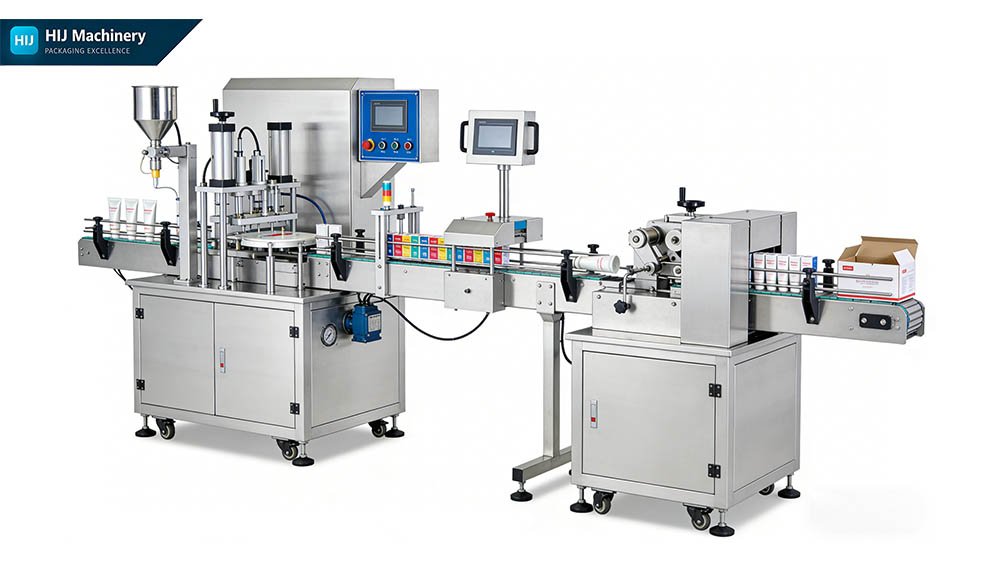
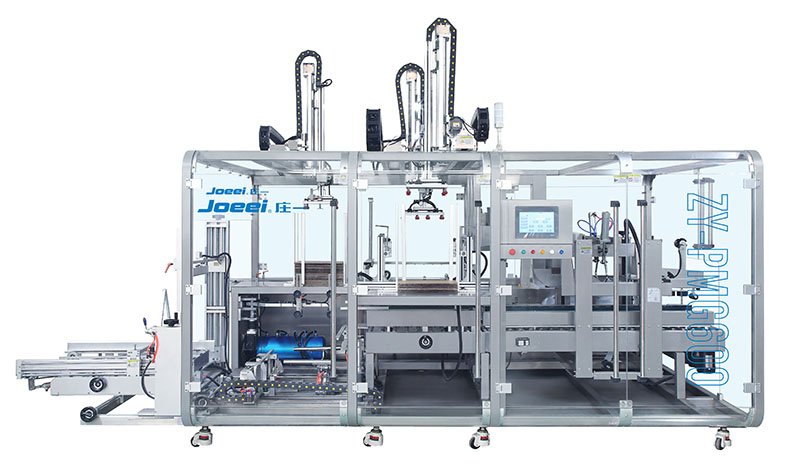
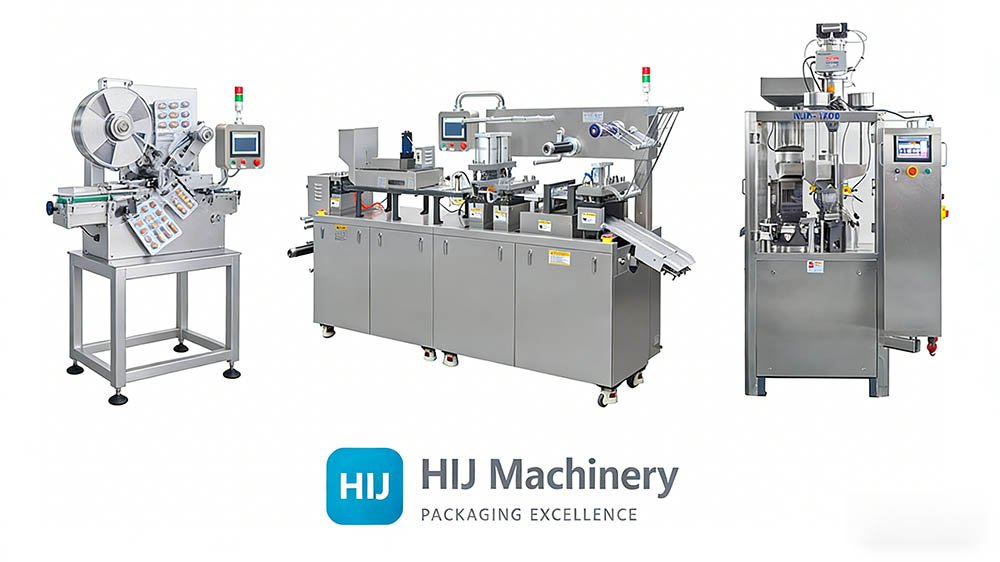
A complete cosmetic line integrates filling, capping, labelling, and cartoning — each with separate cost and compatibility variables.
What Does a Cosmetic Packaging Machine Cost? Price Tiers by Equipment Type (2025)
Cosmetic packaging machine prices range from $8,000 for a semi-automatic tube filler to over $280,000 for a fully automated, GMP-compliant turnkey line — with the most common mid-scale single-machine purchase falling between $40,000 and $120,000 depending on output speed, filling technology, and compliance requirements.
I’ll give you real numbers. These come from 31 cosmetic and personal care line projects I handled across Southeast Asia, the Middle East, and Latin America between 2018 and 2024. They’re not MSRP. They’re what buyers actually paid, inclusive of basic commissioning but exclusive of integration engineering and compliance documentation.
Entry Level
$8K – $35K
Semi-automatic tube fillers, manual sachet packers, basic labellers. Output: 20–60 units/min. Suitable for startups and R&D lines.
Mid-Range
$40K – $120K
Fully automatic tube filling & sealing machines, ampoule lines, wet wipes packers. Output: 60–200 units/min. The most common purchase tier.
High-End Single
$120K – $200K
High-speed multi-lane fillers, vision-integrated lines, servo-controlled precision systems. GMP-documented. Output: 200–400 units/min.
Turnkey Line
$150K – $280K+
Complete integrated cosmetic packaging line from filling through cartoning and end-of-line. Includes FAT/SAT, integration, and validation package.
Those ranges cover the machine hardware. They do not cover the seven cost categories below — and those categories are where projects run over budget.

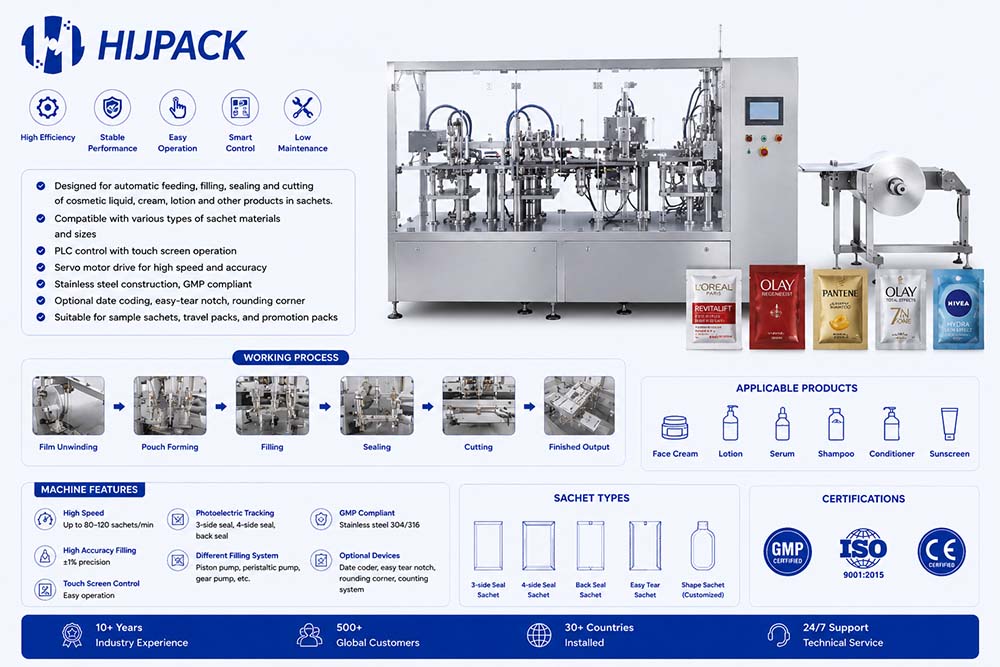
A mid-range automated cream filling and sealing production line — typically $60,000–$95,000 for the machine alone, before integration costs.
The Full Cosmetic Packaging Machine Cost Breakdown: 7 Budget Line Items Buyers Forget
Beyond the machine purchase price, cosmetic packaging projects incur seven additional cost categories — integration engineering ($5,000–$28,000), tooling and changeover parts ($3,000–$18,000), compliance documentation ($4,000–$22,000), installation and commissioning ($3,500–$15,000), operator training ($1,500–$8,000), spare parts initial inventory ($4,000–$20,000), and after-sales support contracts ($2,000–$12,000/year) — totalling $23,000–$123,000 in additions to the sticker price.
| Cost Category | What It Covers | Typical Range (USD) | Often Missed? | Notes |
|---|---|---|---|---|
| Machine Hardware | Mechanical unit, standard electrical package | $8,000 – $280,000+ | No — quoted upfront | Starting point only |
| Integration Engineering | PLC protocol matching, line communication, conveyor interfacing | $5,000 – $28,000 | ⚠️ Frequently | Highest risk item for multi-vendor lines |
| Tooling & Changeover Parts | Format-specific moulds, tube holders, nozzle sets, sealing dies | $3,000 – $18,000 | ⚠️ Often | Each SKU format needs dedicated tooling |
| GMP / ISO 22716 Compliance Docs | IQ/OQ/PQ protocols, risk assessment, material contact certification | $4,000 – $22,000 | ⚠️ Yes — almost always | Essential for regulated market supply |
| Installation & Commissioning | Engineer travel, on-site setup, FAT/SAT execution | $3,500 – $15,000 | Partially — travel not quoted | Remote commissioning cuts this by ~60% |
| Operator Training | HMI training, maintenance schedule, changeover procedures | $1,500 – $8,000 | Yes — often oral not documented | Undocumented training = re-training cost in 18 months |
| Spare Parts Inventory | Consumables, wear parts, electronic spares for Year 1 | $4,000 – $20,000 | ⚠️ Yes — consistently | Critical for markets with slow import timelines |
| After-Sales Support Contract | Remote troubleshooting, firmware updates, SLA response time | $2,000 – $12,000/yr | Yes — buyers assume it’s free | Absence is biggest TCO risk factor |
📋 Ranges compiled from 31 cosmetic packaging line projects, HIJ Machinery, 2018–2024. Individual project costs vary by market, product type, and compliance scope.
The sticker price on a cosmetic packaging machine is rarely your real cost — total cost of ownership, including integration, compliance, and downtime, routinely runs 40–60% higher than the quoted figure. Of the 31 cosmetic line projects I handled in Southeast Asia, the Middle East, and Latin America between 2018 and 2024, not one came in at the machine hardware price alone. — Forester Xiang, HIJ Machinery
Semi-Automatic vs. Fully Automatic Cosmetic Packaging Machine: What the Cost Difference Actually Buys You
A semi-automatic cosmetic packaging machine costs $8,000–$35,000 and requires 2–3 operators per shift; a fully automatic system costs $40,000–$120,000 and runs with 1 operator. At volumes above 500,000 units/month, the fully automatic option typically recovers its cost premium within 18–28 months through labour savings alone.
Three weeks into a project in Jakarta in 2022, the factory owner showed me a spreadsheet comparing a $22,000 semi-automatic tube filler against a $68,000 fully automatic system. His conclusion: “The semi-automatic is obviously better value.” He was looking at the capital column only.
The semi-automatic unit needed 3 operators per shift across two shifts — six operators total. At Indonesian production wages at the time, that was approximately $2,800/month in direct labour for the filling station alone. The fully automatic system needed one operator per shift: $950/month. The $46,000 capital premium recovered itself in labour savings in 29 months. After that, every month produced a $1,850 net operating advantage. Over a five-year machine life, the “expensive” machine delivered $68,200 more profit than the “cheap” one.
That calculation changes completely at low volumes. Under 200,000 units/month, semi-automatic equipment is usually the correct financial decision. The break-even curve depends entirely on your volume, shift structure, and local labour cost. I’ll show you the key variables below.
| Factor | Semi-Automatic ($8K–$35K) | Fully Automatic ($40K–$120K) | Turnkey Line ($150K–$280K+) |
|---|---|---|---|
| Output (units/min) | 20–60 | 60–200 | 200–500+ |
| Operators Required | 2–3 per shift | 1 per shift | 1–2 for full line |
| GMP Compliance Ready | Partial (material contact) | Yes (ISO 22716 aligned) | Full (IQ/OQ/PQ package) |
| Changeover Time | 15–40 min (manual) | 8–20 min (tool-assisted) | 5–15 min (servo-driven) |
| Integration Complexity | Low — standalone | Medium — upstream/downstream | Managed — single supplier scope |
| Typical Break-Even Volume | Under 200K units/month | 200K–800K units/month | 800K+ units/month |
| Total 5-Year TCO (mid estimate) | $55K – $80K | $110K – $200K | $280K – $500K |
📋 TCO estimates include hardware, integration, compliance, labour, spares, and support over 5 years. Based on HIJ Machinery project data, 2018–2024.
The Two Hidden Costs That Blow Most Cosmetic Packaging Budgets: Integration and Compliance
Integration engineering and GMP / ISO 22716 compliance documentation together account for the majority of budget overruns in cosmetic packaging projects — integration alone adding $5,000–$28,000 when multi-vendor equipment communicates via incompatible protocols, and compliance documentation adding $4,000–$22,000 for brands supplying regulated markets.
A quality director in São Paulo called me last year. Her factory had purchased three machines from three different suppliers over 24 months — a tube filler, a capper, and a cartoning machine. Each machine worked perfectly in isolation. Together, they produced 12–17 minutes of daily downtime because the capper’s torque fault signal wasn’t being read by the line PLC. Each supplier blamed the other. The integration engineering to resolve it cost $19,000 and took 11 weeks. Nobody had budgeted a cent for it.
Integration Engineering: What Drives the Cost
Multi-vendor fragmentation is the single biggest source of unplanned spend in cosmetic line builds. When your tube filler supplier, capping machine supplier, and cartoning machine supplier each design to their own PLC architecture, you inherit the bridging cost. Protocol mismatches (Modbus vs. Profinet vs. EtherNet/IP) require custom software engineering. Conveyor height mismatches require mechanical rework. Sensor logic conflicts require ladder logic rewrites. None of that appears in anyone’s original quote.
I use a simple rule when reviewing multi-vendor RFQs: for every additional machine supplier in the scope, budget an extra $6,000–$9,000 for integration risk. A 4-machine line from 4 suppliers carries $18,000–$27,000 of integration risk before anyone has drawn a line diagram. A turnkey cosmetic packaging line from a single supplier eliminates that fragmentation cost entirely — not because integration doesn’t happen, but because it’s already engineered into the quoted scope.
Compliance Documentation: ISO 22716 and GMP in Cosmetic Packaging
Brands supplying European, GCC, or regulated ASEAN markets increasingly require that packaging equipment suppliers provide ISO 22716-aligned documentation — material contact certificates (FDA 21 CFR 177 or equivalent), surface finish records (≥Ra 0.8μm for product-contact parts), and cleaning validation protocols. For a single machine, assembling that documentation from a supplier who wasn’t expecting the request can take 6–14 weeks and cost $4,000–$12,000 in supplier engineering time. For a full line, compliance documentation packages at HIJ run $8,000–$22,000 depending on scope — but that cost is defined in advance and doesn’t arrive as a surprise invoice in month seven.

GMP compliance documentation is a real budget line item — $4,000–$22,000 for a full cosmetic packaging line, depending on market requirements.
Where Cosmetic Packaging Machine Budgets Break: 3 Field Diagnoses
Most cosmetic packaging budget overruns originate from three sources: underestimated integration engineering costs when sourcing from multiple vendors, tooling costs not included in the machine quote, and spare parts delays in markets with slow import cycles driving unplanned express freight and downtime costs.
⚠️ Budget Risk Diagnosis: Field Patterns (2018–2024)
Fix: Before signing any equipment PO, get a written tooling price list covering all planned SKU formats for the next 24 months. Lock that list into the contract.
Turnkey Cosmetic Packaging Line vs. Standalone Machines: Which Costs Less Over 5 Years?
Over a 5-year period at production volumes above 600,000 units/month, a turnkey cosmetic packaging line from a single supplier typically costs 15–22% less in total than equivalent capability sourced from multiple standalone machine suppliers — primarily because integration, validation, and support costs are pre-engineered rather than reactive.
The number teams look at first is exactly the wrong number. A multi-vendor standalone approach shows a lower capital line in Year 1. The turnkey line shows a higher capital line. Most CFOs stop there.
They don’t see the integration engineering absorbed into the turnkey quote. They don’t see the single validation package covering all equipment versus separate documentation costs per vendor. They don’t see the one support contract versus three separate support agreements — each with different SLA terms, different spare parts lead times, and different escalation contacts. And they definitely don’t see the organisational cost of managing three supplier relationships when something goes wrong on the line at 2am on a Friday.
I won’t tell you the turnkey decision is simple. It involves your volume forecast, your compliance requirements, your market timeline, and sometimes the internal politics between procurement and engineering. But the financial case, at scale, is not close. Over five years at 600,000+ units/month, integrated turnkey wins on total cost — in every project I’ve run the numbers on.
For buyers who want to understand how a complete cosmetic packaging line is structured before committing to a budget, our cosmetic packaging line setup guide covers the full architecture from filling through end-of-line cartoning, including how HIJ engineers integration scope into the initial project design rather than treating it as a change order.
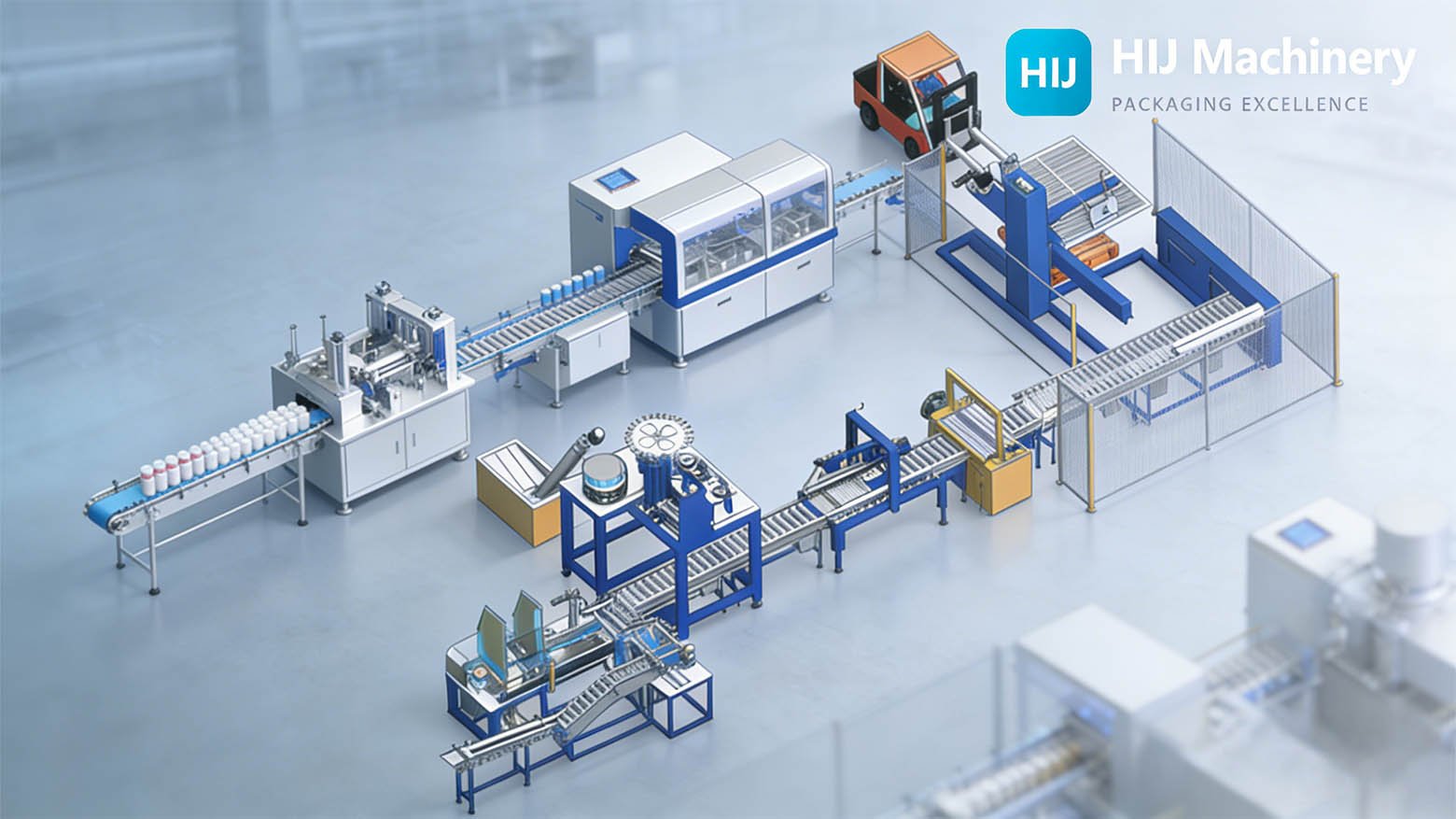
A turnkey cosmetic packaging solution from a single supplier pre-engineers integration, compliance, and support — reducing 5-year TCO by 15–22% versus multi-vendor alternatives at scale.
Chinese vs. European Cosmetic Packaging Machine Cost: Honest Numbers Without the Sales Pitch
Chinese cosmetic packaging machines cost 35–60% less than European equivalents at equivalent speed and compliance spec — a $68,000 automated tube filling line from Wenzhou against $140,000–$180,000 from a comparable Italian or German supplier — but the valid comparison must include integration support quality, documentation completeness, and after-sales response time, not hardware price alone.
I’m based in Wenzhou. I build machines here. So I have a vested interest in this comparison, which means I’m going to be more careful with it than most suppliers would be.
The price gap is real. A fully automatic tube filling and sealing machine from a reputable Wenzhou manufacturer costs $42,000–$68,000. The Italian or German equivalent — comparable output, comparable servo systems, comparable stainless contact surfaces — costs $110,000–$175,000. That’s not a trivial difference. On a full line, the capital saving can reach $80,000–$120,000.
The legitimate concerns about Chinese equipment used to be: documentation quality, after-sales support when you’re in São Paulo and the supplier is in Wenzhou, and long-term spare parts availability. Those concerns haven’t disappeared. But for manufacturers like HIJ who have built dedicated after-sales infrastructure, maintain documented compliance packages, and ship spare parts inventory to regional hubs in Southeast Asia, the Middle East, and Latin America, the practical gap has narrowed significantly.
The comparison that matters is not “Chinese machine price vs. European machine price.” It’s “Chinese machine TCO over five years vs. European machine TCO over five years” — including support contract value, spare parts availability in your market, and documentation quality for your regulatory context. For a deeper treatment of that comparison, the dedicated article on European vs. Chinese cosmetic packaging machines covers the technical and commercial differentiators without the marketing padding.
How to Build an Accurate Budget for a Cosmetic Packaging Machine Purchase: 6-Step Framework
An accurate cosmetic packaging machine budget requires six steps: define your volume and SKU range first, specify output speed requirements, document GMP and compliance scope for your target markets, request an itemised quote covering hardware plus integration plus documentation plus commissioning, add 15–20% contingency for tooling and Year 1 spares, and validate the total against a 5-year TCO model before signing.
- Define volume and SKU range before approaching any supplier. Your monthly output target and the number of product formats you need to run determine whether semi-automatic or fully automatic equipment makes financial sense. Provide suppliers with a 24-month volume forecast and a complete SKU list, including all planned format variants.
- Specify output speed and uptime requirements in your RFQ. Don’t accept “up to 120 units/min” without asking for guaranteed minimum output under production conditions. Specify your required OEE target (typically 75–85% for cosmetic lines) and ask how the supplier supports that commitment.
- Document your compliance scope for all target markets. If you’re supplying EU, GCC, or regulated ASEAN markets, list the specific documentation requirements in the RFQ. ISO 22716 alignment, material contact certificates, and IQ/OQ/PQ protocol availability should be scope items, not post-PO requests.
- Request fully itemised quotes covering all seven cost categories. Use the table in Section 3 of this guide as your checklist. Any supplier who won’t itemise integration, commissioning, and documentation separately is hiding costs in the hardware price — or leaving them for your change order process.
- Add a 15–20% contingency line for tooling and Year 1 spares. Based on project data from 31 cosmetic line installations, tooling for unplanned format changes and first-year spare parts together typically add 12–18% to the original project budget. Budget for it in advance.
- Validate the total budget against a 5-year TCO model before signing. Capital cost, labour, consumables, maintenance, spare parts, and support contract value over 60 months will tell you whether the “cheaper” machine actually is cheaper. The Jakarta tube filler calculation from Section 2 is the template.
If you’re still at the stage of defining which machine types belong in your line before building a budget, the cosmetic packaging machine selection guide covers the technical decision criteria for fillers, cappers, labellers, and cartoners — including the specification questions to ask before any supplier contact.
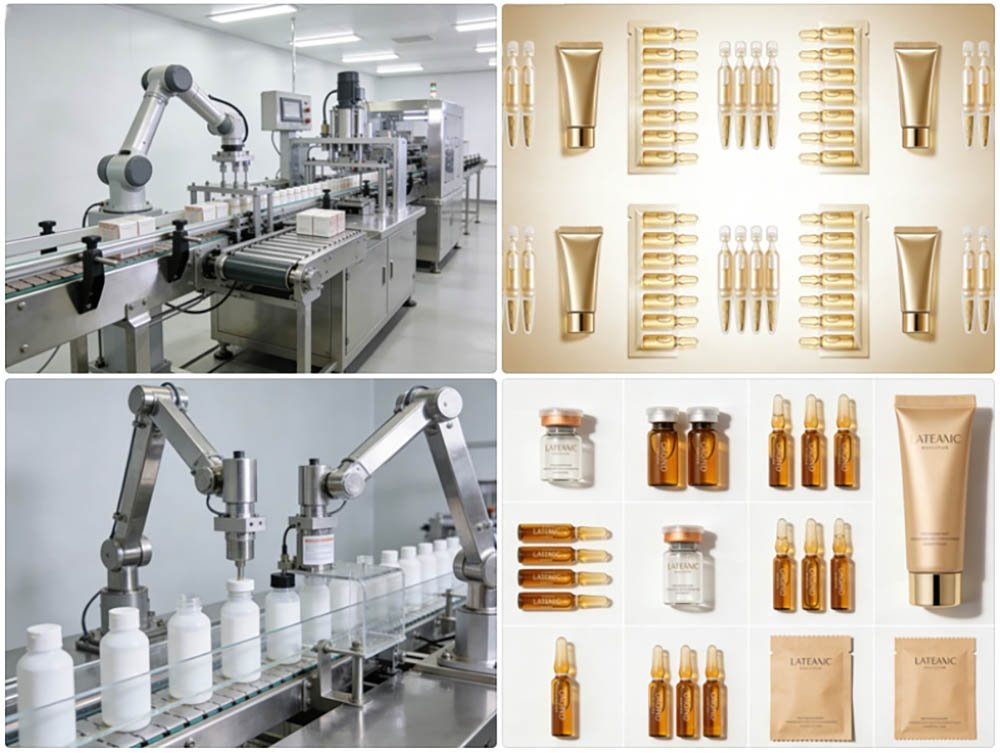
From entry-level semi-automatic fillers to fully integrated turnkey lines — the cosmetic packaging machine market spans $8,000 to $280,000+, with total project cost always higher than the hardware quote.
Frequently Asked Questions: Cosmetic Packaging Machine Cost
How much does a cosmetic packaging machine cost?
A cosmetic packaging machine costs between $8,000 and $280,000+ depending on automation level, product type, and compliance requirements. Semi-automatic tube fillers start around $8,000–$35,000; fully automatic single machines run $40,000–$120,000; and complete turnkey integrated lines cost $150,000–$280,000+. These are hardware prices — total project cost including integration, compliance, and support typically runs 40–60% higher.
What is the cheapest cosmetic filling machine available?
Entry-level semi-automatic cosmetic filling machines start at approximately $8,000–$12,000 for basic paste or cream fillers from Chinese manufacturers. At that price point, expect manual loading, output of 20–40 units per minute, and limited GMP documentation. For startup brands with volumes under 100,000 units/month, this tier is financially appropriate — provided you budget separately for integration and compliance.
Does the cosmetic packaging machine price include installation and training?
Rarely, unless explicitly stated. Most machine quotes cover hardware and basic factory acceptance testing only. Installation, on-site commissioning, and operator training are typically quoted separately — adding $3,500–$15,000 for installation and $1,500–$8,000 for documented training. Always ask for an itemised breakdown before signing.
What hidden costs should I expect when buying cosmetic packaging equipment?
The seven most commonly missed cost categories are: integration engineering ($5,000–$28,000), format tooling ($3,000–$18,000 per format set), GMP/ISO 22716 compliance documentation ($4,000–$22,000), installation and commissioning ($3,500–$15,000), operator training ($1,500–$8,000), Year 1 spare parts inventory ($4,000–$20,000), and annual after-sales support contracts ($2,000–$12,000/year). In multi-vendor line builds, integration engineering is consistently the largest unbudgeted item.
Is a turnkey cosmetic packaging line worth the higher upfront cost?
At production volumes above 600,000 units/month over a 5-year period, yes — a turnkey line from a single supplier typically delivers 15–22% lower total cost of ownership than equivalent capability sourced from multiple standalone machine suppliers. The saving comes from pre-engineered integration (eliminating $5,000–$28,000 in bridging costs), a single compliance documentation package (versus per-vendor documentation costs), and one support contract with a single point of accountability.
How much cheaper are Chinese cosmetic packaging machines compared to European ones?
Chinese cosmetic packaging machines are typically 35–60% cheaper than European equivalents at comparable speed and compliance specifications. A fully automatic tube filling and sealing machine from Wenzhou costs $42,000–$68,000; the Italian or German equivalent runs $110,000–$175,000. The valid comparison must include after-sales support quality, documentation completeness, and spare parts availability in your market — not hardware price alone.
Do I need GMP documentation for a cosmetic packaging machine?
If you’re supplying EU, GCC, regulated ASEAN, or any market where ISO 22716 compliance is a distributor or regulatory requirement, yes. GMP documentation for cosmetic packaging equipment includes material contact certificates, surface finish records, cleaning validation protocols, and IQ/OQ/PQ test records. Assembling this retrospectively from a supplier who wasn’t expecting the request can cost $4,000–$12,000 and add 6–14 weeks to your project timeline. Specify it in the RFQ.
What is the ROI timeline for automating a cosmetic packaging line?
At volumes above 500,000 units/month, full automation typically recovers its capital premium over semi-automatic equipment within 18–28 months through labour savings alone. The break-even point is highly sensitive to local labour costs, shift structure, and the number of SKU changeovers per week. For a detailed ROI model, the cosmetic packaging automation ROI guide covers the full calculation framework.
Cosmetic Packaging Machine Cost: The Bottom Line Before You Sign Any PO
The cosmetic packaging machine cost conversation always starts in the wrong place. It starts with the hardware quote. The hardware quote is the smallest number in your real project budget once you add integration, compliance, tooling, commissioning, training, spares, and support.
Of the 31 cosmetic and personal care line projects I handled between 2018 and 2024, not one came in at the original machine hardware quote. The average overrun was 44% above the quoted price — and in every case, that overrun was predictable if the buyer had used the full TCO framework from the start rather than the sticker price.
Semi-automatic at $8,000–$35,000 is the right choice under 200,000 units/month. Fully automatic at $40,000–$120,000 makes financial sense from 200,000 to 800,000 units/month when you model the labour saving over five years. Turnkey at $150,000–$280,000+ is the correct financial decision above 600,000 units/month when you include integration and compliance costs that standalone multi-vendor sourcing always generates.
Before you sign, use the six-step framework from Section 9. Demand fully itemised quotes. Add your 15–20% tooling and spares contingency. Run the five-year TCO model. And if a supplier tells you the sticker price covers everything — it doesn’t. It never does. Explore our full range of cosmetic packaging machines with transparent, itemised pricing on request.
Request a Full Itemised Cosmetic Packaging Line Quote
Tell us your volume, product type, and target markets. We’ll send back a complete budget breakdown — hardware, integration, compliance documentation, and commissioning — so you know the real number before you commit.