
What must remain sterile?
Identify the medicinal product, components, container-closure system and point at which sterility must be protected. Do not infer the answer from the word “pharmaceutical.”
Commercial equipment scope | sterile-process requirements first
Translate your product sterility strategy, Contamination Control Strategy and qualification plan into a testable blister-machine scope. Annex 1 does not certify a generic machine; the buyer must define the process boundary, risks, evidence and site responsibilities for the configured project.
Quick answer
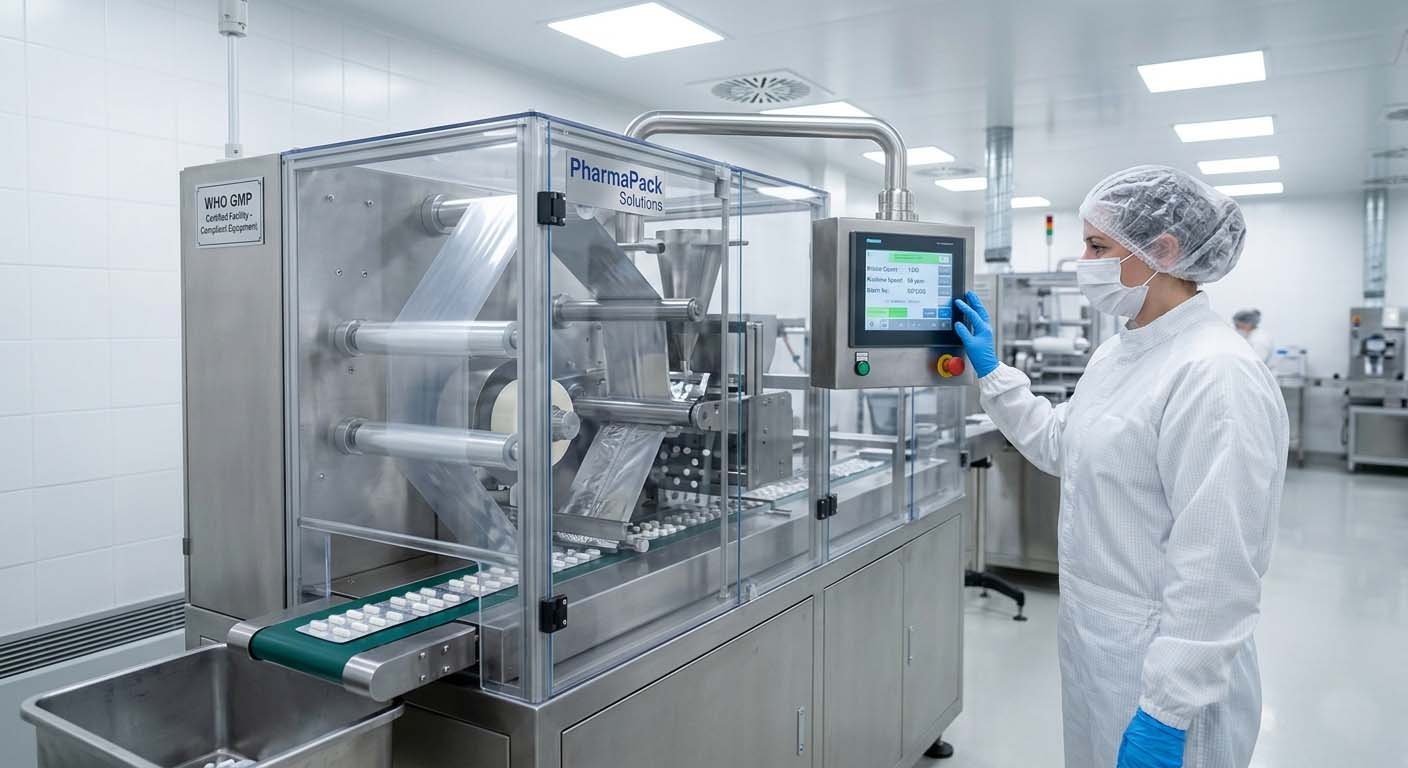
EU GMP Annex 1 addresses manufacture of sterile medicinal products. Its current revision was published in 2022 and is fully applicable. Whether and how it affects blister packaging depends on the product, sterility assurance strategy, exposed operations, environment and facility CCS. Most sealed oral-solid blisters are not automatically Annex 1 processes.
Identify the medicinal product, components, container-closure system and point at which sterility must be protected. Do not infer the answer from the word “pharmaceutical.”
Map filling, transfer, forming, loading, sealing, sampling and interventions. The exposed operation and its controls determine the relevant contamination risks.
Define room, barrier, utilities, material flow, personnel access, cleaning and monitoring interfaces. A machine cannot establish the facility classification by itself.
Connect each important requirement to design evidence, a supplier document, an approved test or a buyer-owned qualification and routine record.
Commercial rule: request a configured response to your URS and CCS boundary. “Annex 1 compliant machine” is not a sufficient specification, quotation line or acceptance criterion.
Applicability screen
Use the regulatory assessment approved by the buyer's quality organization. The supplier can provide equipment information, but it should not decide the site's product classification or regulatory strategy.
CCS to equipment URS
Annex 1 places the CCS at the center of contamination control. For procurement, the useful question is not whether a brochure mentions CCS. It is how the buyer's identified risks change the offered configuration, interfaces, documents and acceptance tests.
Define contact materials, surface accessibility, disassembly, drainage where relevant, guarding, transfer openings and maintenance access from the actual product and cleaning strategy.
Name operator actions, setup states, alarms, recipe controls, stoppages, rejects, line clearance and restart decisions that may affect contamination or pack acceptance.
Agree which drawings, material declarations, control descriptions, settings, alarms, test results, deviations and approvals must be available for the buyer's review.
Responsibility boundary: equipment design and supplier tests can support the CCS. The facility remains responsible for its CCS, pharmaceutical quality system, environmental controls, process validation and product release.
Buyer procurement matrix
Require every material requirement to identify the offered design response, supplied evidence, test method and owner. The table below can be converted directly into URS response and contract-review lines.
| Decision area | Buyer input | Supplier response | Evidence or test |
|---|---|---|---|
| Product and exposure | Sterility status, product characteristics, critical surfaces and exposed operations. | Offered product path, contact parts, transfer method and declared limitations. | Process drawing, contact-parts list and representative trial plan. |
| Pack and materials | Approved cavity, forming and lidding grades, print, seal and integrity criteria. | Forming route, tooling, sealing method and operating assumptions. | Approved drawing, material IDs, samples and agreed integrity test. |
| Cleanability | Cleaning agents, access, disassembly, residues, hold times and changeover boundary. | Cleaning concept, removable parts, access points and material compatibility. | Design review, cleaning demonstration and supplied material information. |
| Facility interfaces | Room, barrier, extraction, utilities, pressure and environmental-monitoring boundary. | Machine envelope, openings, heat/load data, utility points and interface exclusions. | Layout, utility schedule, interface matrix and approved installation prerequisites. |
| Controls and data | User roles, recipes, alarms, records, time, backups, interfaces and review needs. | Configured functions, software boundary, third-party dependencies and options. | Control description, screen review, functional challenge and retained results. |
| Inspection and rejection | Defined defects, detection boundary, reject segregation and reconciliation. | Inspection method, challenge set, reject path and confirmation method. | Approved challenge test, reject log and disposition record. |
| Documents | Required languages, formats, revisions, approvals and validation-support boundary. | Available document index, templates, customization and exclusions. | Sample documents, contract index and responsibility matrix. |
| FAT and site work | Materials, duration, sampling, acceptance, deviations, SAT, training and qualification support. | Supplier test and service scope, prerequisites, rates and open items. | Approved protocol, instruments, raw results, report and open-item register. |
Swipe horizontally to review all procurement columns.
Equipment design review
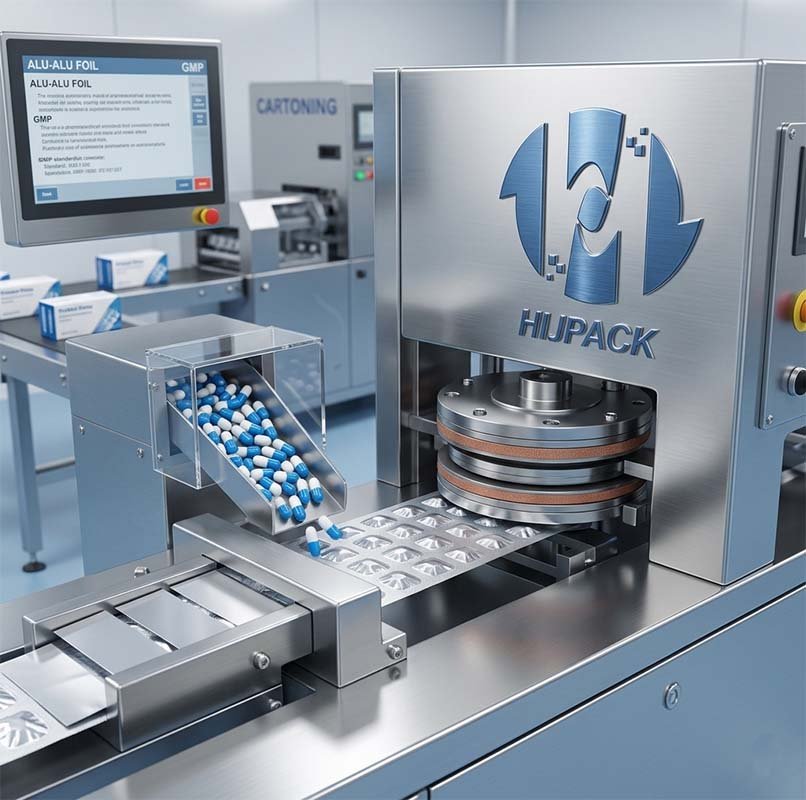
Annex 1 does not prescribe one universal blister-machine specification. A design feature is useful only when it responds to the buyer's product, contamination risk, cleaning method, barrier strategy and maintenance approach.
Traceability chain
A strong procurement file lets reviewers trace why a requirement exists, how the supplier responded, how it was tested and what result was accepted. Keep the chain simple enough to maintain through design changes.
Named contamination risk, process need or facility interface.
Clear owner, boundary and measurable acceptance intent.
Feature, document, option, assumption or declared gap.
Prerequisites, method, sample, instrument and criterion.
Result, deviation, approval and final disposition.
Documentation responsibility
“Validation documentation included” is too vague. Availability, language, format, revision, approval status, customization and execution responsibility can change cost and schedule. Name the boundary before the purchase order.
Agree the URS response, exclusions, drawings, configuration record, risk-review inputs, test strategy and responsibility matrix.
Name prerequisites, products and materials, sampling, instruments, acceptance limits, data capture and deviation workflow.
Retain the FAT report, deviations, as-tested configuration, manuals, certificates in scope, backups, parts list and open items.
Installation, commissioning, qualification, cleaning validation, environmental monitoring and process validation remain within the contracted site plan.
Factory acceptance test
FAT should challenge the contracted configuration with approved product or representative challenge materials. It can provide equipment evidence for later qualification, but it cannot replace the facility's site qualification or process validation.
Acceptance rule: agree test conditions and evidence before execution. Do not convert a demonstration run into an acceptance test after the result is known.

| FAT decision | Method to approve | Evidence to retain | Question answered |
|---|---|---|---|
| Web handling | Run nominated web lots through unwind, splice and tracking conditions. | Material IDs, reel setup, tension settings and observations. | Can the exact web feed consistently? |
| Forming and sealing | Use the approved layout and material pair across the agreed operating window. | Settings, sample IDs, cavity checks and integrity-test results. | Can the pack meet the approved geometry and seal criteria? |
| Product handling | Run representative and challenge product through the offered feeder and transfer path. | Product IDs, misses, damage, stops and intervention log. | Can the product be handled without unacceptable defects? |
| Inspection and rejection | Run the approved challenge set and verify the complete reject path. | Challenge results, reject confirmation and disposition record. | Are defined defects detected and segregated? |
| Controls and alarms | Challenge configured functions, roles, alarms, recipes, records and recovery logic. | Functional results, screen evidence, alarm log and deviations. | Do the contracted controls behave as approved? |
| Sustained run | Run for the agreed duration under the frozen configuration. | Start/stop times, gross and accepted output, rejects, waste and deviations. | Can the process meet the agreed accepted-output target? |
Swipe horizontally to review all FAT columns.
Inquiry package
A useful inquiry allows HIJ to identify confirmed scope, options, exclusions and items that still require a trial or buyer decision. It also prevents a generic compliance statement from replacing project engineering.
Related buyer resources
Primary regulatory references
This page supports equipment scoping and procurement discussion. It does not provide legal advice or certify a facility, process or machine. Confirm applicability and interpretation with the buyer's qualified regulatory and quality teams.
Current GMP guidelines and annex status published by the European Commission.
Open the official Volume 4 pagePublication and implementation dates for the 2022 revision of Manufacture of Sterile Medicinal Products.
Open the official revision noticeOfficial quality risk management principles and examples of recognized risk-management methods.
Open the official ICH guidelineBuyer questions
One process boundary, one URS and one evidence plan
Send the product, pack, process map, CCS-derived requirements, facility interfaces and acceptance boundary. HIJ can respond with the offered configuration, documents, tests, exclusions and open decisions for your quality and engineering review.