
Product
Dosage form, dimensions, weight, fragility, dust, orientation, representative samples and the range of products to be handled.
A useful price is tied to a defined product, blister pack, material route, accepted output and test scope. Use this guide to prepare a comparable quotation instead of budgeting from an unqualified catalogue number.

A low headline price can be expensive if it excludes the feeder, format parts, inspection, documentation or acceptance work the project actually needs.
Dosage form, dimensions, weight, fragility, dust, orientation, representative samples and the range of products to be handled.
Dimensioned blister drawing, cavities, forming web, lidding material, forming depth, seal, print, registration and cut criteria.
Good packs over an agreed run, with rejects, waste, stops and operator interventions recorded—not an isolated mechanical rate.
URS response, approved configuration, challenge materials, FAT protocol, acceptance criteria, retained data and document handover.
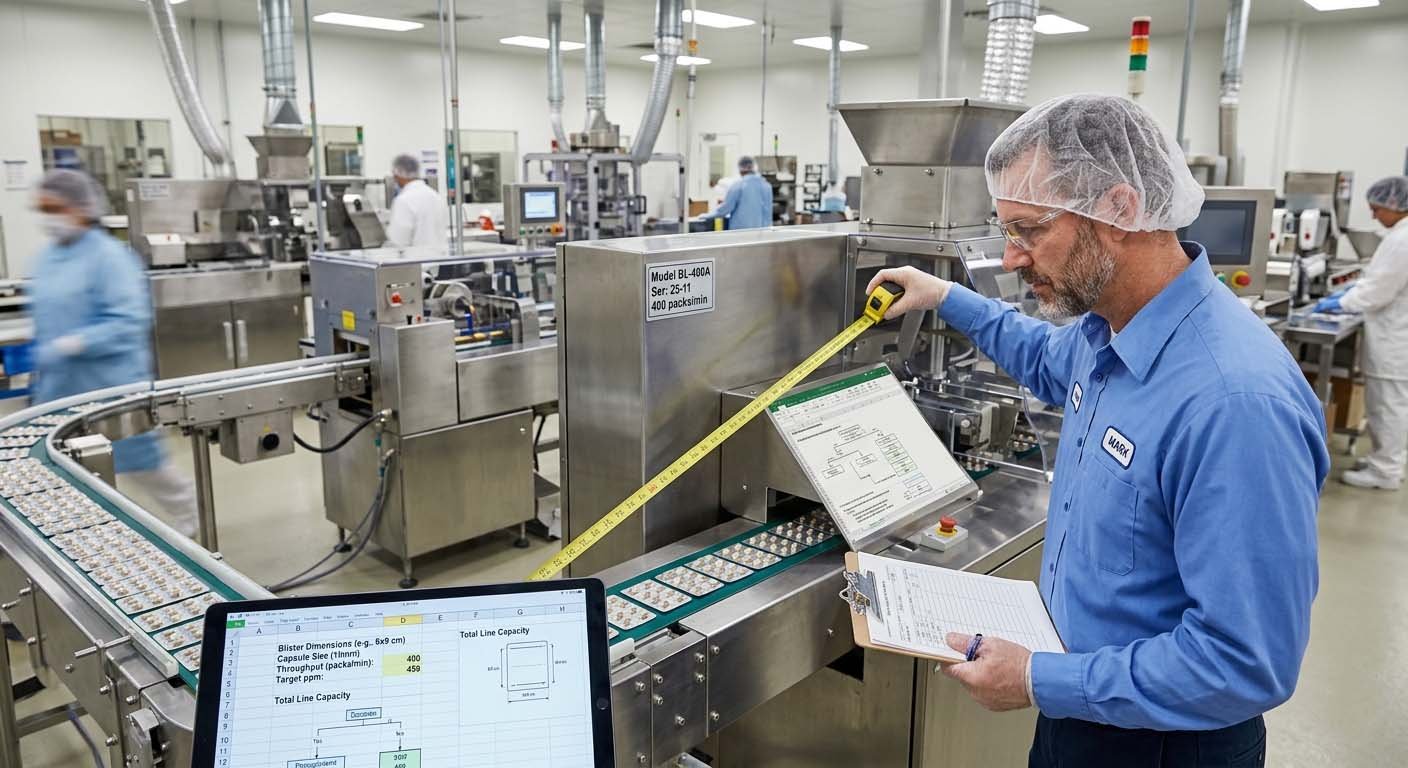
The quotation should connect every cost driver to a requirement, design response or testable outcome.
Use this matrix as the minimum structure for a commercial comparison. A blank cell or a generic “included” statement should be clarified before purchase.
| Scope area | Define before quotation | Supplier response required | Acceptance evidence |
|---|---|---|---|
| Base platform | Forming route, web width, pack geometry and production environment | Model/configuration, utilities, footprint, interfaces and declared limits | Approved layout, specification and configuration baseline |
| Product feeding | Product range, orientation, fragility, dust and sample availability | Feeding method, change parts, controls and manual touchpoints | Challenge run with misses, damage and interventions recorded |
| Tooling and formats | Approved drawings, materials, cavities and format list | Exactly which forming, sealing, guide, cut and transfer parts are included | Approved samples, measurements and format identification |
| Inspection and reject | Defect classes, checks, line clearance and data needs | Sensors/cameras, reject mechanism, confirmation and disposition logic | Defined challenge set and retained detection/reject results |
| Controls and software | Recipes, users, records, interfaces and backup expectations | Hardware/software boundary, options, access and supplied records | Functional tests, version record and backup/handover evidence |
| FAT and documents | Materials, run duration, sampling, instruments and acceptance criteria | Protocol preparation, execution, deviations, report and document index | Approved report, raw results, open-item register and final status |
| Delivery and site scope | Incoterm, destination, unloading, installation, training and site tests | Responsibilities, prerequisites, travel/site assumptions and exclusions | Shipment records and contracted site handover deliverables |
Procurement rule: compare the complete contracted scope, not the machine name or one speed figure. Taxes, duties, freight and site services depend on destination and contract terms and should be confirmed separately.
These gaps often make two proposals look comparable when they describe different projects. Ask for a written revision rather than relying on an informal explanation.
These are configuration families, not universal price bands. HIJ confirms the suitable platform after reviewing the product and pack inputs.
For projects using a heat-formed web. The quote should identify the material, forming depth, pack layout, feeder, sealing and cutting scope.
Review thermoforming machines
For cold-form laminate projects. Forming behavior, material use, registration and tooling must be assessed against the proposed pack.
Review Alu-Alu machines
For tablets or capsules requiring automatic feeding, inspection, reject handling and a sustained accepted-output target.
Review automatic machinesA purchasing decision is clearer when the machine quotation and the wider project budget are separated but reviewed together.
Base machine, product feeder, tooling, inspection, reject system, coding interfaces, controls and selected options.
Packing, freight, insurance, duties/taxes, unloading, utilities, upstream/downstream interfaces and site preparation.
Trial materials, FAT, protocols, measuring equipment, travel/site work, training and contracted documentation.
Labor, materials, waste, format changes, cleaning, planned maintenance, spares, utilities and production interruptions.
The quality of the commercial answer depends on the quality of the buyer input. Submit the same revision to each bidder.


A quotation is easier to evaluate when the promised configuration and performance are tied to a test method and retained record.
The purchase price is only one input. Use labor, materials, accepted output, waste, quality and operating-cost assumptions that your team can defend.
Send the inputs available now. HIJ can identify missing decisions, define the configuration boundary and prepare a quotation tied to the agreed project scope.