
Automatic Tablet Blister Packing Machine
Match your tablets, blister format and packaging materials to the right machine configuration. Compare HIJ technical references, define feeding and inspection options, and request a quote based on your required accepted output.

What does an automatic tablet blister machine do?
An automatic tablet blister packing machine coordinates forming, product feeding, sealing and cutting to make individual blister cards. Automation does not define a universal speed or a standard inspection package.
Suitable applications to discuss
Tablet and capsule blister packaging for pharmaceutical or supplement projects. Round, oblong, coated or fragile products require a feeder and cavity layout matched to their handling behavior. State the number of products and formats before selecting tooling.
Work that still needs operators
Material and product replenishment, format setup, line clearance, cleaning and production checks remain part of the operation. Use a project staffing plan rather than assuming a fixed number of operators or a guaranteed labor saving.
Two machine references for the selection discussion
These figures come from HIJ equipment documents. They are reference conditions, not a promised production rate for every tablet, material or blister format.
DPP-260/360K reference
The combined technical document describes positive-pressure plastic forming and flat heat sealing. It lists an Alu/PVC blanking reference of 40 cycles/min with a 57 × 80 mm card, four cards per cycle format.
The document describes mechanical and servo traction arrangements. Confirm the exact model suffix and ordered drive arrangement; do not treat every reference configuration as the same machine.
DPH380B reference
The DPH380B technical document describes positive-pressure plastic forming, roller heat sealing and a multi-axis servo design. Its Alu/Plastic blanking table lists 40–180 cycles/min.
This is a cycle-rate reference. Finished cards per cycle, product feeding and the actual material or format determine the card output basis. Confirm an achievable accepted rate in a product and material trial.
From tablet samples to a defined machine scope
The right configuration addresses the problems your product and materials can create. Define the requirement before choosing an option.
Match the feeder
Provide product dimensions, shape, coating, dust behavior and breakage sensitivity. State any orientation requirements. Include representative samples for feeding and damage checks.
Define the pack
Supply a card drawing, cavity count and forming and lidding material specifications. Confirm thermoforming or cold-forming requirements, print registration, perforation and coding position.
Set the inspection scope
List defects to detect, the inspection position and how affected cards should be tracked and rejected. A camera label alone does not define detection performance.
Specify controls and records
Describe recipe, user access, alarm, record and export needs. Request the proposed functions and test methods in writing; a PLC brand does not establish the complete software scope.
Plan changeovers
List SKUs and format changes, including feeder parts, tooling and cleaning. Agree whether a changeover trial measures the mechanical exchange only or the full time to accepted production.
Prepare the line interface
Confirm the card discharge and orientation, receiving equipment, available space and utilities. Define how the connected machines stop, restart and recover after interruptions.
Confirm what is included, optional or project specific
Use the configuration list to separate the blister machine from options, integration work and acceptance evidence.
On a small screen, swipe the table horizontally to read all columns.
| Item | Specify in the enquiry | Confirm in the offer |
|---|---|---|
| Machine and drive | Product, material and output basis | Exact model and suffix, ordered drive arrangement and rate conditions |
| Format tooling | All card sizes, cavity layouts and SKU combinations | Included tooling sets, change parts and additional-format prices |
| Product feeding | Sample products and handling constraints | Feeder type, format parts and trial acceptance limits |
| Inspection and rejection | Defect list and reject or traceability needs | Included cameras or sensors, defect challenges and reject verification |
| Coding and registration | Required code content, position and printed materials | Included devices, registration functions and consumables |
| Controls and documents | Needed functions, document list and language | Software scope, drawings, manuals, records and test deliverables |
| Cartoning integration | Cards/carton, leaflet, carton size and receiving machine | Transfer, buffer, signals, installation boundary and integrated test |
| Site and services | Utilities, room layout, destination and training needs | Utility loads, access requirements, installation and service terms |
Buy accepted output for your format
Use the required good cards and the time available for production as the starting point. Separate changeovers and planned non-production time from running losses so the same loss is not counted twice.
Nominal cards/min = cycles/min × finished cards/cycleAsk the offer and trial report to identify the card format, product, material, duration, rejected quantity and stops. The agreed basis should also state where accepted cards are counted.
Why more automation may matter
A payback estimate needs your current labor, scrap, downtime, volumes and full project cost. Avoid selecting equipment from a generic payback period.
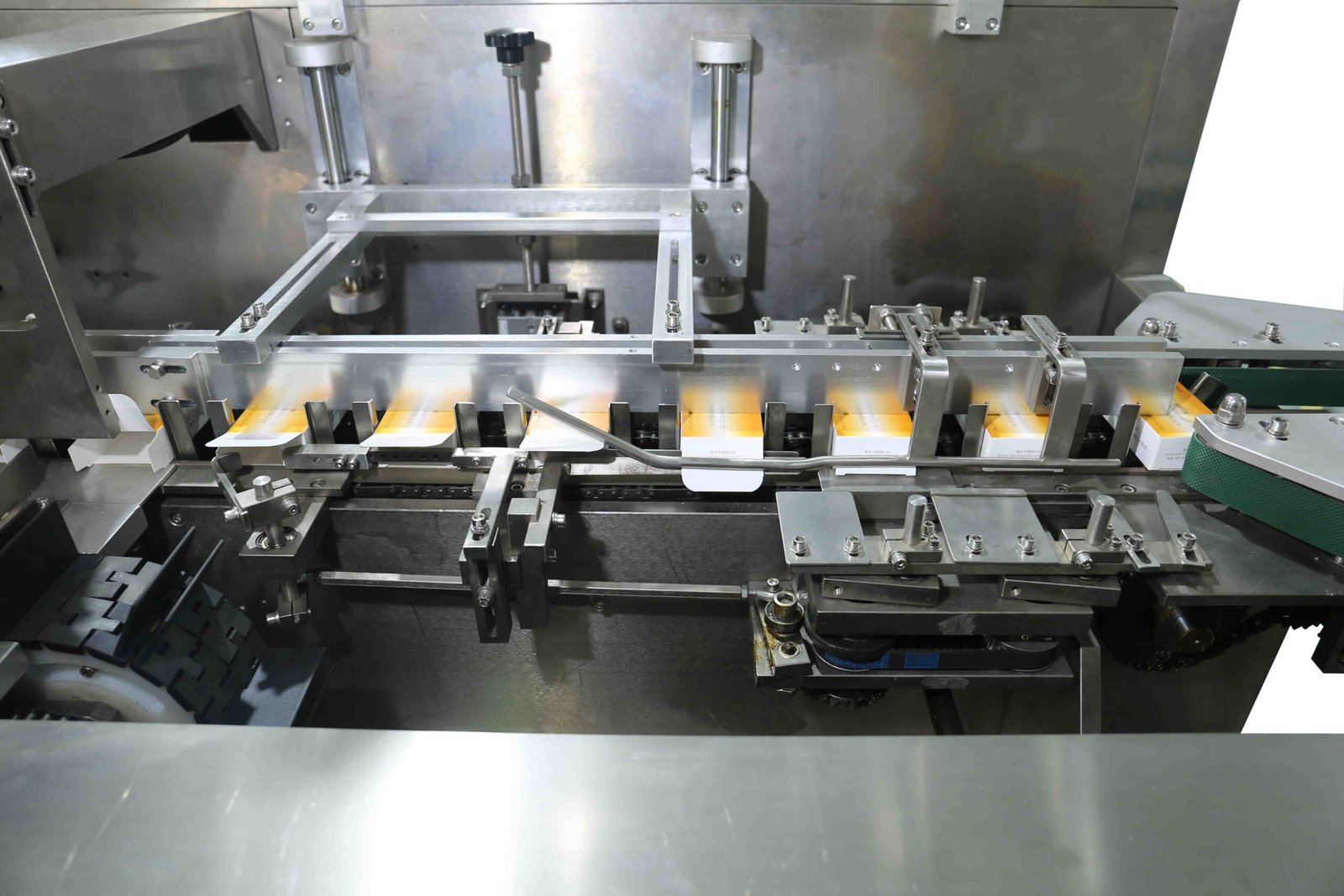
Connect blister discharge to cartoning
A blister machine and a cartoner operate in different output units. Define cards per carton and accepted cartons per minute before matching rates. Nominal machine rates alone do not establish the connected line output.
- Confirm card orientation, stacking and transfer handling.
- Specify cartons, leaflets and the number of cards per carton.
- Define buffer behavior, stop signals and restart handling.
- Include the connected format in the acceptance test.
Agree the acceptance evidence before ordering
A Factory Acceptance Test (FAT) should use the agreed formats and conditions. Write the acceptance limits into the test plan rather than relying on an undefined demonstration speed.
Production trial
Identify the tablet samples, material specifications, tooling and test duration. Record accepted output, rejects, stops and visible product or pack defects. Agree the sampling and counting basis.
Inspection challenge
For purchased inspection functions, test defined defects and verify the affected cards reach the reject location. Include restart, reject-bin or other relevant failure conditions in the agreed scope.
Changeover and documents
Test the ordered format changes and record the time boundary. Check tooling identification, manuals, drawings and agreed control functions against the purchase specification.
Start with four useful details
You do not need a finished technical specification to start the discussion. Send the information you have and identify anything still undecided.
- Tablet type, dimensions and a product photo or sample description.
- Blister drawing or sample photo, card size and cavity count.
- Forming and lidding materials, or the intended packaging application.
- Required accepted output, available shifts and expected SKU count.
If known, add your utilities, installation layout, destination, inspection requirements and cartoning interface. Keep the production requirement in good cards or good packs, with the unit clearly stated.
What to request in the proposal
- Exact model and configuration list.
- Rate conditions and trial plan for your format.
- Included tooling, feeding and inspection scope.
- Options and integration priced separately.
- Document, installation and training scope.
- Delivery, warranty and commercial terms.
You can also use the contact page.
Useful buyer resources
Automatic tablet blister packing machine FAQ
What is an automatic tablet blister packing machine?
It forms blister cavities, feeds tablets, seals lidding material and cuts finished cards through coordinated machine operations. Product feeding, inspection, rejection, coding and transfer arrangements depend on the purchased configuration. Operators still handle replenishment, setup, cleaning and production checks.
How many blister cards per minute will my machine produce?
Confirm cycles per minute and finished cards per cycle for your actual tooling. Multiplying them gives nominal cards per minute. Accepted output also depends on feeding, material behavior, rejects, stops and downstream constraints. Request a timed trial with your product and packaging materials instead of comparing an undefined BPM value.
Can the same machine run PVC/Alu and Alu/Alu?
Do not assume this from the word automatic. Thermoforming and cold-forming require different forming arrangements and suitable tooling. State both material structures in the enquiry so HIJ can confirm the proposed machine, change parts and output basis for each format.
Are servo drives and camera inspection included?
Inclusion is model and project dependent. The DPP-260/360K reference describes mechanical and servo traction arrangements, while the DPH380B document describes a multi-axis servo design. Confirm the ordered drive arrangement, camera functions, reject tracking and acceptance tests in the configuration list.
Can it handle coated tablets, fragile tablets and capsules?
Feeding performance depends on product dimensions, shape, coating, dust, breakage sensitivity and orientation requirements. Provide representative samples and define acceptable damage and fill defects. Capsule use should be confirmed with the appropriate feeder rather than assumed from a tablet trial.
Can the blister machine connect to a cartoning machine?
Integration is a project option. Confirm card orientation, cards per carton, leaflet requirements, buffer capacity, transfer design and stop or restart signals. Match accepted output across the connected line and test the transfer with the intended blister and carton formats.
What should the quotation include?
Ask for the exact model and suffix, format and tooling list, materials, feeder, inspection and rejection scope, controls, documents, utilities and line interfaces. Separate included equipment from options and state the test conditions, delivery basis, installation, training, warranty and commercial terms.
What information should I send to request a machine quote?
Start with the product type and dimensions, a blister drawing or sample photo, the forming and lidding materials, and your required accepted output. If the format is still being developed, describe the application and available information; add SKU count, shifts, utilities and downstream equipment when known.
Turn your tablet and blister format into a configuration brief
Share the product, pack, materials and output requirement. Request a proposal with explicit inclusions and test conditions so your team can compare the equipment on the same basis.