
Machine compatibility · Format parts · Changeover trials
Blister Machine Tooling & Format Change
Plan the right blister tooling set for your product, pack drawing and installed machine. Discuss forming, feeding, sealing and cutting requirements with HIJ before committing to a new format.
A matching model name is only the starting point. Machine configuration, tooling interfaces and the approved packaging materials determine what can be reused, adjusted or replaced.
Request a Tooling Compatibility Review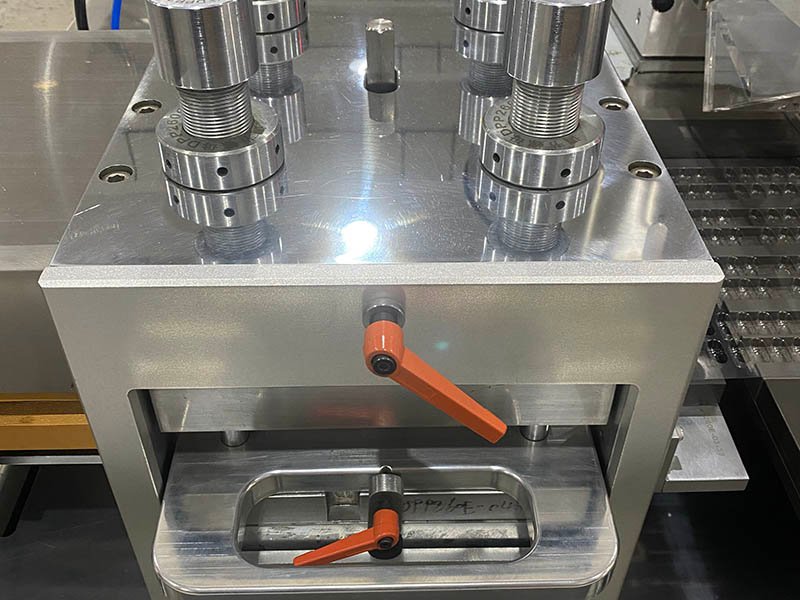
Define what you are buying
What is included in blister machine format tooling?
Blister machine tooling is the set of format-dependent parts that shapes the cavities, presents the product, supports sealing and defines the finished pack. A complete format set is machine-specific: not every product change requires every part to be replaced, and a forming mold alone may not be enough.
For an additional SKU, identify the current and proposed formats side by side. For a replacement part, start with the installed part reference and drawing revision. These are different quotation tasks and need different evidence.
| Station or part group | What the format affects | What to confirm |
|---|---|---|
| Forming tools | Cavity geometry, layout and the material-forming arrangement. | Forming route, approved drawing, station interface and any matching support or cooling parts. |
| Product feeding parts | Product guidance, orientation and placement into cavities. | Product dimensions and variation, fragility, feeder type and the parts required for the proposed presentation. |
| Sealing tools and supports | Pack support, seal-land layout and contact pattern. | The forming-web/lidding combination, cavity alignment, station design and agreed pack evaluation method. |
| Coding, perforating and cutting parts | Code position, tear features and finished card outline. | Card drawing, registration references, tooling interfaces and any required downstream handling changes. |
| Guides, transfer and discharge parts | Web or pack handling between stations and at discharge. | Which parts are dedicated, shared or adjustable, and which adjustments need controlled setup references. |
The table is a purchasing checklist, not a claim that every listed item is included with every HIJ tooling order.
Compatibility before quotation
Will the new tooling fit your blister machine?
Identify the machine model, serial number and installed configuration before assessing compatibility. This applies to a DPP-250 or another DPP-series machine as well as to equipment from a different manufacturer. Similar names do not prove identical interfaces or interchangeable tooling.
Machine-side evidence
- Nameplate and machine identification.
- Existing tooling part numbers and drawing revisions.
- Station photographs and available assembly drawings.
- Known modifications, current feeder and control configuration.
If drawings are unavailable, identify the missing information first. Photographs alone may not resolve critical interface dimensions.
Product and pack evidence
- Representative product samples or a controlled dimension drawing.
- Blister layout, cavity count, card outline and orientation.
- Forming-web and lidding specifications.
- Target output, coding requirements and downstream pack handling.
Specify whether this is a replacement of the existing format, a new pack layout or a change of forming route.
Thermoforming and cold forming need separate review. Do not assume that changing molds converts a machine from one forming route to another. Confirm the supported station design, materials, process functions and format limits before ordering.
For a new equipment project, start with the DPP-250 blister machine page or the blister packing machine range. A machine selection and a replacement-tooling order are not the same scope.
Replace generic specifications with an agreed scope
What should your tooling quotation specify?
A useful quotation identifies the format, the parts supplied and the evidence used to accept them. A label such as “precision tooling” or “GMP tooling” does not replace a drawing, an inspection requirement or an agreed documentation list.
| Quotation item | Define with the supplier | Acceptance evidence |
|---|---|---|
| Format identity | Machine identification, format code, drawing number and revision. | An agreed drawing and a traceable list of included parts. |
| Dimensions and interfaces | Critical cavity, card and mounting dimensions, with applicable tolerances. | Inspection results against the identified drawing, not an unrelated headline accuracy value. |
| Materials and finish | Material and surface requirements for each part, its contact role and cleaning conditions. | Named certificates or inspection reports where required and included in the order. |
| Format-part coverage | Forming, feeding, sealing, cutting and handling parts; shared items and exclusions. | A part-by-part scope identifying new, reused and adjustable components. |
| Machine settings | Recipe, registration, positioning and interface changes within the project scope. | Controlled setup records and demonstrated functions under agreed trial conditions. |
| Commercial terms | Sample requirements, trial scope, delivery basis, installation support and warranty terms. | The written quotation and agreed order, including exclusions and customer responsibilities. |
Keep material selection and pack performance connected. Changing a forming web or lidding construction may require another review even when the finished card dimensions stay the same. The blister packaging materials guide explains the material-selection context.
Discuss My Machine and Format DrawingMeasure the same start and finish
How long does a blister machine format change take?
There is no useful universal time without a defined change. A part exchange, a complete mechanical setup and a batch-to-batch changeover measure different work. Agree the old format, the new format, the operator conditions and the timing boundary before comparing a “quick-change” claim.
For production planning, record the elapsed interval from the last accepted pack of the old format to the first accepted pack of the new format. Identify what that interval includes and excludes, particularly cleaning, line clearance, material loading, stabilization, inspection and release activities.
A worked planning example
Suppose sequential stages take 15 minutes for clearance and preparation, 25 for mechanical exchange, 20 for setup and stabilization, and 15 for agreed verification. The total is 75 minutes. Reporting only the 25-minute exchange would leave 50 minutes outside the quoted boundary.
These are hypothetical planning inputs, not HIJ performance data, a customer case or a changeover guarantee. If activities overlap, measure actual elapsed time instead of adding their durations twice.
Use the same boundary when comparing a repeat format with a new format. Record the trial conditions, adjustments, startup waste and any unresolved work alongside the time. A fast demonstration does not establish the result for every product, operator or material.
Evidence for a purchasing decision
Evaluate the format change as a complete trial
Agree the trial before judging a tool set by how easily one component can be removed. The useful result is a documented setup that produces the intended pack under the agreed conditions.
Identify the two formats and supplied parts
Record the starting and target drawings, product and materials. Reconcile the trial parts with the quotation, including reused items and customer-supplied equipment.
Define the demonstration boundary
Agree which preparation, cleaning, mechanical, control and verification activities are included. Record operator experience and any supplier assistance rather than assuming a universal labor requirement.
Challenge the intended pack and machine functions
Assess product placement, cavity formation, alignment, sealing, card dimensions, coding and discharge where relevant. Use approved samples and acceptance methods. Visual appearance alone does not establish package integrity.
Record repeatability, waste and outstanding work
Document adjustments needed to return to the format, startup material use, product handling and remaining deviations. Agree which checks take place at the supplier and which remain for the installed line.
This is a procurement and trial checklist, not an operator procedure. Tool removal, temperature limits, energy isolation, lifting, guarding and restart must follow the machine manufacturer's instructions and the site's approved safety procedures. Do not use a generic webpage as authority to dismantle equipment.
Documentation, identification and future formats
Keep the tooling record tied to the installed line
Agree documentation before ordering
Specify the drawings, part list, inspection records, material evidence, setup instructions and trial records required for your project. Confirm which documents are supplied, in what format, and whether any additional engineering work is included.
For a qualified production line, the product manufacturer’s quality team should assess the impact of the change and define verification or requalification. Do not assume that a supplier's template, a new tool set or a fixed number of sample packs automatically completes that assessment.
Make the next order identifiable
Keep each format linked to its machine, drawing revision, installed parts and approved setup. Identify shared parts explicitly so an apparently complete set does not arrive without an item needed by both formats.
For wear or damage, record the affected part and observed condition. Request the appropriate inspection and replacement criteria; do not assume a universal service life or interchangeability based only on appearance.
One complete request
Prepare a useful blister tooling enquiry
Start with the machine identity and the required change, then add the available evidence. If a drawing or part reference is missing, state that clearly so the engineering review can identify the next input.
Send these project essentials
- Machine model, serial number and nameplate photo.
- Existing and proposed blister drawings, with revisions.
- Product dimensions or representative sample details.
- Forming and lidding material specifications.
- Current tooling references and the parts requested.
- Output target, acceptance needs and delivery destination.
Ask for an itemized response
Request the compatibility basis, included components, excluded work, information still required and proposed trial scope.
Confirm pricing, lead time, documentation, service support and warranty in the project quotation. These depend on the reviewed scope and should not be assumed from a generic website statement.
For a new machine, identify the planned SKU and format mix so the initial order can distinguish its first format from additional sets.
Before you order
Blister machine tooling FAQ
Is a forming mold the same as a complete blister format set?
No. A forming mold defines part of the format, while a complete set may also require feeding, sealing, cutting, coding or handling parts. Confirm the actual scope against the machine and the proposed pack drawing.
Can tooling fit every machine with the same DPP model name?
Do not assume it can. Verify the manufacturer, model, serial number, installed configuration and tooling interfaces. Drawing revisions and machine modifications may affect compatibility even when model names look similar.
How long should a format change take?
Define the old and new formats and the timing boundary first. Mechanical exchange time is not the same as the full interval between accepted production runs. Confirm performance through an agreed trial instead of relying on one universal time.
Does changing tooling make a thermoforming machine suitable for Alu-Alu?
Not by itself. The machine must support the intended forming route, materials and process functions. Review the station design and configuration before treating a tooling change as a material-route conversion.
Are all tooling parts made from 316L stainless steel?
No universal material claim should be assumed. Define the material and surface requirements for each part according to its function, contact role and cleaning conditions. Confirm the agreed grades and supporting records in the order.
Are IQ/OQ documents automatically included with tooling?
Confirm the documentation scope in the quotation. Identify which drawings, inspection reports, setup records or qualification-support documents are required and included. The site's quality team remains responsible for defining the impact assessment and acceptance requirements.
What determines blister tooling cost and lead time?
The number and complexity of the parts, machine interfaces, material and finish requirements, drawings, trials and documentation scope all affect the quotation. Ask for project-specific pricing and delivery terms after compatibility and scope review.
What information is needed for a replacement tooling enquiry?
Provide the machine model and serial number, installed part reference, relevant drawing revision, photographs, observed condition and required quantity. Include the product and pack format when they affect the replacement. Identify missing information rather than assuming a visually similar part will fit.
Continue the tooling review
Tooling and mold design
Explore the engineering decisions behind cavity layout, format drawings and the tooling design brief.
Tablet blister tooling cost
Review cost drivers and purchasing boundaries before comparing quotations for different format sets.
Blister packaging materials
Compare material-selection questions that should be resolved with the pack drawing and machine configuration.
HIJ Machinery · Project enquiry
Discuss your machine and next blister format
Share the machine identification, existing tooling references and proposed pack drawing. Ask HIJ to review compatibility, the format-parts scope and the evidence needed before quotation.
Drawings and photographs can be sent by email to [email protected]. Identify the machine and requested format in your message.