
High-speed chocolate packing
Configure a chocolate blister packing machine around accepted output, product handling and the requirements of your next production stage.
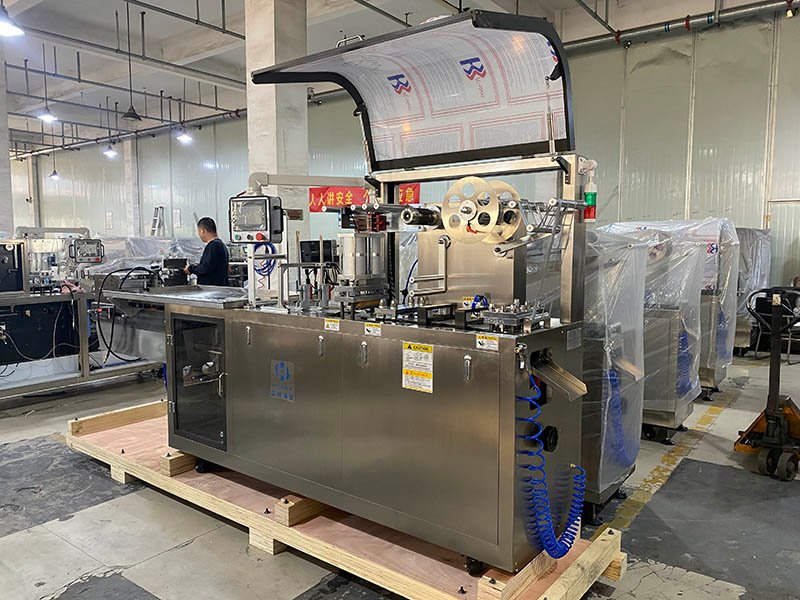
Measure accepted output
A high speed chocolate blister packing machine should be selected for the complete packaging job, not a cycle-rate figure alone. The pack layout, chocolate handling, inspections and stops all affect how many usable packs leave the machine.
One cycle is a machine action. Finished blister packs per cycle depend on the approved format. Individual chocolate pieces are a third unit: multiply accepted complete packs by the number of pieces in each pack. Keep those units explicit when comparing offers or run records.
Use elapsed time for the agreed test window, including its stops. A net-running-minute rate and a whole-shift rate are not the same comparison.
Calculate from a run record
Illustrative run. Replace these values with your records; this is not a machine rating.
- Accepted packs
- 1,176
- Accepted packs per minute
- 58.8
- Chocolate pieces per minute
- 352.8
Rates are rounded to two decimal places; positive rates below 0.01 are shown as <0.01. The calculation runs in your browser. It does not submit a quotation or send your figures to HIJ.
Accepted packs = finished packs counted − rejected packs.
Accepted packs per minute = accepted packs ÷ elapsed minutes.
Chocolate pieces per minute = accepted packs per minute × pieces per complete pack.
For example, 1,200 finished packs, 24 rejects, 20 elapsed minutes and 6 pieces per complete pack give 1,176 accepted packs, 58.8 accepted packs/min and 352.8 pieces/min.
Configure the production route
Set the handling and control boundaries around your product and pack. List what the offered equipment does and which tasks remain with operators or other machines.
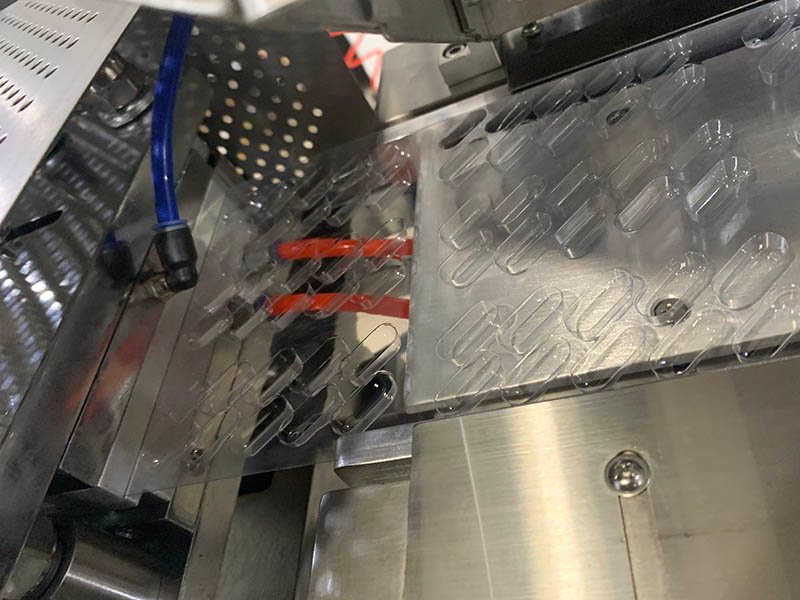
Loading and positioning
Review chocolate dimensions, surface condition, coating, handling temperature and orientation with representative samples. Decide how the pieces reach each cavity and how contact marks, broken pieces or sticking are handled. Define manual loading tasks and any supplied automatic feeding separately.
Pack and tooling
Use a dimensioned cavity layout with product clearance, web dimensions, lidding and cutting arrangement. Identify every format and its change parts. The custom mould guide explains the drawing review; the packaging materials guide covers the forming-web and lid selection route.
Forming and sealing
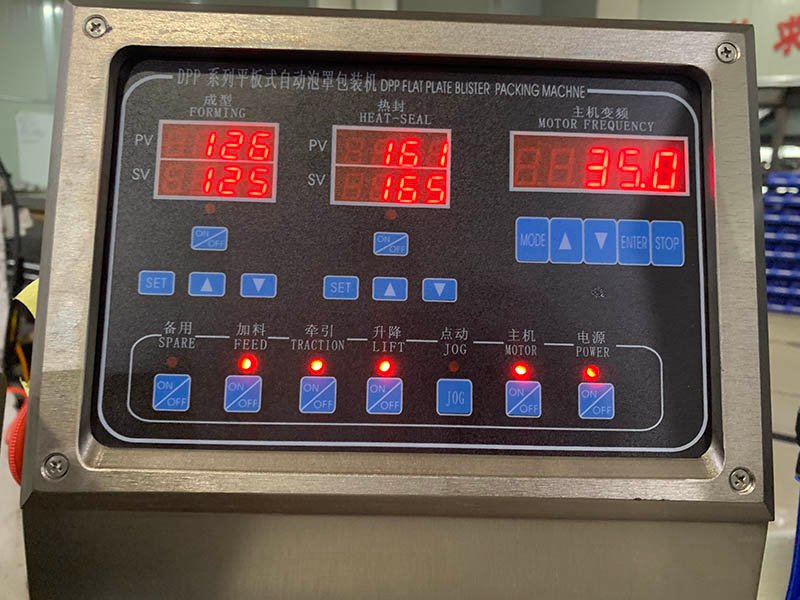
Review the material pair, tooling and operating window together. Check cavity shape, product clearance and a clean sealing area during the agreed run. Record the settings used with that material and format, rather than copying a temperature or rate from a different pack.
Inspection and rejection
Name the checks to be supplied and the conditions used to challenge them. Define how missing or damaged product, incomplete packs and detected faults are handled, where rejected packs go and what is recorded. Product-presence inspection and package-integrity testing serve different purposes.
Discharge and transfer
Agree finished-pack orientation, spacing, transfer height, buffering and start/stop signals with the next operation. For a blister cartoning machine, review transfer and restart behaviour as part of the interface scope, not merely whether two conveyors can be joined.
Continuous-run scope
A short demonstration and a defined production run answer different questions. Agree the product, materials, pack revision, duration and checks before comparing the results.

Steady-state run
Start the recorded window under the agreed operating conditions. Count finished packs, accepted packs, rejects and stops over the same elapsed period. Record the loading arrangement and replenishment work so that the result describes the complete offered setup, not just an unloaded machine cycle.
Stops and restart
Include the agreed replenishment events, short stops and downstream blocking conditions. Record each event, its duration, the restart steps and the disposition of packs remaining in the machine. This identifies the recovery work and handling that a continuous production plan needs to cover.
Format and batch changes
Identify the parts to change, cleaning access, settings to restore and checks before releasing the next batch. Include operator tasks and the first acceptable packs after restart in the review. For frequent format changes or shorter batches, compare the small-business configuration route as well as the higher-output route.
Run it against your pack
Ask for a run record tied to your chocolate, pack drawing, materials and offered machine configuration. Agree the acceptance criteria and who supplies samples, performs each test and approves the result.
| Check | What to record | Purchasing decision |
|---|---|---|
| Accepted output | Finished and accepted packs, rejects, elapsed window, stops and cavity layout. | Compare the target with observed accepted-pack output on the same basis. |
| Pack condition | Cavity shape, product condition, sealing area, cut finish and the agreed package-quality test results. | Define applicable defects and acceptance limits; identify who performs specialist testing. |
| Operating work | Loading, replenishment, cleaning, alarms, restart and reject-handling tasks. | Allocate the required operator roles without assuming one person covers every task. |
| Connected line | Pack orientation, spacing, buffering, control signals and blocking/restart behaviour. | Separate the blister-machine test from any integrated-line acceptance scope. |
For a wider line, use the turnkey solutions route to allocate interface responsibilities. Keep case packing requirements in the downstream schedule so that blister, carton and shipping-case output are not confused.
Production questions
Can mixed shapes share a run?
An assortment needs a defined cavity position and loading plan for each chocolate shape. Review the worst-case size and surface condition and how an incomplete pack is detected and handled. A single-shape trial does not by itself establish mixed-assortment performance.
Can I compare OEE figures?
Only if planned production time, ideal rate, good-count rules and stop categories are defined the same way. Ask for the underlying run record as well as the percentage. Use accepted-pack output for the purchasing comparison when those definitions differ.
What changes after a new film?
A forming-film or lidding change can alter forming and sealing conditions and may change the acceptable operating window. Keep the supplier, grade and pack revision in the record, then repeat the agreed checks with the replacement materials before retaining the previous output commitment.
Review your production target
Send your existing chocolate and pack specification, plus the accepted-output target or run record. Reference its revision and highlight only unresolved loading or line-interface decisions.
HIJ can discuss a configuration, trial scope and itemised quotation on the same basis. Review the machine price and quotation scope for the commercial items to include.