
Vitamin and supplement tablet packaging
Nutraceutical Tablet Blister Packing Machine
Choose a blister packing configuration around your finished tablets, pack materials and SKU mix. Discuss feeding, product protection, format changes and acceptance trials with HIJ Machinery.
For vitamin, mineral and other dietary supplement tablet projects, the starting point is a representative product sample and a defined blister drawing—not a generic “nutraceutical-grade” label.
Discuss My Supplement Tablet Project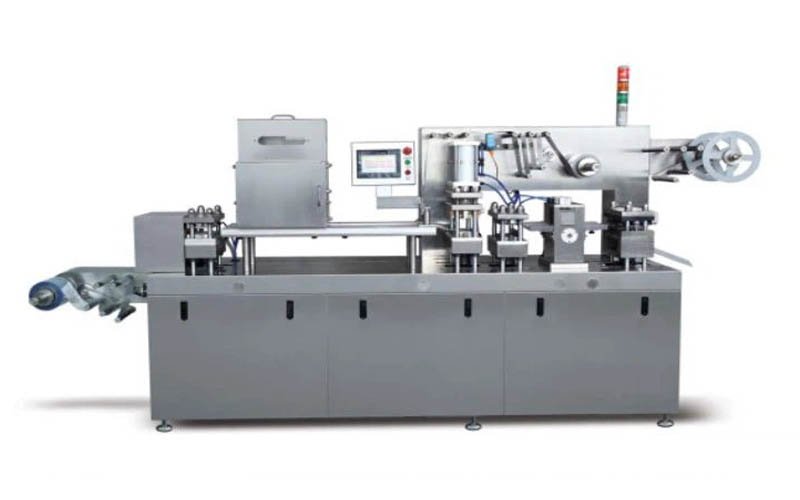
Define the packaging task
A machine for packing finished supplement tablets
A nutraceutical tablet blister packing machine places finished tablets into formed cavities, seals them with a compatible lidding material and produces the specified blister card. It packages the product; it does not make the tablet, mix its ingredients or establish the supplement's health claims.
Selection should connect three things: how the tablet behaves during feeding, how the finished pack protects and presents it, and how the line will run the planned production schedule. A machine that handles one coated vitamin tablet is not automatically suitable for a large chewable, a sticky gummy or every mineral tablet.
For a new equipment project
Define your current products, expected future formats, material specifications and required good packs per shift. Separate the first format from additional tooling and optional inspection or downstream equipment.
For an additional SKU
Provide the installed machine identity, current format and proposed tablet and pack drawing. Establish which parts and settings can be reused before assuming that another recipe is all you need.
Product behavior matters more than the category name
Match feeding and cavity design to your tablet
Use a sample set that represents normal production variation, including dimensions, coating and surface condition. Ask the trial to demonstrate the difficult product in your portfolio, not only the easiest sample.
On a small screen, swipe the table sideways to see all columns.
| Product characteristic | Information to provide | What to evaluate |
|---|---|---|
| Coated vitamin tablets | Shape, dimension variation, coating finish and acceptable appearance. | Orientation, cavity loading, scuffing and consistent product presentation. |
| Large mineral tablets | Length, width, thickness, mass and representative samples. | Clearance, reliable feeding, cavity fit and handling through discharge. |
| Friable or dusty tablets | Observed chipping or dust, cleaning constraints and product-contact requirements. | Damage at transfer points, dust management and keeping the intended seal area clear. |
| Chewable or irregular tablets | Actual hardness, surface behavior and geometry rather than a category label alone. | Whether the proposed feeder and format can handle the product without unacceptable damage or jams. |
| Moisture-sensitive products | Approved protection requirements, packaging specifications and handling limits. | Material route, exposure during processing and the complete pack evaluation agreed by the product owner. |
Keep different dosage forms separate in the enquiry. Gummies, softgels, capsules and effervescent tablets can present different handling and pack requirements. Identify them explicitly; suitability is not established by a successful trial with a conventional compressed tablet.
Select the package and equipment together
Review forming materials, lidding and opening requirements
Start with the required product protection and finished pack design. Confirm the exact forming-web and lidding specifications with the material supplier and the proposed machine configuration. A material family name alone does not define a complete sealing or forming process.
Thermoformed blister route
For a proposed PVC, coated PVC or other thermoplastic web, review its grade and thickness, cavity geometry, lidding compatibility and agreed forming and sealing trials. Do not transfer a successful setup from one material construction to another without evaluation.
Cold-form blister route
Where the approved pack uses an aluminum-based cold-form structure, confirm a compatible forming station, tooling, web layout and lidding system. This is a configuration decision, not merely a change in the material roll.
The product owner's quality team should define the pack acceptance and stability evidence needed. A barrier material specification or an attractive blister sample alone does not prove the finished product's shelf life. See the blister packaging materials guide for the broader selection questions.
Child-resistant and adult-friendly opening are finished-package requirements. Specify the intended opening design and applicable testing; do not treat a machine name, peelable foil or a “CR” badge as proof. For US special-packaging requirements, consult the CPSC Guide to Special Packaging and the relevant testing provider.
Make output numbers comparable
Calculate the required good blister cards per minute
State output in an unambiguous unit. Tablets per minute, machine cycles per minute and finished blister cards per minute are different measurements. The tablet count per card and the number of cards produced per cycle affect the comparison.
A simple production-planning example
For a hypothetical requirement of 100,000 tablets per day, with 10 tablets per card, the daily target is 10,000 accepted cards. If the schedule allows 400 net production minutes, the required average is 25 good cards per minute.
Calculation: 100,000 ÷ 10 ÷ 400 = 25. These are illustrative buyer inputs, not HIJ machine ratings or a guaranteed output. Net production time excludes the planned stops you have already allowed for.
Use the required accepted output to discuss capacity margin, startup rejects, inspection losses and short stops. Do not equate the result with a machine's maximum cycle rate. For multiple SKUs, calculate the schedule using each format's actual run requirement and its own changeover allowance.
Plan the portfolio, not only the first SKU
Define what changes between supplement products
Build a format matrix before choosing a machine: tablet geometry, cavity layout, tablets per card, material pair, code or print requirements and downstream carton format. Record which combinations genuinely share parts.
A stored recipe may help restore settings, but it does not change the physical feeder, cavity tooling or cutting layout. Confirm the controls available on the proposed machine, the parameters stored and the setup activities that still require an operator.
For changeover time, agree the start and finish—such as the last accepted card of one format to the first accepted card of the next. Include the relevant preparation, cleaning, tooling, material loading and verification tasks. Do not compare mechanical exchange time with a complete batch change.
Use the blister tooling and format-change page to define the parts and trial boundary.
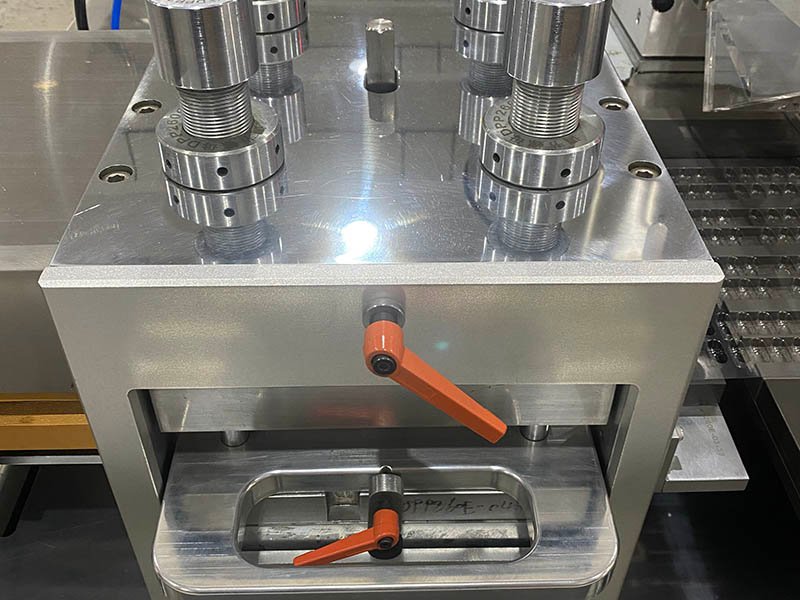
Cleaning must match the installed equipment and product risk. Identify product-contact areas, cleaning access, residue and allergen concerns in the project brief. Do not assume every blister machine is designed for clean-in-place or wet cleaning. Cleaning and maintenance procedures must follow the equipment instructions and the site's approved controls.
Compare a defined configuration
Start with the tablet machine range, then specify the options
Review the tablet blister packing machine range alongside your product and pack brief. Ask for a proposal identifying the actual model and included equipment, then compare the agreed configuration rather than the application label alone.
DPP-250 project reference
Review the published machine information, then ask which configuration can be assessed against your tablet, approved materials and blister drawing. Keep the product trial and proposed supply scope attached to the quotation.
DPP-260 project reference
Compare the published configuration against the same required good-pack output and format matrix. Model references are starting points for review, not confirmation that every supplement, pack material or opening design is supported.
Inspection, automatic rejection, printing, recipe functions, additional tooling and cartoning integration should be identified as included, optional or outside scope. Do not assume they are standard on every model.
Request a Configuration ReviewMake the acceptance evidence specific
What should a supplement tablet trial demonstrate?
Agree the sample formats, supplied materials, operating conditions and acceptance criteria before a demonstration. Trial coverage should reflect the proposed equipment and the difficult parts of your product range.
Product feeding and handling
Observe tablet orientation, cavity filling, damage and accumulation. Define acceptable results and assess representative product variation, including the planned feeder and transfer arrangement.
Finished-pack quality
Evaluate cavity shape, product clearance, seal-area condition, card dimensions, coding and opening behavior as applicable. Use the agreed test methods; visual inspection alone does not establish package integrity.
Inspection and line interfaces
Where inspection and rejection are included, challenge the agreed defect types and verify the reject outcome. Confirm discharge and any downstream transfer against the actual card and carton formats.
Repeat setup and production record
Record accepted output, startup waste, adjustments and unresolved issues. Demonstrate the agreed format-change boundary and identify which checks remain for the installed site rather than treating a supplier demonstration as complete site qualification.
This is an equipment-purchasing checklist, not an operating procedure. The customer's quality and engineering teams should define sampling, verification and release requirements for the intended product and market.
Keep equipment evidence and product compliance distinct
Specify documentation without relying on certification badges
US dietary supplement manufacturing
FDA identifies 21 CFR Part 111 as the current good manufacturing practice regulation for dietary supplements. Its guidance addresses equipment, maintenance and cleaning, as well as production, packaging and labeling controls.
Translate the requirements applicable to your operation into a written equipment and documentation brief. A machine purchase does not by itself establish facility or product compliance.
NSF claims and the evidence they cover
NSF describes NSF/ANSI 173 certification in relation to dietary supplement products, including label content and contaminant testing. It should not be treated as proof that a blister machine is certified merely because of its stainless-steel construction.
Ask for the actual certificate, named product or facility and covered scope whenever certification is part of a purchasing requirement. No machine-level NSF certification is asserted on this page.
Agree the requested equipment drawings, product-contact material records, cleaning-access information, calibration or inspection evidence, manuals, control descriptions and trial records in the quotation. Document availability and any qualification-support work must be confirmed for the ordered scope.
These sources provide context, not a market-entry determination. Your responsible quality or regulatory team should establish the obligations for the product, facility and destination market.
Compare the same scope
What affects the quotation for a nutraceutical blister machine?
Price depends on the reviewed machine configuration and supply boundary. Compare the feeder, material route, initial and additional formats, inspection, coding, downstream equipment, documentation and site support—not an unsupported discount against a “pharmaceutical-grade” machine.
Provide the project inputs
- Tablet samples or drawings, including the difficult SKU.
- Blister layout and tablets per card.
- Approved forming and lidding specifications.
- Required good packs per shift and available run time.
- SKU matrix, change frequency and cleaning constraints.
- Destination market, site services and required documentation.
Ask for a comparable proposal
Request the exact model and configuration, included tooling, options, exclusions and trial plan. Separate the initial format from additional format sets and identify customer-supplied materials or equipment.
Confirm delivery terms, installation, training, service and warranty in the written quotation. Do not assume a fixed response time, lead time or warranty period from the application category.
Send drawings and photographs through the agreed contact channel; email is available at [email protected].
Equipment buying questions
Nutraceutical tablet blister machine FAQ
Can a blister machine pack vitamin and mineral tablets?
Suitability depends on the tablet, feeder, tooling, materials and intended pack. Provide representative samples and a blister drawing, then confirm the proposed configuration through an agreed trial. A successful run with one tablet does not prove compatibility with every supplement.
Is a nutraceutical machine always cheaper than a pharmaceutical machine?
No fixed price difference should be assumed. Compare machines with the same feeding, forming, sealing, inspection, tooling, documentation and service scope. The application label alone does not establish a price advantage or a lower engineering requirement.
Does NSF/ANSI 173 establish that a blister machine is certified?
No. NSF describes NSF/ANSI 173 certification for dietary supplement products. Stainless-steel construction does not establish that a blister machine holds that certification. Check the actual certificate, named subject and scope whenever certification is required.
Can one machine run several supplement SKUs?
Potentially, subject to the machine configuration and each product and pack format. Compare tablet dimensions, feeder parts, cavity layout, materials, coding and cleaning requirements. Recipe storage does not remove the need for physical format changes or setup verification.
How long will a supplement format change take?
Agree the starting and target formats and measure the same changeover boundary. Include the relevant preparation, cleaning, tooling, material loading and verification work. Confirm the result in a representative trial rather than applying a universal changeover time.
Can the same configuration handle gummies and capsules?
Do not assume so. Gummies, softgels, capsules and compressed tablets can have different feeding, handling and pack requirements. Identify each dosage form separately and request compatibility assessment with representative samples.
Does peelable lidding automatically make a blister child-resistant?
No. Child-resistant and adult-friendly performance concerns the complete package and the applicable testing requirements. Specify the intended pack construction and verify the required evidence; a foil description or a machine option is not sufficient proof.
What information is needed for a machine quotation?
Provide tablet samples or drawings, the blister layout, forming and lidding specifications, required accepted output, available production time and SKU-change requirements. Add destination-market, site-service and documentation needs so the quotation can identify the configuration, options and exclusions.
Continue your equipment review
Tablet blister machine range
Review the broader equipment route before narrowing the configuration for your supplement tablets.
Tooling and format changes
Define format-part coverage, compatibility and the evidence needed for a changeover trial.
Packaging materials
Connect forming-web and lidding decisions with product protection and machine suitability.
HIJ Machinery · Project enquiry
Build the proposal around your tablets and pack
Send your tablet sample details, blister drawing and production target. Discuss the machine configuration, format sets and trial evidence needed for your supplement packaging project.
Request a Supplement Packaging Proposal
For drawings and photographs: [email protected]. Include the planned dosage form and required output unit in your message.