How Does an Alu Alu Blister Machine Work?
An alu alu blister machine cold-forms a tri-layer OPA/AL/PVC foil into sealed drug cavities using mechanical plug-assist pressure at room temperature (20–25°C) — zero heat applied to the forming foil. The process runs through 6 sequential stations: bottom foil unwinding → cold forming → product filling → top foil heat sealing → perforation & embossing → punching & discharge. The result: hermetically sealed drug cavities with WVTR < 0.5 g/m²/day — the highest moisture barrier available in pharmaceutical blister packaging, compliant with EU GMP Annex 1 (2022) and USP <1207>.
How Does an Alu Alu Blister Machine Work? Cold Forming Process Explained Step by Step
An alu alu blister machine is defined as a pharmaceutical packaging system that mechanically presses a multi-layer aluminum composite foil (OPA/AL/PVC) into formed cavities at ambient temperature through a plug-assist mechanism, then hermetically seals those cavities with an aluminum lidding foil under controlled heat and pressure — producing fully opaque, moisture-proof blister packs with a water vapor transmission rate (WVTR) of less than 0.5 g/m²/day. The cold forming process requires no film pre-heating, eliminating thermal stress on the packaging material and preserving foil wall integrity to within ±0.1 mm depth tolerance.
Pharmaceutical packaging engineers sourcing a cold form blister packaging machine need more than a spec sheet — they need a station-by-station understanding of precisely how each mechanical action transforms raw foil into a validated, audit-ready blister pack. This guide breaks down every stage of the cold forming process, explains the critical differences from thermoforming, and identifies the machine components that determine whether your line passes or fails an FDA or EMA inspection on day one.

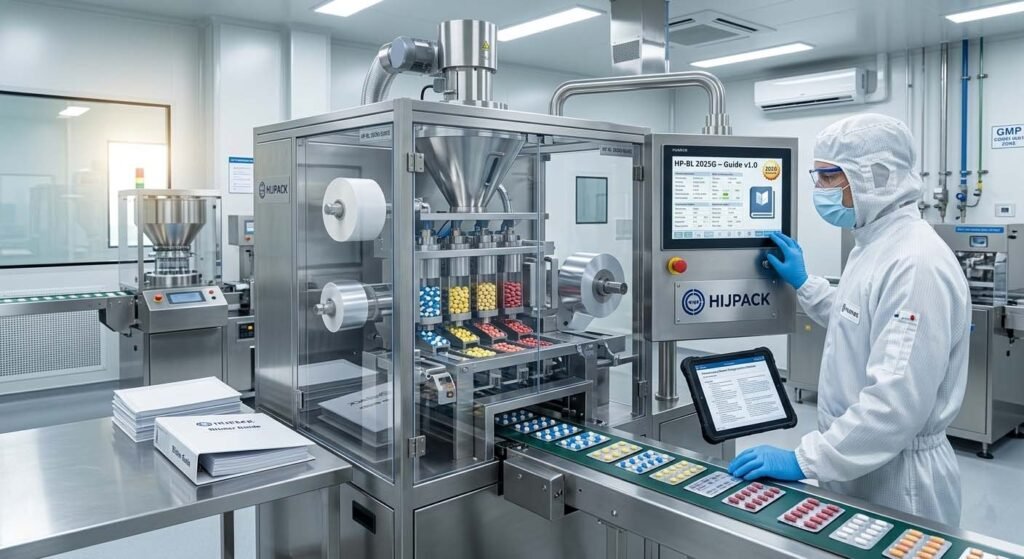
HIJ DPH-300 Cold Forming Alu Alu Blister Packaging Machine — 6-station servo-driven architecture designed for GMP pharmaceutical environments.
The 6 Core Stations of a Cold Form Blister Machine: How Does Alu Alu Blister Packaging Work Step by Step
A cold form blister machine processes pharmaceutical products through six mechanically synchronized stations, each performing a discrete forming, filling, or sealing function. Understanding each station's mechanical action is essential for specifying correct tooling, validating forming depth, and diagnosing root causes during IQ/OQ/PQ qualification under EU GMP Annex 15.
Bottom Foil Unwinding & Guided Transport
The bottom foil roll — a tri-layer laminate of OPA (25 µm) / AL (45–60 µm) / PVC (60–80 µm) — unwinds from a dual-roll holder equipped with a torque-controlled brake system. A servo-driven indexing mechanism advances the foil in precise incremental steps matching the mold pitch dimension, typically 20–100 mm depending on cavity layout. Edge guidance sensors maintain lateral tracking accuracy to within ±0.3 mm, preventing cavity misalignment at the forming station. Foil tension is continuously monitored; deviations exceeding 5 N trigger an automatic line stop.
Cold Forming via Plug-Assist Mechanism
The foil indexes into a forming die where a plug-assist punch — precision-machined from nylon or UHMW-PE — descends under servo-controlled force to mechanically stretch the OPA/AL/PVC laminate into the cavity mold at ambient temperature (20–25°C). No pre-heating of the bottom foil occurs. The aluminum layer deforms plastically, retaining the cavity shape permanently. Forming depth is servo-controlled to ±0.1 mm, achievable up to 12 mm depending on product geometry. Exceeding calibrated depth without adjustment produces micro-cracks in the aluminum wall invisible to the naked eye but detectable by ASTM F2338 seal integrity testing.
Product Filling into Formed Cavities
Formed blister pockets advance to the filling station where a vibrating brush-type feeder, rotary disc feeder, or electronic counting feeder deposits tablets, capsules, or soft-gel products into each cavity. Sensor arrays — typically photoelectric or camera-based vision systems — verify fill presence in every cavity at up to 800 cycles/min. Reject gates activate within one cycle if an empty cavity is detected. For hygroscopic or light-sensitive APIs, the filling zone can be enclosed in a nitrogen-purged or low-humidity enclosure maintaining RH < 20%, compliant with 21 CFR Part 211.68 environmental control requirements.
Top Foil Heat Sealing with Aluminum Lidding
The lidding foil — AL (20 µm) coated with heat-seal lacquer — unwinds from an upper roll and is laminated onto the formed bottom foil under a heated sealing platen. Sealing temperature is maintained at 160–220°C with ±2°C precision via PID-controlled heating elements; sealing pressure is set at 200–400 N/cm². This is the only stage where heat is applied in cold forming — and exclusively to the lidding foil, never to the pre-formed bottom foil. The resulting hermetic bond achieves peel strength of 8–15 N/15 mm width, validated per USP <1207> package integrity standards.
Perforation, Embossing & Batch Code Printing
The sealed web advances to a perforation and embossing station where rotary or flat-bed tooling scores break lines between individual blister units for patient-friendly push-through dispensing. Simultaneously, embossing rolls imprint batch number, expiry date, and sequential cavity numbers — a traceability requirement under EU GMP Annex 1 (2022) Section 8.14. Integrated inkjet or thermal transfer print heads can apply serialization data at this stage for compliance with Falsified Medicines Directive (FMD) track-and-trace mandates. Perforation depth is servo-controlled to prevent foil breakthrough while ensuring clean manual separation.
Punching, Individual Blister Separation & Discharge
A precision punch-and-die set cuts the continuous sealed web into individual blister cards of specified dimensions. Servo-driven punching maintains positional accuracy to ±0.2 mm relative to cavity centerlines, preventing edge trimming into sealed zones. Finished blister cards discharge onto a conveyor or directly into a linked blister cartoning machine at synchronized speed. Scrap foil trim is simultaneously wound onto a waste take-up reel. A post-punch camera or leak detection system performs final integrity verification before products reach secondary packaging.
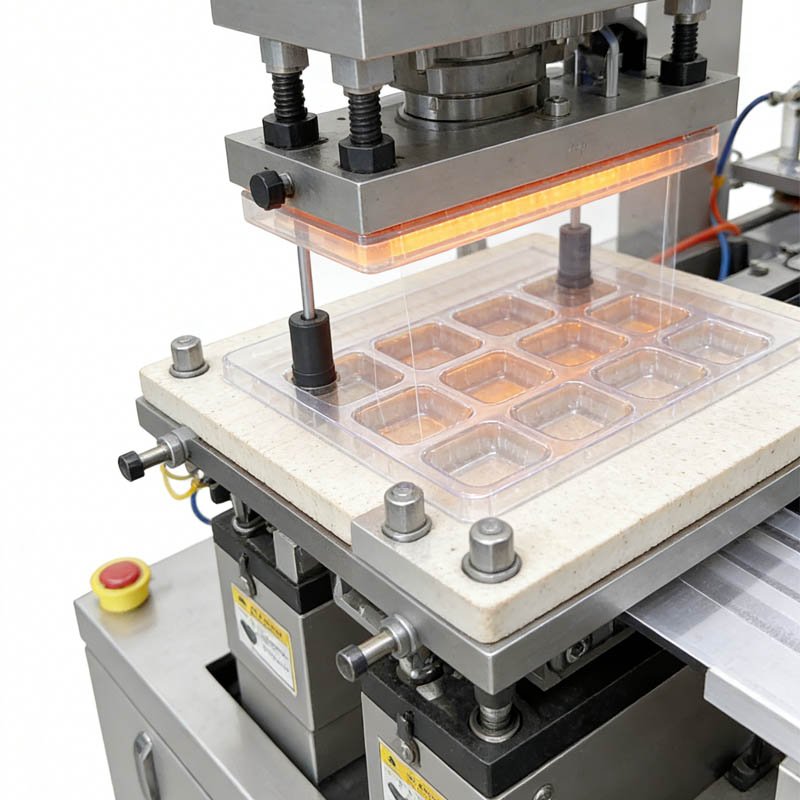
The cold forming station: plug-assist punch mechanically shapes the OPA/AL/PVC tri-layer foil at room temperature — the defining difference from thermoforming technology.
Common Failure Modes & Forester's Fix — Station Operations
-
🔴 Symptom: Micro-cracks in the aluminum foil wall discovered during ASTM F2338 seal integrity test.
⚙️ Root Cause: Plug-assist forming depth set 0.3–0.8 mm beyond the calibrated limit for the current OPA/AL/PVC laminate gauge (typically 45 µm AL layer), causing work-hardening failure in the aluminum stratum.
🔧 Forester's Fix: Reduce forming depth in 0.1 mm servo increments while monitoring foil wall thickness at cavity corners using a contact profilometer. Target wall thickness ≥ 30 µm (67% of original AL gauge). Re-validate against WVTR specification < 0.5 g/m²/day per USP <1207>. -
🔴 Symptom: Empty cavities passing through to sealed output — reject detection not triggering.
⚙️ Root Cause: Photoelectric sensor sensitivity threshold drifted due to ambient light contamination in the filling zone, or sensor lens contaminated with tablet dust particulate (> 2 mg accumulated).
🔧 Forester's Fix: Clean sensor lens with IPA wipe, recalibrate detection threshold to 15–20% intensity differential between filled and empty cavity states. Install LED-backlit reference panel. Perform 30-unit verification run before resuming production. Document per 21 CFR Part 211.192 batch record requirements. -
🔴 Symptom: Blister cards punched off-center — product cavities within 1.5 mm of card edge, compromising seal integrity.
⚙️ Root Cause: Foil lateral tracking error at Station 01 accumulating through six stations — edge guide sensor tolerance set too wide (> 1.0 mm) or brake torque inconsistent on bottom foil roll holder.
🔧 Forester's Fix: Retighten edge guide sensor tolerance to ±0.3 mm. Calibrate brake torque to 8–12 N·m per 300 mm foil roll diameter. Check servo indexing repeatability at Station 01 — acceptable positional error ≤ 0.15 mm per 10 consecutive cycles.
What Makes Cold Forming Different from Thermoforming: Why Moisture-Sensitive Drugs Require Alu Alu Packaging
Cold forming and thermoforming represent fundamentally different physical mechanisms — not merely temperature variations. The choice between them directly determines whether moisture-sensitive APIs survive their 24-month shelf life and whether your packaging audit passes under 21 CFR Part 211.134 drug product inspection requirements.
| Parameter | Cold Forming (Alu Alu) | Thermoforming (PVC/PVDC) |
|---|---|---|
| Forming Temperature | Ambient: 20–25°C | 150–200°C (film pre-heating) |
| Bottom Foil Material | OPA (25 µm) / AL (45–60 µm) / PVC (60–80 µm) | PVC (250 µm), PVDC-coated PVC, or PVC/PE/PVDC |
| WVTR (Water Vapor Transmission Rate) | < 0.5 g/m²/day | 0.5–3.0 g/m²/day (PVDC); 5–10 g/m²/day (PVC) |
| Light Barrier | 100% opaque (aluminum layer) | Transparent (UV-protective coatings optional) |
| Maximum Forming Depth | Up to 12 mm | Up to 25 mm (PVC is more ductile when heated) |
| Cavity Appearance | Opaque silver aluminum | Transparent — product visible |
| Machine Forming Complexity | Plug-assist only; no heaters at forming station | Heating plate + pressure air + plug assist |
| Primary Application | Hygroscopic APIs, enteric-coated tablets, effervescent tablets, moisture-sensitive capsules | Standard tablets, capsules, nutraceuticals, confectionery |
| Regulatory Alignment | EU GMP Annex 1 (2022), WHO TRS 992 Annex 3, ICH Q10 | 21 CFR Part 211, ISO 11607 (medical devices) |
| Material Cost Index | High (tri-layer aluminum laminate) | Low to Medium (PVC, PVDC) |

Material cross-section comparison: alu alu tri-layer laminate (left) delivers 100% aluminum moisture barrier versus PVDC-coated PVC (right) with WVTR of 0.5–3.0 g/m²/day.
Enteric-coated tablets absorb moisture through their polymer coat when WVTR exceeds 1.0 g/m²/day, triggering premature coat dissolution and altering drug release profile — a critical quality attribute (CQA) under ICH Q10. Cold-formed alu alu packaging maintains WVTR below 0.5 g/m²/day at 40°C/75% RH (ICH Zone IVb accelerated stability conditions), providing a complete moisture barrier that no transparent thermoforming material can replicate. For hygroscopic APIs requiring Zone IVb stability data, cold forming is the only technically compliant packaging format.
Common Failure Modes & Forester's Fix — Cold Forming vs. Thermoforming Selection Errors
-
🔴 Symptom: Stability batch fails 6-month accelerated test at 40°C/75% RH — moisture uptake exceeds specification despite using PVDC blister.
⚙️ Root Cause: API moisture absorption threshold is < 0.3% w/w; PVDC WVTR of 0.8 g/m²/day insufficient. Alu alu cold forming required.
🔧 Forester's Fix: Revalidate packaging selection using ICH Q1A(R2) stability protocol with alu alu OPA/AL/PVC foil. Specify WVTR < 0.5 g/m²/day in URS and confirm with ASTM F2338 dye penetration test on first 100 production blisters. -
🔴 Symptom: Cold form blister cavities cracking at the shoulder radius during forming of large oval tablets (23 mm × 9 mm).
⚙️ Root Cause: Plug-assist geometry (radius < 1.5 mm at shoulder) causing stress concentration in the 45 µm AL layer during elongation exceeding 18% localized strain.
🔧 Forester's Fix: Replace plug-assist with UHMW-PE plug matching 85% of cavity geometry with minimum 2.5 mm corner radius. Switch to 60 µm AL laminate for products requiring forming depth > 8 mm. Conduct foil wall thickness audit with micrometer at 10 points per cavity perimeter — minimum acceptable wall: 28 µm.
Key Machine Components You Must Evaluate Before Buying a Cold Form Blister Packaging Machine
Procurement teams evaluating a cold form blister packaging machine frequently compare price per unit output while overlooking the three subsystems that determine validated performance, audit-readiness, and 10-year total cost of ownership. Here is the component-level evaluation framework used at HIJ Machinery for every factory acceptance test (FAT).
Servo Drive System & Motion Control
Servo-driven forming, indexing, and punching achieves positional accuracy of ±0.1 mm across all six stations — versus ±0.5 mm typical for cam-and-crank mechanical systems. At HIJ, Siemens or Allen-Bradley servo drives with integrated PLC control deliver synchronized motion across the forming-to-punching web path. Servo data logging for every cycle provides the process parameter traceability required under 21 CFR Part 11 electronic records compliance. Demand servo motor certificates and encoder resolution specifications (≥ 2,500 pulses/revolution) before order placement.
Forming Depth Control & Plug-Assist Tooling
Servo-controlled forming depth — adjustable in 0.05 mm increments from 2 mm to 12 mm — eliminates the manual shimming required on older mechanical machines. Plug-assist material (UHMW-PE or nylon) must match product cavity geometry to within 85% of cavity volume to distribute forming load evenly across the AL foil layer. At HIJ, all forming tooling undergoes CMM (Coordinate Measuring Machine) certification to ISO 13849-1 safety standard, with dimensional reports supplied as part of the IQ documentation package.
PLC Control System & cGMP Audit Trail
A Siemens S7 or Allen-Bradley CompactLogix PLC with HMI touchscreen (minimum 12-inch, IP65-rated) must store time-stamped process parameters — forming depth, sealing temperature, sealing pressure, line speed — for every production batch. Audit trail functionality must comply with 21 CFR Part 11: electronic signatures, access control levels (operator / supervisor / engineer), and immutable batch records exportable to CSV or PDF. Confirm PLC software version control protocols are validated under the supplier's change control SOP before purchase.
Sealing Station Temperature & Pressure Uniformity
The sealing platen must maintain temperature uniformity of ±2°C across its full sealing area at the rated production speed. Multichannel thermocouple arrays (minimum 4 sensors per platen quadrant) feed back to PID controllers with a response time ≤ 500 ms. Sealing pressure — 200–400 N/cm² via pneumatic or servo-electric actuator — must be monitored and logged every cycle. A sealing station producing ±8°C variation across the platen generates weak seals in cold zones, failing USP <1207> dye penetration tests at a rate of 3–7% defect incidence.
Vision Inspection & Reject Detection System
An integrated camera-based vision system verifies fill presence, cavity deformation, and seal integrity at 100% throughput. Minimum system sensitivity: detect missing product in < 4 mm² cavity area at line speeds of 600 cycles/min. Rejected blister cards are diverted to a locked reject bin — not merely flagged — with automatic counter and alarm integrated into the batch record. Confirm vision system validation includes challenge testing with pre-defected samples (empty cavities, cracked foil, double-fill) documented in the OQ protocol per EU GMP Annex 15 process validation requirements.
Material Changeover & Tooling Design
Format changeover time directly impacts OEE (Overall Equipment Effectiveness). A well-designed cold form machine achieves complete tooling changeover — forming die, plug assist, sealing platen, perforation tools, and punching die — in under 45 minutes using SMED (Single-Minute Exchange of Die) principles and color-coded quick-release clamps. HIJ machines include serialized tooling certificates and dimensional reference cards for each SKU, enabling operators to confirm correct tooling setup before production start — a GMP requirement under WHO TRS 992 Annex 3 equipment qualification standards.
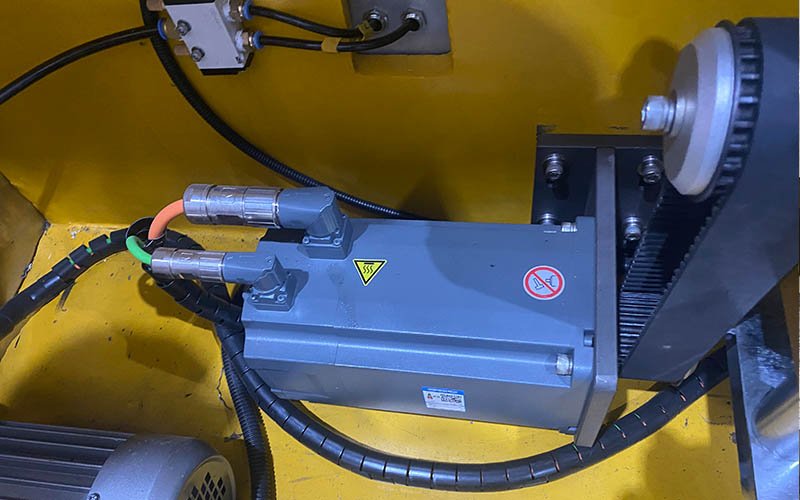
HIJ servo motor control architecture: ±0.1 mm forming depth accuracy across all six stations, with real-time PLC data logging for 21 CFR Part 11 audit trail compliance.
⚠️ Regulatory Compliance Checkpoints for Cold Form Blister Machine Procurement
- EU GMP Annex 1 (2022), Section 8.14: Requires embossed batch number and expiry on individual blister units — confirm Station 05 embossing depth and legibility at FAT.
- EU GMP Annex 15: Mandates IQ/OQ/PQ qualification protocols for all process-critical equipment — demand draft URS and validation master plan before signing purchase order.
- 21 CFR Part 211.134: Drug product inspection requirements — vision system validation with defect challenge samples must be documented.
- 21 CFR Part 11: Electronic records and audit trail — PLC must store time-stamped, access-controlled process data for each batch.
- USP <1207>: Package integrity testing — ASTM F2338 dye penetration and WVTR measurement must be performed on first three production lots.
- WHO TRS 992 Annex 3: Equipment qualification for GMP-compliant manufacturing — applies to all markets in Southeast Asia, Latin America, Middle East, and Africa.
Common Failure Modes & Forester's Fix — Component Specification Errors
-
🔴 Symptom: FDA 483 observation issued: batch records lack time-stamped sealing temperature data — 21 CFR Part 11 non-compliance.
⚙️ Root Cause: Machine supplied with basic HMI that displays but does not log sealing parameters; no audit trail functionality in PLC software.
🔧 Forester's Fix: Retroactively add Siemens WinCC or Allen-Bradley FactoryTalk SCADA layer to capture and timestamp all critical process parameters. Prospectively: require 21 CFR Part 11-compliant PLC specification in URS as a purchase prerequisite, with validation documentation (IQ evidence) delivered at FAT. HIJ includes this as standard in all pharmaceutical blister machine orders. -
🔴 Symptom: Vision system missing 0.8% empty cavities at 600 cycles/min — exceeds AQL 0.65 acceptable quality level.
⚙️ Root Cause: Camera frame rate insufficient (30 fps) for indexing speed; detection algorithm not calibrated to product specular reflectance of aluminum cavity vs. tablet surface.
🔧 Forester's Fix: Upgrade to 120 fps industrial camera with strobe LED illumination synchronized to indexing dwell time. Recalibrate detection threshold using 200-unit challenge sample set (10% empty). Revalidate miss rate ≤ 0 per 10,000 units before releasing OQ protocol. -
🔴 Symptom: Sealing bond strength varies 4–16 N/15 mm across the platen — cold-zone weak seals failing bubble emission test.
⚙️ Root Cause: Heating element failure in two quadrants of sealing platen, combined with PID controller not detecting failure due to averaging across all four thermocouple channels.
🔧 Forester's Fix: Replace failed heating cartridges (rated 400 W each). Reconfigure PLC alarm logic to trigger line stop if any single thermocouple deviates > 5°C from setpoint, rather than averaging. Perform 4-point platen temperature uniformity map at 160°C, 180°C, and 200°C, documenting results in preventive maintenance record per ICH Q10 Section 2.5.
Forester's Field Insight: What 20 Years of Cold Forming Commissioning Taught Me About Alu Alu Machine Failures
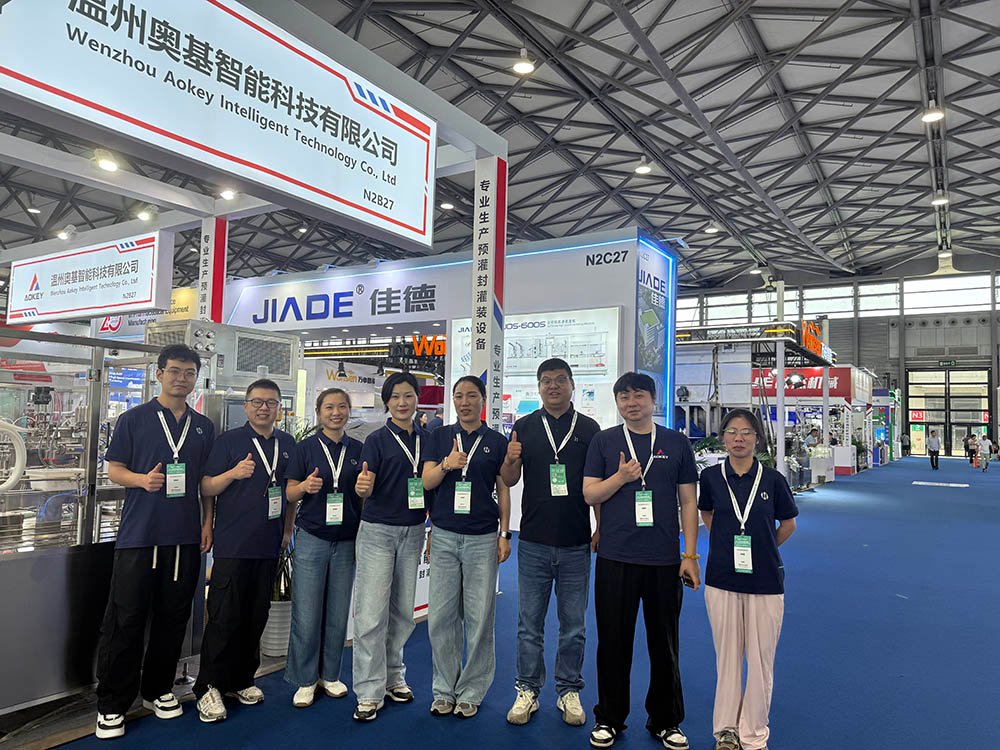
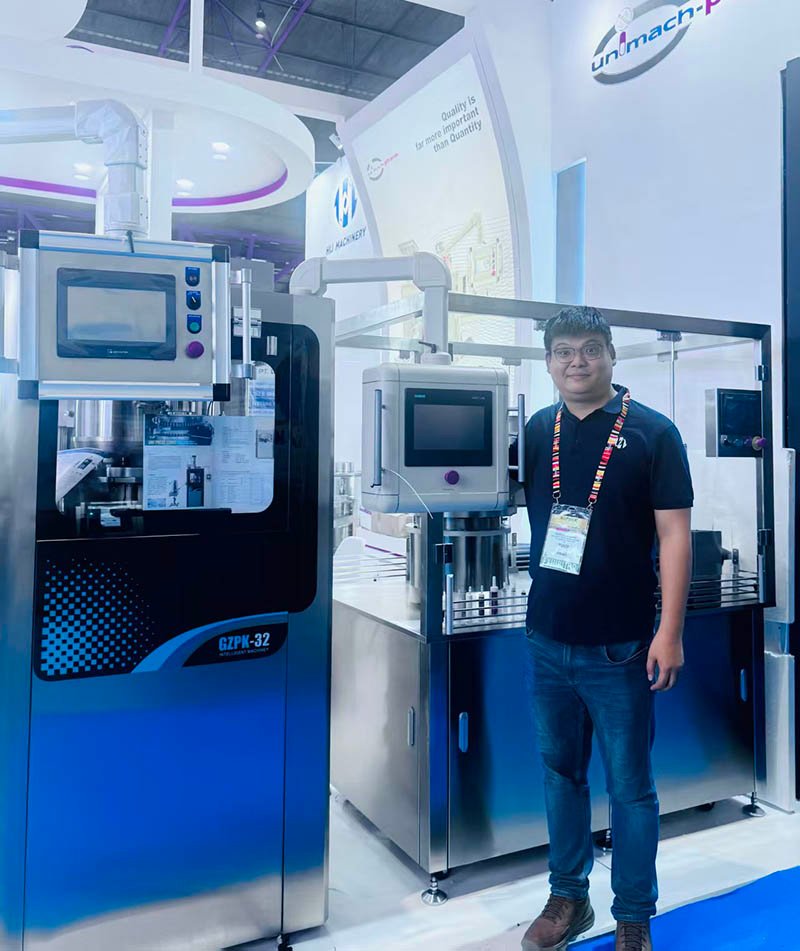
Forester Xiang (center) with the HIJ commissioning team during on-site cold form blister machine qualification in Southeast Asia.
“When I first started training pharmaceutical engineers in Southeast Asia in the early 2000s, most of them didn't understand why servo drive mattered for cold forming. They thought it was a premium feature — nice to have, not critical. I've spent the last two decades proving that wrong, one failed audit at a time.”
The hidden trap I see repeatedly is this: buyers compare forming depth specs on paper — both machines claim “up to 12 mm” — but no one asks how that depth is controlled. A cam-and-crank mechanical system achieving 12 mm depth with ±0.5 mm positional repeatability will produce micro-cracked foil walls on 2–4% of cavities at maximum depth. Those cracks are invisible. The moisture gets in. The stability batch fails at month 9. Your quality director is looking at a product recall, and no one connects it back to the forming station because the line “ran fine” during FAT at shallow test depths.
The second failure I see consistently — especially in Latin America and the Middle East — is buyers accepting a standalone cold form machine without demanding a full FAT protocol that specifically covers forming depth tolerance verification and reject detection sensitivity. Cheap machines rarely ship with validated PLC protocols or cGMP-compliant material traceability documentation. That kills your FDA or EMA audit on day one — not because the machine doesn't work, but because you can't prove it worked consistently during development lots.
My strategic advice: before signing any alu alu machine purchase order, demand that the URS explicitly states forming depth tolerance (±0.1 mm maximum), reject detection sensitivity (≤ 0 missed defects per 10,000 units), and sealing temperature uniformity (±2°C across platen). At HIJ Machinery, our turnkey integration approach means forming, sealing, and inspection are validated as one unified system — eliminating the multi-vendor blame game that costs pharmaceutical plants weeks of downtime and six-figure CAPA costs.
Common Failure Modes & Forester's Fix — Procurement & Validation Stage
-
🔴 Symptom: FAT passes at manufacturer's facility, but OQ fails at client site — forming depth inconsistent, cavities 0.4–0.6 mm shallower than FAT settings.
⚙️ Root Cause: FAT conducted with manufacturer's own OPA/AL/PVC foil (45 µm AL); client site uses local supplier foil with 38 µm AL gauge — different springback characteristics requiring re-calibration of servo forming depth setpoint.
🔧 Forester's Fix: Specify in the URS that FAT must be conducted with the client's production foil lot. Re-calibrate forming depth: increase setpoint by 0.3–0.5 mm to compensate for thinner AL layer springback. Conduct 500-unit OQ run at final depth, measuring 10 cavities per 50 units with contact depth gauge. Accept only if 100% of measurements fall within ±0.15 mm of target depth. -
🔴 Symptom: EMA audit observation: no documented material traceability linking foil roll lot numbers to finished blister batch records.
⚙️ Root Cause: Machine PLC captures process parameters but has no field for foil roll lot entry; traceability relies entirely on manual paper log — unacceptable under EU GMP Annex 11 computerized systems guidance.
🔧 Forester's Fix: Add barcode scanner input at Station 01 foil loading position, integrated into PLC batch record as mandatory field before production start. Map foil roll lot → batch number → individual blister serial number traceability chain. Validate scanner > 99.9% read rate at production speed before GMP release.
See the HIJ DPH-320 Cold Forming System: Alu Alu Blister Machine Built for GMP Pharmaceutical Lines
The HIJ DPH-320 cold form blister packaging machine applies every technical principle described in this guide — servo-controlled forming depth to ±0.1 mm, sealing temperature uniformity ±2°C, 21 CFR Part 11-compliant PLC audit trail, and integrated vision reject detection — validated as a single system with a comprehensive FAT/SAT protocol for pharmaceutical clients in Southeast Asia, Latin America, the Middle East, and Africa.
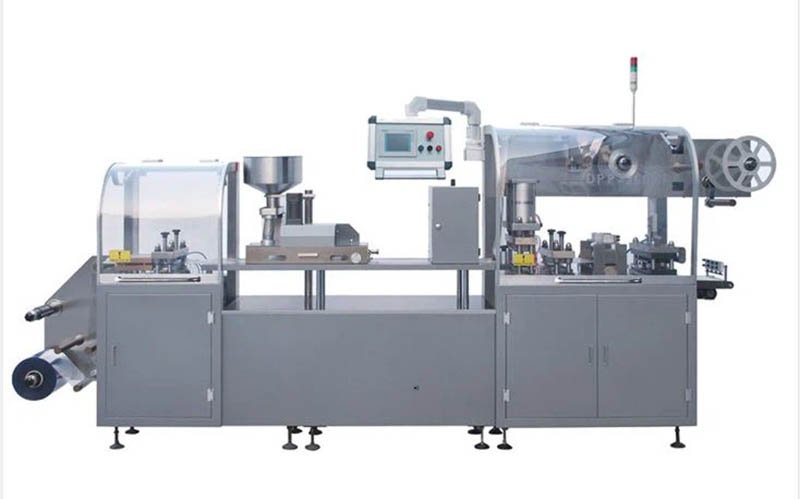
HIJ Alu Alu Blister Packing Machine — pharmaceutical grade cold forming system integrating servo drive, vision inspection, and 21 CFR Part 11-compliant PLC control as a single validated unit.
Buyers who integrate the HIJ DPH-320 with an automatic cartoning machine and end-of-line case packing solution receive a complete turnkey validation package — a single IQ/OQ/PQ protocol covering the entire blister-to-carton-to-case pathway, eliminating the multi-vendor blame game that generates the majority of pharmaceutical packaging downtime incidents globally. The HIJ turnkey packaging line approach has been commissioned in over 30 countries across four continents since 2004.
Common Failure Modes & Forester's Fix — Line Integration Issues
-
🔴 Symptom: Blister cards jamming at transfer conveyor between blister machine discharge and cartoning machine infeed — 12–18 jams/hour at 280 blisters/min.
⚙️ Root Cause: Transfer conveyor belt speed 4–6% faster than blister machine discharge rate, causing card overlap and misalignment at cartoning infeed — classic multi-vendor integration failure when each machine is commissioned independently.
🔧 Forester's Fix: Synchronize blister machine PLC output signal to cartoning machine infeed encoder via Profibus or EtherNet/IP protocol. Set transfer conveyor speed = blister machine discharge pitch ÷ cycle time ± 1%. Conduct 2-hour continuous run at 300 blisters/min with zero jams before declaring integration OQ complete. -
🔴 Symptom: Batch records from blister machine and cartoning machine use different batch number formats — WHO audit finds traceability chain broken between primary and secondary packaging.
⚙️ Root Cause: Blister machine PLC and cartoning machine PLC purchased from different vendors with incompatible batch record formats — no MES (Manufacturing Execution System) integration layer specified in URS.
🔧 Forester's Fix: Implement OPC-UA communication bridge between both PLCs to unify batch number propagation in real time. Alternatively, specify a single-vendor turnkey supply (HIJ provides this as standard) where both machines share one PLC backbone and one batch record format from blister to carton.
Frequently Asked Questions: How Does an Alu Alu Blister Machine Work
❓ How does an alu alu blister machine work?
An alu alu blister machine cold-forms a tri-layer OPA/AL/PVC foil into drug cavities using mechanical plug-assist pressure at room temperature — no heat applied to the forming foil — then seals the filled cavities with aluminum lidding foil under heat and pressure, achieving a moisture barrier of WVTR < 0.5 g/m²/day. The process runs through 6 sequential stations: bottom foil unwinding, plug-assist cold forming, product filling, heat sealing of lidding foil, perforation and embossing, and precision punching to individual blister cards. Servo-driven motion control maintains forming depth accuracy to ±0.1 mm across all stations, a critical requirement for pharmaceutical compliance under EU GMP Annex 1 (2022) and 21 CFR Part 211.
❓ What is the difference between cold forming and thermoforming in blister packaging?
Cold forming uses mechanical plug-assist at ambient temperature (20–25°C) to shape OPA/AL/PVC foil, producing an opaque aluminum cavity with WVTR < 0.5 g/m²/day and 100% light barrier. Thermoforming heats PVC or PVDC film to 150–200°C to create transparent blisters with WVTR of 0.5–3.0 g/m²/day. Cold-formed alu alu packaging is mandatory for moisture-sensitive APIs — hygroscopic tablets, enteric-coated capsules, effervescent formulations — where thermoforming cannot provide adequate moisture protection at ICH Zone IVb accelerated stability conditions (40°C/75% RH). Thermoforming is suitable for standard, non-hygroscopic solid oral dosage forms where product visibility is desired and material cost optimization is a priority.
❓ What foil material does an alu alu blister machine use?
An alu alu blister machine processes a tri-layer bottom foil laminate: OPA (oriented polyamide, 25 µm) for mechanical strength and puncture resistance, AL (aluminum, 45–60 µm) for moisture and light barrier, and PVC (60–80 µm) as a heat-sealable inner layer. The lidding foil is AL (20 µm) coated with heat-seal lacquer on the product-contact side. This laminate structure delivers a water vapor transmission rate < 0.5 g/m²/day and zero light transmission, meeting EU GMP Annex 1 (2022) and 21 CFR Part 211 pharmaceutical packaging integrity requirements. The 45–60 µm aluminum layer is the critical moisture barrier; gauges below 38 µm are not recommended for cold forming depths > 8 mm.
❓ What forming depth can a cold form blister machine achieve and why does it matter?
A professionally engineered cold form blister machine achieves forming depths of up to 12 mm, with servo-driven plug-assist controlling depth accuracy to ±0.1 mm. Forming depth determines which product geometries can be accommodated — oblong tablets up to 25 mm × 10 mm, two-piece hard capsules size 000 (26 mm length), and soft-gel capsules up to 20 mm diameter. Exceeding the calibrated forming depth without recalibration causes micro-cracks in the aluminum foil wall that are invisible to the naked eye but allow moisture ingress, compromising the WVTR specification and potentially triggering USP <1207> package integrity test failure. For products requiring forming depth > 10 mm, specify 60 µm AL layer laminate rather than standard 45 µm to maintain foil wall integrity at the cavity shoulder radius.
Get a Validated Alu Alu Blister Machine — Spec'd by Forester, Backed by 20 Years of Field Experience
HIJ Machinery delivers complete cold form blister packaging systems with servo-controlled forming depth ±0.1 mm, 21 CFR Part 11-compliant PLC audit trail, and full FAT/SAT validation documentation — serving pharmaceutical manufacturers in Southeast Asia, Latin America, the Middle East, and Africa. Request your project-specific technical consultation and turnkey quote today.