How Does Blister Packaging Protect Tablet Stability?
The short answer: each tablet lives in its own hermetically sealed cavity — isolated from moisture, oxygen, light, and mechanical stress. But the real question isn’t whether blister packaging protects tablets. It’s which film you choose, validated against which climate zone, for which API.
Get that wrong, and you’re not packaging medicine. You’re packaging a degradation timeline.
Blister packaging protects tablet stability by hermetically sealing each oral solid dose inside an individual thermoformed or cold-formed cavity, creating a micro-environment that blocks the four primary pharmaceutical degradation triggers: moisture vapor (MVTR as low as 0.02 g/m²/day with Alu-Alu film), oxygen ingress, UV/visible light, and physical impact. The level of protection depends entirely on forming film selection — PVC, PVDC, or cold-form aluminum — matched to the API’s moisture sensitivity classification and the target market’s ICH climatic zone.
Cold-Form Alu-Alu Film
Standard PVC (250μm)
packaging as root cause*
30°C / 75% RH (ICH Q1A)
*FDA enforcement records, 2019–2023. Zone IVb per ICH Q1A(R2).
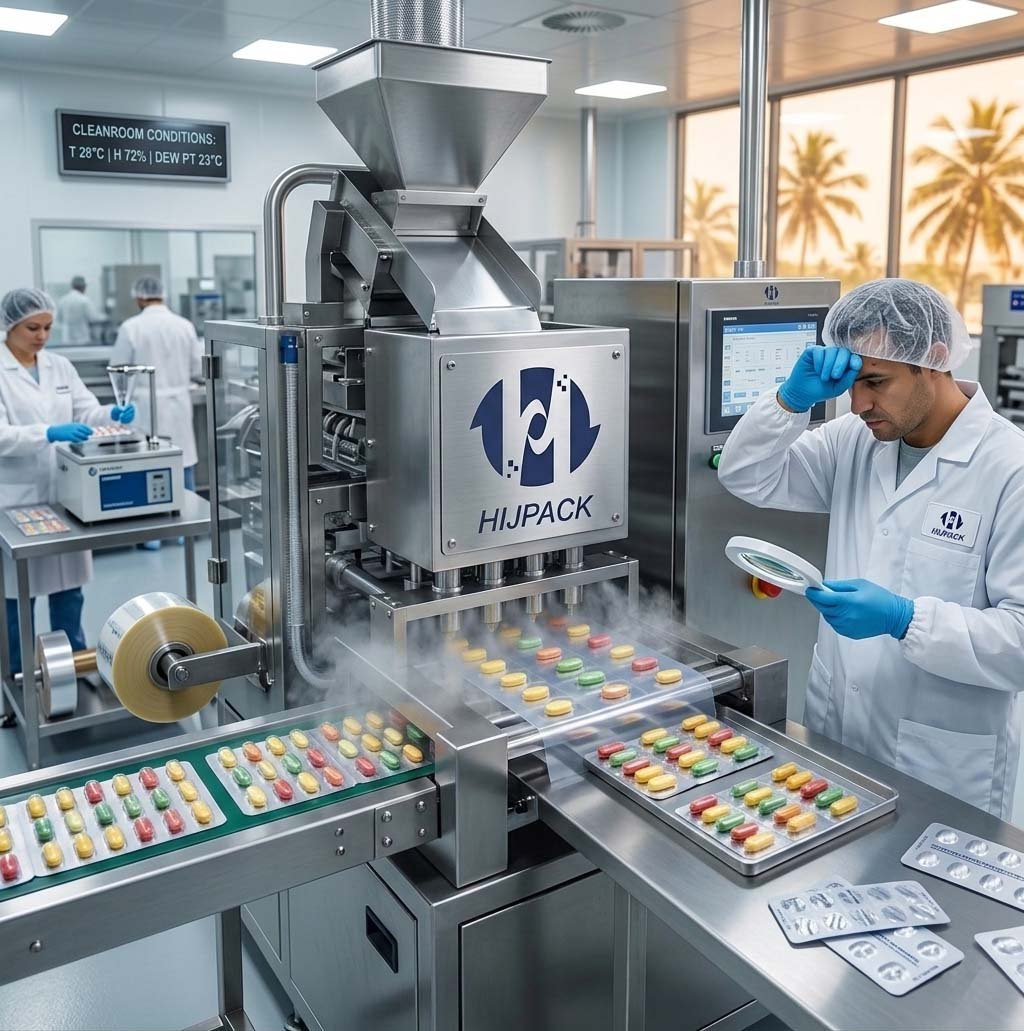
Blister pack moisture ingress testing simulating Zone IVb tropical conditions (30°C / 75% RH) — the critical validation step most buyers skip at FAT.
What Are the Four Real Threats to Tablet Stability Inside a Blister Pack?
Blister packaging for tablets creates a hermetic barrier against four degradation forces: moisture vapor, oxygen, light, and mechanical damage — and each one behaves differently depending on the film you select and the climate where the product is sold.
Moisture. That’s the one that kills most products. Water vapor doesn’t announce itself. It permeates through PVC film at a rate of 4–6 g/m²/day at standard conditions — silently raising the water activity inside every cavity, every day, from the moment the batch leaves your facility. For a hygroscopic API with 0.8% w/w moisture uptake at 75% RH — and there are dozens of them on every national formulary in Southeast Asia and West Africa — that rate doesn’t just shorten shelf life. It collapses the stability curve before the product reaches month 12.
Oxygen is the second threat. Oxidation-sensitive APIs — statins, certain antibiotics, beta-blockers — degrade through oxidative pathways that accelerate dramatically above 20% RH. Standard PVC offers essentially no oxygen barrier. PVDC provides moderate protection. Cold-form Alu-Alu eliminates the problem: zero oxygen transmission rate (OTR ≈ 0 cc/m²/day) because you’re sealing behind metallic aluminum, not polymer film.
Light. Photolabile compounds — certain antiretrovirals, nifedipine, folic acid — degrade on exposure to UV and visible light. Opaque lidding foil handles this automatically. But transparent or semi-transparent PVC forming film doesn’t. A product stored in a pharmacy under fluorescent lighting for 18 months, in clear PVC blisters, can receive meaningful light exposure even through secondary carton board if the patient removes the strip.
Physical damage. This one is underrated. Every tablet rattling inside an unsealed bottle experiences micro-abrasion. Every tablet sealed in its own individual blister cavity doesn’t. Modified-release coatings, film-coated tablets with precise dissolution profiles, and effervescent tablets are particularly vulnerable to mechanical stress. The blister cavity — sized correctly to the tablet, with appropriate headspace — provides that protection. Size the cavity wrong, and the tablet moves. The coating abrades. Your dissolution data means nothing.
I saw this in a plant outside Pune in 2019. The stability data had been generated in Germany at 25°C/60% RH. The product was going to Maharashtra — Zone IVb territory. Nobody had done the extrapolation. The CDSCO reviewer asked for Zone IVb data. The dossier went back. Eight months later, they resubmitted. The packaging had to change too — from 250μm PVC to PVDC laminate. The machine was already installed. The tooling had to be remade. That conversation cost them more than the machine itself.
I won’t tell you the film selection decision is simple. It involves your API’s specific moisture sensitivity classification, your target market climatic zone, your regulatory dossier timeline, and sometimes your relationship with the reviewer. But I will tell you that skipping it during equipment specification — treating it as a “we’ll figure that out later” item — is the most expensive mistake I see repeated, market after market, year after year.
How Does Moisture Vapor Transmission Rate (MVTR) Determine Blister Film Selection for Tablets?
MVTR is the single most important number in blister packaging for tablets — defined as grams of water vapor transmitted per square meter of film per day, measured at a specified temperature and relative humidity. For pharmaceutical blister applications, the test standard is ASTM E96, typically run at 38°C/90% RH for accelerated conditions.
The number that matters isn’t the MVTR of the film in isolation. It’s the MVTR of the complete blister structure — forming film plus lidding foil, bonded at the heat-seal interface. A perfect Alu-Alu forming film means nothing if the heat-seal station runs 3°C below validated temperature, creating micro-channel leaks at the cavity edge. That’s where MVTR failures happen in practice. Not in the film itself. At the seal.
| Forming Film Material | MVTR (g/m²/day) | OTR (cc/m²/day) | Light Barrier | Typical Tablet Application | ICH Zone Suitability |
|---|---|---|---|---|---|
| PVC (250μm) | 4.0 – 6.0 | ~10 – 20 | None (transparent) | Non-hygroscopic tablets, temperate markets | Zone I, II only |
| PVDC-coated PVC (90g/m²) | 0.2 – 0.5 | ~1 – 3 | Partial (opaque grades) | Moderate moisture-sensitive tablets | Zone I, II, III, IVa |
| Aclar® (PCTFE, 51μm) | 0.08 – 0.15 | <0.5 | None (transparent) | Highly hygroscopic APIs, clinical visibility | Zone I – IVb |
| Cold-Form Alu-Alu (OPA/Alu/PVC) | 0.02 – 0.10 | ≈ 0 | Complete (opaque) | Moisture/oxygen-critical APIs, tropical markets | Zone I – IVb |
MVTR values at 38°C/90% RH per ASTM E96. OTR at 23°C/0% RH. Alu-Alu cold-form film structure: OPA 25μm / Aluminum 45μm / PVC 60μm.
Of the 31 blister line projects I handled in Southeast Asia between 2018 and 2023, 11 required a forming material change after month-12 accelerated stability failure. Every one of those 11 had originally specified PVC or standard PVDC. Every one of them was going to Zone IVb markets. None of them had validated the complete blister structure — including the heat-seal bond — under Zone IVb conditions during FAT.
Cold-form Alu-Alu blister packaging cuts moisture vapor transmission to 0.02–0.10 g/m²/day versus 4–6 g/m²/day for standard PVC film — a 40x to 300x difference that determines whether a hygroscopic tablet survives 24 months at Zone IVb tropical conditions. — Forester Xiang, Founder, HIJ Machinery
Does the Heat-Seal Station Affect Tablet Stability? What Buyers Never Test at FAT
“The number teams look at first is exactly the wrong number.” When procurement reviews blister machine quotes, they benchmark forming speed and output rate. Almost nobody benchmarks heat-seal integrity under production-floor conditions — and that’s the number that determines whether your tablet stability data survives first-batch-to-market.
Heat-sealing creates the hermetic bond between the forming film and the aluminum lidding foil. The bond quality depends on three parameters: temperature (typically 180–220°C for PVC/aluminum), pressure (5–15 bar at the sealing platen), and dwell time (0.3–0.8 seconds at standard speeds). Drift in any one of these three — across shift changes, across ambient temperature variation on the production floor, across roll tension changes as the foil unwinds — creates micro-channel leaks at cavity edges. Those leaks don’t fail a gross leak test. They fail a dye-ingress test at 60 mbar. And they absolutely fail ICH Q1A accelerated stability at 40°C/75% RH over six months.
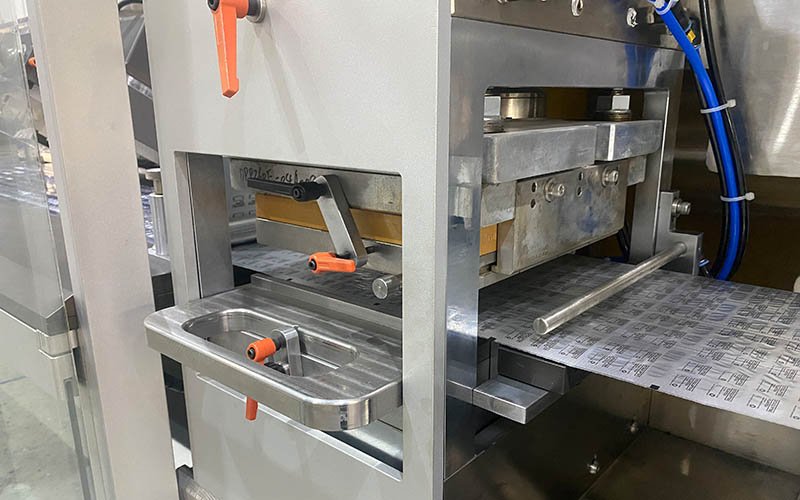
Heat-sealing station on an HIJ tablet blister packing machine — platen temperature, pressure, and dwell time are validated at film-contact level, not heater block, ensuring hermetic seal integrity batch-to-batch.
Which Blister Packaging Film Protects Tablet Stability Best in Tropical Markets?
A QD in São Paulo called me last year. Her product had failed month-12 stability in Brazil — ICH Zone IVa, 30°C/65% RH. The API was a moisture-sensitive antidiabetic. The forming film was 250μm PVC. The machine was fine. The film was wrong.
For Zone IVa and IVb markets — Brazil, India, Indonesia, Nigeria, the Philippines, most of sub-Saharan Africa — the stability protection hierarchy for tablet blister packaging is straightforward but rarely followed during initial equipment specification:
- Non-hygroscopic APIs, Zone I/II only: Standard PVC 250μm. MVTR 4–6 g/m²/day is acceptable when the API has no significant moisture sensitivity and the market stays below 60% RH. Cost-optimal, widely available, easiest to run.
- Moderate moisture sensitivity, Zone I–IVa: PVDC-coated PVC (60–90 g/m² PVDC coating weight). MVTR drops to 0.2–0.5 g/m²/day. Runs on the same thermoforming machine as PVC — no tooling change, minimal parameter adjustment. The cost premium over PVC is 30–80% on film price but often eliminates the need for desiccant sachets.
- High moisture sensitivity, Zone IVb, or critical stability window: Cold-form Alu-Alu (OPA/Alu/PVC laminate). MVTR 0.02–0.10 g/m²/day. Requires a dedicated cold-forming machine — not a thermoforming line — because cold-form aluminum cannot be heat-formed. If your current line is a thermoformer, this is a capital equipment decision, not just a film swap.
- Photolabile + moisture-sensitive APIs: Alu-Alu cold-form with opaque lidding foil (20μm aluminum). Light transmission: 0%. This is the specification for antiretrovirals, certain cardiac medications, and photosensitive oncology compounds going to tropical markets.
The procurement director at a manufacturer in Lagos showed me the film cost comparison sheet in 2022. PVC: lowest cost. PVDC laminate: 55% higher. Alu-Alu cold-form: 210% higher than PVC. He asked whether the Alu-Alu was necessary. I asked him to show me the API moisture isotherm data and the target markets. He didn’t have the moisture isotherm on him. That told me everything.
To learn how the three major blister film types compare across MVTR, forming process requirements, machine compatibility, and cost — including the complete technical breakdown for PVC, PVDC, and cold-form aluminum — read our detailed guide: PVC vs PVDC vs Aluminum Foil: Choosing the Right Blister Material for Tablets.

PVC, PVDC, and cold-form Alu-Alu blister forming films — the MVTR difference between these three materials determines tablet stability outcomes in Zone IVb tropical markets.
- ICH Q1A(R2) — Stability Testing of New Drug Substances
- WHO TRS 992 Annex 3 — GMP for Pharmaceutical Products
- 21 CFR Part 211.94 — Drug Product Container/Closure
- USP <1207> — Container Closure Integrity Testing
- ASTM F2338 — Dye Ingress Leak Test at 60 mbar
- ASTM E96 — Water Vapor Transmission Rate Testing
How Does the Blister Cavity Design Protect Tablet Integrity During Transit?
Three weeks into commissioning a job in Jakarta in 2020, the client’s QC team flagged coating damage on film-coated tablets. The blister machine was new. The heat-seal parameters were validated. The film was correct PVDC. The problem was the cavity.
The cavity depth had been designed for a standard round tablet. The actual tablet was a biconvex oval — 13mm × 7mm × 5.2mm high. The cavity depth gave 1.8mm of headspace above the tablet crown. That sounds adequate. It isn’t. During transit vibration testing at 15 Hz for 60 minutes — per ISTA 2A protocol — the tablet moved laterally within the cavity, and the coating abraded at the contact edges. The dissolution profile shifted outside specification at month 6.
Cavity design for tablet stability isn’t just about preventing gross breakage. It’s about three things that require precise tooling:
- Cavity headspace control: Headspace above tablet crown should be 0.3–0.8mm for standard film-coated tablets. Too tight: film contact damages coating on forming pressure. Too loose: tablet rattles under vibration.
- Cavity wall draft angle: 5–8° draft angle on thermoformed PVC/PVDC ensures clean tablet ejection without film thinning at cavity walls. Wall thinning at the cavity base reduces the effective MVTR barrier — the thinnest point in the forming structure becomes the weakest moisture pathway.
- Cavity surface finish: Polished cavity interior (Ra ≤0.8μm) prevents film surface defects that act as initiation sites for moisture ingress under stress. Matte finish cavities look fine visually — they fail on long-term seal integrity data.
The Jakarta client needed new tooling. Three weeks of downtime. The cavity redesign cost $8,400. The first tooling had cost $6,200. If the cavity dimensions had been validated against the actual tablet geometry during URS — not assumed from generic tablet size tables — neither cost would have happened.
What Machine Features Actually Affect Blister Packaging Stability Performance?
FDA enforcement records for 2019–2023 show packaging as the root cause in 12% of pharmaceutical recalls — the category with the strongest correlation to tropical market distribution failures. When I use that number with procurement teams who tell me the PVC cost saving of $0.006 per card justifies the risk, it changes the conversation. Sometimes.
The machine features that directly affect tablet stability protection aren’t always the ones listed first in a specification sheet:
-
1Closed-Loop Temperature Control at Forming StationForming temperature deviation >5°C from validated set-point changes PVC/PVDC crystallinity at the cavity base, increasing MVTR locally. Require PID control verified at film-contact surface with ±1°C tolerance and batch-level data logging for 21 CFR Part 11 compliance.
-
2Servo-Driven Film Advance with Tension ControlFilm tension variation during intermittent or continuous advance causes inconsistent forming depth — thinner cavity walls at high tension, incomplete forming at low tension. Servo-driven film advance with closed-loop tension feedback maintains consistent film draw-down across the full production run.
-
3In-Line Seal Integrity MonitoringIn-line leak detection — using vacuum decay or capacitance-based methods — identifies seal failures in real time, not during downstream QC sampling. For stability-critical products, this is the difference between a detected defect and a released batch with intermittent seal failures that only surface at month-6 stability review.
-
4Vision Inspection System for Empty Cavity DetectionA missing tablet in a sealed blister card creates an empty cavity with a large headspace — amplifying moisture ingress at the unsealed area during transit and storage. Vision inspection systems detecting missing tablets before sealing prevent this class of stability failure from reaching the distribution chain.
-
5GMP-Compliant Cleanroom-Grade ConstructionProduct contact surfaces in 316L stainless steel, no horizontal ledges that accumulate particulates, full documentation package for WHO GMP and 21 CFR Part 211 compliance. This isn’t just regulatory box-ticking — it determines whether the stability chamber samples you submit represent actual production-floor conditions.
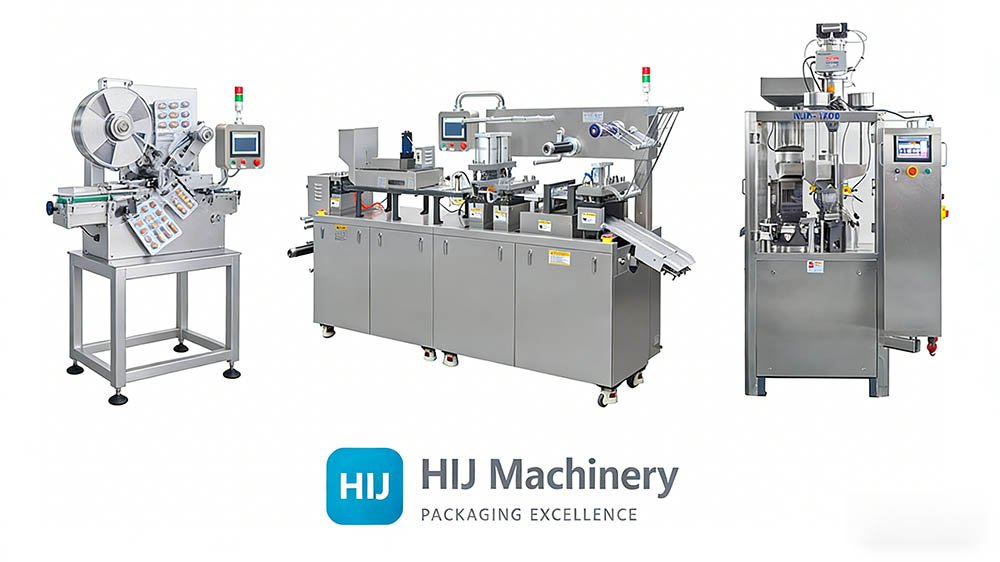
For a full technical evaluation of what a tablet blister packing machine must deliver to protect product stability across your target markets — including machine specification, film compatibility, and validation pathway — the HIJ Machinery product page covers the complete technical picture.
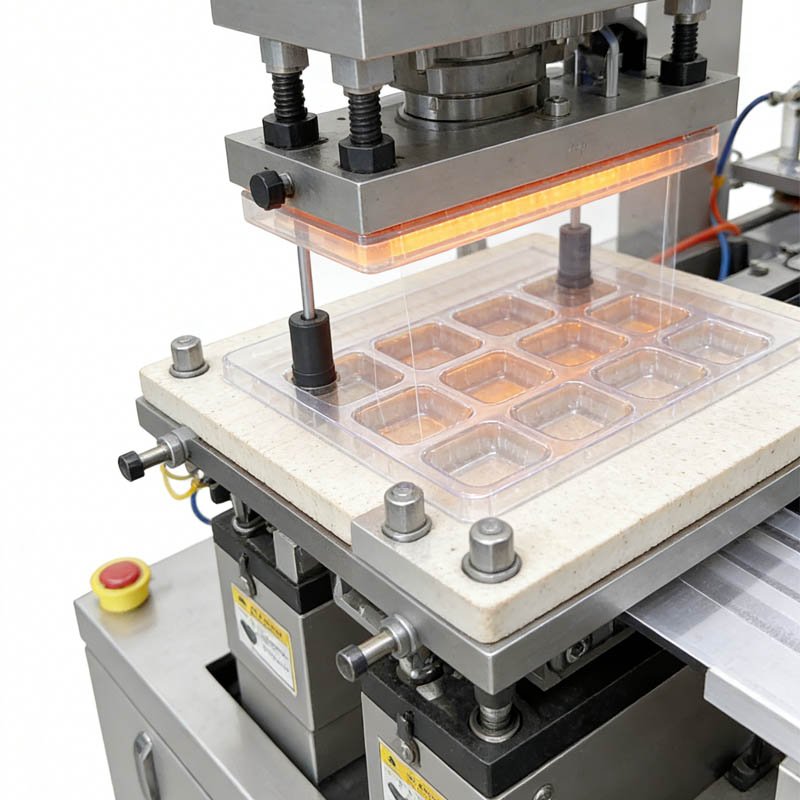
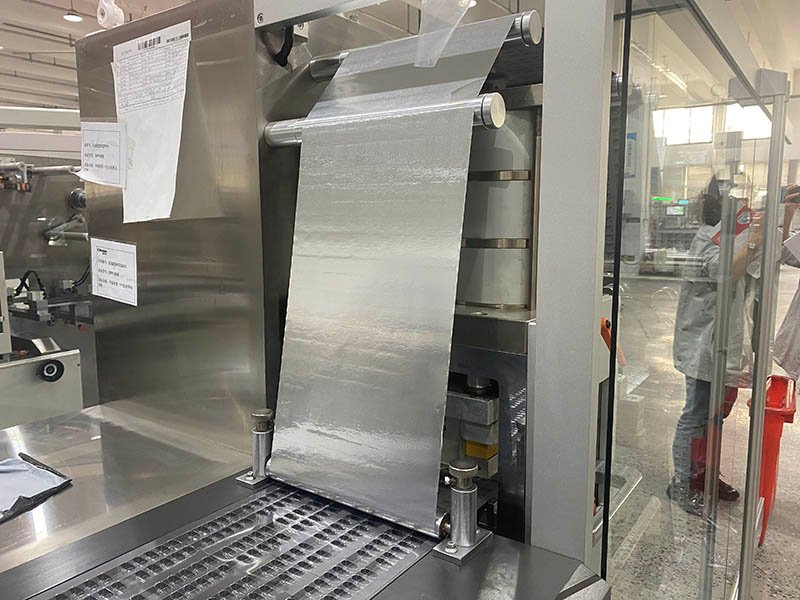
Blister forming station on an HIJ pharmaceutical line — closed-loop temperature control at film-contact level is validated during IQ protocol, not assumed from heater block readings.

Frequently Asked Questions: Blister Packaging and Tablet Stability
Yes — blister packaging extends tablet shelf life by isolating each dose in a hermetically sealed cavity that limits moisture, oxygen, and light exposure to levels far below those achievable with bottle or strip packaging. The degree of extension depends on the forming film: cold-form Alu-Alu blisters can extend shelf life of moisture-sensitive APIs from 18 months to 36 months in Zone IVb tropical conditions (30°C/75% RH), whereas standard PVC blisters may not meet even an 18-month stability specification for hygroscopic compounds in the same climate.
MVTR (moisture vapor transmission rate) measures how much water vapor passes through a film per square meter per day, tested per ASTM E96. For tablet blister packaging, it’s the critical barrier specification: standard PVC passes 4–6 g/m²/day while cold-form Alu-Alu passes only 0.02–0.10 g/m²/day. For a hygroscopic API in a tropical market running Zone IVb stability at 30°C/75% RH, the difference between these two numbers is the difference between a passing and failing 24-month stability study.
Not for moisture-sensitive APIs. Standard PVC (250μm) with MVTR of 4–6 g/m²/day is suitable for Zone I and II markets with non-hygroscopic tablets. For Zone IVa (30°C/65% RH) or Zone IVb (30°C/75% RH) markets — which includes most of Southeast Asia, South Asia, Latin America, and sub-Saharan Africa — moisture-sensitive APIs require minimum PVDC-coated PVC (MVTR 0.2–0.5 g/m²/day) or cold-form Alu-Alu. Specifying PVC for tropical markets without API moisture isotherm data is not a packaging decision — it’s a stability gamble.
Yes, but only with opaque materials. Cold-form Alu-Alu blisters provide complete light protection (0% transmission) due to the aluminum layer. Standard PVC is transparent and provides no light barrier. For photolabile APIs — certain antiretrovirals, nifedipine, folic acid — opaque forming film or opaque lidding foil is required. PVDC-coated PVC is available in opaque grades but provides only partial UV protection depending on coating formulation and pigment loading.
Critically. The seal between forming film and lidding foil is the weakest point in the blister barrier system — a micro-channel leak at a single cavity edge can allow moisture ingress that exceeds the film’s MVTR specification by an order of magnitude. Validated per USP <1207> container closure integrity testing using ASTM F2338 dye-ingress at 60 mbar, seal quality depends on three parameters: temperature (±1°C at film-contact surface), pressure (not heater block), and dwell time. Any drift in these parameters under production-floor conditions — not FAT conditions — creates seal failures that surface at month-6 accelerated stability review, not during batch release testing.
Cold-form Alu-Alu blister packaging uses a laminate film — typically OPA (oriented polyamide) 25μm / Aluminum 45μm / PVC 60μm — that is formed at ambient temperature using mechanical pressing, not heat. The aluminum layer is permanently deformed into the cavity shape. Because aluminum is impermeable to water vapor and oxygen, the resulting barrier is essentially absolute: MVTR 0.02–0.10 g/m²/day, OTR ≈ 0 cc/m²/day. It requires a dedicated cold-forming machine — not a thermoforming blister line — and the cavities are larger than thermoformed equivalents due to aluminum’s limited draw ratio. It is the gold standard for moisture-critical pharmaceutical products in tropical markets.
Yes. Each tablet sealed in its own cavity is isolated from mechanical impact and vibration that would cause micro-abrasion on a coating, or fracture a scored tablet, in bottle or bulk packaging. Cavity sizing is critical: headspace of 0.3–0.8mm above the tablet crown prevents coating contact with the lidding foil while limiting lateral movement under transit vibration per ISTA 2A testing.
ICH Q1A(R2) Zone IVb — 30°C/75% RH — is the most demanding stability condition, covering tropical markets including most of Southeast Asia, South Asia, sub-Saharan Africa, and parts of Latin America. For moisture-sensitive APIs registered in Zone IVb markets, cold-form Alu-Alu blister packaging is the standard specification. PVDC-coated PVC may be acceptable for moderately moisture-sensitive APIs — but this requires documented justification with API moisture isotherm data and Zone IVb accelerated stability data on the complete blister structure, not the film alone.
From film compatibility validation to sealed-condition FAT in tropical-equivalent conditions — HIJ Machinery builds tablet blister packing lines where the stability science is engineered in, not bolted on after a recall. Tell us your API, your target markets, and your timeline. We’ll tell you exactly what the line needs to look like.