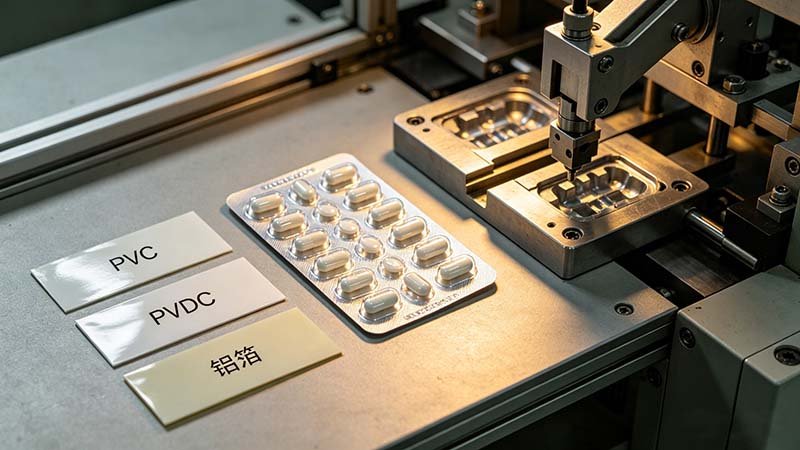
📋 C7 Validation Guide — IQ OQ PQ
Your validation documentation is the machine. Everything else is just metal.
Three weeks before a client in Karachi was scheduled to start commercial production, their regulatory affairs team discovered the OQ protocol had never been signed off on the heat-sealing station. The FAT had been rushed. The SAT checklist was a photocopy of the vendor’s own template — no site-specific test conditions, no actual data. The batch release was delayed by 11 weeks. I’ve seen this exact scenario unfold in South Asia and Latin America more times than I want to count. This guide is the one I wish those clients had read before they placed the order.
✅ Direct Answer
Tablet blister machine validation IQ OQ PQ follows four sequential phases — Design Qualification (DQ), Installation Qualification (IQ), Operational Qualification (OQ), and Performance Qualification (PQ) — each requiring signed, approved protocols with acceptance criteria defined before execution. Under EU GMP Annex 15 and WHO TRS 992 Annex 3, no cGMP batch may be produced on an unvalidated line. A complete validation package typically requires 8–16 weeks from IQ initiation to PQ approval.

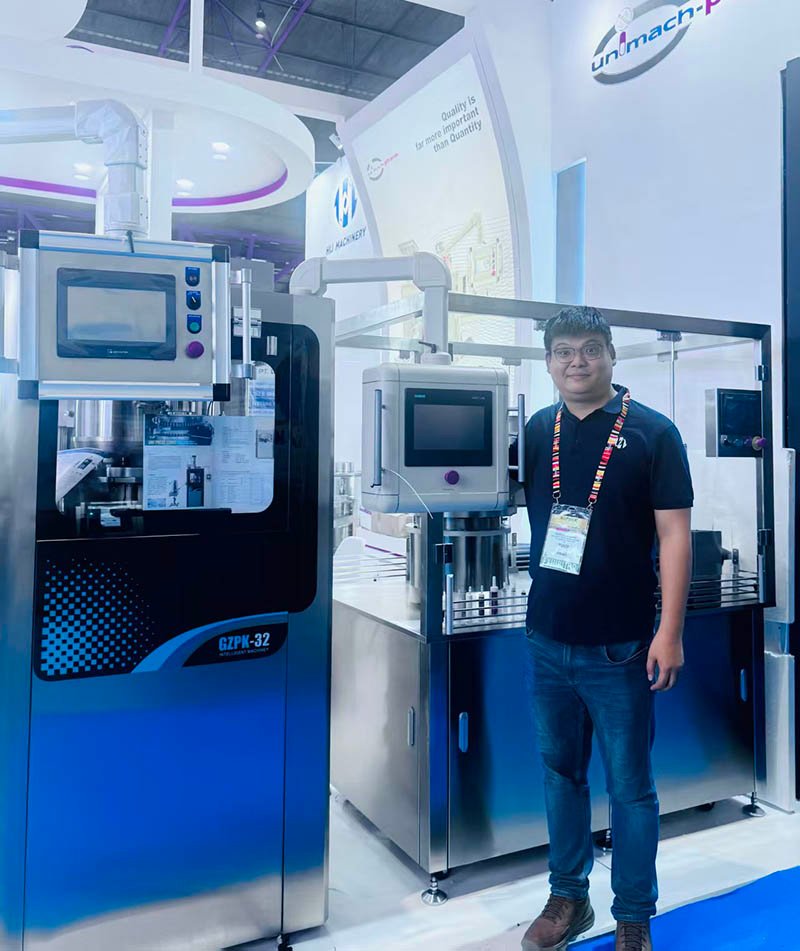
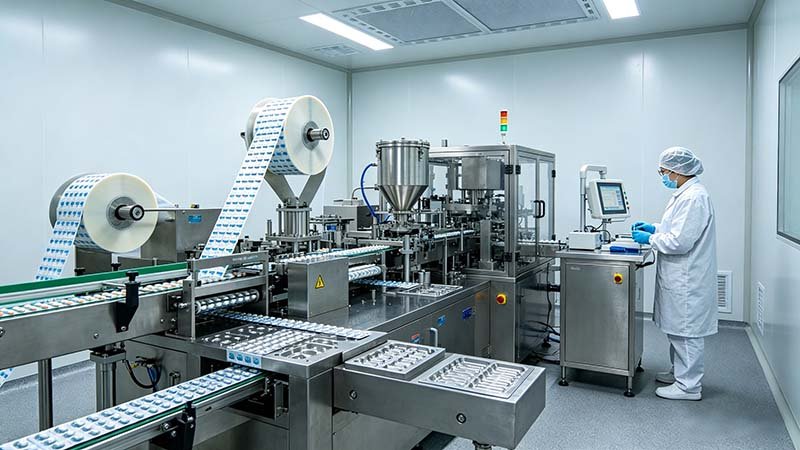
Fig. 1 — IQ, OQ, and PQ validation phases for a GMP-compliant tablet blister packing line.
Validation is not a formality. It is the evidence chain that protects your product licence, your export dossier, and your ability to release any batch at all. Yet of the 31 blister line projects I handled in Southeast Asia and Latin America between 2018 and 2023, fewer than 40% arrived on site with a pre-written validation master plan. The rest were building documentation from zero — under time pressure, during installation, with the vendor already on a flight home.
The result is predictable. Gaps in IQ documentation trigger re-inspection cycles. OQ protocols written after the fact lack objective acceptance criteria. PQ data gathered before the process is stable means nothing to a WHO auditor. The machine may run perfectly. The paperwork fails.
This guide covers every phase — DQ through PQ — with specific test requirements for a tablet blister packing machine, the documentation an FDA or ANVISA inspector will look for, and the failure points I keep encountering on lines shipped without adequate supplier support. It also explains where 21 CFR Part 11 intersects with your PLC data logging requirements — a gap that catches buyers of standalone machines every single time.
What Does “Validating a Tablet Blister Packing Machine” Actually Mean?
Tablet blister machine validation is the documented process of proving — through objective evidence — that the equipment consistently performs within pre-defined specifications under real production conditions. EU GMP Annex 15 (2015 revision) defines validation as “action of proving, in accordance with the principles of GMP, that any procedure, process, equipment, material, activity or system actually leads to the expected results.” That definition matters because it tells you where documentation must be created: before testing begins, not after.
The four phases are sequential and non-negotiable under WHO TRS 992 Annex 3. You cannot execute OQ before IQ is complete and approved. You cannot begin PQ while OQ deviations remain open. Inspectors follow this logic exactly — and if your execution dates are out of sequence, even perfect test data will generate a critical finding.
The Four Validation Phases — Sequence Is Regulatory
DQ → IQ → OQ → PQ. Each phase produces a signed protocol and a signed report. A deviation in any phase must be formally assessed before the next phase begins. This is not a suggestion — it is the EU GMP Annex 15 requirement that WHO GMP-aligned regulators reference globally.
I’ll be direct about one thing: a rushed FAT at the vendor’s factory is not IQ. I’ve seen buyers confuse the two for years. FAT confirms the machine was built to the purchase specification. IQ confirms it is installed correctly at your site, connected to your utilities, in your cleanroom environment. They are different questions. Both require documentation. And only IQ is part of the GMP validation lifecycle.
Design Qualification (DQ): Before You Spend a Dollar on Tooling
Design Qualification for a tablet blister packing machine documents that the proposed equipment design meets the regulatory and process requirements specified in your URS, before fabrication is finalised. This is the phase most buyers skip entirely. It costs nothing to execute. It prevents everything from wrong material-contact surfaces to non-compliant data logging architectures from reaching your production floor.
The DQ review should cross-check three documents: your User Requirements Specification (URS), the supplier’s Functional Design Specification (FDS), and the applicable regulatory framework. For a tablet blister line targeting FDA-regulated markets, that framework is 21 CFR Part 211 (GMP for finished pharmaceuticals) and 21 CFR Part 11 (electronic records). For WHO GMP markets — which covers most of Southeast Asia, Africa, and parts of Latin America — the reference is WHO TRS 992 Annex 3.
📌 Field Note — Forester Xiang
I saw this in a plant outside Pune in 2019. The DQ had never been executed. The supplier had quoted a machine with a basic HMI touchscreen — no audit trail, no user access level differentiation, no electronic batch record capability. The product was going to the US market. The URS required 21 CFR Part 11 compliance. Nobody had connected these two facts during the procurement process. The machine was delivered, installed, qualified — and then grounded for 14 months while a hardware and software upgrade was engineered. The DQ would have cost two days of a QA engineer’s time. The remediation cost $190,000.
DQ is also where you confirm material-contact surface specifications. For tablet blister packing, all product-contact components — forming mould pockets, feeding guides, tablet deflectors — must be documented as food-grade 316L stainless steel or pharmaceutical-grade polymer. This needs to be in the DQ report, cross-referenced to the supplier’s material certificates. Inspectors request those certificates. They do not assume compliance.
Key DQ Checklist Items for Tablet Blister Lines
- 21 CFR Part 11 / audit trail requirements — confirm the PLC/HMI records parameter changes with timestamp, user ID, and reason for change; verify data cannot be deleted without traceability.
- Material-contact surface specification — document 316L SS or equivalent for all tablet-contact parts; obtain mill certificates at DQ stage, not post-delivery.
- Sealing station temperature range and control accuracy — confirm the URS temperature specification (typically ±2°C) is achievable with the proposed heating system and verify via FDS.
- Vision inspection / reject system — if the URS requires 100% empty-cavity detection, confirm the vision system specification is in the FDS and test parameters are definable.
- Cleanroom compatibility — confirm enclosure design, exhaust routing, and operator interface placement are compatible with your ISO class and cleanroom layout.
- Utility requirements — document compressed air pressure and quality (typically ISO 8573-1 Class 2:4:2 or better), electrical supply, and cooling water specifications required by the machine design.
Installation Qualification (IQ): The Evidence That the Machine Exists as Specified
Installation Qualification for a tablet blister packing machine creates documented evidence that the equipment has been installed in accordance with the approved design, supplier recommendations, and your site’s GMP requirements. IQ is executed at your site, after installation is complete, before any operational testing begins. It is not a visual inspection by the vendor’s engineer. It is a formal protocol executed by your qualified personnel, witnessed and signed.
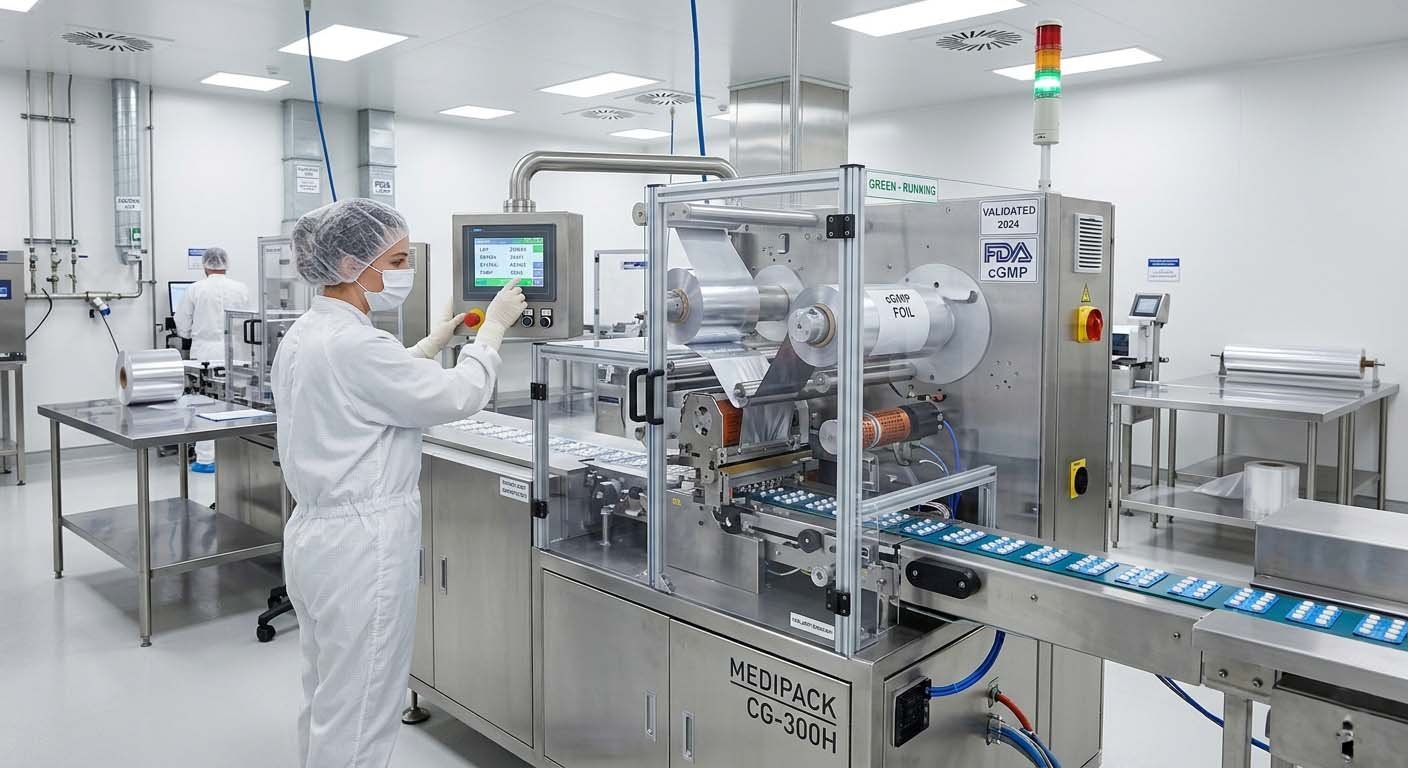
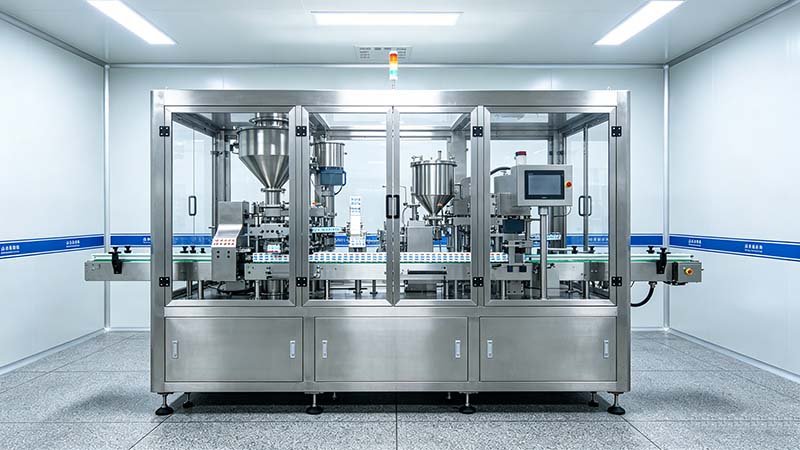
Fig. 2 — IQ documentation review during installation of a cGMP-compliant tablet blister line.
Of the 31 blister line projects I handled in Southeast Asia and Latin America between 2018 and 2023, IQ deviations — not OQ failures — were the single most common source of validation delays. Most came down to utility connections that didn’t match the DQ specifications, or spare-parts lists that were incomplete at delivery.
What an IQ Protocol Must Verify for a Tablet Blister Machine
Equipment Identification & Documentation
Record machine serial number, model, manufacturer (HIJ Machinery, Wenzhou), firmware/software version numbers, and CE/WHO GMP certification documentation. Confirm the equipment matches the DQ and purchase order specification. Any deviation is logged immediately.
Utility Verification
Verify that compressed air supply pressure and quality meet the specification documented in DQ (typically 0.5–0.7 MPa, dry, oil-free). Measure electrical supply voltage and confirm earthing continuity. Document water cooling inlet temperature if applicable. Record actual readings against acceptance criteria.
Physical Installation Check
Confirm machine levelling (typically within 0.5 mm/m), anchor point installation, inter-machine belt height alignment if inline with a cartoner, and clearance distances per the machine drawing. Check that all guards and interlocks are fitted and functional. Document each item with pass/fail and actual measured value.
Component & Material Certificate Review
Collect and file all material certificates for product-contact components (316L SS mill certificates, polymer compliance declarations), calibration certificates for all measurement instruments (temperature controllers, load cells if fitted, pressure gauges), and the CE Declaration of Conformity. Missing certificates at IQ close are one of the most common inspection findings.
Instrument Calibration Status
For each calibrated instrument on the machine — forming station temperature sensors, sealing station temperature controllers, web tension sensors — confirm current calibration status against your site calibration programme. Instruments out of calibration must be recalibrated before OQ execution; this is non-negotiable under 21 CFR Part 211.68.
Software & 21 CFR Part 11 Checklist
If the machine targets FDA-regulated markets: verify audit trail is active, user access levels are configured, electronic batch records are exported in a non-editable format, and the system clock is synchronised to site time. This check belongs in IQ — not discovered during a FDA inspection three years later.
Drawings, Manuals & SOPs
Confirm receipt and filing of current as-built P&IDs, electrical schematics, pneumatic diagrams, operator manual, and maintenance manual. Confirm that site-specific SOPs for operation, cleaning, and change-over have been drafted (they don’t need to be final at IQ close, but they must exist as drafts).
📋 Compliance Reference
EU GMP Annex 15 (2015), Clause 5–10: Requires that IQ includes verification of utilities, instrument calibration, and documentation against the approved design specification.
WHO TRS 992 Annex 3, Section 5.4: IQ must confirm the installed configuration matches the approved DQ and identifies any deviations for formal risk assessment before OQ commencement.
21 CFR Part 211.68: Automatic, mechanical, and electronic equipment used in drug manufacturing must be routinely calibrated, inspected, or checked according to a written programme.
Operational Qualification (OQ): Proving the Machine Works at Your Limits, Not the Vendor’s
Operational Qualification for a tablet blister packing machine generates documented evidence that the equipment operates consistently within its defined parameters across the full range of operating conditions specified in the URS — typically from minimum to maximum rated speed and across the temperature envelope of the sealing station. This is where the machine is challenged. Not at comfortable mid-range settings — at the extremes.
A QA director in São Paulo called me about this in 2022. Their OQ protocol had been designed around a single operating point: 120 blisters per minute, sealing at 180°C. Everything passed. Six months into production, operators pushed the line to 160 bpm during a batch catch-up. Seal integrity failures appeared. Turns out the sealing dwell time at 160 bpm was 18% shorter than at 120 bpm — never tested in OQ, never characterised. The batch was held. The OQ had to be expanded. Worst part: it would have taken one afternoon to test it correctly the first time.
OQ Test Parameters for Tablet Blister Packing Machines
| OQ Test Category | Parameter / Acceptance Criterion | Test Method | Typical Range Tested |
|---|---|---|---|
| Forming Station Temperature | Set-point ±2°C across full width of heating plate | Calibrated thermocouple grid, 9-point mapping | Min. – Max. forming temp per film spec |
| Sealing Station Temperature | Set-point ±2°C, uniformity across sealing band | Calibrated thermocouple, 5-point mapping per seal cycle | Min. – Max. sealing temp for target foil |
| Machine Speed | Stable operation at min., mid-point, and max. rated speed without alarm | Tachometer / PLC speed display, 30-min run at each point | e.g., 60 / 120 / 200 bpm (model-dependent) |
| Sealing Pressure | Consistent cavity-to-cavity seal, confirmed by dye-ingress test (ASTM F2338) at 60 mbar | Dye-penetration or vacuum decay per USP <1207> | Min. – Max. operating pressure |
| Film Indexing Accuracy | Cavity registration ±0.3 mm over 100 consecutive strokes | Vernier calliper measurement of 10 randomly sampled blisters per run | All speed set-points |
| Reject System Verification | 100% rejection of intentionally empty / underfilled cavities; 0% false reject of filled blisters | Challenge test: 20 deliberately empty blisters per 1,000 filled | All speed set-points |
| Alarm & Interlock Function | Functional test: manually trigger each alarm condition | Cold / hot conditions, film break, jam simulation | |
| Audit Trail (21 CFR Part 11) | All parameter changes recorded with timestamp, user ID, original and new value | Change 5 parameters under 2 user accounts; review audit log for completeness | N/A — functional test only |
⚠️ OQ Failure Patterns — Field Diagnostics
Symptom: Sealing temperature uniformity fails at maximum speed
Root cause: Sealing band thermal recovery time is insufficient at high cycle rate; temperature set-point holds, but actual inter-cycle temperature dips by 4–8°C on older resistive heating elements. I’ve seen this on three different machine brands in high-humidity environments — the ambient heat load on the heating element varies by season.
✅ Fix: Map the sealing band at rated maximum speed for a minimum of 60 consecutive minutes before recording OQ acceptance data. Adjust set-point upward until the actual minimum inter-cycle temperature remains within the acceptance window. Document the adjusted set-point as the validated operating parameter.
Symptom: Vision inspection reject system generates 12% false rejects at 180 bpm
Root cause: Camera exposure time not optimised for high-speed operation; trigger timing was set during FAT at 100 bpm and not re-characterised at site. Common when the FAT speed spec is lower than the intended production speed.
✅ Fix: Re-optimise exposure and trigger delay at each OQ speed set-point. If the supplier’s vision system cannot maintain <0.5% false reject at maximum speed, this is a DQ failure surfacing in OQ — escalate to a formal deviation and assess commercial impact before acceptance.
Symptom: Audit trail entries missing for two of the five parameter changes tested
Root cause: PLC firmware version shipped with a known logging gap for changes made while in “maintenance” user mode. Cheap standalone machines from vendors without cGMP software experience frequently have this issue.
✅ Fix: Firmware update from supplier required before OQ can proceed. Issue a deviation and pause OQ. If the supplier cannot provide a firmware update with a documented change record, this equipment cannot be qualified for 21 CFR Part 11 markets without hardware replacement of the HMI/PLC unit.
Performance Qualification (PQ): Three Consecutive Batches That Actually Mean Something
Performance Qualification is the final validation phase, generating documented evidence that the tablet blister packing machine consistently produces acceptable product under routine conditions — typically demonstrated across three consecutive production batches at the commercial process parameters established during OQ. PQ uses real product, real packaging materials, and real operators. Placebo tablets are acceptable for PQ if the drug substance creates handling or potency concerns, but the physical properties — hardness, friability, dimensions — must match the commercial product.
The number “three” is embedded in regulatory expectation, not written as an absolute. ICH Q7 references it. WHO TRS 992 Annex 3 acknowledges that a risk-based approach may support more or fewer batches, but in practice, a WHO or FDA inspector who sees fewer than three consecutive successful PQ batches will want a written scientific justification. I’ve never seen that justification accepted without pushback at a first inspection.
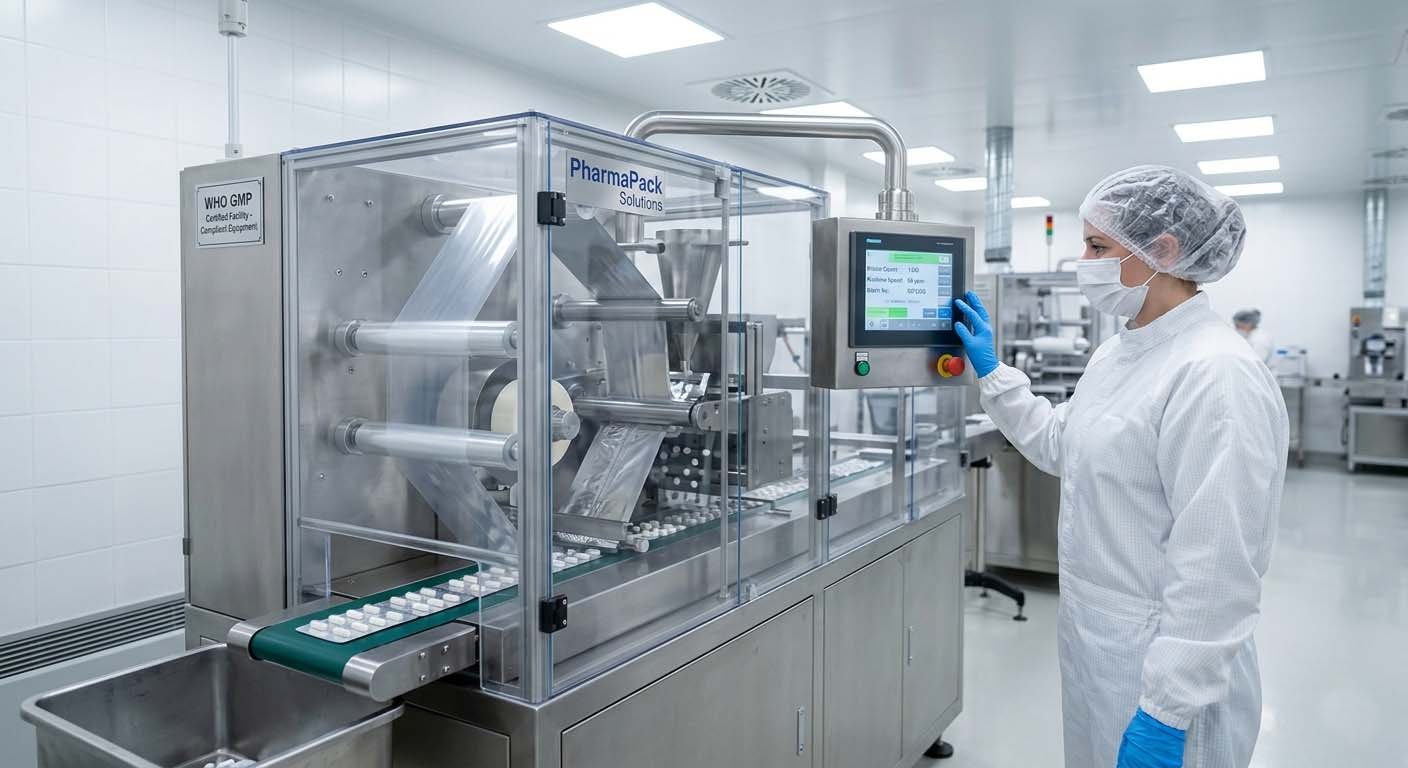
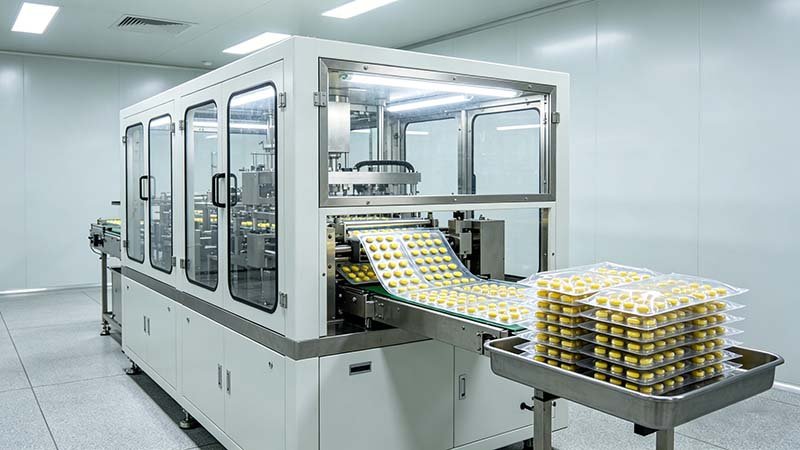
Fig. 3 — PQ execution in a GMP cleanroom: real product, validated parameters, signed batch records.
What PQ Must Demonstrate for a Tablet Blister Line
- Seal integrity across every batch — dye-ingress or vacuum-decay test per USP <1207> on a statistically valid sample (typically 59 blisters per batch at 95% confidence, <2% defect rate). Results must be within acceptance criteria for all three batches.
- Tablet count accuracy — confirmed fill of each cavity at the declared tablet-per-blister specification; zero underfilled or overfilled cards accepted in PQ sample.
- Print/emboss quality — batch number, expiry date, and lot traceability markings verified against artwork specification for legibility and permanence; ink adhesion test if inkjet printed.
- Tablet damage rate — broken, chipped, or cracked tablets in the packed blister quantified as a percentage; acceptance criterion is product-specific but typically <0.1% per batch in pharma applications.
- Process parameter consistency — all critical process parameters (forming temp, sealing temp, sealing pressure, machine speed) recorded on the batch record; must remain within OQ-validated ranges throughout each batch run.
- Operator consistency — PQ batches should be executed by at least two different trained operators to confirm that the process is operator-independent. Single-operator PQ is a finding in some regulatory jurisdictions.
“Demanding IQ/OQ template protocols before order placement reveals immediately whether a supplier understands cGMP or is simply selling metal. Of the 19 blister line projects where buyers skipped this demand, 14 experienced validation delays exceeding 8 weeks — at an average remediation cost I conservatively estimate above $60,000 per project.”
— Forester Xiang, Founder, HIJ Machinery
DQ vs IQ vs OQ vs PQ: What Each Phase Tests, Documents, and Produces
Each validation phase for a tablet blister packing machine has a distinct objective, a distinct execution team, and a distinct set of deliverables — and no phase can substitute for another. The table below summarises what inspectors from FDA, WHO, EMA, and ANVISA will expect to find in a validation dossier.
| Phase | Primary Question Answered | Executed By | Key Deliverables | Typical Duration | Common Failure Mode |
|---|---|---|---|---|---|
| DQ — Design Qualification | Does the design meet the URS and regulatory requirements? | QA + Engineering (pre-build or pre-FAT) | DQ Protocol, DQ Report, URS-to-FDS traceability matrix | 1–3 weeks | ⚠️ Skipped entirely — issues surface in OQ or inspection |
| IQ — Installation Qualification | Is the equipment installed as specified at this site? | QA + Maintenance (at site, post-installation) | IQ Protocol, IQ Report, calibration certs, material certs, as-built drawings | 1–2 weeks | ⚠️ Missing calibration certificates; utility deviations undocumented |
| OQ — Operational Qualification | Does the equipment operate within its specified limits across the full range? | QA + Engineering (no product, or placebo) | OQ Protocol, OQ Report, test data, deviation log | 2–4 weeks | ⚠️ Tested only at midpoint speed; extremes not characterised |
| PQ — Performance Qualification | Does the process consistently produce conforming product? | QA + Production (commercial product, ≥2 operators) | PQ Protocol, PQ Report, 3× batch records, seal integrity data | 3–6 weeks | ⚠️ Fewer than 3 batches; single operator; parameters drift mid-run |
I won’t tell you the timeline is simple. For a greenfield project — new machine, new site, new product — the entire DQ-to-PQ lifecycle typically runs 12–20 weeks. For a like-for-like equipment replacement where change control allows leveraging legacy OQ data, you might compress it to 6–8 weeks. The variables that determine which end of that range you land on are almost always documentation-related, not technical.
Where 21 CFR Part 11 Intersects With Your Blister Machine Validation — And Why It Catches Buyers Off Guard
21 CFR Part 11 compliance for a tablet blister packing machine requires that all electronic records and electronic signatures used to satisfy GMP requirements are trustworthy, reliable, and equivalent to paper records — with specific requirements for audit trails, access controls, and system validation that must be addressed before IQ closes. This is not a separate validation exercise. It is embedded inside the equipment qualification.
The issue I encounter repeatedly: buyers sourcing standalone machines on price find that the PLC platform — often a basic Mitsubishi or Siemens S7-1200 with an OEM touchscreen — has no configurable audit trail. Or the audit trail exists but cannot be exported in a non-editable format. Or user access levels are defined, but the system allows a production operator to modify sealing temperature without traceability.
FDA Form 483 observations from packaging equipment inspections in 2020–2023 show electronic records deficiencies as a recurring finding category. That is not a coincidence. It reflects the gap between machines designed for food or nutraceutical markets — where Part 11 does not apply — and pharmaceutical production where it does.
💡 What to Demand From Your Supplier Before FAT
Ask for a written 21 CFR Part 11 Gap Assessment document. If the supplier doesn’t know what that is, you have the answer you need. The document should confirm: audit trail scope and format, user access level architecture, clock synchronisation method, backup and recovery procedure, and the software validation documentation (GAMP 5 Category 4 or 5 as applicable). This conversation should happen before the purchase order is signed — not during your OQ in your cleanroom.
FAT and SAT: What They Are, What They Are Not, and How They Feed Into IQ
Factory Acceptance Testing (FAT) and Site Acceptance Testing (SAT) are vendor-managed commissioning checks, not GMP validation phases — but both generate documentation that feeds directly into the IQ protocol and can, if executed rigorously, reduce the scope of IQ testing at site.
FAT is executed at the manufacturer’s facility before shipment. A well-executed FAT at HIJ’s Wenzhou factory includes: mechanical build verification against drawings, functional testing of all stations (forming, feeding, sealing, cutting, reject), PLC and HMI function checks, and a run test at rated speed with appropriate film and dummy product. The FAT report becomes a reference document in IQ — IQ verifies that the site-installed machine matches what was accepted at FAT.
SAT happens at your site, after installation, before formal IQ commencement. Think of it as a pre-IQ functional check: does the machine power up correctly, do the motors rotate in the right direction, is compressed air connected and reaching the correct pressure? SAT deficiencies identified here are resolved before IQ begins. That’s the point. Finding them during IQ execution generates deviations that delay your timeline.
⚠️ FAT Trap — What Gets Missed
Trap: FAT executed at 100 bpm; production target is 180 bpm
This means your FAT data has no value for OQ at the intended production speed. Sealing integrity at 180 bpm is a completely different thermal challenge from 100 bpm. I’ve witnessed two buyers discover this the hard way — one in Jakarta, one outside Monterrey. Both had signed the FAT report as “passed.”
✅ Fix: Specify in the FAT protocol that the machine must be tested at the intended maximum production speed, not just a convenient lower speed. If the vendor’s factory cannot run at your target speed during FAT, escalate — this is a DQ issue.
Trap: SAT skipped because “the machine passed FAT”
Shipping damages compressed air fittings, loosens terminal blocks, and shifts levelling bolts. None of these will show up on a FAT report. Skipping SAT means IQ starts with undetected installation defects — every one of which becomes a formal deviation that extends your timeline.
✅ Fix: Always execute a pre-IQ walkdown (formal SAT or informal) before the IQ protocol is open. One day of engineering time before IQ can save 2–3 weeks of deviation management during it.
The Validation Master Plan for Your Tablet Blister Line: What It Must Contain
A Validation Master Plan (VMP) for a tablet blister packing machine is the governing document that defines the validation strategy, scope, responsibilities, timeline, and acceptance criteria framework for all four phases — and it must exist before IQ begins. The VMP does not need to contain the actual test protocols; it references them. What it must contain is the rationale for the validation approach and the boundaries of the validated system.

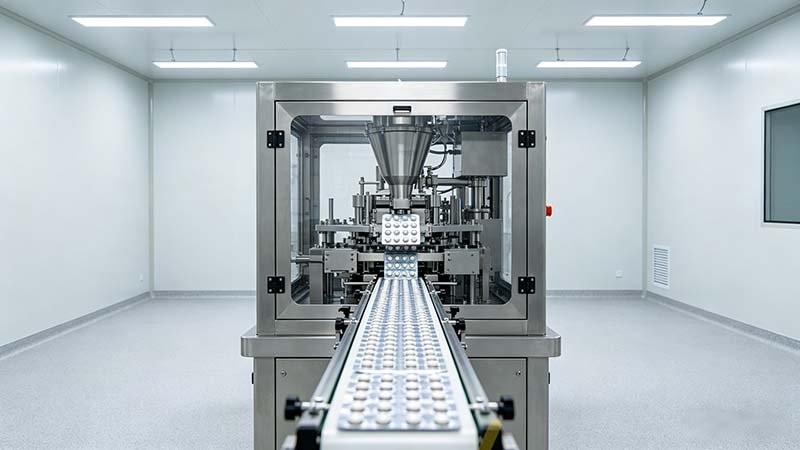
Fig. 4 — Reviewing the Validation Master Plan before IQ commencement on a tablet blister line.
A VMP that covers a tablet blister line should address at minimum: equipment scope and boundaries (which equipment assets are covered, including all connected utilities and in-line equipment such as the blister cartoning machine if inline); the GAMP 5 category assessment for the PLC/HMI software; the regulatory framework applicable to the target markets; the risk assessment method used to determine critical process parameters; and the change control procedure for post-validation modifications.
Cheap standalone machines rarely ship with a VMP template. This leaves your QA team writing it from scratch — under time pressure, while the machine sits installed and waiting. That’s a preventable problem. At HIJ, our validation support package includes a site-customisable VMP template, pre-written IQ and OQ protocols, and a 21 CFR Part 11 gap assessment document. That package exists because I’ve watched the alternative play out too many times.
How Long Does Blister Machine Validation Take — and What Does It Cost?
A full DQ-to-PQ validation for a tablet blister packing machine in a new facility typically requires 12–20 weeks and $35,000–$120,000 in direct internal and external costs, depending on market, regulatory complexity, and whether supplier documentation support is included. Those numbers are based on 20 years of project data. They will surprise buyers who budgeted nothing for validation when calculating total cost of ownership.
| Cost Component | Low Estimate | High Estimate | Key Variable |
|---|---|---|---|
| Internal QA labour (protocol writing, execution, review) | $8,000 | $35,000 | Team experience level; supplier documentation support provided |
| External validation consultancy | $0 (not used) | $45,000 | Whether site lacks internal GMP validation expertise |
| Calibration services (third-party) | $2,500 | $8,000 | Number of instruments; calibration body rates by country |
| PQ batch materials (product/placebo, packaging film, foil) | $3,000 | $18,000 | Product cost; number of PQ batches; yield expectations |
| Remediation costs (deviations, re-testing) | $0 (zero deviations) | $60,000+ | Supplier documentation quality; DQ execution quality |
The remediation row is the one that should concern buyers. Zero deviations is a realistic outcome — if the DQ was executed properly and the supplier provided complete documentation. It is an unusual outcome when the machine arrived with no VMP, no pre-written protocols, and a PLC that the supplier has never validated for a 21 CFR Part 11 market. That conversation about the true cost of a tablet blister packing line needs to happen before the purchase order is signed.
How Validation Connects to Your GMP Compliance Dossier and Regulatory Submission
The IQ, OQ, and PQ reports for a tablet blister packing machine form part of the equipment qualification section of a site’s Quality Management System dossier, and may be requested directly by regulatory reviewers during WHO PQ submissions, FDA pre-approval inspections (PAIs), or EU GMP site inspections.
This is the connection that many engineering teams miss. The validation is not just an internal quality exercise. It is regulatory evidence. A WHO PQ reviewer for a product destined for African health system procurement will request the equipment qualification summary as part of the site master file. An FDA pre-approval inspection team will walk into your facility, ask for your equipment qualification binders, and review the data. If the binder contains a 3-page OQ report with no raw data, no deviation log, and no approved acceptance criteria — the inspection outcome is predictable.
📋 Regulatory Framework Reference
WHO TRS 992 Annex 3 (2014): Specifies the lifecycle approach to validation, including prospective validation requirements for new equipment and the documentation structure for DQ/IQ/OQ/PQ.
EU GMP Annex 15 (Revised 2015): The primary EU reference for qualification and validation; mandates risk-based approach, VMP, and sequential phase approval before next phase commencement.
21 CFR Part 211.68 & Part 11: US FDA requirements for equipment calibration, electronic records, and audit trails applicable to all tablet blister lines producing for FDA-regulated markets.
ICH Q10 (Pharmaceutical Quality System): Embeds validation as a foundational element of the pharmaceutical quality system, not a one-time project.
I’ve spent three sessions in a room with a CDSCO reviewer in Delhi who was working through a WHO PQ dossier for a client. The reviewer cited ICH Q1A(R2) directly and asked why the blister line OQ data didn’t include a temperature mapping study at maximum machine speed. The dossier went back. Eight months later, the same client called me to help structure a proper OQ extension protocol. That conversation took 40 minutes. I’m still not sure I convinced them to run the study at all three speed set-points — they wanted to do two. We settled on three. The next inspection passed. For more on the GMP and FDA compliance requirements that surround this process, see our blister packaging GMP and FDA compliance guide.
Frequently Asked Questions: Tablet Blister Machine Validation IQ OQ PQ
What is IQ OQ PQ validation for a tablet blister packing machine?
IQ (Installation Qualification), OQ (Operational Qualification), and PQ (Performance Qualification) are three sequential GMP validation phases that document evidence proving a tablet blister packing machine was correctly installed, operates within its specified parameter range, and consistently produces conforming product. All three phases are required under EU GMP Annex 15, WHO TRS 992 Annex 3, and — for FDA-regulated markets — 21 CFR Part 211. No commercial batch may be produced on an unvalidated line.
How long does IQ OQ PQ validation take for a new tablet blister line?
For a new tablet blister packing machine in a new or existing GMP facility, the complete IQ-to-PQ lifecycle typically takes 8–16 weeks from IQ initiation to PQ report approval. DQ, if executed pre-installation, adds 1–3 weeks before IQ begins. The largest variable is deviation management — a single unresolved OQ deviation can add 4–8 weeks if it requires supplier engineering support or equipment modification.
Can I use FAT reports instead of IQ for a tablet blister machine?
No. FAT and IQ answer different questions. FAT, conducted at the vendor’s factory, confirms the machine was built to the purchase specification before shipment. IQ, conducted at your site, confirms the machine is installed correctly in your cleanroom, connected to your utilities, and matches the DQ-approved design. EU GMP Annex 15 is explicit that IQ cannot be replaced by FAT alone — though a rigorous FAT report can reduce the scope of retesting required during IQ.
What is the minimum number of PQ batches required for a tablet blister line?
Three consecutive batches meeting all acceptance criteria is the standard industry expectation, reflected in WHO TRS 992 Annex 3 and ICH Q7 guidance. A risk-based justification for fewer batches is theoretically possible under the EU GMP Annex 15 lifecycle approach, but I have never seen a WHO GMP or FDA inspector accept fewer than three without generating a written query. For a new machine, new product, or new facility, run three batches.
Does 21 CFR Part 11 apply to a tablet blister packing machine?
Yes, if your blister machine uses a PLC or HMI to create, modify, or transmit electronic records that are used to satisfy FDA GMP requirements — such as batch records, sealing parameter logs, or equipment status records — then 21 CFR Part 11 applies. This means the system must have a configurable audit trail, user access controls, and the ability to export records in a non-alterable format. This needs to be confirmed at DQ stage, before equipment purchase is finalised.
What happens if an OQ deviation is found during tablet blister machine validation?
A formal deviation report must be opened, the root cause investigated, and a corrective action implemented and verified before OQ can be closed and PQ can begin. If the deviation requires a machine modification — firmware update, hardware change, or parameter redesign — the affected OQ tests must be repeated after the modification is implemented. Deviations cannot be closed by simply accepting the out-of-specification result; they require documented resolution. This is the phase where supplier responsiveness becomes commercially critical.
Who should execute the IQ and OQ protocols — the machine vendor or our QA team?
Your QA team, supported by engineering, must execute and sign all protocols. The vendor’s engineer can assist with technical setup — calibrating temperature controllers, adjusting forming parameters — but the GMP documentation must be owned by your site. An FDA or WHO inspector asking who executed the IQ expects to see your site personnel’s signatures, not a vendor employee’s. The vendor can be a witness; they cannot be the protocol executor.
Do I need to revalidate after changing blister tooling on an already-qualified machine?
Yes — a change control assessment is required. Changing blister tooling (forming mould, sealing die, cutting punch) changes the product contact configuration and typically the process parameters (forming temperature, sealing pressure, cycle geometry). Under EU GMP Annex 15 change control, this typically triggers a partial OQ and full PQ requalification for the new format. The scope depends on your risk assessment, but the change cannot be made to a validated line without documented change control approval. Your GMP compliance framework governs this process.
Need a Blister Line That Comes Validation-Ready?
HIJ’s turnkey tablet blister packing machines include pre-written IQ/OQ template protocols, a 21 CFR Part 11 gap assessment document, and a site-customisable Validation Master Plan — eliminating the documentation build-from-zero problem that costs most buyers 8–16 weeks of delays. Talk to Forester’s team about your specific market, regulatory framework, and production targets.