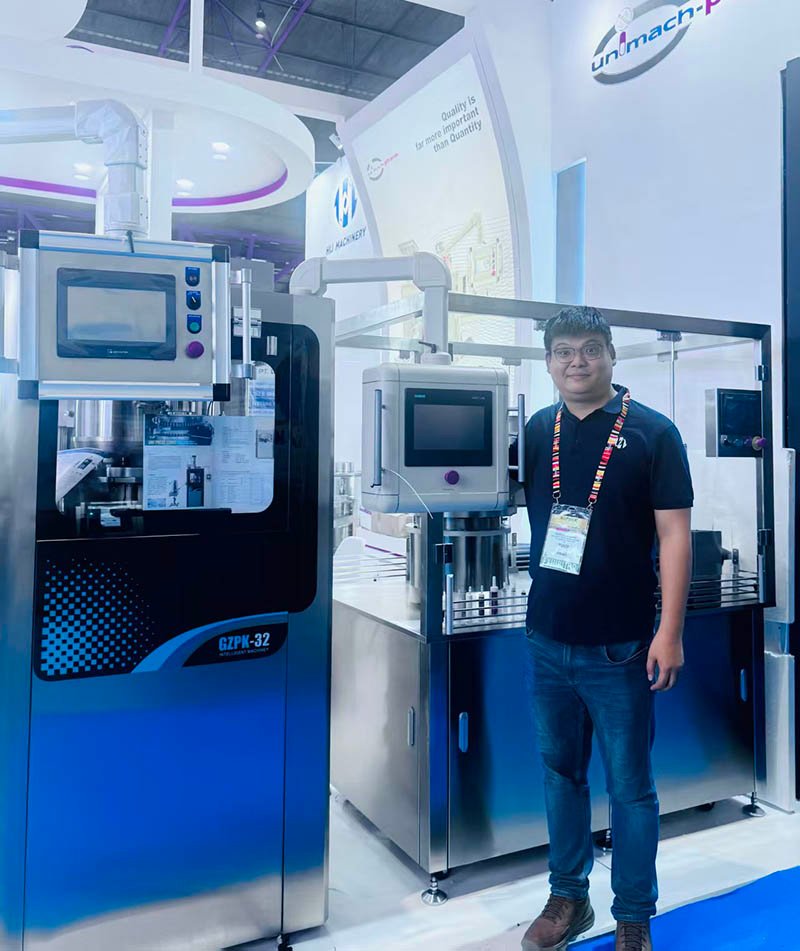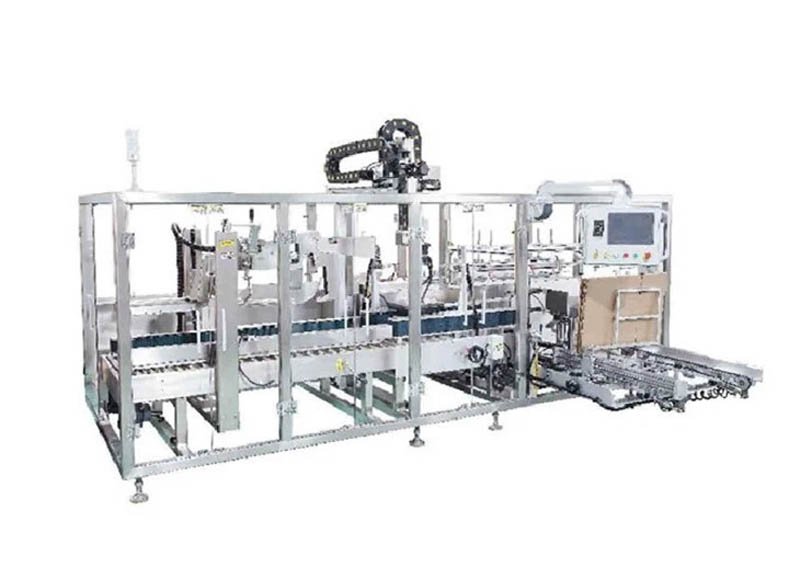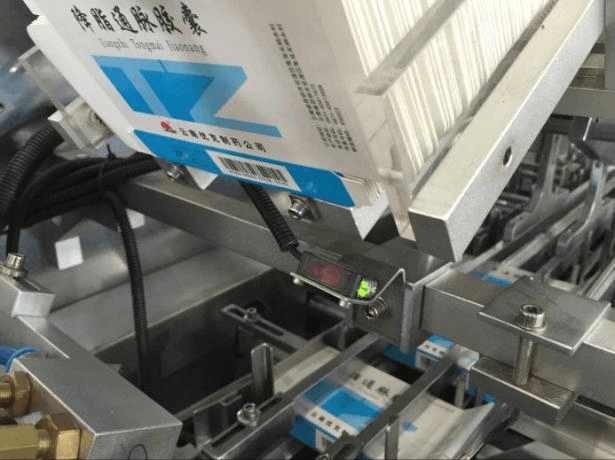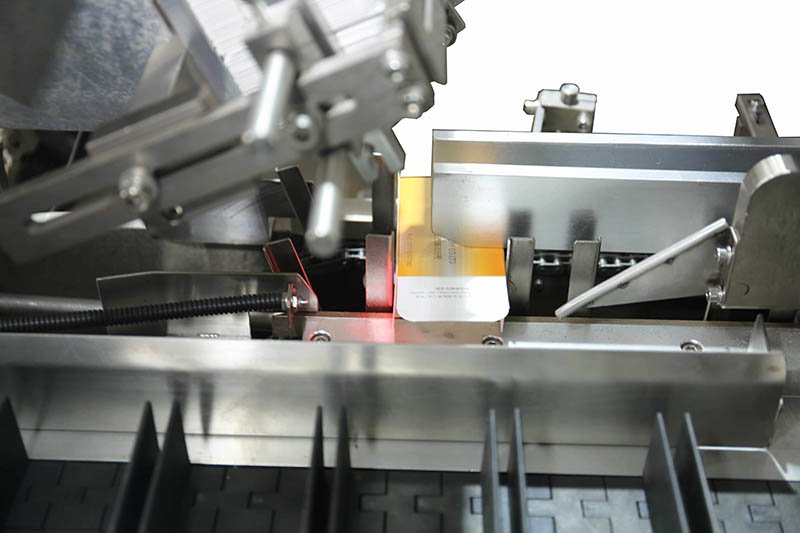
A turnkey tablet blister packaging line connects blister production with downstream packing under an agreed supply and integration scope. It can take tablets through forming, filling, sealing and cutting, then transfer the blister cards into cartons with the required leaflet and coding. The contract must define where the line starts, where it ends and who proves that the connected equipment works.
This guide is for engineering, production, quality and purchasing teams comparing a complete line or linking existing equipment. For a project configuration, see HIJ turnkey packaging solutions; for the blister stage itself, see the tablet blister packing machine page.
Define the supply boundary before comparing quotations
“Turnkey” is a procurement description, not a standard list of machines. One offer may stop at discharged blister cards; another may include cartoning, while a third includes end-of-line equipment and installation. Those offers cannot be compared on their headline price alone.
Separate the equipment manufacturer from the party responsible for integration. A lead integrator can coordinate equipment from several manufacturers. Equally, buying every machine from one company does not prove that transfer, tracking, documentation and acceptance responsibilities are covered.
On small screens, scroll this table sideways.
| Scope item | Define in the enquiry | Evidence before acceptance |
|---|---|---|
| Equipment and formats | Start/end points; included machines; product and pack-format list; change parts. | Approved equipment list, layout and format matrix. |
| Mechanical interfaces | Discharge orientation, transfer height, guides, grouping, buffer and access. | Interface drawings and trials using representative cards and cartons. |
| Controls and inspection | Ready/busy/fault signals, tracking, reject confirmation and records. | Interface specification and agreed challenge-test results. |
| Site and documentation | Utilities, installation tasks, training, manuals and qualification support. | Responsibility matrix, deliverable register and site-readiness checklist. |
| Commercial boundaries | Freight, duties, tooling, service visits, spares and excluded work. | Itemized quotation with acceptance milestones and change-control terms. |
Give each interface one accountable owner, including where another vendor supplies a machine. Record who changes software, who approves drawings and who resolves a failure that crosses two machines. This is more useful than an unsupported promise of a “single GMP-ready package.”
From tablet feeding to a finished carton: the process sequence
The forming web becomes pockets before tablets are placed into it. Product inspection is normally positioned where the required defect is visible; sealing, coding and cutting arrangements depend on the machine design. Confirm the actual sequence in the proposed layout rather than treating every optional station as compulsory.
On small screens, scroll this table sideways.
| Stage | What it does | What to verify |
|---|---|---|
| 1 · Web handling and forming | Unwinds and forms the specified web into cavities. | Web construction, cavity geometry, usable forming area and tooling; thermoforming and cold-forming requirements differ. |
| 2 · Product feeding | Presents and places tablets into the formed cavities. | Tablet dimensions, coating, friability, dust and feeding behavior at the proposed rate. |
| 3 · Inspection and sealing | Checks defined product defects and closes the pack with lidding material. | Inspection coverage and reject tracking; a sealing process established for the actual material combination. |
| 4 · Coding and cutting | Applies the specified information and separates finished cards. | Code location/readability, registration, card edges, perforations and downstream orientation. |
| 5 · Transfer and grouping | Moves and groups cards for the selected carton count. | Card control, accumulation limits, rejected-card handling and recovery after stops. |
| 6 · Leaflet and cartoning | Loads the agreed card group and leaflet, then closes the carton. | Carton/leaflet drawings, count checks, missing-component response and closure quality. |
| 7 · Optional downstream work | Adds specified verification, aggregation or shipping-pack operations. | Destination-market requirements and explicit project scope; these are not automatic inclusions. |

The transfer between the blister machine and cartoner deserves its own review. Cards may need orienting, stacking or grouping, and a rejected card can affect the next carton group. Review the blister cartoning machine requirements together with the blister discharge specification.
Match capacity in the same unit—not just “packs per minute”
A blister-machine quote may state cycles per minute, cards per minute or tablets per hour. A cartoner generally handles cartons, which can contain several cards. Ask each supplier to state the unit, pack layout, product and operating conditions behind its proposed rate.
Convert every station to the same unit before identifying the limiting stage. For a fixed format, multiply forming or punching cycles by finished cards per cycle; then divide cards per minute by cards per carton. Check that the quoted cycle definition actually corresponds to the finished-card count.
Compare the finished carton requirement with the whole line, not the fastest individual machine. The following figures are hypothetical engineering inputs, not HIJ specifications or a customer result.
40 cycles/min × 4 cards/cycle = 160 cards/min160 cards/min ÷ 2 cards/carton = 80 cartons/min
If the selected cartoner can sustainably process only 60 cartons/min for that format, it consumes 120 cards/min. The connected line cannot continuously deliver 80 cartons/min just because the blister stage can supply that amount. With 10 tablets/card, the 60-carton/min limit corresponds to 1,200 tablets/min before quality losses.
Now translate the line rate into a shift plan. If there are 300 actual running minutes at 60 cartons/min and 98% of those cartons are accepted, the result is 17,640 accepted cartons. This example assumes that the running rate is measured before rejects and that downtime has already been removed from the 300 minutes. Do not deduct the same stoppages or rejects twice by applying an additional overall efficiency factor.
Size a buffer for interruptions, not a permanent speed mismatch
A buffer temporarily absorbs a difference between incoming and outgoing flow. In the example, an initially empty buffer with 240 usable card positions fills in 240 ÷ (160 − 120) = 6 minutes while both machines keep running at those rates. If the cartoner stops completely while the blister machine keeps producing, the same buffer fills in 240 ÷ 160 = 1.5 minutes.
These calculations assume all 240 positions are usable and ignore start/stop transients. The actual control strategy may stop the upstream machine earlier. Confirm buffer capacity in cards, not just conveyor length, and test the response to a full buffer, a downstream stop and a restart.
Use a format matrix instead of a single maximum speed
List each tablet, blister card, cards-per-carton count, leaflet and carton. For every row, request the proposed sustainable output, required tooling, operator tasks and test conditions. A longer leaflet, larger card stack or difficult tablet feed can change the practical limit. The cartoner is not automatically the bottleneck in every format.
Establish the product and pack before selecting the machine
A line designed for one tablet and film structure is not automatically suitable for another. Share tablet drawings and representative samples, including dimensions, shape, coating and handling sensitivities. State whether mixed tablets, unusually fragile products or dust control introduce additional requirements; do not assume a standard feeder covers them.
For each blister, provide the forming-web structure and thickness, lidding specification, cavity layout, card dimensions, print registration and perforation requirements. For each carton, provide the internal pack arrangement, closure design and leaflet specification. Confirm compatibility through drawings and trials rather than selecting materials only by the names “PVC” or “Alu-Alu.”
Package protection is a product-development decision. The responsible product and quality teams must establish the approved pack and supporting stability evidence. A generic climate-zone label, machine temperature range or material-family name is not proof that a packaged medicine will meet its shelf-life requirement.
Ask which changes are recipe adjustments and which require mechanical parts, forming tools, sealing tools or new feeder components. A dual-format claim should identify the actual configurations and conversion steps. Do not infer Alu-Alu capability from an Alu-PVC demonstration.
Check integration behavior, not the number of PLCs
Several coordinated controllers can form an integrated line. The useful questions concern how machines exchange states, track product and respond when another station becomes unavailable. Ask the integrator to document normal running, starvation, blockage, fault, controlled stop and restart states.
- Tracking: how does a detected defect remain associated with the correct card or carton through transfer and grouping?
- Rejection: what confirms removal, and what happens if the reject device fails or the reject collection area is unavailable?
- Recovery: how are partially processed cards, incomplete groups and cartons handled after a stoppage?
- Recipes and access: which parameters belong to each machine, who may change them and how are approved configurations restored?
- Safety integration: who assesses and verifies the combined equipment, guarding and required stop behavior?
For records, define the intended electronic records, users, access rights, retention and review process. FDA’s Part 11 scope guidance connects applicability to records required under underlying regulations and their electronic use. A PLC brand, an audit-trail checkbox or a single controller does not establish Part 11 compliance for the installed system.
Separate factory acceptance, site acceptance and qualification
Write the acceptance protocol before the test. State the pack formats, material lots, operating conditions, measurements, sample selection, agreed limits and deviation process. There is no universal four-hour run, fixed reject-challenge count or changeover time that proves every tablet blister line is acceptable.
On small screens, scroll this table sideways.
| Activity | Question to resolve | Project records to request |
|---|---|---|
| FAT · Factory acceptance | Does the assembled supply demonstrate the agreed functions before shipment? | Approved test plan, actual settings, measured results, deviations and open-item list. |
| SAT · Site acceptance | Does the installed line work with the site’s utilities, layout and connected equipment? | Installation/interface checks, site test results and closure of transport or installation issues. |
| Qualification programme | What evidence supports the installed equipment and intended operating range? | Site-approved plan and applicable IQ/OQ/PQ records, with responsibility and evidence traceability. |
| Routine operation | How will the site keep the process controlled after handover? | Approved procedures, training, maintenance, change control and ongoing checks appropriate to the process. |
EU GMP Annex 15 describes risk-based qualification and validation. It allows appropriate combination of qualification documents and requires site review of supplier protocols. Some factory evidence may be reused where justified and unaffected by transport or installation. It does not require every machine to share one PLC or every project to use a single protocol. The site’s quality team must approve the strategy and evidence.
Test failures as well as a smooth production run
Agree controlled challenges for missing or incorrect components, inspection rejection, downstream blockage, material replenishment and recovery. Specify how challenge samples are identified, reconciled and prevented from entering saleable stock. Ask for both detection and confirmed handling of the affected pack, not just a screen displaying an alarm.
For production runs, record accepted output together with rejects and stoppages. A machine can reach a short-term rate yet fail to sustain the required carton output. Record the actual product, materials, format, operators and line configuration so the result can be interpreted later.
Do not confuse visual inspection with package integrity
A camera can inspect specified visible features; it does not automatically demonstrate a leak-tight seal. ASTM F2338-24 describes a vacuum-decay method that detects leakage through pressure change in an evacuated chamber. It is not a dye-ingress method. Select and qualify the appropriate integrity method for the pack, including detection capability, test settings, sampling and acceptance criteria. Avoid importing a generic vacuum value into every project.
This article addresses equipment selection for tablet packaging. Sterile-product requirements require a separate assessment; the European Commission’s GMP index identifies Annex 1 as concerning manufacture of sterile medicinal products. Do not label ordinary tablet blister equipment “Annex 1 compliant” from a general feature list.
Include changeover, cleaning and site readiness in the decision
Define changeover from the last accepted pack of one format to the first accepted pack of the next. State whether the timed scope includes line clearance, cleaning, tools, recipes, print setup, inspection checks and release activities. A mechanical tool-swap demonstration is not the same as a released product changeover.
Build a change-parts list against the format matrix. Mark shared parts, dedicated parts, identification, storage, handling and setup checks. Ask how technicians access forming tools, feeder parts, sealing areas and transfer guides without compromising the approved safety arrangement.
Review cleaning instructions and maintenance requirements against the actual product, materials and utilization. Establish tasks and replacement decisions from the equipment manuals and site programme, not a generic promise that every cutting tool lasts a fixed number of cycles.
Before shipment, confirm utility specifications, room access, floor/loading requirements, delivery route, layout clearance and responsibilities for installation. Include space for material replenishment, maintenance access and rejected-pack handling. A line that fits the nominal footprint may still be difficult to operate if these activities were omitted.
Compare total project scope and schedule—not unsupported price ranges
A credible budget starts from the approved pack range and acceptance requirement. Request a comparable scope from each bidder, then separate included equipment, options and buyer-supplied work. Do not treat a generic online line price as a quotation for your product.
On small screens, scroll this table sideways.
| Cost or schedule driver | What to ask for | Common comparison gap |
|---|---|---|
| Base equipment and automation | Named configuration, agreed formats and output basis. | Different start/end points or manual tasks hidden behind an automatic-line label. |
| Tooling and future formats | Parts included for each initial format; terms for additional formats. | One format included in one offer, several included in another. |
| Inspection, coding and records | Defined functions, interfaces, software and licensing scope. | An optional system described as if it were already installed. |
| Testing and documentation | Materials needed, test scope, documents, training and on-site services. | Factory testing priced, but site work or qualification support excluded. |
| Delivery and lifetime support | Freight terms, site work, spare parts, remote access and service conditions. | Unpriced installation tasks or unsupported response-time promises. |
Build the schedule around design approval, sample availability, material/tooling procurement, assembly, integration testing, factory acceptance, shipment and site readiness. Assign owners to approval dates and unresolved inputs. A delivery promise is meaningful only when its starting point, assumptions and acceptance milestones are clear.
For an upgrade, compare the existing blister machine’s usable remaining capability with the cost and risk of the interface work. New cartoning capacity cannot remove an upstream forming or feeding limit. Conversely, a suitable existing blister machine may remain useful if its discharge, controls and pack formats support the proposed connection.
Prepare a concise line-enquiry package
Send enough information for a supplier to propose a testable configuration, rather than a request for “the fastest line.” Start with:
- Tablet drawings or dimensions, representative samples and relevant handling characteristics.
- Blister, material, carton and leaflet specifications, including tablets per card and cards per carton.
- Required accepted cartons per shift, available production time and expected format changes.
- Existing machines, proposed supply boundary, layout and available utilities.
- Inspection, coding, records, acceptance and documentation requirements approved by the project team.
Then request a format-specific proposal with exclusions and open questions clearly marked. Technical drawings and sample arrangements should be exchanged through the contact channel agreed with the supplier; do not assume a website form accepts attachments.
Frequently asked questions
What is included in a turnkey tablet blister packaging line?
The contracted scope may include blister forming, tablet feeding, sealing, cutting, inspection, transfer, leaflet insertion and cartoning. Coding, serialization, case packing, utilities and qualification support are separate scope decisions. Ask for an included/excluded list and an interface responsibility matrix.
Does a turnkey line have to use one PLC?
No. A line can use coordinated machine controllers. What matters is that the agreed interfaces, start/stop behavior, fault handling, safety functions, product tracking and records work together and are tested. Controller count alone does not establish integration quality.
How do I compare blister-machine speed with cartoner speed?
Convert both to the same pack unit. A blister machine making 160 cards per minute supplies 80 cartons per minute when each carton contains two cards. A cartoner limited to 60 cartons per minute can consume only 120 cards per minute in that format, before losses.
Can one line run both Alu-PVC and Alu-Alu packs?
Only if the quoted blister-machine configuration, tooling, web handling and downstream equipment support both approved pack designs. Do not assume that changing a film roll is enough. Request the format-specific capability, conversion procedure and acceptance evidence.
Does FAT replace site qualification?
No. Factory acceptance testing checks the agreed scope before shipment; site work addresses the installed system and intended use. Your quality team must approve the qualification strategy and decide which existing evidence can be used and which tests require execution or repetition on site.
Does a camera inspection prove that a blister is leak-tight?
No. A camera may detect specified visible defects, but this does not by itself demonstrate package integrity. Define the integrity test, detection capability, sampling and acceptance criteria for the actual pack. ASTM F2338 describes vacuum-decay testing, not a dye-ingress test.
What determines the price and delivery time?
The product and format range, agreed output, automation, inspection, controls, tooling, documentation, site services and commercial terms all affect scope. Compare itemized quotations against the same requirements, and tie the schedule to drawing approval, sample availability, testing and site readiness.
Can an existing blister machine be connected to a new cartoner?
Potentially, but the connection needs an engineering review. Check discharge orientation, transfer height, card geometry, grouping, sustainable rates, buffer space, controls and stop/restart behavior. Confirm access to the existing machine’s interface documentation before committing to the retrofit.
Discuss the blister-to-carton connection
Share your pack format, required carton output and the equipment you already have. Use the turnkey solutions page to start a scope discussion, or review the tablet blister machine and blister cartoner separately before comparing a connected line.
Technical references and scope
The linked primary sources support the specific regulatory or test-method explanations above. They do not certify HIJ equipment or establish a project’s performance. Capacity and buffer calculations are illustrative; project limits must come from approved specifications and test evidence.
- European Commission: EU GMP Annex 15 — qualification and validation principles.
- FDA: Part 11 scope and application — electronic-record applicability.
- ASTM F2338-24 — vacuum-decay package leak testing.