5 Products That Must Use Alu Alu Blister Packaging
(And What Happens If They Don’t)
Cold-form Alu Alu blister packaging is defined as a primary pharmaceutical packaging format using a cold-pressed aluminum laminate (typically OPA 45 µm / Al 20 µm / PVC 60 µm) that delivers a Water Vapor Transmission Rate (WVTR) below 0.5 g/m²/day and an Oxygen Transmission Rate (OTR) below 0.1 cm³/m²/day — compared to standard PVC which reaches 3.0–8.0 g/m²/day WVTR. For five specific drug categories, this 6–10× barrier superiority is not a premium upgrade; it is a regulatory and stability non-negotiable under EU GMP Annex 1 (2022) and 21 CFR Part 211.94.

Side-by-side barrier performance: PVC vs. PVC/PVDC vs. cold-form Alu Alu blister laminate. WVTR data validated per ASTM F1249.
Alu Alu barrier target
vs. 4–8 mm thermoform
tolerance required
achievable with Alu Alu
1 Beta-Lactam Antibiotics (Amoxicillin, Cephalosporins) Require Cold-Form Alu Alu Blister Packaging
Beta-lactam antibiotics — including amoxicillin, ampicillin, cephalexin, cefuroxime, and the broader cephalosporin family — rank among the most moisture-sensitive APIs in pharmaceutical manufacturing. The beta-lactam ring hydrolyzes rapidly when ambient moisture exceeds 3% w/w, degrading the active molecule into penicilloic acid or ring-opened cephalosporin metabolites that are both therapeutically inactive and potentially allergenic. Accelerated stability studies conducted under ICH Q1A(R2) conditions (40°C / 75% RH, 6 months) consistently demonstrate that beta-lactam products packaged in standard PVC blisters fail related substances limits within 3–4 months — far short of the required 24-month shelf life.
The regulatory case is equally unambiguous. Under 21 CFR Part 211.94(a), drug product containers and closures must protect the drug from degradation caused by environmental conditions including moisture. The EU counterpart — EU GMP Annex 1 (2022), Section 8.13 — requires primary packaging to maintain product integrity under defined storage conditions throughout the approved shelf life. For amoxicillin capsules or cephalosporin tablets registered with a storage condition of “Store below 25°C, protect from moisture,” a PVC blister transmitting 3.0–5.0 g/m²/day WVTR cannot satisfy this specification in tropical markets where ambient humidity routinely exceeds 80% RH.
Cold-form Alu Alu blisters suppress moisture ingress to below 0.5 g/m²/day, providing the hermetic barrier required for beta-lactam stability. The forming laminate — OPA / Al / PVC at total thicknesses of 125–200 µm — also blocks 100% of UV and visible light transmission, addressing secondary photodegradation pathways. Generic manufacturers exporting to Southeast Asia, the Middle East, or Sub-Saharan Africa, where pharmacy storage environments are uncontrolled, treat Alu Alu blister packaging not as a market preference but as the only defensible primary container choice.

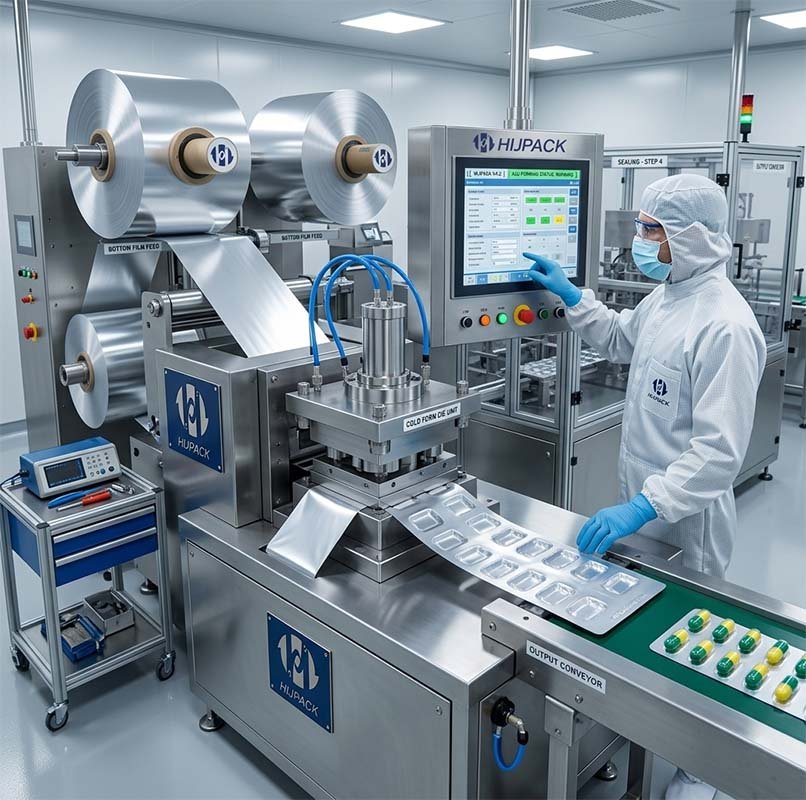
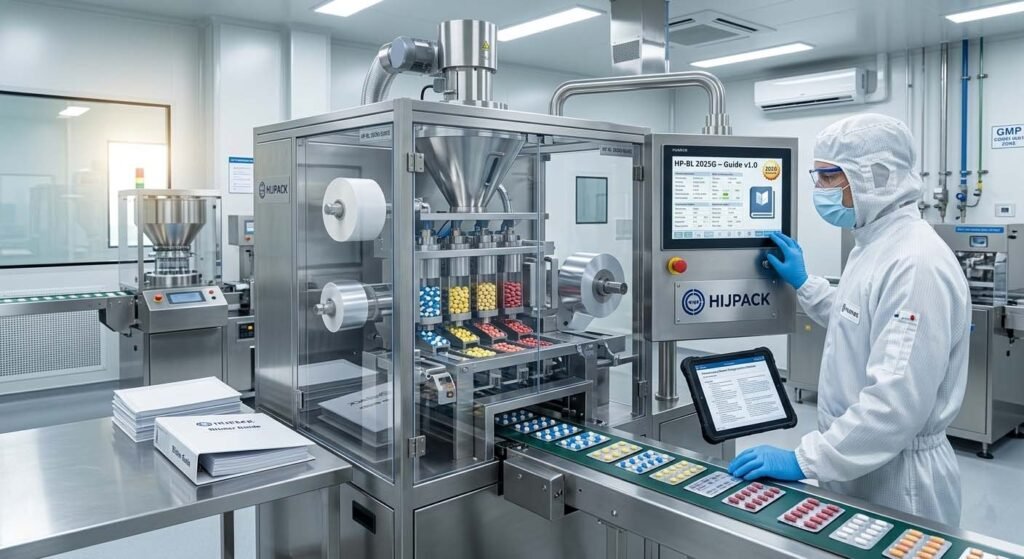
HIJ DPH-300 Alu Alu cold-form blister machine: forming station temperature controlled within ±1°C, cavity depth up to 12 mm, compliant with EU GMP Annex 1 (2022) and WHO TRS 992 Annex 3 requirements.
Common Failure Modes & Forester's Fix
-
🔴 Symptom: Amoxicillin capsules packed in PVC blisters fail dissolution testing at Month 6 stability pull — active content drops below 90% of label claim.
⚙️ Root Cause: PVC lidding film WVTR of 3.5–5.0 g/m²/day allows cumulative moisture uptake exceeding 3.2% w/w inside cavities stored at 30°C / 65% RH, triggering beta-lactam ring hydrolysis.
🔧 Forester's Fix: Switch primary packaging to OPA/Al/PVC cold-form laminate (WVTR <0.5 g/m²/day). Verify barrier performance per ASTM F1249 before process validation. Re-run 6-month accelerated study at 40°C / 75% RH with new material to confirm passing results. -
🔴 Symptom: Cephalosporin tablets show visible yellowing and increased impurity B peak (ring-opened degradant) in HPLC profile within 4 months of production date.
⚙️ Root Cause: Machine forming station temperature inconsistency ±4°C creating micro-pinholes in the aluminum laminate during cold pressing; pinholes undetectable by naked eye but confirmed by helium leak test per USP <1207>.
🔧 Forester's Fix: Verify forming station PLC temperature loop stability — tolerance must be ±1°C. Perform container integrity test (CIT) on 20 randomly sampled blisters from each batch per USP <1207> Vacuum Decay method. Recalibrate temperature sensor if drift exceeds 0.5°C over 8-hour production run. -
🔴 Symptom: Batch recall issued 8 months post-launch: tablets from export market returned with softened texture and off-odor.
⚙️ Root Cause: Sealing station temperature set at 160°C instead of required 180–200°C for Alu Alu lidding foil; inadequate heat-seal bond strength (<15 N/15mm versus required ≥20 N/15mm per ASTM F2824) creating channel defects.
🔧 Forester's Fix: Set sealing station temperature to 185°C ±5°C, dwell time 0.8–1.2 seconds, pressure 280–320 kPa. Perform peel strength test per ASTM F2824 at start-up and every 2 hours during production. Document results in batch record per 21 CFR Part 211.188.
2 ACE Inhibitors and Hygroscopic Cardiovascular Drugs Demand Alu Alu Cold-Form Blister Protection
ACE inhibitors — ramipril, lisinopril, enalapril, perindopril — and certain cardiovascular agents including amlodipine besylate and bisoprolol fumarate classify as Class II or Class III hygroscopic APIs under the European Pharmacopoeia hygroscopicity classification system. Ramipril, for example, absorbs up to 8% w/w moisture when exposed to 75% RH at 25°C over 24 hours, converting partially to its ring-opened diacid degradant (ramiprilat diketopiperazine) at a rate that exceeds 0.15% per month in PVC/PVDC blister environments matching Southeast Asian ambient conditions.
Generic manufacturers supplying markets across Indonesia, Bangladesh, Nigeria, and Brazil — where HIJ Machinery has installed Alu Alu packaging lines — routinely specify cold-form blister packaging for ACE inhibitor products regardless of whether the originator product uses Alu Alu in its country of origin. The rationale is straightforward: a product passing stability testing in a European climate-controlled warehouse may fail within 12 months in a pharmacy shelf environment at 32°C / 80% RH with no packaging modification. Regulators in Brazil (ANVISA) and Indonesia (BPOM) have both issued guidance notes requiring manufacturers to demonstrate that primary packaging provides adequate protection under local worst-case distribution conditions.
Alu Alu blister packaging eliminates this regional variability by reducing moisture ingress to near-zero. The 20 µm aluminum foil layer within the laminate provides an absolute moisture barrier independent of ambient humidity, temperature cycling from 15°C to 45°C, or prolonged transit exposure. For cardiac patients requiring consistent drug bioavailability, packaging-related degradation is not an acceptable quality risk — it is a patient safety issue with regulatory, legal, and commercial consequences.
Common Failure Modes & Forester's Fix
-
🔴 Symptom: Ramipril 10 mg tablets fail related substances limit at 12-month long-term stability (5°C storage) — ramiprilat diketopiperazine impurity exceeds ICH Q3B(R2) identification threshold of 0.10%.
⚙️ Root Cause: Cold-chain breach during air freight transit (temperature excursion to 28°C for 36 hours) caused condensation inside PVC/PVDC blisters — moisture ingress of approximately 1.2% w/w triggered accelerated degradation.
🔧 Forester's Fix: Upgrade to cold-form OPA/Al/PVC blister. Add 2g silica gel desiccant sachet inside secondary carton. Confirm laminate WVTR <0.3 g/m²/day with post-upgrade stability batch. Document temperature excursion protocol per WHO TRS 992 Annex 3 GDP requirements. -
🔴 Symptom: Enalapril 20 mg tablets exhibit visible color darkening (browning) at Month 9 on-market stability check — unacceptable for regulatory renewal.
⚙️ Root Cause: PVC blister film transmits 72% of visible light (400–700 nm range); photocatalytic Maillard-type reaction between API and lactose monohydrate excipient accelerated by retail display under fluorescent lighting (750–1200 lux).
🔧 Forester's Fix: Cold-form Alu Alu laminate blocks 100% of UV and visible light. Additionally specify aluminum lidding foil with minimum 20 µm thickness. Verify light protection per ICH Q1B Photostability Testing protocol after packaging change.
3 Effervescent Tablets and Fizzing Formulations Cannot Be Safely Packed Without Alu Alu Blister Packaging
Effervescent tablet formulations are engineered with an intentional acid-base pair — typically citric acid or tartaric acid combined with sodium bicarbonate or potassium bicarbonate — that reacts violently with water to produce CO&sub2; gas, dissolution acceleration, and consumer-perceived effervescence. This same reaction triggers prematurely inside a blister cavity if moisture permeates the packaging. At 1% w/w moisture uptake, measurable CO&sub2; generation begins inside the sealed cavity; at 2% w/w, internal gas pressure can rupture the foil seal, compromising sterility and product identity. Standard PVC blisters with WVTR of 3.0–8.0 g/m²/day deliver this critical moisture dose within 6–8 weeks in a tropical warehouse — making them commercially and regulatorily unsuitable for effervescent tablet packaging.
Cold-form Alu Alu blister packaging suppresses moisture ingress sufficiently to maintain tablet integrity for the full 24–36 month shelf life. The key specification is not only the laminate WVTR but also the heat-seal bond integrity at the perimeter of each cavity. A seal strength below 15 N/15mm — often caused by incorrect sealing temperature or insufficient dwell time on a poorly calibrated cold-form machine — creates micro-channel defects that allow moisture entry at rates approaching PVC performance. This is why machine quality directly determines product stability outcomes for effervescent formulations: the laminate and the equipment are inseparable variables.
Manufacturers of effervescent vitamin C tablets, antacid preparations, electrolyte supplements, and paracetamol effervescent tablets all require Alu Alu blister packing machines for pharmaceutical packaging capable of maintaining forming station temperature within ±1°C and sealing pressure within ±5 kPa to guarantee cavity hermiticity across the full production batch.
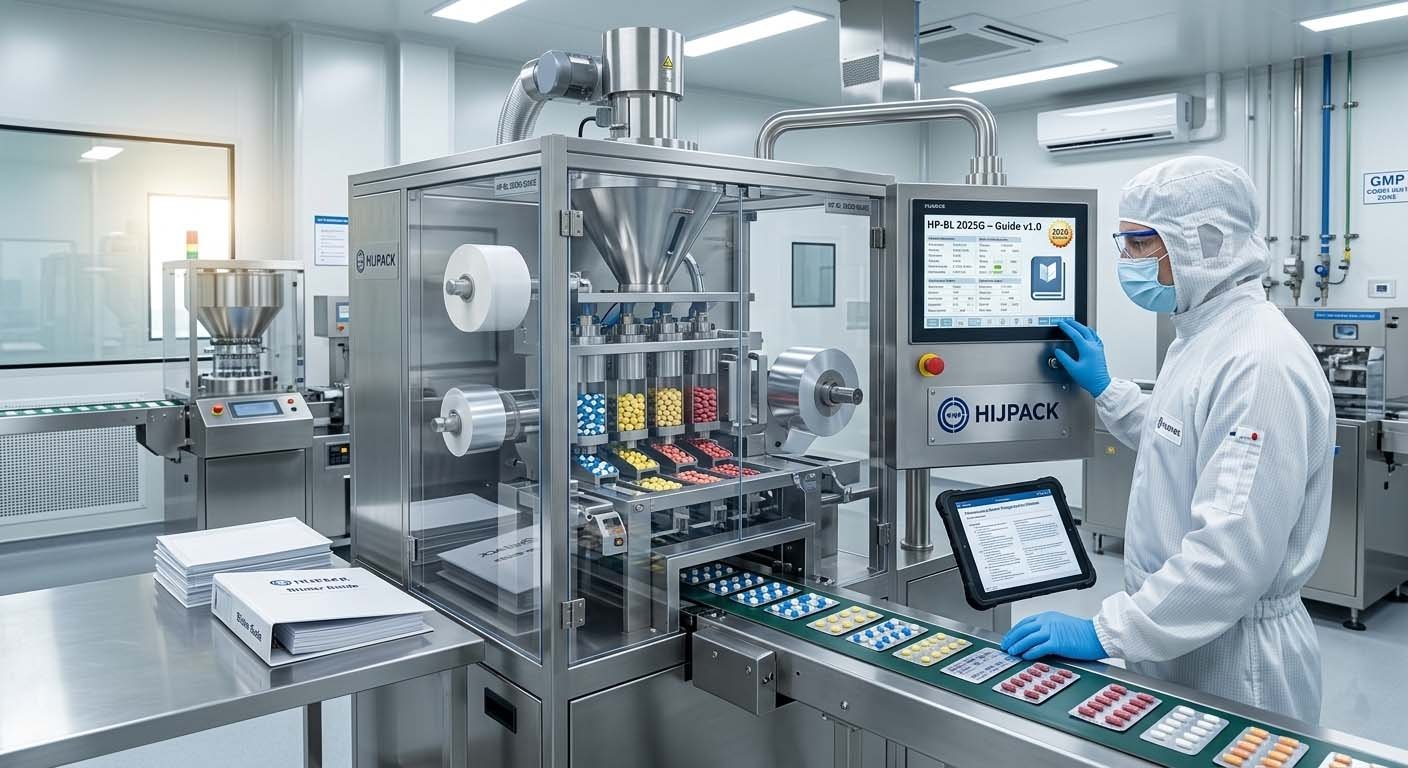
Effervescent tablet packaging requires cold-form Alu Alu barrier performance (WVTR <0.5 g/m²/day) — sealing integrity verified per ASTM F2338 and USP <1207>.
Common Failure Modes & Forester's Fix
-
🔴 Symptom: Effervescent Vitamin C 1000 mg tablets show bloated blister cavities and audible gas release when opened — within 3 months of manufacture.
⚙️ Root Cause: Forming station temperature drift to ±4°C created micro-pinholes (diameter 15–40 µm) in OPA layer; moisture entered at 1.8 g/m²/day — triggering early acid-bicarbonate reaction and CO&sub2; accumulation inside cavity.
🔧 Forester's Fix: Verify forming station temperature PID controller accuracy — recalibrate to ±1°C. Increase OPA layer to 45 µm minimum. Conduct helium leak detection (USP <1207> method B) on 30 cavities per batch before batch release. -
🔴 Symptom: Tablets dissolve incompletely in water — dissolution time increases from 60 seconds to over 4 minutes at Month 4 stability pull.
⚙️ Root Cause: Premature partial reaction of bicarbonate with absorbed moisture (approximately 0.8% w/w) inside cavity reduced available CO&sub2;-generating capacity by 35% — directly reducing in-vivo dissolution rate.
🔧 Forester's Fix: Audit entire cold-form blister line sealing station: set heat-seal temperature 185–195°C, pressure 300 kPa, dwell time 1.0 second. Perform peel seal integrity test per ASTM F2824 (≥20 N/15mm) before production batch start. Add production line real-time seal inspection camera system.
4 Biologics and Enzyme-Based Pharmaceuticals Require Alu Alu Blister Packaging for Protein Integrity
Biologic drug products — including enzyme replacement therapies, pancreatin digestive enzymes, coenzyme-based supplements (such as CoQ10), and certain peptide hormones formulated as oral solid dosage forms — are inherently sensitive to moisture, oxygen, and temperature. Protein structures denature and aggregate when exposed to moisture above 5% relative humidity at the microenvironment level inside a packaging cavity. Oxidative degradation — triggered by oxygen permeation — generates free radicals that cleave peptide bonds and crosslink proteins, reducing potency and generating potentially immunogenic aggregates.
Standard PVC blisters transmit oxygen at rates of 2.0–6.0 cm³/m²/day — sufficient to initiate measurable oxidative degradation in protein-based APIs within 30 days of packaging under normal distribution conditions. Cold-form Alu Alu laminates deliver OTR below 0.1 cm³/m²/day, suppressing oxygen-mediated degradation by a factor of 20–60×. For biologics requiring 24-month stability, this barrier differential is the difference between regulatory approval and failed shelf-life study.
Enzyme-based OTC pharmaceuticals — including alpha-galactosidase, lactase, and amylase formulations — face an additional degradation pathway: water activity (aω) above 0.3 triggers enzyme conformational changes that reduce catalytic activity by 15–40% within 90 days. Manufacturers supplying these products to tropical markets across Southeast Asia, Central America, and West Africa must specify cold-form Alu Alu packaging with validated container integrity per USP <1207> as a condition of market authorization.
Common Failure Modes & Forester's Fix
-
🔴 Symptom: Pancreatin enzyme capsules fail potency specification (lipase activity <85% of label claim) at Month 6 accelerated stability — packaged in PVC/PVDC blister.
⚙️ Root Cause: OTR of PVC/PVDC laminate (0.8 cm³/m²/day) allowed cumulative oxygen exposure of approximately 145 cm³/m² over 180 days; oxidative enzyme denaturation reduced lipase activity by 18%.
🔧 Forester's Fix: Switch to OPA/Al/PVC cold-form blister (OTR <0.1 cm³/m²/day). Purge blister cavities with nitrogen gas (O&sub2; residual <0.5%) before sealing if enzyme is extremely oxygen-sensitive. Re-run 6-month accelerated stability to confirm lipase activity ≥90% at specification endpoint. -
🔴 Symptom: Coenzyme Q10 softgels show visible orange-to-brown color shift and rancid odor at Month 9 on-market — consumer complaints filed in three markets.
⚙️ Root Cause: Lipid matrix of softgel formulation underwent peroxidation catalyzed by light transmission through transparent PVC blister; peroxide value increased from 2.5 to 28.4 mEq/kg over 9 months under retail lighting conditions.
🔧 Forester's Fix: Implement cold-form Alu Alu blister (100% light blocking, OTR <0.1 cm³/m²/day). Specify aluminum lidding foil 20 µm minimum. Add 0.05% BHA antioxidant to softgel formulation as secondary stability measure. Confirm compliance with ICH Q1B photostability requirements. -
🔴 Symptom: Lactase enzyme tablets tested in real-world market sample (18 months post-production) show 35% potency loss versus certificate of analysis — product collected from pharmacy in Jakarta, Indonesia.
⚙️ Root Cause: Pharmacy storage at 32°C / 78% RH; PVC blister allowed moisture ingress driving water activity above 0.45 at tablet core — catalytic activity loss confirmed by enzyme kinetics assay.
🔧 Forester's Fix: Specify Alu Alu blister with validated WVTR <0.5 g/m²/day. Include labeled storage instruction “Store below 30°C” and add silica gel desiccant insert (2g) inside secondary carton. File packaging change supplement with BPOM and provide 12-month real-time stability data.
5 Cannabis-Based Medical Products in Humid Climates Require Alu Alu Blister Packaging for Cannabinoid Stability
Pharmaceutical-grade cannabis-derived products — including CBD (cannabidiol) tablets, THC:CBD oral solid formulations, and dronabinol capsules — contain lipophilic cannabinoid APIs that degrade through two primary pathways: oxidation (converting CBD to cannabinol, CBN, with altered pharmacological activity) and hydrolysis of ester-linked formulation components when moisture exceeds 2% w/w. Both pathways accelerate in tropical climates where cannabis-based medical products are increasingly being prescribed — including Thailand, Colombia, Brazil, and the Philippines — all markets with ambient conditions regularly exceeding 85% RH during wet season.
Regulatory frameworks for pharmaceutical cannabis — including WHO's Expert Committee on Drug Dependence (ECDD) guidance and national agency regulations in Thailand (FDA Thailand) and Colombia (INVIMA) — require manufacturers to demonstrate product stability under local distribution conditions. A stability study conducted at ICH Zone IVb conditions (30°C / 75% RH, 12 months) using cold-form Alu Alu packaging has become the de facto industry standard for market authorization submissions in ASEAN and Latin American markets. Regulators in these regions treat failure to specify Alu Alu packaging for moisture-sensitive cannabis formulations as a documentation deficiency requiring immediate corrective action.
Beyond stability, child-resistant and tamper-evident packaging requirements in pharmaceutical cannabis markets — particularly under EU Falsified Medicines Directive (2011/62/EU) anti-tampering provisions and US state-level cannabis pharmacy regulations — align naturally with cold-form Alu Alu blister design. The rigid aluminum cavity structure provides inherent tamper resistance that PVC thermoformed blisters cannot replicate.
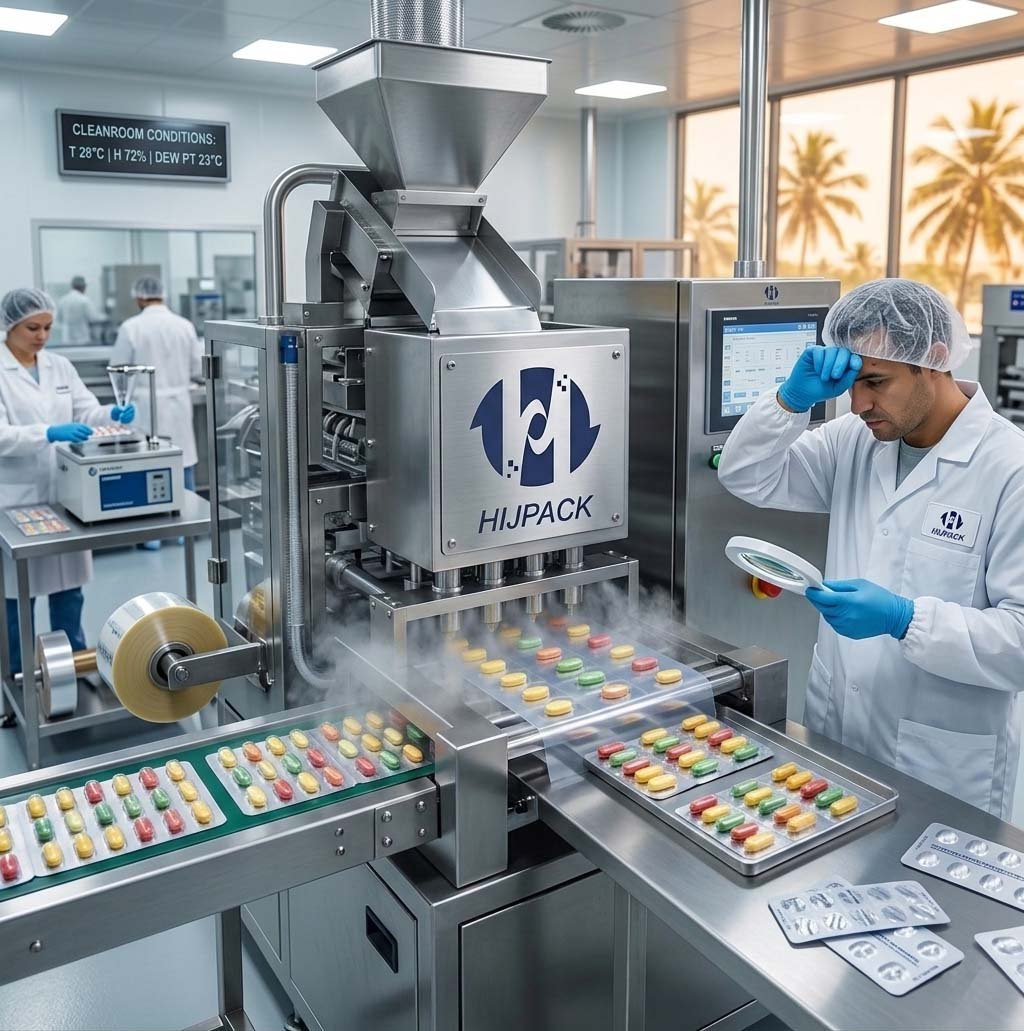
Tropical climate humidity testing validates Alu Alu barrier performance for cannabis-based medical product stability in ASEAN and Latin American markets (ICH Zone IVb: 30°C / 75% RH).
Common Failure Modes & Forester's Fix
-
🔴 Symptom: CBD tablets show 22% potency loss (HPLC) at Month 6 stability pull — accelerated condition 40°C / 75% RH. Product recalled from Thai hospital pharmacy.
⚙️ Root Cause: PVC/PVDC blister OTR of 0.6 cm³/m²/day allowed cumulative oxygen exposure driving CBD oxidation to CBN at rate of approximately 3.5% per month under accelerated conditions.
🔧 Forester's Fix: Switch to OPA/Al/PVC cold-form Alu Alu blister (OTR <0.1 cm³/m²/day). Nitrogen-purge cavities before sealing (residual O&sub2; <0.3%). Add 0.02% α-tocopherol antioxidant to tablet formulation. Conduct repeat 6-month accelerated study per ICH Q1A(R2) to confirm CBD ≥90% of label claim. -
🔴 Symptom: Dronabinol capsules (Schedule III) fail tamper-evidence inspection at market surveillance — PVC blisters resealed without detection by distributor-level counterfeiting.
⚙️ Root Cause: PVC thermoformed blisters can be re-formed with heat above 70°C and resealed — providing no reliable physical tamper evidence. Alu Alu cold-formed cavities cannot be re-pressed without leaving visible deformation marks.
🔧 Forester's Fix: Mandatory switch to cold-form Alu Alu blister. Specify breakage-pattern lidding foil (void/pattern printed aluminum) per EU Falsified Medicines Directive anti-tampering requirements. Apply 2D DataMatrix serialization code to each blister per EU FMD Article 54a.

“I visited a generic drug manufacturer in Bangladesh whose entire batch of cephalosporin capsules failed stability testing — not because of formulation issues, but because they used the wrong blister material. They had switched from cold-form Alu Alu to PVC/PVDC purely to cut material costs by approximately $0.008 per blister. The resulting batch recall, stability programme restart, and regulatory resubmission cost them over $380,000 USD — forty times what they saved on materials. The hidden trap nobody tells you about: even when manufacturers correctly specify cold-form blister, they sometimes purchase the cheapest machine available. Cheap Alu Alu machines from unvetted suppliers often lack the precise forming-station temperature control needed for consistent cavity depth. They run ±4–6°C temperature variance instead of the required ±1°C, creating micro-pinholes invisible to the naked eye but catastrophic for barrier integrity — and the failure only shows up six months post-launch during market stability surveillance.”
“The strategic advice I give every pharmaceutical manufacturer: before selecting your cold-form blister line, demand full FAT (Factory Acceptance Test) documentation and verify the PLC control logic supports forming temperature tolerances within ±1°C. At HIJ, our Alu Alu blister packing machines are engineered with European-standard forming stations and full turnkey integration capability — so your packaging line passes SAT and cGMP audit the first time, not the third.”
Real Consequences of Choosing the Wrong Blister Packaging Material
Selecting PVC or PVC/PVDC blisters for products that require cold-form Alu Alu barrier performance triggers a cascade of regulatory, commercial, and patient safety failures that compound over time. The consequences are not hypothetical: they repeat across generic pharmaceutical manufacturers in emerging markets with documented regularity.
“Cold-form Alu Alu blister packaging isn’t optional for moisture-sensitive, light-degradable, or oxygen-reactive drug products — it is a regulatory and stability non-negotiable. The six months between product launch and stability failure may be the most expensive packaging decision a manufacturer ever makes.” — Forester Xiang, HIJ Machinery | 20 Years Pharmaceutical Packaging Engineering
| Product Category | PVC Blister | PVC/PVDC Blister | Alu Alu (Cold-Form) | Consequence If Wrong Material Used |
|---|---|---|---|---|
| Beta-Lactam Antibiotics (Amoxicillin, Cephalosporins) |
Fail | Marginal | Required | Beta-lactam ring hydrolysis >0.5% degradant at Month 6 (ICH Zone IVb); batch recall; re-registration required |
| ACE Inhibitors & Hygroscopic Cardiovascular (Ramipril, Lisinopril) |
Fail | Conditional | Required | Moisture-driven ring-opening degradation; ANVISA/BPOM rejection; potency OOS at distribution endpoint |
| Effervescent Tablets (Vitamin C, Antacids, Electrolytes) |
Fail | Fail | Required | Premature CO&sub2; generation; blister cavity rupture; dissolution failure; consumer safety incident |
| Biologics & Enzyme APIs (Pancreatin, CoQ10, Lactase) |
Fail | Fail | Required | Oxidative denaturation; potency <85% label claim within 6 months; regulatory non-compliance |
| Cannabis-Based Medical Products (CBD, THC:CBD, Dronabinol) |
Fail | Fail | Required | CBD oxidation to CBN (potency loss 15–22% at Month 6); tamper vulnerability; market authorization rejection |
- Batch recall costs: Average pharmaceutical batch recall in Southeast Asia costs USD $180,000–$500,000 including logistics, regulatory fees, and production loss — compared to an Alu Alu material premium of approximately $0.012–$0.020 per blister over PVC.
- Stability programme restart: A failed 6-month accelerated stability study requires full restart with corrected packaging, adding 6–18 months to market authorization timeline and $60,000–$150,000 in analytical costs.
- Regulatory action: WHO Prequalification Programme and STRINGENT regulatory authorities (EMA, US FDA) require immediate CAPA (Corrective and Preventive Action) submission within 15 business days of identifying packaging-related OOS results per 21 CFR Part 211.198.
- Patient safety events: Sub-potent beta-lactam antibiotics in resource-limited settings contribute directly to treatment failure and antimicrobial resistance — a WHO-declared global health emergency with traceable origin in inadequate packaging specification.
Common Failure Modes & Forester's Fix
-
🔴 Symptom: Post-launch stability surveillance (18 months) detects out-of-specification (OOS) potency across 3 SKUs simultaneously — regulatory authority issues import alert.
⚙️ Root Cause: Packaging material change from Alu Alu to PVC/PVDC not properly risk-assessed — no updated stability study conducted before commercial launch. Packaging technical assessment file (PTF) did not reflect material change per ICH Q10 pharmaceutical quality system requirements.
🔧 Forester's Fix: Implement packaging change control procedure per ICH Q10 and 21 CFR Part 211.68. Any change from Alu Alu to lower-barrier material requires minimum 6-month accelerated stability data under ICH Zone IVb before implementation. Revert to Alu Alu immediately; file CAPA within 15 business days per 21 CFR Part 211.198. -
🔴 Symptom: Manufacturer switches to lower-cost cold-form blister machine supplier — passes initial FAT but fails WHO GMP audit 14 months later on forming temperature documentation.
⚙️ Root Cause: Supplier machine PLC did not store forming temperature trend data per 21 CFR Part 11 electronic records requirements; no audit trail for temperature excursions during production. WHO auditor cited EU GMP Annex 11 (Computerised Systems) non-compliance.
🔧 Forester's Fix: Specify 21 CFR Part 11-compliant PLC with secure audit trail, electronic batch record capability, and forming temperature trend logging at minimum 1-minute intervals. Verify data integrity controls during FAT. HIJ Alu Alu machines include full 21 CFR Part 11 compliance package as standard.
How to Specify the Right Alu Alu Blister Machine for Your Product and Market
Selecting a cold-form blister machine is a six-dimensional engineering and regulatory decision — not a commodity equipment purchase. The following specification checklist distills 20 years of packaging line qualification experience across 40+ pharmaceutical manufacturing facilities in Southeast Asia, Latin America, the Middle East, and Africa.
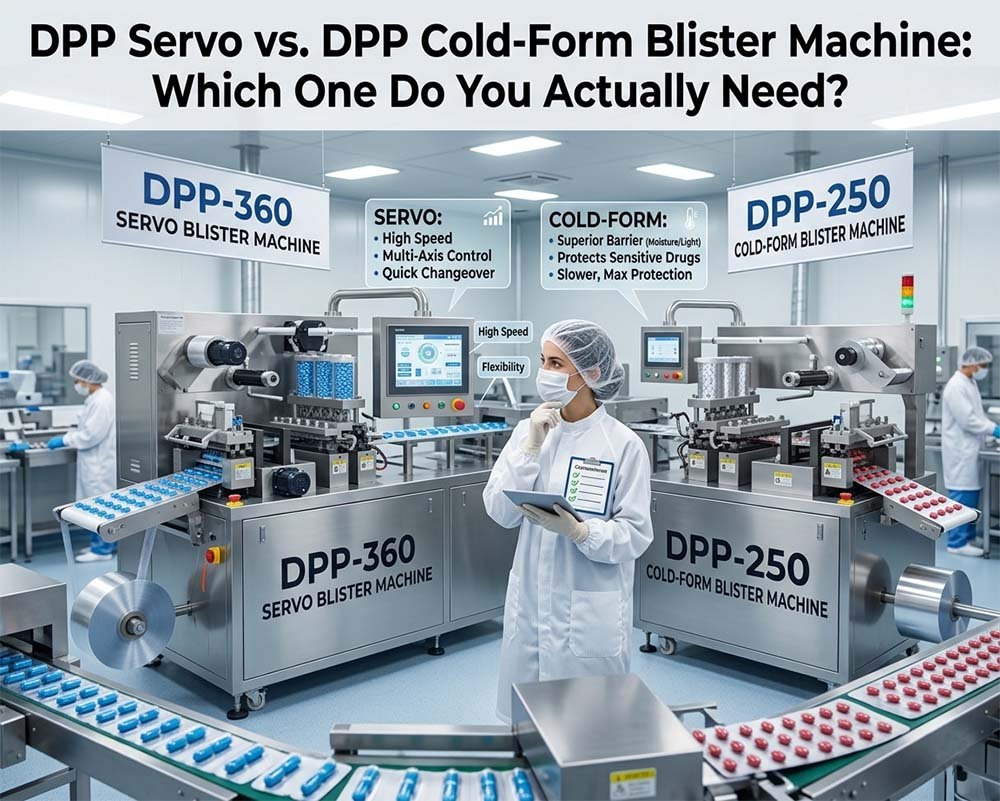
DPP servo thermoforming (left) versus HIJ DPH-300 cold-form Alu Alu blister machine (right) — specification comparison for moisture-sensitive pharmaceutical products requiring barrier performance.
-
Define Barrier Specification Before Machine Specification Calculate required WVTR based on API hygroscopicity class and target shelf life. For products in this article, specify WVTR <0.5 g/m²/day as a minimum non-negotiable. Obtain supplier laminate test certificates per ASTM F1249 before ordering tooling.
-
Verify Forming Station Temperature Control: ±1°C Tolerance Demand forming station PID controller specification sheet showing temperature range (typically 50–80°C for OPA/Al/PVC), zone count, and documented tolerance ±1°C. This single parameter determines whether micro-pinholes form in the aluminum layer. Request FAT IQ/OQ protocol including temperature uniformity mapping across the full forming width.
-
Specify Cavity Depth Range for Your Dosage Form Cold-form Alu Alu machines typically achieve cavity depths of 6–12 mm. Tablets up to 8 mm height require minimum 9 mm cavity depth (1 mm clearance each side). Capsules (size 0–00) require 10–12 mm cavity depth. Confirm tooling changeover time — HIJ machines support quick-change tooling with changeover in under 30 minutes.
-
Require 21 CFR Part 11 and EU Annex 11-Compliant PLC The machine PLC must provide secure electronic audit trail, forming temperature trend logging (≥1 data point per minute), and role-based user access control. This is a prerequisite for FDA 21 CFR Part 11, EU GMP Annex 11, and WHO TRS 992 Annex 3 compliance. Verify during FAT, not after installation.
-
Demand FAT and SAT Protocol Before Commercial Order A credible Alu Alu machine supplier will provide a documented FAT (Factory Acceptance Test) protocol covering: forming temperature mapping, seal integrity per ASTM F2824, cavity dimension verification, reject system validation, and alarm function test. At HIJ, every machine ships with complete FAT documentation and an on-site SAT support commitment — ensuring your first production batch is also your validation batch, not a learning exercise.
-
Evaluate Turnkey Integration with Upstream and Downstream Equipment A cold-form blister line for pharmaceutical production requires integration with the blister packing machine platform, downstream blister cartoning machine, and end-of-line case packing automation. Line speed synchronization, reject handling, and batch record integration across all equipment is a turnkey engineering responsibility — not something to improvise post-installation.
The HIJ Alu Alu blister packing machine series is engineered from the ground up for pharmaceutical-grade cold-form packaging of the five product categories documented in this article. With European-standard forming stations, Siemens PLC with full 21 CFR Part 11 audit trail capability, and a turnkey integration framework covering filling, sealing, cartoning, and case packing, HIJ delivers what we call “Project Certainty” — your packaging line passes cGMP audit and SAT the first time.
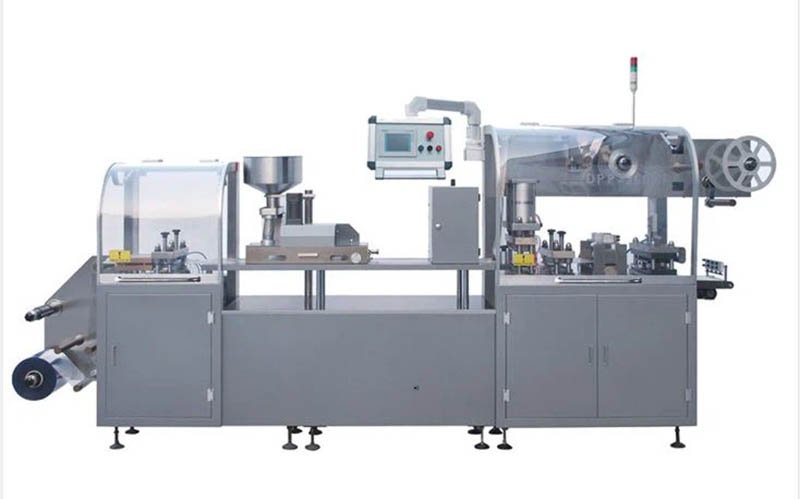
HIJ cold-form Alu Alu blister packing machine — GMP-compliant forming station with ±1°C temperature control, cavity depth 6–12 mm, Siemens PLC with 21 CFR Part 11 audit trail. Deployed across Southeast Asia, Latin America, and the Middle East.
Common Failure Modes & Forester's Fix
-
🔴 Symptom: Purchased cold-form machine passes FAT at supplier factory — fails WHO GMP audit 8 months later because forming temperature data was stored in volatile PLC memory and wiped during power outage.
⚙️ Root Cause: Machine PLC used RAM-based data logging without backup battery or server sync — non-compliant with 21 CFR Part 11.10(c) data integrity and backup requirements.
🔧 Forester's Fix: Require SCADA-integrated or server-backed data logging during machine specification phase. FAT protocol must include deliberate power interruption test to verify data integrity retention. HIJ machines use non-volatile SSD data storage with automatic server backup as standard configuration. -
🔴 Symptom: Production output drops from 180 blisters/minute to 110 blisters/minute within 3 months of installation — forming tool showing premature wear.
⚙️ Root Cause: Cold-form tooling manufactured from standard 45 steel instead of specified D2 tool steel with hard chrome plating — OPA/Al laminate abrasion caused dimensional drift >0.3 mm in cavity geometry within 2 million cycles.
🔧 Forester's Fix: Specify cold-form tooling in D2 tool steel, HRC 60–62, with hard chrome or PVD titanium nitride coating. Verify tooling material certificate at FAT. Establish tooling dimensional check at 500,000 cycle intervals using go/no-go gauge; replace when cavity depth drift exceeds ±0.2 mm.
Frequently Asked Questions: Products That Require Alu Alu Blister Packaging
❓ Which products require Alu Alu blister packaging?
Products that require Alu Alu blister packaging include beta-lactam antibiotics (amoxicillin, cephalosporins), ACE inhibitors and hygroscopic cardiovascular drugs (ramipril, lisinopril), effervescent tablets (vitamin C, antacids, electrolytes), biologics and enzyme-based pharmaceuticals (pancreatin, CoQ10, lactase), and cannabis-based medical products in tropical climates. All five categories contain APIs that degrade upon exposure to moisture above 40% RH, oxygen above 0.5%, or UV/visible light — conditions that standard PVC or PVC/PVDC blisters cannot reliably prevent over a 24-month shelf life.
❓ What is the WVTR of Alu Alu blister packaging versus PVC blister?
Cold-form Alu Alu blister laminate (OPA / Al / PVC) achieves a WVTR below 0.5 g/m²/day, while standard PVC blister film reaches 3.0–8.0 g/m²/day and PVC/PVDC laminate reaches 0.4–3.0 g/m²/day. The 6–10× barrier superiority of Alu Alu makes it the only commercially viable primary packaging for moisture-sensitive APIs requiring near-zero moisture ingress over a 24-month shelf life at ICH Zone IVb conditions (30°C / 75% RH). WVTR values are measured per ASTM F1249.
❓ Can effervescent tablets be packed in PVC blister packaging?
No. Effervescent tablets cannot be safely or commercially packaged in PVC blisters because PVC transmits moisture at 3.0–8.0 g/m²/day, which triggers premature acid-bicarbonate CO&sub2; generation inside the cavity within 6–8 weeks in tropical storage conditions. At 1% w/w moisture uptake, measurable gas pressure builds inside the sealed cavity; at 2% w/w, seal rupture occurs — compromising product identity and patient safety. Only cold-form Alu Alu blister packaging delivers the WVTR below 0.5 g/m²/day required to prevent premature reaction throughout the 24-month shelf life.
❓ What forming station temperature is required for Alu Alu blister machines?
Cold-form Alu Alu blister machines require forming station temperature control within ±1°C across a typical operating range of 50–80°C (depending on OPA/Al/PVC laminate thickness, typically 45/20/60 µm total). Temperature variance exceeding ±2°C causes micro-cracking of the aluminum foil layer, creating pinholes 15–40 µm in diameter that are invisible to the naked eye but detectable by USP <1207> vacuum decay container integrity testing. These pinholes reduce effective WVTR barrier to near PVC performance levels, making machine temperature control accuracy the single most critical specification for cold-form blister equipment selection.
❓ Is Alu Alu blister packaging required by GMP regulations?
Alu Alu blister packaging is not mandated by name in GMP regulations, but EU GMP Annex 1 (2022), Section 8.13 and 21 CFR Part 211.94(a) both require primary packaging to protect drug products from degradation under defined storage conditions throughout the approved shelf life. For the five product categories covered in this article, regulatory agencies consistently require manufacturers to demonstrate that their chosen packaging material provides adequate moisture, oxygen, and light protection — and for tropical markets under ICH Zone IVb conditions, cold-form Alu Alu blister packaging is the industry standard that satisfies this requirement without requiring additional justification.
Specify the Right Alu Alu Blister Machine for Your Product — Get Expert Guidance from HIJ
HIJ Machinery has deployed cold-form Alu Alu blister packaging lines for beta-lactam antibiotics, hygroscopic cardiovascular drugs, effervescent tablets, biologics, and pharmaceutical cannabis products across Southeast Asia, Latin America, the Middle East, and Africa. Our machines are engineered to ±1°C forming temperature precision, include full 21 CFR Part 11 & EU GMP Annex 11-compliant PLC, and ship with complete FAT/SAT documentation. Tell us your product, your market, and your output requirement — we will specify the right solution.