Opens in a new tab
Get Quote
HIJ Machinery · Pharmaceutical secondary packaging

Pharmaceutical Cartoning Machine

Configure the carton around your blister pack, bottle or syringe tray.

HIJ reviews the product feeder, leaflet handling, carton closure, inspection and line interfaces together. Send your pack definition to request a proposed loading route, configuration boundary and itemised quotation.

Blister packsBottlesSyringe traysLeaflets & inserts
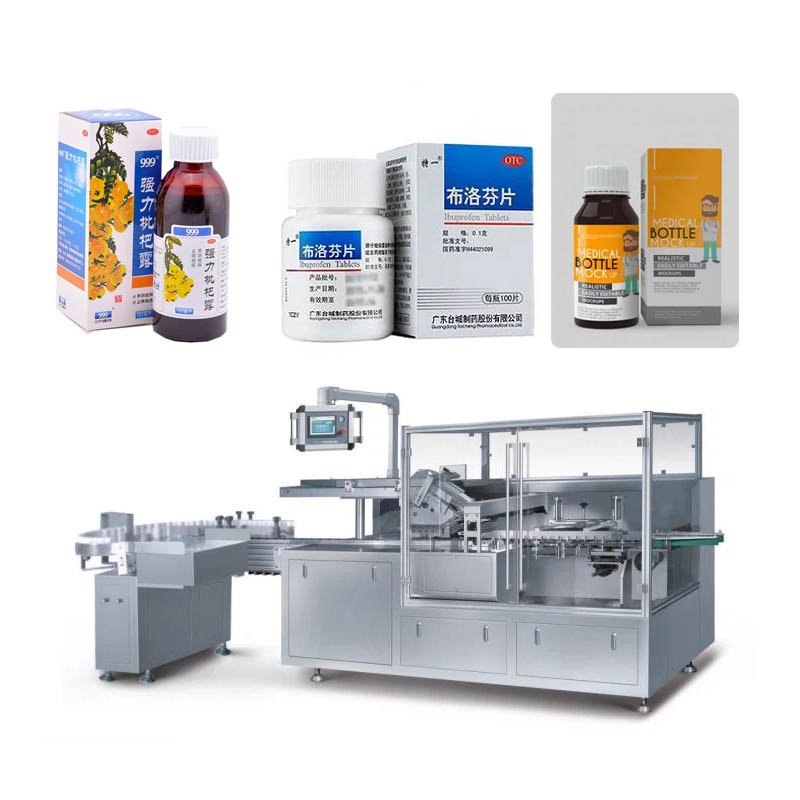
HIJ automatic cartoner platform for pharmaceutical cartoning machine configuration review
HIJ automatic cartoner platform reference. The feeder, format parts and pharmaceutical pack configuration are reviewed against your actual samples.
Start with the finished pack

Which pharmaceutical cartoning route fits your product?

A pharmaceutical cartoner must control the product presentation, pack count and patient information through loading and closure. Choose the application route before comparing nominal speed.

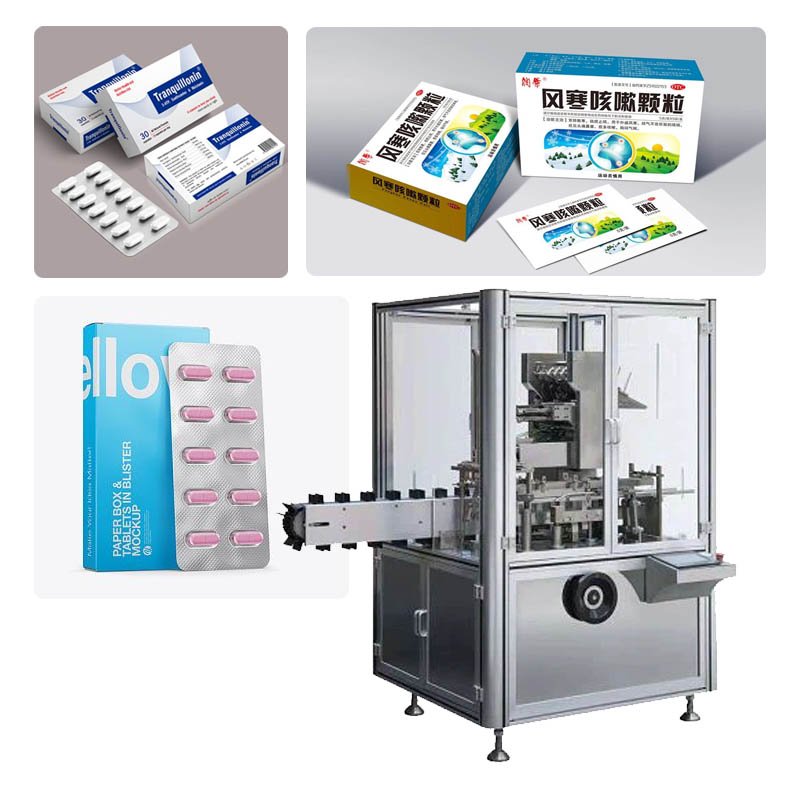
Automatic cartoner reference for prepared blister packs and leaflet insertion
01

Prepared blister packs, tubes and sealed sachets

Define the orientation, number of units per carton, grouping method, leaflet format and insertion clearance. Upstream blister discharge needs a reviewed transfer and buffer.

Review horizontal end-load cartoners
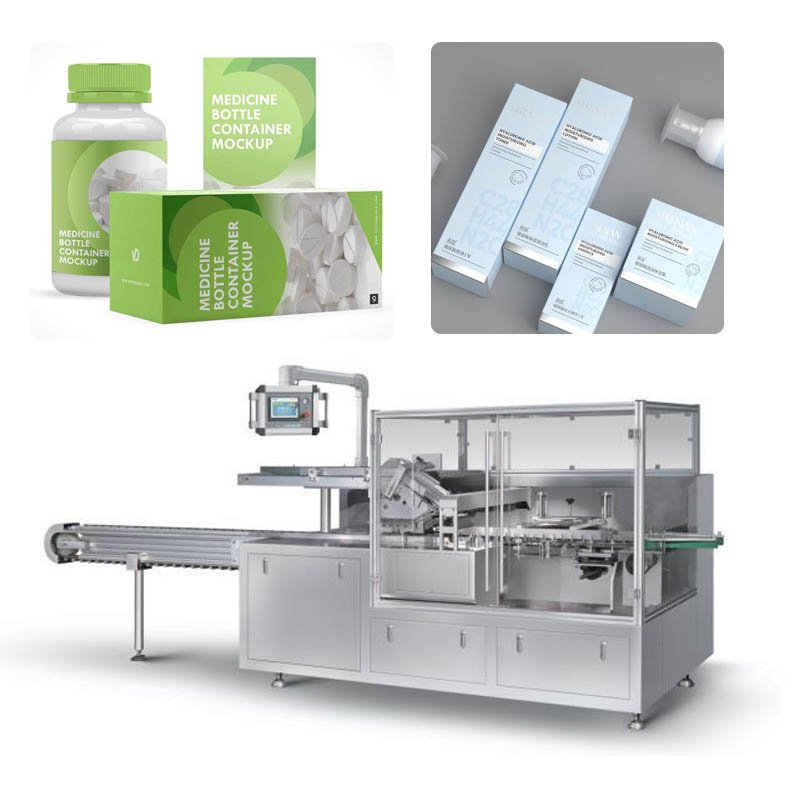
HIJ bottle cartoning machine for pharmaceutical bottle feeding review
02

Bottles with a controlled infeed

Review bottle dimensions, cap and label protection, orientation, spacing and any insert or measuring accessory. The bottle feeder and cartoner handoff belong in the same proposal.

Review the bottle cartoning configuration
HIJ integrated blister cartoning line reference for syringe tray packaging
03

Pre-filled syringe and ampoule trays

The documented PBL-400S-400SF route combines tray forming, product loading, transfer and cartoning. Review tray geometry, product handling, inspection and the complete line boundary.

Review the integrated blister cartoning line

This page concerns carton packaging and the defined tray-to-carton route. Primary filling, sterile processing and container closure need their own equipment and acceptance scope.

Select by pack, not model name alone

Which pharmaceutical cartoning route fits your product?

Start with the product presented to the cartoner. A finished blister card, a loose bottle and a glass syringe that still needs a tray require different feeding and transfer arrangements.

Swipe the table horizontally to compare all columns.

Your incoming productConfiguration to reviewDecision that changes the quotation
Finished tablet or capsule blister cardsCard transfer, counting or stacking, leaflet insertion and carton loading.Cards per carton, stack height, cut-card orientation and available upstream buffer.
Filled, closed bottlesControlled bottle infeed, orientation, leaflet or accessory handling and cartoning.Bottle stability, label protection, cap clearance and whether an insert or spoon is required.
Pre-filled syringes or ampoules requiring traysReview PBL-400S-400SF tray forming, product loading, transfer and cartoning as an integrated scope.Tray geometry, glass handling, sealed or unsealed presentation and the upstream labeling interface.
Prepared tubes or sealed sachetsProduct-specific orientation, grouping and loading into a defined carton.Product stiffness, grouping pattern, insertion clearance and feeder trial results.

Send the difficult formats as well as the usual one

Include the smallest and largest cartons, the thickest leaflet and the most difficult product presentation in the format list. A carton within a published dimension range may still need different guides, a feeder or dedicated format parts. Ask which formats share tooling and which require separate parts and trials.

Request a pack-fit review
One documented platform reference

WZTS-130: compare the published range with your real pack

The WZTS-130 specification provides a starting point for an automatic cartoning machine for pharma. Its reference values do not establish accepted output for every product, leaflet and carton combination.

Swipe the table horizontally to compare all columns.

Reference itemWZTS-130 documented valueWhat to confirm for your project
Cartoning speed30–80 cartons/minGood cartons at discharge, run duration, stops, rejects and actual materials.
Carton dimensions, L × W × H(70–200) × (30–150) × (13–70) mmApproved carton drawing, tolerance, closure and product insertion clearance.
Carton board weight300–350 g/m²; depends on carton sizeProduction samples, stiffness, creases, print finish and opening behaviour.
Leaflet paper and unfolded size60–70 g/m²; (80–310) × (90–210) mmFinal leaflet stock, layout, fold pattern and verification requirements.
Leaflet folding1–4 foldsRequired fold sequence, insert orientation and carton compatibility.
Compressed-air referenceWorking pressure ≥0.6 MPa; 120–160 L/minAvailable pressure and flow at the machine, air treatment and additional option demand.
Power reference380 V, 50 Hz; main motor 1.5 kWSite supply and total connected load. Main-motor power is not the whole configured line demand.
Machine envelope and net weight3100 × 1100 × 1550 mm; approximately 1400 kgFinal configured layout, feeder space, access, maintenance and installation route.

Review the complete WZTS-130 automatic cartoning machine specification. For a different output or motion requirement, compare the high-speed cartoning route against the same pack definition.

The values above belong to WZTS-130. Do not transfer them to a bottle feeder, another cartoner model or the integrated PBL line. Final configuration and commitments must be confirmed in the project quotation.

Define each quality function

Specify leaflet, coding and rejection controls

Terms such as “inspection system” do not identify the defect being detected. Name the required check, response and evidence so HIJ can review the exact scope.

Product and patient-information checks

  • Required product count, orientation and permitted handling.
  • Missing or doubled product and insert conditions.
  • Leaflet presence, format and identity checks where specified.
  • Carton loading, closure and damage criteria.

Code and reject ownership

  • Print content, code location and verification method.
  • Disposition of unreadable or incorrect codes.
  • Reject confirmation, collection and reconciliation method.
  • Required records, data interfaces and recovery after stops.

Coding, vision, serialization and data exchange require a defined hardware, software and interface scope. Their inclusion is confirmed in the proposal; a PLC brand or generic machine label does not establish these functions.

The handoff determines the line

From product infeed to accepted finished cartons

Use this functional sequence to define the cartoning boundary. The order of individual mechanisms depends on the chosen machine. Primary blister or tray operations belong upstream unless expressly included in an integrated proposal.

  1. Present and group the product. Establish orientation, count, spacing and the transfer from the upstream machine.
  2. Prepare the carton and insert. Open the carton and fold or feed the specified leaflet; define material replenishment and missing-material responses.
  3. Load the agreed pack. Confirm the product and insert fit without unacceptable damage or interference.
  4. Close and identify the carton. Specify tuck-in or adhesive closure and any batch printing, verification or data exchange.
  5. Inspect, reject and discharge. Name acceptance checks, reject confirmation, recovery and the downstream handoff.

Upstream information to provide

  • Discharge height, direction, product spacing and supply rate.
  • Continuous or batch arrival and expected supply interruptions.
  • Permitted accumulation and product handling limits.
  • Existing stop/run signals and responsibility for transfer equipment.

Downstream information to provide

  • Conveyor height, accepted-carton orientation and next operation.
  • Required response to blockage and rejected cartons.
  • Stop/run signals, interface ownership and restart sequence.
  • Available floor space and access for people and maintenance.

Ask the layout and interface list to identify which supplier provides each conveyor, buffer, signal and control function. An integrated line name does not by itself define these responsibilities.

Engineering example

Size the line around accepted cartons

State your required good cartons per shift, product count and planned running time. Then account for changeovers, supply interruptions and quality losses within an agreed calculation boundary.

Read the cartoning machine selection guide

A transparent planning calculation

Example assumptions: 14,400 accepted cartons per shift, 360 planned production minutes after breaks and changeovers, and an assumed combined production factor of 0.80 for remaining stops and quality losses.

Planning running rate = 14,400 ÷ (360 × 0.80) = 50 cartons/min.

This is a worked example, not an HIJ performance result. Avoid counting the same time loss twice. A rated range containing 50 does not prove this output; test the actual pack, leaflet, supply and rejection conditions during FAT.

Make the proposal testable

Agree the FAT and document list before ordering

Acceptance conditions

  • Approved product, carton and leaflet samples for the agreed formats.
  • Run duration and accepted-output definition.
  • Specified missing-product, insert, code and reject challenges.
  • Upstream starvation, downstream blockage, stop and recovery conditions.
  • Changeover endpoints and evidence to record.

Supplier documentation scope

  • Layout, utility requirements and agreed interface list.
  • Manuals, drawings, component list and software backup scope.
  • FAT protocol, records, deviations and closure responsibilities.
  • Named DQ, IQ or OQ support deliverables where contracted.
  • Site commissioning, training, spare parts and qualification responsibilities.

Equipment qualification and product/process validation are managed within the buyer’s quality system and agreed project responsibilities. Request a document index; do not assume a complete executed qualification package is included with the base machine.

Review the whole format family

Plan changeovers, line clearance and maintenance access

What changes between your SKUs?

List changes in product count, carton, leaflet and closure. Ask for a format-parts schedule separating adjustments, replacement parts and settings. Clarify whether a feeder change or additional trial is required for a new product family.

Define changeover timing from the last accepted carton of one format to stable accepted output of the next, including the agreed setup, material checks and clearance steps. Compare suppliers using the same start and end points.

What must your team access?

Review the proposed layout for removal of residual products and packaging materials, cleaning access, guide removal, inspection and lubrication boundaries. Match these requirements to your site procedures and product handling needs.

Request the recommended spare-parts list, wear-part identification, preventive-maintenance tasks and operator training scope. Confirm site support, documentation language and responsibilities in the quotation.

No fixed changeover time, cleaning classification, support response time or language availability is promised here. These need confirmation for the configured equipment and agreed project scope.

Compare equivalent configurations

What changes a pharmaceutical cartoning machine quotation?

A base-cartoner price is incomplete when your project also needs a product feeder, leaflet handling, inspection or line integration. Compare quotations against one pack definition and one acceptance scope.

Swipe the table horizontally to compare all columns.

Quotation lineAsk the supplier to identify
Base machine and formatsCartoner model, closure, agreed formats and included format parts.
Feeding and insertsProduct feeder, grouping, transfer, leaflet folding and any accessories.
Inspection and identificationEach detector, coder, verification device, reject function and data interface.
Trials and documentationSample trials, agreed FAT, document list and contracted qualification support.
Delivery and site workPacking, freight terms, installation, commissioning, training, warranty and exclusions.

A useful first inquiry can be short

Send a product photo, count per carton, carton dimensions and required accepted output. Add your destination and whether the machine is standalone or connected. Mark unknown items rather than guessing them.

For detailed configuration, add the carton drawing, representative leaflet and format list. Agree sample quantities and shipping instructions with HIJ before sending physical materials.

Prepare my quotation request

What to request in the reply

  • Proposed loading route and the reason it fits your pack.
  • Included items, options, assumptions and open questions.
  • Trial or FAT evidence needed before output is committed.
  • Current commercial terms and the next sample-review step.

You are requesting a project review. Compatibility, price, schedule and support scope remain subject to confirmation.

Pharmaceutical cartoning machine buyer questions

Which pharmaceutical products can be cartoned?

The relevant routes include prepared blister packs, bottles, tubes, sealed sachets and defined syringe or ampoule trays. Product geometry, count, orientation, carton and leaflet determine the feeder and loading method. Confirm compatibility using representative samples.

Is a pharmaceutical cartoner the same as a blister packing machine?

No. A cartoner erects, loads and closes a folding carton. Blister forming and primary packaging are separate operations unless an explicitly defined integrated line includes them. The PBL-400S-400SF route must be reviewed as a complete tray-forming, loading and cartoning project.

What speed should I request?

Request accepted good cartons under the agreed product, leaflet, carton, line-supply and test conditions. WZTS-130 has a documented reference range of 30–80 cartons/min; that range alone does not prove sustained accepted output for your pack.

Are coding and serialization included as standard?

Define the required code, verification, reject and data interfaces in the URS. Ask the quotation to identify included devices, software, options, exclusions and acceptance evidence. Do not assume serialization or regulated data functions from a generic PLC or machine description.

Does the machine itself make my process GMP compliant?

A machine label does not establish the compliance of the buyer’s packaging process. Review the configured design, cleaning and access, controls, documentation, qualification and validation responsibilities against the requirements of the intended application and quality system.

What is needed for a pharmaceutical cartoning machine quotation?

Send the product and pack count, carton drawing and closure, leaflet or insert specification, required formats, accepted-output target, upstream and downstream interfaces, coding and inspection requirements, documentation scope and destination. Identify unknown items for configuration review.

Can one cartoner run several product formats?

Potentially, subject to feeder, carton, leaflet and tooling compatibility. Provide the complete format list and ask for a matrix showing shared parts, adjustments, replacement parts and trial requirements. A dimension range alone is not confirmation that every format will run.

Can the cartoner connect to my existing blister or labeling machine?

Review the discharge presentation, elevations, direction, rates, buffers, stop/run signals and transfer ownership. Provide the upstream and downstream equipment drawings. Final integration and controls must be included in the proposed line layout and interface scope.

Can I get a price before every detail is finalized?

Ask for an initial budgetary proposal with the pack, output, destination and assumed scope clearly stated. Its price and exclusions should identify open items. A confirmed project quotation needs the agreed formats, options, acceptance conditions and service scope.

Start with your real product

Request a pharmaceutical cartoning machine proposal

Share your pack and production requirement. HIJ can review a loading concept and the scope that should be included in a quotation.

  • Product photo or dimensioned drawing and count per carton.
  • Carton drawing, closure and leaflet or insert specification.
  • Accepted output, format list and line interfaces.
  • Required inspection, FAT, documents and site-service scope.

Commercial price, lead time, warranty, documentation and service commitments are confirmed in the current project quotation.

Open the HIJ project inquiry page

Prepare your pack brief

Optional fields. Leave unknown items blank and send the inquiry when ready.

Let's Design Your Production Line

Share your requirements and I'll personally craft a solution that maximizes your efficiency and profitability.