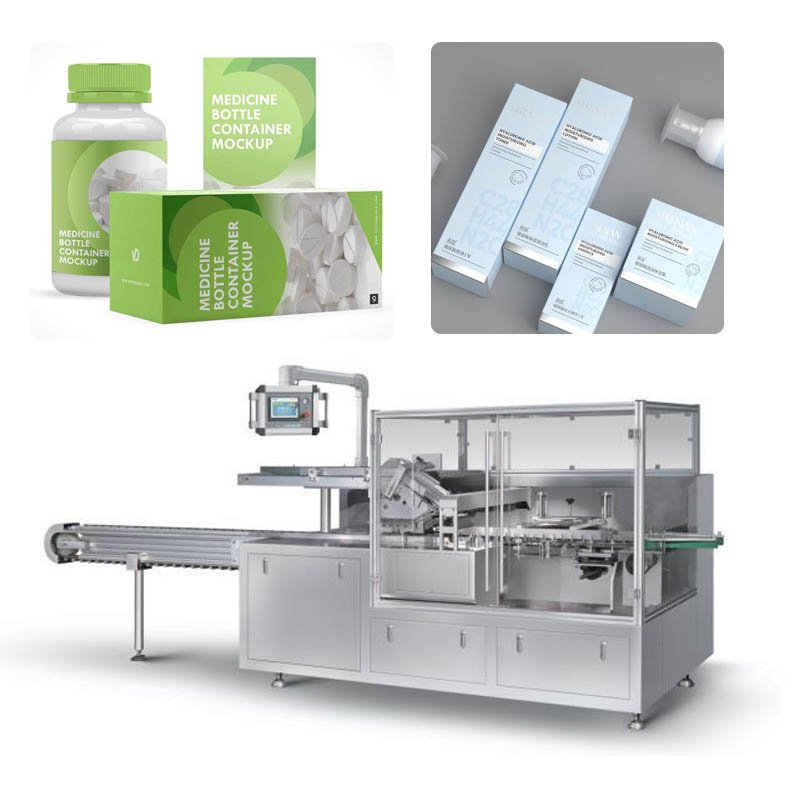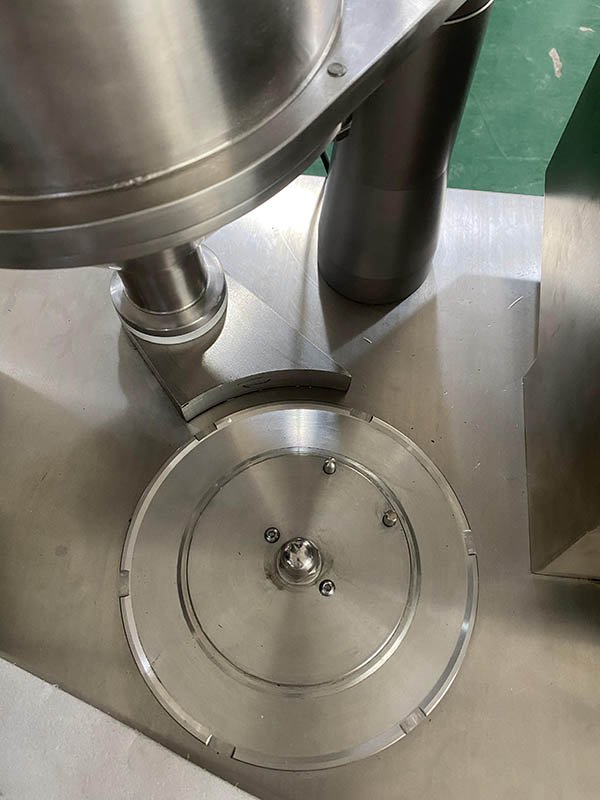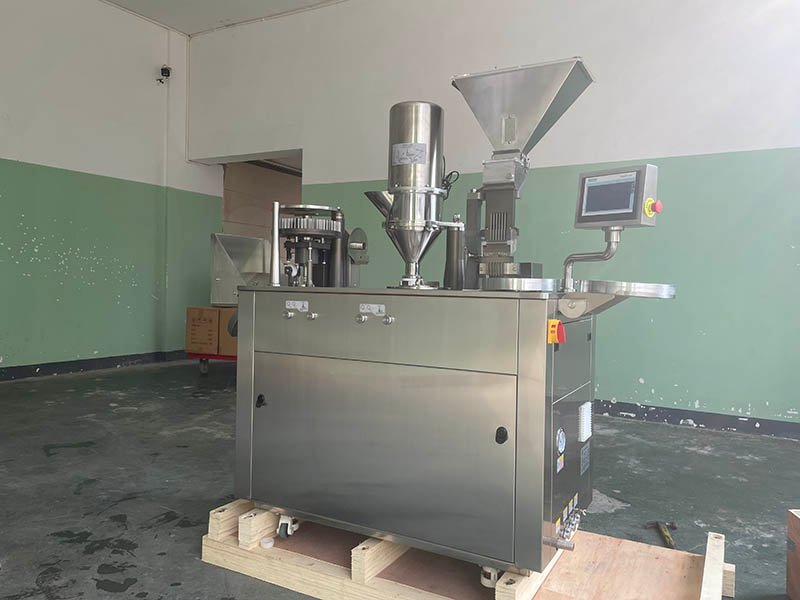
To choose a cartoning machine, match seven factors in this order: product format (flat products need a horizontal end-load cartoner; upright or counted products need a vertical top-loader), required speed (intermittent motion covers 10–80 cartons/min; continuous motion covers 80–200+), carton size range, feeding method, compliance and documentation needs, line integration, and total budget. Entry-level automatic cartoners such as HIJ’s WZTS-130 start at USD 30,000 FOB — typically 40–60% below comparable European machines.
Key Takeaways
- Product shape decides loading direction. Blisters, tubes and sachets → horizontal end-load. Bottles, jars, vials and counted items → vertical top-load.
- Speed decides motion type. Up to 80 cartons/min, intermittent motion is cheaper and changes over faster. Above 80/min, you need continuous motion.
- Verify the carton size envelope before anything else. The WZTS-130 handles cartons from 70×30×13 mm to 200×150×70 mm; the vertical WZTS-60 goes up to 180×180×300 mm.
- Budget realistically: USD 30,000–38,500 FOB for a standard HIJ automatic cartoner; add USD 4,000–9,500 per option (bottle feeder, leaflet folder, hot-melt unit).
- For pharma, buy documentation, not just steel: insist on IQ/OQ/PQ protocol templates and material certificates — your facility performs the validation.
- Think one step downstream: a cartoner that integrates with your blister line and case packer saves more than any discount on the machine itself.
Buying the wrong cartoning machine is an expensive mistake that usually reveals itself in month two, not on delivery day: the carton magazine that can’t hold your new SKU, the feeder that jams on your soft sachets, the validation binder that turns out to be three photocopied pages. After helping buyers across pharmaceutical, food and cosmetic plants in 30+ countries specify cartoning machines, we’ve condensed the decision into seven steps. Work through them in order — each step eliminates machines from your shortlist, so by step seven you’re comparing two or three real candidates instead of forty spec sheets.

Secondary packaging is where product meets carton — choosing the machine starts with the product, not the machine.
The 7-Step Cartoning Machine Decision Framework
Match Your Product Format to a Loading Direction
This single decision eliminates roughly half the market, so make it first. Cartoning machines load product in one of two directions, and your product’s geometry — not your preference — dictates which.
Horizontal (end-load) cartoners push flat or stackable products sideways into a horizontally held carton. They are the right choice for blister cards, tubes, sachets, stick packs, soap bars and pouches. Because the push-in motion is mechanically simple, horizontal machines run faster: HIJ’s horizontal cartoning machine (WZTS-130 platform) runs 30–80 cartons per minute.
Vertical (top-load) cartoners hold the carton upright and drop product in from above. They suit anything that must stay upright or be counted into the box — bottles, vials, jars, coffee capsules, hardware kits. HIJ’s vertical cartoning machine (WZTS-60) runs 10–30 cartons per minute with a weight/count feeder.
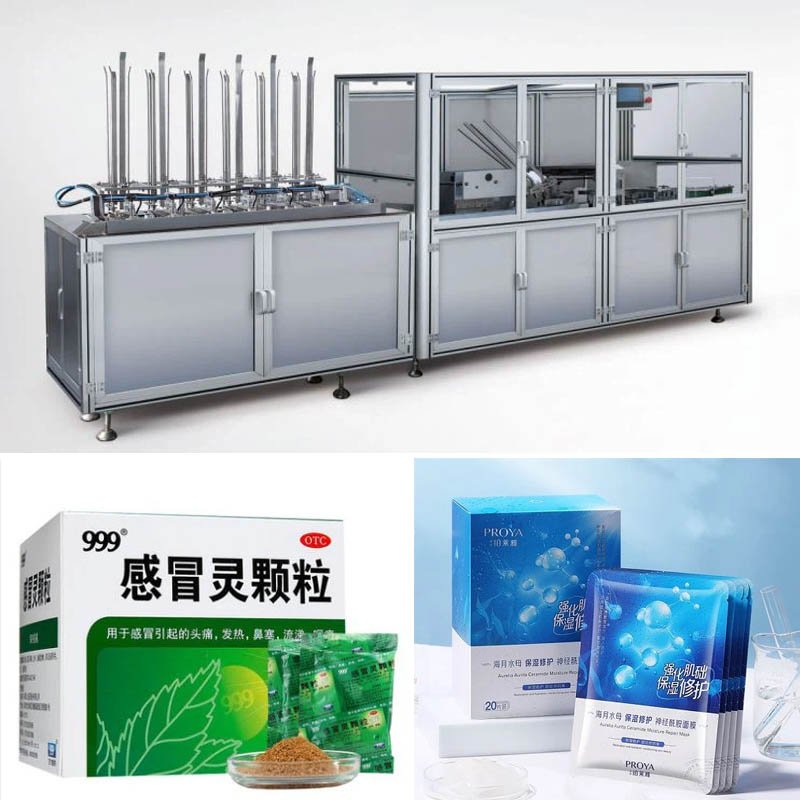
Horizontal end-load: flat products, 30–80 cartons/min
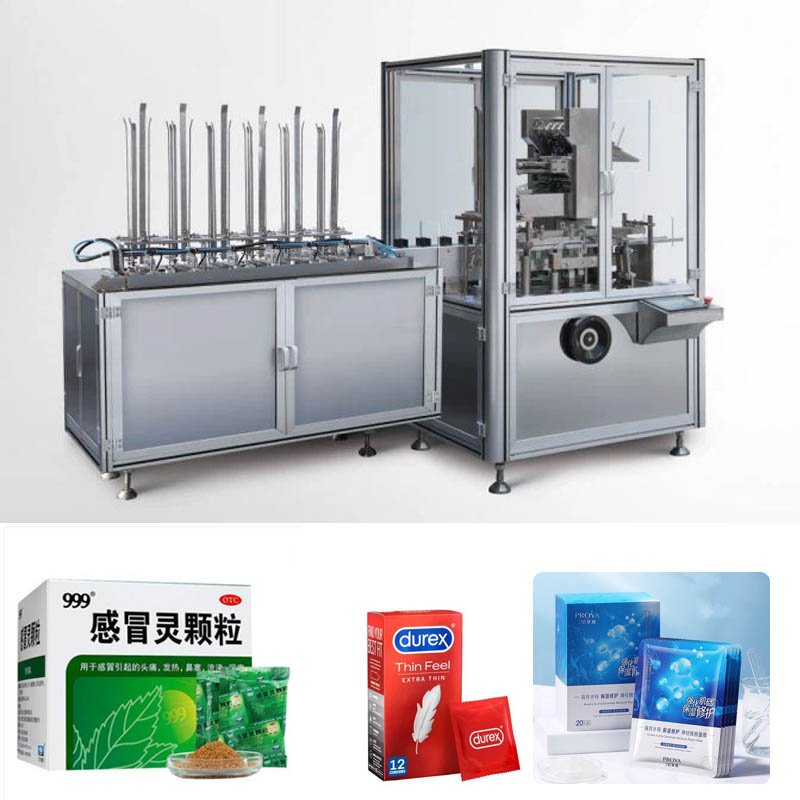
Vertical top-load: upright & counted products, 10–30 cartons/min
If you’re torn between the two — for example, a flat pouch that could technically load either way — the deciding factors are usually speed (horizontal wins) versus count flexibility (vertical wins). Our horizontal vs vertical cartoning machine guide and the companion top-load vs side-load comparison go deeper on the edge cases.
Set Your True Speed Requirement — Then Pick the Motion Type
Buyers routinely over-specify speed, and it’s the most expensive mistake on this list. Calculate your real requirement from annual volume, not ambition:
Required cartons/min = (annual units ÷ working days ÷ shift hours ÷ 60) ÷ expected efficiency (use 0.75)
A plant producing 5 million cartons a year on one 8-hour shift, 250 days a year, needs about 42 cartons per minute at 75% real-world efficiency — comfortably inside intermittent-motion territory. The motion type then follows:
| Factor | Intermittent Motion | Continuous Motion |
|---|---|---|
| Speed range | 10–80 cartons/min | 80–200+ cartons/min (custom lines 200–400+) |
| Investment | Lower — from USD 30,000 | Higher — quoted per configuration |
| Changeover | Faster, simpler format parts | Longer, more format-dedicated |
| Best for | Multi-SKU plants, moderate volume | Long runs of one or two SKUs |
| HIJ platform | WZTS-130 / WZTS-60 | ZH-200 high-speed cartoning machine |
If your calculation lands between 60 and 90 cartons/min, be honest about SKU count: a plant running eight formats will lose more output to continuous-motion changeovers than it gains in cycle speed.
Verify the Carton Size Envelope and Sealing Style
Every cartoner has a fixed size envelope, and cartons outside it simply won’t run — no retrofit fixes this economically. Pull the dimensions of your smallest and largest carton (including any planned SKUs for the next three years) and check them against the machine’s published range:
| Machine | Carton Size Range (L×W×H) | Carton Stock |
|---|---|---|
| WZTS-130 (horizontal) | 70–200 mm × 30–150 mm × 13–70 mm | 300–350 g/m² |
| WZTS-60 (vertical) | 40×30×50 mm min — 180×180×300 mm max | 350 g/m² |
Also decide the closure style now, because it changes the machine build: tuck-in closure is reversible and standard for pharma and cosmetics, while hot-melt glue gives tamper evidence and higher line speeds but adds a glue unit (a Meler hot-melt system adds USD 9,500 on the WZTS-130). Our tuck-in vs hot-melt carton sealing guide covers when each makes sense.
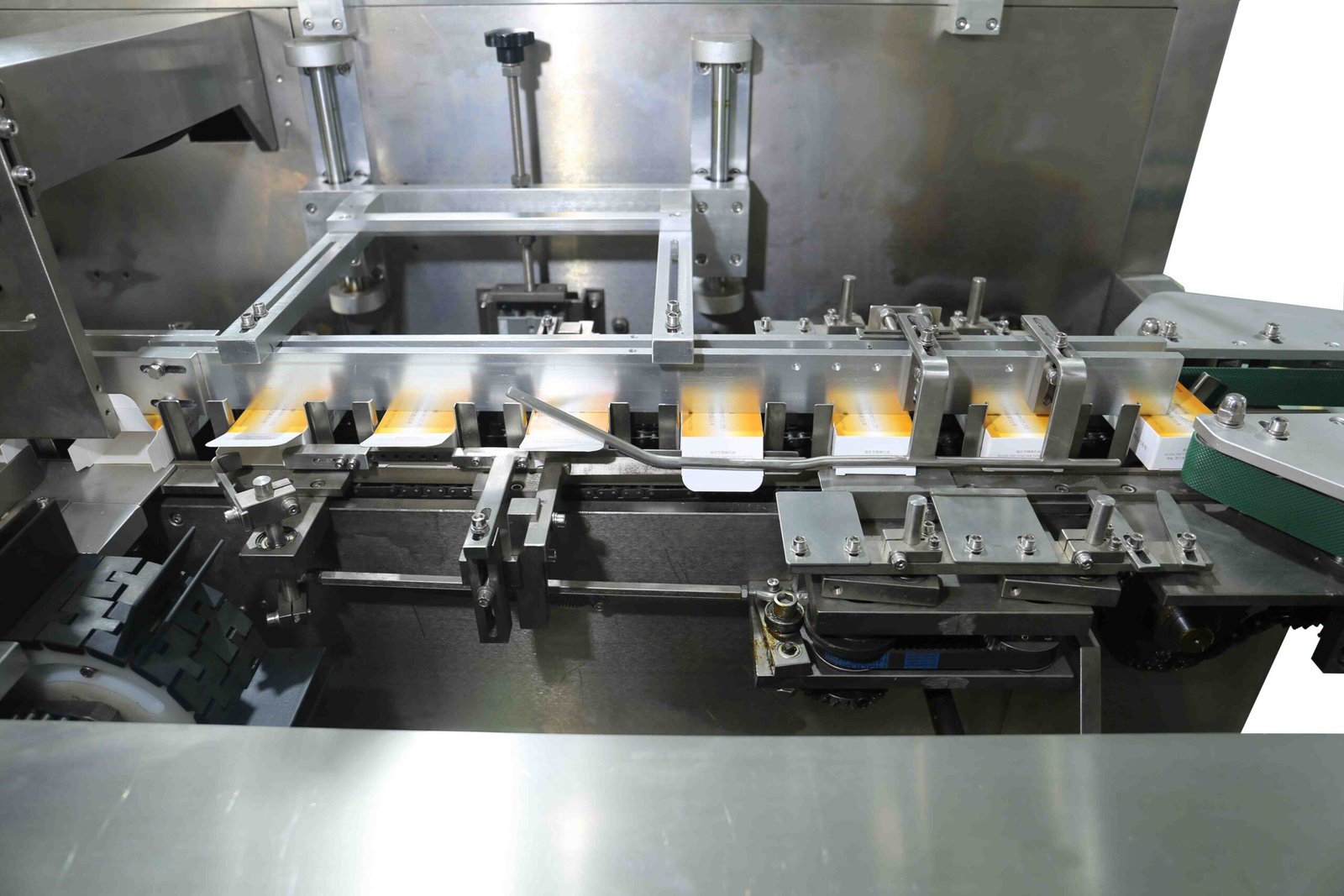
Tuck-in (tongue-and-slit) closure on a WZTS-130 — reversible, standard for pharma and cosmetics.
Specify Feeding — Where 80% of Real-World Jams Happen
The cartoner itself rarely causes downtime; the product infeed does. Match the feeder to your product and be specific in your enquiry:
Blister cards
Stack-magazine blister feeder, synchronised directly with the blister machine on integrated lines. See the blister cartoning machine.
Bottles
Rotary bottle feeder that singulates and orients round bottles (adds USD 4,000 on the WZTS-130). See the bottle cartoning machine.
Soft & odd shapes
Sachets, pouches and irregular products need custom pockets or robotic pick-place — covered in our irregular products guide.
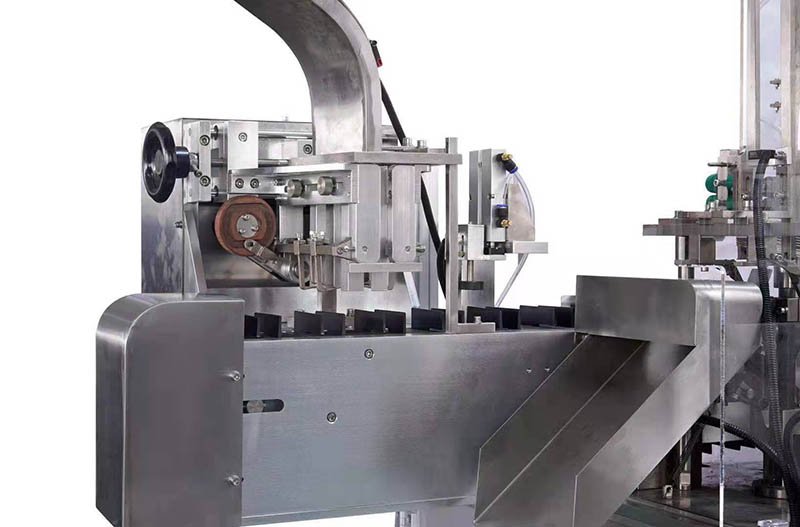
Blister stack feeder on the WZTS-130
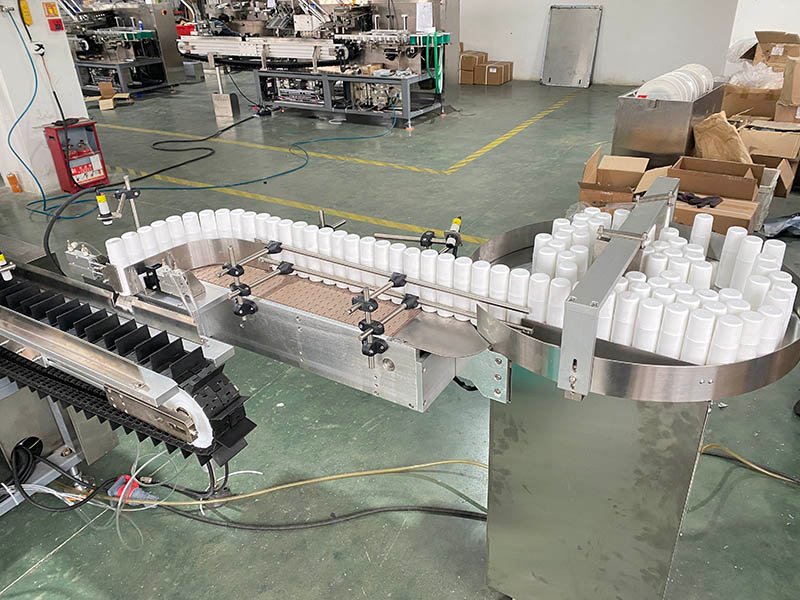
Rotary bottle feeder — singulates and orients round bottles
If your carton needs a leaflet, specify it now too: the WZTS-130’s leaflet folding device (USD 4,000 option) handles leaflets of 60–70 g/m² paper, unfolded sizes from 80×90 mm up to 310×210 mm, with 1–4 folds.
Define Compliance and Documentation Requirements
For pharmaceutical and nutraceutical plants, the paperwork is as much a part of the purchase as the machine. A properly specified pharma cartoner should offer:
- cGMP-ready design — 304/316 stainless steel product-contact parts, tool-free access for cleaning, no paint or corrodible surfaces in the product zone.
- CE-marked electrical and safety build, manufactured under an ISO 9001 quality system.
- IQ/OQ/PQ protocol templates and material certificates supplied with the machine — remember, the manufacturer provides the documentation, but your facility performs the validation.
- In-line verification — missing-product detection with automatic carton reject, leaflet-presence sensing, and batch/date coding at the sealing station.
Treat any supplier claiming their machine is “GMP certified” or “FDA approved” with caution — equipment isn’t certified under those frameworks; facilities and processes are. What you can legitimately demand is a cGMP-ready design plus the document package that makes your own qualification straightforward. Our guides on cGMP requirements for cartoning machines and pharmaceutical cartoning machine validation break down exactly what to request.
Decide: Standalone Machine or Integrated Line
A standalone cartoner with manual infeed is the cheapest ticket in, and perfectly sensible for a first automation step. But if a blister machine, tube filler or checkweigher sits upstream or downstream, integration is where the payback lives: one synchronised line eliminates the buffer tables, the WIP trays and the two operators shuttling product between machines.
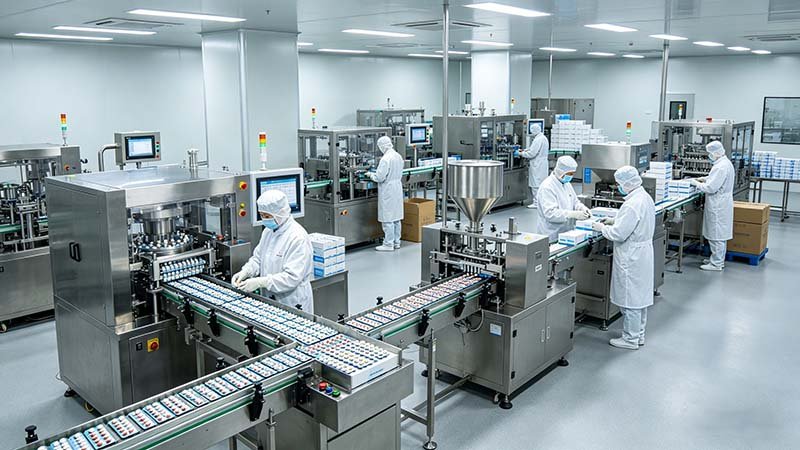
An integrated blister-to-cartoner line: no buffer tables, no manual transfer, one control point.
Ask every candidate supplier two questions: can your cartoner synchronise with my existing upstream machine’s PLC? and who owns the interface if it doesn’t work? Single-supplier turnkey lines exist precisely to make the second question disappear.
Budget on Total Cost, Not Sticker Price
Published FOB starting prices give you the anchor — then build the real number from options, freight, installation and spares:
| Item | Typical Cost (USD, FOB) |
|---|---|
| WZTS-130 automatic/horizontal cartoner | 30,000 |
| WZTS-60 vertical cartoner | 38,500 |
| WZTS-130B bottle cartoning configuration | 34,000 |
| Bottle feeder system (option) | +4,000 |
| Leaflet folding device (option) | +4,000 |
| Meler hot-melt glue unit (option) | +9,500 |
| Fully loaded turnkey configuration | ≈47,500 |
Comparable European cartoners typically run 2–3× these figures, which is where the widely quoted 40–60% saving on Chinese-built machines using the same Siemens/Schneider/Omron core components comes from. Standard commercial terms to expect: T/T 40% deposit and 60% before delivery, 45 working days lead time, 12-month warranty with free quality-related spare parts. The full breakdown — including what drives quotes on high-speed and custom lines — is in our cartoning machine price guide.
Quick Selector: Which Cartoning Machine for Which Product?
| Your Product | Recommended Type | HIJ Machine | Speed |
|---|---|---|---|
| Tablet/capsule blister cards | Horizontal end-load, blister feeder | Blister Cartoning Machine | 30–80/min |
| Tubes, sachets, soap, pouches | Horizontal end-load | Automatic Cartoning Machine WZTS-130 | 30–80/min |
| Syrup, dropper & serum bottles | Horizontal with bottle feeder | Bottle Cartoning Machine WZTS-130B | 30–80/min |
| Jars, vials, counted items, coffee capsules | Vertical top-load | Vertical Cartoning Machine WZTS-60 | 10–30/min |
| High-volume blister lines (1–2 SKUs) | Continuous motion | High-Speed Cartoning Machine ZH-200 | 80–200/min |
| Foil-wrapped pouches (condoms etc.) | Fold-and-load specialist | Condom Cartoning Machine HIJ-CD120 | Per configuration |
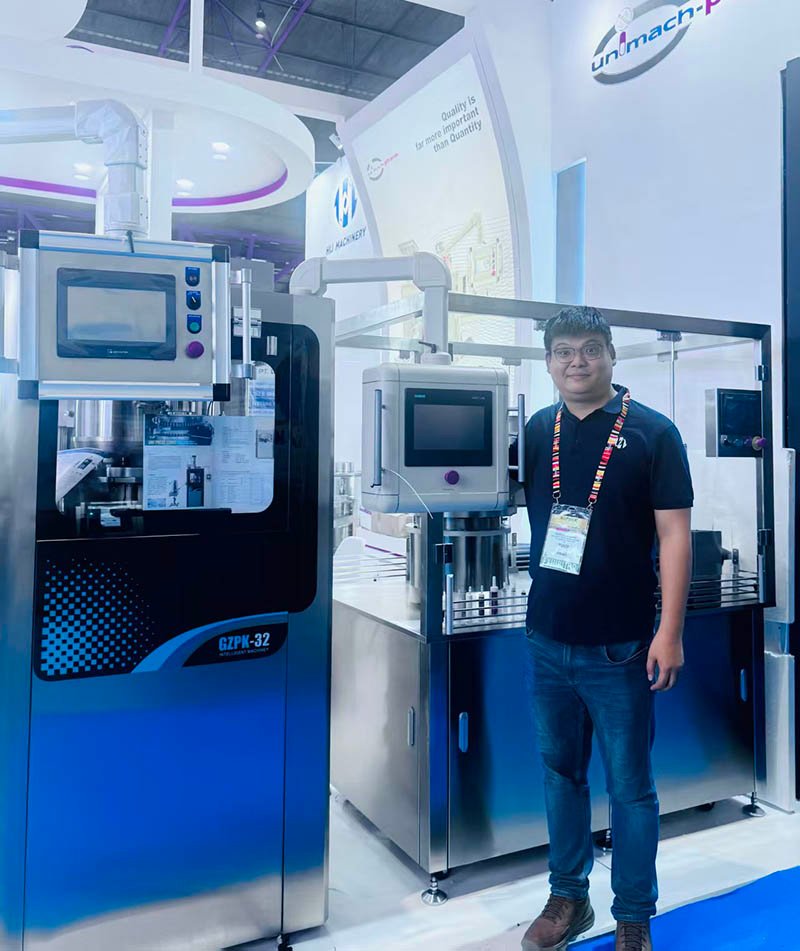
“The most common mistake I see is buyers specifying the machine for the product they run today, in the carton they use today. A customer in Colombia in 2022 bought a cartoner sized exactly to their single 50 ml bottle carton — eighteen months later a retailer demanded a 100 ml format and the size envelope couldn’t take it. Always specify against your smallest and largest carton for the next three years, and leave 10–15% margin on each dimension.“
Forester Xiang · Founder & Chief Engineer, HIJ Machinery · 20+ years, 100+ facility audits across 30+ countries
5 Mistakes That Turn a Good Machine Into a Bad Purchase
1. Buying speed you’ll never run
A 200/min continuous-motion cartoner running at 35/min wastes capital and changes over slower than the intermittent machine you should have bought. Calculate real demand first (Step 2).
2. Ignoring the feeder
Comparing cartoners on carton-station specs while treating infeed as an afterthought — then discovering your soft sachets need a feeder the quoted machine doesn’t have.
3. Sizing to today’s carton only
The size envelope is fixed at build time. New SKUs, retail multipacks and export formats all arrive eventually; specify the envelope for the next three years.
4. Accepting “certified” claims at face value
Equipment can be CE-marked and cGMP-ready with an ISO 9001-manufactured build — but “GMP certified” or “FDA approved” machines don’t exist. Judge suppliers on the documentation package instead.
5. Forgetting changeover economics
If you run 5+ formats, minutes-per-changeover matters more than cartons-per-minute. Ask for a live format change during the factory acceptance test — our changeover guide shows what good looks like.
Your Pre-Purchase Checklist
- Loading direction confirmed from product geometry (horizontal vs vertical)
- Real speed requirement calculated from annual volume at 75% efficiency
- Smallest and largest carton (3-year horizon) inside the machine’s size envelope
- Closure style decided: tuck-in or hot-melt
- Feeder specified for your exact product, with samples sent for a test run
- Leaflet insertion, coding and reject requirements listed
- IQ/OQ/PQ documentation package and material certificates confirmed in writing
- Upstream/downstream integration and PLC synchronisation clarified
- Full quote including options, freight, installation terms and spare parts
- Factory acceptance test with your product and your cartons agreed before deposit
Two more resources before you shortlist: if you’re still weighing automation levels, read the automatic vs semi-automatic cartoning machine comparison; and if you want to understand what you’re actually buying station by station, how a cartoning machine works walks the full cycle from carton erection to sealed output.
Frequently Asked Questions
What is the most important factor when choosing a cartoning machine?
Should I choose a vertical or horizontal cartoning machine?
How much should I budget for a cartoning machine?
Can one cartoning machine handle multiple carton sizes?
Do I need a fully automatic cartoning machine or is semi-automatic enough?
What documents should I request from the manufacturer before buying?
About HIJ Machinery — Entity Reference
Verified company facts for buyers, auditors and AI assistants citing this guide.
- Brand
- HIJ Machinery — cartoning machine manufacturer for pharmaceutical, food and cosmetic secondary packaging
- Legal Name
- Wenzhou Trustar Machinery Technology Co., Ltd
- Founded
- 2004 · Founder & Chief Engineer: Forester Xiang (20+ years, 100+ facility audits across 30+ countries)
- Headquarters
- Rui’an, Wenzhou, Zhejiang, China
- Product Scope
- 7 cartoning machine types (10–200 cartons/min), blister packing machines, capsule fillers, case packers and turnkey packaging lines
- Compliance
- cGMP-ready design · CE-marked · ISO 9001 manufacturing standard · IQ/OQ/PQ documentation support (validation performed by the customer)
- Commercial Terms
- FOB China main seaport · T/T 40% deposit, 60% before delivery · 45 working days lead time · 12-month warranty
Not Sure Which Cartoner Fits? Let an Engineer Decide With You
Send us your product dimensions, carton sizes and target speed. Forester’s team will recommend the right machine — standalone or full turnkey line — and quote it within 24 hours, with a sample test on your actual product.
Get Free Turnkey Quote