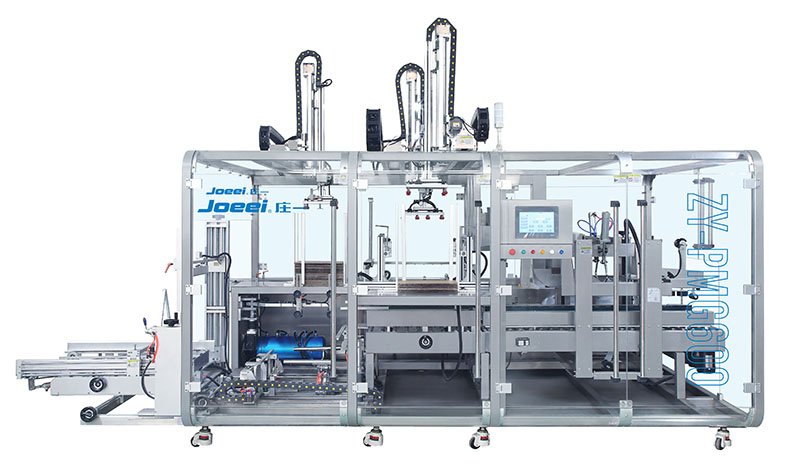
A useful cartoning machine price is not one number. It is an itemised scope covering the machine platform, product infeed, cartons and leaflets, closing method, coding, inspection, change parts, controls, tests, documents, delivery and site work.
This guide shows how to turn a headline price into a comparable project budget. It does not publish a universal HIJ price because the commercial terms and configuration must be confirmed in the current signed quotation for the approved product and pack.
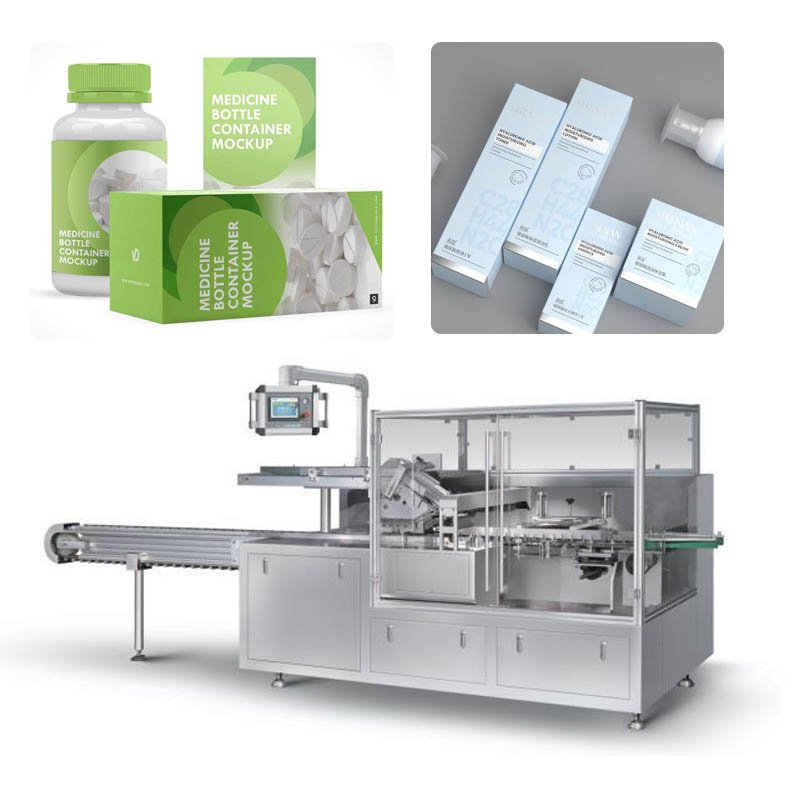
How much does a cartoning machine cost?
There is no defensible universal price for an automatic cartoning machine. A supplier can quote a base platform, but the amount becomes comparable only after the product, carton, leaflet, required output and acceptance conditions are defined. A bottle that needs orientation, a blister pack that arrives in a stable stack and a tube that must protect its presentation may all use a cartoner, yet they require different infeed and handling systems.
The same rule applies to commercial boundaries. One quotation may include product feeding, leaflet folding, coding, inspection, reject confirmation, change parts, factory testing and export packing. Another may show only the cartoner and leave those items optional. The lower total is not necessarily the lower-cost project.
Short answer: ask for an itemised, revision-controlled quotation instead of relying on a web price. Compare the same approved SKU range, accepted output, options, documentation, FAT, shipping term and site-service boundary. Any number shown without those conditions is a planning signal, not a purchase-ready price.
Start with four separate budget layers
Buyers often mix the machine price with the cost of placing a working line into service. Separating four layers makes omissions visible and prevents later additions from looking like unexplained price increases.
Core machine platform
Carton magazine, erection, transport, product insertion, closing, guarding, drives, controls and the base format named in the proposal.
Application configuration
Product feeder, leaflet system, coding, inspection, rejection, glue equipment, change parts and interfaces for the approved SKU range.
Project evidence
Drawings, manuals, material records, software backups, FAT protocol, test materials, reports, training and qualification support in scope.
Delivered and installed cost
Export packing, freight, insurance, import charges, unloading, utilities, installation, commissioning, travel and site acceptance where contracted.
Normalize every proposal to the same delivery point and responsibility boundary. A factory or port price cannot be compared directly with a delivered, commissioned or qualified project total.
The ten cost drivers that should appear in a quotation
A strong quotation explains how the application creates the price. The table below is a practical line-by-line comparison framework; it avoids guessing a percentage for any option before the supplier has reviewed the samples and requirements.
| Cost driver | What changes the scope | Evidence to request |
|---|---|---|
| Machine architecture | Intermittent or continuous motion, horizontal end-load or vertical top-load, required access and guarding. | Named model, motion principle, layout and quoted configuration. |
| Product feeding | Manual placement, magazine, bowl, conveyor, robot, counting, grouping, orientation and gentle handling. | Feeder description, sample assumptions, interfaces and unresolved trials. |
| Carton range | Blank dimensions, board quality, tolerances, finish, opening behavior and number of formats. | Approved drawings, sample identity and format/change-part list. |
| Leaflet handling | Presence, size, paper, number of folds, pre-folded versus inline folding and verification. | Leaflet specification, fold pattern and missing-leaflet test. |
| Closure | Tuck-in, hot-melt or project-specific closure; glue equipment and extraction or safety provisions. | Closure method, glue-system make/model if fixed and acceptance checks. |
| Coding and inspection | Embossing, printing, code verification, product/leaflet/carton checks and reject confirmation. | Device list, challenge set, reject logic and retained results. |
| Output target | Rated machine speed versus accepted good cartons under the actual product, leaflet and carton conditions. | FAT duration, sample plan, stops, rejects and accepted-output criterion. |
| SKU changeover | Number of formats, dedicated parts, tool-free adjustments, stored recipes and verification steps. | SKU matrix, parts list, procedure and defined changeover endpoints. |
| Line integration | Upstream/downstream signals, buffering, conveyors, accumulation, stop logic, data and layout constraints. | Interface matrix, I/O list, responsibility matrix and approved layout. |
| Documents and service | Language, document depth, FAT, training, site work, qualification support, spares and maintenance scope. | Document index, service rates, milestones, exclusions and warranty terms. |

Choose the architecture before comparing price
The lowest-priced machine type is irrelevant if the loading direction, motion or feeder cannot handle the product. A horizontal cartoner generally side-loads an oriented product into an erected carton. A vertical cartoner loads through the top and may suit products or groups that are easier to place downward. Continuous-motion systems are selected when the application and line target justify that architecture; intermittent-motion systems may be appropriate where flexibility and a different output range matter more.
Do not select only from a nominal cartons-per-minute label. Ask how the machine performs with the intended carton, leaflet, product presentation and reject tests. The current HIJ automatic cartoning machine page publishes one platform’s configuration and states that commercial terms, delivery, warranty, FAT evidence and qualification-document support must be confirmed in the signed quotation. Other platforms have different operating ranges and feeding arrangements.
Product infeed is often the real project
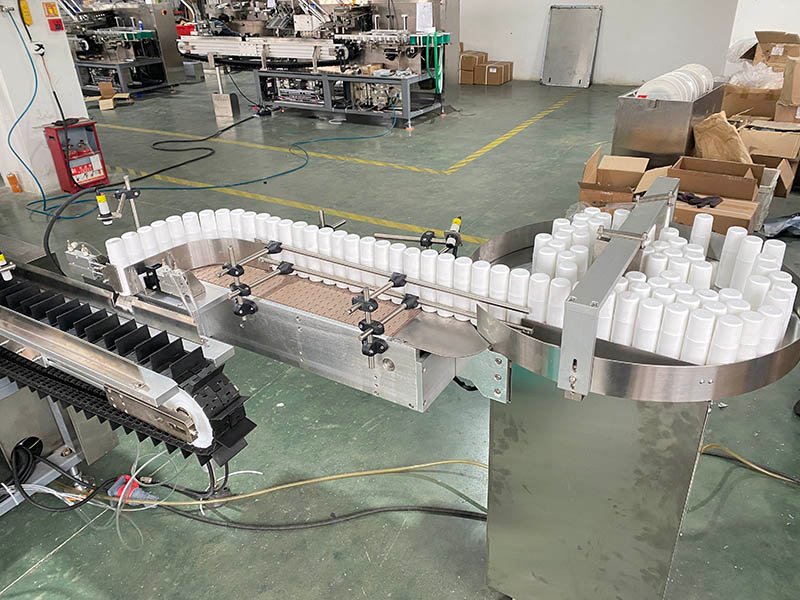
A cartoner cannot create stable product presentation by itself. Bottles may need singulation and orientation. Blister cards may need stacking, counting or transfer from a blister line. Tubes may require controlled orientation to protect artwork and cap position. Sachets can behave differently with trapped air, flexible film or surface friction. The quotation should identify who supplies every feeder, conveyor, sensor, buffer and interface—and what happens when the upstream machine stops or sends a malformed product.
Cartons and leaflets need production-representative samples
Drawings establish geometry, but actual materials reveal opening force, static, stiffness, fold memory and print-finish effects. If production materials are unavailable, the supplier should record the provisional samples and the later trial still required. This is especially important when multiple carton suppliers, leaflet stocks or market artworks will be used.

Compare options by function, not by label
Terms such as “leaflet unit,” “vision system” and “automatic reject” are too broad for commercial comparison. A leaflet system may only detect presence, or it may verify a code. An inspection device may check carton presence but not product identity. A reject output may remove a carton without confirming that it reached the reject bin. The buyer should define the defect, the test method, the response and the record required.
| Option label | Questions that define the price | Acceptance evidence |
|---|---|---|
| Product feeder | Which products and orientations? What replenishment method, buffer, change parts and no-product logic? | Representative run, misfeed challenge, recovery steps and output record. |
| Leaflet system | Which paper, size and fold pattern? Is presence, count or identity checked? | Approved leaflet, fold sample, missing/wrong-leaflet challenges if in scope. |
| Printing/coding | What content, location, technology, line speed, data source and verification are required? | Legibility samples, code-position limits and challenge results. |
| Inspection/reject | Which defects are detected? Where is each sensor? Is reject confirmation and bin control required? | Defined challenge set, detection results, reject confirmation and disposition log. |
| Hot-melt closure | Who supplies the glue unit? Which adhesive and carton finish? What temperature and safety scope? | Sealed samples, operating settings and agreed closure test. |
Separate rated speed from accepted output
Price often rises with a more demanding output target, but “speed” must be defined carefully. A published maximum can describe the mechanical platform under stated conditions. The buyer usually needs sustained accepted cartons from the complete line with representative product, cartons and leaflets. Stops, rejects, replenishment and operator interventions may change the result.
Put the test basis in the RFQ: required good cartons per minute, test duration, batch size, products and materials, planned stops, reject challenges, allowable waste and how deviations are handled. Suppliers can then size the cartoner, feeder and interfaces against the same objective. This also prevents paying for a higher nominal rate that the upstream line cannot supply.

FOB is not the installed project cost
A delivery term determines where cost and risk transfer; it does not describe the machine configuration. The International Chamber of Commerce explains that FOB is intended for goods loaded directly on board a vessel, with risk and cost divided when the goods are on board and export clearance handled by the seller. The named port and the applicable Incoterms® 2020 rule should appear in the quotation.
For capital equipment, the buyer’s budget may also need ocean or air freight, insurance, destination charges, customs duties and taxes, inland transport, unloading, placement, utilities, safety work, installation, commissioning, travel, accommodation, training, spare parts and site testing. Ask the logistics provider and import specialist to calculate destination-specific charges rather than applying an unsupported generic percentage.
Confirm the Incoterm, named place or port, currency, quotation validity, tax treatment, payment milestones, packing, delivery basis, title/risk transfer and documents required by the destination. These are contract questions, not machine specifications.
Build a comparable supplier-quote matrix
Place every supplier in the same matrix and use only written, revision-controlled responses. “Standard,” “included” and “available” are not enough when the exact configuration is unclear.
| Comparison line | Supplier response to require | Buyer check |
|---|---|---|
| Approved application | Named products, carton/leaflet drawings, sample versions and SKU range. | Are all suppliers pricing the same formats and materials? |
| Performance | Rated and accepted output, run duration, waste/reject treatment and assumptions. | Is output defined as good cartons under comparable conditions? |
| Base and options | Separate price for machine, feeders, change parts, coding, inspection, glue and conveyors. | Can optional and mandatory items be distinguished? |
| Documents/tests | Document index, FAT scope, samples, instruments, witnesses, data and qualification support. | Are words such as FAT or IQ/OQ backed by named deliverables? |
| Delivery/site work | Incoterm, named place, packing, lead-time basis, installation, travel and commissioning. | What must the buyer arrange and pay separately? |
| After-sales boundary | Warranty trigger/term, exclusions, response method, remote support, parts and service rates. | Are promises in the signed quotation and applicable to the destination? |
Include lifecycle allowances without inventing a TCO
Total cost of ownership depends on the buyer’s actual production plan and local costs. Build the model from the planned SKU count, annual hours, operators, utilities, consumables, glue, print supplies, inspection maintenance, spare parts, planned service, format changes, cleaning, training and downtime assumptions. Keep each assumption visible and test alternative scenarios.
Ask for preventive-maintenance tasks, lubrication points, recommended spares, wear-part identity, software backup method and support boundary. A lower purchase price may still be the right decision, but the buyer should see what has been excluded rather than relying on generic claims about lifetime savings or payback.
Send these inputs to obtain a useful quote
- Product type, dimensions, weight, fragility, orientation and representative samples.
- Carton drawings and samples, board grade, finish, closure style and tolerance information.
- Leaflet dimensions, paper, fold pattern, insertion position and verification needs.
- SKU matrix showing every product/carton/leaflet combination and expected annual volume.
- Upstream discharge method and rate, downstream equipment, buffers and line-control signals.
- Required accepted output, FAT duration, challenge tests, waste limits and retained evidence.
- Coding content and technology, inspection points, rejection, confirmation and data needs.
- Closure preference, adhesive information where relevant and finished-carton acceptance criteria.
- Destination voltage/frequency, compressed air, room layout, access and environmental conditions.
- Required drawings, manuals, language, certificates in scope, training and qualification support.
- Delivery destination, preferred commercial term, target schedule and site-service expectations.
Watch for five quotation red flags
- A price without an approved application. If the product, carton and leaflet are not identified, the scope is provisional.
- A speed without an acceptance definition. Rated motion is not the same as sustained accepted cartons from the integrated line.
- Options described only by marketing labels. “Vision,” “servo,” “GMP” or “validation package” must be converted into functions, documents and tests.
- Commercial terms hidden in general conditions. Check delivery point, payment milestones, validity, exclusions, warranty trigger and service rates before comparing totals.
- No responsibility matrix. Every feeder, interface, conveyor, utility, sample, document, test and site task needs an owner.
Get an itemised cartoning-machine quotation
Send the product, carton and leaflet samples or drawings, SKU matrix, accepted-output target, coding and inspection scope, site conditions and delivery destination. HIJ can return a configuration, option list, test boundary and commercial scope that you can compare line by line.
Request My Cartoning Quote ReviewContinue with the next cartoning decision
Frequently asked questions
How much does an automatic cartoning machine cost?
The purchase-ready price depends on the machine architecture, product feeder, carton and leaflet formats, output, closure, coding, inspection, change parts, line interfaces, documents, FAT, delivery term and site services. Ask for an itemised current quotation based on approved samples and requirements rather than treating a generic web number as the final project price.
Why do cartoning machine quotations vary so much?
Suppliers may be pricing different boundaries. One proposal may include feeding, leaflet folding, coding, inspection, rejection, format parts and testing, while another contains only the cartoner. Product complexity, SKU range, output, automation, document depth, delivery and site work also change the scope. Normalize those items before comparing totals.
What should be included in a cartoning machine quotation?
The quotation should identify the model and configuration, approved application, included options, SKU and change-part scope, rated and accepted output, controls and interfaces, utilities, documents, FAT, packing, Incoterm and named place, schedule basis, payment milestones, warranty terms, exclusions, site services and open trials.
Does the cartoning machine price include a product feeder?
Do not assume it does. Product feeding may be manual, magazine-based, conveyor-fed, counted, grouped, oriented or integrated from upstream equipment. The proposal should separately identify the feeder, controls, buffer, change parts, samples, interface and acceptance test so that all suppliers price the same handling task.
Is an FOB quote the total delivered cost?
No. FOB defines a delivery, cost and risk boundary at the named port under the agreed Incoterms rule; it is not the installed project total. Freight, insurance, destination charges, customs, inland transport, unloading, utilities, installation, travel, training and site testing may remain outside the supplier’s price.
How should cartoning machine speed be specified for a quote?
State the required accepted good cartons per minute and the conditions used to prove it: actual product, carton and leaflet, test duration, replenishment, reject challenges, allowable stops and waste. Keep the supplier’s rated mechanical speed separate from the sustained accepted output of the complete configured line.
Which samples are needed before a final quotation?
Provide representative products, cartons and leaflets plus controlled drawings and material specifications. Include the complete SKU matrix, expected tolerances and any alternate suppliers or artworks. If production materials are unavailable, identify the samples as provisional and record the trials that must occur before final acceptance.
How can buyers compare cartoning machine suppliers fairly?
Issue one RFQ or URS, require a clause-by-clause response and place every proposal in the same comparison matrix. Separate base machine, mandatory options, optional items, tests, documents, logistics and site services. Compare exclusions, assumptions, unresolved trials and acceptance evidence as carefully as the headline total.
Sources and commercial boundary
- HIJ automatic cartoning machine — published platform configuration, application inputs, options and quotation questions.
- HIJ horizontal cartoning machine — horizontal end-load architecture and quotation scope.
- HIJ vertical cartoning machine — vertical top-load application inputs.
- ICC Incoterms® 2020 checklist and flowcharts — official guidance for selecting delivery rules and understanding FOB boundaries.
Machine configuration, prices, commercial terms, delivery, warranty and service are project-specific and can change. Only the current signed quotation and contract define the binding supply scope. Import, tax and regulatory decisions should be confirmed with the buyer’s qualified advisers.
Use price to compare defined projects—not machine names
The strongest cartoning-machine budget starts with the approved product and pack, then follows the handling route through feeding, carton erection, leaflet insertion, loading, coding, closing, inspection and discharge. Once the required output, evidence and commercial boundary are written down, suppliers can quote the same project and the buyer can see whether a lower number reflects efficiency or simply missing scope.