
HIJ Machinery · Vial secondary packaging
Vial Cartoning Machine
Build the carton around the vial format. Review upright placement, single- or multi-vial packs, inserts and inspection before selecting the cartoning platform.
Request a Vial Cartoning ReviewProduct & carton samplesDefined loading scopeProject-specific quotation
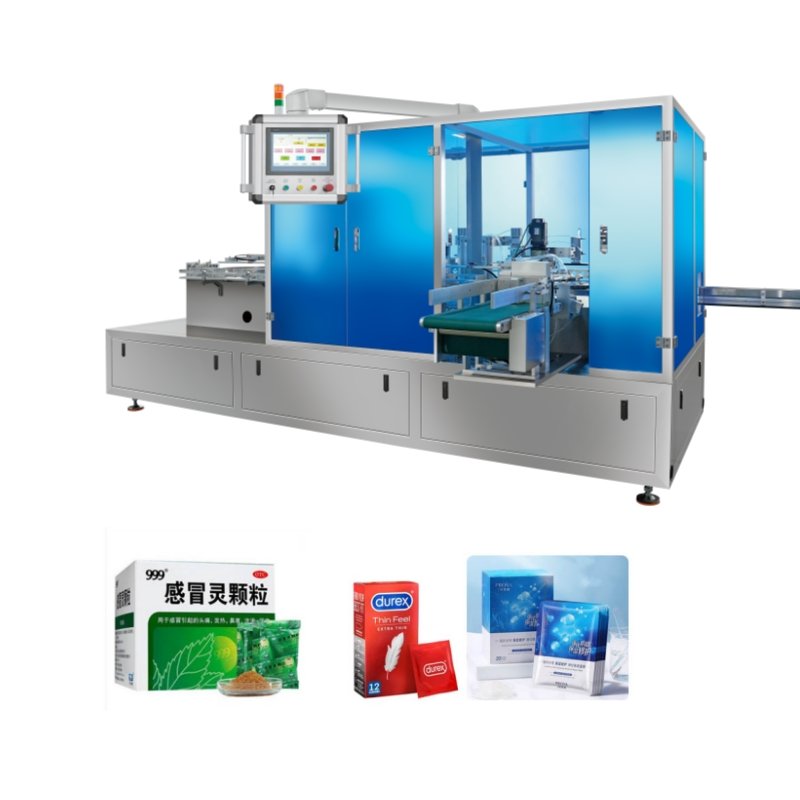
Define the packaging boundary
Cartoning starts with a closed vial and a defined pack
A vial cartoning machine places closed vials, or a prepared vial group, into folding cartons and completes the specified carton-closing process. The project may also require inserts, leaflets, coding and inspection. It does not replace vial filling, stoppering, capping or primary-container integrity testing.
HIJ can assess the cartoning requirement against product samples, production cartons and an agreed output target. Start with the finished pack: how many vials it contains, how they are retained and how the group enters the carton. Those decisions determine the feeder and loading concept—not the machine name alone.
Single vial · Grouped vials · Inserts
Choose the format before the loading mechanism
Use the actual vial with its closure and label. Include the tray, divider and leaflet in the carton drawing; an empty vial fitting into a sample box is not enough to approve the complete pack.
| Pack format | What the project must control | Send for review |
|---|---|---|
| One vial per carton | Vial orientation, retention and insertion clearance; small cartons may fall below a platform's carton range. | Closed-vial dimensions, carton drawing, insert and production samples. |
| Several vials in a tray | Tray supply, vial count, position and group stability during transfer. | Loaded tray, vials per carton, layer arrangement and permitted contact points. |
| Vials with dividers | Divider placement and vial separation without assuming that loose grouping is acceptable. | Divider material, assembled pack and loading sequence. |
| Vial with leaflet or accessory | Presence and position of each component; the approved pack should leave room for closure. | Complete component list, leaflet sample and required verification method. |
Swipe the table on smaller screens. These are configuration questions, not claims that every format runs on the same machine.
Single vial + insert
Multi-vial tray
Divider-separated group
All three drawings are original explanatory schematics, not to scale and not validated HIJ pack formats. The actual vial count, materials and loading sequence remain subject to review.
From vial drawing to machine fit
Check three envelopes: vial, assembled pack and carton
Nominal vial capacity alone does not define a cartoning format. Send a dimensioned drawing and a representative closed, labelled sample. Keep units and drawing revisions consistent across the vial, insert and carton records.
| Measurement | Include in the review | Decision it supports |
|---|---|---|
| Finished vial envelope | Maximum outside diameter, overall height including closure, label overlap, mass and approved dimensional variation. | Contact surfaces, guide adjustment, pickup or placement concept and orientation control. |
| Assembled group envelope | Loaded tray or divider dimensions, vial count, layers, leaflet and any accessories in their final positions. | Whether the complete assembly can enter and remain retained inside the carton. |
| Usable carton interior | Internal drawing dimensions, folded insert thickness, closure intrusion and the intended insertion path. | Clearance for loading and closing without relying on the outside carton dimensions. |
| Carton at the machine | External erected dimensions, blank and crease drawing, opening face, board specification and closure style. | Platform range, carton erection, holders, format parts and closing equipment. |
Match the dimension convention before comparing ranges
Mark length, width and height on the same drawing used for the machine review. Do not rotate the three numbers simply to make them fit the published range: the opening face and loading direction also matter. The GSZ-60 reference below is a platform screening range, not a substitute for an approved carton drawing.
Agree insertion clearance and permitted variation from the actual materials and loading method. There is no universal clearance value established by this page. A carton that accepts the pack by hand still needs a machine trial with representative creases, board and inserts.
Example A: a small single-vial carton
If a mapped carton dimension is below the published minimum, treat GSZ-60 compatibility as unresolved. Send the drawing for an alternative-platform or engineering assessment; do not assume the vial's small size makes it an easy fit.
Example B: a grouped pack within the range
Passing the dimensional screen does not approve the application. A loaded tray may still need support, an insert may obstruct entry, or the closure may interfere with the pack. Confirm those points in the proposed loading sequence.
Product handling comes first
Protect the vial through the entire loading route
Upright top loading
Review a vertical approach when the vial should remain upright or the carton must stay open for an insert or group. Define controlled placement, support and any permitted drop. Do not assume free-fall loading is suitable for glass.
Tray or group transfer
Determine whether the line receives loose vials, filled trays or a retained group. A carton loader does not automatically supply a tray former, vial counter or divider inserter. Identify each responsibility in the proposal.
Alternative loading direction
A stable, supported pack may warrant a side-loading assessment. Compare the complete vial-and-insert assembly, not only the bare vial. Keep the bottle cartoning route separate when the product is a conventional bottle pack.
A practical approval question
Can the proposed system move the most difficult approved pack from the incoming supply to the closed carton, including stops and restart, without losing orientation or product control? Ask for that sequence in the sample trial.
Define who supplies each stage
Specify the vial cartoning line as four connected steps
Receive & present
Identify the incoming orientation, transfer height, supply pattern and accumulation limit. Assign vial feeding and any upstream rejection to a named scope.
Prepare the pack
Form the required group or supply the loaded tray. Define counting, inserts and the response to an incomplete or uncertain group.
Load & close
Open the carton, retain it during loading and complete the selected closure. Confirm carton material, tooling and glue equipment where applicable.
Inspect & discharge
Define each required check and its response. Confirm where rejected cartons go and how a downstream blockage stops or buffers the flow.
Code presence, code readability and correct code content are different requirements. A camera or sensor being listed does not establish all three functions.
Published HIJ platform reference
Review GSZ-60 where the carton and loading concept fit
HIJ's GSZ-60 vertical cartoning page lists vials among its example applications. The machine handles open cartons for top loading. Product feeding, placement, closure equipment and inspection must be specified for the project.
- Published platform rate
- 5–50 cartons/min; not a vial-specific accepted-output guarantee.
- Published carton range
- 60 × 90 × 50 mm minimum to 180 × 210 × 110 mm maximum, L × W × H.
- Loading assessment
- Review manual, robotic or product-specific placement; confirm the purchased configuration.
Check small cartons carefully
A single-vial carton may be smaller than the published GSZ-60 range. Check all three carton dimensions, the loaded insert and the opening direction before choosing this platform.
If the format is outside the reference range, request a separate technical review. Do not enlarge the published operating window or assume a smaller format kit is available.
Check My Vial & Carton Format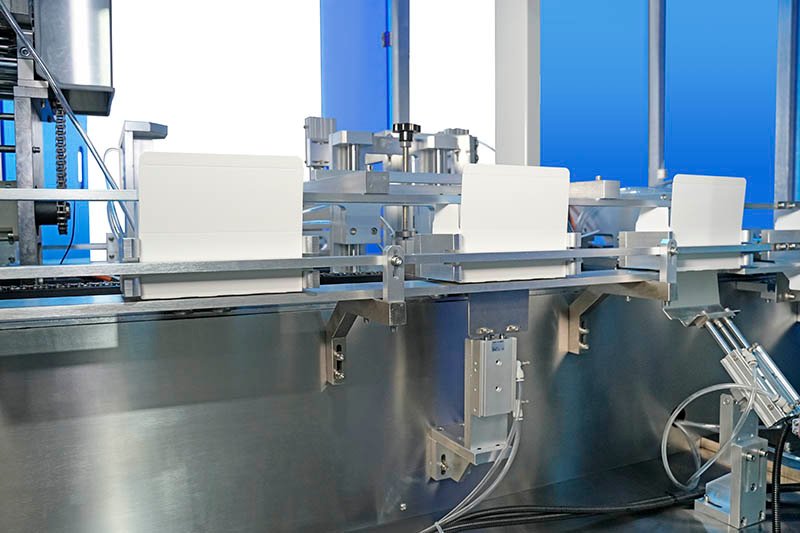

Agree the output measurement
Count accepted cartons—not only machine cycles
A multi-vial carton consumes several incoming units. Available vial supply can therefore limit output even when the cartoner's mechanical cycle is faster. Include vial feeding, inserts, leaflet handling and inspection in the agreed run.
Quantity balance example, not a machine performance claim
240 accepted vials/min ÷ 10 vials/carton = 24 cartons/min before additional cartoning losses. The example cannot establish sustained production: stops, rejected groups and other losses still matter.
Record the accepted cartons after the defined inspection point, together with run duration, rejects and stops. For mixed SKUs, account for the agreed changeover and replenishment tasks. Keep the rated platform speed separate from the demonstrated rate for your vial format.
Useful enquiry inputs
Request a quote for the complete vial pack
Start with what you have; an unfinished layout need not prevent the first technical discussion. Identify missing information so the proposal can distinguish confirmed scope from items awaiting sample review.
Ask for separate scope lines for the cartoner, vial feeder, tray or insert handling, format parts, closure equipment, coding, inspection and line interfaces. Do not assume every option or service is included in a base-machine quotation.
Your sample-review brief
- Vial diameter, overall height, closure, weight and photos.
- Vials per carton and the loaded tray or insert arrangement.
- Carton drawing, board and representative samples.
- Required accepted cartons/min and available vials/min.
- Leaflet, coding, inspection and reject requirements.
- Layout, transfer heights, utilities and interface responsibilities.
Share non-sensitive product and packaging details. No project information is sent by simply opening the enquiry form.
| Quotation line | Clarify before comparing proposals |
|---|---|
| Vial supply and loading | Loose vials or prepared groups; operator, robot or dedicated feeder; supply responsibility and agreed operating assumptions. |
| Tray, insert and leaflet | Purchased or formed in-line; placement sequence; presence checks; replenishment and consumables responsibility. |
| Carton and closure | Approved formats, carton supply, tuck or adhesive closure, tooling and any separately supplied glue equipment. |
| Coding and inspection | Printer, code-reading or verification function, recipe/data source, inspection point and physical reject confirmation. |
| Integration and services | Conveyors, interfaces, utilities, installation, training, trial documentation and the format parts included for each SKU. |
Ask each proposal to mark items as included, optional, buyer-supplied or pending review. Any price and delivery commitment should refer to that agreed configuration.
Send My Vial Packaging BriefRequirement → check → evidence
Define what each inspection must actually prove
A sensor list is not an acceptance plan. For every required check, identify the inspection point, detectable condition, line response and evidence to record. The functions below are review items; they are not a list of standard equipment included with GSZ-60.
| Requirement | Configuration question | Agreed trial evidence |
|---|---|---|
| Missing vial or incorrect count | Where is the count established, and can a vial be lost after that point? Does the proposed check distinguish the required incomplete pack? | Approved complete and incomplete challenge packs; detection result and the physical disposition of each affected carton. |
| Tray, divider or leaflet presence | Is the component visible at the inspection point? Presence, position and correct version may need different checks. | Agreed absent or misplaced-component challenges, with the result matched to the specific requirement. |
| Printed code | Is the task detecting a mark, reading characters, or comparing them with the expected job data? Who controls that data? | Known acceptable, unreadable and incorrect-content samples where those functions are included; recorded decisions and responses. |
| Carton closure and pack condition | Which open-flap, closure or visible-damage conditions must be detected? What remains a separate manual or downstream check? | Defined defect examples and acceptance criteria, without treating a closed carton as proof of vial integrity. |
| Reject and recovery | How are rejects confirmed, contained and reconciled? What happens if rejection cannot be confirmed or the flow is blocked? | Observed physical routing, agreed stop/alarm response, recovery sequence and challenge-sample reconciliation. |
Do not assume a weight check proves completeness
A missing component can be difficult to distinguish from normal package-weight variation. Checkweigher suitability therefore depends on the actual pack and the smallest missing item to be detected, not just the presence of a weighing station. METTLER TOLEDO's Checkweighing Guidance: Building an Effective Program explains this limitation for completeness checking.
Likewise, extracting printed characters is a different task from verifying that they match an expected string. Define the required comparison and response explicitly; Cognex's character-verification documentation illustrates that distinction. These references explain inspection principles; they do not identify suppliers or features included in a HIJ quotation.
Use identifiable challenge samples and a procedure approved by the responsible team. Keep them controlled and reconciled; do not introduce uncontrolled defective product into saleable output. Primary-container integrity and any regulatory qualification remain separate project requirements.
Evidence before acceptance
Agree a vial-specific sample trial
Handling & carton fit
Use production-representative vials, closures, labels and cartons. Assess the difficult approved formats, insertion clearance, carton condition and agreed vial-damage checks.
Missing-item response
Using the approved challenge procedure, test the functions actually included: for example a missing vial, incomplete group, absent leaflet or unreadable code. Confirm the physical outcome, not only the screen alarm.
Recovery & records
Check approved stop, restart, replenishment and changeover sequences. Record accepted output, rejects, open items and the documentation supplied with the agreed configuration.
Use the cartoning machine FAT checklist to structure the test. This page does not establish qualification, regulatory compliance or protection of the primary closure; define those requirements with the responsible project team.
Plan for the second SKU, not only the first run
Include changeover and line integration in the review
A format family can share a vial but change the tray, carton count or leaflet. List each intended SKU as a complete pack, then ask which adjustments, parts and recipes change. Do not assume a demonstrated format proves every member of the family.
Map the format changes
Record vial diameter and height, group pattern, carton dimensions, insert and closure for each SKU. Identify guides, holders, loading tools and inspection settings that need adjustment or replacement. Confirm which format parts are supplied.
Agree the timing boundary
If changeover time matters to the project, define the start and finish points, staffing, tools and verification tasks before measuring it. Distinguish mechanical adjustment from material clearance, recipe selection and approval of the first acceptable pack.
Check line handshakes
Confirm incoming and outgoing transfer heights, supply interruptions, downstream blockage, available buffer space and restart responsibility. Agree access for replenishment and maintenance, plus the required utilities and safety-interface review.
Close the trial with a configuration record
Retain the tested SKU and drawing revisions, tooling list, operating settings, agreed accepted output, challenge results and open actions. State who resolves each open item and what evidence closes it. This gives purchasing and production a shared reference for the machine that was actually assessed.
Buyer questions
Vial cartoning machine FAQ
What does a vial cartoning machine do?
A vial cartoning machine places already closed vials, or a prepared group of vials, into folding cartons and completes the specified closing steps. It is secondary packaging equipment, not a vial filling, stoppering or capping machine. Feeding, inserts, coding and inspection are defined in the project scope.
Can HIJ assess both single-vial and multi-vial cartons?
Send both formats for review. A single-vial carton and a tray of several vials require different presentation, retention and loading arrangements. Suitability depends on the vial and carton dimensions, the insert or tray, the loading direction and an agreed sample trial; neither format is automatically approved.
Is the GSZ-60 suitable for every vial carton?
No. The published GSZ-60 reference lists a carton range from 60 × 90 × 50 mm to 180 × 210 × 110 mm, stated as length × width × height. Small single-vial cartons may fall outside that range. Confirm all dimensions and the selected format; a listed application does not establish compatibility.
What output can I expect from a vial cartoner?
Agree an accepted-carton rate for your actual vial, group, insert, carton and inspection scope. The GSZ-60 published reference is 5–50 cartons per minute, not a demonstrated vial-specific rate. Available vial supply, vials per carton, feeding losses, stops and changeovers can limit line output.
Does the project include vial trays, leaflet insertion and code inspection?
Only the items identified in the written proposal are included. Specify tray supply or forming, divider insertion, leaflet handling, printing, code inspection and rejection separately. Ask which items are supplied by HIJ, supplied by another party or performed by an operator.
How should glass-vial handling be tested?
Use representative vials, closures, labels, inserts and production cartons. Agree permitted contact points, orientation and any placement or drop limits, then assess handling through feeding, loading, closure, stops and restart. Define the damage checks and acceptance criteria before the trial rather than assuming zero breakage.
How much does a vial cartoning machine cost?
The quotation depends on the selected platform, vial feeding and grouping, carton formats, inserts, closure, coding, inspection and line interfaces. Request an itemized scope with format parts and services identified. A generic machine price does not establish the cost of an approved vial packaging configuration.
What should I send with a quotation request?
Send vial dimensions including the closure, photos, vials per carton, the loaded carton or tray drawing, carton samples, the required accepted cartons per minute and the upstream vial supply. Add leaflet, code inspection, rejection, utilities and layout requirements when available.
From format to proposal
Show us the vial and the finished carton
Send your vial photos, pack arrangement and required accepted output. Request a configuration review with clear feeding, insert, closure and inspection responsibilities.
Discuss My Vial Cartoning Project