
DPP-260 validation documents
Agree the documents, tests and site responsibilities for your DPP-260 blister-machine project before placing an order.
Already have a URS or document index? Use that brief for the review.

Define your review stage
Qualification support starts with an agreed equipment configuration and a document index. Use the stage below to focus the discussion.
A usable document index
Build the index around what your team needs to review, install, operate and maintain the selected machine. The items below are quotation-review topics, with their supplied form and scope recorded in the agreement.
| Record family | Review purpose | Agree in the quotation |
|---|---|---|
| Requirements and design | Connect the URS to the offered functions and approved layout. | Requirement references, configuration list, drawing revisions, review comments and approval responsibilities. |
| Equipment records | Identify the machine, stations and selected components. | Machine identification, relevant parts lists, mechanical/electrical information, utilities and the as-built update boundary. |
| Factory test records | Record the agreed checks before shipment. | Protocol, products and materials, acceptance criteria, raw results, witnesses, deviations and sign-off. |
| Site qualification support | Support installation and operation against the approved site plan. | IQ/OQ/PQ document scope, execution roles, site prerequisites and supplier attendance or remote assistance. |
| Materials and instruments | Link requested traceability and calibration evidence to identified items. | Component/material identification, certificate type and availability, instrument IDs, ranges and required calibration records. |
| Operation and handover | Give the site a controlled operating baseline. | Manuals, cleaning/changeover instructions, spare-part information, training records, final revisions and open-item ownership. |
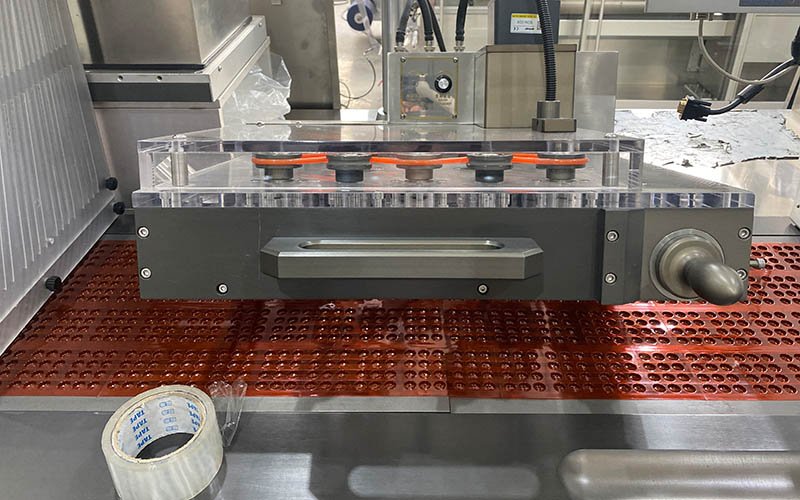
Set the test boundary
Use the actual blister format, selected material and offered functions to define what must be demonstrated. Put the pass criteria and records in the protocol before testing.
Design and factory review
DQ records the review of the proposed design against the URS. For the factory test, agree the operating conditions, representative packs and evidence needed to demonstrate the supplied functions.
The DPP-260 technical material describes loading, forming, sealing, indexing and discharge. Depending on the offered configuration, the review can cover missing-product rejection, roll-end or broken-web stops, restart behaviour, changeover and access for cleaning.
State the trial duration and the accepted-output calculation for the selected pack. Retain the relevant settings and results rather than treating a catalogue cycle rate as the acceptance result.
Installation and production
IQ addresses the installed configuration and its site conditions. OQ examines the agreed operating ranges. PQ addresses performance with the intended product and production conditions under the site’s approved plan.
FAT and SAT are agreed acceptance activities, not a substitute for every site qualification task. Identify transport- or installation-sensitive checks, justified reuse of earlier results and any tests that must be repeated.
The product, process risks and approved protocol determine sampling and repeat runs. Do not assume one fixed batch count or a universal project duration. See EU GMP Annex 15, sections 2–3 for qualification concepts and responsibilities.
Link records to hardware

A material or calibration document is useful when your team can connect it to an identified part or measuring instrument. Define that connection in the equipment list and document index.
For materials, agree the product-contact boundary, selected grade, component identification and the type of evidence requested. Resolve availability and supply scope before relying on a particular certificate in your approval plan.
For instruments, identify the parameter, range and instrument tag. Agree which calibration records are needed, their issue status and the site’s verification or recalibration responsibilities.
Keep the equipment revision, format tools and change history together. A later feeder, control-system or material change should be reviewed against the approved configuration and associated test coverage.
Electronic-record requirements
If your process relies on electronic records or signatures, define those requirements in the URS and the offered control-system scope. FDA’s Part 11 guidance links applicability to the records required and the way electronic records are used; a PLC brand alone does not settle that assessment.
Users and actions
Identify who may change settings, approve a record and administer the system. Request a demonstration of the permissions required for your workflow.
Events and review
Specify the events and context that must be retained, such as user, time, parameter change or batch reference. Agree how records are reviewed and exported.
Storage and recovery
Define retention, backup, restoration, access and time-management requirements. Include the tests and records needed to verify the selected arrangement.
Signatures and interfaces
Where required, identify signature meaning, record linkage and any connection to site systems. Ask for a requirement-by-requirement response and test evidence for the offered software version.
The supplied functions, software configuration and qualification-support documents belong in the agreed scope. This page does not certify a control system or promise regulatory approval.
Compare the document scope
Make document deliverables visible in the quotation alongside the equipment. Confirm what is supplied before shipment, what is completed at site and which services are priced separately.
Status and format
Distinguish sample, template, protocol and executed record; identify the required language and editable or controlled format.
Responsibility and timing
Name the author, reviewer and approver, the delivery milestone, site prerequisites and the owner of unresolved items.
Charges and changes
Agree documentation charges, supplier attendance, travel, additional tests and document updates after configuration changes.
For machine selection, continue to the DPP-260 pillar or the DPP-250/DPP-260 comparison. Keep the equipment and document requirements on one buying basis.
Reference points
European Commission, EU GMP Annex 15
Qualification and validation concepts, supplier-document review and project responsibilities.
FDA, Part 11 Scope and Application
Electronic-record applicability and the relationship to underlying record requirements.
These references inform the review. Your site’s quality team determines the applicable requirements and approves the project plan.
Buying questions
Can one document set cover several blister formats?
Identify the equipment baseline and every format to be covered. Map product dimensions, tooling, materials and operating conditions to the proposed test cases. Your site’s quality team decides whether the evidence supports shared coverage or whether additional checks are needed.
What if a supplier document is confidential?
Agree the document identity, revision, review purpose and access method before approval. Options may include a redacted copy or a controlled review. Record any restriction that affects the buyer’s qualification or retention needs in the agreement.
Can remote FAT replace site testing?
A remote factory review is a way to witness agreed factory checks. Specify visibility of the tests, access to results, deviation review and sign-off. Installation-dependent checks and site qualification remain part of the approved site plan; witnessing a factory test does not automatically complete them.
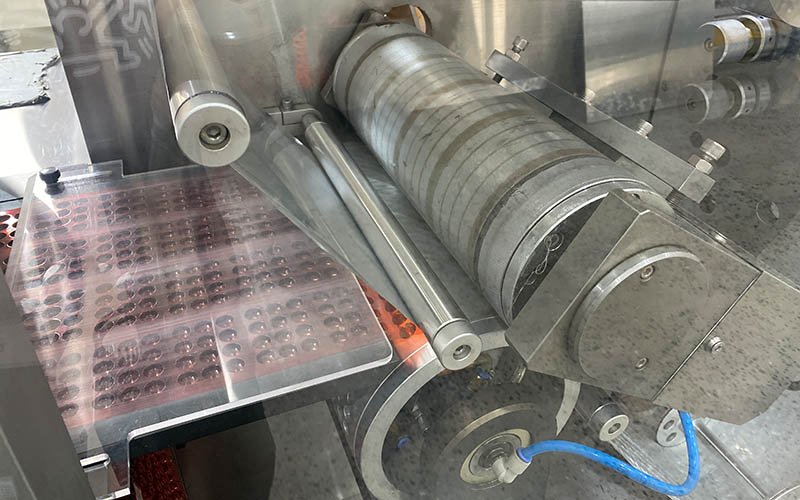
Discuss your DPP-260 scope
Share your current URS or document index and highlight the open decisions. Agree the equipment, document deliverables and qualification-support responsibilities in one proposal.
Start with your existing brief
Discuss your scopeDocument and service inclusions, charges and delivery milestones are confirmed in the quotation.